search
dashboard All 23098 museum exhibitions 10862article local 3082article news 2487trending_up market 2230article culture 1544person people 942article policy 770rate_review review 452candle obituary 380gavel restitution 308article event 23article events 5article school 3article museum 3article museums 2article gallery 2article satire 1article architecture 1article museums & heritage 1
date_range Range Today This Week This Month All
Subscribe

modern contemporary art

The article explores the distinction between Modern and contemporary art, explaining that Modern art emerged in the late 19th century as a reaction to classical art and the Industrial Revolution, with movements like Impressionism, Cubism, Futurism, and Surrealism redefining painting in response to photography. Contemporary art, by contrast, is a reaction to Modern art, with its start debated between World War II and the 1960s-70s consumerist era, encompassing diverse mediums such as sculpture, street art, and performance art, exemplified by artists like Jeff Koons, Banksy, and Yoko Ono.

contemporary frames

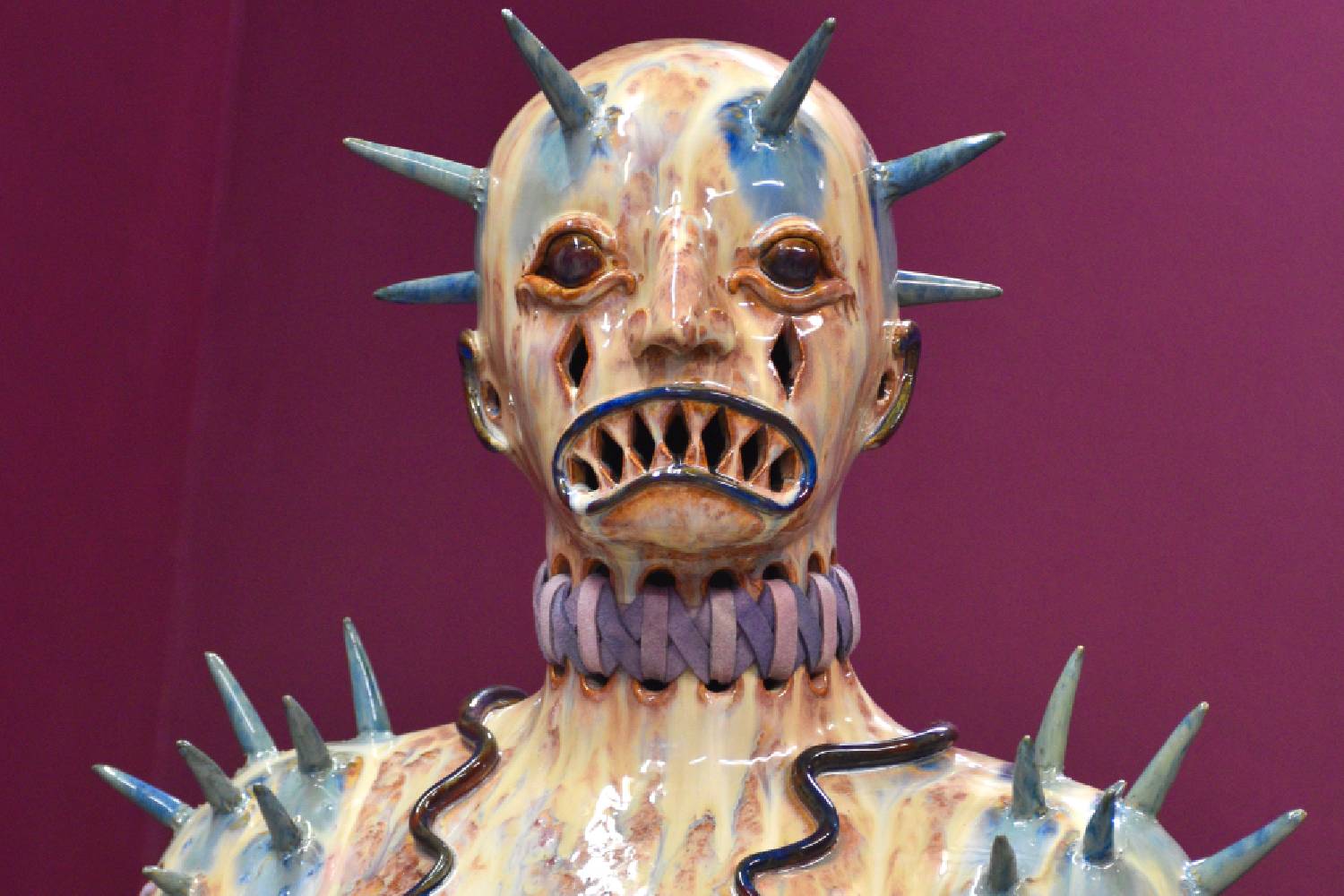
Artist Harry Gould Harvey IV and others are reclaiming the frame as an integral part of the artwork, using found wood and elaborate designs to embed narrative, memory, and place. Harvey, represented by P.P.O.W., began making frames from a fallen black walnut tree, while artists like Jenna Rothstein create ceramic frames with spiky thorns. The New Museum Los Gatos recently honored Holly Lane, a pioneer who milled Renaissance-style frames in the 1980s, challenging the minimalist norm.

‘I make casts of their feet!’ Rachel Whiteread, Michael Armitage and more on how they get their kids into art

Five artist parents—Rachel Whiteread, Michael Armitage, Chantal Joffe, and Rachel Maclean—share their personal approaches to introducing young children to art. Whiteread describes letting her boys play in her studio and casting their hands and feet for fun; Armitage lets his daughter lead, using his materials in unexpected ways; Joffe emphasizes good materials and allowing mess; Maclean prefers making art at home over museum visits. The article includes practical tips and photographs of children interacting with artworks.

We Asked Artists, Dealers, Lawyers, and Advisers What Gallery Representation Means Today—And It’s Surprisingly Complicated

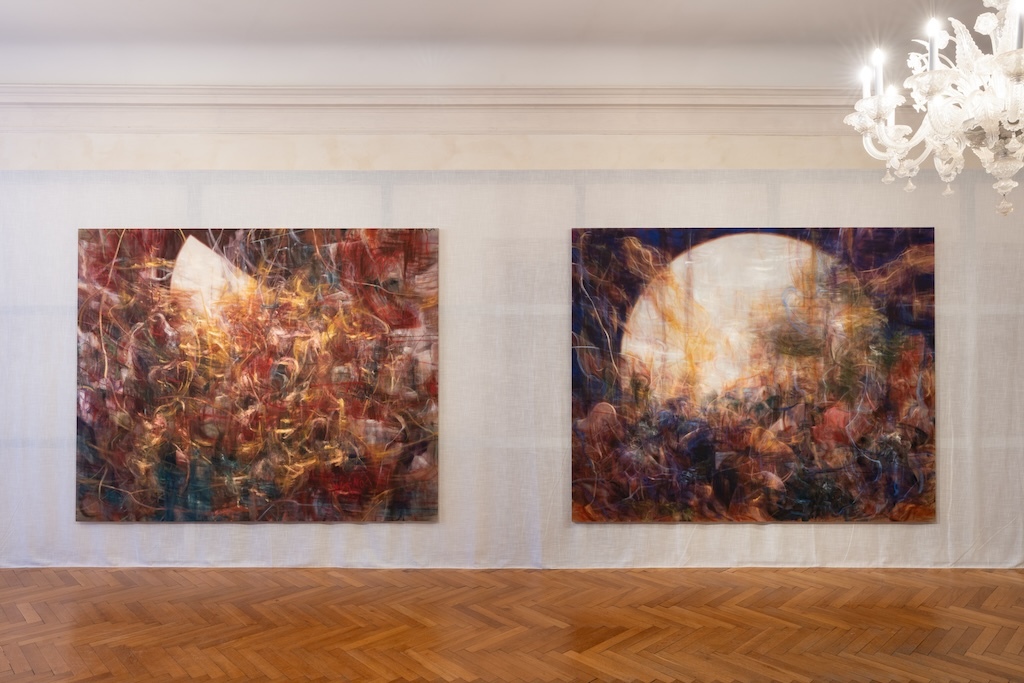
ARTnews explores the evolving and often ambiguous nature of gallery representation through interviews with artists, dealers, lawyers, and advisers. The article traces British painter Nigel Cooke's journey from his first representation by Stuart Shave/Modern Art in 2002 to his current gallery Pace, and his recent exhibition "Bad Habits" at Fondazione Querini Stampalia in Venice. It highlights the gap between the romantic ideal of a dealer discovering and nurturing an artist's career and the commercial reality of contracts, commissions, and termination clauses.

The 21st Century’s Biggest Art Trend is Not a Style. But Once You See It, You’ll Notice It Everywhere.

The article traces the evolution of "systems art," a term coined by critic Jack Burnham in 1968 to describe art that uses rules, seriality, and repetition to mirror and reveal the growing protocols of the Cold War era. It highlights early practitioners like Kenneth Noland, Robert Morris, Dan Flavin, and notably Hans Haacke and Adrian Piper, who shifted from atmospheric systems (e.g., Haacke's *Condensation Cube*) to social systems (e.g., Haacke's *Shapolsky et al. Manhattan Real Estate Holdings*). The piece argues that systems thinking has become unavoidable in contemporary life—from algorithms to systemic racism—and that art remains a crucial tool for making these invisible systems legible.

Rocked on their heels: how exhibitions can change the course of artists’ lives

Alyce Mahon's new book, *Dorothea Tanning: A Surrealist World*, explores how the 1936 MoMA exhibition *Fantastic Art, Dada, Surrealism* profoundly transformed the young artist Dorothea Tanning, who described being "rocked on my run-over heels" by the experience. The article also recounts similar life-changing exhibition encounters for contemporary artists Lorna Simpson and Hurvin Anderson, as discussed on *The Week in Art* and *A brush with…* podcasts, highlighting how specific shows shaped their artistic trajectories.

My toddler threw a toy pig at an artwork – and inspired this guide for small kids in galleries

A journalist recounts a stressful visit to the Royal Academy with her toddler, where a toy pig was thrown toward a Kerry James Marshall painting. This incident serves as the catalyst for a new series exploring the compatibility of small children and art galleries, addressing the anxieties parents face regarding museum etiquette, accessibility, and the fear of damaging artworks.

Which City Will Be the Next Asian Art Hub? That’s the Wrong Question

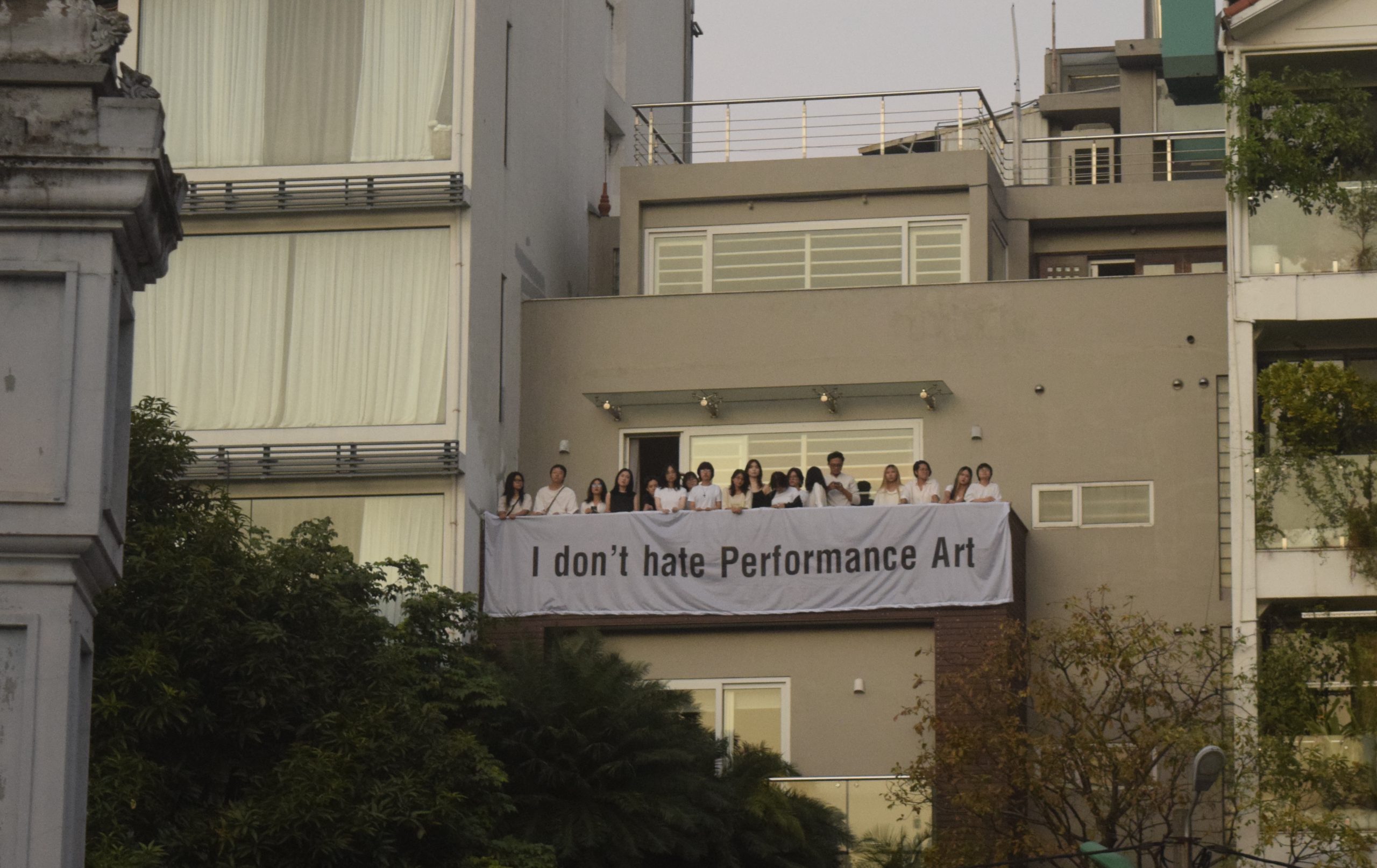
The traditional quest to identify a single dominant Asian art hub is being challenged by the organic growth of decentralized scenes in cities like Bangkok and Hanoi. While Hong Kong and Seoul remain established centers, private initiatives and artist-led projects in Thailand and Vietnam are building resilient, hybrid ecosystems that prioritize long-term structural depth over immediate auction results. From the opening of Dib Bangkok to experimental exhibitions in Hanoi, these cities are transitioning from peripheral status to significant cultural players through a mix of private museums, biennials, and non-profit platforms.

How Josh Kline Wrote the Essay That the Art World Can’t Stop Talking About

Artist Josh Kline has sparked intense debate across the New York art world with his viral essay, "New York Real Estate and the Ruin of American Art," published in the journal October. The text serves as a scathing critique of the current state of the American art industry, diagnosing it as "sick" due to skyrocketing real estate costs, systemic power imbalances, and a market that has become an unsustainable "conveyor belt" of commercial painting. Kline argues that the economic pressures of post-pandemic New York have made the city a hostile environment for experimental and conceptual practices.

How the New Deal Treated Art as Essential to Democracy

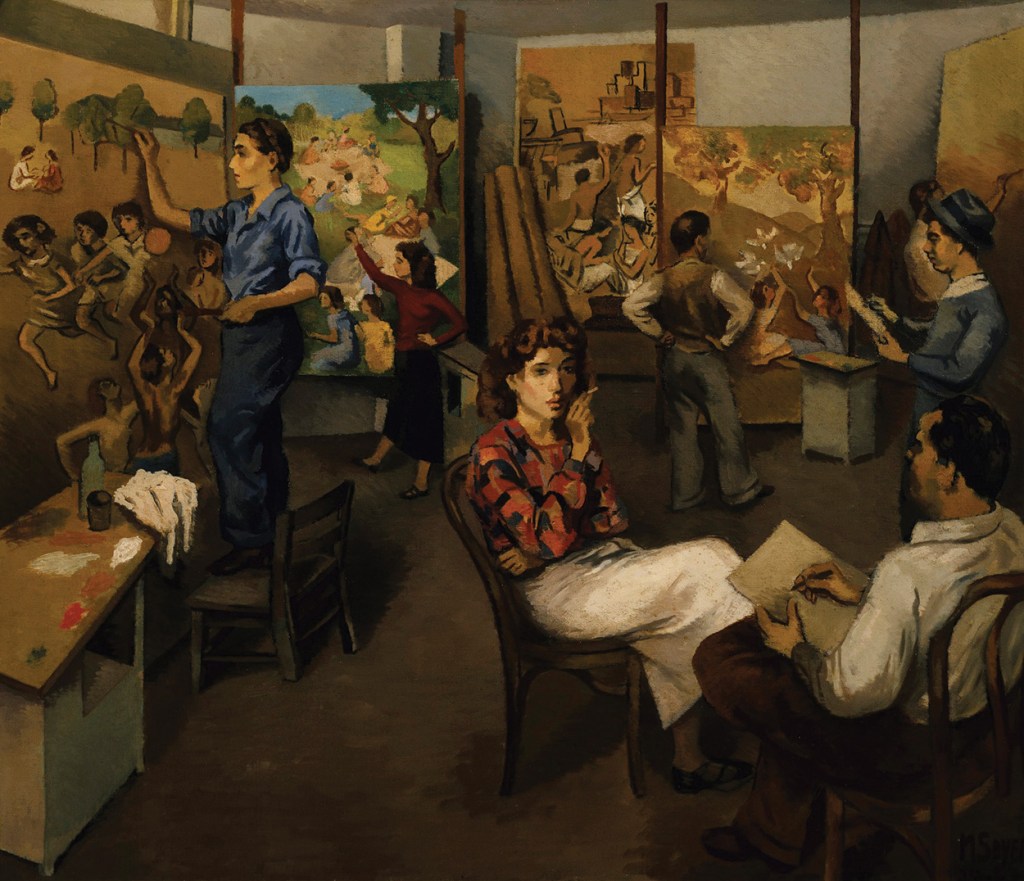
The United States government transformed the role of the artist during the Great Depression by treating art as a vital public resource rather than a private luxury. Between 1933 and 1943, New Deal programs like the Public Works of Art Project (PWAP) commissioned hundreds of thousands of works for schools, libraries, and hospitals, providing 'plumbers' wages' to struggling creators. This federal patronage supported a generation of then-unknown figures, including Jackson Pollock, Mark Rothko, and Alice Neel, while focusing on the 'American scene' to make culture accessible to the general public.

ai weiwei royal academy controversy

Artist Ai Weiwei has claimed in a new interview that he faced censorship in the West, citing a specific incident with London's Royal Academy. In late 2023, an exhibition of his new works at the Lisson Gallery was canceled after he posted a controversial tweet about the Israeli-Palestinian conflict. Subsequently, the Royal Academy held a vote on whether to revoke his honorary membership over accusations of antisemitism, which he won. Ai also claims the Academy then declined to publish an article he wrote on free speech for its magazine.

judy chicago google

Artist Judy Chicago recounts her frustrating experiences with public art commissions, focusing on a recent failed collaboration with Google for its Chicago headquarters at the Thompson Center. After being encouraged by her dealer to apply, Chicago was awarded a commission in fall 2025 to create a large terrazzo floor and a 17-story glass elevator shaft using her "Through the Flower" imagery. However, the project fell through after months of effort, mirroring earlier disappointments with the Beverly Hills Sculpture Park, where a city councilor questioned the value of her work, which Chicago attributes to institutionalized sexism.

re air uncovering the louvres hidden stories

Artnet News re-airs a podcast episode exploring the hidden stories of the Louvre, prompted by a recent daylight heist in which thieves stole eight pieces of royal jewelry from the Paris museum. The episode features Elaine Sciolino, a former Paris bureau chief for the New York Times, who discusses her book *Adventures in the Louvre: How to Fall in Love with the World’s Greatest Museum*, based on unprecedented access to the museum's guards, curators, and hidden rooms.

the push to preserve nina simones childhood home just got a 6 million boost thanks to venus williams and adam pendleton

The childhood home of legendary singer and activist Nina Simone in Tryon, North Carolina, has been fully restored after nine years of effort by an artist coalition led by Adam Pendleton, alongside Julie Mehretu, Rashid Johnson, and Ellen Gallagher. The restoration, completed with a $6 million boost from a charity auction and gala co-hosted by tennis star Venus Williams and Pace Gallery, preserved the 650-square-foot clapboard house to its 1933–1937 condition, including historically accurate materials, an ADA ramp, geothermal climate control, and a century-old magnolia tree named “Sweetie Mae.” The African American Cultural Heritage Action Fund announced the completion, and the property remains closed to the public while community programming and ethical cultural tourism are being planned.

times square statue thomas j price statue debate

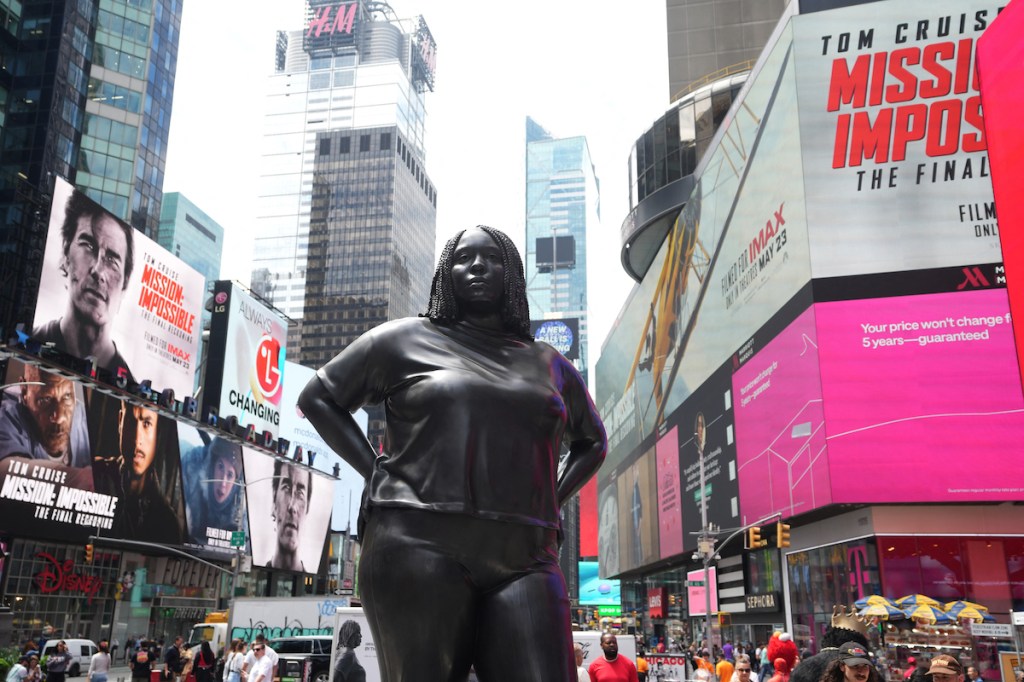
A 12-foot-tall bronze statue of a Black woman by British sculptor Thomas J. Price, titled *Grounded in the Stars* (2023), has been installed in Times Square, sparking a polarized public reaction. Online, conservative commentators and social media users have labeled the work a sign of a "very sick society" and a "death of civilization," with racist AI-generated and Photoshopped images circulating. In person, the sculpture has drawn both affirming responses—such as a Black woman mimicking its defiant pose—and disrespectful acts, including a white man groping the statue's buttocks for a photo. The work, which stands near permanent monuments to white male figures, will be on view until June 17.

art market open door policy jeff magid

Jeff Magid, a New York, Los Angeles, and Mexico City–based art collector, plans to open Cuernavaca Tres, a public art foundation in Mexico City, in 2026. In an opinion piece for ARTnews, he argues that the current downturn in the art market—marked by declining sales and gallery closures—is not due to economic cycles or financialization, but rather a simple mismatch: there are more galleries, auctions, fairs, and artists than ever, while the number of buyers has not kept pace. Magid criticizes the luxury retail model adopted by many galleries, which prioritizes exclusivity and status signaling, and contends that this approach fails to attract enough new collectors to sustain the market.

okwui enwezor cuator duke collected writings

A new two-volume collection of Okwui Enwezor's writings, titled "Okwui Enwezor: Selected Writings, Volume 1: Toward a New African Art Discourse" and "Volume 2: Curating the Postcolonial Condition," has been published by Duke University Press in 2025, edited by Terry Smith. Spanning over a thousand pages and covering the years 1994 to 2019, the collection gathers Enwezor's catalog essays, exhibition reviews, and analyses, tracing his evolution as a poet, writer, curator, theorist, educator, and museum director who died in 2019 at age 56.

how top curators spot the artists of tomorrow

Artnet News spoke to seven leading curators about how they identify emerging artists who will become the next big names. The curators, including Amy Smith-Stewart of The Aldrich Contemporary Art Museum and iLiana Fokianaki of Kunsthalle Bern, describe their methods: seeking artists who address erased histories, geopolitical contexts, and marginalized perspectives. The article also references a recent debate sparked by Dean Kissick's polemic 'The Painted Protest' in Harper's, which criticized contemporary art for being overly dictated by identity politics, a view countered by curators who affirm their commitment to socially engaged work.

art basel party june social diary

ARTnews sent correspondents Daniel Cassady and George Nelson to cover the social scene at Art Basel, documenting their experiences across three nights of parties, dinners, and cocktail hours. Cassady's journey was marred by travel delays, but he eventually attended a dinner hosted by Thaddaeus Ropac at Safran Zunft, a garden party by Sean Kelly Gallery, and a late-night gathering organized by multiple galleries. Nelson arrived smoothly and joined Cassady for drinks, noting the challenges of street noise and cabbage smells near their Airbnb.

ceramics artists

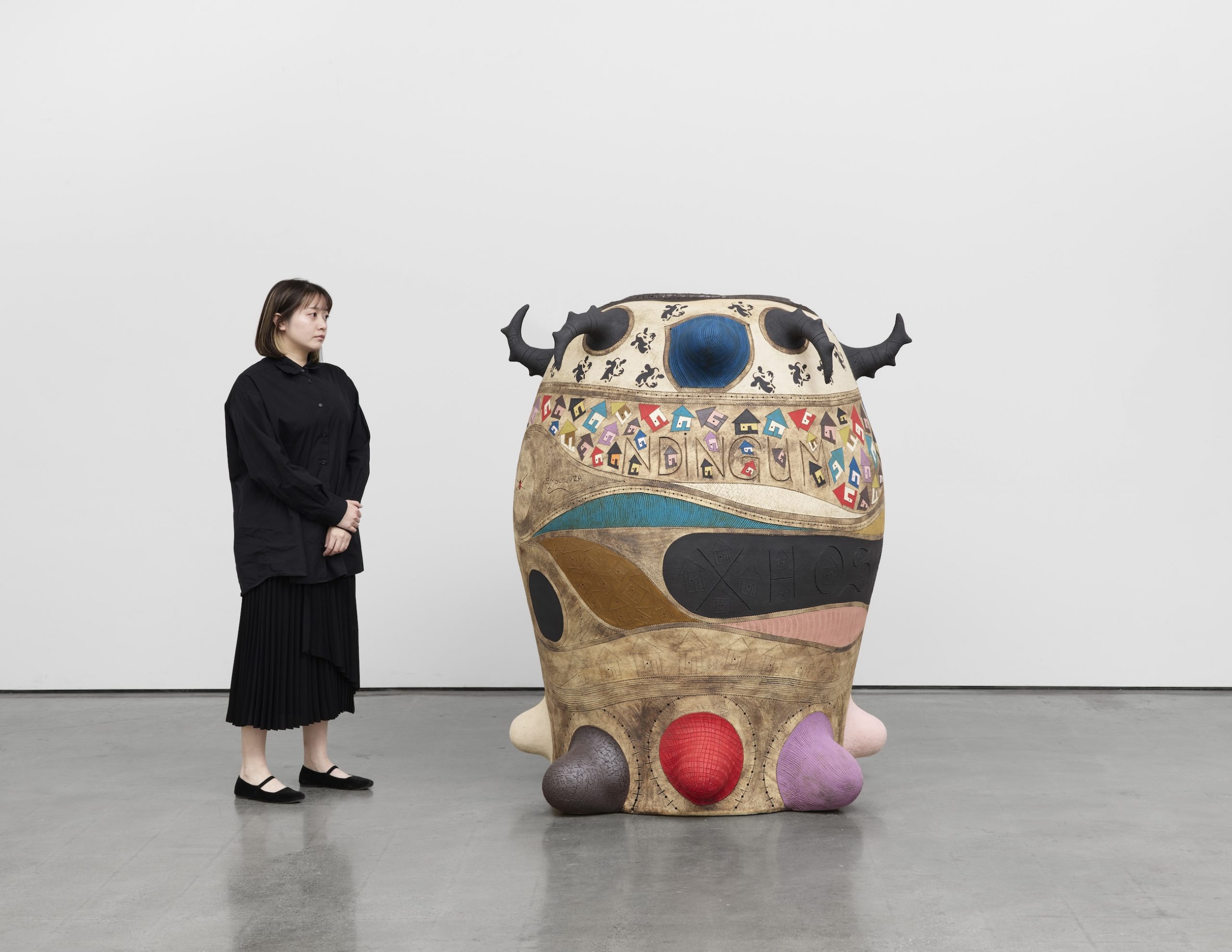
The article examines the resurgence of ceramics as a fine art medium, tracing its history from ancient Chinese and Greek pottery to the record-breaking $36 million sale of a Ming Dynasty chicken cup in 2014. It highlights influential figures like Peter Voulkos, who established ceramics departments at major institutions, and artists such as Ken Price, Ron Nagle, and Betty Woodman. Recent major museum exhibitions—including 'Strange Clay' at London’s Hayward Gallery, 'Funk You Too!' at New York’s Museum of Arts and Design, and 'Ceramics in the Expanded Field' at MASS MoCA—showcase a new generation of artists pushing the medium beyond traditional craft.

julie curtiss motherhood pumping painting

Artnet News journalist Annie Armstrong recounts her emotional experience at Art Basel Miami Beach, where she desperately sought to see Julie Curtiss's painting "Mary With the Medela" (2024), a portrait of a woman using a breast pump. As a new mother balancing work and pumping, Armstrong felt a deep personal connection to the work but arrived at the White Cube booth moments after it had been sold and removed from view, leaving her in tears.

What’s the True State of Bangkok’s Art Ecosystem?

The article examines the current state of Bangkok's art scene, which is experiencing a surge of private investment and international attention. New institutions like UNITED Unlimited and Misiem's/bangkok are opening, and events like the Bangkok Art Biennale are gaining prominence, leading some international media to compare the city's potential to art hubs like Miami.

8 Artists to Follow If You Like Marcel Duchamp

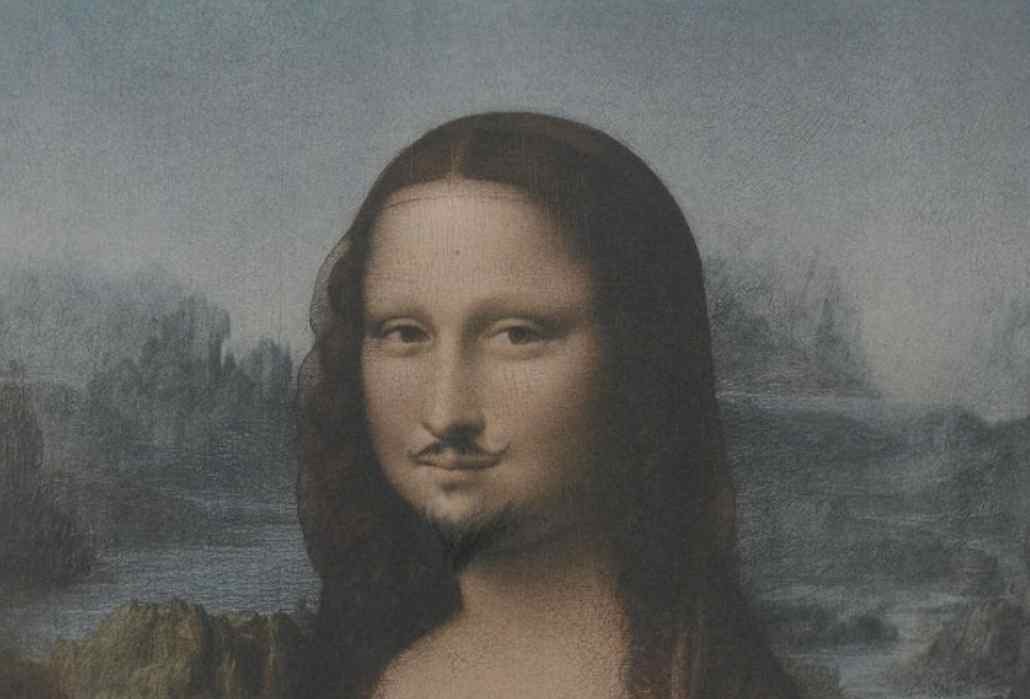
Marcel Duchamp’s legacy continues to shape contemporary art through his pioneering use of readymades, conceptual rigor, and institutional critique. This analysis identifies eight modern and contemporary artists whose practices echo Duchamp’s subversion of traditional aesthetics, ranging from his early experiments with found objects to his later explorations of gender and mechanical desire.

8 Artists to Follow if You Like Elsa Schiaparelli

The article profiles eight contemporary artists whose work resonates with the legacy of fashion designer Elsa Schiaparelli. It highlights creators like Shona McAndrew, whose soft sculptures explore the body's interior, and Kiki Smith, known for visceral, anatomical forms, drawing direct parallels to Schiaparelli's surrealist and corporeal inspirations.

Jamie Nares’s Enduring Romance With the Brushstroke

Hyperallergic interviews Jamie Nares, a New York-based painter and filmmaker, about her artistic journey and enduring focus on the brushstroke. Nares, who came out as transgender in 2019 and changed her artist name in 2024, discusses her move from London to New York in the mid-1970s, her involvement in the No Wave movement, and her recent decision to relocate permanently to Upstate New York. She explains how she reduced her practice to the single brushstroke, finding endless variation in that gesture, and describes her process as a search for the essences of things, stripping away what is superfluous.

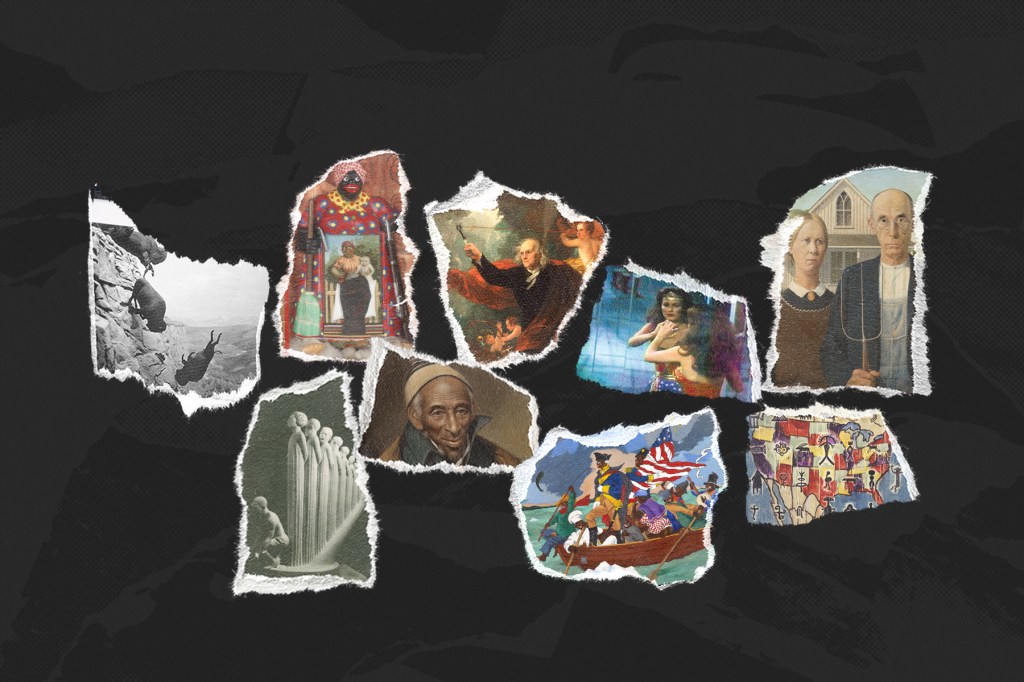
The 100 Best Artworks About America

ARTnews and Art in America have jointly compiled a list of the 100 best artworks about America, selected by their editors. The list spans from before the nation's founding in 1776 to the present day, featuring paintings, sculptures, prints, drawings, videos, films, and digital works. Notable entries include rafa esparza's 2019 performance 'bust: indestructible columns,' which involved chiseling himself out of a concrete Ionic column on the Ellipse near the White House as a metaphor for democracy; Bureau of Inverse Technology's 1997–98 project 'BIT Plane,' a surveillance critique using a radio-controlled aircraft over Silicon Valley; and Bruce Nauman's 1981–82 neon work 'American Violence,' which combines sexual advances and white nationalist imagery.

‘A gift that keeps on giving’: the witty world of Lee Friedlander – in pictures

The Guardian published a photo essay celebrating American photographer Lee Friedlander, featuring images from his career spanning the 1950s to the 2010s. The article highlights his new book "Life Still," published by Aperture, which collects over 130 photographs—most previously unpublished—showcasing his signature wit and his eye for the American social landscape, including chain link fences, roadside signs, and still lifes. The piece includes commentary from curator Peter Galassi and notes Friedlander's influences from Walker Evans and Robert Frank.

‘This is mine, I own it’: how Tracey Emin and Frida Kahlo inspired me to make meaning out of pain

The article is a personal essay by a writer who, after undergoing a colectomy in 2023, found inspiration in Tracey Emin's unflinching self-portraiture following her 2020 cancer diagnosis. The author describes taking her own post-surgery photographs, echoing Emin's mantra "This is mine, I own it," and reflects on Emin's current work, including the Tate Modern exhibition and paintings like "I watched Myself die and come alive" (2023) and "Barbed Wire Stitches" (2024). The essay also connects Emin's approach to that of Frida Kahlo, whose retrospective is upcoming at Tate.

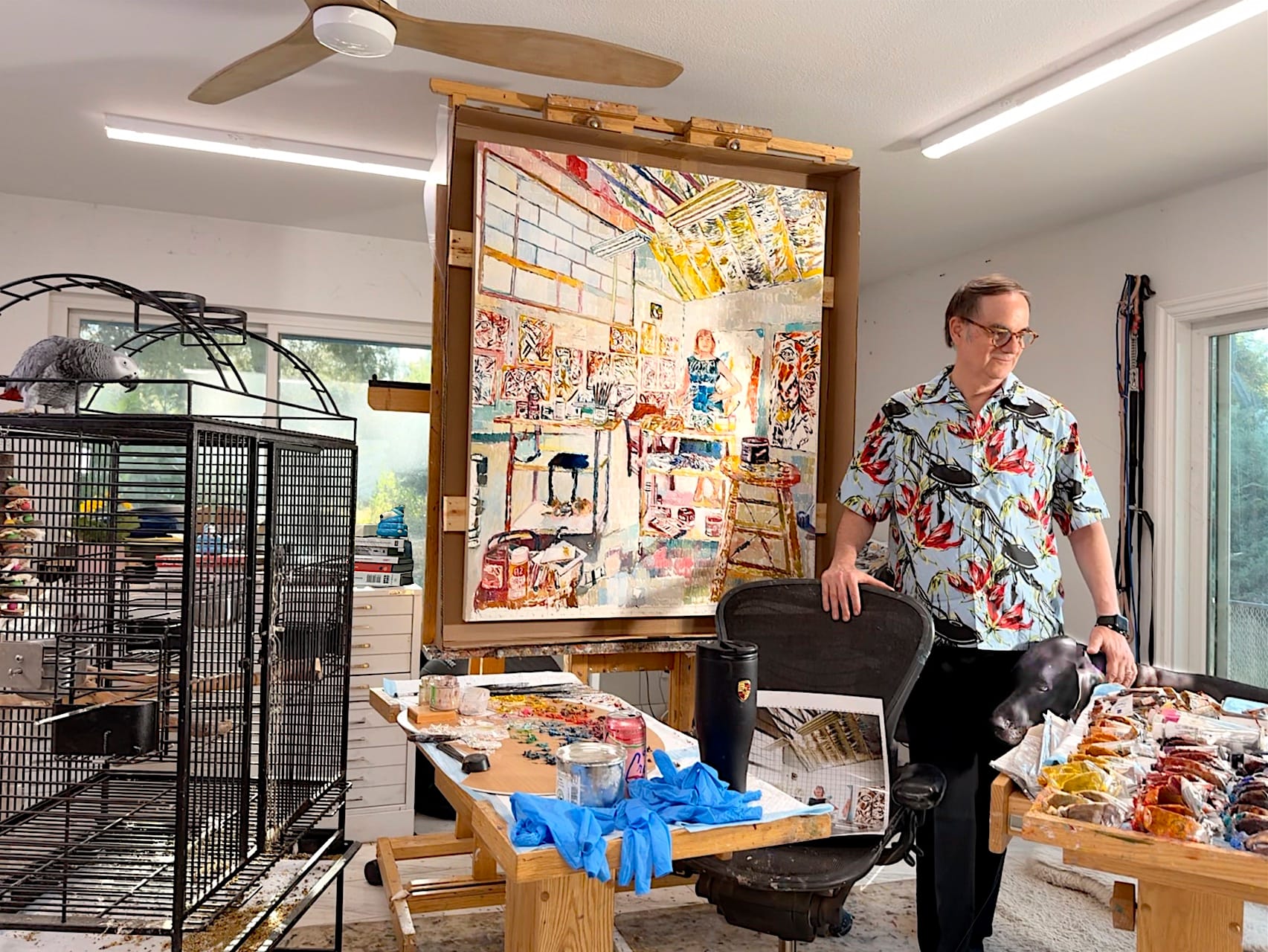
Beer With a Painter: Keith Mayerson

Hyperallergic interviews Los Angeles-based painter Keith Mayerson, who discusses his ongoing 'My American Dream' series—a cosmology of paintings blending American identity, activism, and popular culture. The conversation covers his early influences from comics, the Muppets, and Hunter S. Thompson, his transition from cartooning to painting, and his vibratory, swirling brushwork. Mayerson's work has been featured in the 2014 Whitney Biennial and is currently on view at the Aspen Art Museum and the Pollock-Krasner House.

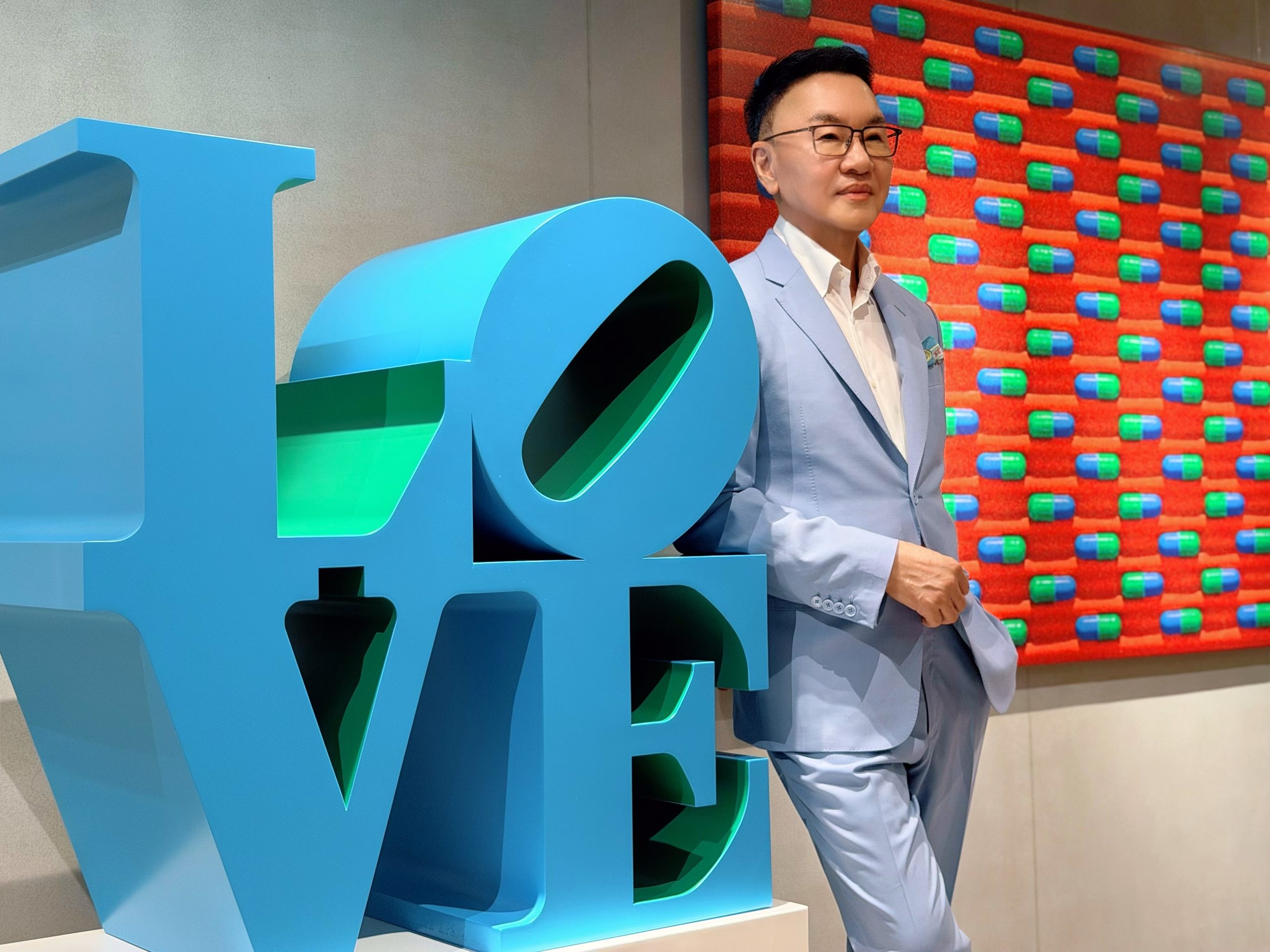
Inside Sunpride Foundation’s Mission to Champion LGBTQ+ Art Across Asia

Patrick Sun founded the Sunpride Foundation in 2014 to support LGBTQ+ communities through art, combining his passion for contemporary queer Asian art with philanthropy. The foundation's flagship "Spectrosynthesis" exhibition series has been staged at major institutions across Asia, including the Museum of Contemporary Art, Taipei, and the Bangkok Art and Culture Centre. The latest iteration, "Spectrosynthesis Seoul," opened at Seoul's Art Sonje Center and runs through June 28, 2026. Sun, a Hong Kong-born real estate developer and longtime art collector, built the foundation's collection with a focus on works suitable for museum exhibitions about queer identity.