
filter_list Showing 3 results for "Delights" close Clear
search
dashboard All 28 museum exhibitions 19article culture 3article news 3article local 1candle obituary 1rate_review review 1
date_range Range Today This Week This Month All
Subscribe

art installations that could double as haunted houses

Artnet News lists 10 immersive installation artworks that are creepy enough to double as haunted houses for Halloween. Featured works include Alex Da Corte's "Die Hexe" (2015) at Luxembourg & Dayan, which transformed a townhouse into a ghostly dollhouse with a morgue; Mike Kelley's "Exploded Fortress of Solitude" (2011) at Hauser & Wirth, a sculptural interpretation of Superman's lair; Jonah Freeman and Justin Lowe's "Scenario in the Shade" at Red Bull Studios, a dystopian arts festival installation; Tobias Rehberger's "Bar Oppenheimer" (2013) at Hotel Americano, featuring disorienting dazzle camouflage patterns; and Puppies Puppies' "Gollum" at Queer Thoughts, where an actor in a Gollum mask performs live.
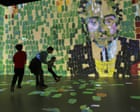
Mummy, is this a video game? The dangers of showing kids art on a screen

A parent takes their toddler to Frameless, an immersive digital art experience in London, where works by Hieronymus Bosch, Claude Monet, and Georges Seurat are projected onto walls, ceilings, and floors. The child reacts with mixed engagement—enjoying some moments but feeling overwhelmed by the frenetic, screen-based environment—while the author reflects on the tension between traditional static art and animated digital reproductions.

hieronymus bosch garden of earthly delights why important

The article examines Hieronymus Bosch's masterpiece "The Garden of Earthly Delights" (c. 1490–1510), explaining that while modern viewers often call it surreal, the term is an anachronism; the painting reflects a medieval worldview where damnation and divine order were accepted realities. It describes the triptych's structure, its likely commission by Engelbert II, Count of Nassau, and its narrative flow from grisaille exterior to vivid interior panels depicting Eden and hell. The piece also notes how 20th-century Surrealists like André Breton and Salvador Dalí claimed Bosch as a precursor, with Dalí directly borrowing motifs from the painting.