filter_list Showing 10 results for "HORROR" close Clear
search
dashboard All 70 museum exhibitions 33article culture 10rate_review review 6article local 6article news 4person people 3article policy 3trending_up market 3candle obituary 2
date_range Range Today This Week This Month All
Subscribe

art installations that could double as haunted houses

Artnet News lists 10 immersive installation artworks that are creepy enough to double as haunted houses for Halloween. Featured works include Alex Da Corte's "Die Hexe" (2015) at Luxembourg & Dayan, which transformed a townhouse into a ghostly dollhouse with a morgue; Mike Kelley's "Exploded Fortress of Solitude" (2011) at Hauser & Wirth, a sculptural interpretation of Superman's lair; Jonah Freeman and Justin Lowe's "Scenario in the Shade" at Red Bull Studios, a dystopian arts festival installation; Tobias Rehberger's "Bar Oppenheimer" (2013) at Hotel Americano, featuring disorienting dazzle camouflage patterns; and Puppies Puppies' "Gollum" at Queer Thoughts, where an actor in a Gollum mask performs live.

boo the spookiest works in art history from samurai decapitations to ghoulish incubi

Artnet News has compiled a list of the spookiest, bloodiest, and most gruesome works in art history to celebrate Halloween. The selection includes Francisco de Goya's "Saturn Devouring His Son" (ca. 1820–23), Hermann Nitsch's blood-soaked "Schuttbild" (2013), Tsukioka Yoshitoshi's woodblock print of a samurai drinking from a severed head, and Théodore Géricault's macabre still lifes of body parts. Other entries feature Goya's "The Witches' Flight," Katsushika Hokusai's ghost story print "The Lantern Ghost, Oiwa-San," John Henry Fuseli's "The Nightmare," Vincent van Gogh's "Skull of a Skeleton with Burning Cigarette," and Utagawa Kuniyoshi's "Takiyasha The Witch and the Skeleton Spectre."

art words of the year

Artnet News critic Ben Davis presents his annual "art words of the year" for 2025, a curated list of terms that capture prevailing moods and ideas in the art world. The list includes "antimemetics" (from writer Nadia Asparhouva and internet fiction), "cyniserity" (coined by art writer David Colman to describe Anne Imhoff's work), "delightmare" (a horror-adjacent feeling linked to overconsumption and AI art, exemplified by Beeple's Art Basel installation), "elite capture" (from philosopher Olúfẹ́mi O. Táíwò's book, now a tool for critiquing identity politics in art), and "K-shaped" (an economic term describing divergent recovery, applied to gallery closures versus record auction sales).

paul pfeiffer religion prescient nba basketball justin bieber

Paul Pfeiffer's studio visit reveals his ongoing exploration of media spectacles, particularly through his "Four Horsemen of the Apocalypse" series (2001–), which digitally isolates NBA basketball players by erasing teammates, opponents, and jersey details from archival images. The artist discusses his counterintuitive relationship to sports, his intense Christian upbringing in Hawaii and the Philippines, and the influence of horror films like "The Exorcist" on his work, which examines the religious undertones of secular activities and the mechanics of voyeurism.

cannupa hanska luger mascot jordan peele horror film him

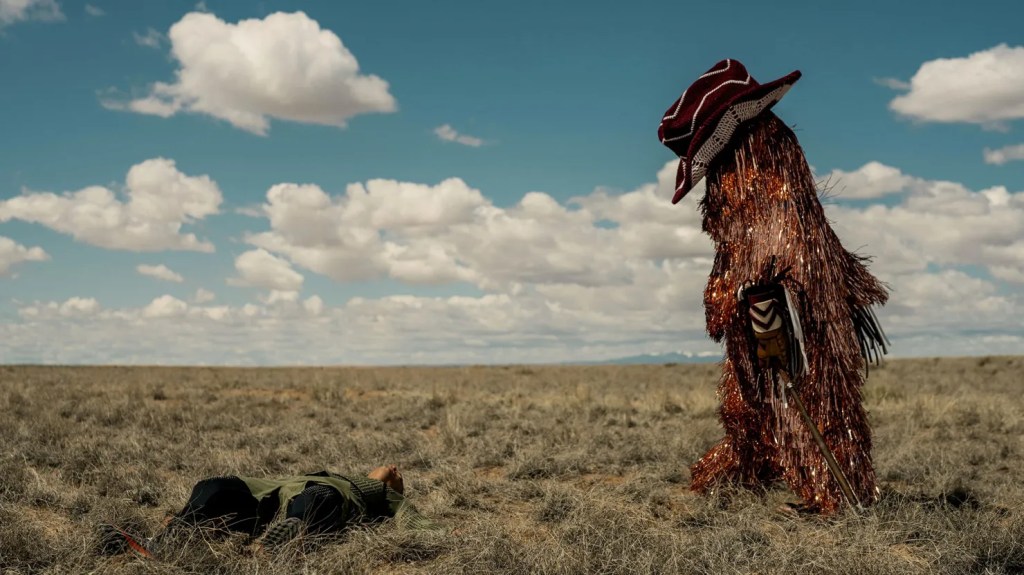
Cannupa Hanska Luger collaborated with the filmmakers of the horror film *Him*, directed by Justin Tipping and produced by Jordan Peele, to create a sports mascot named “Tinsel Larry.” The mascot appears in the film as the symbol for the fictional San Antonio Saviors team. Luger worked with lead costume designer Dominique Dawson on the design, which evolved from a “Conquistador Larry” concept into a “razzle-dazzle rose gold glitter monster.” Luger explained on Instagram that the mascot incorporates Indigenous references as a deliberate commentary on the racist history of sports mascots, calling it “an act of reclamation.”

Modern Art and Politics in Germany 1910–1945

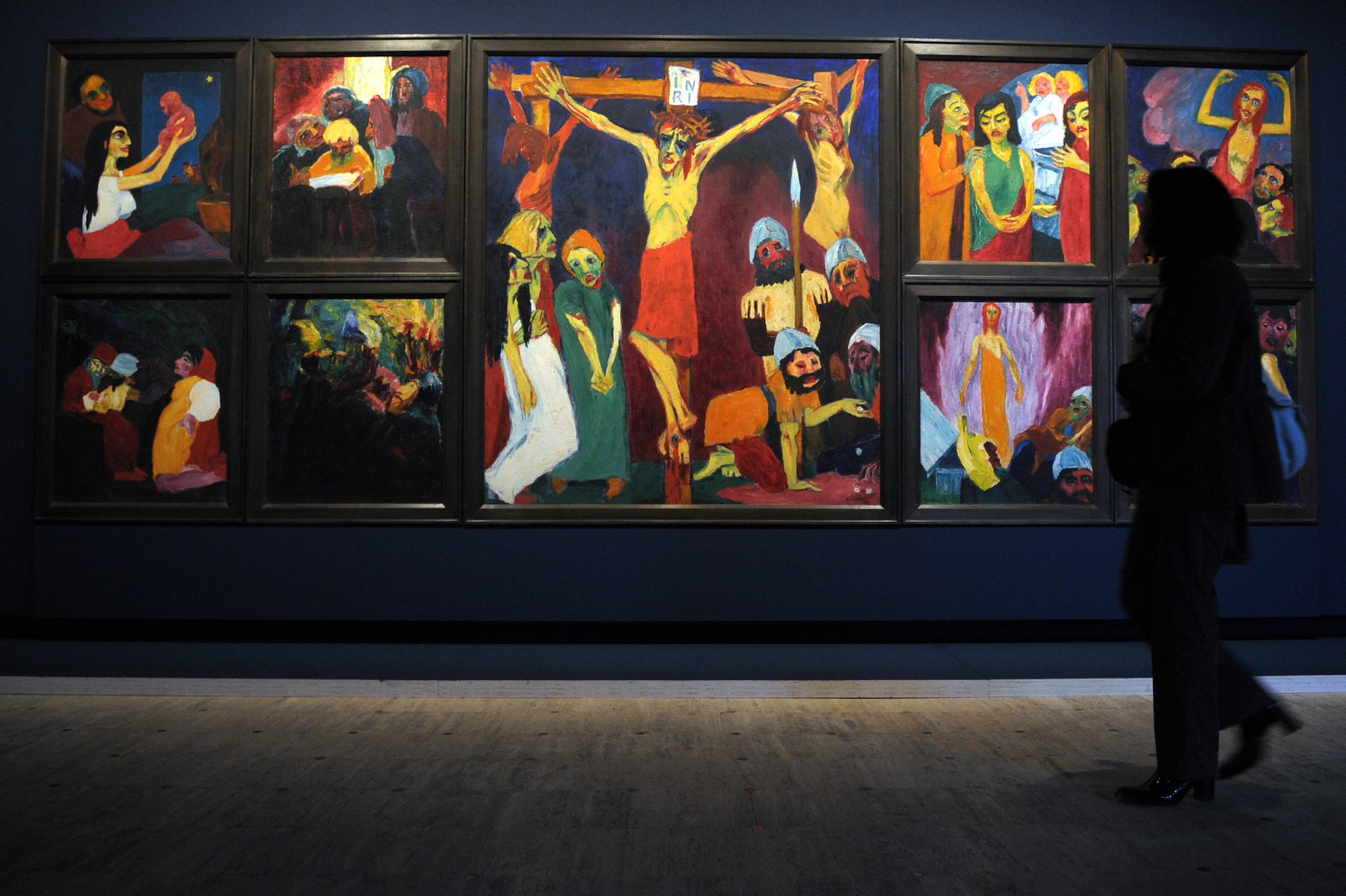
The article examines the complex and often fraught relationship between modern art and political power in Germany from 1910 to 1945. It details how avant-garde movements like Expressionism, Dada, and the Bauhaus initially flourished, only to be systematically suppressed and labeled "degenerate" by the Nazi regime after 1933.

The Disturbing Lessons of the 1937 ‘Degenerate Art’ Show

The article examines the historical context and enduring relevance of the 1937 Nazi-organized 'Degenerate Art Show' (Entartete Kunst) in Munich, which displayed hundreds of works by modern artists like George Grosz, Wassily Kandinsky, and Paul Klee as examples of moral and cultural corruption. It traces the concept's roots in 19th-century Social Darwinism, its adoption by Adolf Hitler and the Nazi Party to denigrate modern art, and the gradual escalation of cultural purification policies after Hitler seized power in 1933, including the firing of museum directors and the construction of the Haus der Deutschen Kunst.

A Delightful Short Film Highlights the Remarkable Self-Taught Art of George Voronovsky

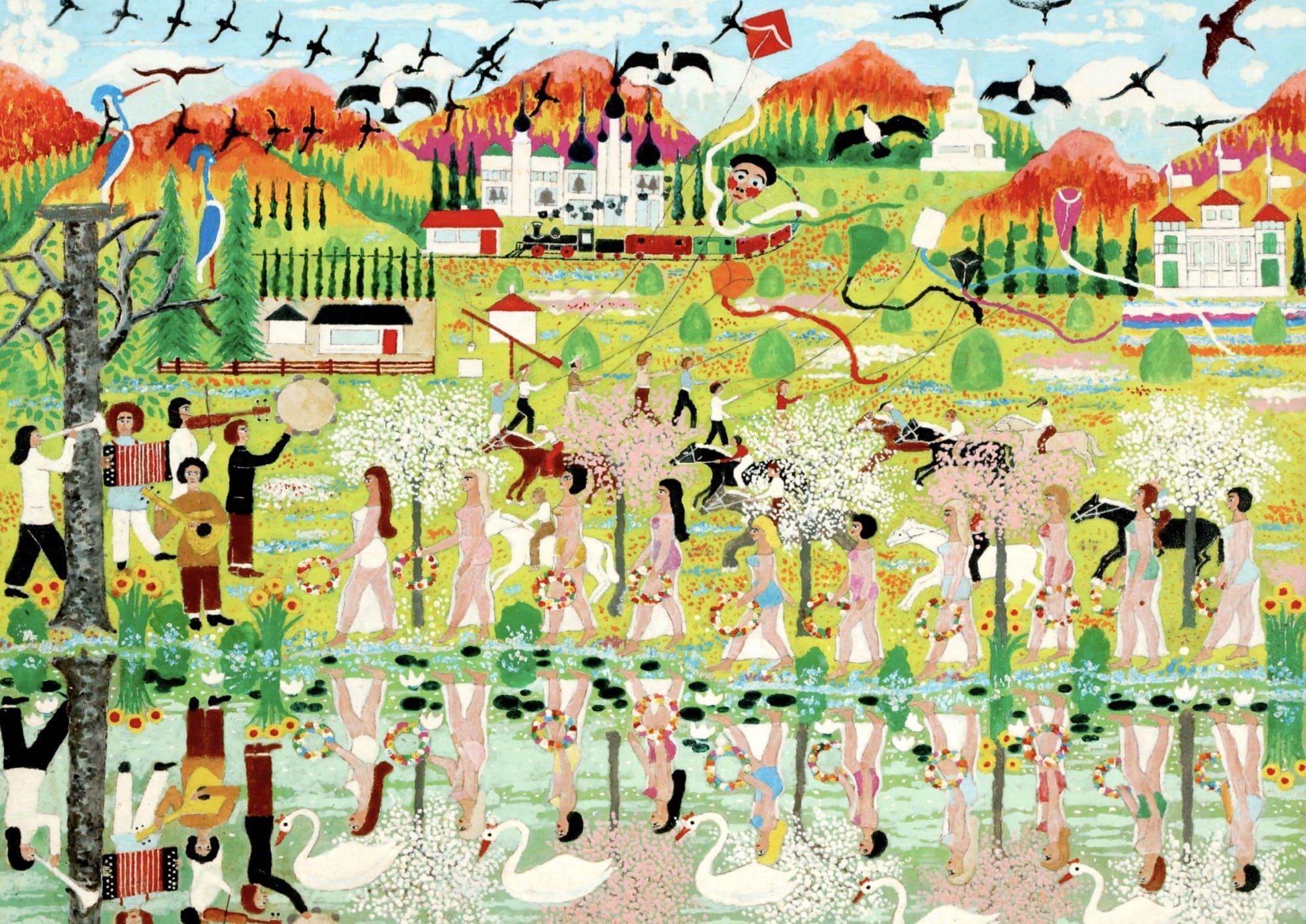
Ukrainian-born artist Jonko “George” Voronovsky transformed his modest retirement room at Miami’s Colony Hotel into a dense, vibrant sanctuary of over 5,000 artworks. After surviving the horrors of the Russian Revolution, Nazi labor camps, and permanent separation from his family, Voronovsky immigrated to the U.S. and spent his final years creating "memoryscapes." These works, crafted from found materials like pizza boxes and soda cans, depicted idyllic, colorful scenes of his youth in Ukraine, contrasting sharply with the trauma of his past.

This unpublished comic tries to tell us what the Biennale of the future will be like

Questo fumetto inedito prova raccontarci come sarà la Biennale del futuro

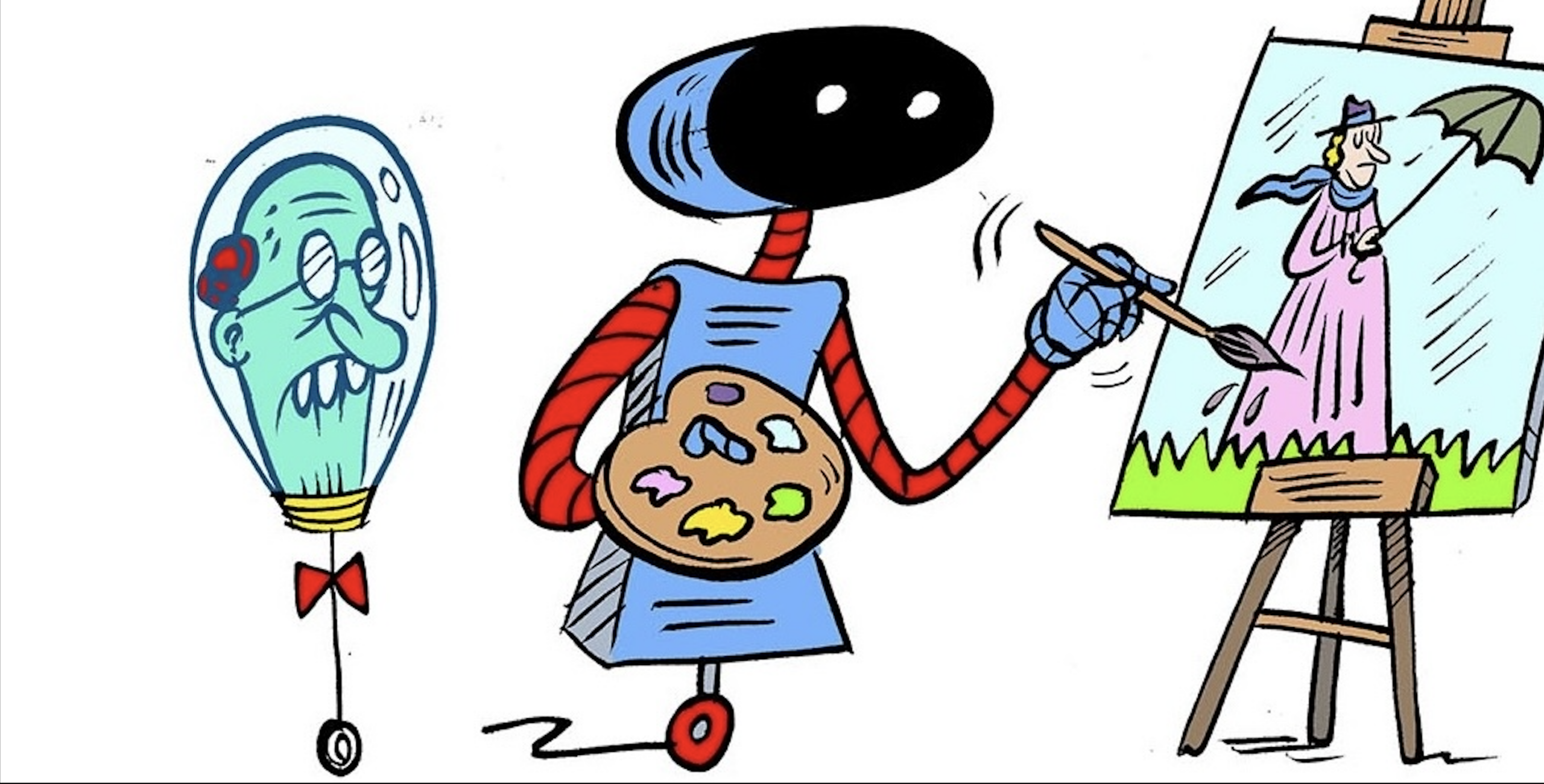
Hurricane (Ivan Manuppelli), a leading figure in Italian underground comics, creates an original comic titled "Biennale 2126" for Artribune, imagining what the Venice Biennale might look like in the future. In an accompanying interview, he discusses his satirical approach, the enduring relevance of underground comics, and the importance of critiquing power through art.

Provincia Cosmica. A Foggia per scoprire la fotografia sociologica di Maria Palmieri

Maria Palmieri (Foggia, 1986) is a photographer who uses her camera as a tool for observation, understanding, and social improvement. After studying law, she turned to visual arts, blending reportage with vernacular photography to uncover truth amid the 'noisy horror' of contemporary life. In an interview with Artribune, she discusses her sociological approach to photography, her return to her hometown of Foggia, and her ongoing documentation of the region's fragilities, including the largest migrant ghetto in Europe.