filter_list Showing 8 results for "Members" close Clear
search
dashboard All 170 article local 67museum exhibitions 53article news 25article culture 8article policy 8person people 3candle obituary 2rate_review review 2trending_up market 2
date_range Range Today This Week This Month All
Subscribe

Required Reading

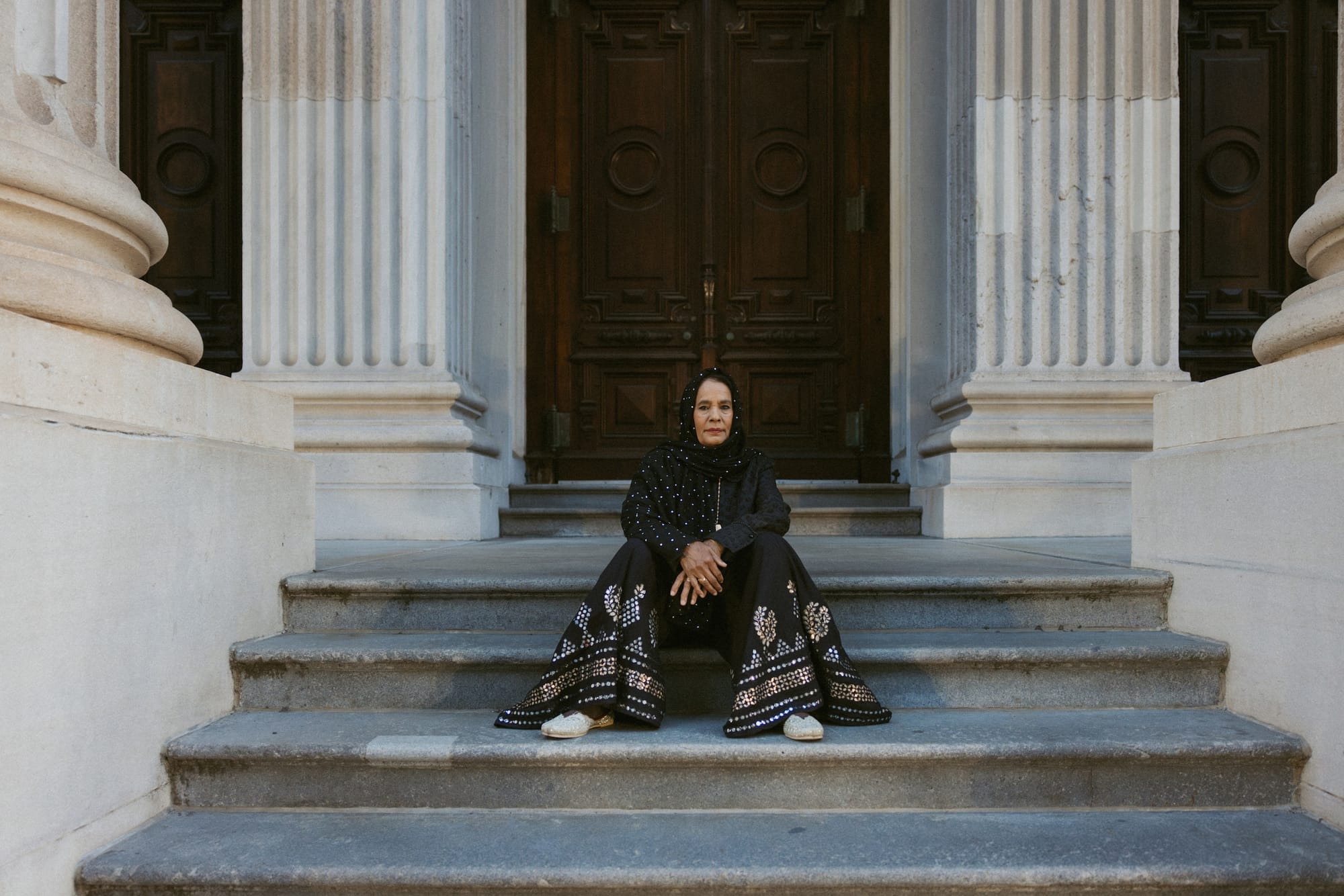
Pakistani-born, Brooklyn-based tailor and community leader Hafeez Raza was honored by Mayor Zohran Mamdani as one of six garment workers photographed by Kara McCurdy, highlighting the real faces behind the fashion industry. Meanwhile, the Los Angeles Times's Image Editor-in-Chief Elisa Wouk Almino recounts a peculiar correspondence with artist Sophie Calle, who orchestrated a fake but real exchange using pre-written texts. In other news, Ai Weiwei discusses his new exhibition in Italy, censorship in Europe, and the Venice Biennale in an interview with El País. Additionally, Jacci Gresham, the first professional Black tattoo artist in the United States, reflects on her career since 1976, including tattooing Klan members and innovating with brown paper for Black and Brown clients.
Primitivism to Reinvent Art

Le primitivisme pour réinventer l’art

Philippe Dagen has published the third and final volume of his series on primitivism, covering the period from World War II to the late 1970s. The book traces how Western artists, from Barnett Newman and Jackson Pollock to members of the CoBrA movement and figures like Jean Dubuffet, Lucio Fontana, and Yayoi Kusama, engaged with so-called "primitive" art from Africa, Oceania, and the Americas, often as a means of rejecting or redefining modern civilization. Dagen also examines the intellectual debates surrounding primitivism, including the critiques of colonized peoples who refused the label "primitive," and the shifting attitudes of thinkers like Claude Lévi-Strauss, Michel Leiris, and Aimé Césaire.

Elle Peréz Gets Personal with the Next-Gen Collectors Changing the Art World

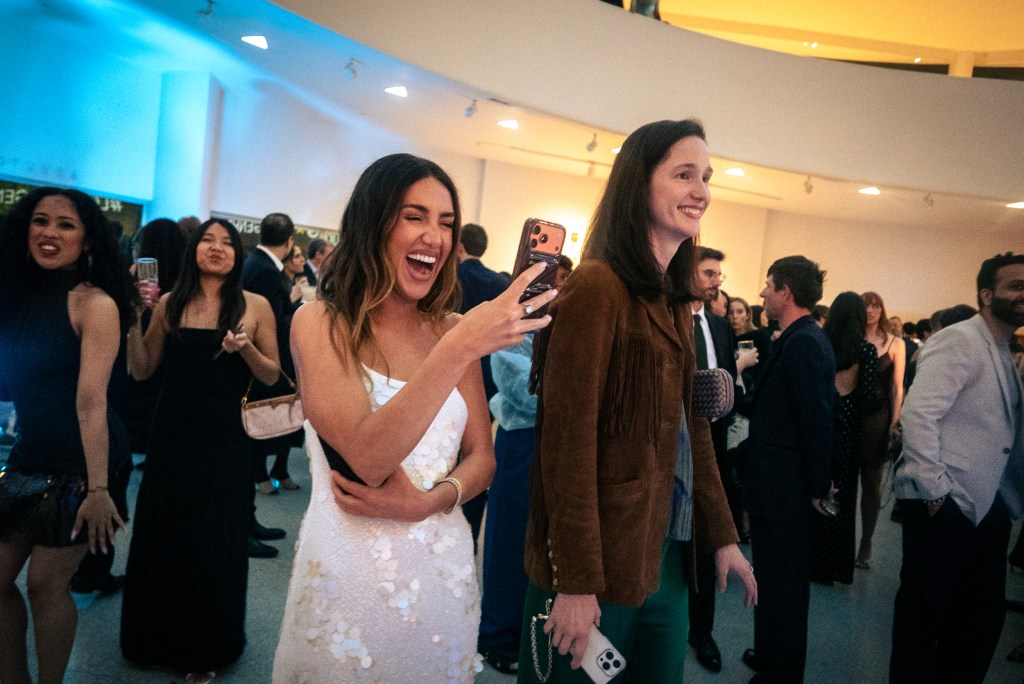
Elle Peréz, a photographer and co-chair of the Young Collectors Council (YCC) at an unnamed museum, discusses the group's activities in an interview. The YCC meets twice a year to acquire artworks through a transparent process involving curator presentations and studio visits, with members voting on acquisitions. Peréz highlights the party celebrating Diane Severin Nguyen's commissioned piece, noting the seamless integration of music, art, and aesthetics, and emphasizes that the acquisition meetings are the core of the group's appeal.

Dolce Vita is Over

Dolce Vita war gestern

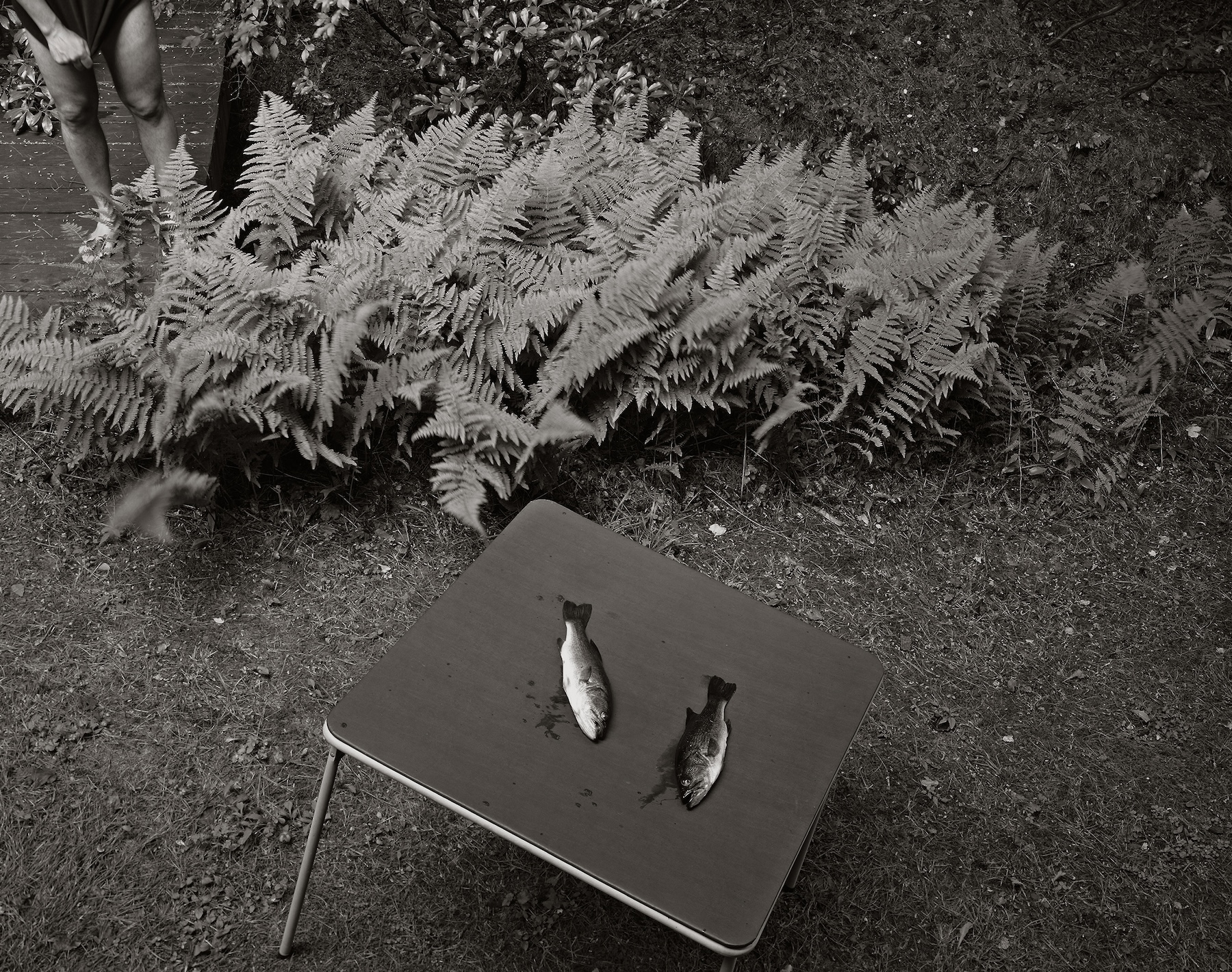
Andrea Modica's new photobook "Italian Story" collects four decades of photographs taken in Italy, beginning with her first trip there in the late 1980s. Born in 1960 to a family with roots in Sicily and Naples, Modica received a Fulbright scholarship to travel to Sicily and photograph the origins of the Catholic imagery, gender roles, and family structures she experienced growing up in New York. The book, however, is not a documentary of her heritage; instead, it presents dreamlike, surreal images—motionless bodies in water, dead fish, figures behind mosquito nets, Madonna statues—that resist clear narrative or identity politics. Modica works with an 8x10 large-format analog camera and prints using the historic platinum-palladium process, giving the images a timeless, collaborative quality.

Around North America, Community Members Are Stitching Nearly 11,000 Birds

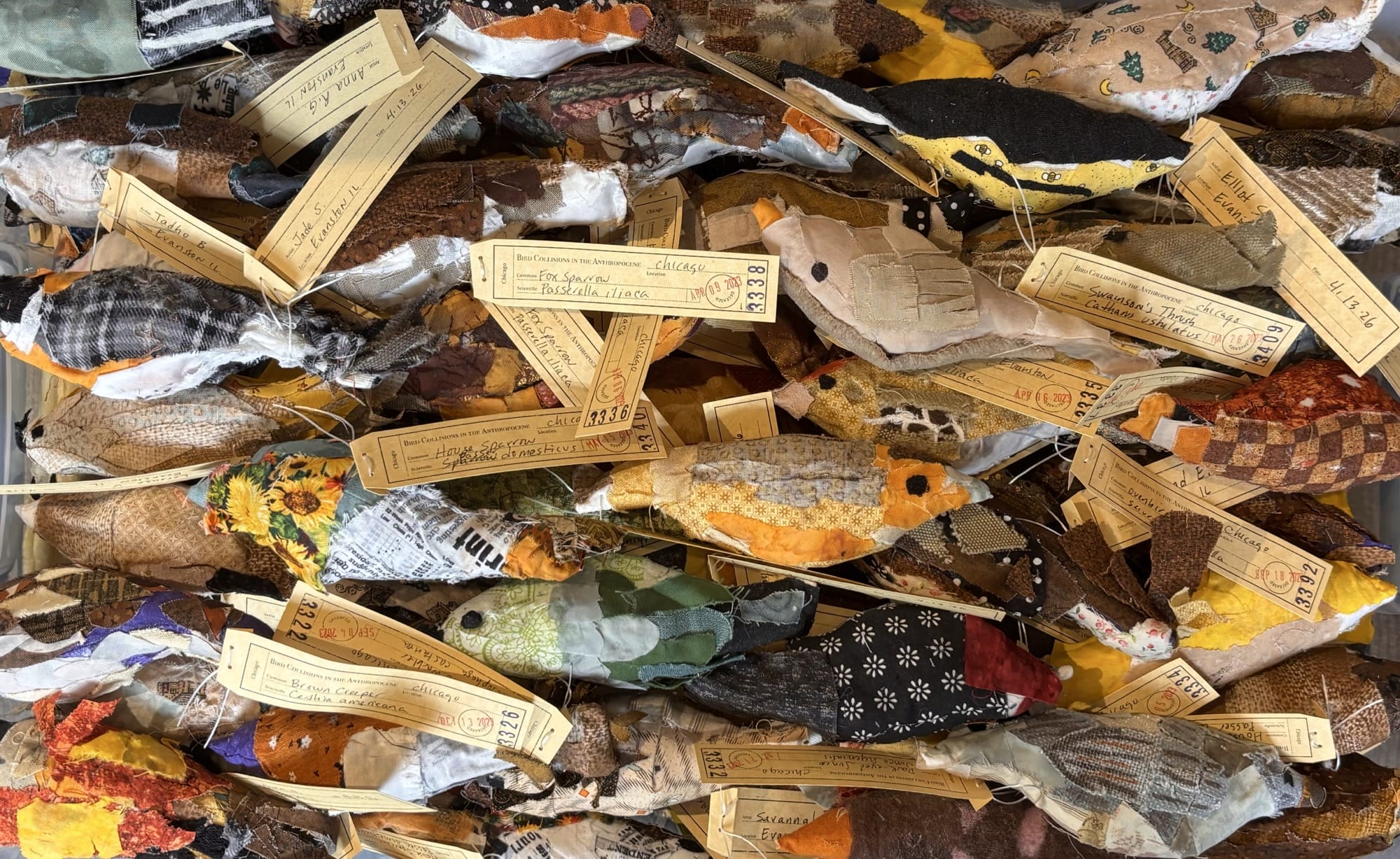
Artist and educator Holly Greenberg launched the multi-year project "Bird Collisions in the Anthropocene" in 2024 after learning about a mass bird collision at Chicago's McCormick Place Lakeside Center in October 2023, where nearly 1,000 birds died in a single night. Using data from the Chicago Field Museum and ornithologist Dave Willard, Greenberg focuses on the 10,863 birds found dead after hitting Chicago buildings in 2023 alone. The project involves community members stitching nearly 11,000 fabric birds to raise awareness and educate the public about preventing window collisions, which kill an estimated one billion birds annually across North America.

Die Welt als Sound – mit Peter Licht

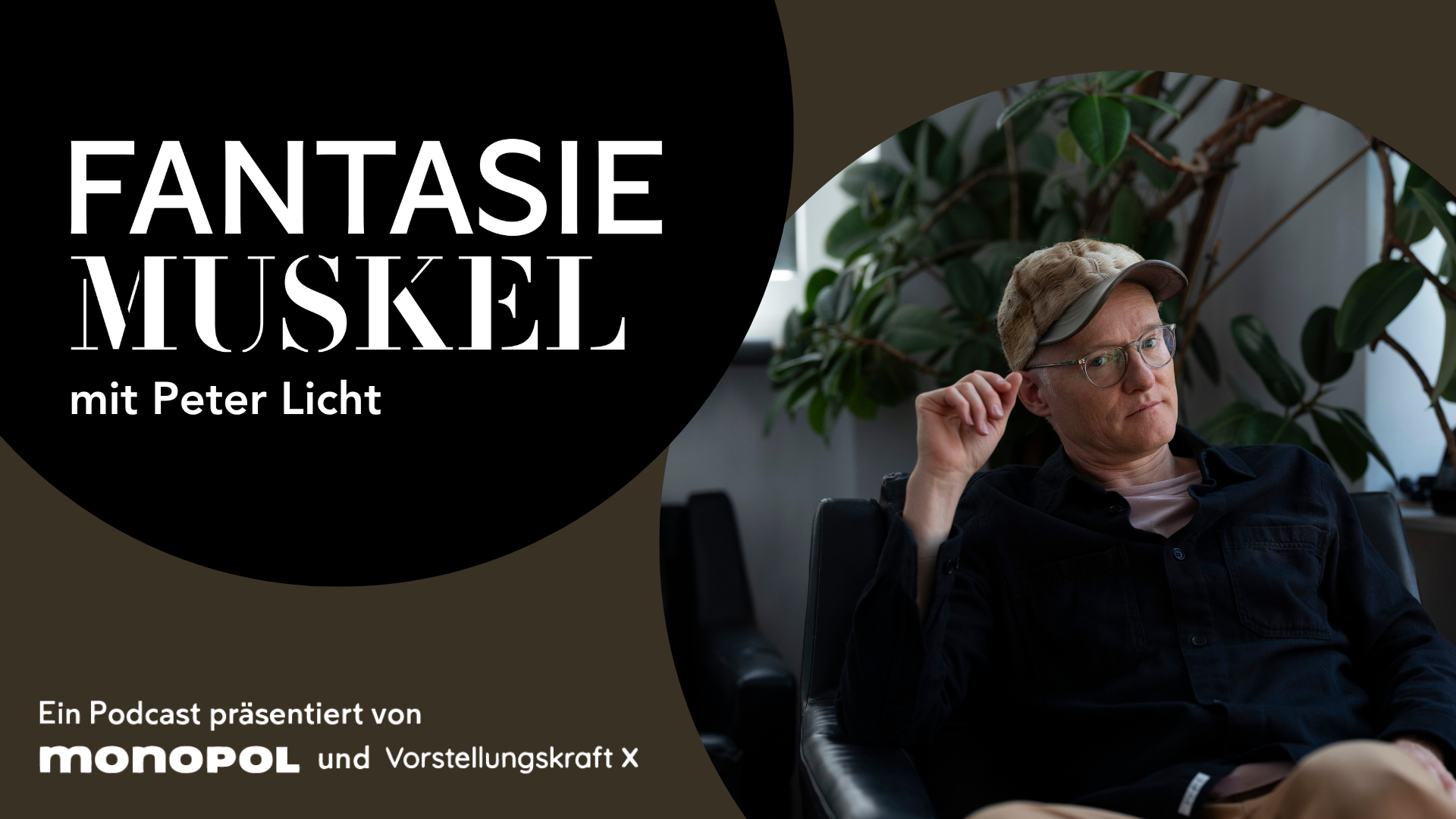
Peter Licht, a German musician, author, and playwright, appears as a guest on the 82nd episode of the "Fantasiemuskel" podcast, where he discusses his view of the world as a sound phenomenon. He reflects on his 2006 song "Lied vom Ende des Kapitalismus," which preceded the 2008 financial crisis, and explores how language, fear, and utopian moments manifest through sound in his work—whether in pop songs, theater pieces, or novels. Licht also describes a recent "problem-solving show" at Schauspiel Köln, where audience members submit problems that are collectively sung, turning singing into an act of resistance and community-building.

In the Studio with Jevon Brown

Artist Jevon Brown, a Miamian of Bahamian, Jamaican, and Black Southern descent, discusses his multidisciplinary practice in an interview conducted in his Miami Beach apartment and studio. Brown works across textiles, silkscreen printing, fashion, and photography to explore cultural identity, belonging, queerness, and history. He describes how memories of Miami sunsets, family members like his uncle (a sneakerhead and hat collector), and ancestral references inform his creative process. Key works discussed include the "HAIREtage" series (2025), which uses materials like burlap and raffia to connect contemporary streetwear culture with African and Caribbean spirituality, and his inclusion in the exhibition "Material, Material World" at David Castillo Gallery.

Salon | Impressionism, Realism & Post-Impressionism

The Salon was an official art exhibition sponsored by the French government, originating in 1667 when Louis XIV sponsored an exhibit of works by members of the Académie Royale de Peinture et de Sculpture. It was held in the Salon d’Apollon of the Louvre Palace in Paris, and after 1737 it became an annual event, with a jury system introduced in 1748. During the French Revolution, the Salon opened to all French artists, though academicians retained control through much of the 19th century. Its influence waned after the Société des Artistes Français took over in 1881 and as independent avant-garde exhibitions gained prominence.