filter_list Showing 111 results for "Movement" close Clear
search
dashboard All 1169 museum exhibitions 647article culture 111article news 110trending_up market 79candle obituary 66article local 54rate_review review 36person people 34article policy 21gavel restitution 11
date_range Range Today This Week This Month All
Subscribe

jean baudrillard photography art performance

Jean Baudrillard, the French philosopher whose concept of simulation inspired *The Matrix* (1999), is the subject of a new biography by Emmanuelle Fantin and Bran Nicol. The article explores Baudrillard's complex relationship with the art world: he was celebrated by artists and served on *Artforum*'s editorial board, yet he disavowed the Neo-Geo movement that claimed his ideas, arguing that art had become indistinguishable from commerce and lost its critical distance. His 1987 lecture at the Whitney Museum drew thousands, but he used the platform to declare art's irrelevance.
forget blue chip art its a red chip art world now

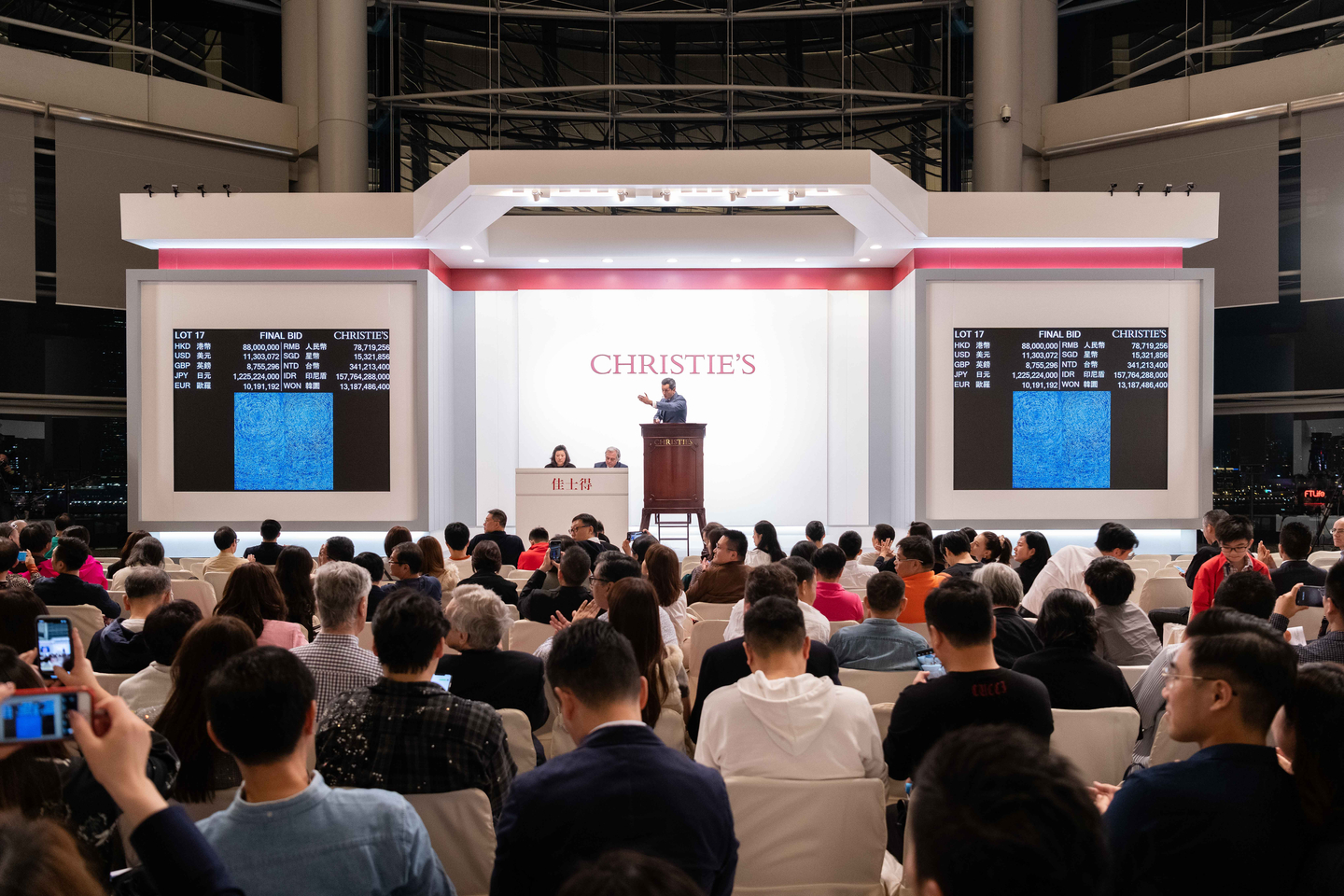
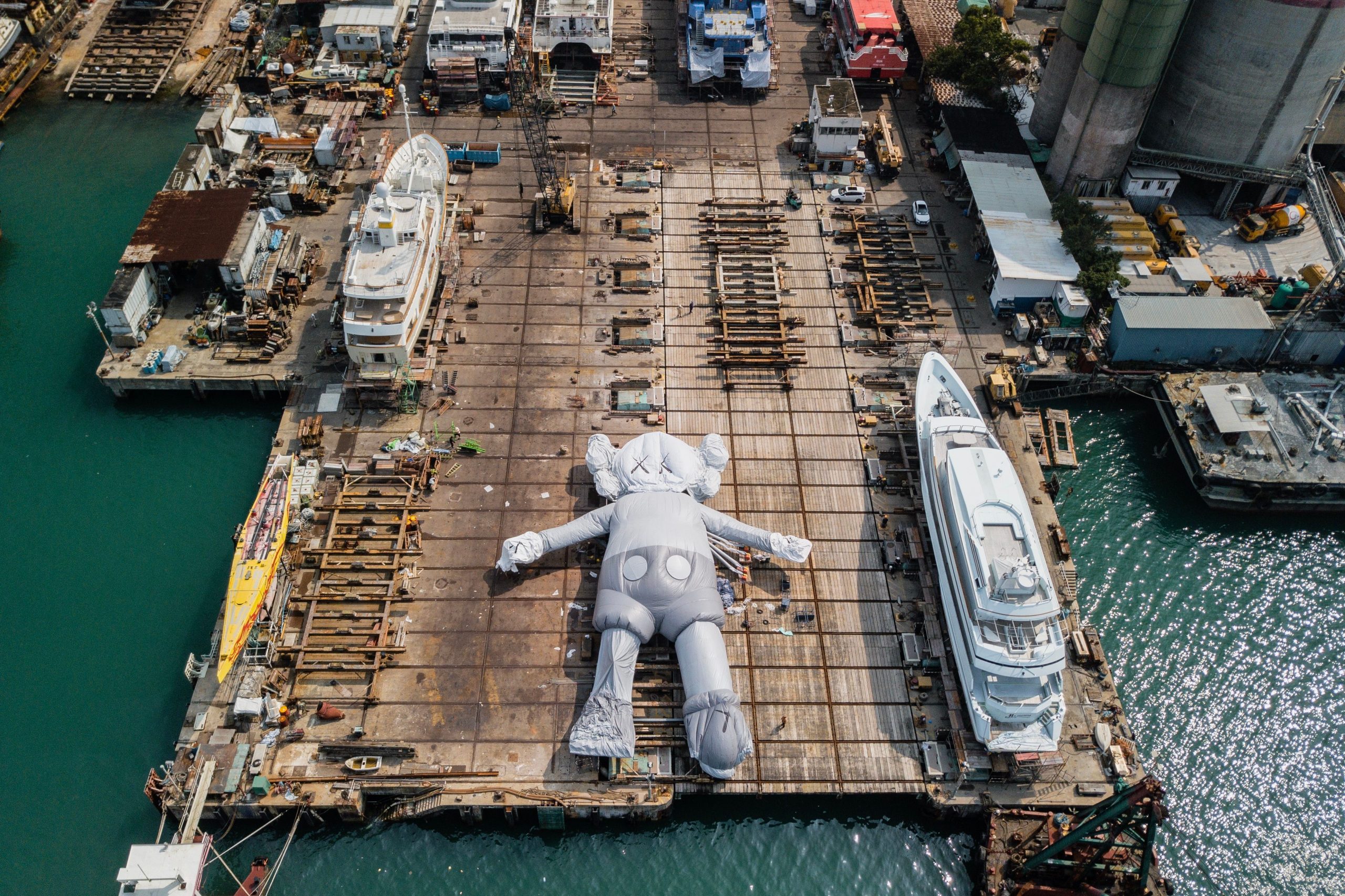
The article introduces and defines the concept of "red-chip art," a new category of art collecting that rejects traditional art-historical reverence in favor of aesthetics rooted in street art, graffiti, super-flat cartoons, multi-colored chrome, and crypto culture. It describes red-chip collectors as mysteriously affluent millennials, techies, hip-hop visionaries, and crypto aspirants who gravitate toward artworks that resemble toys, limited-edition dolls, NFTs, and memecoins, often consumed at venues like the Eden Fine Art gallery at the Wynn in Las Vegas or parties during Art Basel Miami Beach. Key artists associated with this movement include KAWS, George Condo, Virgil Abloh, Tom Sachs, Alex Israel, Damien Hirst, Harmony Korine, Yoshitomo Nara, and Banksy, with Jeff Koons and Takashi Murakami seen as transitional "purple chip" figures.

modern contemporary art

The article explores the distinction between Modern and contemporary art, explaining that Modern art emerged in the late 19th century as a reaction to classical art and the Industrial Revolution, with movements like Impressionism, Cubism, Futurism, and Surrealism redefining painting in response to photography. Contemporary art, by contrast, is a reaction to Modern art, with its start debated between World War II and the 1960s-70s consumerist era, encompassing diverse mediums such as sculpture, street art, and performance art, exemplified by artists like Jeff Koons, Banksy, and Yoko Ono.

okwui enwezor cuator duke collected writings

A new two-volume collection of Okwui Enwezor's writings, titled "Okwui Enwezor: Selected Writings, Volume 1: Toward a New African Art Discourse" and "Volume 2: Curating the Postcolonial Condition," has been published by Duke University Press in 2025, edited by Terry Smith. Spanning over a thousand pages and covering the years 1994 to 2019, the collection gathers Enwezor's catalog essays, exhibition reviews, and analyses, tracing his evolution as a poet, writer, curator, theorist, educator, and museum director who died in 2019 at age 56.

Here’s How Stars at the 2026 Met Gala Nodded to Art History

The 2026 Met Gala, themed "Fashion Is Art," saw celebrities and fashion figures wearing outfits directly inspired by or referencing iconic artworks and art historical movements. Notable nods included Chloe Malle in a gown referencing Frederic Leighton's *Flaming June*, Lauren Sánchez Bezos in a Schiaparelli dress echoing John Singer Sargent's *Madame X*, and Hunter Schafer channeling Gustav Klimt's portrait *Mäda Primavesi*. Other attendees like Anne Hathaway, Hailey Bieber, and Karan Johar also drew from specific paintings, sculptures, and poems, while stylist Law Roach wore a hand-painted piece by Gabonese artist Naïla Opiangah.

remembering robert grosvenor paula cooper

The article is a personal remembrance of artist Robert Grosvenor, written by a former student who encountered him as a visiting speaker at the Rhode Island School of Design in 1978. It recounts the profound impact Grosvenor's work and teaching had on the author's own artistic practice, describing his use of ordinary materials, his sculptural innovations like the cantilever and "hover," and his influence on her approach to art-making. The piece also references Grosvenor's 2025 exhibition at Paula Cooper Gallery and his earlier commission at Storm King Art Center.

contemporary frames

Artist Harry Gould Harvey IV and others are reclaiming the frame as an integral part of the artwork, using found wood and elaborate designs to embed narrative, memory, and place. Harvey, represented by P.P.O.W., began making frames from a fallen black walnut tree, while artists like Jenna Rothstein create ceramic frames with spiky thorns. The New Museum Los Gatos recently honored Holly Lane, a pioneer who milled Renaissance-style frames in the 1980s, challenging the minimalist norm.

these trends defined art in 2025

Artnet News recaps the defining trends of 2025 in the art world, highlighting five key stories. These include the resurgence of elaborate frames in contemporary art ("Bordercore"), the rise of "red-chip art" favored by a new breed of flashy collectors, a "para-pastoral" movement that twists idyllic rural scenes into unsettling visions, and the growing popularity of small-scale paintings driven by intimacy and market shifts.

More Than Breakfast

Mehr als Frühstück

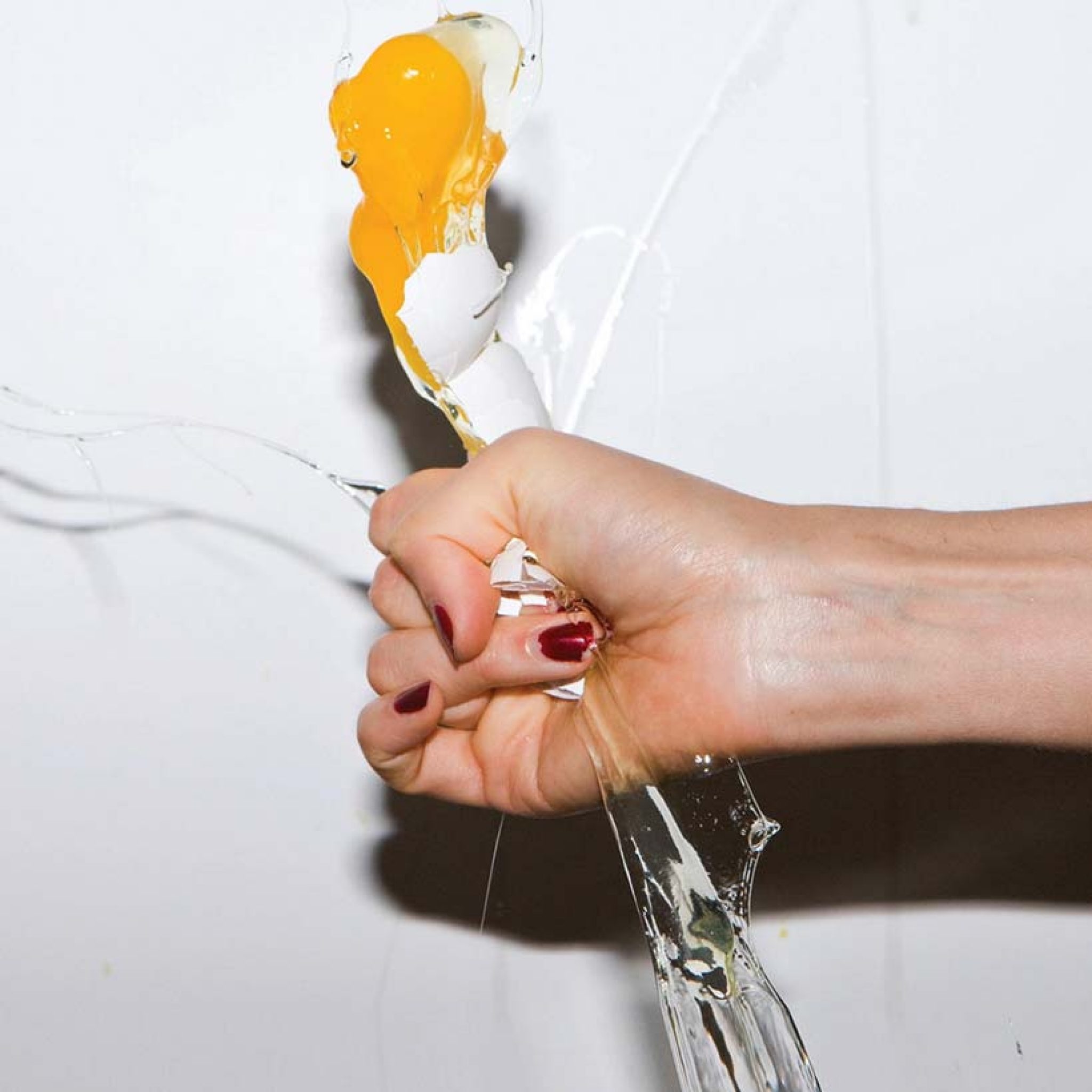
The article explores the enduring presence and symbolism of the egg as a motif throughout art history. It highlights works by artists from Hieronymus Bosch and Pieter Bruegel the Elder to Salvador Dalí and Constantin Brâncuși, showing how the egg has been used in painting, sculpture, and photography to represent themes of origin, life, and perfect form.

What Makes a Good Protest Sign?

The article's main feature is a guide on creating effective protest signs for the upcoming No Kings protest, compiled by comic artist Steven Weinberg with input from artists, writers, and curators including Hyperallergic's Editor-at-Large Hrag Vartanian. It offers practical advice for crafting visually and rhetorically powerful signs that challenge authority.

On Curating Carnage

On Curating Carnage

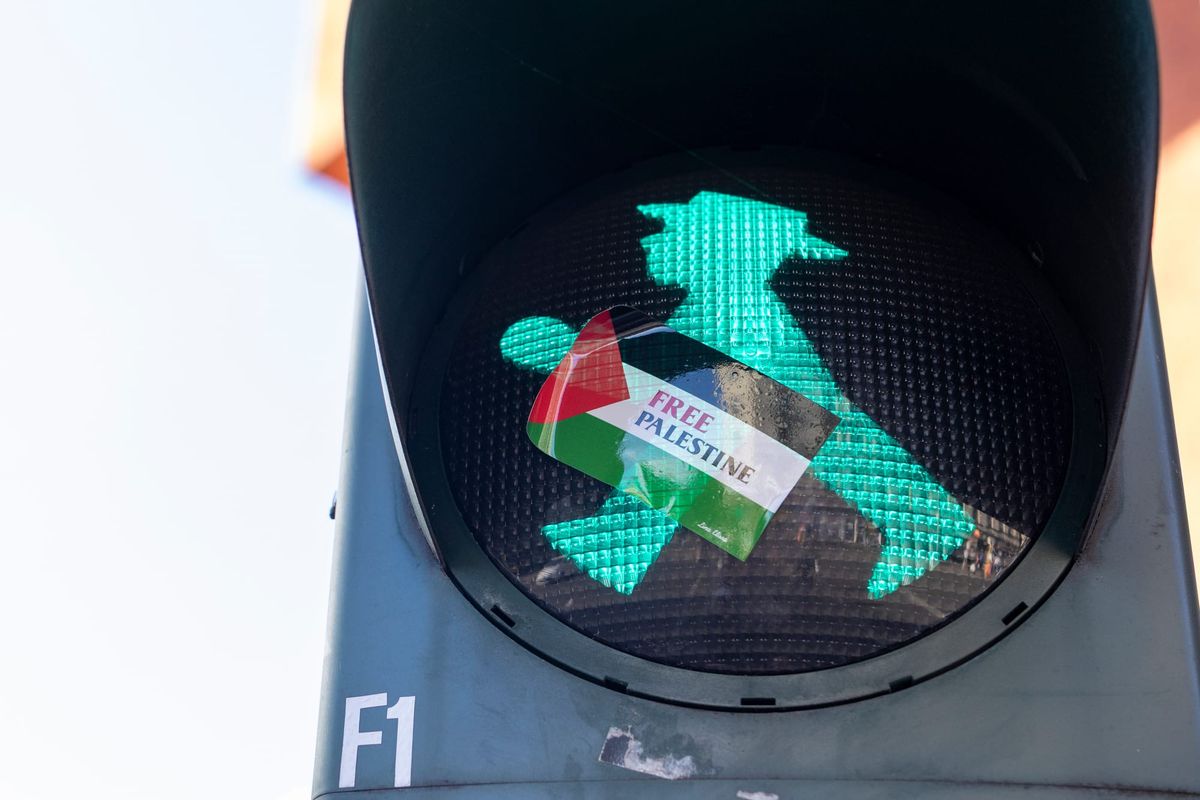
The Berlin-based art journal *OnCurating* published a September 2025 issue titled "Let’s Talk About… Anti-Democratic, Anti-Queer, Misogynist, Antisemitic, Right-Wing Spaces and Their Counter-Movements." The article critiques this publication, arguing it uses the language of feminism, anti-racism, and anti-Semitism as a political tool to unconditionally support Israel and demonize the Palestinian cause, thereby aligning with German state policy and a specific strain of leftist thought known as Antideutsch.

Artists Set Islamic Futurism Into Motion

A growing movement of artists is exploring Islamic Futurism, a framework that draws from Islamic philosophy, visual traditions, and speculative practices to imagine Muslim futures. Artists like Zarah Hussain, Ibrahim El-Salahi, and Soraya Syed are working across mediums—including light installation, digital animation, painting, and classical calligraphy—to reinterpret historical forms for contemporary and future contexts.

Chicago Art Movements Over The Years, From the Monster Roster to the Modern Moment

Chicago’s art history is defined by a series of indigenous movements that prioritized visceral, existential expression over commercial appeal. The article traces this lineage back to the late 1940s with the emergence of the Monster Roster, a group of artists including Leon Golub and Dominick Di Meo who returned from World War II to produce agonistic work. This movement was catalyzed by institutional resistance at the School of the Art Institute of Chicago, leading to the creation of the independent Momentum Exhibitions which bypassed conservative juried systems.

‘Depraved in all the right ways’: why forgotten no wave visionary Gordon Stevenson is about to take off

The article profiles Gordon Stevenson, a forgotten visionary of the no wave movement in late-1970s New York, who was an artist, jewelry designer, musician, and filmmaker best known for the notorious film *Ecstatic Stigmatic*. Decades after his death from AIDS, a storage unit full of his lost work has been discovered, including jewelry, mail-art collaborations with Ray Johnson, and clues to a surviving print of his film. His family has also recovered hundreds of letters he wrote to his parents, chronicling his life in downtown New York and his experiences as one of the city's first AIDS patients. The piece traces his journey from a small town in Georgia, where he met his wife Mirielle Cervenka (who later renamed Exene Cervenka), to their punk-era jewelry brand LHOOQ and his lasting influence on gothic fashion.

Harnessing the winds of societal change: how art dealers have been able to shape taste for centuries

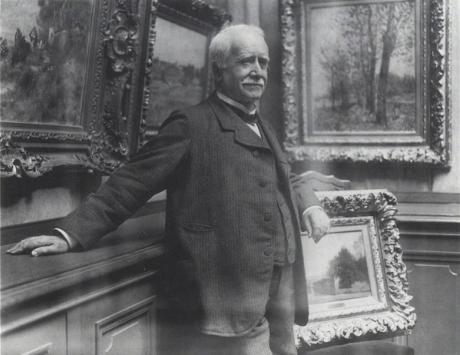
Valentina Castellani, a former Gagosian director, has authored a new book titled *Trading Beauty: Art Market Histories from the Altar to the Gallery* (out 1 May). The book traces how art dealers have historically leveraged societal changes—political, economic, and social—to reshape taste and market structures. Castellani begins in the Middle Ages, when art was made only on commission for patrons like the Catholic church and monarchies, and moves through key shifts such as the Dutch Republic's first open art market in the 17th century, which gave rise to the professional art dealer. She highlights dealers like Paul Durand-Ruel, Joseph Duveen, and Leo Castelli who capitalized on anti-establishment energy, new wealth, and post-war consumer culture to bring avant-garde art to the forefront.

refik anadol moma ai art 60 minutes debate

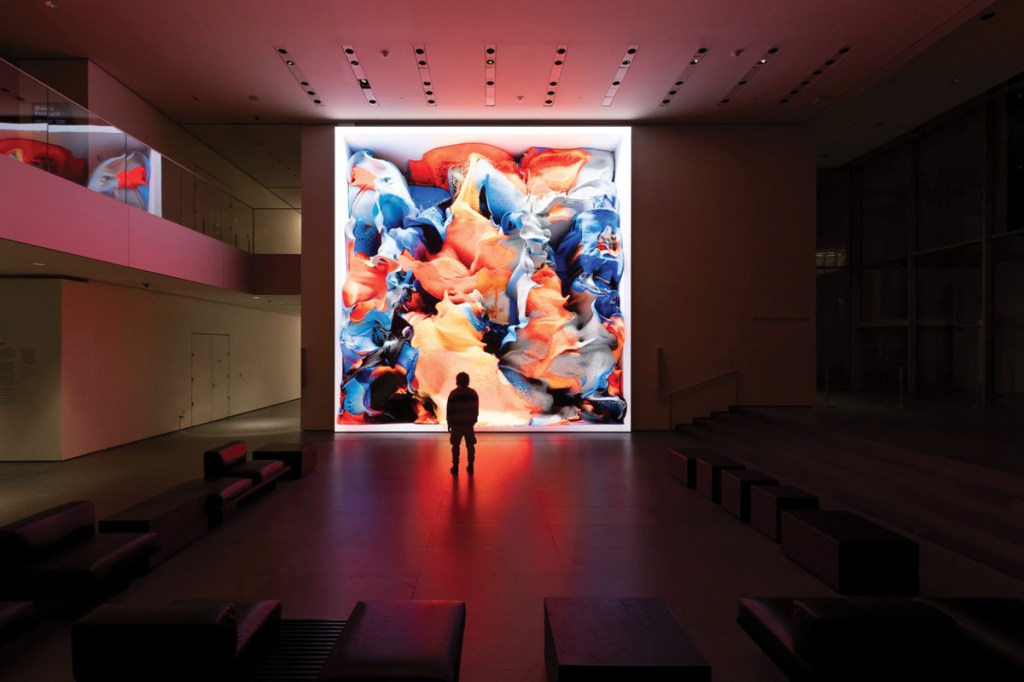
Refik Anadol’s controversial AI installation 'Unsupervised' at the Museum of Modern Art has sparked a heated debate on the nature of art and technology, recently highlighted in a '60 Minutes' segment. While Anadol defends his work as a poetic use of 'data as pigment' that captures viewer attention for an average of 38 minutes, critics and fellow artists raise concerns about the substance and ethics of the medium. The piece, which uses MoMA’s metadata to create morphing abstractions, became a viral sensation that challenged traditional museum engagement.

burton the meeting on the turret stairs

The article explores Frederic William Burton's iconic Victorian watercolor *Hellelil and Hildebrand, the Meeting on the Turret Stairs* (1864), held at the National Gallery of Ireland. It recounts the tragic medieval Danish ballad that inspired the painting, in which the noblewoman Hellelil and her guard Heldebrand are doomed lovers. Burton, an Irish painter influenced by the Pre-Raphaelite Brotherhood, worked exclusively in watercolor and gouache, making this delicate piece a technical marvel. The museum displays it only one hour twice weekly to protect it from light damage.

art nouveau renaissance mucha jugendstil paris metro

The article recounts the author's personal rediscovery of Art Nouveau, sparked by encountering an iron doorknob shaped like a Belgian endive at the Bröhan Museum in Berlin. It explores the movement's history, its German variant Jugendstil, and the philosophical debate between Walter Benjamin and Theodor Adorno over its merits—Benjamin criticizing it as a superficial escape from industrial reality, Adorno defending its utopian desire to reconcile art, nature, and technology. The piece also notes a contemporary resurgence of interest in the style.

art bites plein air painting history

The article traces the history of plein air painting, beginning with French painter Pierre Henri de Valenciennes in the 1780s, who created one of the earliest known outdoor oil sketches on the banks of the river Rance in Brittany. It follows the evolution of the practice through British painter John Constable, the Barbizon school in France, and the revolutionary impact of John G. Rand's invention of the paint tube in 1841, which enabled artists like Claude Monet and Pierre-Auguste Renoir to capture light and atmosphere with unprecedented accuracy.

the push to preserve nina simones childhood home just got a 6 million boost thanks to venus williams and adam pendleton

The childhood home of legendary singer and activist Nina Simone in Tryon, North Carolina, has been fully restored after nine years of effort by an artist coalition led by Adam Pendleton, alongside Julie Mehretu, Rashid Johnson, and Ellen Gallagher. The restoration, completed with a $6 million boost from a charity auction and gala co-hosted by tennis star Venus Williams and Pace Gallery, preserved the 650-square-foot clapboard house to its 1933–1937 condition, including historically accurate materials, an ADA ramp, geothermal climate control, and a century-old magnolia tree named “Sweetie Mae.” The African American Cultural Heritage Action Fund announced the completion, and the property remains closed to the public while community programming and ethical cultural tourism are being planned.

5 rediscoveries transforming black art narratives

Artnet News highlights five recent rediscoveries and reinterpretations that are reshaping narratives around Black artists and sitters in art history. These include Gustav Klimt's long-lost portrait of Prince William Nii Nortey Dowuona, an Osu prince exhibited in a racist "human zoo" in Vienna, which resurfaced in 2023 and was shown at TEFAF Maastricht with a $16.4 million price tag. Also featured are Edvard Munch's dual portrayals of Sultan Abdul Karim—one intimate, one stereotyped—on view at the National Portrait Gallery in London, and new research identifying James Cumberlidge, a Black servant in a Jean-Baptiste van Loo portrait, correcting a historical misattribution.

art bites marcel duchamp dentist check

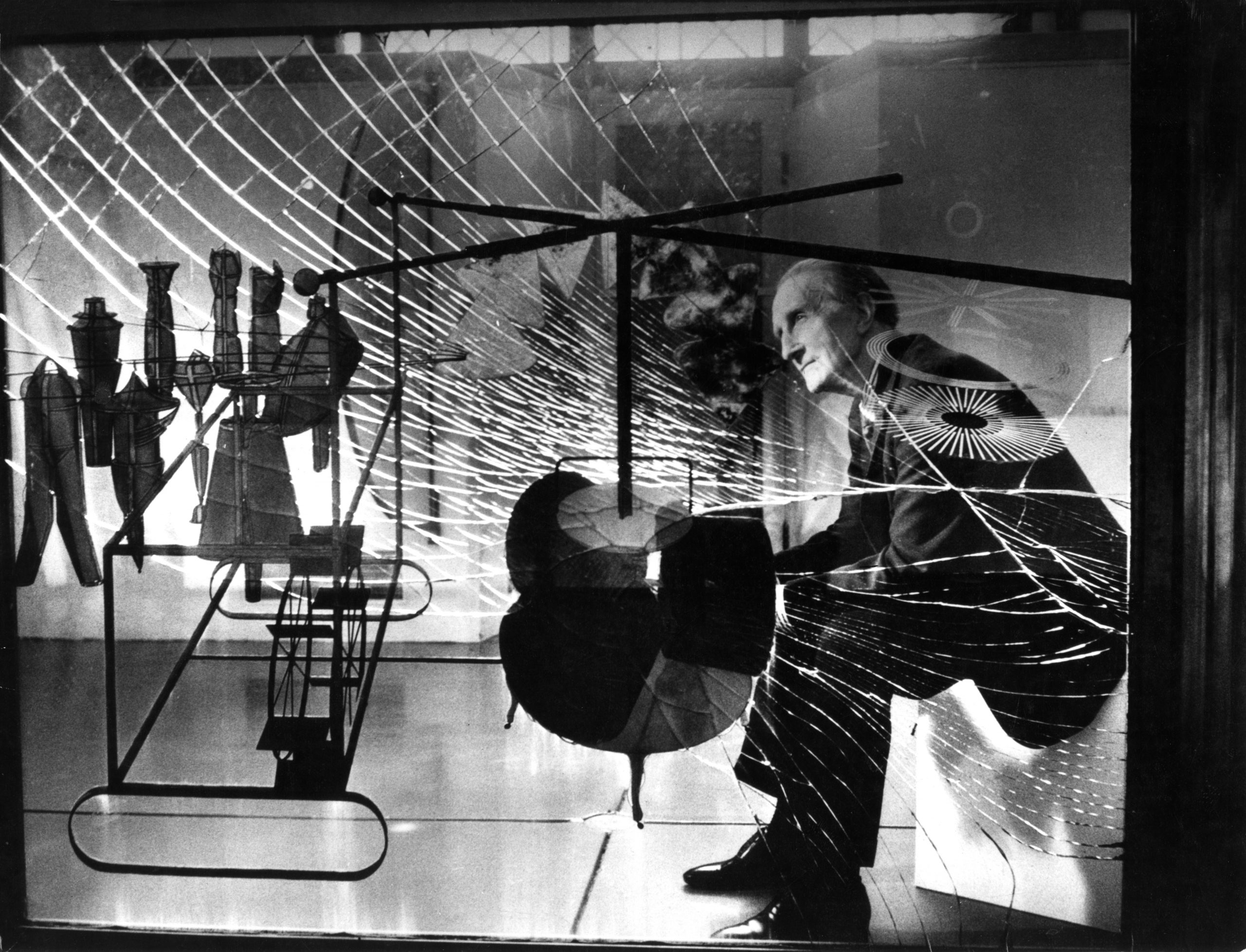
Marcel Duchamp paid his dentist, Daniel Tzanck, with a hand-painted forged check in 1919, titled *Tzanck Check*. The work mimics a real bank check made out for $115, drawn on the fictitious “The Teeth’s Loan & Trust Company Consolidated.” Duchamp meticulously painted each letter to look printed, and the dentist—who was also a major art collector—never cashed it, recognizing its artistic value. The check is now a promised gift to the Israel Museum in Jerusalem, with a 1938 reproduction held by M+ museum in Hong Kong.

10 chefs-d’œuvre de l’impressionnisme décryptés par Beaux Arts

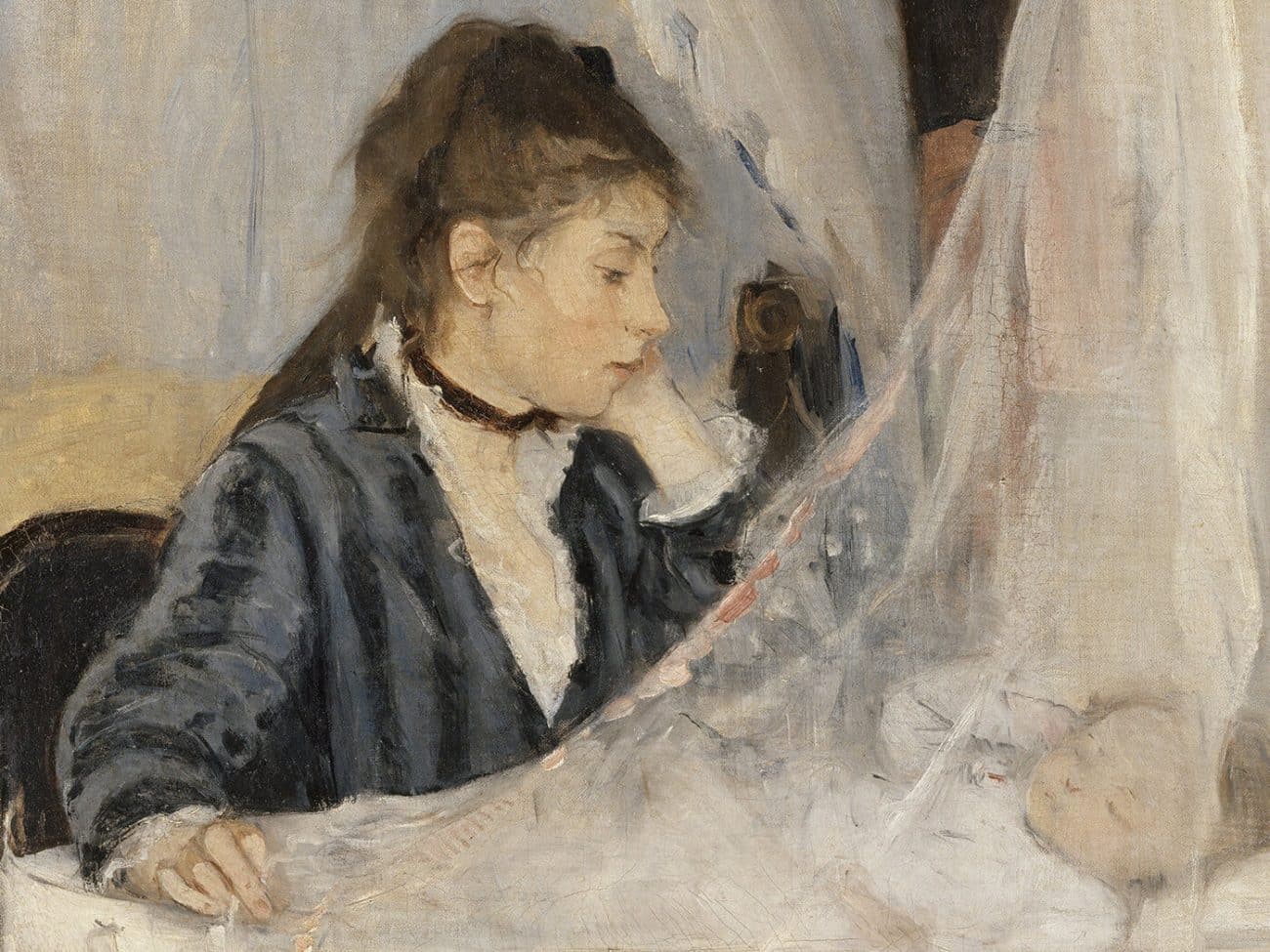
Beaux Arts Magazine presents a detailed dossier analyzing ten iconic masterpieces of Impressionism, including works by Edgar Degas, Édouard Manet, Berthe Morisot, Auguste Renoir, Gustave Caillebotte, Claude Monet, and Mary Cassatt. The article explores the technical innovations, modern subjects, and revolutionary spirit of the movement, which began in 1874 and was initially rejected by critics. Each featured painting—such as *Le Déjeuner sur l’herbe*, *Impression, soleil levant*, and *Le Bal du moulin de la Galette*—is examined by art historians and journalists to reveal its composition, historical context, and lasting impact.

7 Artists Who Capture the Essence of Black Dandyism

The article highlights seven contemporary artists whose work embodies Black dandyism, timed to the 2025 Met Gala theme 'Superfine: Tailoring Black Style' and the corresponding exhibition at the Metropolitan Museum of Art's Costume Institute. It traces the history of Black dandyism from its 18th-century European roots through its evolution during slavery and the 20th century, emphasizing its role as a defiant, empowering form of self-expression that challenges gender norms and racial stereotypes. Featured artists include Barkley L. Hendricks, Derek Fordjour, and Tyler Mitchell, among others.

Dansaekhwa has taken over the modern art world. But the story of how that happened is up for debate.

The article examines the global rise of Dansaekhwa, a Korean monochrome painting style that has achieved record auction prices and widespread collector interest over the past decade. It traces key milestones, including two pivotal 2014 exhibitions at Kukje Gallery in Seoul and Blum & Poe in Los Angeles, and the surge in auction prices for artists like Kim Whan-ki, Park Seo-bo, and Chung Sang-hwa, culminating in a $13 million sale in 2019.

A brush with… Lubaina Himid — podcast

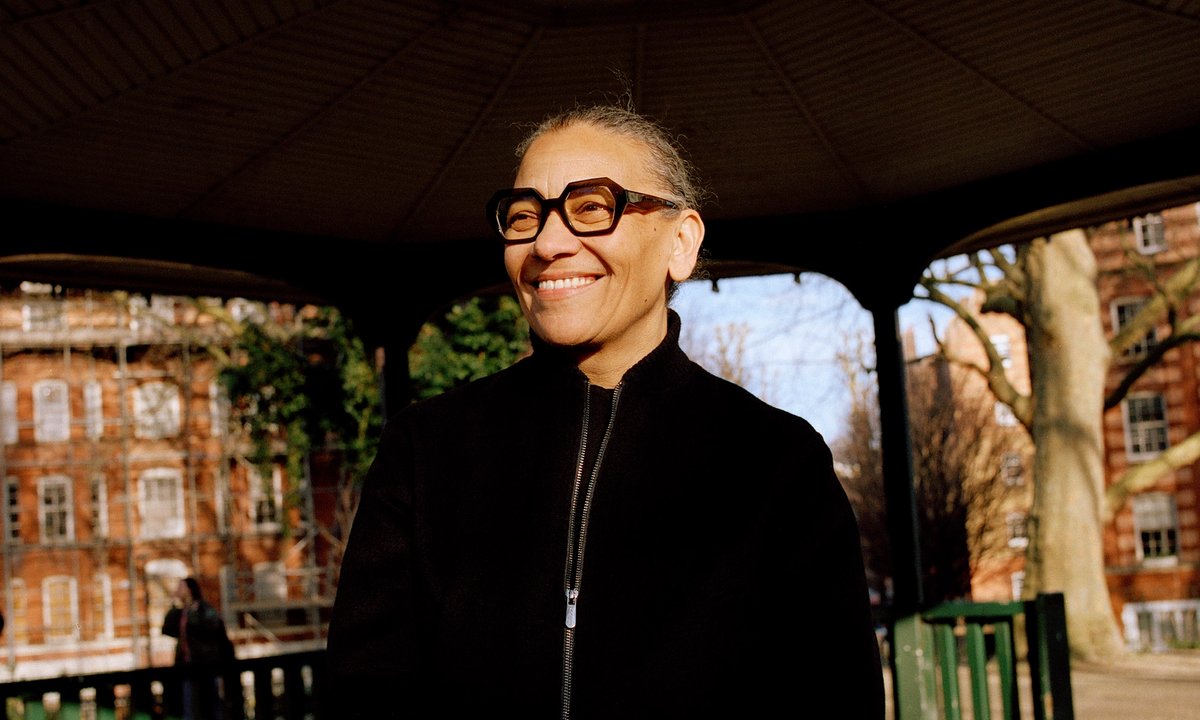
This podcast episode features a conversation with Lubaina Himid, the Turner Prize-winning artist born in Zanzibar in 1954 and based in Preston, UK. Himid discusses her paintings, sculptures, and installations that center marginalized figures, diasporic cultures, and overlooked histories. She reflects on the influence of artists Stanley Spencer, Bridget Riley, and William Hogarth, as well as writers Audre Lorde and Essex Hemphill. The episode also covers her curatorial work in the 1980s, her role in the Black British Arts movement, and her admiration for peer Claudette Johnson. Upcoming exhibitions include a show with Magda Stawarska at Kettle’s Yard in Cambridge, a group show at the Institute of Contemporary Arts in London, and her representation of the British Pavilion at the 2026 Venice Biennale.

The Divine Powers of “Chicken Linda”

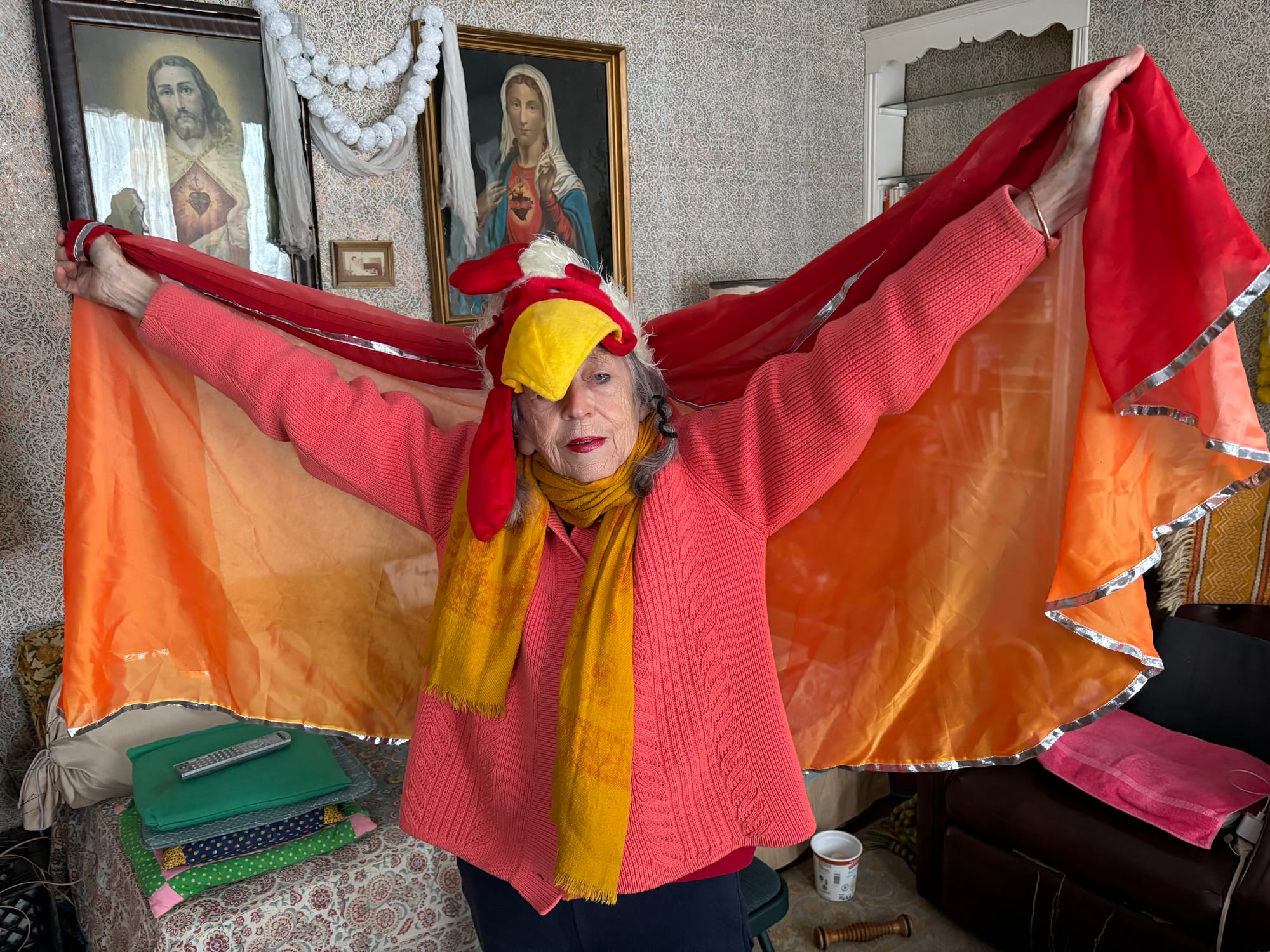
Performance artist Linda Mary Montano, now in her 80s, invited writer Taliesin Thomas into her home in Saugerties, New York, which functions as a living shrine filled with altars, experimental sculptures, and religious iconography. Montano, who calls herself “Chicken Linda” to connect with the Holy Spirit, discussed her six-decade career as an endurance performance artist, her Catholic faith, her studies with guru Shri Bhramananda Saraswati, and her influential early years in San Francisco during the First Wave feminist art movement. She also recounted personal tragedies, including the murder of her former husband Mitchell Payne, which led to her video work “Mitchell’s Death,” now in the collections of MoMA and the Museum of Conceptual Art, Los Angeles.

Vincenzo Trione's new book aims to redefine the concept of the avant-garde (reviews by his students)

Il nuovo libro di Vincenzo Trione vuole ridefinire il concetto di avanguardia (le recensioni dei suoi allievi)

On March 9, 2026, at IULM University in Milan, Vincenzo Trione presented his new book *Rifare il mondo. Le età dell’avanguardia* (Einaudi, 2025). The event was part of the cultural program *Leonardo alla IULM*, which also featured pages from the Codex Atlanticus on loan from the Biblioteca Ambrosiana. Trione, a professor at IULM, discussed the book with four of his students: Anna Luigia De Simone, Vincenzo Di Rosa, Anna Calise, and Alessia Scaparra Seneca. The talk, titled "Nessuna parola caratterizza l’arte contemporanea più di avanguardia," explored the concept of the avant-garde, its historical legacy, and its contemporary reactivation through movements, manifestos, collectives, and cultural phenomena.

The Future of Museums Is a Dance Floor

Museums and art institutions are increasingly incorporating nightlife and rave culture into their programming, treating the dance floor as a site of cultural and political significance. Exhibitions like Steve McQueen's 2024 Dia Beacon show, the 2018 'Elements of Vogue' in Madrid, the Swiss National Museum's 2025 'Techno' exhibition, and the author's own 2025 curatorial project 'Rave into the Future: Art in Motion' at the Asian Art Museum demonstrate this institutional turn.

Nine Lessons on My Path From Engagement to Leadership

The article is an excerpt from the forthcoming field resource 'Curating Engagement,' featuring a first-person reflection by an arts professional. The author outlines nine lessons learned over two decades of practice, moving from engagement-focused roles to institutional leadership. Key lessons emphasize curiosity as a foundational practice, engagement as a form of service to communities rather than extraction, and the importance of site and history as collaborators in curatorial work.