filter_list Showing 39 results for "source" close Clear
dashboard All 615 museum exhibitions 228article news 112article local 83article policy 49article culture 39trending_up market 39person people 24gavel restitution 19rate_review review 15candle obituary 6article event 1
date_range Range Today This Week This Month All
Subscribe

collectors reveal key advice 2632313

Collectors share advice for aspiring art patrons in a two-part series, recounting their early mistakes and lessons learned. Diana Bowes, board chair of the Aldrich Contemporary Art Museum, recalls buying her first pieces at Art Basel in 2006 and warns against purchasing art online without seeing it in person, as well as protecting works from water, children, and house painters. Mana Jalalian, an interior designer based in Dubai with over 400 works by Iranian artists, emphasizes following instincts, continuous learning, and the value of working with an art advisor.

best art books for kids 1612528

This article from Artnet News presents a curated list of the best art books for children, featuring titles such as "Linnea in Monet's Garden," "Grandpa and the Library: How Charles White Learned to Paint," "Action Jackson," "Yayoi Kusama: From Here to Infinity," and "Frida Kahlo and Her Animalitos." Each book is described with its age range, a brief synopsis, and why it is recommended for inspiring young readers to engage with art and artists.

The Defining Themes of Today’s Biennial Art

The article analyzes the defining themes and styles of the past four years in the international biennial circuit, based on a survey of 130 biennials. It identifies a core group of artists who appeared most frequently, including Ali Eyal, Apichatpong Weerasethakul, Carolina Caycedo, Kapwani Kiwanga, and Tuan Andrew Nguyen, among others. Many of these artists are also featured in the upcoming 61st Venice Biennale curated by the late Koyo Kouoh. The piece categorizes their work under two broad themes: "Post-Colonial Post-Conceptualism," which involves poetic engagement with colonial history and artifacts, and "Families and Networks," where artists explore personal and political family histories.

how ancient egypt influenced modern art 2665864

The article explores how ancient Egyptian art and design have influenced modern Western aesthetics, from Empire furniture to Art Deco. It traces the phenomenon of 'Egyptomania' back to the 19th century, when European artists and archaeologists like Dominique Vivant Denon, Jean-Léon Gérôme, and Howard Carter brought Egyptian motifs and artifacts to public attention. The piece highlights three key examples: the adoption of Egyptian-inspired Empire furniture under Napoleon, the use of Nubian tribute scenes in decorative arts, and the impact of King Tutankhamun's tomb discovery on early 20th-century design.

How the New Deal Treated Art as Essential to Democracy

The United States government transformed the role of the artist during the Great Depression by treating art as a vital public resource rather than a private luxury. Between 1933 and 1943, New Deal programs like the Public Works of Art Project (PWAP) commissioned hundreds of thousands of works for schools, libraries, and hospitals, providing 'plumbers' wages' to struggling creators. This federal patronage supported a generation of then-unknown figures, including Jackson Pollock, Mark Rothko, and Alice Neel, while focusing on the 'American scene' to make culture accessible to the general public.

parlez vous le francais french old masters glossary and museum list 32155

Artnet News published a French-language glossary of Old Masters terminology and a list of French museums dedicated to Old Masters. The article defines an Old Master as a European painter who worked before 1800, then provides an A–Z bilingual glossary covering terms from Baroque to Venetian Renaissance. It also profiles two museums: the Musée du Louvre in Paris, highlighting its history, collection size, and a wartime anecdote about Théodore Géricault's "Le Radeau de la Méduse," and the Musée du Louvre-Lens, a branch museum opened in 2012 on a former mining site.

art pop culture crossover 2025 2729394

Artnet News recapped nine notable art and design crossovers in pop culture from 2025. These include a Renoir painting spotted in a Wes Anderson film, a John Everett Millais reference on a Taylor Swift album cover, and a Dieter Rams chair appearing in the TV show "Severance." The article also highlights painter Ronan Day-Lewis bringing his visual world to film with his debut "Anemone," Spike Lee incorporating his art collection into the film "Highest 2 Lowest," and Frank Lloyd Wright's Oak Park home being featured on the TV series "The Bear."

15 museum shop gifts were loving 2706918

Artnet News has curated a selection of 15 unusual and art-themed gifts available at museum shops worldwide, ranging from a snake-embroidered brooch inspired by Cartier at the Victoria and Albert Museum in London to a 'Souls in Purgatory' magnet from the Morgan Library & Museum in New York, a traditional palm-leaf fan from Al Ain Museum in Abu Dhabi, a gilded sewing kit from the Neue Galerie in New York, and a CD of a Hanne Darboven composition from the Dia Art Foundation. Each item is presented with its price, source museum, and a brief explanation of its appeal, often tying back to specific exhibitions or artworks.

Nine Lessons on My Path From Engagement to Leadership

The article is an excerpt from the forthcoming field resource 'Curating Engagement,' featuring a first-person reflection by an arts professional. The author outlines nine lessons learned over two decades of practice, moving from engagement-focused roles to institutional leadership. Key lessons emphasize curiosity as a foundational practice, engagement as a form of service to communities rather than extraction, and the importance of site and history as collaborators in curatorial work.

All we want for Christmas: The Art Newspaper 2025 gift guide

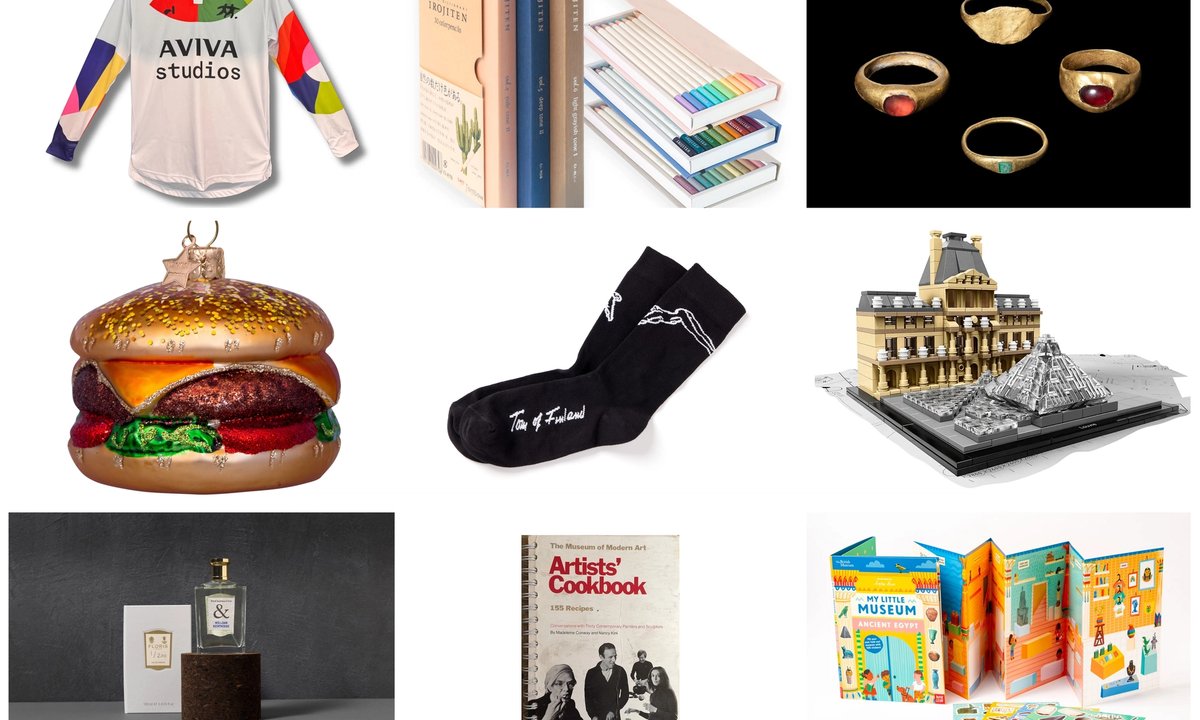
The Art Newspaper has published its 2025 Christmas gift guide, featuring a curated selection of art-related presents. Suggestions include art supplies from London's historic L. Cornelissen & Son, Japanese Irojiten color pencils, and cookbooks like "The Kitchen Studio: Culinary Creations by Artists" and the out-of-print "The Museum of Modern Art Artists' Cookbook." The guide also includes fantasy gift lists from Frieze and Art UK, with items such as Alexander Calder playing cards and a Tom of Finland cushion from House of Voltaire, alongside more unusual ideas like a sponsorship deal for a Victorian loo or a Lego Louvre heist set.

artist studio 2709225

Journalist Bianca Bosker went undercover as a studio assistant for painter Julie Curtiss and other artists, revealing the gritty, athletic reality behind art-making—a world of blood, sweat, and sleepless nights. The article explores how mounting financial pressures, especially for sculptors and installation artists like Ivana Bašić, Erwin Wurm, and Lindsey Mendick, force tough decisions about studio space and production. Bašić, despite critical acclaim, lost a subsidized Dumbo studio and now outsources production to keep costs down, while a growing number of established artists pass on wisdom through residencies and assistant teams.

the push to preserve nina simones childhood home just got a 6 million boost thanks to venus williams and adam pendleton 2307161

The childhood home of legendary singer and activist Nina Simone in Tryon, North Carolina, has been fully restored after nine years of effort by an artist coalition led by Adam Pendleton, alongside Julie Mehretu, Rashid Johnson, and Ellen Gallagher. The restoration, completed with a $6 million boost from a charity auction and gala co-hosted by tennis star Venus Williams and Pace Gallery, preserved the 650-square-foot clapboard house to its 1933–1937 condition, including historically accurate materials, an ADA ramp, geothermal climate control, and a century-old magnolia tree named “Sweetie Mae.” The African American Cultural Heritage Action Fund announced the completion, and the property remains closed to the public while community programming and ethical cultural tourism are being planned.

Comment | Museums can't get enough of anniversary exhibitions—but surely there's better ways to serve the public

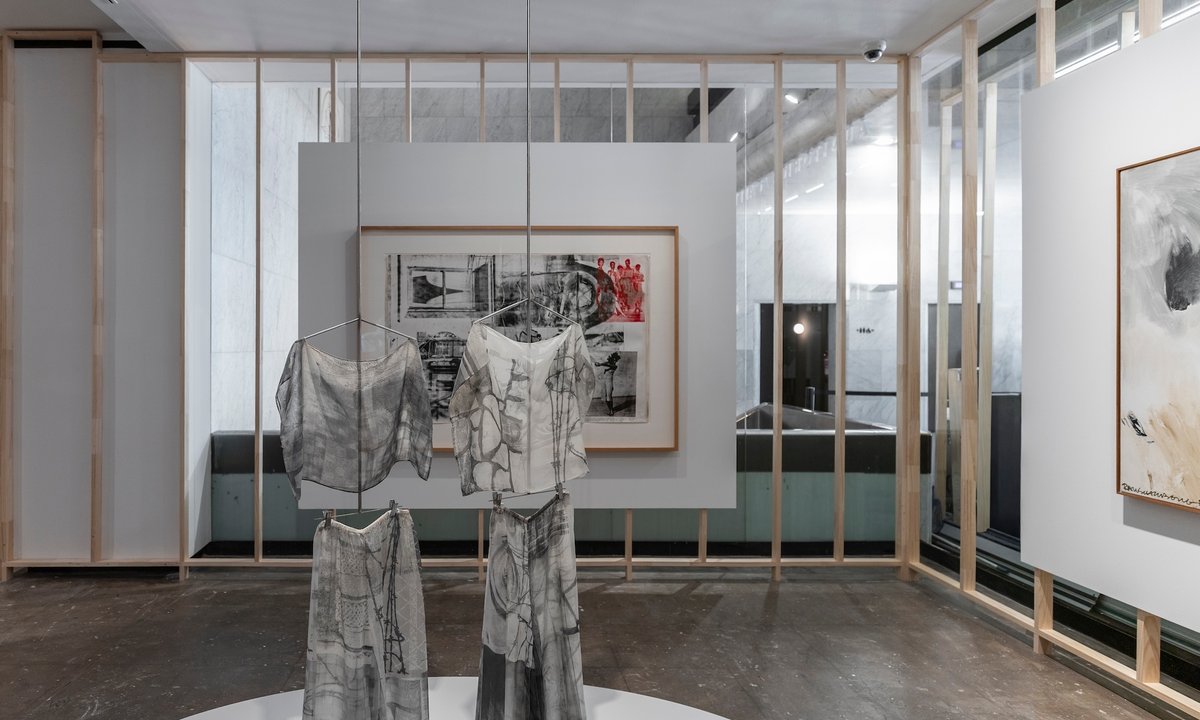
The article critiques the growing trend of museums mounting anniversary exhibitions to celebrate the birth or death of famous artists, using the centennial of Robert Rauschenberg as a prime example. Nearly 100 organizations worldwide are participating in Rauschenberg-related shows, from the Menil Collection in Houston to the Grey Art Museum in New York. The author notes similar patterns in 2024 for James Ensor and in 2023 for Ellsworth Kelly and Pablo Picasso, with museums often resorting to highly specific or gimmicky themes to differentiate their offerings.

deleuze seminars painting 1234749008

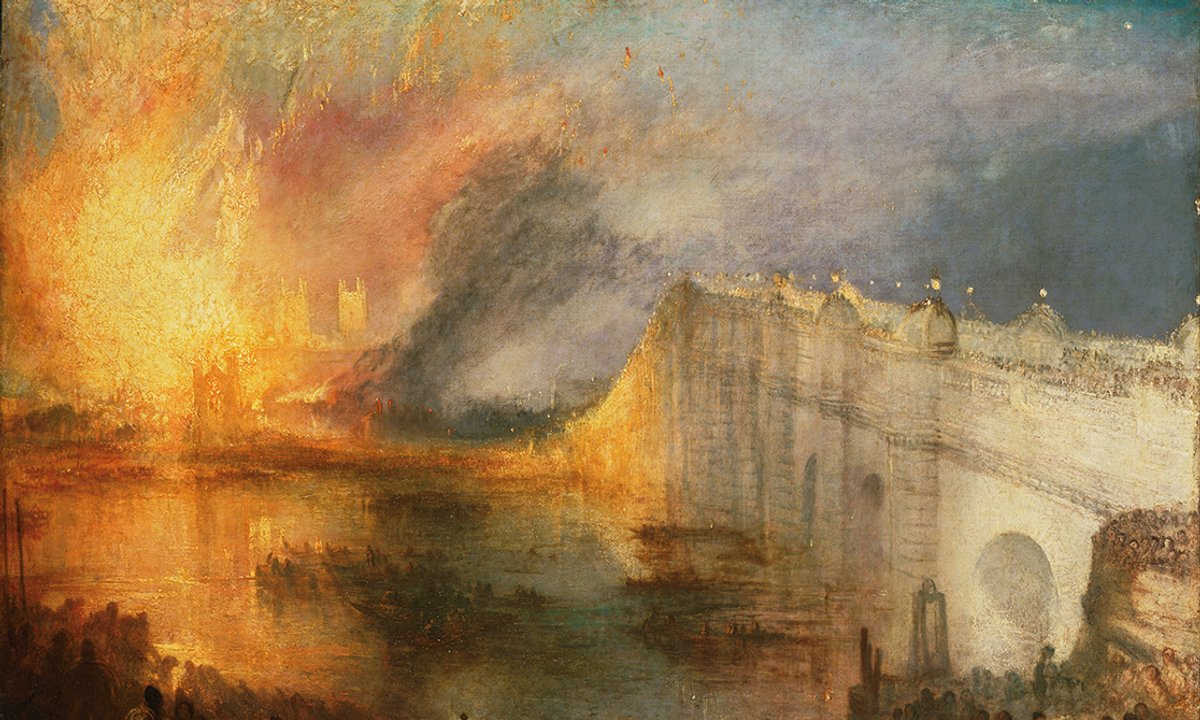
A newly translated English edition of Gilles Deleuze's 1981 seminars on painting, originally published in French as 'Sur la peinture' in 2023, has been released by the University of Minnesota Press. Translated by Charles J. Stivale, the eight lectures explore what concepts painting can offer to philosophy, rather than the reverse. Deleuze discusses terms like catastrophe, the diagram, and figure, focusing on artists such as Titian, Turner, Cézanne, van Gogh, Klee, Mondrian, Pollock, and Bacon, offering a chaotic yet magnificent counterpoint to his more systematic book 'Francis Bacon: The Logic of Sensation'.

Ten essential works of art to see on the French Riviera

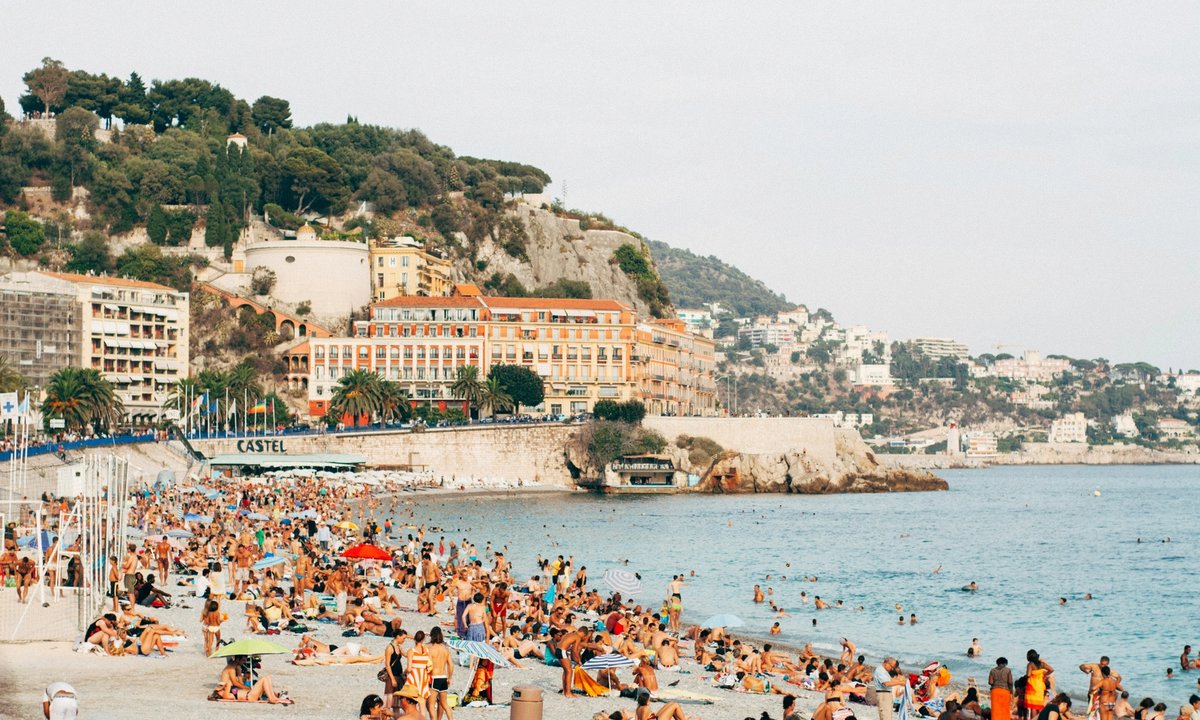
The article highlights ten essential artworks to see on the French Riviera, tracing the region's artistic heritage from the 19th century to the present. It features works by Paul Signac, Henri Matisse, Ludovico Brea, and others, housed in museums such as the Musée de l'Annonciade in Saint-Tropez and the Musée Matisse in Nice, with historical context on how artists like Renoir, Picasso, and Chagall were drawn to the area's light and atmosphere.

Primitivism to Reinvent Art

Le primitivisme pour réinventer l’art

Philippe Dagen has published the third and final volume of his series on primitivism, covering the period from World War II to the late 1970s. The book traces how Western artists, from Barnett Newman and Jackson Pollock to members of the CoBrA movement and figures like Jean Dubuffet, Lucio Fontana, and Yayoi Kusama, engaged with so-called "primitive" art from Africa, Oceania, and the Americas, often as a means of rejecting or redefining modern civilization. Dagen also examines the intellectual debates surrounding primitivism, including the critiques of colonized peoples who refused the label "primitive," and the shifting attitudes of thinkers like Claude Lévi-Strauss, Michel Leiris, and Aimé Césaire.

The Myth of the “Emerging” Black Artist: Ageism and Access in the Art World

The article, written by Chenoa Baker, critiques the art world's labeling system that categorizes artists as emerging, mid-career, or established. It argues that these labels are particularly harmful to Black artists, who are often kept in the "emerging" category for years despite significant achievements, collections, and decades of practice. The piece highlights the cases of Cheryl Miller, a self-taught analog photographer whose work is held by major institutions yet who had to "re-emerge" after relocating, and Ifé Franklin, a queer Black artist whose career was sidelined by systemic erasure and who is now being honored as an "elder" artist. The article connects these labels to ageism, lack of access to elite schools and galleries, and the undervaluing of self-taught artists and those working outside traditional art centers.

Final book in trilogy asks: What is the future of the art world?

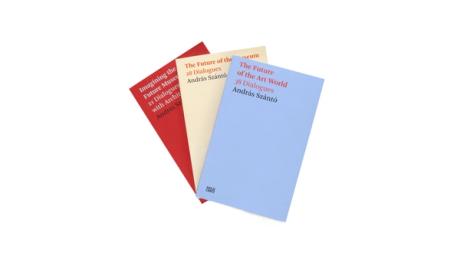
Cultural strategist András Szántó has published the third and final volume of his trilogy on the future of museums, titled *What Is the Future of the Art World?*. The book features dialogues with a wide range of art-world figures—including gallerists José Kuri and Atsuko Ninagawa, collectors Alain Servais and Sylvain Levy, artists William Kentridge and Holly Herndon & Mathew Dryhurst, curator Fatoş Üstek, network scientist Albert-László Barabási, former Art Basel director Marc Spiegler, and Sheikha Al-Mayassa Al Thani—who discuss topics such as the definition of the art world, its rules, and its future trajectory. Szántó notes that there is no consensus on whether the art world is still expanding or entering a phase of slowdown, with different regions moving on divergent paths.

stuart semple color of the year anarchic venom 2726052

British artist Stuart Semple has announced the winner of his public vote for "Color of the Year," a direct challenge to Pantone's annual color selection. After collecting 4,063 votes online, the winning shade is a purple called Anarchic Venom (hex #B17DAC), now available for $9.99 through Semple's art materials brand Culture Hustle. Semple has a history of democratizing trademarked colors, having previously created alternatives to Tiffany blue, Barbie pink, and Vantablack in a long-running feud with Anish Kapoor. He also released a variant of Pantone's 2025 color Cloud Dancer, which he dubbed Proud Chancer.

An expert’s guide to late Pablo Picasso: five must-read books on the second half of his career

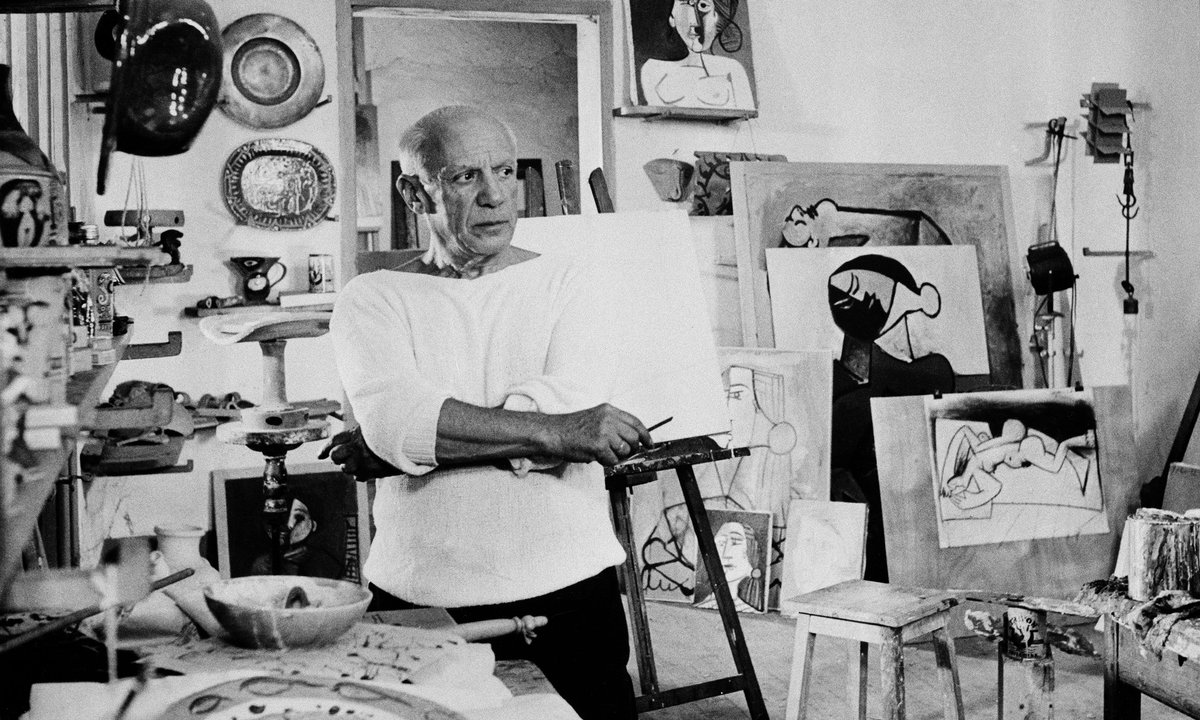
Pablo Picasso remains one of the most prolific and studied artists in history. This article presents a curated reading list of five essential books focused on the second half of his career, timed to coincide with the exhibition 'Late Picasso' at Stockholm's Moderna Museet. The books, selected by curators Dieter Buchhart and Anna Karina Hofbauer, include 'Picasso: Painting Against Time' (2006), 'A Life of Picasso: The Triumphant Years, 1917-1932' (2008), 'Picasso: Endlessly Drawing' (2024), 'Picasso's Animals' (2014), and 'Pablo Picasso: A Retrospective' (1980), each offering unique insights into his later works, personal life, and artistic evolution.

An expert’s guide to Edvard Munch: five must-read books on the Norwegian Expressionist

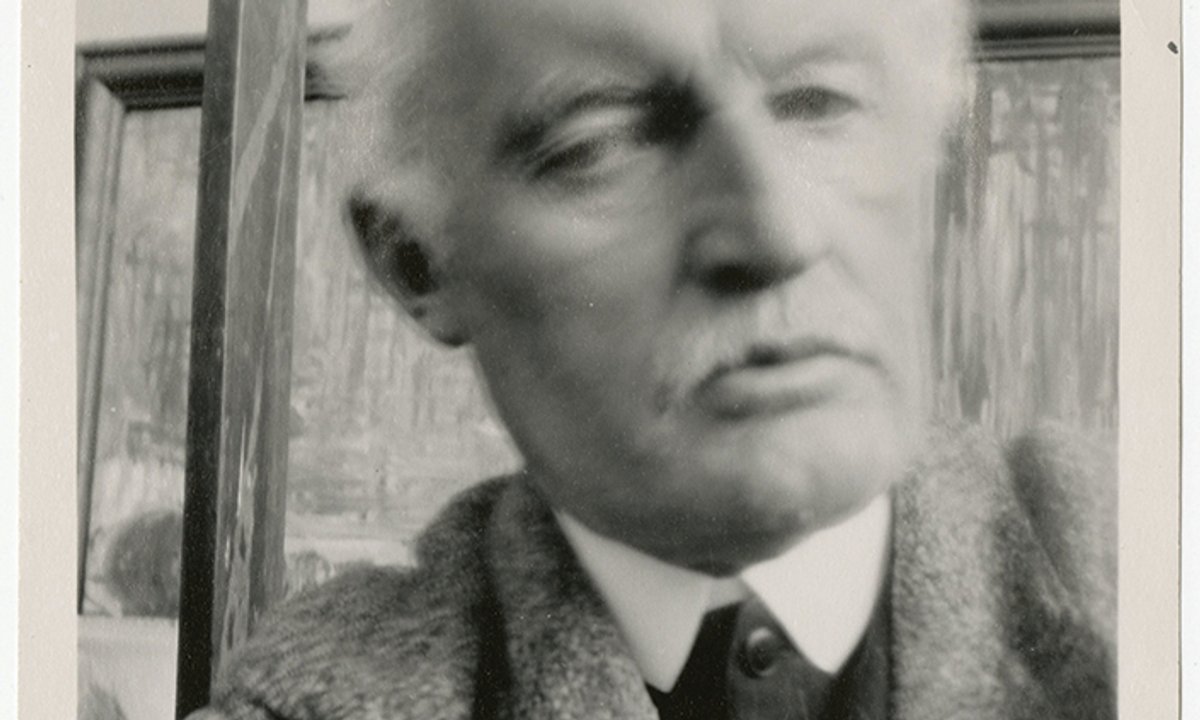
The article presents a curated reading list on Edvard Munch, compiled by Trine Otte Bak Nielsen, a curator at the Munch Museum in Oslo. The list includes five key books: Ali Smith's essay "So in the Spruce Forest" (2025), Gerd Woll's catalogue raisonné "Edvard Munch: Complete Paintings" (2009), "Living Lines: Five Contemporary Artists on Edvard Munch's Drawings" (2021) edited by Halvor Haugen, Rolf E. Stenersen's biography "Edvard Munch: Close-up of a Genius" (1944/2013), and Stanislaw Przybyszewski's "Das Werk Des Edvard Munch" (1894). The selection coincides with the museum's exhibition "Lifeblood: Edvard Munch," which explores the artist's work through themes of health and sickness.

A biography of Turner and Constable that goes beyond the stereotypes

Nicola Moorby, curator of British art 1790-1850 at Tate, has published a new book titled *Turner & Constable: Art, Life, Landscape*, which examines the lives and careers of J.M.W. Turner and John Constable side by side for the first time in such depth. Published in the 250th anniversary year of Turner's birth and ahead of Constable's in 2026, the study uses a thematic approach within a chronological framework to compare their approaches to landscape painting, including their treatment of rivers like the Thames and the Stour, their differing paths to success, and famous flashpoints at Royal Academy exhibitions.

Extended from one volume to three, the new ‘Taste and the Antique’ expands on four centuries of interactions with sculpture

A new, expanded edition of the seminal art-historical reference work 'Taste and the Antique' has been released, growing from one volume to three. Originally published in 1981 by Francis Haskell and Nicholas Penny, the book traced the reception history of ancient Greek and Roman statues from 1500 to 1900. This updated version features full-color photography of all 95 canonical works, including multiple angles and detail shots, overcoming the original edition's criticized monochrome images. A third volume illustrates copies, prints, casts, and reproductions of the statues across media and centuries, from Renaissance drawings to modern advertisements and photographs.

Arts of Africa

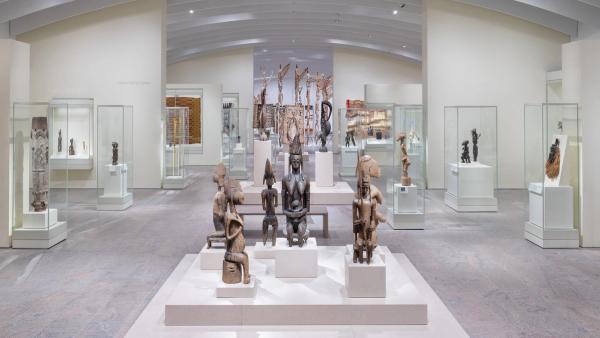
This article explores the deep history and cultural significance of Africa's artistic traditions, focusing on the continent as the cradle of human creativity. It traces the development of diverse cultures south of the Sahara over 160,000 years, highlighting how artists and workshops translated worldviews into enduring creations. The text also examines Africa's Atlantic Coast engagement from 1445 onward, detailing early European contact, trade agreements along the Gold Coast, and the forced exodus of captives during the transatlantic slave trade, which deprived the region of its productive youth.

Miljohn Ruperto Rethinks Western Ideas of Time

The rise of the 'one-work exhibition' is transforming how audiences engage with art, shifting the focus from the rapid consumption of numerous objects to a singular, immersive spatial experience. By isolating a single masterpiece or installation, institutions are creating environments that demand 'slow looking' and provide a meditative counterpoint to the overwhelming speed of digital and contemporary visual culture.

Learning is something aesthetic and emotional. Marco Dallari says so in his latest book (and in this interview)

L’apprendimento è qualcosa di estetico e di emotivo. Lo dice Marco Dallari nel suo ultimo libro (e in questa intervista)

Italian pedagogist Marco Dallari discusses his latest book, "La bellezza di Sophia" (2026), which explores the intrinsic human drive for knowledge as an aesthetic and emotional necessity rather than a pragmatic survival tool. Drawing on Freudian concepts and the work of Alessandra Risso, Dallari argues that the desire to learn is a primal impulse that should be nurtured through beauty and curiosity rather than stifled by rigid institutional structures.

huge persepolis destruction 2718329

The article recounts the Sack of Persepolis in 330 B.C.E., when Alexander the Great and his Macedonian forces pillaged and destroyed the Achaemenid capital. It describes Persepolis as a marvel of ancient architecture, including the 31-acre limestone terrace, the Apadana hall with 36 columns, and the palace of Xerxes I. Ancient sources like Diodorus of Sicily and Plutarch offer conflicting accounts of the destruction—whether it was spontaneous, premeditated, or fueled by alcohol—while modern historians view it as a political act of retribution for Xerxes' attack on Athens.

The Ten Best Books to Complement Your Viewing of This Year’s Oscar-Nominated Movies

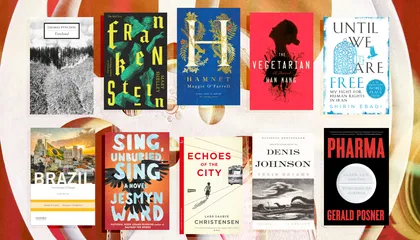
Smithsonian magazine has curated a list of ten books to enhance the viewing experience of this year's Oscar-nominated films, published ahead of the 2026 Academy Awards. The selections include direct source material for nominated adaptations, such as Thomas Pynchon's *Vineland* for Paul Thomas Anderson's *One Battle After Another*, as well as thematic companions like *Frankenstein* and *The Vegetarian* for other recognized movies.

craft as protest 2741909

Craft-based activism is surging in the U.S. as a form of protest against Immigration and Customs Enforcement (ICE) policies and operations under President Trump's second term. Projects include the "Melt the ICE" hat, a red beanie pattern that has sold over 65,000 copies and raised over $600,000 for immigrant-support nonprofits, and origami rabbits for a detained five-year-old boy, drawing direct parallels to historical craft-as-resistance movements like the Norwegian topplue worn against Nazi occupation.

Comment | Climate change is forcing tough choices—how much heritage can we save before it is too late?

Climate change is accelerating the degradation of archaeological sites worldwide, forcing archaeologists to make urgent, difficult choices about what to save. From thawing permafrost in the Canadian Arctic threatening Inuit heritage to landslides endangering ancient Buddhist temples in Nepal, researchers are now deploying innovative technologies like ground-penetrating radar, 3D scanning, and even cosmic-ray muon detectors to digitally document and monitor at-risk sites before they are lost.