filter_list Showing 33 results for "colonialism" close Clear
search
dashboard All 45 museum exhibitions 33rate_review review 5article news 3person people 2article culture 1trending_up market 1
date_range Range Today This Week This Month All
Subscribe

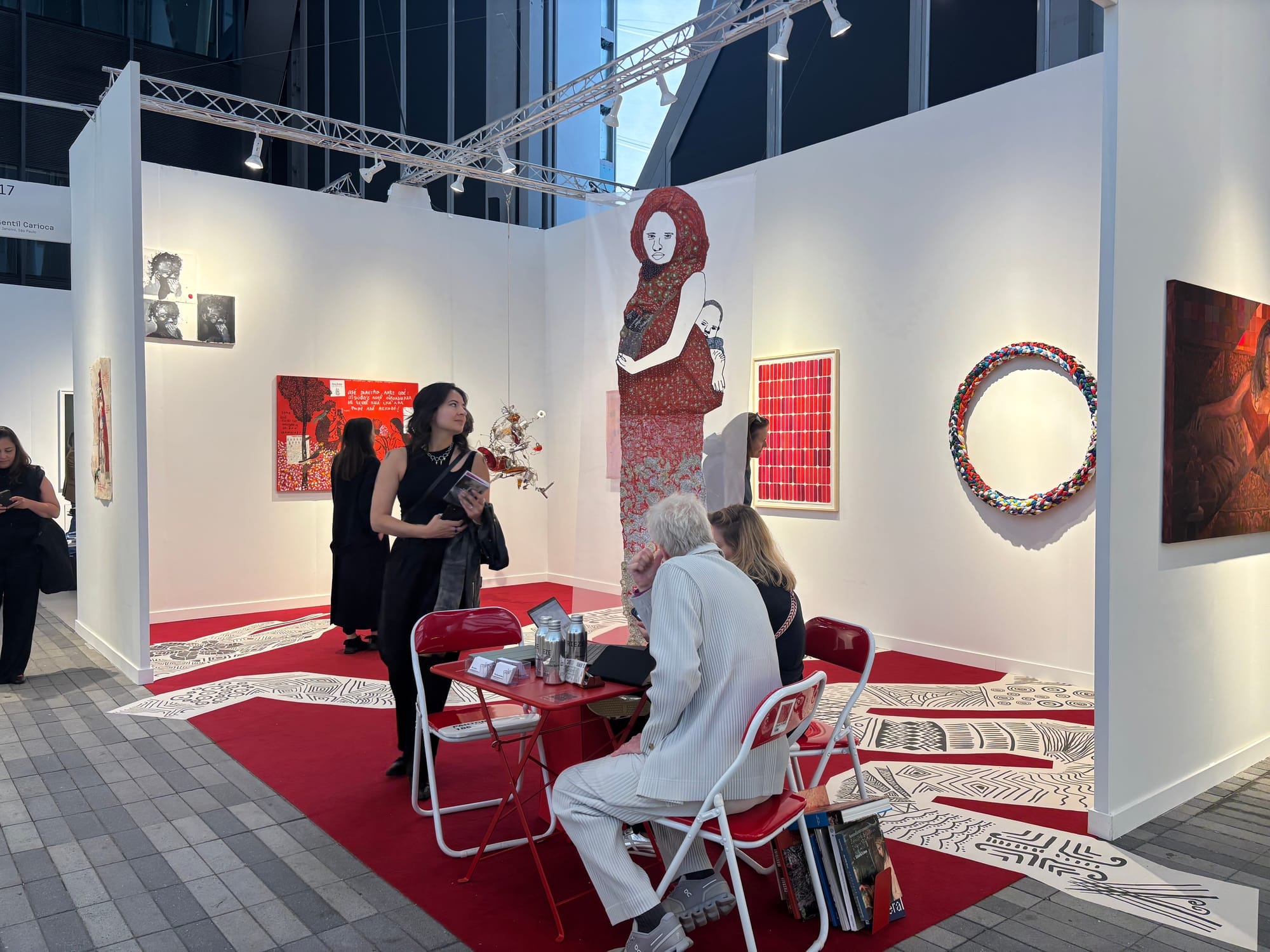
Frieze New York Is an Assembly-Line Salad

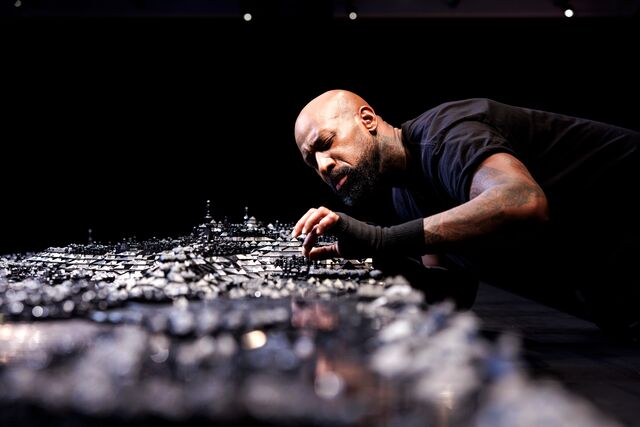
At Frieze New York, curator Lucien Zayan searches for artworks exploring the relationship between food and art, finding a piece by Aki Goto at Europa gallery that reflects on sugar, colonization, and cavities. The fair features works like David Lamelas's "To Pour Milk into a Glass" (1972) from Dia Art Foundation and Mungo Thomson's "Snowman" (2023) at Karma, while a performance by Kite (Oglála Lakȟóta) at the Counterpublic triennial booth offers a reprieve from the monotonous fair experience.

Who is Yto Barrada, France's representative at the Venice Biennale with a world-spanning work?

Qui est Yto Barrada, représentante de la France à la Biennale de Venise avec une œuvre-monde ?

Yto Barrada, the artist representing France at the 2026 Venice Biennale, has created a multidisciplinary installation titled "Saturne" for the French Pavilion. The work centers on textiles and natural dyeing, weaving together themes of postcolonial history, migration, craft transmission, and the symbolism of Saturn—from its astronomical mystery to its mythological role as the devourer of children. The installation features wool curtains, Aubusson tapestry, goat skins, wasp-nest sculptures, masks, muzzles, a color chart, and video, all housed in a renovated pavilion designed with the help of numerous artisans. Barrada, born in Paris in 1971 and raised in Tangier, founded the Cinémathèque de Tanger and later The Mothership, a research center focused on textiles and natural dyes. The exhibition is curated by Myriam Ben Salah.

From Agnès Varda to Giuseppe Penone, the strange passion of artists for potatoes deciphered in Aubenas

D’Agnès Varda à Giuseppe Penone, l’étrange passion des artistes pour les patates décryptée à Aubenas

The article explores the exhibition "Des patates" at Le Château – Centre d'Art Contemporain et du Patrimoine in Aubenas, France, which celebrates the humble potato as an artistic subject. It highlights how filmmaker and visual artist Agnès Varda turned potatoes into art with her 2003 Venice Biennale project "Patatutopia," dressing as a potato and scattering 700 kilos of tubers, inspired by her documentary *Les Glaneurs et la glaneuse*. The show also features works by Giuseppe Penone, Michel Blazy, Valérie Geissbühler Pacheco, and Lucas Chanoine, all using potatoes to explore themes of consumption, waste, colonialism, and the cycle of life.

The Strong Presence of Guatemalan Indigenous Artists at the Sydney Biennale

LA FUERTE PRESENCIA DE ARTISTAS INDÍGENAS GUATEMALTECOS EN LA BIENAL DE SYDNEY

The 25th Sydney Biennale, titled "Rememory" and curated by Hoor Al Qasimi, centers on colonialism and historical reparation, featuring a strong presence of Indigenous and First Nations artists. Notably, five Maya artists from Guatemala—Sandra Monterroso, Angélica Serech, Ángel Poyón, Fernando Poyón, and Edgar Calel—are participating, exploring ancestral knowledge, community practices, and tensions between Indigenous cosmologies and modernity. Their work engages with Australian debates on Indigenous sovereignty and colonial repair, challenging historical institutional representation.

Exhibition | Nengi Omuku, 'We Were Like Those Who Dreamed' at Pippy Houldsworth Gallery, London, United Kingdom

Pippy Houldsworth Gallery in London presents 'We Were Like Those Who Dreamed,' the second solo exhibition by Nigerian artist Nengi Omuku. The show features new paintings that explore the politics of green spaces in urban centers, particularly Lagos, where rapid urbanization has created a 'concrete jungle.' Omuku transposes figures from contemporary and archival images of Lagos into lush, Impressionistic landscapes painted with pointillist brushstrokes and a Fauvist palette, using the garden as a radical symbol of equality and resistance. She paints on sanyan, a hand-spun Yoruba cloth, working with local artisans in Ilorin to revive the tradition. Works like 'Dream Logic' and 'One Particular Man' address socio-economic tensions, while 'A quiet nation' captures the dichotomy between urban Brutalist architecture and natural foliage.

In Venice, the Punta della Dogana tells the striking trajectory of activist artist Paulo Nazareth

À Venise, la Punta della Dogana raconte la trajectoire saisissante de l’artiste activiste Paulo Nazareth

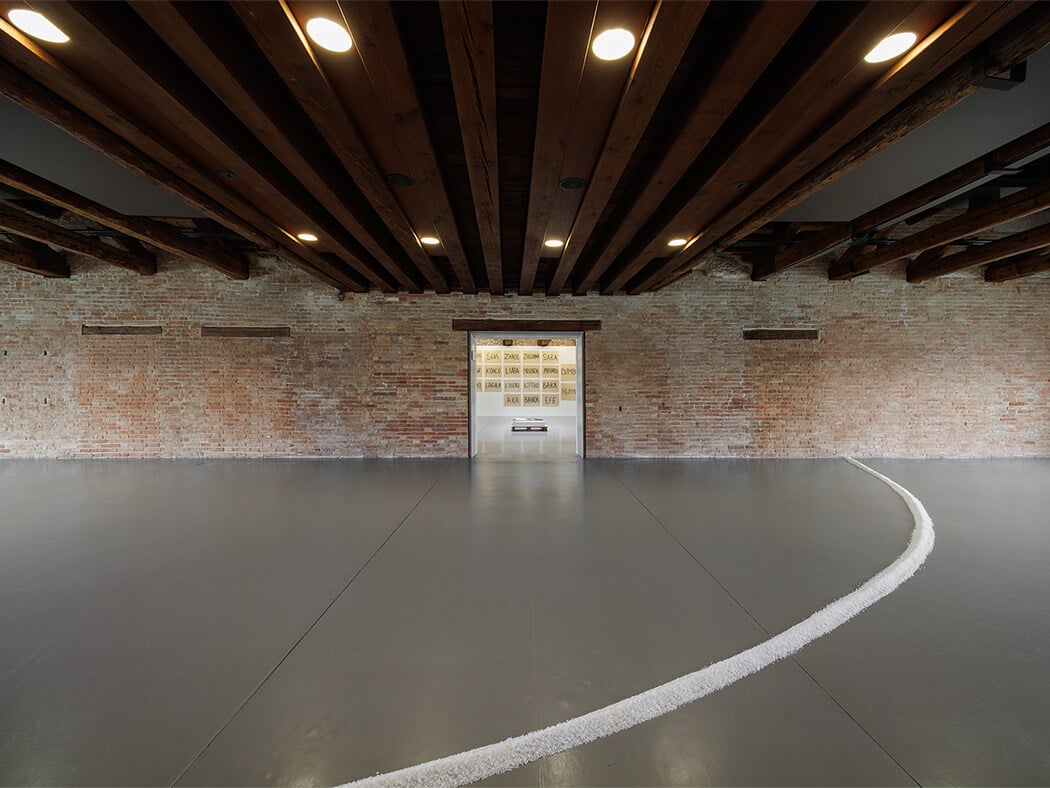
Brazilian artist Paulo Nazareth (b. 1977) has mounted a major exhibition at the Punta della Dogana in Venice, working remotely to honor his pledge not to set foot in Europe until he has walked through all 54 African countries. The show includes a striking new installation: a line of salt tracing the shape of a slave ship (tumbeiro) on the first floor, evoking the hundreds of enslaved people who died in such vessels. Other works range from embroidered dishcloths and spontaneous photographic self-portraits to cardboard signs and resin-encased packaging critiquing racist marketing, alongside fragile handmade boat models that echo refugee crossings. The exhibition, titled "Algebra," was curated by Fernanda Brenner and runs through 2026.

Muscle memory: Natasha Tontey’s wild Venice installation explodes perceptions of Indonesian history

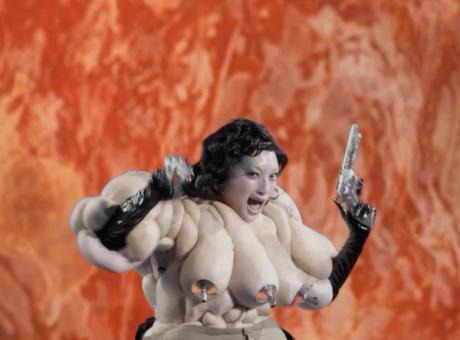
Natasha Tontey's new installation "The Phantom Combatants" at the Ateneo Veneto in Venice reimagines the story of Len Karamoy, a woman who was part of the CIA-funded Permesta resistance movement in North Sulawesi, Indonesia (1957-1961). The 22-minute film, commissioned by the LAS foundation and Amos Rex, features absurdly muscular mutant warriors and draws on Indigenous belief systems, video games, Indonesian soap operas, and B-movie aesthetics to explore themes of autonomy, resistance, and historical perspective.

Au Mémorial de Caen, les artistes africains font face à l’histoire de la colonisation

The Mémorial de Caen, a museum dedicated to World War II and the Cold War, has opened a new exhibition titled "(Dé)colonisations: des artistes africains interrogent l'histoire" (Decolonizations: African Artists Question History). Curated by Ayoko Mensah and Jean-Yves Marin, the show features 80 works by contemporary artists of sub-Saharan African origin, including Omar Victor Diop and Roméo Mivekannin. Swiss collector Jean Claude Gandur, who is building a foundation adjacent to the museum, lent 23 works, and his foundation's curator Olivia Fahmy helped organize the exhibition. The show is a prelude to a planned permanent section on colonial history at the memorial.

And We Shall Go Through Their Hills Without Much Delay

This article documents three journeys into and out of Yunnan, China, spanning from 1874 to 2023. It begins with British interpreter Augustus Raymond Margary's failed colonial expedition to establish a trade route, which ended in his violent death and contributed to unequal treaties opening Southwest China. It then follows a Naxi student named Xueshan in 1937, whose railway journey introduced modern timekeeping to the region, and finally describes the construction of the Burma Road, a critical WWII supply route. The narrative concludes with the artist Cheng Xinhao retracing these routes on foot from Kunming toward Burma over a year and a half, reflecting on history, bodily experience, and the layers of infrastructure that have reshaped the landscape.

Welcome to Venice: the shows you won’t want to miss at the 61st Biennale

The 61st Venice Biennale, titled "In Minor Keys," opens with a keynote exhibition conceived by the late Koyo Kouoh and realized by her team after her sudden death in May 2025. The show spans the Central Pavilion in the Giardini and the Arsenale, featuring 110 artists and collectives. Highlights include Bracha L. Ettinger's installation at the Hotel Metropole, where she transforms a room where Sigmund Freud wrote part of *The Interpretation of Dreams* into a feminist 'borderspace,' and works by artists such as Arthur Jafa, Richard Prince, Issa Samb, Beverly Buchanan, and Daniel Lind-Ramos. The exhibition explores themes of history, colonialism, war, and environmental destruction, aiming for a 'sotto voce' tone that nonetheless delivers powerful, liberating statements.

The best and worst we saw at the Venice Art Biennale 2026. Artribune's hits and flops

Il meglio e il peggio che abbiamo visto alla Biennale d’Arte di Venezia 2026. Top e flop di Artribune

The 61st Venice Biennale, titled "In Minor Keys" and directed by Koyo Kouoh, opened amid significant turmoil: the death of a newly appointed curator, diplomatic tensions over the presence of Russia and Israel, political protests, and the unprecedented collective resignation of the jury, which led to the Golden Lions being awarded by public vote for the first time. Despite this chaotic backdrop, the exhibition—featuring a record 100 national pavilions—has been widely praised for avoiding moralistic pedagogy and instead embracing visual seduction, formal quality, and sensory joy while addressing themes of identity, memory, colonialism, ecological crisis, and violence. The article highlights top and flop moments from the opening week, including strong showings by Biennale president Pietrangelo Buttafuoco and a standout exhibition at Fondazione Prada.

A Vienna una grande mostra dedicata a Daumier, l’artista della satira

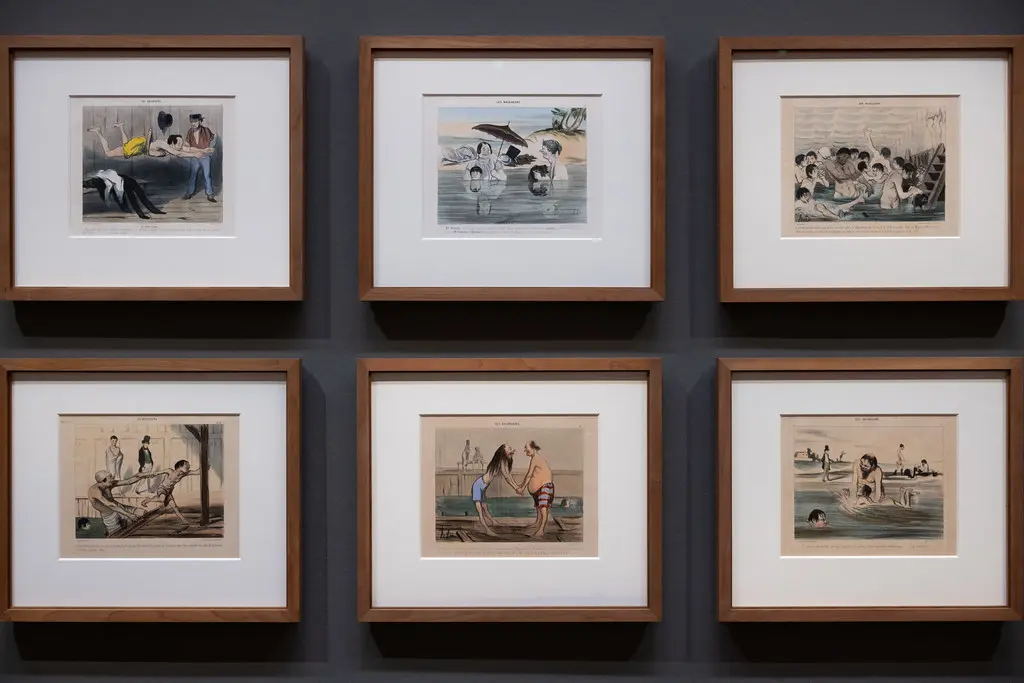
The Albertina Museum in Vienna is hosting a major retrospective titled "Honoré Daumier – Mirror of Society," dedicated to the French artist Honoré Daumier (1808–1879). The exhibition features lithographs, drawings, paintings, and sculptures, with significant loans from the Städel Museum in Frankfurt. Daumier, known for his sharp satire and acute social observation, critiqued political abuses and social injustices of 19th-century European society. The show also recalls a previous Daumier exhibition held at the Albertina in 1936, which served as a political statement against Nazi oppression.

NEW ZEALAND PHOTOGRAPHER FIONA PARDINGTON REPRESENTS AOTEAROA AT THE VENICE BIENNALE

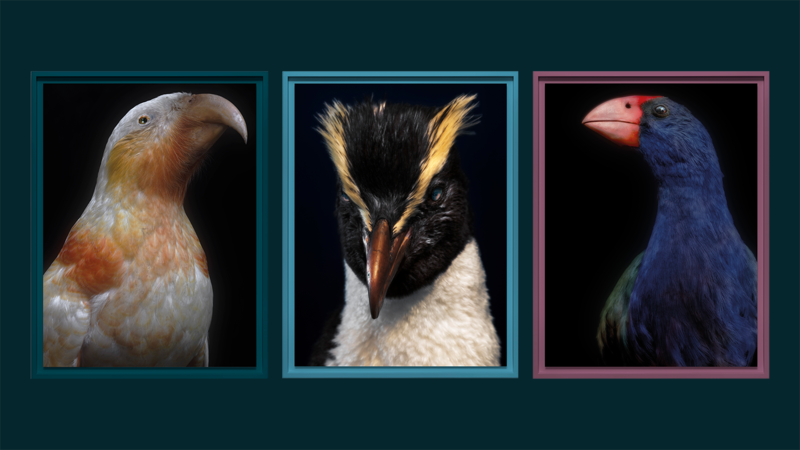
New Zealand photographer Fiona Pardington (born 1961, Auckland) is representing Aotearoa at the 61st Venice Biennale with her exhibition *Taharaki Skyside*, on view from May 9 to November 22, 2026, at the Aotearoa New Zealand Pavilion. The show features large-scale portraits of taxidermied birds from museum collections across New Zealand and Australia, focusing on endemic species including the extinct huia and whēkau. Curated by Felicity Milburn and Chloe Cull, the exhibition is presented by the Arts Council of New Zealand Toi Aotearoa (Creative New Zealand) and Christchurch Art Gallery Te Puna o Waiwhetū.

First Impressions of a Venice Biennale Torn Apart by the Present

The 61st Venice Biennale, titled "In Minor Keys," opens amid turmoil: its curator Koyo Kouoh died of cancer during planning, and the festival jury resigned after a controversial statement about excluding Israel and Russia from prizes, replaced by a Eurovision-style people's choice award. The main exhibition, completed by a team of five collaborators using Kouoh's plans, features over 110 artists and collectives, with highlights including works by Big Chief Demond Melanchon, Tammy Nguyen, Guadalupe Maravilla, Ayrson Heráclito, and a section focused on Michael Armitage's Nairobi Contemporary Art Institute.

Sandra Gamarra: “Réplica” Is Not a Copy

Sandra Gamarra Heshiki's exhibition "Réplica" at MASP in São Paulo opens with an unplanned replica of Francisco Laso's "Habitante de las cordilleras del Perú" (1855), which could not travel from Lima due to bureaucracy. Gamarra produced an inverted, altered version, establishing a critical distinction between copying and responding. The exhibition is organized into sections that parody the classical chronology of encyclopedic museums—"Pre-colonial," "Colonial," "Post-independence," "Modern," and "Contemporary"—transforming the museum into an object of analysis. Gamarra's paintings engage with colonial iconographies, such as the pinturas de castas, by inscribing racial classifications directly onto the figures, making the colonial verdict inseparable from the bodies depicted.

7 artists to have on your radar at Gallery Weekend Berlin 2026

Gallery Weekend Berlin returns for its 22nd edition from May 1 to 3, 2026, featuring 50 galleries across 66 locations throughout the city. The event showcases both established and emerging artists from over 30 countries, with highlights including Martine Syms's pop-up boutique at Sprüth Magers, Göksu Kunak's performance-based exhibition at Ebensperger, and a new sector called Perspectives featuring James Turrell. Other notable presentations include Wynnie Mynerva's exploration of love and colonialism at Société, Monty Richthofen's city-wide performance at Dittrich & Schlechtriem, and Hanna Stiegeler's intimate screenprinted canvases at Sweetwater.

Pio Abad Explores Home and Diaspora for the 2026 Venice Biennale

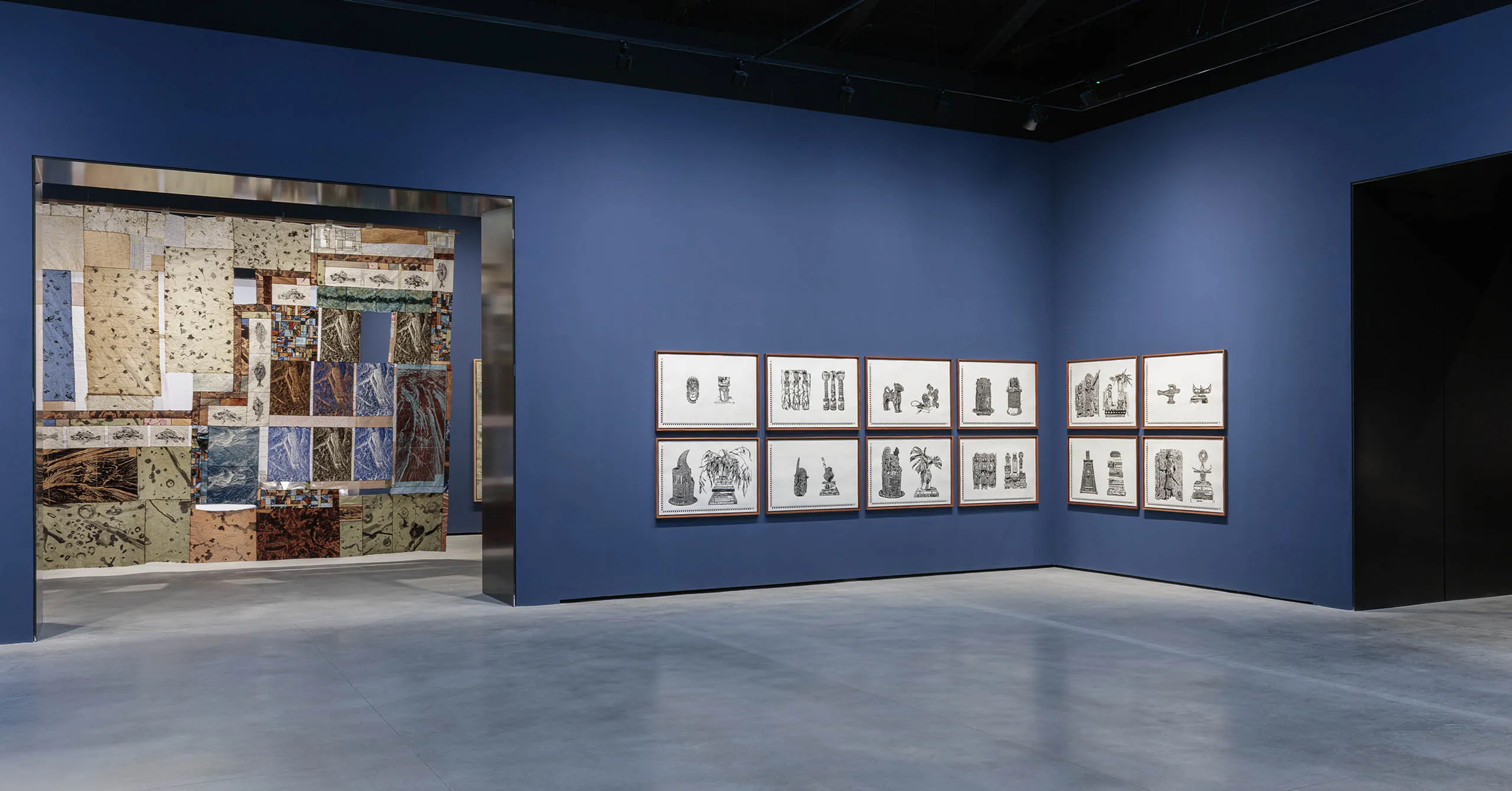
Filipino artist Pio Abad is presenting a series of intricate, hand-drawn works at the 2026 Venice Biennale as part of the exhibition "In Minor Keys," conceived by the late curator Koyo Kouoh. The works, created over four years with a 0.3-millimeter pen, include pieces such as "I’m Singing a Song That Can Only Be Born After Losing a Country" (first shown at the Ashmolean Museum in 2024), "Banua" (his first drawing on fabric), and "1897.76.36.18.6," which reflects on the looting of the Benin Bronzes. Abad, born in the Philippines and based in London, explores themes of migration, memory, exile, and the itinerant nature of objects and language.

Exhibition | Naomi Rincón Gallardo, 'Sonnet of Vermin' at Hayward Gallery, London, United Kingdom

Naomi Rincón Gallardo presents her first solo exhibition in London, 'Sonnet of Vermin,' at the Hayward Gallery. The show features her 2022 film following a group of animals from Mesoamerican myths—Bat, Snake, Scorpion, and a choir of frogs—as they navigate dystopian landscapes in Oaxaca, communicating via radio signals and calling for solidarity amid social and ecological devastation. Rincón Gallardo works across video, performance, drawing, and sculpture, weaving cuir/queer resistance, pre-colonial folklore, DIY aesthetics, music, and dance into surreal narratives that critique colonialism and exploitation.

Venice Biennale 2026: The Pavilions Not to Be Missed

Biennale de Venise 2026 : les pavillons à ne surtout pas manquer

The 61st Venice Biennale, curated by Koyo Kouoh as an invitation to slow down and reconnect with emotions, features a constellation of contemplative and powerful proposals across the city. Notable national pavilions include the Holy See transforming a monastic garden into an immersive sound experience by Soundwalk Collective, Canada exploring colonial heritage through giant water lilies by Abbas Akhavan, and Austria electrifying the Giardini with radical performances by Florentina Holzinger. Other highlights include Spain dissecting collective memory through postcards, Poland imagining new forms of language between human and underwater worlds, and India's pavilion exploring notions of home.

S&M-inspired Greek Pavilion in Venice confronts its fascist chains

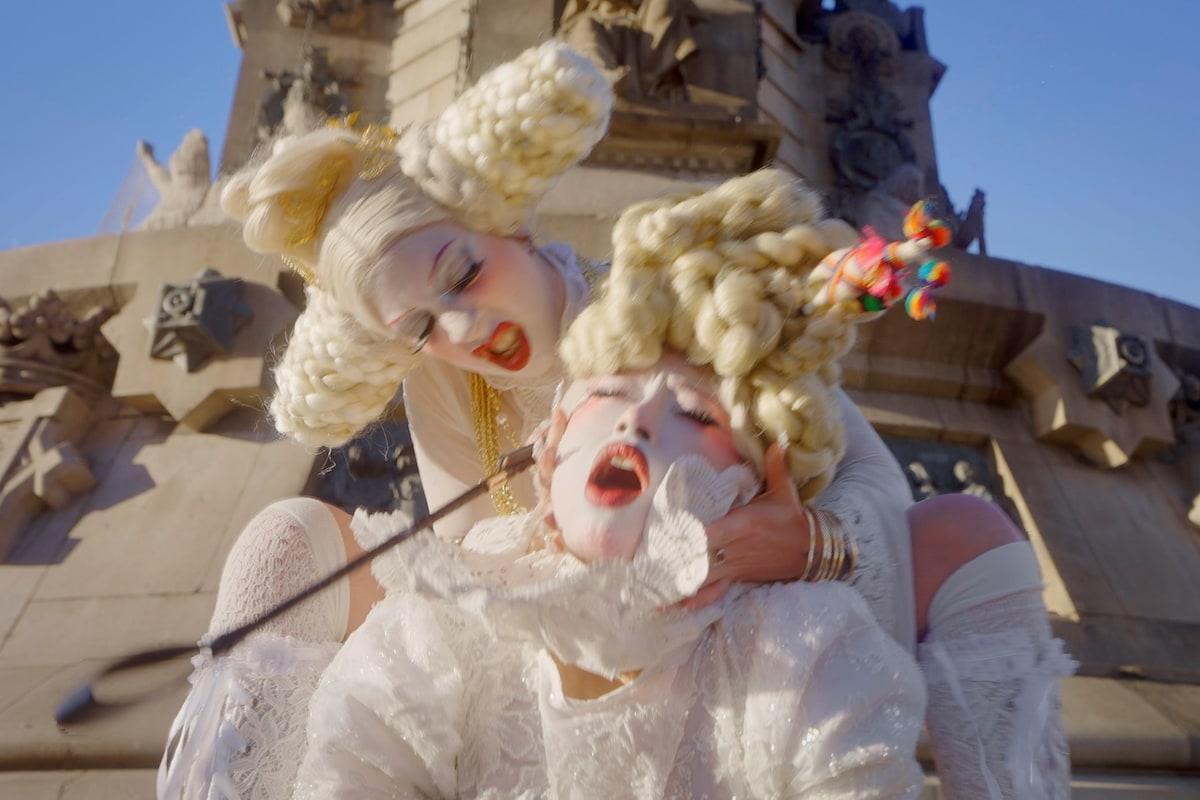
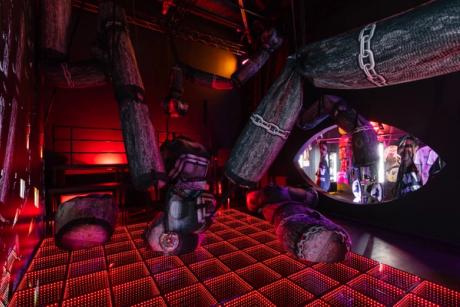
The Greek Pavilion at the 2026 Venice Biennale, titled "Grecia" and conceived as a drag artist, presents an S&M-inspired installation by artist and architect Andreas Angelidakis. The immersive space features a red neon-lit floor, soft sculptures resembling beanbags, fragmented marble columns wrapped in chains, and souvenirs bearing images of queer artists and the late activist Zak Kostopoulos (Zackie Oh). The pavilion aims to deconstruct the idea of a fixed national identity, exploring themes of queerness, fascism, and historical trauma.

Abbas Akhavan Transforms the Canada Pavilion Into a Greenhouse, Daring Viewers to Leave Behind Their Preconceptions

Artist Abbas Akhavan has transformed the Canada Pavilion at the Venice Biennale into a functioning greenhouse for his exhibition "Entre chien et loup." The pavilion now houses a 6,000-gallon pool containing giant Victoria water lilies, with modifications including grow lights, water misters, a new ventilation system, and structural reinforcements to support the 25-ton water tank. The installation evokes Victorian-era Wardian cases and London's Crystal Palace, but Akhavan emphasizes that his interest in the lilies began intuitively, not as a commentary on colonialism or empire. The project, developed with curator Kim Nguyen, involved collaboration with Kew Gardens and the Orto Botanico di Padova to cultivate the plants, and the outcome remains uncertain as the lilies may thrive or wither over the exhibition's six-month run.

L’artista Kader Attia ci racconta la sua opera alla Biennale di Venezia 2026. L’intervista

Kader Attia presents his multimedia installation "Whisper of Traces" at the 2026 Venice Biennale, curated by Koyo Kouoh under the theme "In Minor Keys." The work explores the intersections of magic, spirituality, traditional healing, and digitalization, drawing on Attia's long-standing interest in how colonialism, neoliberalism, and technology have transformed shamanic and healing practices. Attia describes the project as an accumulation of psychic traces from human history, which his mother called "ghosts."

Two exhibitions; one shared dialogue: Weyburn Art Gallery

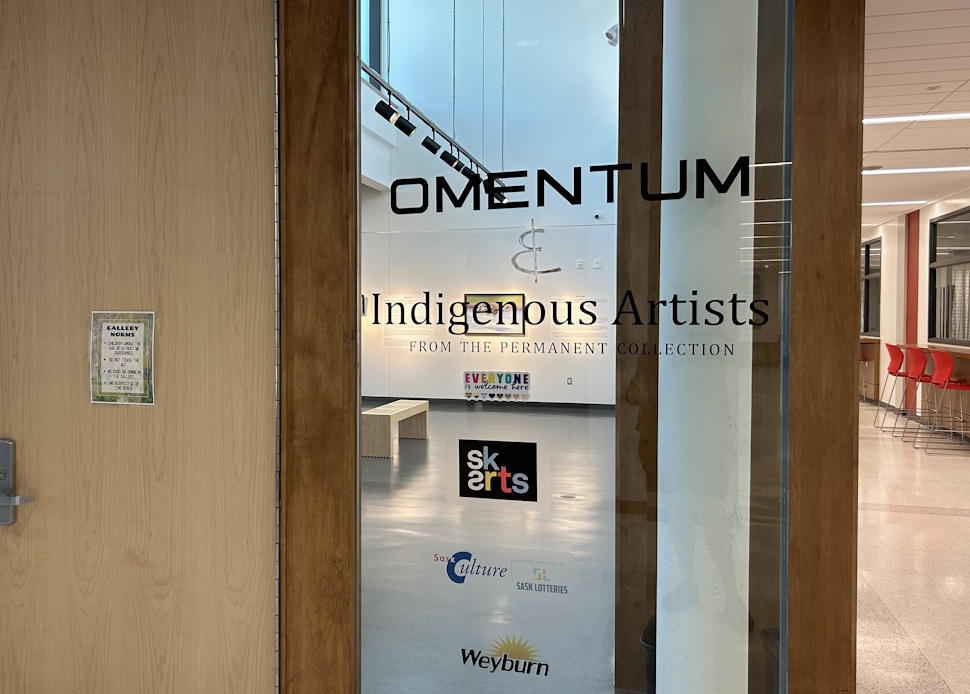
The Weyburn Art Gallery in Saskatchewan is presenting a dual exhibition running through the end of June, featuring two complementary shows. The first, 'Omentum: A look into the Indigenous Experience of the 21st Century- Exhibition Series, 2019' by Nehiyawak-Métis artist John Brady McDonald, comprises ten paintings that address themes such as Missing and Murdered Indigenous Women, cultural appropriation, residential school legacies, and the murder of Colten Boushie. Each painting was personally named by an influential Indigenous figure, including Isaac Murdoch, Rosanna Deerchild, and Dr. Evan Adams. The second exhibition draws from the City of Weyburn’s Permanent Collection, showcasing works by Indigenous artists Michael Lonechild, Ken Lonechild, and Mike Keepness, which explore identity, place, and memory.

In Minor Keys: The 61st Biennale di Arte Venezia Opens Under Koyo Kouoh (1967–2025).

The 61st Biennale di Arte Venezia opens under the posthumous curatorial vision of Koyo Kouoh (1967–2025), the late Cameroonian-born curator who reshaped contemporary African and diasporic art discourse. The central exhibition, spanning the Giardini and Arsenale, features 111 participants including artists, collectives, and artist-led organizations from across the Global South, with works in textiles, film, sculpture, and performance that interrogate colonialism, migration, and ecological repair. The Biennale is also marked by a pronounced presence of African and diasporic narratives across national pavilions, including several first-time pavilions from the African continent.

From Paris To Gyeongseong’ Illuminating The Flow Of Modern Art​

The article 'From Paris To Gyeongseong’ Illuminating The Flow Of Modern Art' explores the historical and cultural exchange of modern art between Paris and Gyeongseong (the former name of Seoul during the Japanese colonial period). It traces how Western modernist movements, particularly from Paris, influenced Korean artists in the early 20th century, highlighting the cross-cultural dialogue that shaped the development of modern art in Korea. The piece examines specific artworks, exhibitions, and the role of key figures who facilitated this artistic flow.

‘Close, yet distant': MMCA exhibition revisits Korea-Japan artistic ties since 1945

The National Museum of Modern and Contemporary Art (MMCA) in Gwacheon, South Korea, has opened a major exhibition titled “Art between Korea and Japan since 1945,” co-organized with the Yokohama Museum of Art. Running from May 14 to September 27, 2026, the show marks the 60th anniversary of normalized diplomatic ties between the two countries. Featuring some 200 works by 43 artists, including Zainichi artists and video art pioneer Nam June Paik, the exhibition traces eight decades of artistic exchange shaped by colonialism, war, division, and ongoing tensions. It previously opened in Yokohama, drawing over 37,000 visitors—significantly surpassing typical attendance—with strong interest from younger audiences.

"Consequences of being" at The FLAG Art Foundation by Daniel Belasco

Deborah Roberts presents her newest body of work in the exhibition "Consequences of being" at The FLAG Art Foundation, featuring eight canvases and nine mixed-media works on paper that blend collage, painting, and drawing. The works explore the postcolonial landscape of Europe and Africa, using fragmented imagery of Black children against stark-white backgrounds to address themes of colonialism, commerce, and identity. Key pieces include "Have a seat, this may take a while" (2025), which incorporates miniature sailing ships and a collaged tiara from Queen Elizabeth II, and "Hands in the air," which critiques racist packaging from a German ice cream company. The exhibition also includes a series of eight collages titled "Many thousands gone" and a sculptural edition, "Zuri," a ceramic bust with metallic glaze.

“We are passing the Pillars of Hercules”. The artist Luca Vitone sends us the logbook of his sailing voyage to Saint Helena

“Stiamo superando le Colonne d’Ercole”. L’artista Luca Vitone ci manda il diario di bordo del suo viaggio a vela verso Sant’Elena

Italian artist Luca Vitone has embarked on a sailing voyage from the port of La Línea, near Gibraltar, toward the island of Saint Helena, as part of his project "Pro Tempore." After six years of preparation, Vitone and his crew—including commander Pier Bruno Morelli, sound engineer Alessandro Daniele, navigator Pietro Bertozzi, cinematographer Elvio Manuzzi, and writer Carlo Antonelli—set sail on the cutter Adriatica. The journey is supported by the Italian Council program, promoted by the Ministry of Culture's Direzione Generale Creatività Contemporanea, and by the Fondazione Oelle in Catania, led by president Ornella Laneri.

Ekow Nimako: Reimagining African Futures in Black LEGO

Ghanaian-Canadian artist Ekow Nimako presents 'Building Black Civilisations – The Nile 3025 CE' at Wereldmuseum Amsterdam, an exhibition of monumental sculptures constructed entirely from black LEGO elements. The works imagine a liberated Africa in the year 3025, merging ancient Nile civilizations with Afrofuturist visions of technological transcendence and ancestral memory. In an interview with ART AFRICA, Nimako discusses how his practice uses the cultural polarity of LEGO—a childhood toy—to build serious, Black-centered narratives that resist historical erasure and propose expansive futures for the African continent.

On the Somalia Pavillion

At the 2026 Venice Biennale, Somalia has established its first-ever national pavilion, commissioned by the Somali government to showcase the richness of Somali culture through the theme of Saddaxleey, a triadic form of Somali poetry and proverbs. The pavilion features works by Somali Swedish artist Ayan Farah, UK-based Somali Danish multidisciplinary artist Asmaa Jama, and Somali British poet Warsan Shire. However, a collective of queer Somali artists, curators, and culture workers called Warbixinta Cidda has publicly criticized the pavilion for overrepresenting the diaspora, selecting an all-male advisory board, and appointing an Italian co-curator instead of Somali curators, raising concerns about representation and neocolonialism.