filter_list Showing 11 results for "mellon foundation" close Clear
search
dashboard All 19 museum exhibitions 11article news 5article local 1candle obituary 1rate_review review 1
date_range Range Today This Week This Month All
Subscribe

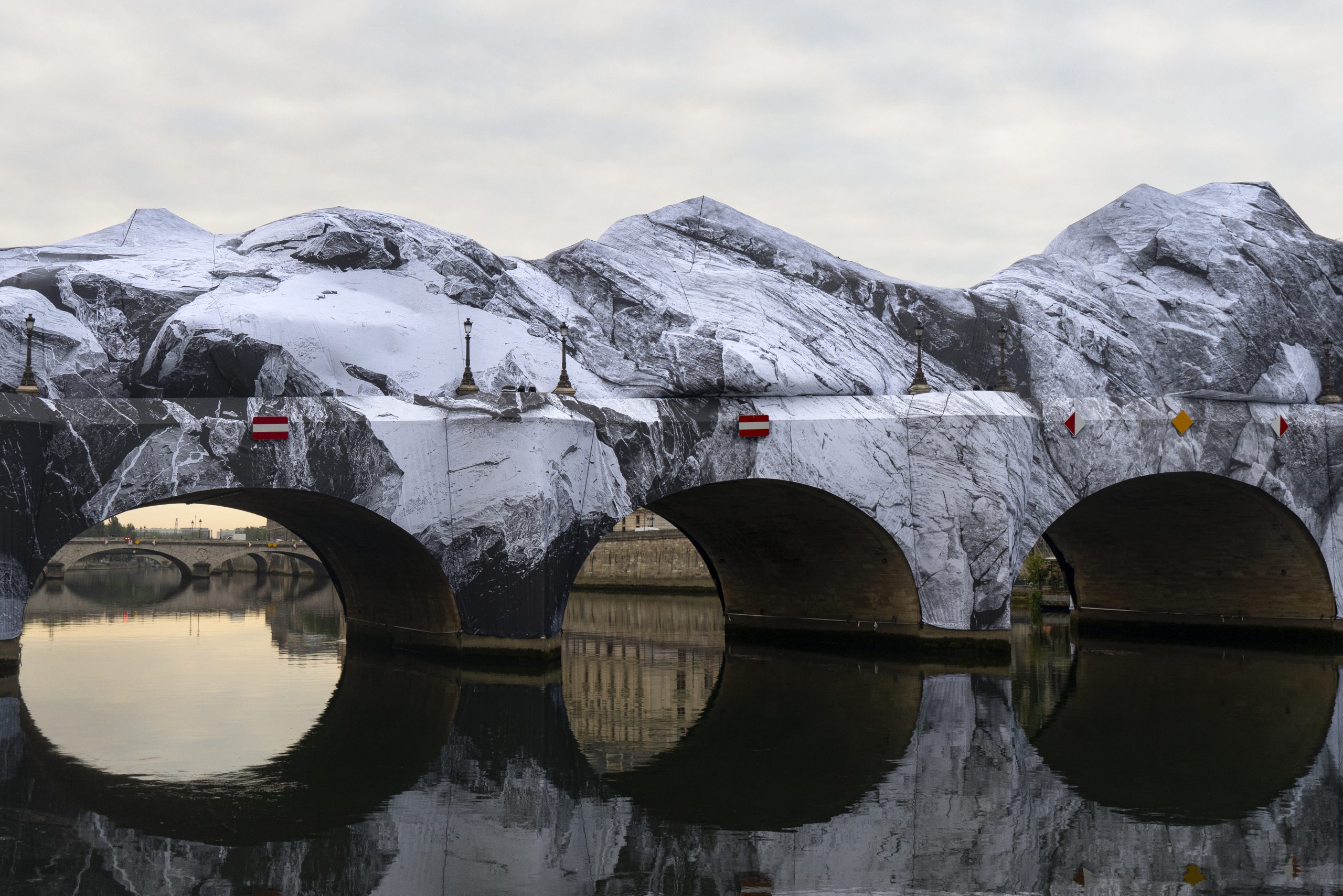
How JR Transformed Paris’s Oldest Bridge Into a Massive Grotto

French artist JR has transformed Paris's Pont Neuf, the city's oldest bridge, into a massive inflatable grotto titled *La Caverne du Pont Neuf* (2026). The installation measures 120 meters long, 20 meters wide, and up to 18 meters tall, and will be open to the public from June 6 to June 28. It incorporates sound design by Thomas Bangalter of Daft Punk, augmented reality via Snap Inc., and a Bloomberg Connect guide. Over 800 people helped realize the project, which was fabricated from 18,900 square meters of fabric and 20,000 cubic meters of pressurized air by French firm Air Toiles Concept. The work concludes a five-year series of large-scale trompe l'oeil pieces by JR and pays homage to Christo and Jeanne-Claude's *The Pont Neuf Wrapped, Paris* (1975–85), with the blessing of their foundation.

First Look: See What’s Inside the Met Gala’s “Costume Art” Exhibition

Vanity Fair art and style correspondents Nate Freeman and José Criales-Unzueta preview the Metropolitan Museum of Art's Costume Institute spring exhibition "Costume Art," which inaugurates the Condé M. Nast Galleries. The exhibition arrives amid controversy over the Met Gala being sponsored by Lauren Sánchez Bezos and Jeff Bezos, leading to boycott calls and New York Mayor Zohran Mamdani skipping the event. Despite this, Anna Wintour and Met director Max Hollein announced the gala raised a record $42 million. Head curator Andrew Bolton presents fashion as art, pairing garments with artworks like Warhol's Skull and Sarah Lucas's Nud Cycladic 9.

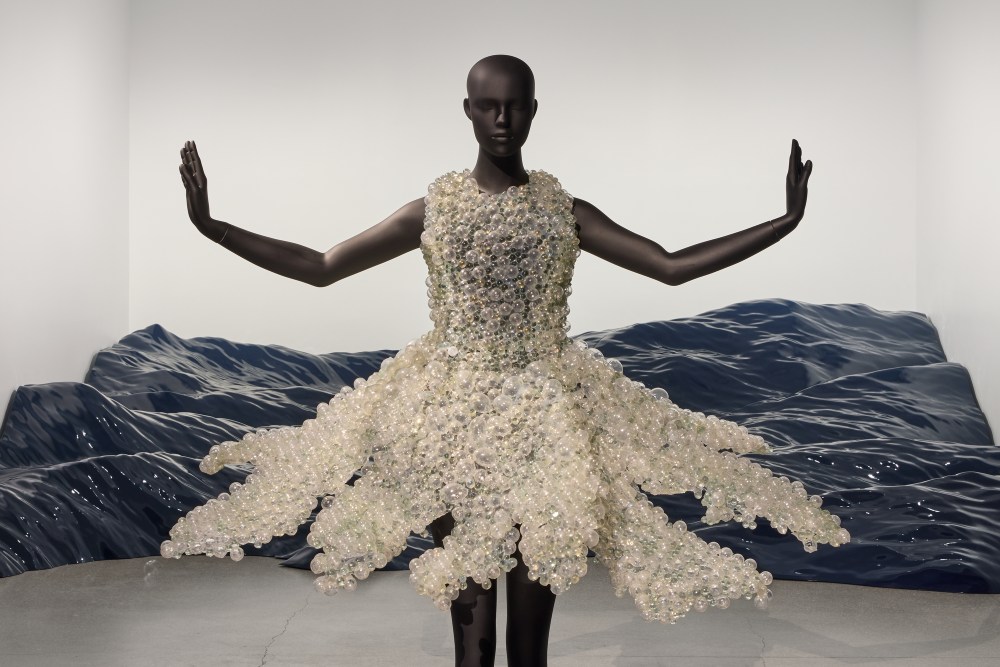
Iris Van Herpen’s Groundbreaking Work Presented in New Exhibit at Brooklyn Museum

The Brooklyn Museum opens "Iris Van Herpen: Sculpting the Senses," a mid-career retrospective of the Dutch fashion designer known for pioneering 3D-printed garments. The exhibition, which originated at the Musée des Arts Décoratifs in Paris in 2023, features over a decade of van Herpen's work, including her first 3D-printed garment from 2010, pieces worn by celebrities like Lady Gaga, Björk, and Beyoncé, and new works such as an algae dress grown from 125 million living organisms. Organized by senior curator Matthew Yokobosky, the show spans eleven themes exploring van Herpen's fusion of traditional craftsmanship with technology, science, and nature.

How Andrea Alvarez’s Long-Overdue Survey on Contemporary Latinx Art at Buffalo AKG Art Museum Came to Be

The Buffalo AKG Art Museum has opened "Let Us Gather in a Flourishing Way," the first major institutional survey of contemporary Latinx painting in the United States. Curated by Andrea Alvarez, the exhibition features 58 living artists in an intergenerational dialogue, spanning an entire museum floor with seven thematic groupings. Alvarez conducted extensive studio visits across the U.S. and Puerto Rico over an unusually long research period, focusing solely on painting to establish a clear curatorial lens while reflecting the diversity of the Latino diaspora.

Venice Biennale: A Silent US Pavilion

Biennale de Venise : un Pavillon US silencieux

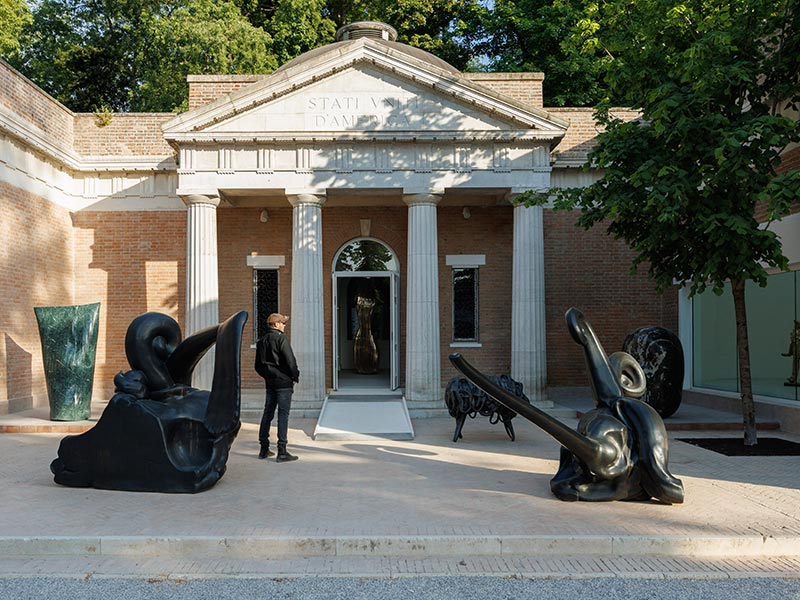
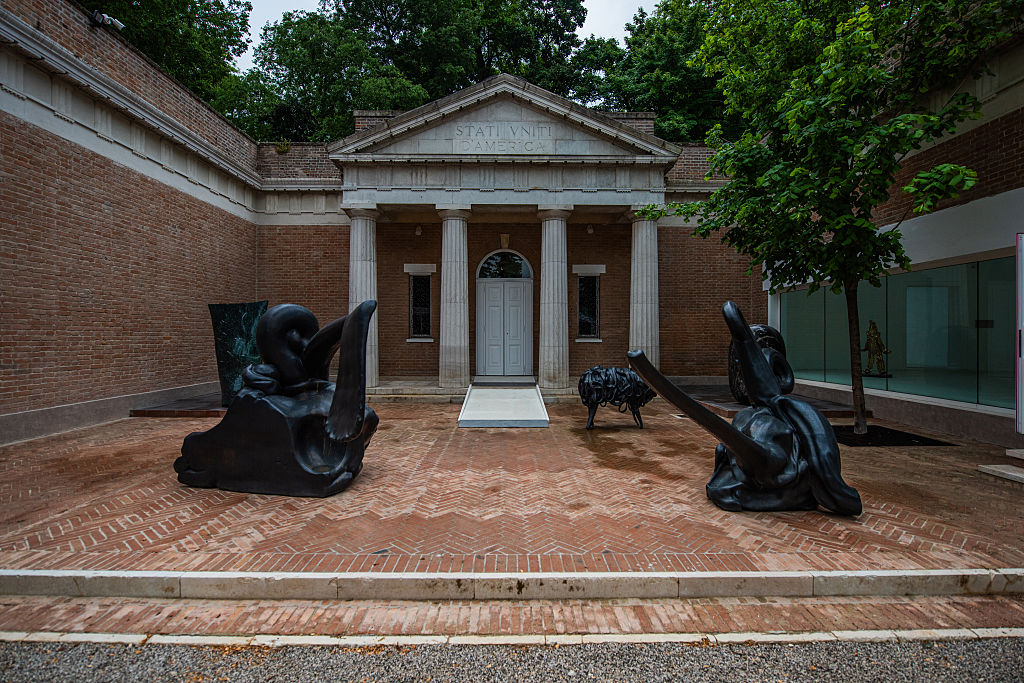
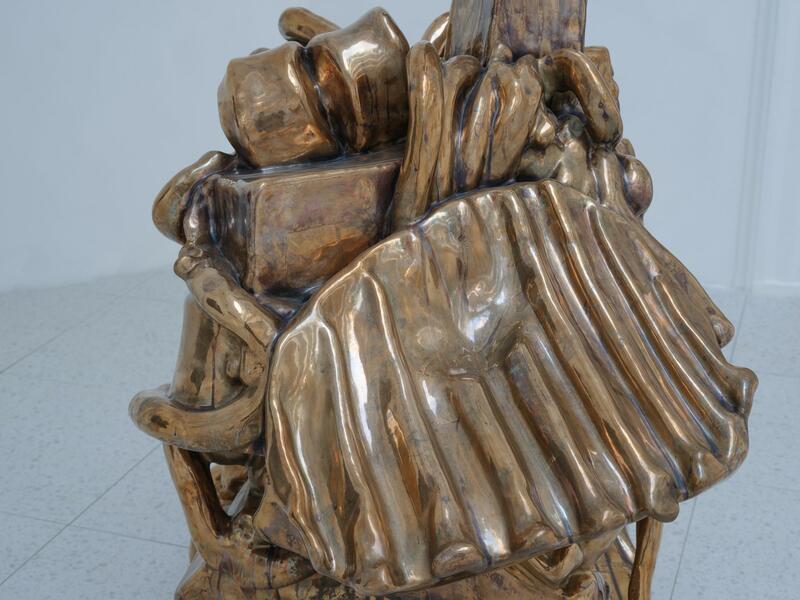
The US Pavilion at the 2026 Venice Biennale, featuring artist Alma Allen, opened to sparse crowds despite a 10% overall attendance increase at the Biennale. The pavilion was embroiled in controversy before opening: Allen was selected by the American Arts Conservancy (AAC), a private entity created in 2025 at the initiative of Donald Trump after the dissolution of the federal committee that previously oversaw the pavilion. AAC head Jenni Parido, a former pet food executive, chose the self-taught, little-known artist who had never had a solo museum exhibition. Major funders the Ford and Mellon Foundations withdrew, forcing the AAC to launch a public donation appeal. The exhibition features 25 abstract bronze, stone, and burl-wood sculptures that the artist describes as biomorphic landscapes, but critics find them pleasant yet silent, lacking the promised political or visceral resonance.

An Art-Lover’s Guide to Tunis’ Ground-Up Contemporary Scene

The article profiles Selma Feriani, a Tunisian gallerist who opened a new purpose-built gallery in the industrial El Kram district of Tunis in January 2024. Designed with architect Chacha Atallah, the three-story space features a concrete exterior referencing traditional Tunisian hand-application techniques and a garden of olive, palm, and orange trees. Feriani, who previously ran a gallery in London's Mayfair, returned to Tunisia after the Revolution to contribute to the country's cultural renaissance. The gallery currently hosts simultaneous exhibitions: Nadia Ayari's paintings of menacing plants and Nidhal Chamekh's "Frictions," part of his broader historical project "Et si Carthage…" exploring Mediterranean power dynamics.

Art Basel Hong Kong 2026: Where The World Comes To See

Art Basel Hong Kong 2026 returned to the Hong Kong Convention and Exhibition Centre from March 25–27, featuring 240 galleries from 42 countries and territories. The 13th edition introduced new sectors including Echoes, dedicated to works made within the past five years, and Zero 10, a digital art initiative making its Asia debut. The fair also transformed its Encounters sector with a collective curatorial framework based on the Five Elements, led by Mami Kataoka and three other Asia-based curators. Robb Report India covered the event through the perspectives of Indian artists Siddharth Kerkar and Jayesh Sachdev.

And We Shall Go Through Their Hills Without Much Delay

This article documents three journeys into and out of Yunnan, China, spanning from 1874 to 2023. It begins with British interpreter Augustus Raymond Margary's failed colonial expedition to establish a trade route, which ended in his violent death and contributed to unequal treaties opening Southwest China. It then follows a Naxi student named Xueshan in 1937, whose railway journey introduced modern timekeeping to the region, and finally describes the construction of the Burma Road, a critical WWII supply route. The narrative concludes with the artist Cheng Xinhao retracing these routes on foot from Kunming toward Burma over a year and a half, reflecting on history, bodily experience, and the layers of infrastructure that have reshaped the landscape.

The message behind the US pavilion at the Venice Biennale

The article previews the 61st Venice Biennale, opening May 9 and running through November 22, highlighting early controversies. The five-person Golden Lion jury, led by Brazilian curator Solange Farkas, resigned after declaring they would not consider pavilions from countries under International Criminal Court investigation, targeting the Israel pavilion and its artist Belu-Simion Fainaru. Separately, the US pavilion has drawn scrutiny from the New York Times over its selection process, with commissioner Jenni Parido (a former pet food store owner) tapping curator Jeffrey Uslip and sculptor Alma Allen, bypassing traditional funders like the Ford and Mellon foundations.

Tang Museum announces summer tours

The Tang Museum at Skidmore College in Saratoga Springs, New York, has announced its summer 2026 public tour program, beginning May 24 with weekly Tang Guide Tours led by trained student ambassadors. The museum will also host three curator-led tours: Rachel Seligman will lead tours of 'All These Growing Things' (June 11) and 'Sheila Pepe: When & Where We Rest' (August 27), while Dayton Director Ian Berry will guide a tour of 'Kathy Butterly: Assume Yes' (July 16). Additional summer programming includes the Upbeat on the Roof concert series, Frances Day community open house, and Family Saturday art-making events.

US SCULPTURES AMID CONTROVERSY AT THE VENICE BIENNALE

The United States Pavilion at the 61st Venice Biennale features sculptor Alma Allen's exhibition "Call Me the Breeze," which opened with no clear funding just ten days prior. Unlike previous pavilions supported by major foundations like Ford and Mellon, Allen's show relies on a $375,000 US government contribution and public donations via the American Arts Conservancy. The selection process was unconventional: the State Department, which took over after Trump's NEA budget cuts, imposed restrictions on DEI policies and required proposals promoting "American exceptionalism." Curator Jeffrey Uslip directly approached Allen without a formal proposal, leading the artist's two galleries—Olney Gleason and Mendes Wood DM—to drop him when he accepted the commission.