filter_list Showing 38 results for "Sur" close Clear
dashboard All 269 museum exhibitions 121article news 38trending_up market 28article local 27article policy 19article culture 16rate_review review 7person people 7candle obituary 5gavel restitution 1
date_range Range Today This Week This Month All
Subscribe

LA’s The Box Gallery to Close After 19 Years

The Box, a prominent Los Angeles gallery, announced it will close after 19 years, with its final exhibition—a two-venue collaboration with Parker Gallery for late California artist Wally Hedrick—ending April 4. The closure will be marked by a fashion show for Johanna Went on June 6. Founder Mara McCarthy cited a combination of factors, including changing economics around support for her father Paul McCarthy's work and the loss of her family's homes in the January 2025 Eaton fire, as making continued operation impossible.

Art Basel Curbs Pre-Fair Sales—and More Art Industry News

Art Basel has launched a "Basel Exclusive" initiative to curb pre-fair PDF sales, encouraging galleries to withhold works from previews to drive in-person discovery at its flagship Swiss event (June 16–21). Around 170 of 232 exhibitors have opted in. Meanwhile, Volta returns to Basel with a new "5,000 Edit" section for works under CHF 5,000 to attract younger collectors, and the alternative fair Esther will hold its third edition in New York during Frieze Week. In other news, Sotheby's set a U.S. record for design auctions with the Jean and Terry de Gunzburg collection totaling $96 million, and billionaire collector Mitchell P. Rales pledged $116 million to the National Gallery of Art to fund loans to smaller museums. The Smithsonian American Art Museum named Lynda Roscoe Hartigan as its new director, and Gladstone Gallery plans a new Seoul space for 2026.

Alma Allen Speaks Out on Backlash Over U.S. Pavilion Commission: ‘A Little Stressful’

Sculptor Alma Allen has spoken out for the first time about the backlash he faced after accepting the commission to represent the United States at the Venice Biennale. In a rare interview on the podcast *Time Sensitive*, recorded at his home in Tepotzlán, Mexico, Allen described the response as “a little stressful” but said he never hesitated when curator Jeffrey Uslip invited him last fall. His selection sparked controversy because the State Department’s requirement that proposals “reflect and promote American values” while not promoting DEI initiatives led higher-profile artists like William Eggleston and Barbara Chase-Riboud to refuse. Allen’s former galleries, Mendes Wood and Olney Gleason, dropped him after he accepted, though he has since joined Perrotin. He also hinted that his exhibition, “Call Me the Breeze,” will include work about conflict and surveillance.

Saudis Renege on Met Opera Financial Aid, Berlin’s Culture Senator Resigns, and More: Morning Links for April 24, 2026

The Metropolitan Opera has announced that Saudi Arabia reneged on a noncommittal memorandum of understanding that would have provided up to $200 million over eight years to the cash-strapped New York institution. Met general manager Peter Gelb said the Saudis blamed the war in Iran and the blocked Strait of Hormuz, but funding had already failed to materialize before the conflict, prompting preemptive layoffs in January. Separately, Berlin culture senator Sarah Wedl-Wilson resigned after a state audit found she illegally authorized €2.6 million for 13 projects meant to combat antisemitism, violating budget regulations. Other news includes President Trump's plan to renovate the Lincoln Memorial reflecting pool, Ontario increasing support for the Art Gallery of Ontario and Royal Ontario Museum, Rome's new photography museum, and the appointment of Thiago de Paula Souza as curator of the eighth Athens Biennale.

US National Gallery of Art gifted more than 1,200 Mitch Epstein photographs

The National Gallery of Art in Washington, D.C., has received a gift of 1,261 photographs from artist Mitch Epstein and his wife, Susan Bell. The donation, the largest institutional collection of Epstein's work, spans his five-decade career and includes major series such as 'American Power,' 'Property Rights,' and 'New York Arbor.'

Collector Dimitris Daskalopoulos’s NEON to Conclude After ‘Having Fulfilled Its Mission’

NEON, the Athens-based contemporary art initiative founded by collector Dimitris Daskalopoulos, will conclude its activities later this year after 14 years. Its final project is a trilogy of exhibitions by artist Michael Rakowitz at the Acropolis Museum, with the last installment set for 2026. The organization also announced it has fulfilled its cultural and social mission.

How Much Is That Chagall in the Window: Metropolitan Opera Faces Funding Crisis After Saudi Deal Collapse

The Metropolitan Opera in New York faces a $30 million deficit after a $200 million funding deal with Saudi Arabia collapsed. The Saudi government withdrew from the agreement, which would have sent Met performers to the Royal Diriyah Opera House for three weeks each February, citing economic pressures from the Iran War and the blockage of the Strait of Hormuz. To address the shortfall, the Met is considering selling two monumental Marc Chagall paintings—The Sources of Music and The Triumph of Music (1966)—valued at $55 million, along with other options like selling naming rights or seeking a similar deal with another country.

Barbara Chase-Riboud Says She Declined US Pavilion Offer Because It Was ‘Not the Moment’

Sculptor Barbara Chase-Riboud has revealed she declined an offer to represent the United States at the 2025 Venice Biennale, stating that for her, "this was not the moment." The offer was made by the American Arts Conservancy, the nonprofit organization commissioning the US Pavilion. The revelation comes amid ongoing scrutiny of the selection process that ultimately led to artist Alma Allen being chosen, following reports that the Trump administration removed diversity language from application materials.

Julia Stoschek Foundation to Close in Berlin

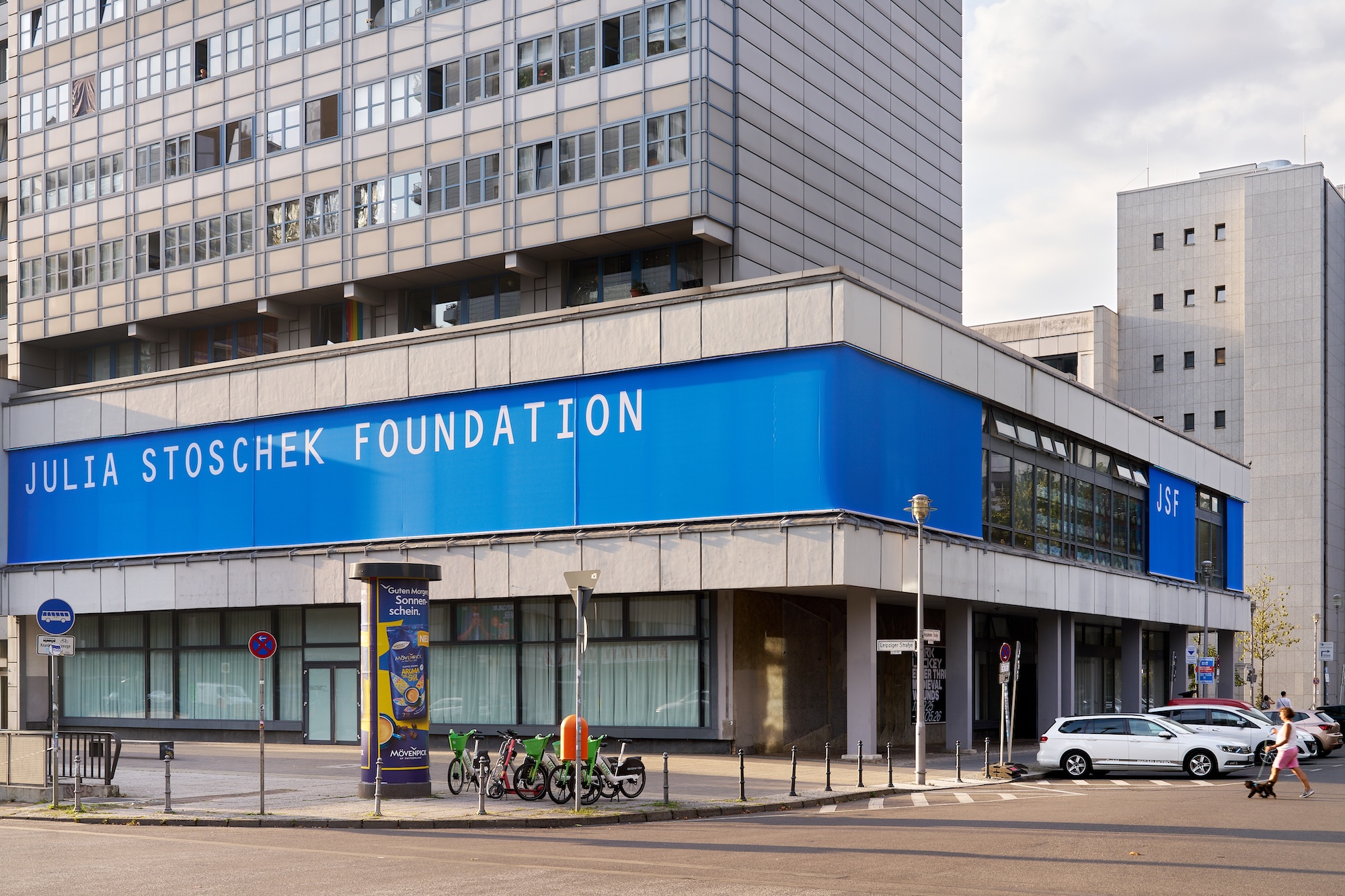
The Julia Stoschek Foundation will close its Berlin outpost at the end of October 2025, after a decade of operation. The Düsseldorf-based nonprofit, which holds one of the world's largest collections of time-based art, opened the Berlin space in 2016 and welcomed over 450,000 visitors across 22 exhibitions, including solo shows by Meriem Bennani, Stan Douglas, Arthur Jafa, and Mark Leckey. The foundation cited a "strategic realignment" that will shift focus to projects elsewhere in Germany and abroad. Its Düsseldorf space is currently closed for renovations and expected to reopen next year.

"Du bist nun in die ewigen Jagdgründe der Kunst entschwunden"

This week's art news roundup covers several stories: Jonathan Meese publishes an obituary for his mother Brigitte Meese in Der Spiegel, describing her as a central figure in his life and work. Pussy Riot seeks to take over the Russian Pavilion at the Venice Biennale. The European Media Art Festival (EMAF) in Osnabrück faces controversy over antisemitism allegations linked to Palestinian-American filmmaker Basma al-Sharif, leading the city and state government to distance themselves from the festival. In the NZZ, Christian Wildhagen reports on conflicts over official political portraits, citing examples like Swiss councilor Martin Neukom rejecting paintings and Donald Trump criticizing his portrait. Art historian Horst Bredekamp pays tribute to Italian philosopher Federico Vercellone (1955–2026) in the FAZ, highlighting his theory of the 'self-activity of form.'

AI Suggests El Greco Could Be the Sole Author of 'The Baptism of Christ'

Une IA suggère qu’El Greco pourrait être l’unique auteur du Baptême du Christ

A new scientific study published in the journal Science Advances challenges the long-held belief that El Greco's monumental painting 'The Baptism of Christ' was completed by his workshop. Using a deep-learning tool called PATCH to analyze the painting's surface topography, researchers from Case Western Reserve University found a technical consistency suggesting the work was executed by a single hand, likely El Greco himself, despite visible variations in execution.

Leaky Berlin Modern Museum’s Opening Delayed Until 2030

The opening of the Berlin Modern Museum, a planned extension of the Neue Nationalgalerie, has been delayed until 2030 due to significant moisture damage and microbial contamination in its foundation, floors, roof coverings, and exterior walls. Originally laid in February 2024 with a projected 2027 opening, the museum's construction costs have surged from 200 million to 507 million euros, according to Monopol. A spokesperson for the Prussian Cultural Heritage Foundation stated that repairs are underway but will push completion back by approximately eight months.

Has A.I. Solved the Mystery of This El Greco Painting?

New research using artificial intelligence has challenged the long-held belief that El Greco's altarpiece *The Baptism of Christ* was largely painted by his son and workshop assistants. A machine-learning model called Patch, developed by researchers at Western Reserve University, analyzed the painting's microscopic surface texture and found underlying connections suggesting El Greco himself painted the majority of the work, with only a small region at the bottom attributed to other hands.

Berlin Museum Oversees Digital Resurrection of Hundreds of Paintings Destroyed During World War II

Berlin's Gemäldegalerie is digitally reconstructing hundreds of Old Master paintings by artists like Rubens, Veronese, van Dyck, and Caravaggio that were destroyed in fires near the end of World War II. The project uses high-resolution scans of glass negatives, primarily photographed by Gustav Schwarz between 1925 and 1944, to create detailed online renderings that will be publicly accessible for viewing and download later this year.

What You Need to Know About the Venice Biennale’s Russian Pavilion Controversy

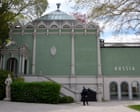
The Russian pavilion is set to return to the Venice Biennale for the first time since the 2022 invasion of Ukraine, presenting an exhibition titled 'The tree is rooted in the sky.' This has sparked significant controversy, with artists, curators, and politicians from Ukraine and several European nations calling for the pavilion's exclusion, citing the ongoing war and sanctions. The Biennale organizers have refused to remove Russia, stating they lack the authority to exclude a state recognized by Italy and emphasizing the event's role as a neutral space for cultural dialogue.

Venice Biennale’s Prize Ban on Israel and Russia Falls Short for Critics

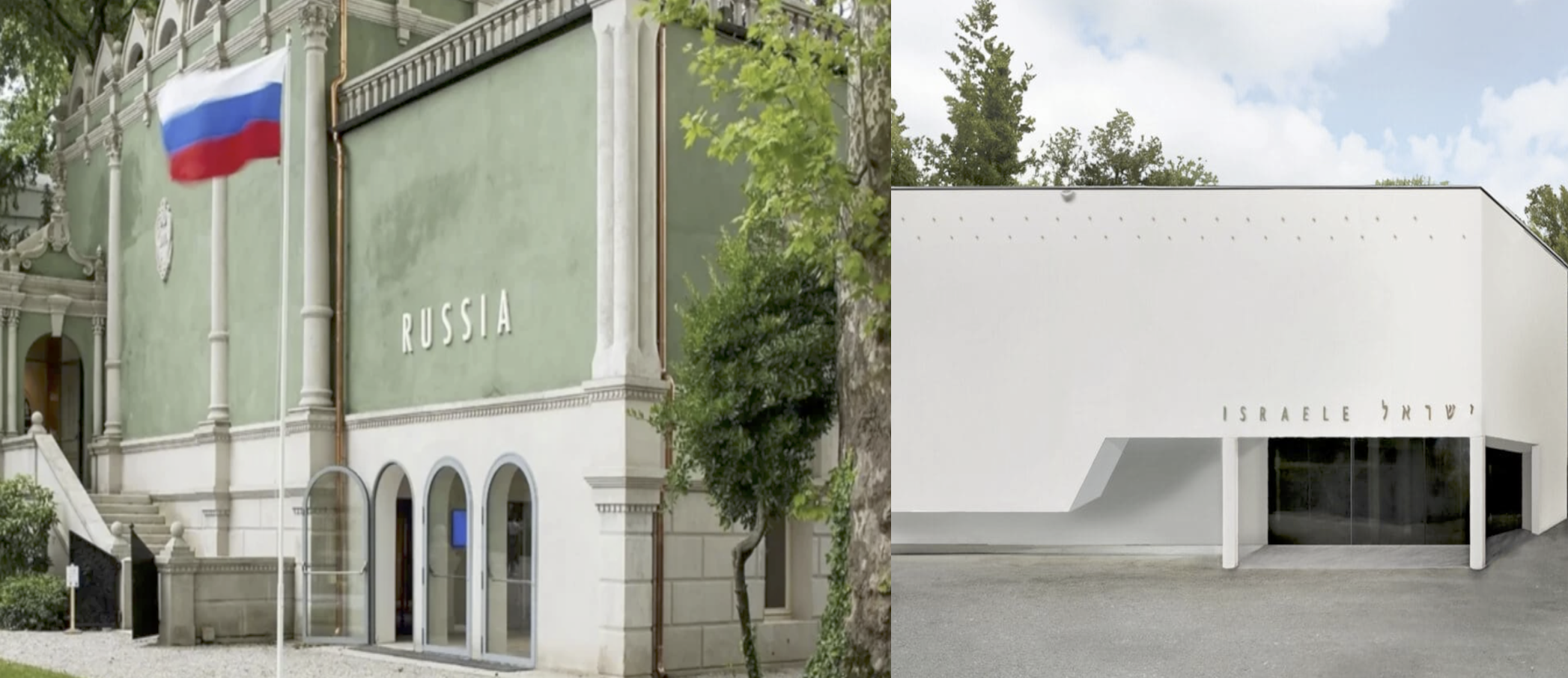
The jury of the 2026 Venice Biennale has ruled that Israel and Russia will be ineligible for the Golden and Silver Lion prizes, citing International Criminal Court charges of crimes against humanity against their leaders. The decision follows years of activism and political pressure, with the European Union withdrawing €2 million in funding from the event in protest of Russia's participation. While groups like Art Not Genocide Alliance praised the move as an unprecedented step, critics argue it falls short of a full ban on participation. Israel's artist representative, Belu-Simion Fainaru, condemned the policy as discriminatory, and an open letter signed by 70 artists and curators called for excluding all regimes committing war crimes, including the United States.

Venice Biennale Jury Bars Israel and Russia from Official Prizes

The international jury of the 61st Venice Biennale announced on April 23 that it will not consider the Israeli and Russian pavilions for official prizes, including the Golden Lion for national participation. The five-member, all-women panel—comprising Solange Farkas, Zoe Butt, Elvira Dyangani Ose, Marta Kuzma, and Giovanna Zapperi—said it would exclude countries whose leaders are currently charged with crimes against humanity by the International Criminal Court, a criterion that applies to Israel and Russia due to ICC arrest warrants for Benjamin Netanyahu and Vladimir Putin. The decision comes amid mounting controversy over the Biennale's decision to host both pavilions, with Russia returning after its artists withdrew in 2022 over the Ukraine invasion and Israel reopening after its 2024 pavilion remained closed pending a Gaza ceasefire. The European Commission had also threatened to suspend a €2 million grant over the Russian pavilion's reopening.

The soap opera continues. Minister Giuli will boycott the inauguration of the Venice Biennale

La telenovela continua. Il Ministro Giuli diserterà l’inaugurazione della Biennale di Venezia

Alessandro Giuli, Italy's Minister of Culture, has announced he will boycott the pre-opening and inauguration ceremony of the 61st Venice Biennale on May 9, 2026, escalating a political and cultural crisis. The dispute began when Biennale president Pietrangelo Buttafuoco allowed the Russian pavilion to reopen, absent since 2022 due to the Ukraine invasion, citing artistic freedom. Giuli demanded the removal of ministry representative Tamara Gregoretti from the Biennale board for failing to oppose the decision. Tensions flared during the Italy Pavilion press conference, where journalists were confined to a separate streaming room and questions were restricted. The European Commission condemned the Russian pavilion's reopening, cutting €2 million in funding and issuing a 30-day ultimatum, while 22 European countries signed a letter pressuring the institution. The Biennale's international jury, led by Solange Oliveira Farkas, then excluded Russia and Israel from award consideration, citing ethical guidelines against countries whose leaders face International Criminal Court charges for crimes against humanity.

Venice Biennale Awards Jury Won’t Consider Russia and Israel

The international awards jury for the 61st Venice Biennale has announced it will not consider countries whose leaders are charged with crimes against humanity by the International Criminal Court (ICC) for prizes. The all-women jury, chaired by Solange Farkas, published a statement on e-flux declaring this policy, which implicitly targets Russia and Israel, whose leaders Vladimir Putin and Benjamin Netanyahu face ICC warrants. The jury is responsible for awarding Golden Lions for the best national pavilion and best artist in the central exhibition. A majority of artists in the main show issued an open letter supporting the decision, while the Biennale Foundation faces criticism for allowing both nations to participate in 2026.

"Etwas zaghaft, etwas ängstlich, etwas sicher"

The article surveys recent art-world commentary, focusing on a critical review of the Turner Prize shortlist in The Guardian, where Eddy Frankel calls the selection "timid, anxious, safe" and laments a self-perpetuating, elitist system. It also covers a Hyperallergic essay by Lisa Siraganian questioning whether artworks can possess personhood, sparked by Pierre Huyghe's Venice exhibition. Additionally, it reports on controversy at the Venice Biennale, where the jury preemptively excluded countries whose leaders are sought by the International Criminal Court—namely Russia and Israel—drawing sharp criticism from Die Welt's Marcus Woeller. A podcast interview with US sculptor Alma Allen, selected for the US Pavilion, rounds out the coverage.

Julia Stoschek Foundation Closes Berlin Location

Julia Stoschek Foundation schließt Berliner Standort

The Julia Stoschek Foundation is closing its Berlin exhibition space at the end of October. The foundation, which specializes in video art, opened the venue in 2016 in a former Czech cultural center on Leipziger Straße, quickly becoming a key destination for time-based art in the city. Over its run, it presented 22 solo and group shows featuring artists such as Arthur Jafa, Ian Cheng, and Mark Leckey, attracting more than 450,000 visitors. The closure is part of a strategic reorientation: the foundation will now focus on its headquarters in Düsseldorf and temporary international projects, building on recent presentations abroad like a show in Los Angeles that drew over 30,000 visitors in early 2026.

An Era Ends When the Illusions Underlying It Are Exhausted

"Eine Ära endet, wenn die ihr zugrunde liegenden Illusionen erschöpft sind"

A media roundup covers several art world stories. The Art Newspaper reports that the ongoing Middle East conflict is unsettling the Gulf art market, causing fair postponements and shaking Dubai's image as a stable luxury hub, though galleries emphasize they continue to work. Meanwhile, the search for a new director for Germany's Kulturstiftung Dessau-Wörlitz continues after a protracted legal battle, with applications open until May 31. The New Yorker presents a reading of Johannes Vermeer's quiet scenes as fragile refuges from a violent historical context, while the Berliner Zeitung critiques the global commercialization of Frida Kahlo into a licensed brand.

Monet, the Great Traveler

Monet, grand voyageur

The publishing house Cinabre has launched a new book series called 'Partance' that explores the influence of travel on artists' work. The inaugural volume, 'Partance. Claude Monet,' published in 2026, marks the centenary of Claude Monet's death by comprehensively tracing all of his foreign travels for the first time and analyzing their impact on his art.

How Pussy Riot Is Challenging Russia’s Return to the Venice Biennale

The feminist art collective Pussy Riot is campaigning to replace the official Russian exhibition at the 2024 Venice Biennale with their own show, "Resistance Imprisoned." The alternative exhibition features art created by nearly 30 current and former political prisoners in Russia, using improvised materials like envelopes, bedding, and blood. The collective's founder, Nadya Tolokonnikova, aims to expose the country's repressive system, drawing from her own experience in a penal colony.

Venice Biennale jury ‘will not award artists from countries facing war crimes charges’

The jury of the Venice Biennale has announced it will not award prizes to artists from countries whose leaders face charges of crimes against humanity by the International Criminal Court, a decision widely seen as targeting Russia and Israel. The five-member jury, appointed by the late curator Koyo Kouoh, stated its commitment to human rights and will exclude artists from nations whose governments are under ICC investigation when selecting winners of the Golden and Silver Lion awards for the 2026 edition, which opens on 9 May. The move follows controversy over Russia’s participation in the biennale, with the European Commission threatening to suspend a €2m grant due to Russia’s involvement, and Italy’s far-right government opposing the decision.

Nations Charged With Crimes Against Humanity Will Not Be Considered for Venice Biennale Awards

The jury for the 2026 Venice Biennale announced it will not consider contributions from countries whose leaders are charged with crimes against humanity for the Golden and Silver Lion awards, effectively excluding Israel and Russia. The decision, framed as a commitment to human rights and aligned with curator Koyo Kouoh's vision, comes amid broader controversy over participating pavilions, including American artists declining to represent the US and the EU withdrawing a $2.3 million grant over Russia's involvement.

Korea’s art market grows, but working conditions for entry-level workers do not

A 20-something intern at a small Seoul gallery, identified as Park, accepted a job paying 1.35 million won ($910) per month after taxes—below South Korea's minimum wage—because she believed early experience was essential for career advancement in the art world. The article, based on interviews with the Korea JoongAng Daily, reveals that many entry-level workers face low pay and precarious conditions, exacerbated by a severe oversupply of arts graduates (48,000 annually) versus only about 3,523 job postings per year on the industry site Art More, leading to reliance on personal connections and informal hiring.

Centuries-Old Love Letter Deciphered With Help From A.I.

MyHeritage's new Scribe A.I. tool has successfully transcribed and translated the earliest surviving Valentine's letter written in English, a 1477 note from Margery Brews to her fiancé John Paston. The tool provides a full transcript, historical context, and research suggestions, making the dense Middle English script accessible.

Taiwanese Indigenous artist stripped of national prize after sexual assault conviction

Taiwan has revoked the National Award for Arts from Indigenous artist Sakuliu Pavavaljung after his sexual assault conviction was upheld by the Supreme Court. The Ministry of Culture and the National Culture and Arts Foundation announced the withdrawal on 17 April 2025, and Pavavaljung must return the NT$1 million prize. The conviction stems from a February 2021 incident involving a woman under his artistic mentorship; he was sentenced to four years and six months in prison. Allegations first surfaced in December 2021 via social media, prompting further accusations. Pavavaljung had previously been dropped from representing Taiwan at the Venice Biennale and suspended from Documenta 15.

Russia and Israel cannot win any prizes at the next Venice Art Biennale 2026. The jury takes a stand

Russia e Israele non potranno vincere nessun premio alla prossima Biennale Arte di Venezia 2026. La giuria prende posizione

The international jury for the 61st Venice Biennale, led by Solange Farkas, has unanimously declared it will not consider countries whose leaders are currently accused of crimes against humanity by the International Criminal Court. This means Russia and Israel are excluded from competing for the Golden Lion awards, including Best National Participation and Best Artist. The jury's statement, published on e-Flux Notes, emphasizes the Biennale's historical role as a platform connecting art with contemporary urgencies and acknowledges the complex relationship between artistic practice and state representation.