filter_list Showing 22 results for "The Sun" close Clear
search
dashboard All 216 museum exhibitions 115article local 23article news 22article culture 20trending_up market 18person people 8candle obituary 4rate_review review 4gavel restitution 2
date_range Range Today This Week This Month All
Subscribe

8 artists poised to break out in 2026

Artnet News asked four curators and four art advisors from around the world to each select one artist they believe is poised to break out in 2026. The article profiles the first two of eight artists: Indonesian artist Bagus Pandega, known for kinetic plant-based installations, who has had solo shows at Kunsthalle Basel and Swiss Institute New York; and Max Hooper Schneider, a Los Angeles-based artist creating aquarium-like works blending organic and artificial materials, recently exhibited at 125 Newbury gallery in New York.

paint drippings art industry news may 2

This week's art industry roundup covers major developments including the sale of Frieze to Hollywood powerbroker Ari Emanuel for $200 million, the opening of Frieze New York amid a cautious market, and the appointment of Alexander Rotter as global president of Christie's. Other highlights include the collapse of a record $32 million Gustav Klimt sale due to restitution issues, Phillips adding country-of-origin details to lot descriptions due to tariff confusion, and gallery moves such as Petzel now representing Tschabalala Self and Hauser & Wirth selling its Upper East Side townhouse for $10.5 million. The Mellon Foundation announced $15 million in emergency funds for state arts councils to offset cuts by the National Endowment for the Humanities.

Why did Van Gogh sign his paintings as ‘Vincent’?

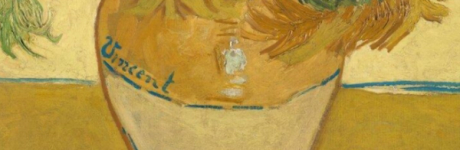
Art historian Julia Engelmayer has published a study titled 'Simply ‘Vincent’: An Overview of Van Gogh’s Signed Paintings' on the Van Gogh Museum's website, analyzing why and how Vincent van Gogh signed his works. The research reveals that only 133 of his 840 surviving paintings bear a signature (16%), an unusually low proportion for a 19th-century artist. Van Gogh signed with only his first name due to strained family relations and the difficulty non-Dutch speakers had pronouncing his surname. The study also highlights his predominant use of red signatures (on 75 works), angled signatures on over half of his signed pieces, and a distinctive horseshoe-shaped 'V' used during his Arles period.

Revealed: the amazing frame once created for Van Gogh’s Sunflowers

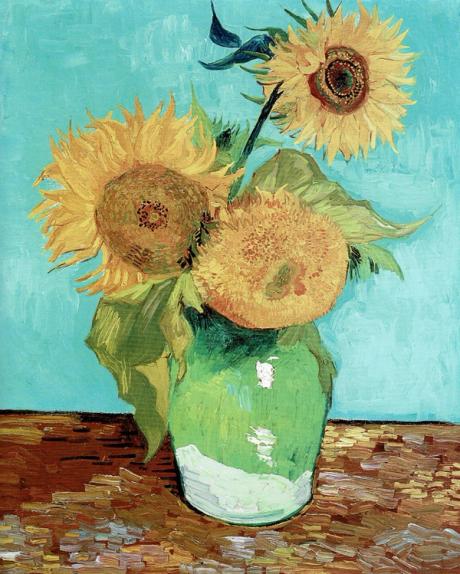
A long-lost, custom-designed Art Deco frame for Vincent van Gogh's painting "Three Sunflowers" has been identified through archival research. The frame, which featured a dark lacquer finish, randomly placed gold circles, and angled outer edges, was commissioned by the Parisian couturier and collector Jacques Doucet shortly after he acquired the painting in 1912. Its existence was pieced together from a 1930s interior photograph, a 1967 family snapshot, and a frame sold at Sotheby's in 1989, allowing for a digital reconstruction of the complete artwork.

The story behind Iran’s only Van Gogh: ‘At Eternity’s Gate'

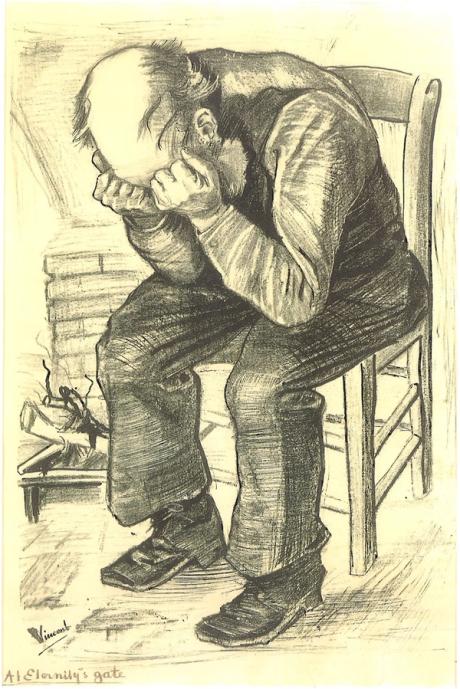
A rare, inscribed lithograph by Vincent van Gogh, 'At Eternity's Gate,' resides in the collection of the Tehran Museum of Contemporary Art. The work, one of only seven surviving examples, was acquired in 1975 by Farah Pahlavi, the wife of the Shah of Iran, for the museum. It passed through notable hands, including those of US Vice President Nelson Rockefeller, before arriving in Tehran just before the 1979 Iranian Revolution.

The Palaces of Memory

The Palaces of Memory

The article reports that Israeli and US airstrikes on Isfahan, Iran, damaged several centuries-old palaces and cultural buildings. It draws a parallel to the destruction of cultural heritage in Gaza, suggesting this may be a targeted strategy to erase cultural identity and history, which are seen as threats to occupying forces.

The US Pavilion Wants Your Money

The American Arts Conservancy, a new nonprofit with MAGA-aligned leadership, is fundraising for Alma Allen's 2026 US Pavilion at the Venice Biennale through a "Donate" button on its website, having received no institutional financial support. Meanwhile, a sculpture by Pedro Reyes at the newly unveiled LACMA building has sparked controversy for recalling a 2021 commission rejected by Mexico City after Indigenous and feminist protests, and the experimental LA nonprofit The Box has closed after 19 years.

What to See in “Spectrosynthesis Seoul 2026”

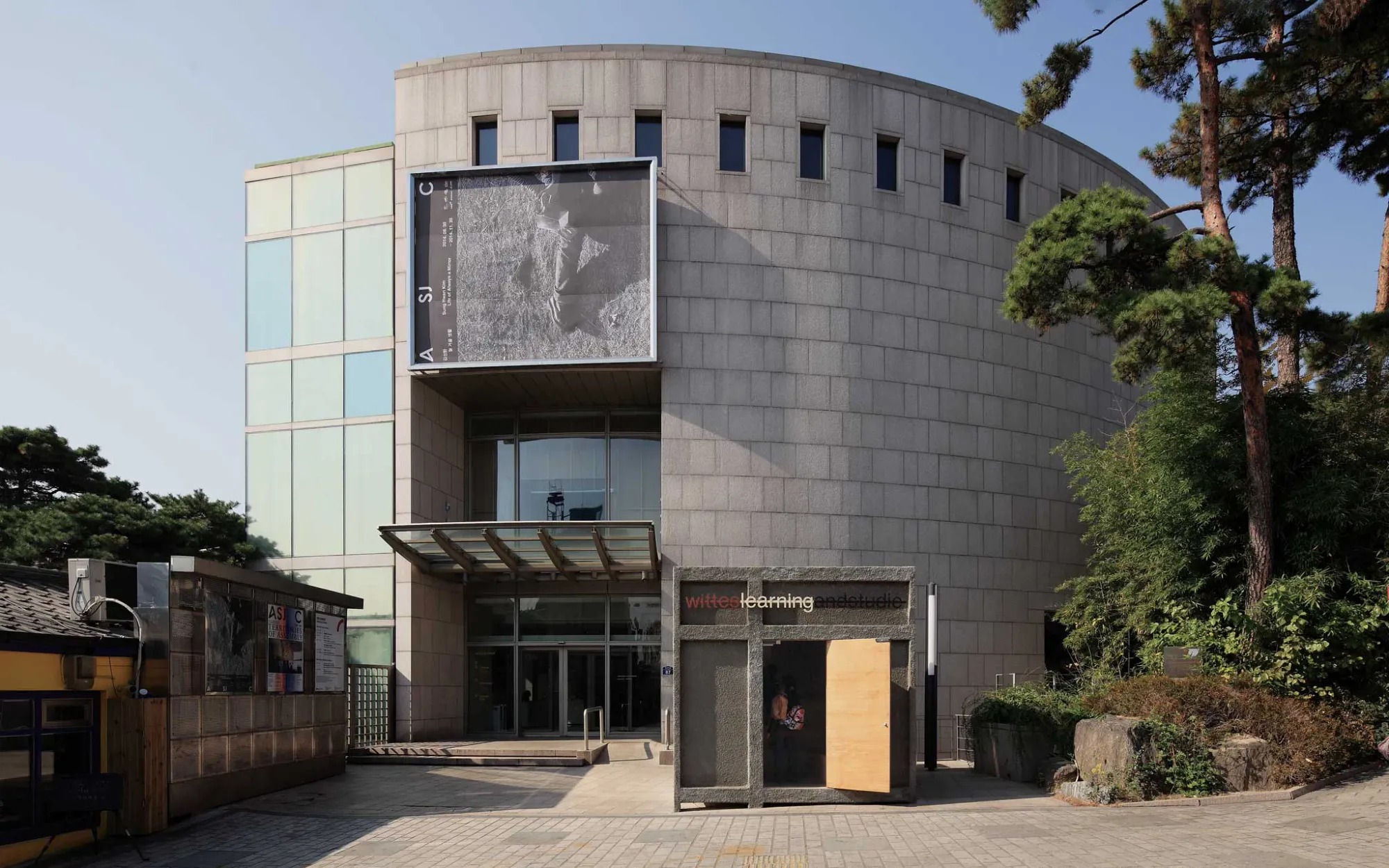
The 'Spectrosynthesis Seoul 2026' exhibition, opening March 20 at the Art Sonje Center, is the fourth installment of the Sunpride Foundation's series showcasing LGBTQ+ art across Asia. It features over 70 artists, including new commissions, and focuses on the experiences of marginalized communities during Korea's modernization and the queer histories of specific Seoul neighborhoods.

aspen art museum redefining future

The Aspen Art Museum is undergoing a strategic shift under director Nicola Lees, moving away from its reputation as a collector's clubhouse toward becoming a global institution. The museum's annual ArtCrush gala and fundraiser week, once centered on wealth-displaying collector home visits and glitzy parties, now emphasizes intellectual programming like the inaugural AIR festival, a $20 million artist-led interdisciplinary initiative featuring talks by Werner Herzog and Hans Ulrich Obrist. This change comes amid soaring local real estate prices, including a $108 million home co-purchased by Steve Wynn and Thomas Peterffy, and contrasts the area's deep pockets with the museum's free admission since 2008.

pope leo first general address van gogh sower at sunset

Pope Leo XIV, in his first general address, referenced Vincent van Gogh's 1888 painting *The Sower at Sunset* as a metaphor for faith and divine guidance. He noted that behind the sower, van Gogh painted the grain already ripe, interpreting the sun as the central figure of the biblical parable. The address highlighted the Pope's engagement with art as a means of spiritual reflection.

Did Van Gogh’s Yellow House turn blue after his death?

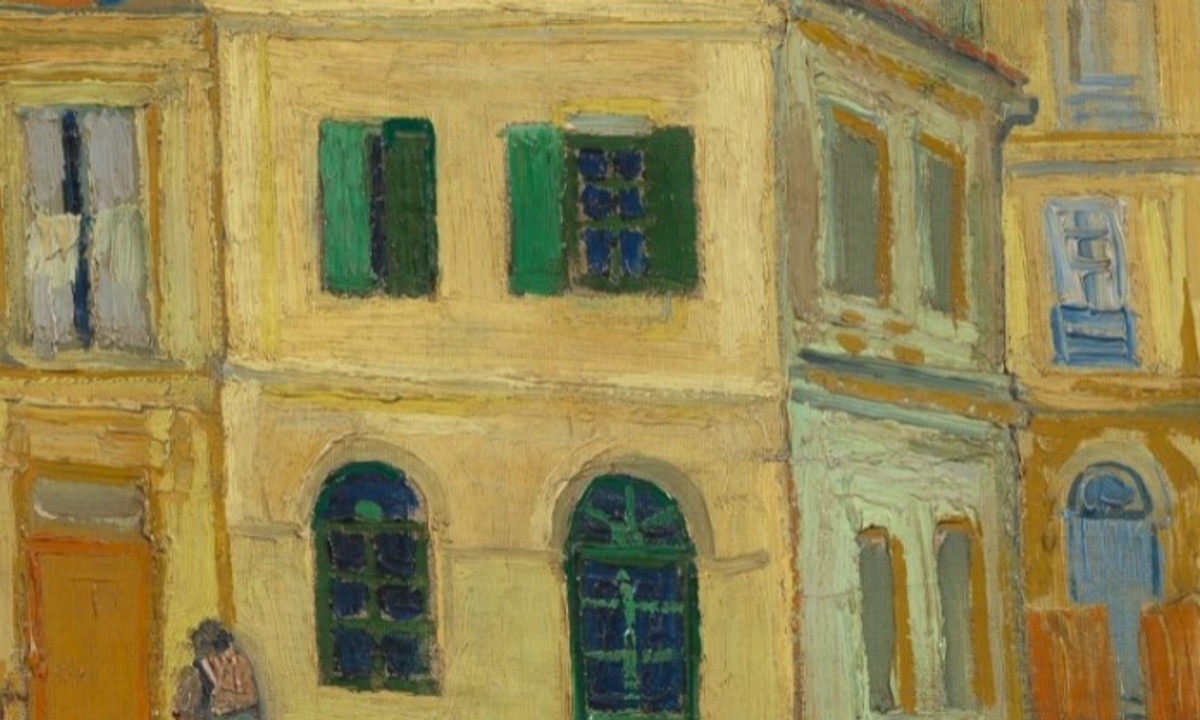
New historical evidence suggests that Vincent van Gogh’s iconic 'Yellow House' in Arles underwent a dramatic color change before its destruction. While Van Gogh famously painted and cherished the building for its yellow facade in 1888, two recently highlighted paintings from the late 1930s by artists Willy Guggenheim (Varlin) and George Tomaziu depict the structure with a blue exterior. This discovery, brought to light by Ukrainian artist Yuri Pikul, indicates the building had been repainted while serving as a café-bar called the Civette Arlésienne.

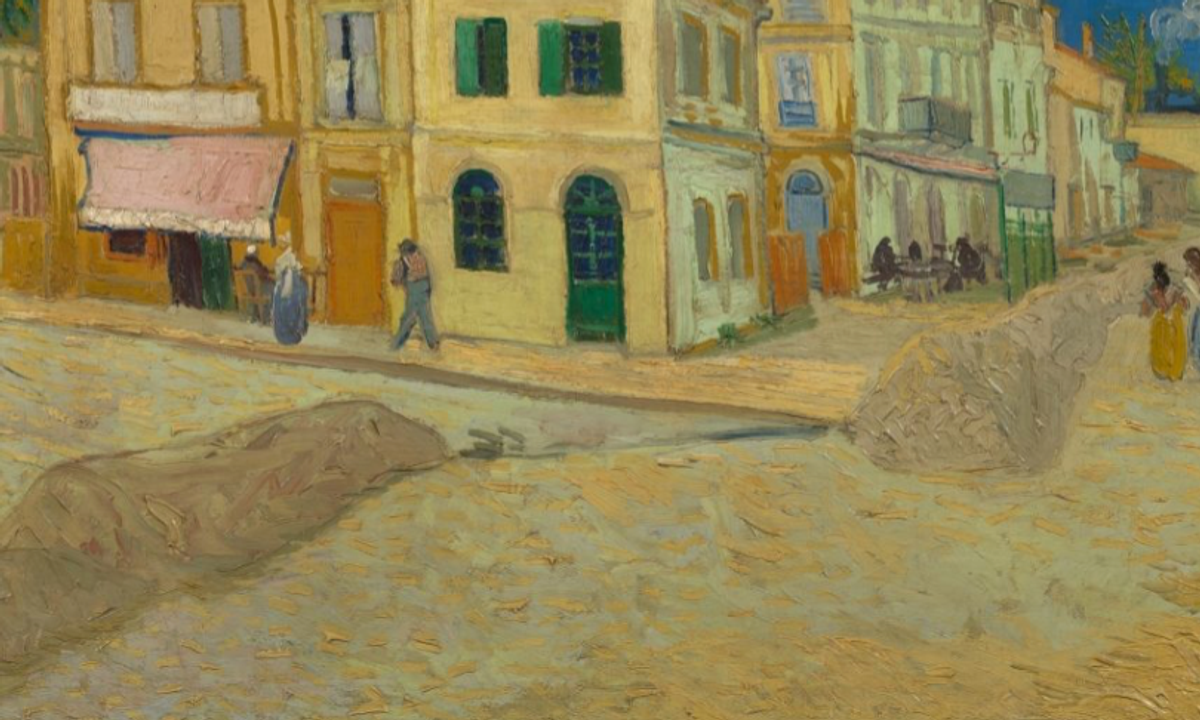
A manure mystery: why did Van Gogh depict heaps of sand in a painting of his beloved Yellow House?

A new study by Van Gogh Museum senior researcher Teio Meedendorp proposes that the mysterious piles of sand in Vincent van Gogh's 1888 painting "The Yellow House" are not, as previously thought, related to gas pipe installation, but rather cleansing sand used to absorb horse manure and urine on the streets of Arles. Meedendorp supports his theory with historical postcards from 1902 showing similar sand piles and street-cleaning practices, as well as municipal records indicating the city had outsourced dung removal in August 1888.

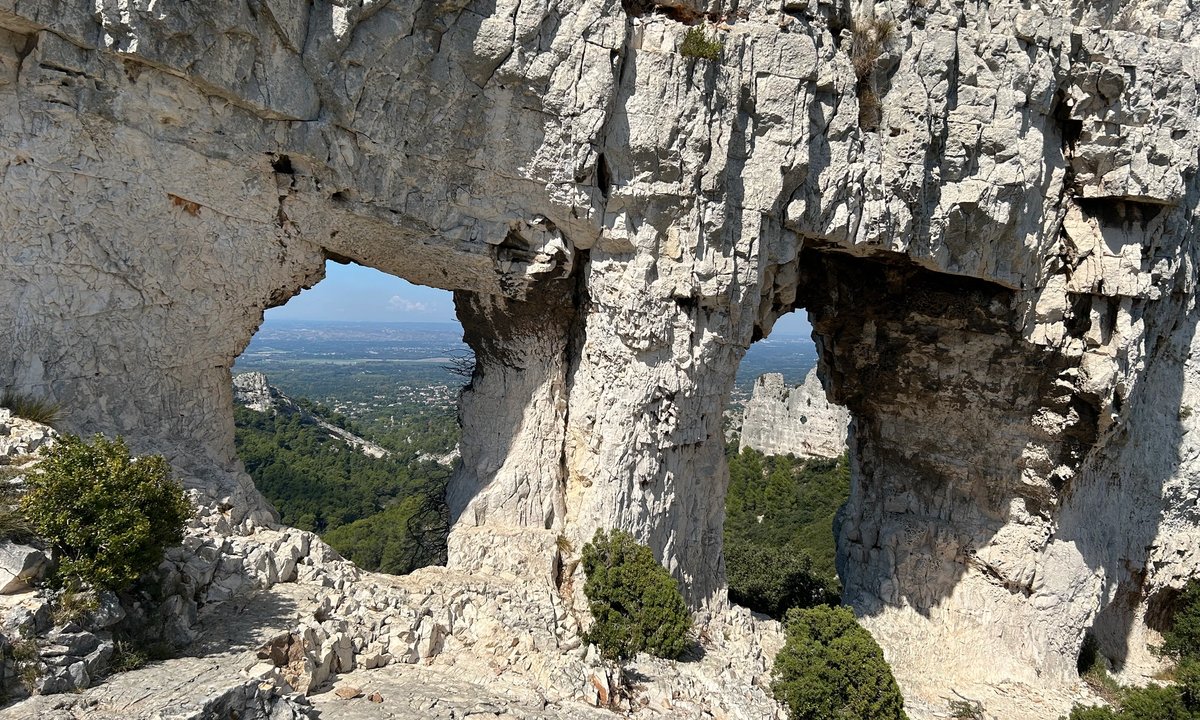
Van Gogh was not fantasising when he painted mountain landscapes with ‘The Two Holes’

Martin Bailey, a leading Van Gogh specialist, reveals that the distinctive rock formation known as Le Rocher des Deux Trous (The Rock of the Two Holes), which appears in two of Vincent van Gogh's paintings—The Olive Trees (June 1889) and Mountains at Saint-Rémy (July 1889)—is a real geological feature near the asylum in Saint-Rémy-de-Provence, not a figment of the artist's imagination. The two paintings, held by the Museum of Modern Art and the Solomon R. Guggenheim Museum in New York, were recently displayed together at London's National Gallery exhibition Van Gogh: Poets & Lovers (14 September 2024–19 January 2025), offering a rare chance to compare them. Bailey traces the history of the formation, noting that an anonymous 17th-century artist also depicted it, and describes a walking route from the former asylum to the site.

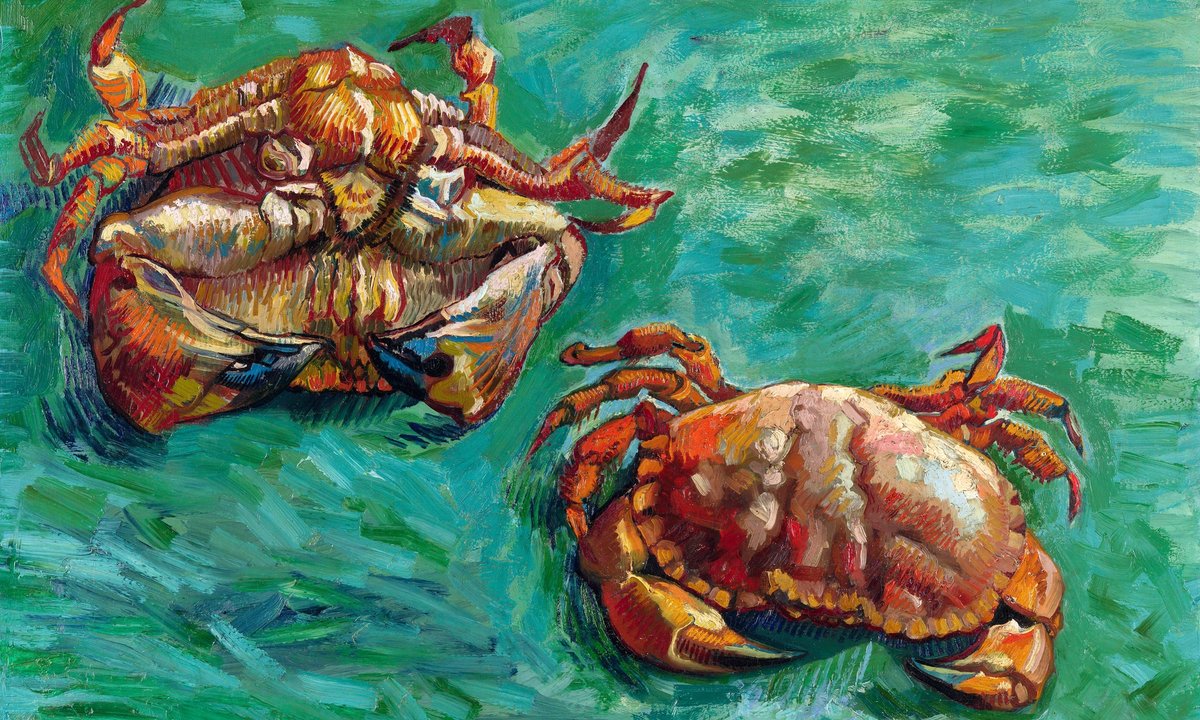
When—and why—did Van Gogh paint a pair of crabs?

An article explores the story behind Vincent van Gogh's still life "Two Crabs," revealing that the two crabs are likely the same individual—a female Cancer pagurus missing its first pair of walking legs. Paul Clark, a crustacean specialist at London's Natural History Museum, confirmed the sex based on the broad abdomen visible in the painting. The work is on long-term loan to London's National Gallery, where it was recently redisplayed as part of the gallery's major rehang ahead of the Sainsbury Wing reopening on May 10. The article also traces the painting's provenance: it was the first Van Gogh bought by a British collector, William Cherry Robinson, in 1893 for 200 guilders, later sold at auction in 1906 for half that amount, and eventually resold at Sotheby's in 2004 for £5.2 million to an anonymous collector who lent it to the National Gallery.

Expo 2026 Recap | Silver Room Block Party Returns | Pita Inn Opening in the City

Expo Chicago 2026 concluded with a strategic downsizing of its floor plan at Navy Pier, a move that drew praise from dealers for increasing the quality and manageability of the fair. Significant market activity was reported, including six-figure sales of works by Robert Nava and Luftwerk, alongside the distribution of the Northern Trust Purchase Prize which gifted several artworks to institutions like the Denver Art Museum and The Phillips Collection. Beyond the fair, the Illinois Arts Council announced over $325,000 in grants for public art projects commemorating the U.S. semiquincentennial.

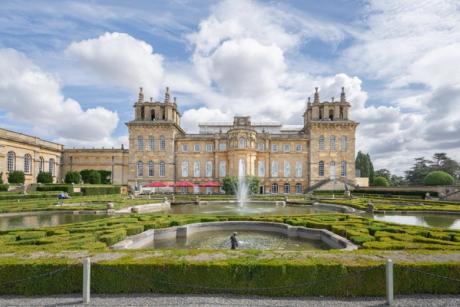
Gods, emperors and eagles restored in Blenheim Palace roof-rescue mission

Blenheim Palace is nearing the completion of a £12m conservation project, the most extensive in the 300-year history of the UNESCO World Heritage site. Led by Donald Insall Associates, the initiative involved a massive logistical effort, including the construction of 31 miles of scaffolding and a one-acre protective tent to repair rotting timbers, crumbling stonework, and leaking roofs. The restoration also addressed the palace's iconic Baroque skyline, featuring statues of gods, emperors, and a 30-tonne marble bust of Louis XIV.

Maine Institutions Dissect the American Semiquincentennial

Boston Art Review (BAR) has published an article examining how Maine-based cultural institutions are approaching the American Semiquincentennial, the 250th anniversary of the United States in 2026. The piece explores the programming, exhibitions, and institutional strategies being developed by museums and art centers across Maine to mark this milestone, focusing on how they interpret American history and identity through contemporary art.

Obama Presidential Center announces new work by Jeffrey Gibson, Rashid Johnson, Lorna Simpson.

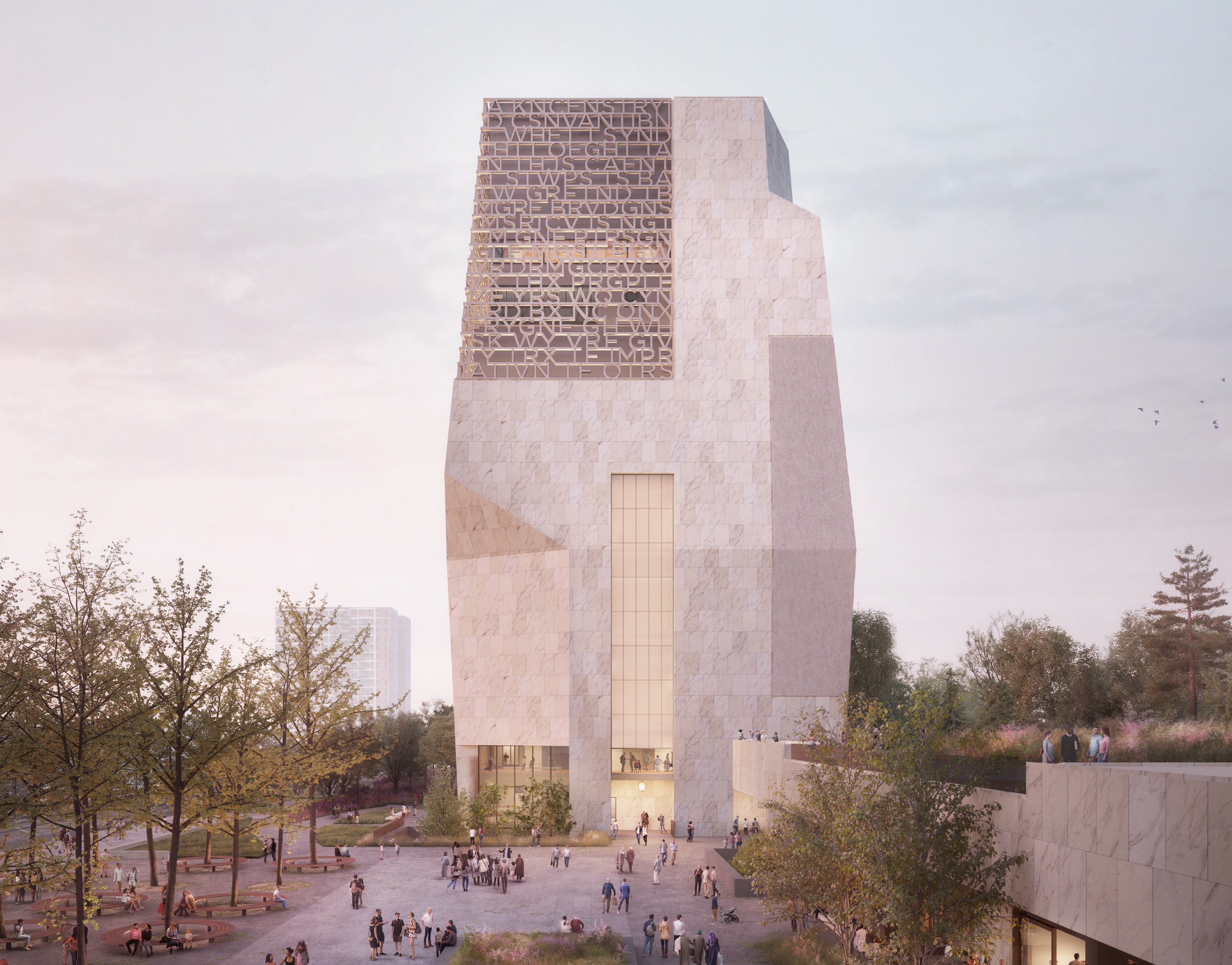
The Obama Foundation has unveiled the final group of artists commissioned to create site-specific works for the Obama Presidential Center in Chicago. This prestigious roster includes Jeffrey Gibson, Rashid Johnson, Lorna Simpson, and Njideka Akunyili Crosby, whose works will be integrated into the 19.3-acre campus. The announcement completes the artistic vision for the center, which aims to blend public space with high-caliber contemporary art when it opens on June 19th.

Mass shooting at Mexico's Teotihuacan archaeological site leaves one dead, 13 injured

A mass shooting occurred at the Teotihuacan archaeological site in Mexico, leaving one Canadian tourist dead and 13 others from various nations injured. The gunman, identified as Julio César Jasso Ramírez, opened fire from atop the Pyramid of the Moon before killing himself at the scene.

London National Gallery’s deficit bombshell, Simon Schama on birds and art, Vilhelm Hammershøi—podcast

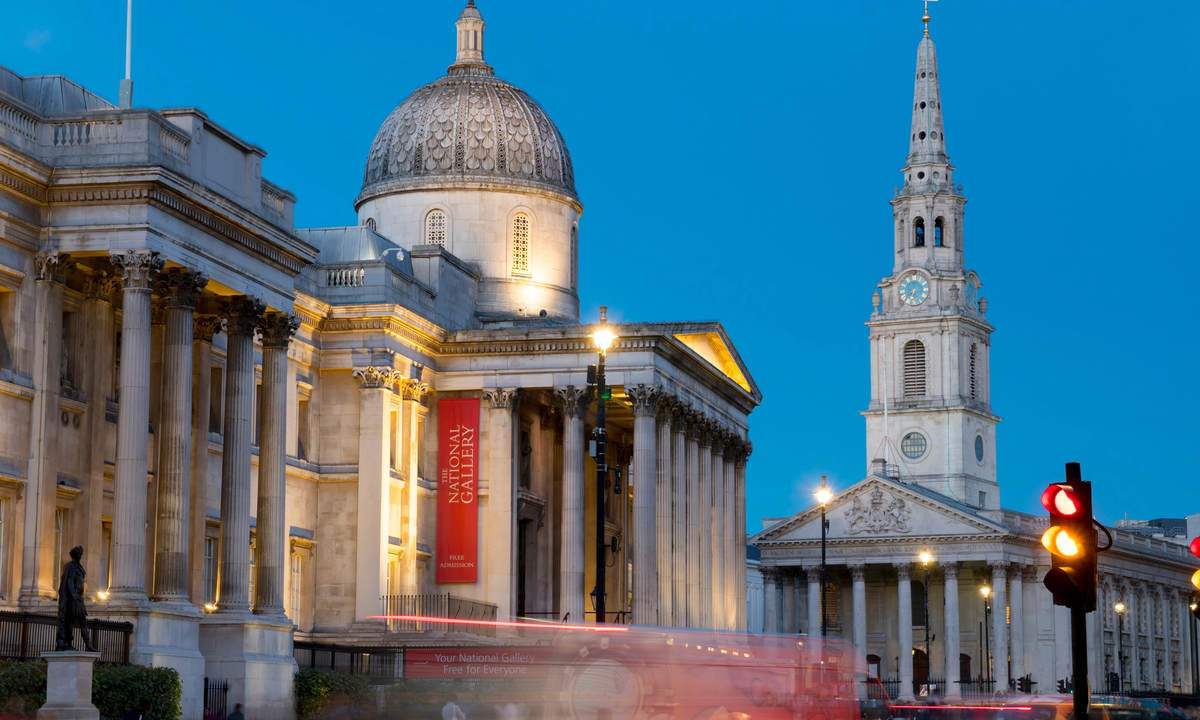
The National Gallery in London has announced unexpected and significant budget cuts, including potential staff reductions, due to a projected deficit of £8.2 million for the upcoming year. This financial crisis comes as a surprise following the recent completion of a major building project and the announcement of another ambitious expansion planned for the 2030s.

California School Shutters Exhibition After Altering "Political" Art

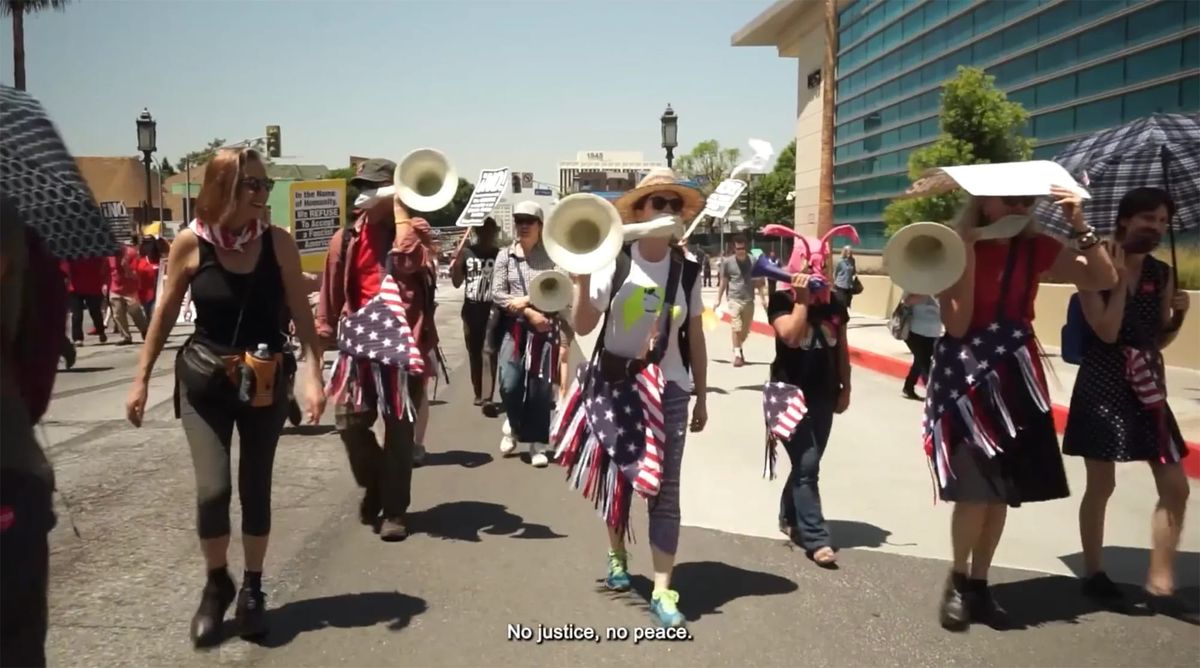
Pepperdine University, a private Christian university in Malibu, abruptly closed the exhibition "Hold My Hand in Yours" at its Frederick R. Weisman Museum of Art six months early, after at least a dozen artists requested to withdraw their works in protest. The school had removed or altered artworks it deemed "political," including Elana Mann's video "Call to Arms 2015-2025" (2025), which documented performances using megaphone-like sculptural instruments and included footage from a 2017 May Day March with chants supporting immigrants and racial justice. Another work by the group AMBOS, a collaborative sculpture featuring an embroidery reading "Save the Children" and "Abolish ICE," was altered by turning the fabric swatch to hide the text and removing a sign inviting visitor interaction. The school did not explain its decisions to the artists.

Ancient artefacts from sunken city lifted out of Mediterranean near Alexandria

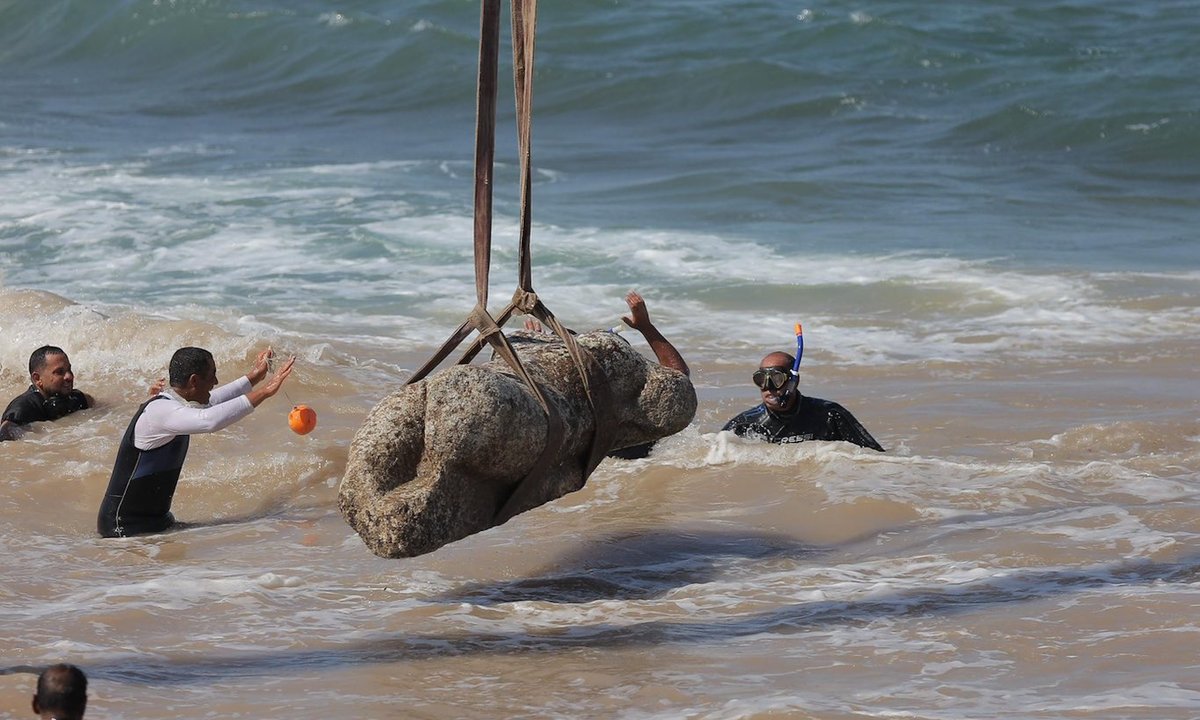
Ancient artefacts from the sunken city of Canopus, submerged off the coast of Alexandria, have been recovered for the first time in 25 years. During a three-day underwater heritage event (19-21 August), archaeologists lifted limestone structures, a quartz sphinx bearing cartouches of Ramses II, and a white marble statue of a Roman nobleman from the Mediterranean. The operation was led by the European Institute for Underwater Archaeology (IEASM) in cooperation with the Egyptian Ministry of Tourism and Antiquities, with French underwater archaeologist Franck Goddio playing a key role. The finds are now on display in the exhibition 'Secrets of the Sunken City' at the Alexandria National Museum.