filter_list Showing 16 results for "necklace" close Clear
search
dashboard All 65 museum exhibitions 27article news 16trending_up market 12article culture 5gavel restitution 3candle obituary 1person people 1
date_range Range Today This Week This Month All
Subscribe

paint drippings art industry news may 12

This week's art industry roundup covers major auction activity, including Christie's $250 million sale of Barnes and Noble founder Len Riggio's collection, and Sotheby's postponement of an ancient Buddhist gemstone auction after criticism from academics and India's Ministry of Culture. Frieze New York, recently sold to Ari Emanuel, reported strong sales with a $3 million Jeff Koons sculpture at Gagosian, while Gagosian's TEFAF New York booth featuring Anna Weyant's jewelry-themed paintings sold out. Other news includes Céline Assimon's appointment as chief commercial officer at Bonhams, the Spring Break Art Show's return, and gallery representation changes.
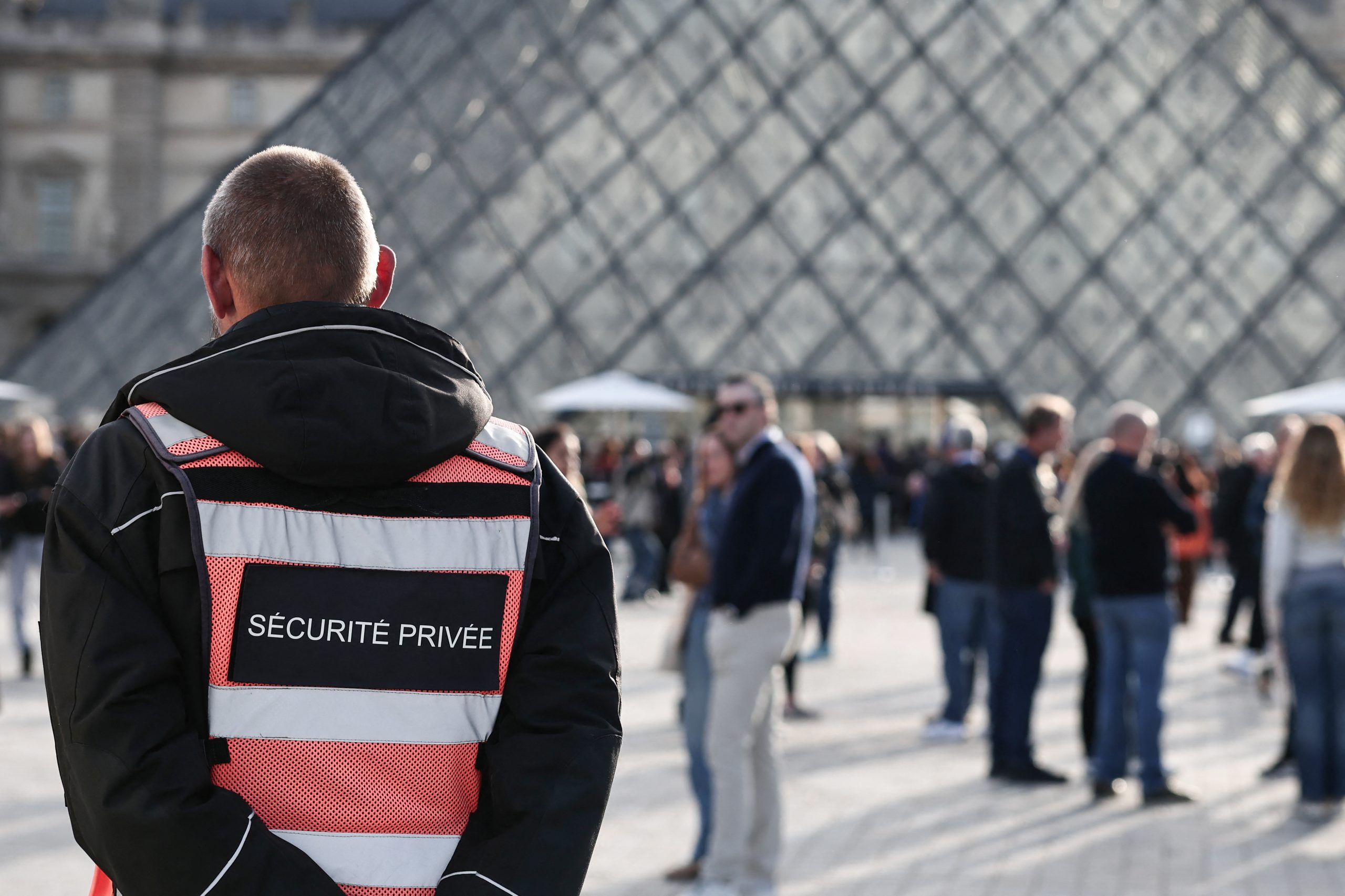
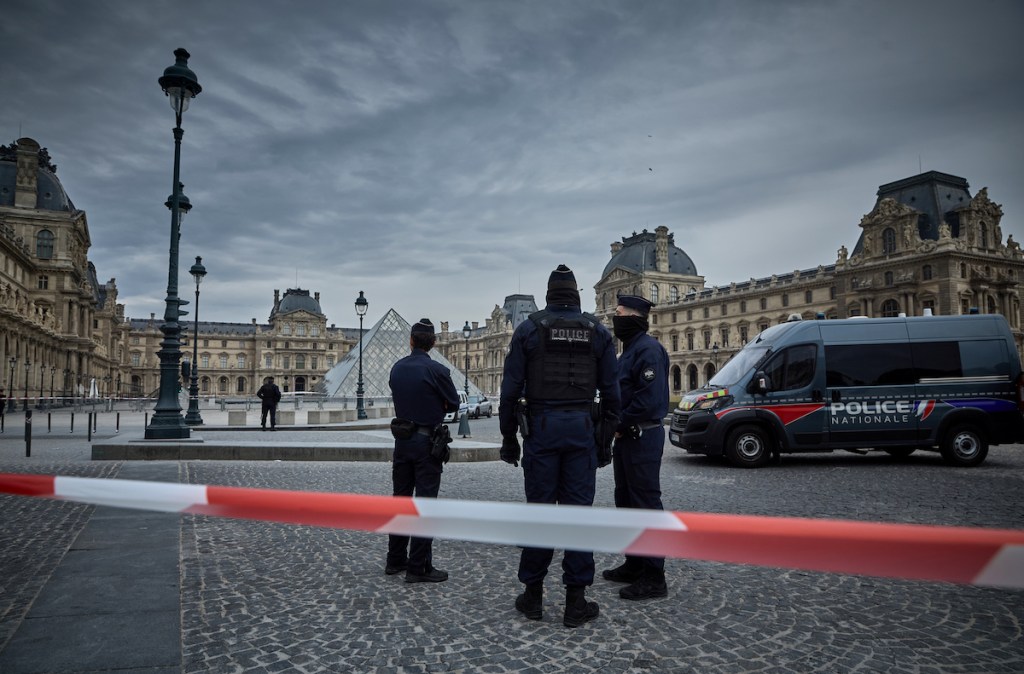
Louvre Robbery: Security Overhaul and Investigation Update

louvre robbery

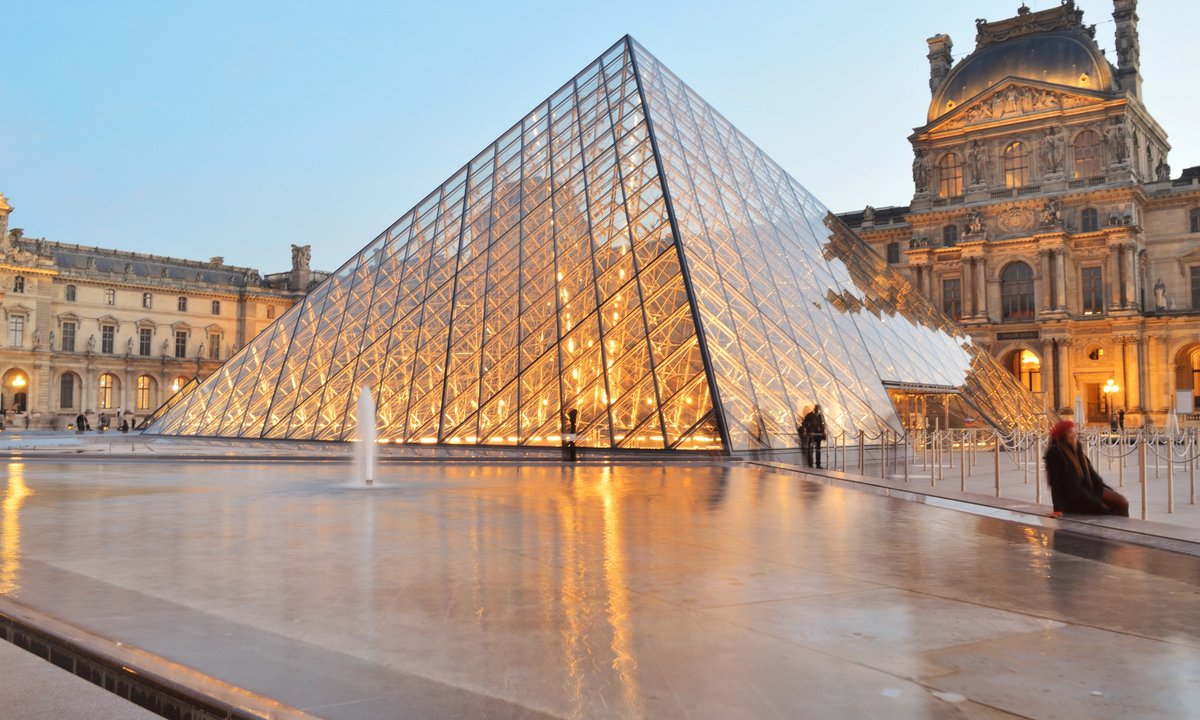
The Louvre Museum has announced a massive €80 million ($92 million) security overhaul following a brazen daytime heist on October 19, where thieves stole imperial jewels valued at €88 million. The investigation revealed significant institutional failures, including outdated software and weak passwords like "Louvre," allowing local thieves to enter via a movers' lift and escape on scooters in under seven minutes. While four suspects from the Paris suburbs have been charged, the majority of the stolen items remain unrecovered.

louvre jewels stolen value

Nine jewels stolen from the Louvre are valued at $102 million, according to Paris prosecutor Laure Beccuau, contradicting earlier French claims that they were of “incalculable” value. The stolen items include a diadem worn by Queen Marie-Amélie and Queen Hortense, an emerald necklace of Empress Marie-Louise, and a diadem once held by Empress Eugénie, the latter containing nearly 2,000 diamonds. One crown belonging to Empress Eugénie was recovered after being dropped by the thieves, but the rest remain missing. The robbers entered through windows using small chainsaws and exited in under eight minutes. The Louvre has been closed since the heist, and cultural minister Rachida Dati defended the museum’s security systems before the National Assembly, calling the theft “a wound for all of us.”

louvre installs bars on heist window

The Louvre Museum has installed security bars on the French window of the Apollo Gallery, the entry point used by thieves in a $102 million jewel heist on October 19. The museum announced the measure on X, showing workers installing the bars before dawn. Additional security upgrades include a mobile police base, distancing devices on the Quai François Mitterrand, and plans for 100 new perimeter cameras by 2026. These steps are part of a $92 million security master plan. Ticket prices for non-E.U. visitors will rise 45% to $37 starting January 14, 2026, to help fund the improvements. The museum also revealed that a 2018 audit sponsored by Van Cleef and Arpels had flagged the balcony's vulnerability, but then-director Jean-Luc Martinez did not act. Louvre president Laurence des Cars offered to resign after the security failures came to light but was asked to stay.

louvre security report

A 2018 security audit commissioned by the Louvre from Van Cleef and Arpels identified critical vulnerabilities in the museum's Apollo Gallery, including a balcony accessible via a lift platform—the exact entry point used by thieves in a daring October 19, 2025 heist. The audit, which included diagrams highlighting a window facing Quai François-Mitterrand as a major weakness, was not passed on to current Louvre president Laurence des Cars when she took over in 2021. The museum only discovered the document after the theft, prompting an internal review and referral to France's General Inspectorate of Cultural Affairs. French authorities have since arrested four more suspects, bringing the total to eight, as the investigation continues into the theft of eight valuable pieces including Napoleon Bonaparte's emerald-and-diamond necklace.

french culture ministry admits stolen louvre jewels valued at 102 m are not insured

Masked thieves stole jewels once belonging to Emperor Napoleon III and Empress Eugénie from the Louvre in a daylight smash-and-grab, using a furniture lift to access the first floor and cutting into display cases. The stolen items, including a diamond-encrusted brooch, diadems, necklaces, and the empress's crown (which was dropped during the escape), are valued at $102 million. French officials have admitted the loot is not privately insured, meaning the state will not be reimbursed if the items are not recovered. Louvre director Laurence des Cars blamed a "terrible failure" in security, offered her resignation (which was refused), and acknowledged staff did not detect the thieves soon enough.

jeff koons stella mccartney capsule 2026

Jeff Koons and Stella McCartney have launched a limited-edition capsule collection for Spring 2026. The collection features ready-to-wear items like hoodies, t-shirts, tote bags, and keychains, adorned with prints of Koons's artworks such as "Untitled (Girl with Dolphin and Monkey)" (2006) and sculptures from his "Made in Heaven" series, paired with McCartney's playful slogans like "Slippery When Wet" and "Doggy Style." The release also includes a reimagined pendant based on Koons's iconic "Rabbit" (1986) sculpture.

Louvre heist sparks cross-party ire amid reports of ‘persistent delays’ to security updates

Two masked thieves stole ten pieces of 19th-century royal and imperial jewelry from the Louvre in Paris on 19 October, using a goods lift and grinders to break into the Apollo Gallery. They escaped on scooters after seven minutes, leaving behind a broken crown and tools, while an employee prevented a fire. The stolen items include a diamond brooch and diadem belonging to Empress Eugénie, and a royal emerald necklace.

what was stolen louvre crown jewels photos

Thieves broke into the Louvre Museum in Paris and stole several pieces of the French Crown Jewels from the Galerie d'Apollon, including a diadem, necklace, earrings, and brooches from the parures of Queen Marie-Amélie, Queen Hortense, Empress Marie-Louise, and Empress Eugénie. Two items—the reliquary brooch and the corsage bow—were dropped and recovered, and a ninth item, Empress Eugénie's crown, was also taken but later recovered. The thieves triggered alarms and fled after a fast, violent break-in, leaving behind a cherry picker; no injuries were reported.

louvre robbery history behind stolen crown jewels

Eight pieces of the French Crown Jewels were stolen from the Louvre Museum on October 19, including a pearl-and-diamond tiara and a bow-shaped brooch that once belonged to Empress Eugénie, as well as a sapphire parure and diadem owned by Queen Maria Amalia. The theft has drawn attention to the jewels' complex history: most of the Crown Jewels were auctioned off in 1887 by the French government to eliminate monarchical symbols, and the stolen pieces were among the few remaining in the Louvre's collection, some repurchased at great expense in the 1990s and 2000s with help from the Société des Amis du Louvre.

grand egyptian museum king tut treasures

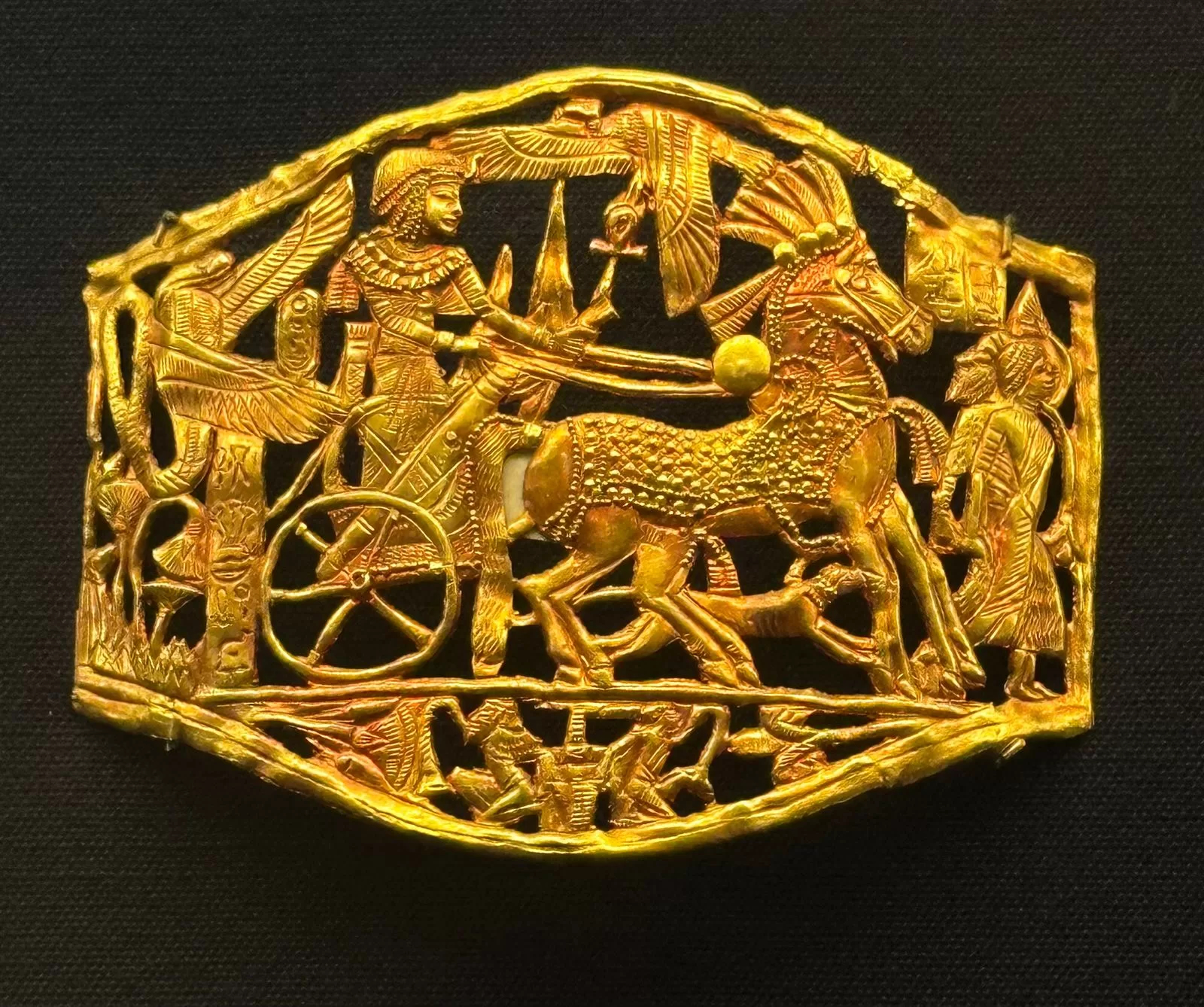
The Grand Egyptian Museum (GEM) in Giza has received another 163 artifacts from the tomb of King Tutankhamun, transferred from the Egyptian Museum in Cairo's Tahrir Square. This delivery includes the pharaoh's ceremonial chair, gilded footstool, canopic shrine, and jewelry, bringing the museum closer to staging the first-ever complete display of the boy king's treasures. The artifacts were transported with care and underwent condition reports at GEM's conservation labs. The final piece to arrive will be Tutankhamun's funerary mask, ahead of the museum's long-awaited grand opening on July 3.

A rare jewellery box identified in Vermeer paintings sheds new light on the artist’s connections

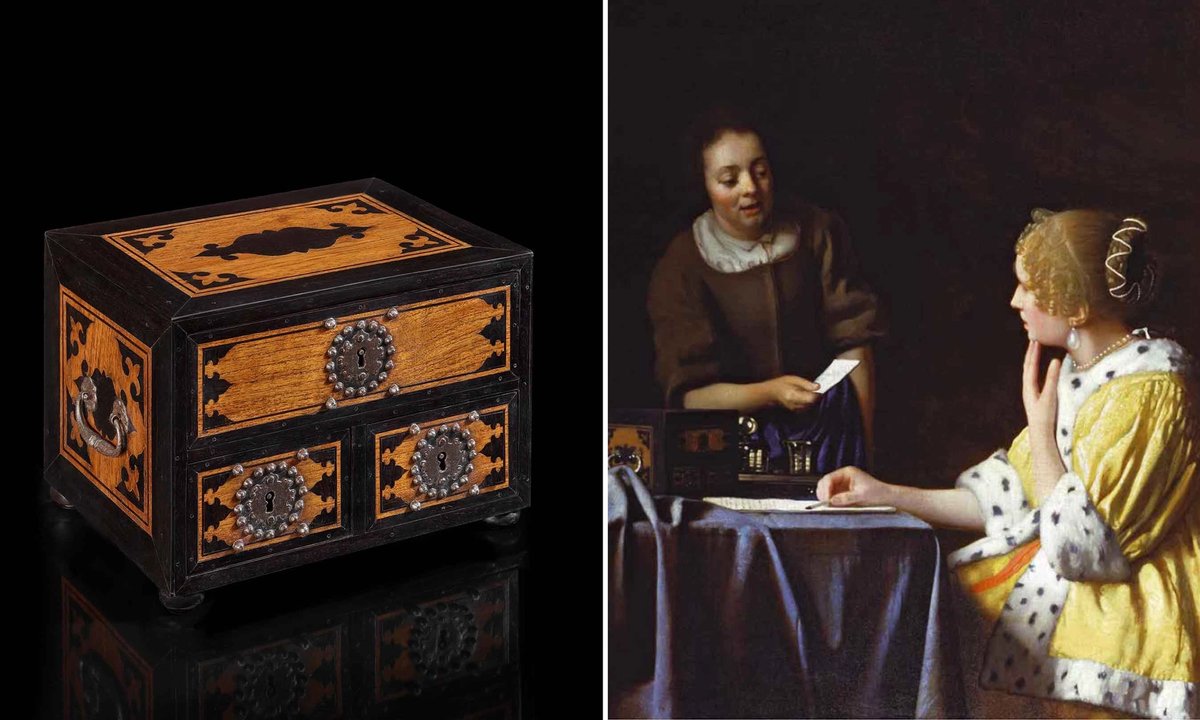
New research by curator Alexandra van Dongen of Rotterdam’s Boijmans Van Beuningen Museum reveals that a rare Indo-Portuguese jewellery casket depicted in two Johannes Vermeer paintings—Mistress and Maid and A Lady Writing (both 1664-67)—is a real, surviving object. Van Dongen tracked down the sole known example in the Távora Sequeira Pinto collection in Porto, with help from Amsterdam dealer Dickie Zebregs. Her findings, published in the book De tastbare wereld van Johannes Vermeer, suggest the casket likely belonged to Vermeer’s patron Maria de Knuijt, a wealthy Dutch East India Company shareholder who may have asked the artist to include it in her paintings.

qubbet al hawa egypt tombs pottery discovered

A research team from Egypt’s Supreme Council of Antiquities has unearthed a significant cache of artifacts at the Qubbet Al-Hawa necropolis near Aswan. The discovery includes two chambers containing 160 well-preserved pottery vessels, many inscribed with text, alongside a courtyard filled with Middle Kingdom jewelry, bronze mirrors, and kohl containers. These finds were located within rock-cut burial shafts that served as resting places for ancient Egyptian elite.

french museum heists continue the house of enlightenment denis diderot

Thieves have stolen nearly 2,000 gold and silver coins from the House of Enlightenment, Denis Diderot, in Landres, France, in a nighttime break-in. The heist occurred just hours after a daylight robbery at the Louvre, where eight Napoleon-era jewels worth approximately $102 million were taken from the Galerie d’Apollon. Authorities are investigating possible connections to a series of recent museum burglaries in France, including incidents at the Jacques Chirac Museum in Sarran, the National Adrien Dubouché Museum in Limoges, and the Natural History Museum in Paris.

roman medusa cameo hallstatt

A rare ancient Roman cameo relief depicting the gorgon Medusa was discovered by construction workers during excavation work for a new funicular railway in Hallstatt, Austria. The 1.5-cm banded agate piece, dated to the 2nd century C.E., was likely crafted in a northern Adriatic workshop and worn as a necklace by an elite Roman woman. It will become part of the permanent collection at Austria's Linz Castle Museum.

archaeologists peru ancient 3500 year old city penico

Peru’s Ministry of Culture has unveiled the archaeological site of Peñico, a 3,500-year-old city in the province of Huaura, after eight years of research and conservation. Dating back to 1800 BCE, the “City of Social Integration” was strategically built to enhance monumentality, prevent flooding, and promote trade. It likely served as a hub linking Pacific coast cultures with the Andes and Amazon. Archaeologist Ruth Shady, director of the Caral Archaeological Zone, led the research and noted that Peñico emerged after the Caral civilization was devastated by climate change. The site includes 18 structures, among them a major administrative building with depictions of conch shell trumpets called pututus, and yielded artifacts such as clay sculptures, necklaces, and stone tools. The site opened for tourism on July 3, with a traditional Andean festival planned for July 12.