filter_list Showing 103 results for "protest" close Clear
search
dashboard All 208 article news 103museum exhibitions 71article culture 16article local 5rate_review review 5trending_up market 3article policy 3candle obituary 1person people 1
date_range Range Today This Week This Month All
Subscribe

Peter Doig, Tracey Emin, and More Sign Letter Defending Southbank Centre Chair

A letter signed by environmental activist Greta Thunberg and artists Tracey Emin and Peter Doig is circulating in support of Misan Harriman, chair of London's Southbank Centre. The letter defends Harriman against what it calls a "dishonest smear campaign" by the Telegraph and other right-wing outlets, which accused him of promoting conspiracies and comparing Reform Party voters to Nazis. The controversy stems from Harriman's social media comments about a knife attack on Jewish men and a video referencing Susan Sontag and Kurt Vonnegut on the Holocaust, which critics say minimized antisemitism or drew inappropriate parallels. Harriman denies making such analogies, and 70,000 people have complained to media watchdog Ipso, while 15,000 signed the letter.

Mom, I'm Gonna Be an Artist!

Hyperallergic's Saturday newsletter, edited by Valentina Di Liscia, rounds up a week of art-world activity marked by protests and resistance. Staff Writer Isa Farfan asked 15 artists to share advice from their mothers for Mother's Day, featuring responses from Pat Oleszko, whose work is in the Whitney Biennial. The newsletter also covers editor-in-chief Hakim Bishara's report on a historic strike for Palestine and workers' rights at the Venice Biennale, where dozens of national pavilions shut down, and Editor-at-Large Hrag Vartanian's review of the central exhibition "In Minor Keys." Additional stories include Damien Davis on artists and consignment agreements, Matt Stromberg on the LA Art Book Fair, a protest against Jeff Bezos at the Met Gala, MoMA PS1's upcoming Teresa Margolles survey, and a picket at the American Folk Art Museum.

The Only Guide to This Year’s Venice Biennale You Will Ever Need

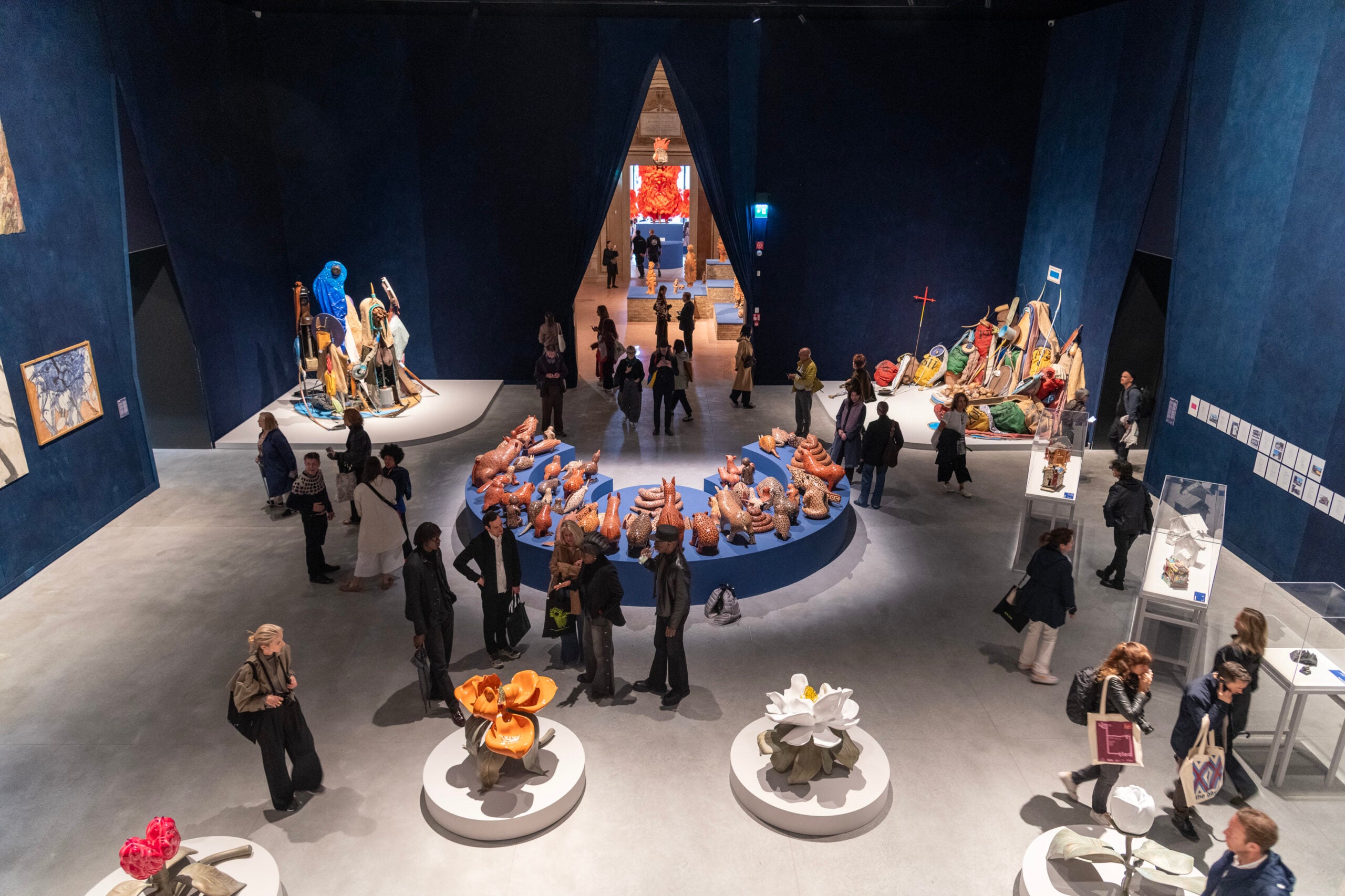
The 61st Venice Biennale opens amid significant turmoil. The entire jury of the International Art Exhibition resigned after a statement about withholding prizes from countries with leaders charged with crimes against humanity by the ICC, leading to the cancellation of the Golden Lion awards in favor of 'Visitors' Lions' to be given at the exhibition's end. The event has been further marred by the sudden death of artistic director Koyo Kouoh from liver cancer in early 2025, and the death of artist Henrike Naumann, who was set to debut work in the German pavilion. Additionally, the selection process for the American pavilion artist, Mexico-based sculptor Alma Allen, sparked controversy after a delayed grant application process.

Venice Biennale Strike Makes History

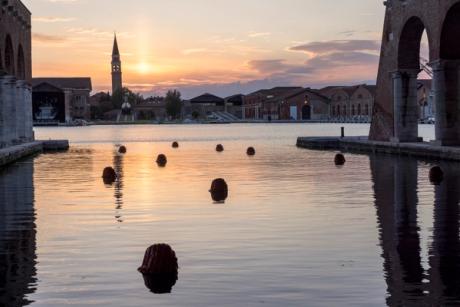
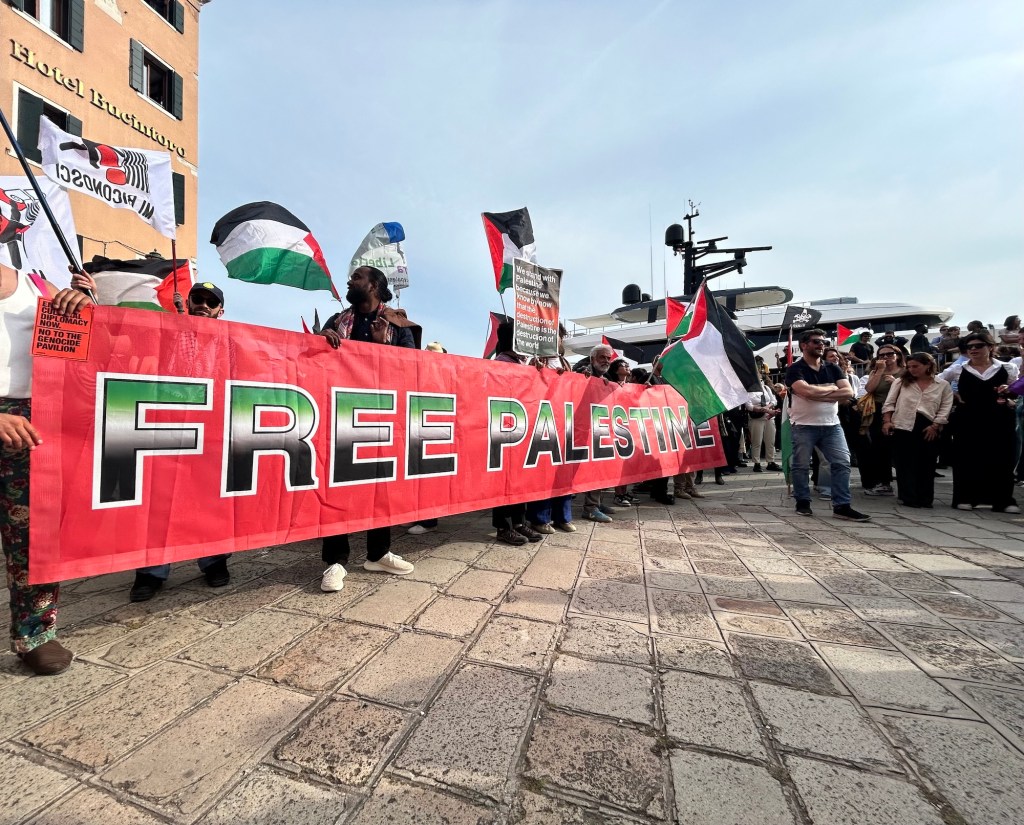
On May 8, thousands marched through Venice and more than two dozen national pavilions were partially or fully shuttered during a 24-hour strike organized by the Art Not Genocide Alliance and local activist groups. The strike, which included Palestinian flags draped over artworks, marks the first cultural strike in the Venice Biennale's 131-year history. Italian police beat back protesters as Editor-in-Chief Hakim Bishara reported from the scene. Separately, a nesting seagull near the Polish pavilion became an unexpected star, and the LA Art Book Fair opened with a focus on archival materials.

A Venice Biennale in Protest

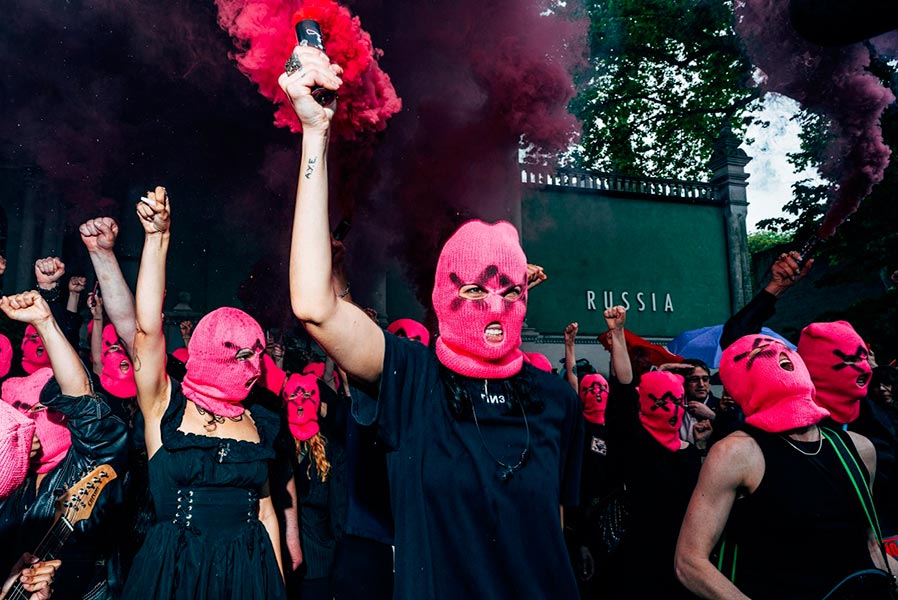
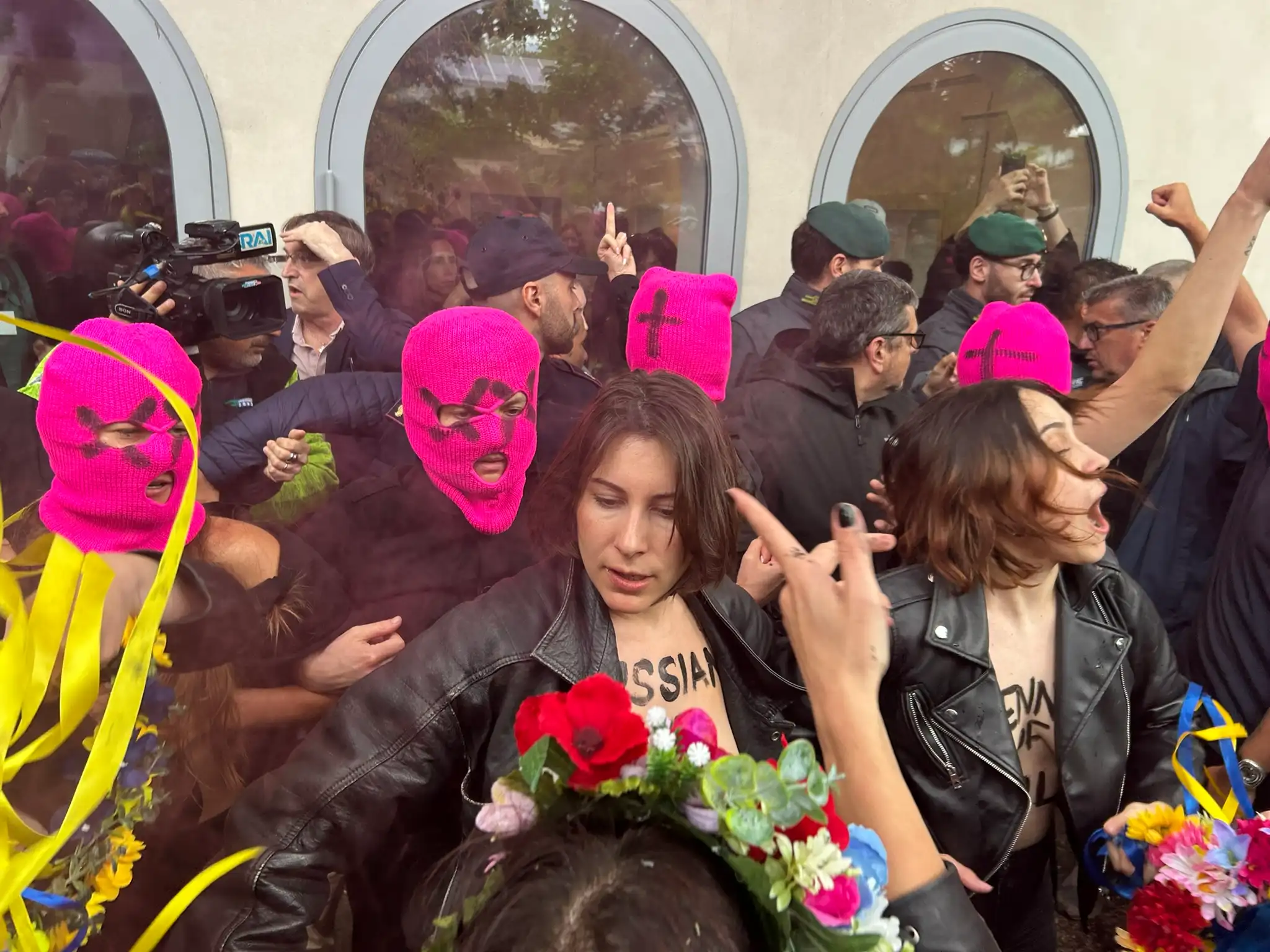
Hundreds of protesters, led by the Art Not Genocide Alliance, blocked the entrance to the Israeli pavilion at the Venice Biennale on May 6, waving Palestinian flags and accusing Israel of operating a "genocide pavilion." Activists from Pussy Riot and FEMEN also staged a pink smoke-filled protest against Russia's participation. Meanwhile, the Biennale jury suddenly resigned, and Israeli pavilion artist Belu-Simion Fainaru made legal threats against the Biennale alleging antisemitism and discrimination. The article also covers exhibitions in Upstate New York, a tribute to Beat Generation icon Jack Kerouac, and obituaries for performance art champion Steven Durland, artist Georg Baselitz, cartoonist Nicole Hollander, and arts patron Doris Fisher.

Art Workers Plan Venice Biennale Strike

Cultural workers, labor unions, and grassroots groups are planning a strike at the Venice Biennale on Friday, May 8, organized by the Art Not Genocide Alliance and others. The action, described as the first organized strike within the Biennale, aims to protest Israel's inclusion in the event, with participants withholding their labor and calling to "shut down the genocide pavilion." The article also covers other art news, including exhibitions in Los Angeles, a profile of nonagenarian artist Mohammad Omer Khalil, and memes about the Met Gala.

The US Pavilion Wants Your Money

The American Arts Conservancy, a new nonprofit with MAGA-aligned leadership, is fundraising for Alma Allen's 2026 US Pavilion at the Venice Biennale through a "Donate" button on its website, having received no institutional financial support. Meanwhile, a sculpture by Pedro Reyes at the newly unveiled LACMA building has sparked controversy for recalling a 2021 commission rejected by Mexico City after Indigenous and feminist protests, and the experimental LA nonprofit The Box has closed after 19 years.

The week around the world in 20 pictures

This photo essay from The Guardian presents 20 images capturing global events from the past week, including a protest by Femen and Pussy Riot activists against Russia's participation at the Venice Biennale art show, Israeli strikes in Gaza, the hantavirus outbreak, and Emma Chamberlain at the Met Gala. Other images document the war in Ukraine, with scenes of Russian military rehearsals in Moscow, damaged monuments, and drone strike aftermath, as well as a political protest in Nashville where Democratic state representative Justin J Pearson was removed from the house gallery during a redistricting protest.

More than 70 Venice Biennale artists withdraw from awards

More than 70 artists participating in the 2025 Venice Biennale have withdrawn from consideration for the Golden Lion awards, which this year will be decided by public vote. The artists, including Walid Raad, Laurie Anderson, and Yto Barrada, signed a statement published on e-flux on May 9, withdrawing in solidarity with the entire prize jury that resigned last month over a dispute regarding the participation of Israel and Russia. The Biennale management replaced the traditional jury-selected awards with a new "Visitor Lion" system where ticket holders can vote, but the Biennale has acknowledged that if any of the withdrawing artists win, they will not collect the award.

See Some of the Most Outrageous, Stylish Looks at the 2026 Met Gala

The 2026 Met Gala raised $42 million for the Metropolitan Museum of Art's Costume Institute, surpassing last year's $31 million. The event, themed "Costume Art" with a dress code of "Fashion is Art," featured honorary chairs Jeff Bezos and Lauren Sánchez Bezos, whose involvement sparked protests. Co-chairs included Beyoncé, Nicole Kidman, Venus Williams, and Anna Wintour, with artists Anna Weyant, Tschabalala Self, and Amy Sherald on the host committee. The gala precedes the Costume Institute's spring exhibition, also titled "Costume Art," opening May 10.

"Kultursenator ist kein Nebenjob"

Berlin's finance senator Stefan Evers is set to additionally take on the role of culture senator following the resignation of Sarah Wedl-Wilson, a move criticized as a stopgap solution that creates a conflict of interest between austerity and cultural advocacy. Meanwhile, the Venice Biennale faces multiple controversies: critics question how to evaluate curator Koyo Kouoh's posthumous main exhibition "In Minor Keys," completed after her death in May 2025; Israeli artist Belu-Simion Fainaru speaks out against his exclusion from the Biennale competition, calling it politically biased and reminiscent of historical persecution; and German press decries the politicization of the Biennale, particularly the exclusion of Israel and Russia from the competition.

A Time of Transition

During the preview week of the 61st Venice Biennale, escalating protests targeted the national pavilions of Israel and Russia, with demonstrations by Pussy Riot, ANGA (Art Not Genocide Alliance), and Baltic pavilions. A major protest on May 8 drew over 3,000 people in solidarity with Palestine, and 27 national pavilions—including Austria, the Netherlands, France, and Japan—staged a strike, the first at the Biennale since 1968. The Golden Lion jury resigned after declaring they would not consider countries under ICC investigation (Israel and Russia), and the Biennale administration replaced the prize with a visitors' award, from which half the artists in the main exhibition have withdrawn.

Is the US about to be humiliated on the world’s most prestigious cultural stage?

More than 70 prominent international artists have signed an open letter demanding the exclusion of the United States, Israel, and Russia from the 2026 Venice Biennale, accusing those governments of committing war crimes and atrocities. The controversy centers on the US pavilion, which will feature Mexico-based American artist Alma Allen, whose abstract, anodyne sculptures were chosen by a last-minute commissioner with no art-world experience—a luxury pet food store owner from Florida who reportedly gained the role through connections at Mar-a-Lago. The Biennale's five-person jury has already resigned amid the furor, and Russia is returning to the event for the first time since its 2022 invasion of Ukraine.

A True-to-Life Biennale

Hakim Bishara, editor-in-chief of Hyperallergic, reflects on the 61st Venice Biennale after returning to New York, describing it as historical, political, and thrilling. He counters critics who claimed the Biennale imploded due to boycotts and resignations, arguing it was more alive than ever. The late Koyo Kouoh's main exhibition "In Minor Keys" is praised for reflecting global woes and joys. The article also highlights a major strike by artists and cultural workers that disrupted the pre-opening, the first cultural strike in the Biennale's 131-year history, with 54 artists in the international exhibition and 22 national pavilion teams withdrawing from awards consideration in solidarity with the jury's resignation.

American Folk Art Museum Workers Picket Gala, Calling for Higher Wages

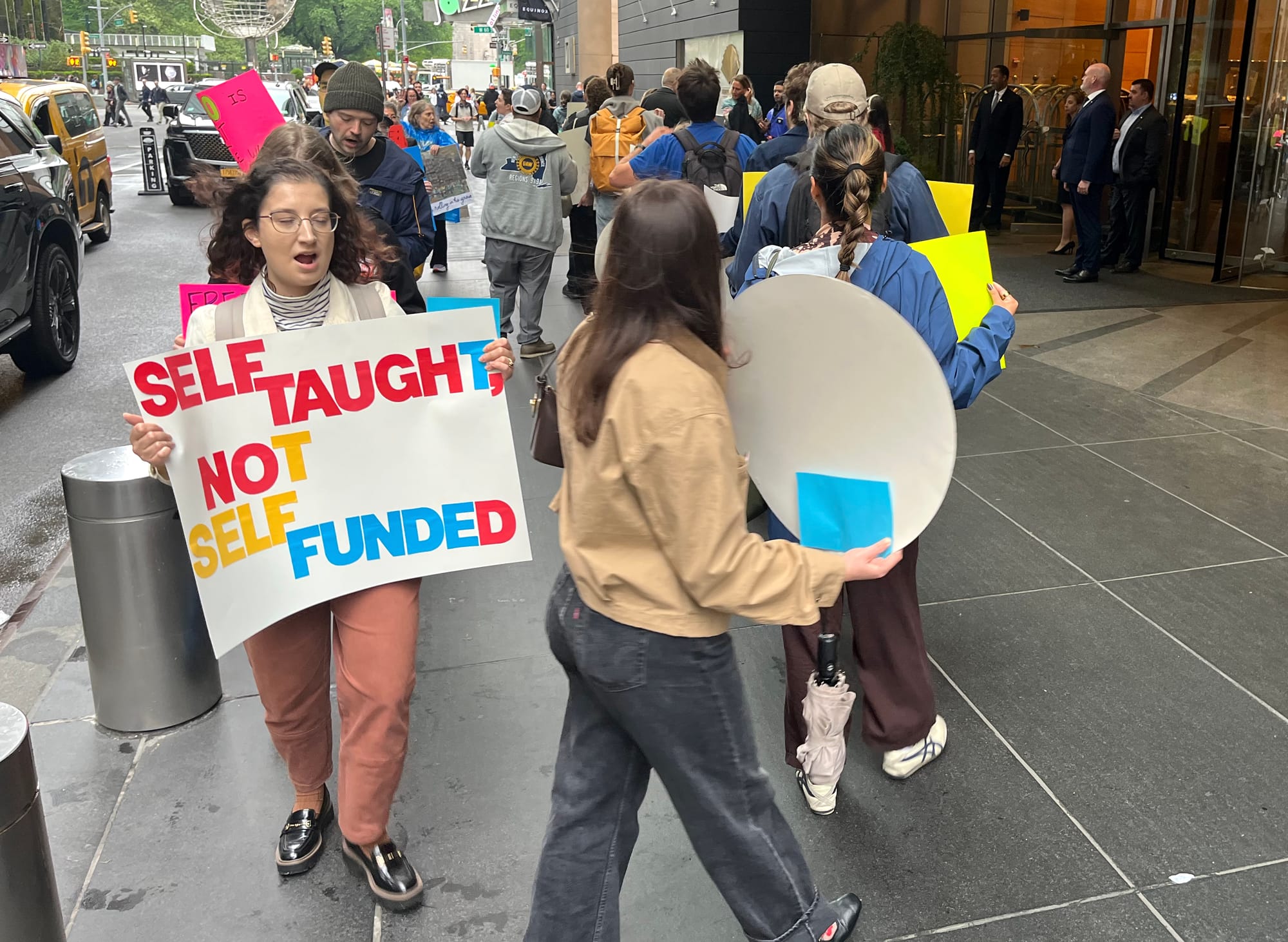
Workers at the American Folk Art Museum in New York City, represented by UAW Local 2110, picketed the museum's annual gala at the Mandarin Oriental in Manhattan on May 6, 2026. They demanded higher wages and better benefits after contract negotiations stalled for nearly two years. Frontline workers earn $19 per hour, about $12,000 below the city's living wage, while the museum's CEO Jason Busch earned $321,882 in 2024. The union requested a three-year contract raising wages to $30 per hour, but management offered only $21.50 and refused to guarantee existing benefits, leading to the protest.

Pussy Riot Storms Russia Pavilion at Venice Biennale

Pussy Riot staged a dramatic protest at the Russia Pavilion during the Venice Biennale, releasing pink smoke and waving Ukrainian flags while chanting slogans like 'Blood is Russia’s art.' Around 50 protesters, including members of Femen, occupied the area. Pussy Riot founder Nadya Tolokonnikova called for the pavilion to be closed and given to oppressed peoples, challenging Biennale president Pietrangelo Buttafuoco to meet her. The protest lasted about 20 minutes, with performers climbing the pavilion and exposing political slogans on their chests.

Pussy Riot and FEMEN Join Forces in Punk Protest in Venice: ‘Russia Kills! Biennale Exhibits!’

On Wednesday morning, Pussy Riot and FEMEN led a protest outside the Russian Pavilion at the 2026 Venice Biennale, chanting slogans like “Russia kills! Biennale exhibits!” and “Blood is Russia’s art!” Dozens of protesters, some in pink balaclavas and others bare-chested with floral crowns, gathered in the Giardini under light rain, carrying guitars and blasting punk rock and hip-hop. The action was organized by Nadya Tolokonnikova and other Pussy Riot members alongside FEMEN, a Ukrainian-founded women’s movement. They released pink, yellow, and blue smoke, and Tolokonnikova criticized the Biennale for allowing Russian participation while artists who oppose the war in Ukraine are imprisoned. She proposed an alternative exhibition, “Resistance Imprisoned,” currently on view in Strasbourg, featuring incarcerated artists.

Rollicking Protest Against Bezos's Met Gala Erupts in Manhattan

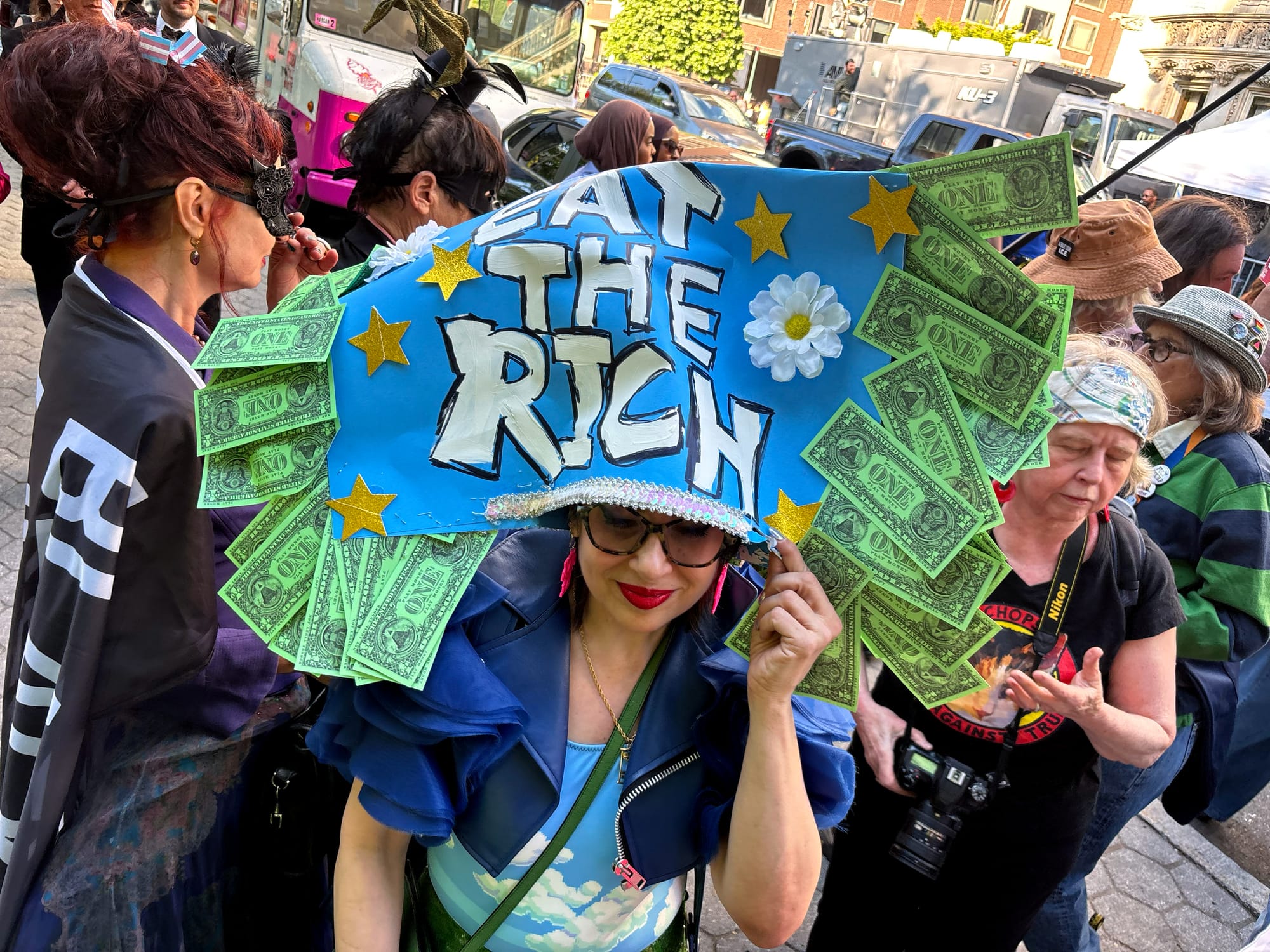
On May 4, 2026, a small but spirited protest organized by the advocacy group Rise and Resist erupted near the Metropolitan Museum of Art during the Met Gala. Dozens of costumed demonstrators gathered on a makeshift "Resistance Runway" to denounce billionaire Jeff Bezos, who co-chaired the event with his wife Lauren Sánchez Bezos. Participants held signs addressing trans rights, fascism, and wealth inequality, and danced to ABBA's "Money, Money, Money." The protest highlighted Bezos's role as co-chair, with activists criticizing his company Amazon's profits from immigration crackdowns and layoffs at the Washington Post. Bezos reportedly did not attend the gala, while his wife walked the red carpet alone.

"Man besitzt Kunst nicht, man ist nur ihr Verwalter"

The 61st Venice Biennale opened on Saturday without ceremony or an opening celebration, amid political turmoil over the participation of Russia and Israel. Italy's Culture Minister Alessandro Giuli criticized Biennale director Pietrangelo Buttafuoco for not informing the government about Russia's participation request, suggesting it could have been used as leverage for a ceasefire in Ukraine. The entire jury resigned after attempting to exclude both Russia and Israel from prize awards, leading to the cancellation of the traditional jury decision in favor of a public vote, which over 70 participating artists have protested by withdrawing from this year's prizes. Separately, a rare photograph from the early 1940s has surfaced showing Lucas Cranach the Elder's painting "Venus with Cupid as Honey Thief" in Adolf Hitler's Munich apartment, raising unresolved questions about whether the work was looted from Jewish owners before 1935.

La Biennale de Venise s’ouvre dans un climat houleux

The 61st Venice Biennale opened amid intense controversy after its president, Pietrangelo Buttafuoco, announced the return of the Russian pavilion, which had been absent since the start of the Ukraine war. The European Commission suspended its €2 million subsidy for the 2028 edition, and the entire Biennale jury resigned on April 30. Buttafuoco later declared the Russian pavilion would remain closed, but protests erupted during the pre-opening days (May 6–8), drawing 28,000 professionals. Pussy Riot members, Femen activists, and the Free Nations League staged demonstrations, while the Israeli pavilion remained open despite a letter signed by nearly 200 artists calling for its exclusion.

The art of politics: how global conflicts are playing out in this year's Venice Biennale

Israel is making a controversial return to the 2025 Venice Art Biennale after its pavilion was locked in 2024 with a note demanding a ceasefire in Gaza. The artist representing Israel, Belu-Simion Fainaru, will present his project "Rose of Nothingness" in the Arsenale, while Russia also returns to the Biennale after its Giardini pavilion was reassigned to Bolivia in 2024. The Art Not Genocide Alliance (ANGA) has renewed calls for a boycott and is organizing strike action to disrupt the event, accusing Israel of genocide.

Selfie-Friendly Pedro Reyes Sculpture Sparks Controversy at LACMA

Nearly eighty Mexican cultural figures have signed an open letter condemning the installation of Pedro Reyes's sculpture 'Tlali' (2026) in the plaza of LACMA's new David Geffen Galleries. The work, described as a selfie-friendly monolithic face inspired by Olmec art, closely resembles a 2021 proposal for a Mexico City sculpture titled 'Tlalli' that was abandoned after protests from hundreds of cultural workers. Critics argue that Reyes, a male artist who does not identify as Indigenous, should not represent Indigenous womanhood, and that the new work perpetuates colonial stereotypes and nationalistic aesthetics. LACMA has defended the piece, claiming it is entirely different in purpose and meaning, while Reyes has not commented.

WTF Is an “A-Corp”?

Hyperallergic's daily newsletter announces that Noah Fischer's comic "Prospect Heights Ghost Story" won a 2026 New York Press Club Award, thanks to collaboration with the Economic Hardship Project (EHRP). The edition also covers anti-Trump guerrilla protest art in Washington, D.C., including an arcade game titled "Operation Epic Furious: Strait to Hell" that satirizes the White House's foreign policy. Other stories include Ridgewood, Queens emerging as a new art hotspot, a feature on Francisco de Zurbarán's religious paintings, and Paddy Johnson's guide to what an "Artist Corporation" (A-Corp) is and whether artists should start one. The newsletter also reports that the Belgian Pavilion at the Venice Biennale closed on May 8 as part of cultural workers' strike for Palestine, and that nearly half of the artists in the international exhibition plus 22 national pavilions withdrew from awards consideration in solidarity with the jury's resignation.

At the Venice Biennale I saw anger at Russia and Israel – and its leadership pretending everything was fine | Charlotte Higgins

At the 2024 Venice Biennale, the Russian pavilion returned with festive performances and prosecco deliveries, drawing sharp criticism from observers who saw it as a propaganda effort to distract from Russia's war in Ukraine. Meanwhile, Ukraine's Kramatorsk was bombed, and protests erupted, including a Pussy Riot intervention. Biennale president Pietrangelo Buttafuoco defended Russia's and Israel's participation, rejecting preemptive bans despite open letters and appeals. European Commission investigated potential sanctions breaches, and culture ministers from Ukraine, Poland, Estonia, and Baltic states boycotted or condemned the biennale's stance, accusing it of yielding to the aggressor.

Numerous Venice Biennale Pavilions and Artists Go on Strike in Protest over Israel’s Participation

Thousands of protesters marched through Venice on the eve of the Venice Biennale's public opening, organized by Art Not Genocide Alliance (ANGA), to demand Israel's exclusion from the event. At least 18 national pavilions—including Austria, Belgium, France, Great Britain, and Ukraine—participated in a 24-hour strike, shutting down completely or partially. Protesters chanted slogans, waved Palestinian flags, and carried banners reading "no genocide pavilions," while ANGA released a statement with 236 signatories calling for Israel's removal, citing the humanitarian crisis in Gaza.

The Short Circuit of Art in Venice. The Tensions at the Biennale Are Not Just Geopolitics

Il cortocircuito dell’arte a Venezia. Le tensioni alla Biennale non sono solo geopolitica

The article analyzes the recent tensions and controversies surrounding the 2026 Venice Biennale, which began with President Pietrangelo Buttafuoco's announcement in March that Russia, Iran, Israel, Ukraine, and Belarus would all be allowed to participate, framing it as a foreign policy gesture. This sparked immediate polarization, leading to two open letters from half the invited artists and curators demanding the exclusion of Russia, Israel, and the United States; the resignation of the jury a week before the opening over a decision to exclude countries under ICC indictment; and a historic strike by workers on May 8 that shut down many pavilions, merging protests against genocide with those against precarious labor conditions.

Russian art today is blood. A tough interview with Pussy Riot

“L’arte russa oggi è il sangue”. Una dura intervista alle Pussy Riot

During the preview of the 2026 Venice Biennale, the Russian Pavilion became the site of a protest by Pussy Riot and FEMEN, who staged an action called "STORM OF VENICE." Wearing pink balaclavas and carrying radical slogans, they denounced Russia's presence at the Biennale, accusing the Kremlin and the European cultural system of complicity. The protest centered on the phrase "Blood is Russia's art." In an interview, Pussy Riot member Nadya Tolokonnikova argues that artists who represent the official Russian Pavilion become instruments of the aggressive imperial state, and that the Biennale confuses cultural dialogue with political normalization.

Art and politics clash at Venice Biennale, as world conflicts upstage exhibition's opening

The 61st Venice Biennale, the world's most prestigious art exhibition, opens under unprecedented turmoil. For the first time, its vision was shaped by the late Cameroonian curator Koyo Kouoh, who centered artists from Africa and its diaspora. However, political conflicts over Russia and Israel have overshadowed the art. All five jurors resigned after the Italian culture minister investigated their decision to withhold prizes from Russia and Israel over alleged crimes against humanity. Protests erupted at the Russian pavilion, with Pussy Riot activists denouncing Russia's participation, while the Israeli pavilion artist threatened legal action over the jury's snub. The Biennale will proceed without a jury, with visitors voting for two awards, and the fate of the Golden Lion remains uncertain.

Hundreds of ‘Piss Bottles’ Left at the Met Gala in Protest of Jeff Bezos

Hundreds of bottles filled with what appeared to be urine were discovered at the Metropolitan Museum of Art during the Met Gala on May 5, 2026, according to the New York Post. The protest was claimed by the anti-billionaire group Everybody Hates Elon, which targeted the event over Jeff Bezos serving as the gala's chair. The group left the bottles with signs labeling them a "Met Gala VIP toilet" and criticizing Bezos for alleged labor practices at Amazon, where workers reportedly feel forced to urinate in bottles due to lack of bathroom breaks. The group later clarified on Instagram that the bottles did not contain real urine.

Venice Biennale Jury Resigns in the Wake of Controversial Prize Ban

The jury for the 2026 Venice Biennale has resigned just days before the public opening on May 9, after announcing on April 22 that it would not consider artists from countries accused of crimes against humanity for the Golden and Silver Lion prizes. The jury, consisting of Solange Oliveira Farks (president), Zoe Butt, Elvira Dyangani Ose, Marta Kuzma, and Giovanna Zapperi, cited its earlier statement of intention in its resignation, which directly impacted the participation of Russia and Israel—both subject to International Criminal Court warrants. In response, the Biennale postponed the awards ceremony from May 9 to November 22 and replaced the traditional jury with a public vote for best participant and best national participation, framing the move as upholding openness and rejecting censorship.