
filter_list Showing 7 results for "TIME" close Clear
dashboard All 249 museum exhibitions 161article news 22article local 21person people 8article policy 8article culture 7trending_up market 7candle obituary 7rate_review review 6gavel restitution 2
date_range Range Today This Week This Month All
Subscribe

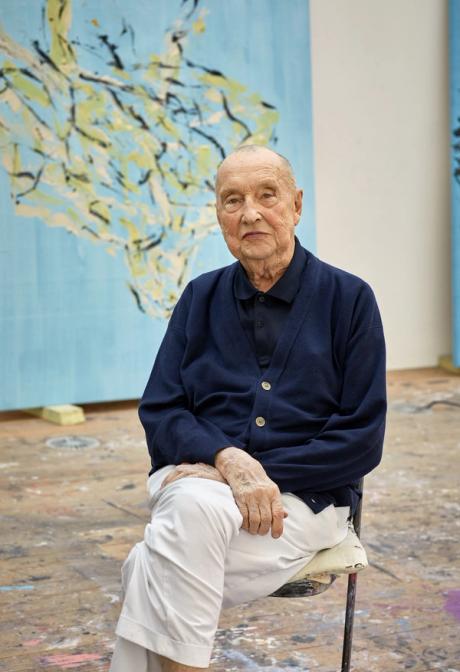
Georg Baselitz, German artist who turned figurative painting on its head, has died, aged 88

Georg Baselitz, the influential German painter and sculptor, died on 30 April at age 88. Born Hans-Georg Kern in 1938 in Deutschbaselitz, he grew up amid the ruins of Nazi Germany and later adopted his surname from his birthplace. Expelled from the East Berlin Academy for "sociopolitical immaturity," he moved to West Berlin, where he rejected both gestural abstraction and Expressionism. His first solo exhibition in 1963 was shut down for obscenity. In 1969 he pioneered his signature inverted paintings, turning subjects upside down to sever image from representation. He also created large carved sculptures using axes and chainsaws. His later series, from 2014 onward, are considered his most astonishing work, culminating in a sustained focus on his wife, artist Elke Kretzschmar.


Georg Baselitz, Lion of German Neo-Expressionism, Dead at 88

Georg Baselitz, the influential German Neo-Expressionist painter, printmaker, and sculptor, died on April 30 at age 88. His death was announced by Thaddaeus Ropac gallery, his longtime representative. Born Hans-Georg Kern in 1938 in Saxony, Baselitz was profoundly shaped by his childhood experience of war and the destruction of Nazi Germany. He was expelled from art school in East Berlin for "socio-political immaturity," moved to West Berlin, and adopted his pseudonym from his hometown. His first solo exhibition in 1963 was raided by police for obscenity, cementing his reputation as a provocateur. Known for his upside-down figures and fierce brushwork, he created series such as "Heroes" and "Fracture" that addressed trauma, violence, and the psychic toll of postwar life.

Georg Baselitz, German Neo-Expressionist Painter, Dies at 88

Georg Baselitz, the German Neo-Expressionist painter known for his provocative, upside-down figurative works, has died at age 88. Along with contemporaries like Anselm Kiefer, Baselitz led a frontal assault on the dominant Minimalist and Conceptualist art movements of the 1970s, reviving expressive, gestural painting in postwar Germany.

‘In every drop of paint he slurped, you see the Holocaust’: the genius and torments of Georg Baselitz

Georg Baselitz, the German painter and sculptor known for his provocative confrontations with Nazi history, has died. Born in 1938, he was one of the last living artists with direct childhood memories of the Third Reich. His early works, such as *Die große Nacht im Eimer* (1961) and his upside-down German eagles, deliberately shocked postwar West Germany by depicting obscene, shameful images of a society trying to forget the Holocaust. He famously exhibited a zombie Hitler woodcarving at the 1980 Venice Biennale alongside Anselm Kiefer, insisting on confronting rather than ignoring the Nazi heritage of the German Pavilion.

Stephanie Chernikowski, 84, Dies; Photographed the ‘Rough Magic’ of Punk

Stephanie Chernikowski, a photographer who documented the raw energy of New York City's punk scene in the 1970s, has died at age 84. She captured iconic images of bands like the Ramones, Blondie, and the Patti Smith Group performing at legendary clubs such as CBGB, preserving the "rough magic" of that era.

A Curator Died Suddenly. Could the Venice Biennale Be Saved?

Koyo Kouoh, the curator of the Venice Biennale’s centerpiece exhibition, died suddenly of cancer at age 57, just months into her tenure. She left behind a detailed plan for the exhibition, which her assistants are now working to realize in her absence.

Nicole Hollander, Acerbic Feminist Cartoonist, Dies at 86

Nicole Hollander, the creator of the long-running comic strip "Sylvia," has died at the age of 86. For over three decades, she wrote and illustrated the strip, which centered on a tart-tongued, witty woman who freely expressed her many opinions, becoming a staple of feminist humor in American newspapers.