filter_list Showing 9 results for "TIME" close Clear
dashboard All 207 museum exhibitions 131article news 21article local 17trending_up market 9article culture 9article policy 6rate_review review 5candle obituary 4person people 3gavel restitution 2
date_range Range Today This Week This Month All
Subscribe

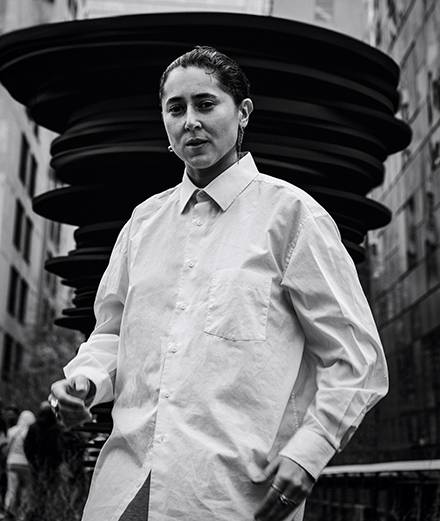
‘It’s not much but, at the same time, it’s very much’: the enduring impact of Sade’s style

The article discusses the enduring style of Sade Adu, frontwoman of the British group Sade, following the band's announcement of their induction into the 2026 Rock and Roll Hall of Fame. It highlights how Adu's signature look—scraped-back hair, red lipstick, hoop earrings, and simple black dresses or denim—has become iconic and influential, with her outfits featured in exhibitions like V&A East's 'The Music is Black' and referenced by celebrities such as Drake. The piece traces the origins of her style to her fashion design studies at Saint Martin's School of Art and her early work with designer Fiona Dealey.

Martin Schongauer in 2 Minutes

Martin Schongauer en 2 minutes

Martin Schongauer (c. 1445–1491), the Alsatian painter, draftsman, and engraver, is celebrated as the greatest German copperplate engraver before Albrecht Dürer and one of the first artists to achieve pan-European fame in his lifetime. The article outlines his life and career, from his early training in his father's goldsmith workshop in Colmar to his studies at the University of Leipzig and travels through Flanders, where he absorbed the influence of Rogier van der Weyden and Dirk Bouts. It highlights his 116 copper engravings, signed with the monogram 'M+S', which elevated engraving to a high art and circulated from Spain to Bohemia, inspiring Dürer and the young Michelangelo. Key works discussed include the painting 'La Vierge au buisson de roses' (1473) and the engraving 'La Tentation de saint Antoine' (c. 1470–1475).

In Spain, art becomes popular thanks to this expert influencer. We interviewed him

In Spagna l’arte diventa popolare grazie a questo esperto influencer. Lo abbiamo intervistato

Miguel Ángel Cajigal, known as 'El Barroquista,' is a Spanish art historian and popularizer who has brought art history to prime-time television, radio, and social media. In an interview with Artribune, he discusses his books, including 'Otra historia del arte' (2021), his approach to making art accessible without dumbing it down, and his critique of the cult of the individual genius in art historiography. He emphasizes the collective nature of art production and reception, challenging the traditional focus on masterpieces and authorship.

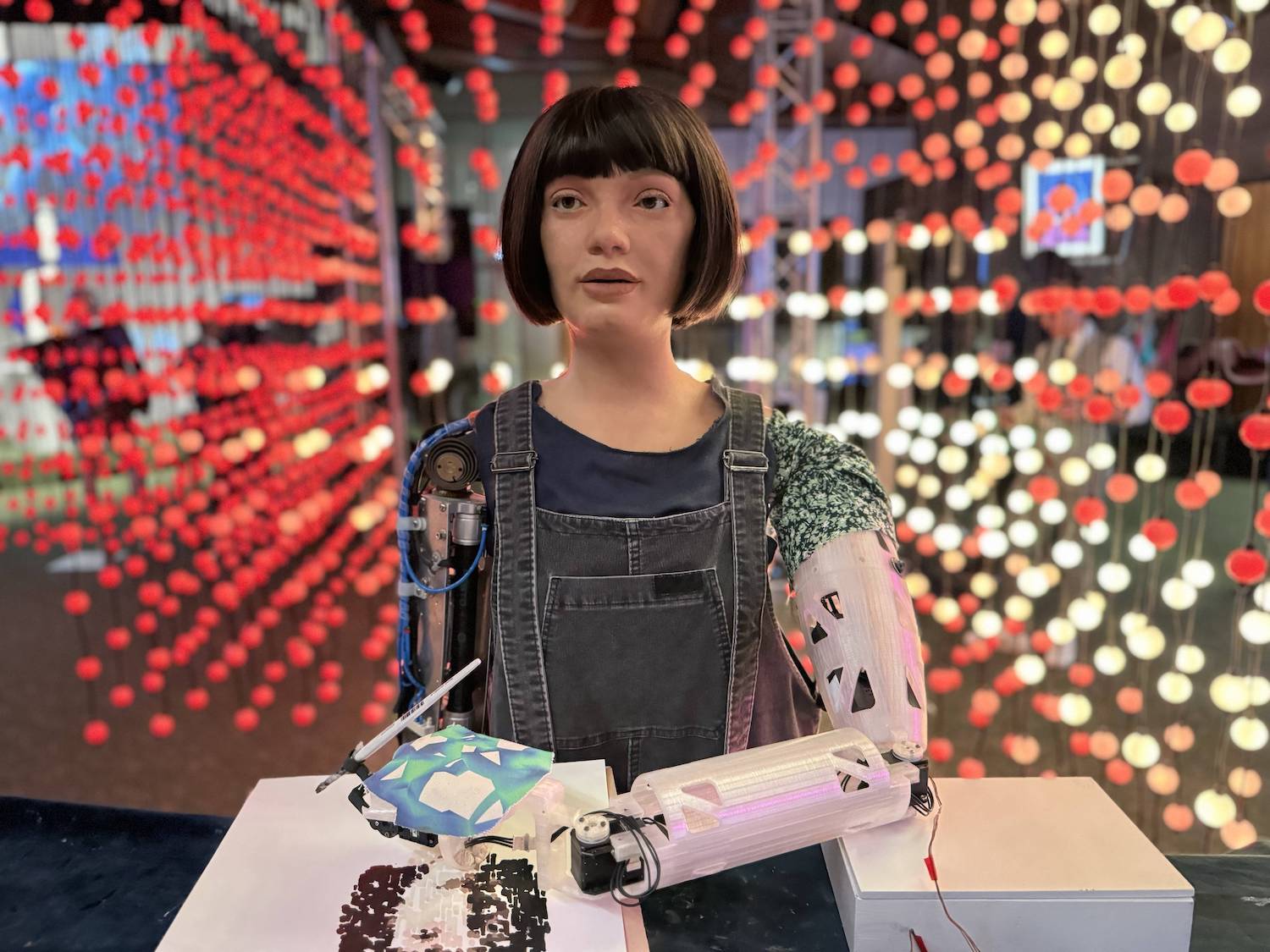
Without Consciousness, No Creativity

"Ohne Bewusstsein keine Kreativität"

Matthias Hornschuh, a speaker at the German Creative Economy Summit in Hamburg, discusses artificial intelligence and its impact on art and creativity in an interview with Monopol. He argues that AI systems lack intentionality and true creativity, describing them as "probability-based imitation" rather than genuine creative tools. Hornschuh warns against the hype surrounding AI, noting that efficiency gains are often overstated and that users can become trapped in unproductive interactions with these systems.

Meriem Bennani, the artist who went viral during the pandemic

Meriem Bennani, a New York-based artist known for her shape-shifting practice of videos, installations, and immersive environments, gained viral fame during the COVID-19 lockdown in March 2020. She co-created the animated series '2 Lizards' with fellow artist Orian Barki, which depicted surreal, humorous conversations between anthropomorphic reptiles navigating the first weeks of the pandemic in New York City. The series, posted on Instagram, resonated widely and led to eight episodes. Bennani's broader work, including 'Life on the CAPS' (2018–2022) and 'Mission Teens' (2019), blends digital animation, live-action footage, and cultural critique, often exploring themes of diaspora, post-colonialism, and migration through dystopian, supernatural narratives.

Required Reading

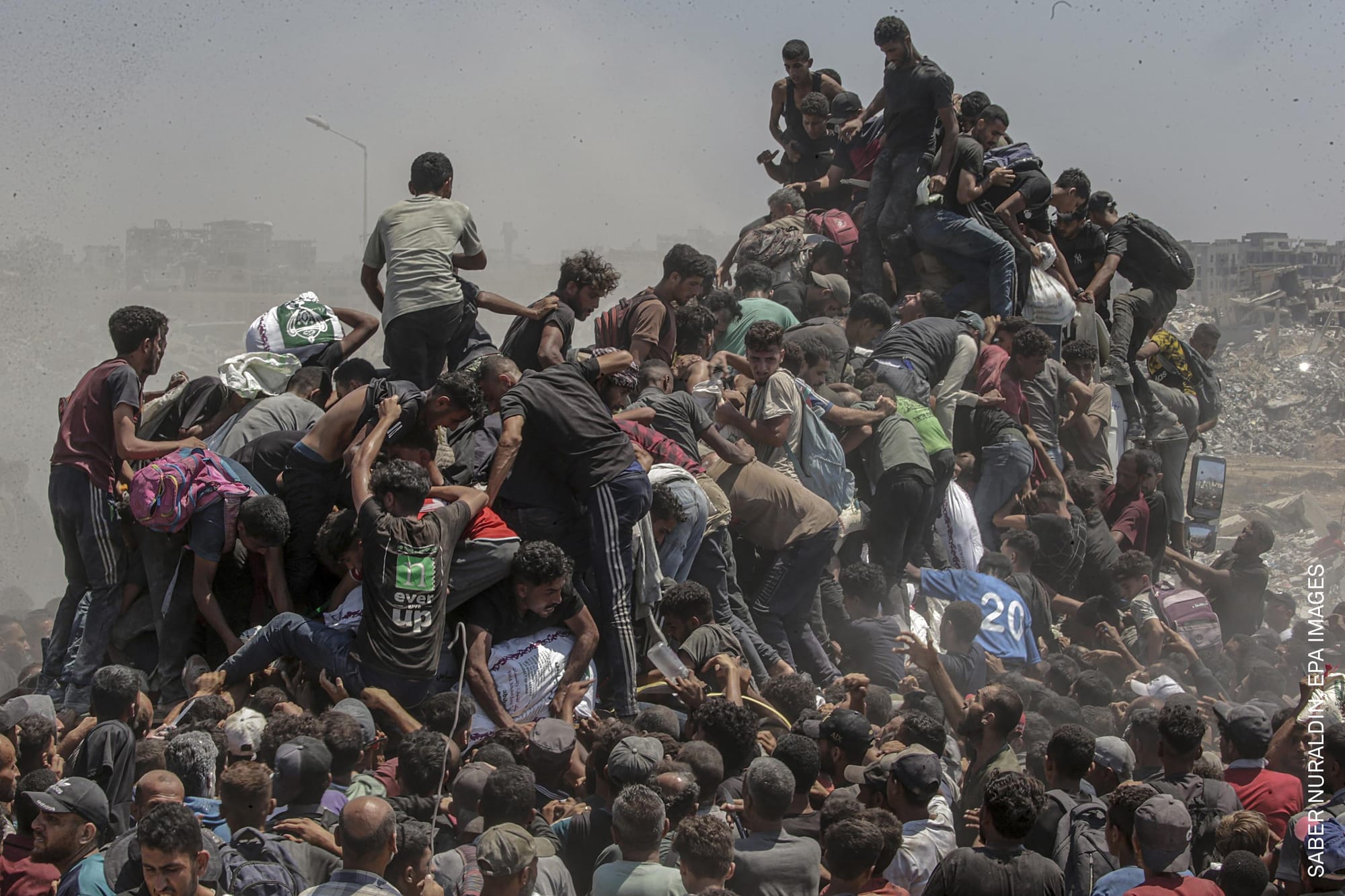
This week's Required Reading from Hyperallergic features a photo by Saber Nuraldin, a finalist for the World Press Photo of the Year, depicting Palestinians climbing an aid truck in Gaza during famine caused by Israel's blockade. The article also includes Elena Megalos's essay on the American Museum of Natural History as a site of motherhood, and reports on Meenu Batra, a legal interpreter arrested by ICE, and the New York Times blocking the Internet Archive from crawling its site.

Navid Baraty’s Atmospheric Photos Explore Contrasting Scales of Time

Navid Baraty's series "The Time Between" combines digital photographs of urban skylines like Manhattan and Chicago with dramatic natural landscapes such as desert dunes and snow-capped mountains. Using a double-exposure technique, the artist blends city lights and skyscraper outlines with geological features to explore contrasts between contemporary urban life and ancient, timeless terrains.

Nine Artists on the Gardens They’ll Never Forget

Nine artists, including Hiroshi Sugimoto, Irene Neuwirth, and Umberto Pasti, share personal reflections on unforgettable gardens from around the world. Each contributor describes a specific garden that left a lasting impression, ranging from historic estates to wild natural landscapes, highlighting the sensory and emotional impact of these spaces.

Ada: My Mother the Architect review – illuminating profile of brilliant builder balances work and family

Architect-turned-filmmaker Yael Melamede directs a documentary portrait of her mother, Israeli architect Ada Karmi-Melamede, who co-designed the Supreme Court of Israel building in Jerusalem in the early 1990s with her brother Ram Karmi and later created Ben Gurion Airport. The film explores Karmi-Melamede's architectural philosophy of "architecture of the ground and of the sky," her departure from her brother's brutalism, and a painful family split when she left her husband and children in New York after being denied tenure at Columbia University.