filter_list Showing 8 results for "Loss" close Clear
search
dashboard All 288 museum exhibitions 138candle obituary 45article culture 27article local 26article news 25trending_up market 8article policy 8rate_review review 6person people 4gavel restitution 1
date_range Range Today This Week This Month All
Subscribe

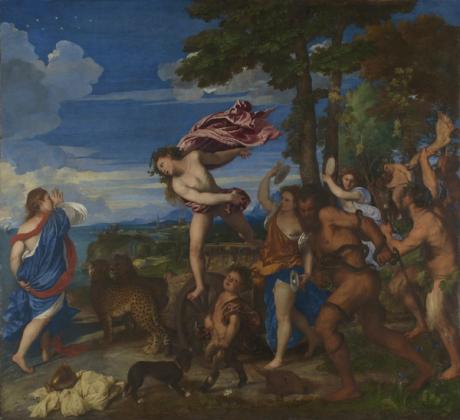
Titian's ‘Bacchus and Ariadne’ to get a refresh with bank conservation grant

Bank of America’s annual art conservation program has awarded grants to 18 projects this year, including the restoration of Titian’s *Bacchus and Ariadne* (1520-23) at the National Gallery in London. The painting will be removed from display next month for conservation work that involves placing it on a new fabric support and repairing paint loss. Other funded projects include Rembrandt’s *The Night Watch* at the Rijksmuseum, bronze palms at the Arc de Triomphe in Paris, *Gaki Zōshi* at the Tokyo National Museum, Matisse’s *La Négresse* at the National Gallery of Art in Washington, DC, and works at the Museo de Arte de Lima and the Montreal Museum of Fine Arts.

Getty’s Black Visual Arts Archives receives additional $1.8m in funding

The Getty Foundation has awarded an additional $1.8 million to its Black Visual Arts Archives initiative, bringing total funding to $4.5 million across 20 awards. The program supports institutions in processing, digitizing, preserving, and activating archival collections related to Black artists and arts organizations in the US. Grantees include Afro Charities, the Auburn Avenue Research Library, Berkeley Art Museum and Pacific Film Archive, Charles H. Wright Museum, Morgan State University, the South Side Community Art Center, the University of Chicago’s South Side Home Movie Project, and the David C. Driskell Center. Notable discoveries include footage of the original Wall of Respect mural from the South Side Home Movie Project.

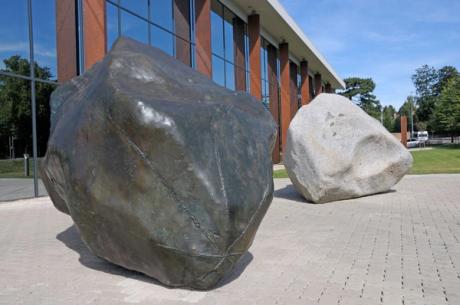
Antony Gormley sculpture quietly removed and sold off by UK council

Kent County Council, led by the Reform party, has removed and sold Antony Gormley's early public sculpture 'Two Stones' (1979-81) from outside the Kent History and Library Centre in Maidstone. The council sold the work back to the artist himself in a private sale to raise funds, citing severe financial pressures and a need to avoid increasing costs for residents. The council's most recent accounts valued the work at £859,000, but the final sale price remains confidential.

Meloni takes control of Italian museums

Meloni reprend en main les musées italiens

Italy’s culture ministry under Prime Minister Giorgia Meloni has appointed 14 new directors for so-called “second-tier” museums, reinforcing a shift away from the international “super-director” model introduced by the 2014 Franceschini reform. All appointees are Italian except for French director Axel Hémery, who was reappointed at the Pinacoteca di Siena due to his strong performance. The move follows the earlier ousting of foreign directors at top-tier museums, with only two foreign-born directors—Eike Schmidt and Gabriel Zuchtriegel—remaining, both of whom hold Italian citizenship.

Why Italy's cultural wealth never really enters public accounts and budgets?

Perché la ricchezza culturale italiana non entra mai davvero nei conti e nei bilanci pubblici?

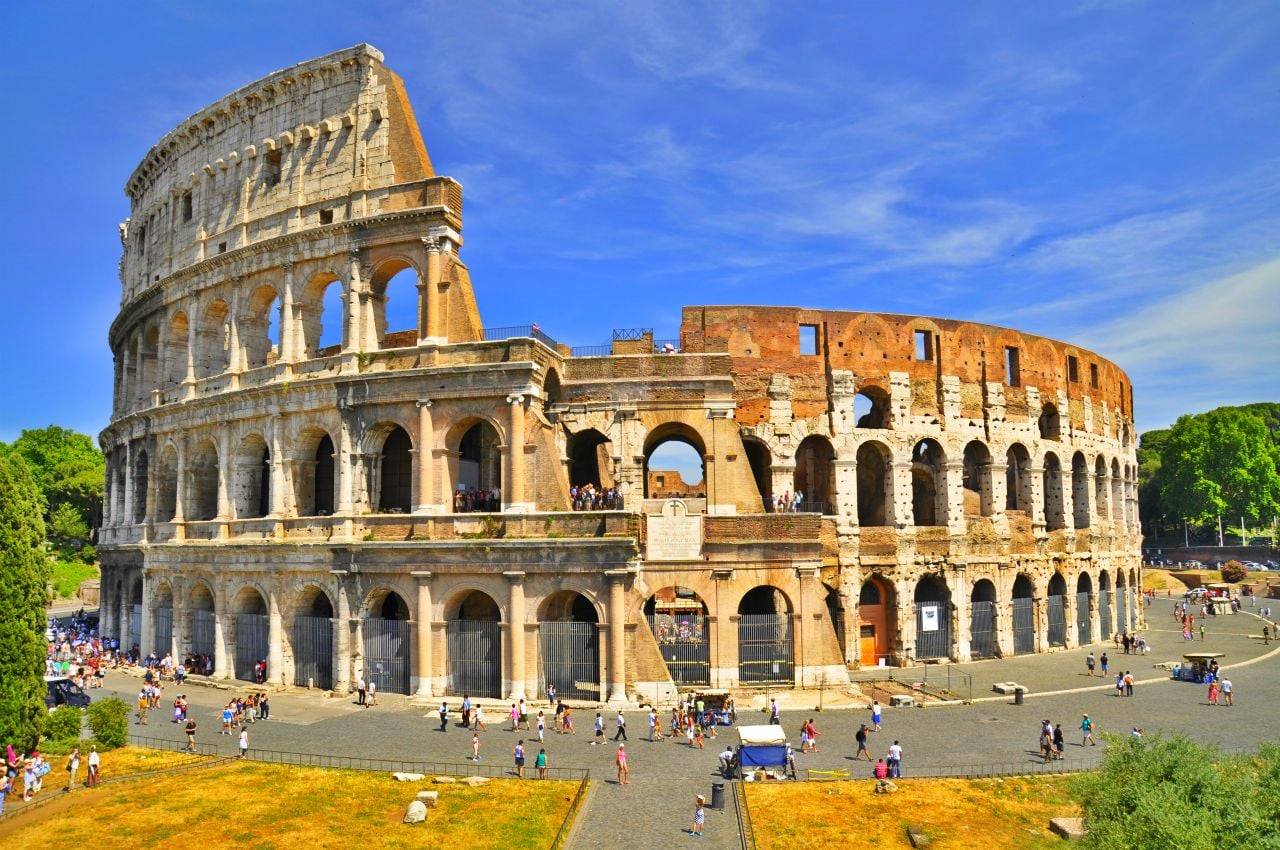
Italy has exceeded the European Commission's structural adjustment path by 0.1 percentage points of GDP, reopening fiscal scrutiny. Amid this debate, the article highlights a deeper issue: Italy's immense cultural heritage is drastically undervalued in public accounts. For example, the Pompeii Archaeological Park is recorded at just €48.9 million, the Colosseum at under €15 million, and the Uffizi at about €2 billion—figures based on outdated 2002 ministerial criteria that bear no relation to actual economic or cultural worth. The State General Accounting Office, with the University of Roma Tre and EU technical assistance, has proposed a new methodology to value cultural assets by discounting their future net financial flows, including direct revenues and indirect tourism-related returns.

Today’s war, tomorrow’s loot: attempts at stemming the illicit trade in art

The article examines the ongoing challenge of preventing the illicit trade in cultural property looted from conflict zones. It discusses the Hague Convention of 1954 and its protocol, which require signatory countries to prevent theft and pillage during armed conflict and to seize and repatriate unlawful exports. However, the protocol only applies to situations of 'occupation,' leaving a gap for looting that occurs in the chaos of war beyond formal occupation. The article also notes UN Security Council Resolutions that restrict unlawfully removed cultural property from Iraq and Syria, but no similar consensus exists for countries like Afghanistan, Libya, Ukraine, Lebanon, Yemen, Sudan, and Iran. EU Regulation 2019/880 is highlighted as a measure that prohibits introducing goods removed unlawfully from their place of origin into the EU, though its scope has expanded beyond its original anti-terrorist financing purpose.

In Berlin, a controversy over subsidies sweeps away the culture official

À Berlin, une polémique sur des subventions emporte l’élue à la Culture

Sarah Wedl-Wilson, Berlin's senator for culture, resigned after the Berlin Court of Auditors ruled that €2.6 million in public subsidies for 13 antisemitism-fighting projects were awarded illegally, bypassing regulatory checks and violating budget law. The controversy intensified when a parliamentary inquiry revealed that CDU politicians, including Christian Goiny and Dirk Stettner, pressured her to approve the funds immediately, coordinating with the Israeli embassy, despite warnings from state secretary Oliver Friederici, whom she later dismissed. Stefan Evers, the finance senator, has been appointed interim successor until Berlin's parliamentary elections in September.

Cultural Observatories: Dinosaurs or Subjects Capable of Interpreting the Present?

Osservatori culturali. Dinosauri o soggetti in grado di interpretare il presente?

The Cultural Observatory of Canton Ticino has published a study on cultural observatories worldwide, including a map and list of surveyed organizations. The analysis reveals that cultural observatories are not a global phenomenon but are concentrated mainly in Europe and South America, with occasional presence in North America (especially Canada and Hispanic-oriented organizations in the US). Africa, Asia, and Oceania are almost entirely absent from the map. The study also highlights a high rate of inactive observatories: among the top 10 countries by active observatories, only Germany shows an effective activity ratio. Spain has 26 active observatories out of about 45 total, while Italy has 11 active out of over 20 inactive. The research defines observatories as non-profit organizations that combine cultural and statistical expertise to deepen and transfer knowledge about the cultural sector, and classifies as inactive those with no recent activity on web or social channels.