filter_list Showing 4 results for "WEB" close Clear
search
dashboard All 100 museum exhibitions 46article news 20article local 14article culture 11trending_up market 4article policy 4rate_review review 1
date_range Range Today This Week This Month All
Subscribe

If fashion is art, why doesn’t CNZ fund it?

Creative New Zealand (CNZ) explicitly states on its website that it does not fund fashion design, classifying it as primarily part of the commercial creative industries. The article highlights the contradiction that while major institutions like The Dowse Art Museum, Auckland Art Gallery, and World of WearableArt treat fashion as art, CNZ denies funding to fashion designers, with rare exceptions for non-commercial, cross-cultural, or collaborative projects. Fashion designer Doris de Pont, founder of The New Zealand Fashion Museum, notes that even when her trust received CNZ support, it was for the art connection, not the fashion itself.
Getty’s Black Visual Arts Archives receives additional $1.8m in funding

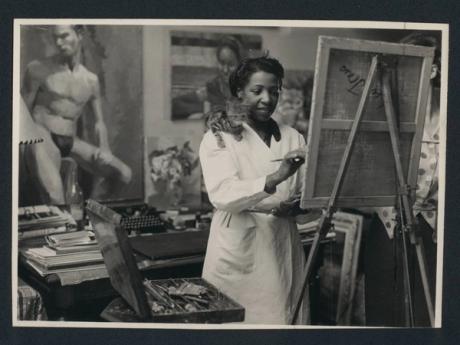
The Getty Foundation has awarded an additional $1.8 million to its Black Visual Arts Archives initiative, bringing total funding to $4.5 million across 20 awards. The program supports institutions in processing, digitizing, preserving, and activating archival collections related to Black artists and arts organizations in the US. Grantees include Afro Charities, the Auburn Avenue Research Library, Berkeley Art Museum and Pacific Film Archive, Charles H. Wright Museum, Morgan State University, the South Side Community Art Center, the University of Chicago’s South Side Home Movie Project, and the David C. Driskell Center. Notable discoveries include footage of the original Wall of Respect mural from the South Side Home Movie Project.

Gulag Museum rebrand marks latest phase in Kremlin’s assault on free speech

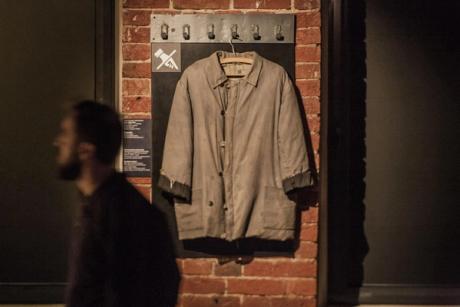
The Kremlin is systematically erasing the memory of Soviet repression under Joseph Stalin from Russian museums. The Gulag Museum in Moscow, which documented Stalin-era crimes, has been rebranded as a "Museum of Memory" focused on Nazi war crimes, with its entire website replaced and exhibitions packed up. Simultaneously, Russia's supreme court banned Memorial, a human rights organization founded to document Stalin-era atrocities, labeling it an "anti-Russian" extremist group. The Yeltsin Presidential Center in Yekaterinburg has also removed references to Memorial from its walls, and the Sakharov Center in Moscow was disbanded and evicted from its facilities.

Cultural Observatories: Dinosaurs or Subjects Capable of Interpreting the Present?

Osservatori culturali. Dinosauri o soggetti in grado di interpretare il presente?

The Cultural Observatory of Canton Ticino has published a study on cultural observatories worldwide, including a map and list of surveyed organizations. The analysis reveals that cultural observatories are not a global phenomenon but are concentrated mainly in Europe and South America, with occasional presence in North America (especially Canada and Hispanic-oriented organizations in the US). Africa, Asia, and Oceania are almost entirely absent from the map. The study also highlights a high rate of inactive observatories: among the top 10 countries by active observatories, only Germany shows an effective activity ratio. Spain has 26 active observatories out of about 45 total, while Italy has 11 active out of over 20 inactive. The research defines observatories as non-profit organizations that combine cultural and statistical expertise to deepen and transfer knowledge about the cultural sector, and classifies as inactive those with no recent activity on web or social channels.