filter_list Showing 13 results for "paris" close Clear
dashboard All 458 museum exhibitions 257trending_up market 54article news 38article culture 31article local 22person people 13article policy 13rate_review review 11candle obituary 10gavel restitution 7article events 1article event 1
date_range Range Today This Week This Month All
Subscribe

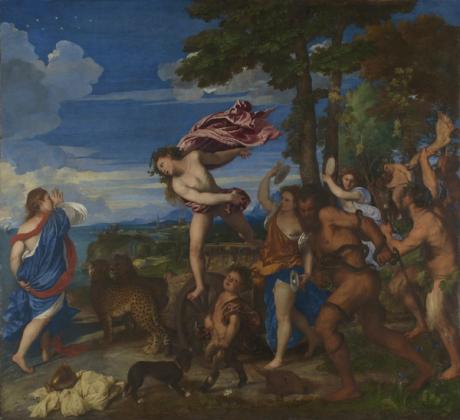
Titian's ‘Bacchus and Ariadne’ to get a refresh with bank conservation grant

Bank of America’s annual art conservation program has awarded grants to 18 projects this year, including the restoration of Titian’s *Bacchus and Ariadne* (1520-23) at the National Gallery in London. The painting will be removed from display next month for conservation work that involves placing it on a new fabric support and repairing paint loss. Other funded projects include Rembrandt’s *The Night Watch* at the Rijksmuseum, bronze palms at the Arc de Triomphe in Paris, *Gaki Zōshi* at the Tokyo National Museum, Matisse’s *La Négresse* at the National Gallery of Art in Washington, DC, and works at the Museo de Arte de Lima and the Montreal Museum of Fine Arts.

Picasso’s Guernica is the ultimate emblem of the horrors of war. It has no place in Spain's partisan squabbles | María Ramírez

A political dispute has erupted in Spain over the potential temporary relocation of Pablo Picasso's iconic anti-war painting *Guernica*. The president of the Basque Country, Imanol Pradales, has formally requested the work be moved from Madrid's Reina Sofía museum to the Guggenheim Museum Bilbao for several months in 2027, framing it as a form of "reparation" for the Basque people. The Spanish government has rejected the request on conservation grounds, while conservative politicians have used the proposal to attack Basque nationalism.

Au Louvre, des directeurs de département entre responsabilités internes et rôle national

Maximilien Durand has been reappointed as head of the Department of Byzantine and Eastern Christian Arts at the Louvre Museum, a role that carries both internal museum responsibilities and national duties on behalf of the French state. Two decrees signed by Culture Minister Catherine Pégard formalize his renewal: one as head of the museum department, and another as head of the corresponding major heritage department, a status held by only nine of the Louvre's departments.

Gilles Bloch: "The Museum needs 1.1 billion euros"

Gilles Bloch : « Le Muséum a besoin de 1,1 milliard d’euros »

Gilles Bloch, president of the Muséum national d’histoire naturelle in Paris, has issued an urgent call for €1.1 billion in funding to address the critical state of the institution's infrastructure. Ahead of its 400th anniversary in 2026, a diagnostic report reveals that 74% of the museum's 120 buildings are in poor condition, with several galleries currently closed to the public or suffering from inadequate climate control. The requested funds would cover €500 million in emergency repairs to stabilize decaying structures and a further €600 million for long-term modernization and energy efficiency upgrades.

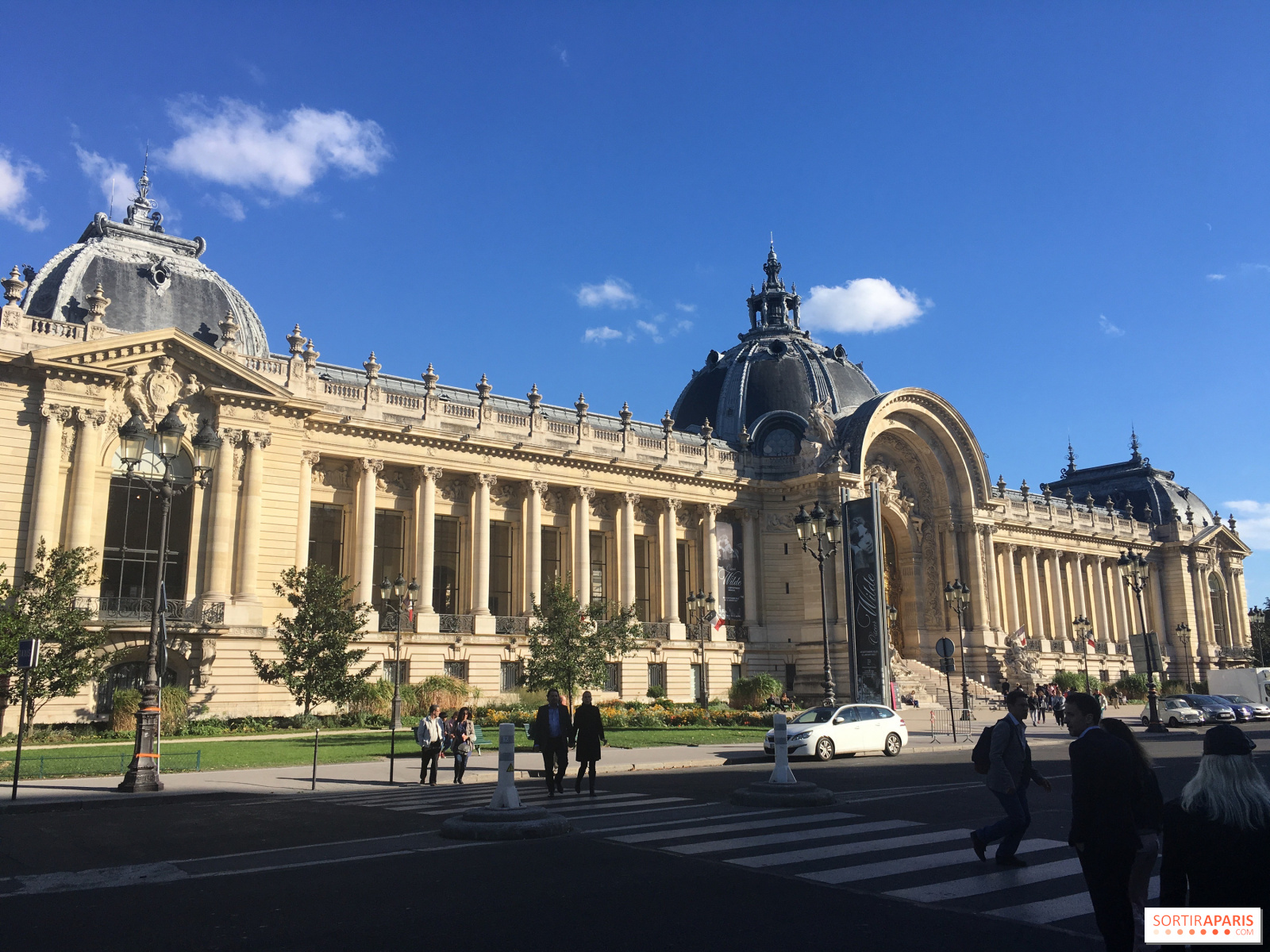
Free museums in Paris and free monuments in Île-de-France: the top cultural deals

The article is a guide listing museums and monuments in Paris and the Île-de-France region that offer free admission, either permanently or on specific occasions like the first Sunday of each month. It highlights venues such as the Paris Museum of Modern Art (MAM), the Petit Palais, the Musée Bourdelle, and Notre-Dame cathedral, detailing their collections and practical visiting information.

Galleries condemned, bones exploding… The National Museum of Natural History is in a serious state of disrepair, warns its president

Galeries condamnées, ossements qui explosent… Le Muséum national d’Histoire naturelle est dans un grave état de vétusté, alerte son président

The president of the Muséum national d’Histoire naturelle in Paris, Gilles Bloch, has issued a public alarm about the institution's severe state of disrepair. He warns that 74% of the museum complex is in grave danger, with urgent repairs costing an estimated €500 million needed to prevent collapse and reopen closed galleries. The deterioration includes mold-infested herbariums, flooded archives, and mineralized bones exploding due to heat and humidity, threatening the museum's world-class collection of over 70 million specimens.

Victorien Bornéat : « De l’échec de la démocratisation culturelle est né un sentiment d’exclusion »

Victorien Bornéat has published a manifesto arguing that French cultural democratization policy, rooted in André Malraux's vision of making masterworks accessible to all, has failed. He cites budget cuts by regional presidents Laurent Wauquiez and Christelle Morançais, police raids on bookshops like Violette and Co, and statistical studies showing that working-class audiences still do not spontaneously attend theaters, museums, or opera. Bornéat contends that the policy's emphasis on direct confrontation with canonical works ignored the need for cultural codes and institutional literacy, creating an exclusion that politicians now exploit for electoral gain.

Notre-Dame Stained Glass: The Fight Continues!

Vitraux de Notre-Dame : le combat continue !

The French government has authorized the removal and replacement of the 19th-century stained-glass windows designed by Eugène Viollet-le-Duc in Notre-Dame Cathedral with new windows by contemporary artist Claire Tabouret. This decision, posted as a work permit on the cathedral, is being challenged in court by the heritage association Sites & Monuments, which argues the replacement is not a legitimate act of conservation or restoration.

Outsourcing a service is not prohibited, but managing the provider's employees is

Externaliser un service n’est pas interdit, diriger les salariés du prestataire l’est

A wave of legal complaints has been filed against several major French cultural institutions, including the Louvre, the Pinault Collection, and the MuCEM, alleging illegal labor practices. Labor unions Sud-Culture, SUD-PTT, and Solidaires claim these museums are engaging in "illicit lending of labor" and "bargaining" by exercising direct authority over outsourced staff from third-party agencies like Marianne International and Pénélope. While outsourcing services like ticketing and reception is legal in France, the lawsuits argue that museums are illegally managing these external employees' daily schedules, rotations, and disciplinary actions as if they were their own staff.

Notre-Dame : les associations attaquent le projet

Two French heritage associations, Sites & Monuments and SOS Paris, have filed legal challenges against the project to replace the stained-glass windows of Notre-Dame de Paris. The groups have submitted requests to an emergency judge and to the administrative court, seeking to suspend the works, which have already begun and threaten to remove the original windows by Viollet-le-Duc within days. The judge will rule on whether there is a serious doubt about the legality of the decision.

Une souscription pour restaurer le réfectoire des Invalides

La Tribune de l'Art reports that a fundraising campaign has been launched to restore the refectory of the Hôtel des Invalides in Paris, specifically the salle de l'Europe. This room features 17th-century murals attributed to Michel Corneille le Jeune, depicting battles from the Franco-Dutch War (1673–1675), including the sieges of Maastricht, Huy, and Limbourg, as well as allegorical scenes of Louis XIV. The restoration is organized by the Musée de l'Armée, which manages the site.

L’offre de formation se développe

French art training institutions are expanding their curricula to include provenance research, responding to a 2022 government report that identified gaps in conservator education. The Institut national du patrimoine (INP) now offers seminars on Nazi-era spoliation (1933-1945) and has added a five-day provenance research module for external competition students since 2024-2025. Paris-Nanterre University launched a master's-level diploma in 2022 covering legal, historical, and methodological aspects of provenance research. The École du Louvre now offers a specialized master's in "sensitive goods and provenance research" addressing spoliated works, human remains, colonial acquisitions, and illicit trafficking, while also integrating provenance methodology into its general curriculum from master's level one.

Cultural Observatories: Dinosaurs or Subjects Capable of Interpreting the Present?

Osservatori culturali. Dinosauri o soggetti in grado di interpretare il presente?

The Cultural Observatory of Canton Ticino has published a study on cultural observatories worldwide, including a map and list of surveyed organizations. The analysis reveals that cultural observatories are not a global phenomenon but are concentrated mainly in Europe and South America, with occasional presence in North America (especially Canada and Hispanic-oriented organizations in the US). Africa, Asia, and Oceania are almost entirely absent from the map. The study also highlights a high rate of inactive observatories: among the top 10 countries by active observatories, only Germany shows an effective activity ratio. Spain has 26 active observatories out of about 45 total, while Italy has 11 active out of over 20 inactive. The research defines observatories as non-profit organizations that combine cultural and statistical expertise to deepen and transfer knowledge about the cultural sector, and classifies as inactive those with no recent activity on web or social channels.