filter_list Showing 8 results for "Demonstrate" close Clear
search
dashboard All 1422 museum exhibitions 714article local 349trending_up market 132article news 83article culture 66person people 28rate_review review 25article policy 9gavel restitution 8candle obituary 8
date_range Range Today This Week This Month All
Subscribe

us turkey sculptures repatriated aaron mendelsohn 2726367

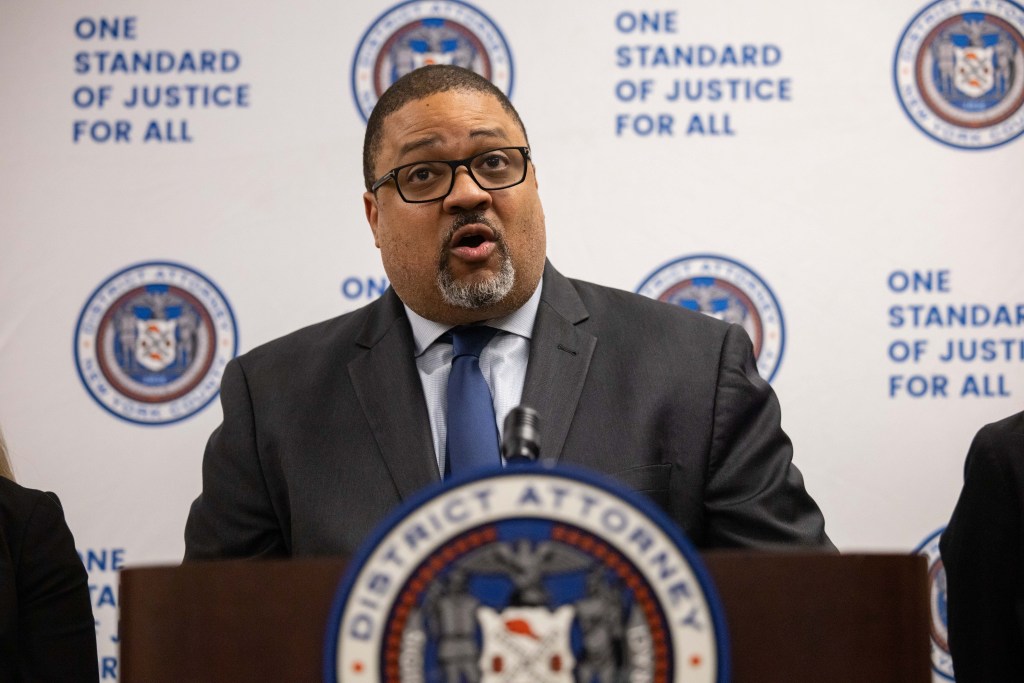
Manhattan District Attorney Alvin Bragg's office has successfully repatriated eight life-sized Roman sculptures that were illegally removed from Bubon, Turkey, 60 years ago. The sculptures, part of a shrine honoring Roman emperors, were sold to Americans by Turkish villagers in the 1960s without required permits. After a two-year legal battle involving two lawsuits and an arrest warrant, the final sculpture—a headless bronze piece—was surrendered by collector Aaron Mendelsohn, who had acquired it for $1.33 million. The sculpture was returned to Turkish officials at a ceremony hosted by Bragg's office, alongside dozens of other looted Turkish antiquities, including a marble head of Demosthenes seized from the Metropolitan Museum of Art.
manhattan district attorney returns antiquities greece 1234756833

The Manhattan District Attorney's office has returned 29 antiquities valued at $3 million to Greece, following seizures by its Antiquities Trafficking Unit. The objects were recovered from ongoing investigations into looting and trafficking networks run by convicted traffickers Robin Symes and Eugene Alexander. Two of the items—a Bronze Foot in the Form of a Sphinx and a Bronze Applique of a Gorgon, both from the 6th century B.C.E.—were seized from the Metropolitan Museum of Art this year, having passed through traffickers and galleries before entering the museum's collection.

1815, a Key Year for the Question of Art Restitution at the Heart of an Enlightening Book

1815, année clé de la question des restitutions d’œuvres d’art au cœur d’un ouvrage éclairant

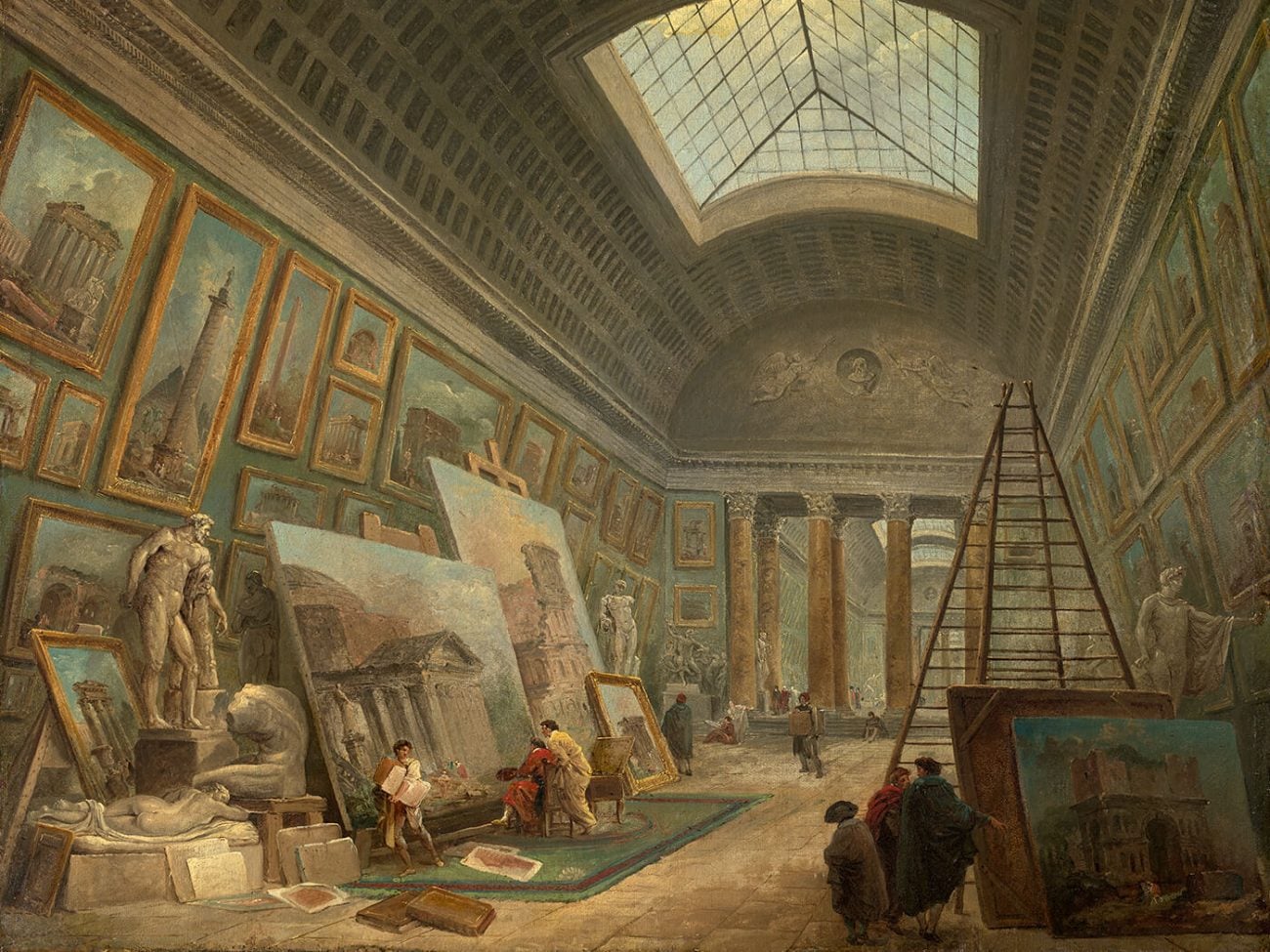
Art historian Bénédicte Savoy has released a new book, "1815, le temps du retour," which examines the massive wave of art restitutions following the collapse of the Napoleonic Empire. Between 1794 and 1811, French revolutionary and imperial forces seized thousands of artworks and cultural objects from across Europe to fill the Louvre under the guise of creating a universal museum. After Napoleon's defeat in 1815, the subsequent return of these works sparked a global debate involving intellectuals and politicians regarding national identity, cultural property, and the legal status of looted heritage.

ohio dutch paintings looted nazis monuments men foundation 1234751711

The auction of two 17th-century Dutch still-life oil paintings of flowers was halted at Apple Tree Auction Center in Newark, Ohio, after the Monuments Men and Women Foundation and the Jewish Digital Cultural Recovery Project identified them as Nazi-looted art. The paintings, originally part of Adolphe and Lucie Haas Schloss's collection, were seized in 1943 and later stored in Hitler's Führerbau before being looted again. Foundation founder Robert Edsel traveled to Ohio to alert the auction house, which cooperated by removing the works from sale and placing them in a vault. The consignor's identity remains undisclosed, and the foundation is working to return the paintings to the Schloss family.

Manhattan D.A.’s Office Returns More Than 650 Looted Artifacts to India

On April 28, Manhattan District Attorney Alvin L. Bragg, Jr., announced the return of 657 trafficked antiquities valued at nearly $14 million to India. The items were recovered by the D.A.'s Antiquities Trafficking Unit and Homeland Security Investigations, and formally returned at a ceremony in New York. Among the repatriated pieces are a bronze figure of Avalokiteshvara (valued at $2 million), stolen from the Mahant Ghasidas Memorial Museum in Raipur in 1982; a red sandstone Buddha statue (valued at $7.5 million) smuggled by convicted dealer Subhash Kapoor; and a sandstone Ganesha sculpture looted by trafficker Vaman Ghiya and sold through Christie's by Nancy Wiener, who was later convicted of antiquities trafficking.

thirty five arrested in bulgaria criminal art trafficking network 1234762594

Bulgarian authorities, with support from Europol, arrested 35 individuals and conducted 131 searches across Bulgaria, seizing over 3,000 cultural artifacts valued at more than €100 million. The operation targeted a criminal network trafficking artifacts from Thracian and Greco-Roman civilizations across Europe, with connections to illegal excavations in Bulgaria and the Balkans. The investigation, which began after a 2020 house raid that uncovered 7,000 artifacts, involved law enforcement from Albania, France, Germany, Greece, Italy, and the UK, and was coordinated from Sofia and Eurojust in The Hague.

ancient rome new orleans tombstone 1234755754

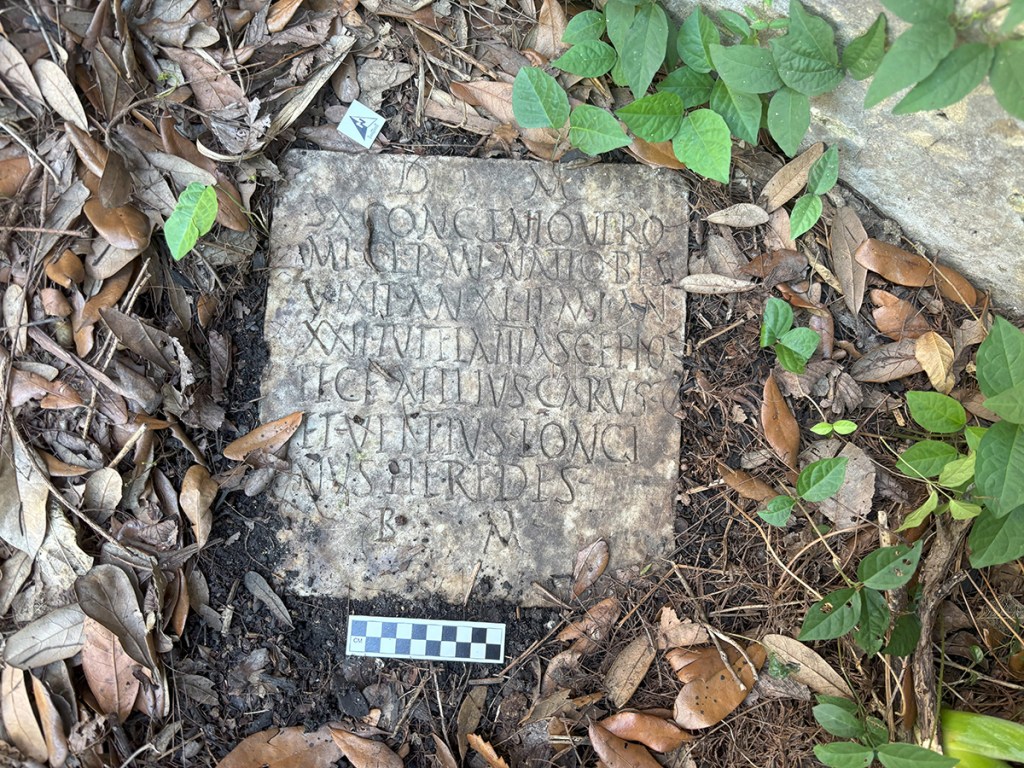
A 2nd-century Roman gravestone inscribed for a sailor named Sextus Congenius Verus was discovered in March 2025 by Daniella Santoro and Aaron Lorenz while doing yard work at their New Orleans home. University of New Orleans archaeologist D. Ryan Gray, working with colleagues at the University of Innsbruck and Tulane University, traced the stone to a missing object from a museum in Civitavecchia, Italy. Researchers believe it was brought to the U.S. as a souvenir by a member of the 34th division of the Fifth Army after the liberation of Rome in 1944. The FBI’s Art Crime Team is now involved in repatriating the headstone to Italy.

Forged Picasso prints sold at Stuttgart auction recovered as part of international police operation

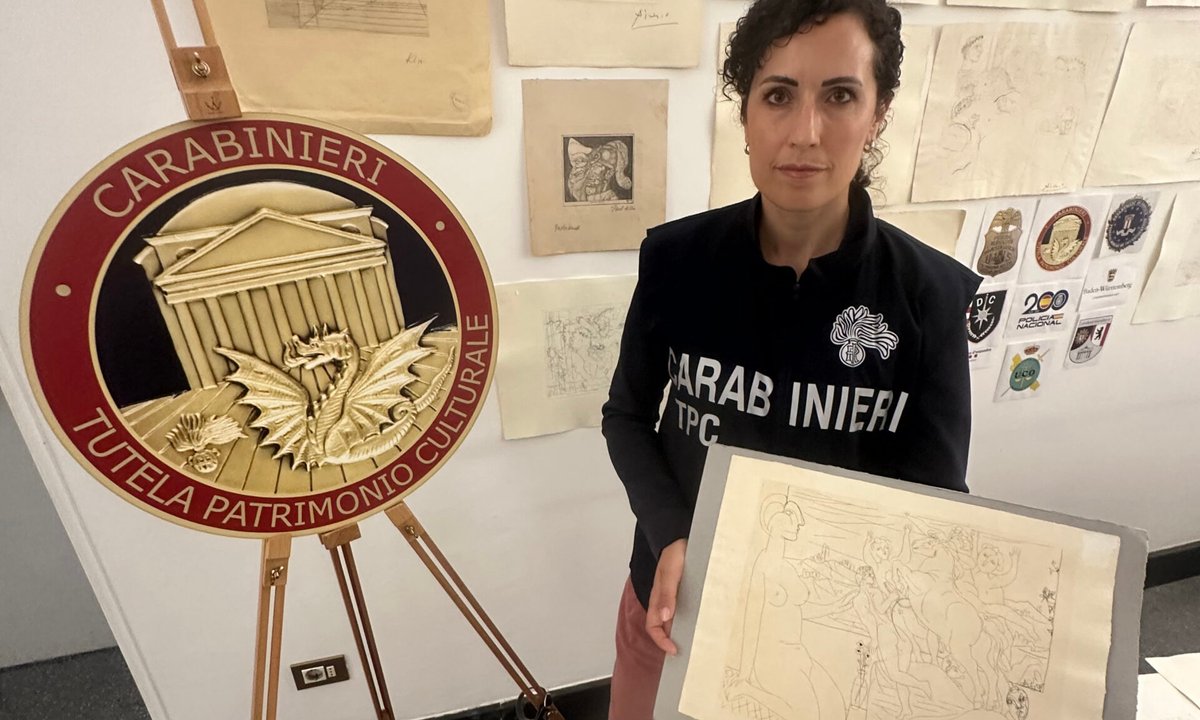
Two forged Pablo Picasso prints from his Suite Vollard series, sold at a Stuttgart auction house, have been recovered as part of an international police operation led by Italian authorities. The Baden-Württemberg State Criminal Police Office (LKA) announced that an Italian national, believed to be a professional art restorer, is suspected of consigning four forged works to the auction house over several years. Two prints were recovered—one in Germany's Rhineland region and one in Austria—while two others were seized before delivery. The operation, code-named "Minotauro bis," began in 2022 and has led to the seizure of 104 fake contemporary artworks, the dismantling of a forgery laboratory in Rome, and the freezing of bank accounts and vehicles. Forgers used complex methods including fake watermarks, scanned images, and aging paper with coffee or tea.