
filter_list Showing 2 results for "Erato" close Clear
search
dashboard All 96 museum exhibitions 31trending_up market 24article culture 11article news 10article local 9article policy 4person people 3rate_review review 2gavel restitution 1candle obituary 1
date_range Range Today This Week This Month All
Subscribe

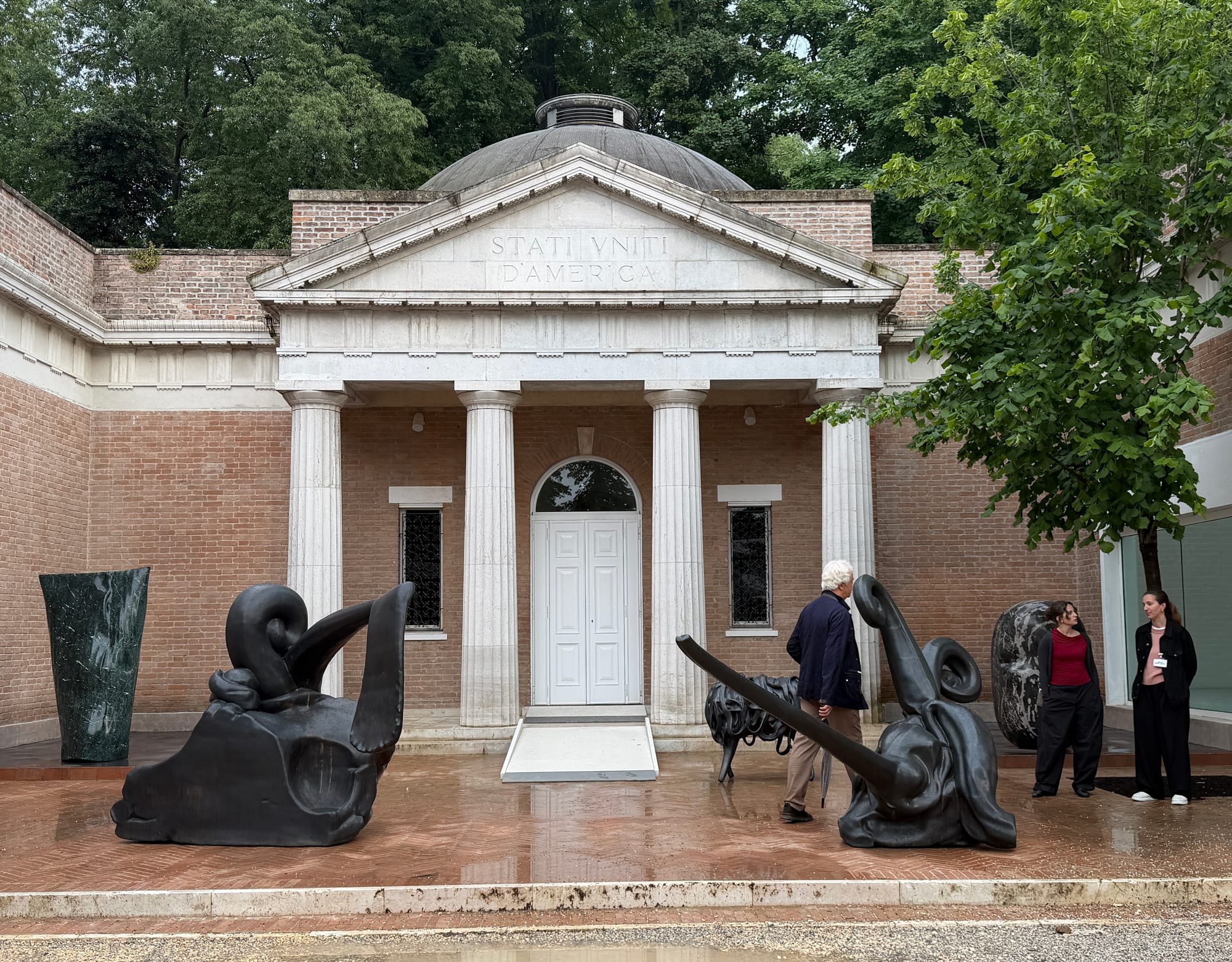
A Whole Lot of Nothing at the US Pavilion

The US Pavilion at the 2026 Venice Biennale features sculptor Alma Allen's exhibition "Call Me the Breeze," curated by Jeffrey Uslip. The show presents untitled, amorphous sculptures in bronze, wood, and stone, including Colorado Yule marble. The selection process was controversial: after the Trump administration excluded the National Endowment for the Arts, the State Department initially picked artist Robert Lazzarini and curator John Ravenal, but that plan collapsed. The American Arts Conservancy, a new nonprofit led by Jenni Parido (a former pet food store operator with Mar-a-Lago ties), then took over, hiring Uslip, who approached Barbara Chase-Riboud and William Eggleston before settling on Allen. Donors include businessman John Phelan and fashion designer Tommy Hilfiger.

The Politics of In-action: Review of In-action: Viennese Actionism and the Passivities of Performance Art

Caroline Lillian Schopp's new book *In-action: Viennese Actionism and the Passivities of Performance Art* (2025) offers a revisionist history of Viennese Actionism, a movement retroactively named in 1970 by Peter Weibel and Valie Export. Schopp introduces the term "in-action" to describe a politics of artistic action that emphasizes intimacy, hesitation, and vulnerability rather than the violent or liberatory extremes typically associated with the movement. She expands the canon to include women artists such as Anna Brus, Hanel Koeck, and Ingrid Wiener, and reexamines the work of Rudolf Schwarzkogler, whose death was mythologized as a suicide by self-castration but was actually a fall from a window. Through close readings of photographs, Schopp argues that Schwarzkogler's performances were characterized by passivity and "in-sincerity," challenging the dominant narrative of actionism as aggressive or heroic.