filter_list Showing 15 results for "Mart" close Clear
search
dashboard All 474 museum exhibitions 259article local 49article news 49article culture 38trending_up market 27rate_review review 15candle obituary 13article policy 10person people 7gavel restitution 7
date_range Range Today This Week This Month All
Subscribe

Alma Allen’s US Pavilion Is One of the Emptiest Shows at the Venice Biennale

Alma Allen represents the United States at the 2026 Venice Biennale with a subdued, apolitical exhibition inside the US Pavilion. The show features roughly 25 sculptures—mostly in bronze, wood, and stone—many titled "Not Yet Titled," and deliberately avoids overt political messaging. This marks a stark departure from the previous two US pavilions, curated by Simone Leigh (2022) and Jeffrey Gibson (2024), which directly confronted colonialism and empire. The Trump administration’s call for proposals explicitly asked for work that "reflects and promotes American values," and Allen’s presentation has been criticized as safe, unremarkable, and lacking the incisive edge of contemporary American art.
The National Gallery of Art’s Dear America Needs a Postscript

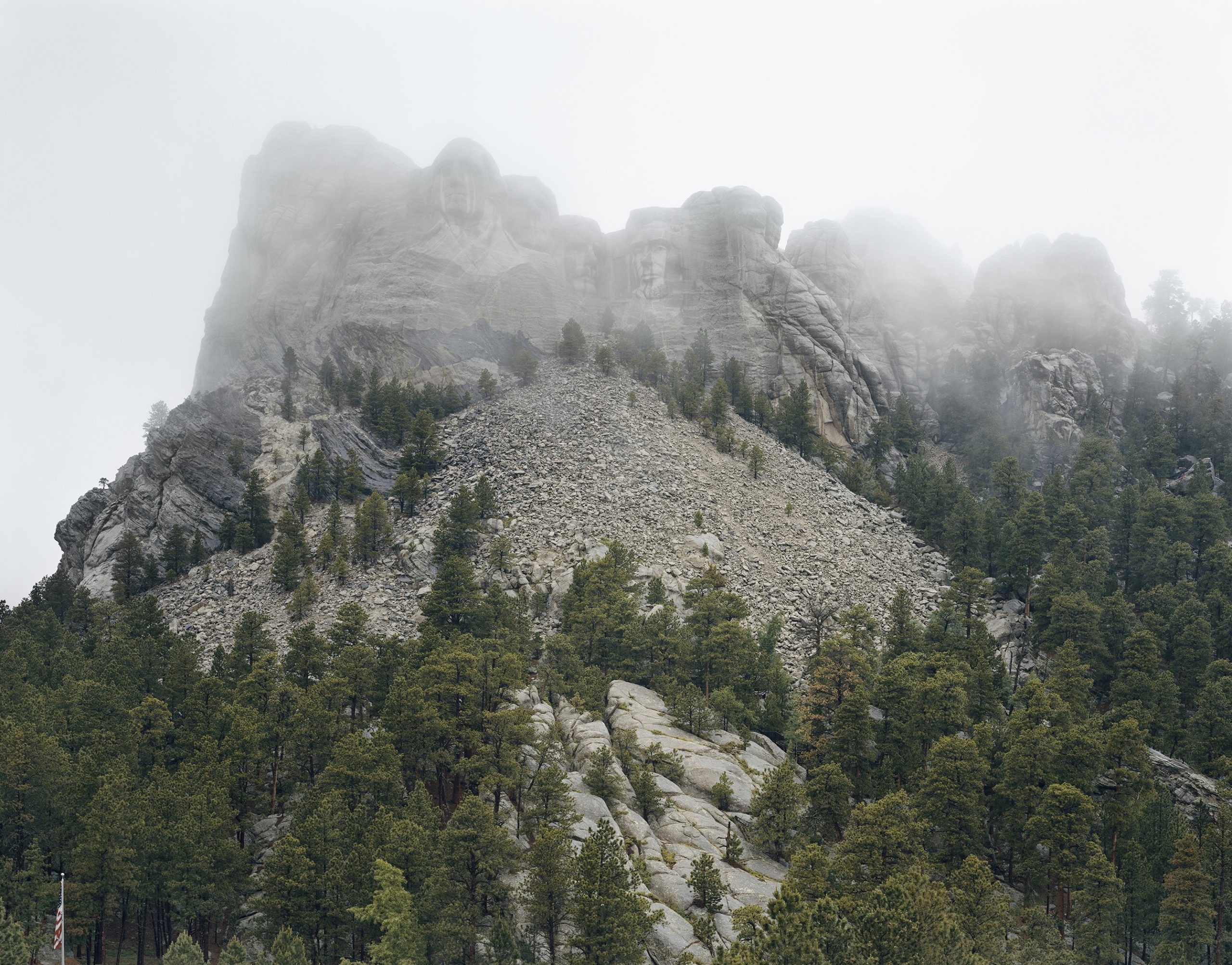
The National Gallery of Art in Washington, D.C. has opened "Dear America," an exhibition organized around the themes of "Land," "Community," and "Freedom" that attempts to survey the entire history of the United States through its collection. The show features works by artists including Mitch Epstein, Victoria Sambunaris, Sedrick E. Huckaby, and Nancy Andrews, with sections on the American landscape, industrialization, and diverse communities. However, the review notes that the exhibition feels overly literal, with American flags prominently featured and a sense of ticking off boxes rather than offering a challenging or intellectually rigorous presentation.

Édouard Glissant’s Museum-as-Archipelago

The article reviews the exhibition "The Earth, the Fire, the Water, and the Winds: For a Museum of Errantry with Édouard Glissant" at the Center for Art, Research and Alliances (CARA) in New York, the first U.S. showing of works from the personal collection of Martinician philosopher and writer Édouard Glissant. Curated from his archive, the exhibition features artists such as Roberto Matta, Wifredo Lam, Etel Adnan, Irving Petlin, Antonio Seguí, Öyvind Fahlström, Jack Whitten, and Mel Edwards, reflecting Glissant's friendships and intellectual exchanges across Europe, Africa, and the Americas. Highlights include Antonio Seguí's large pastel works from his Titanic series.

Mary Frank Creates Her Own Pantheon

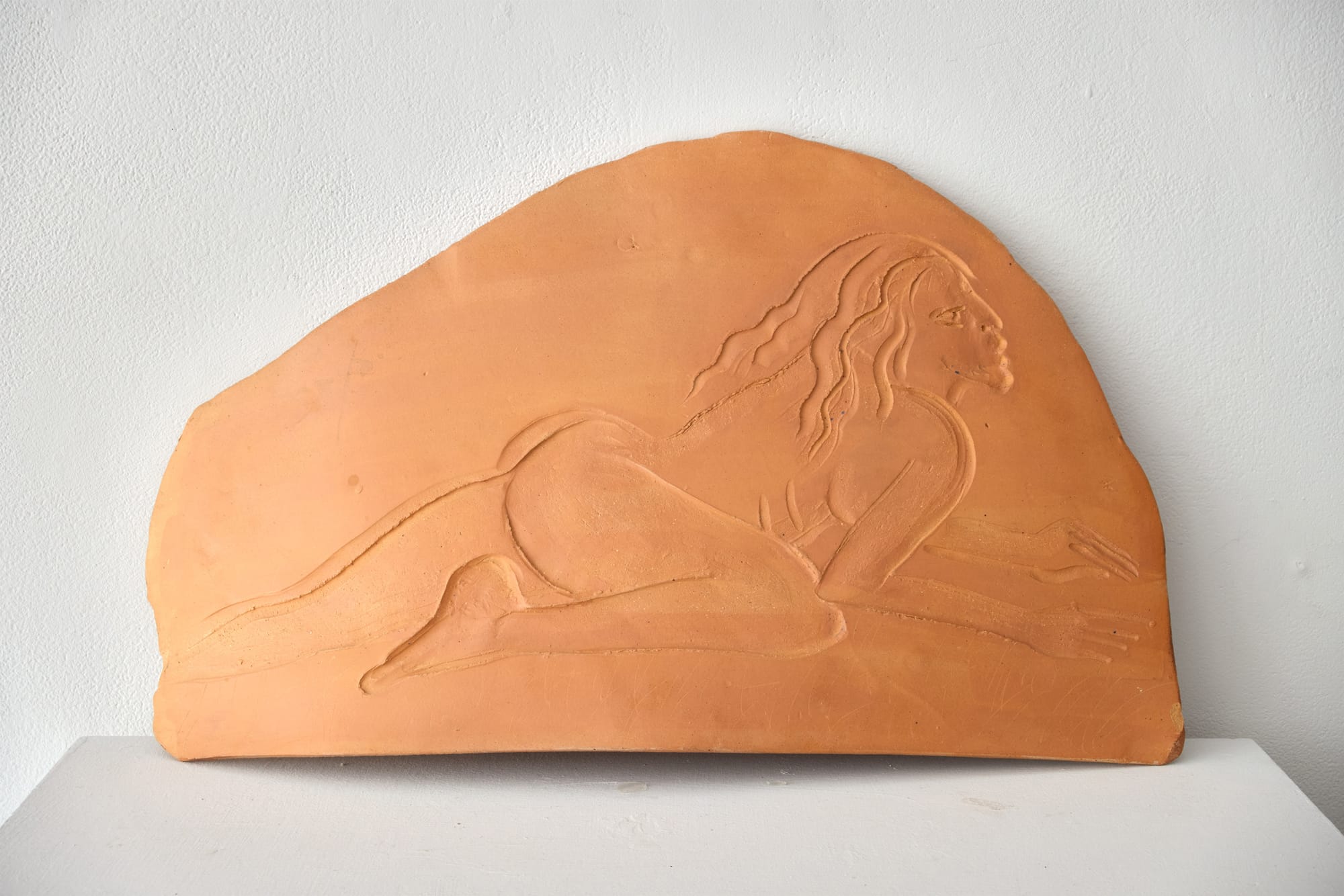
Mary Frank, an artist in her early 90s known for mythologically rooted sculpture and works on paper, is the subject of a focused exhibition at Steven Harvey Fine Art Projects in New York. Curated by Steven Harvey, the show presents 11 sculptures in wood, bronze, and ceramic from 1958 to 1985, alongside five works on paper, including a monotype and an oil-on-paper piece. Frank’s work, influenced by her study with Martha Graham, centers on self-sustaining female figures that embody agency, tenderness, and survival, often rendered in ceramic slabs or carved wood.

Review of the Italian Pavilion by Chiara Camoni and its relationship with the Biennale

La recensione del Padiglione Italia di Chiara Camoni e la sua relazione con la Biennale

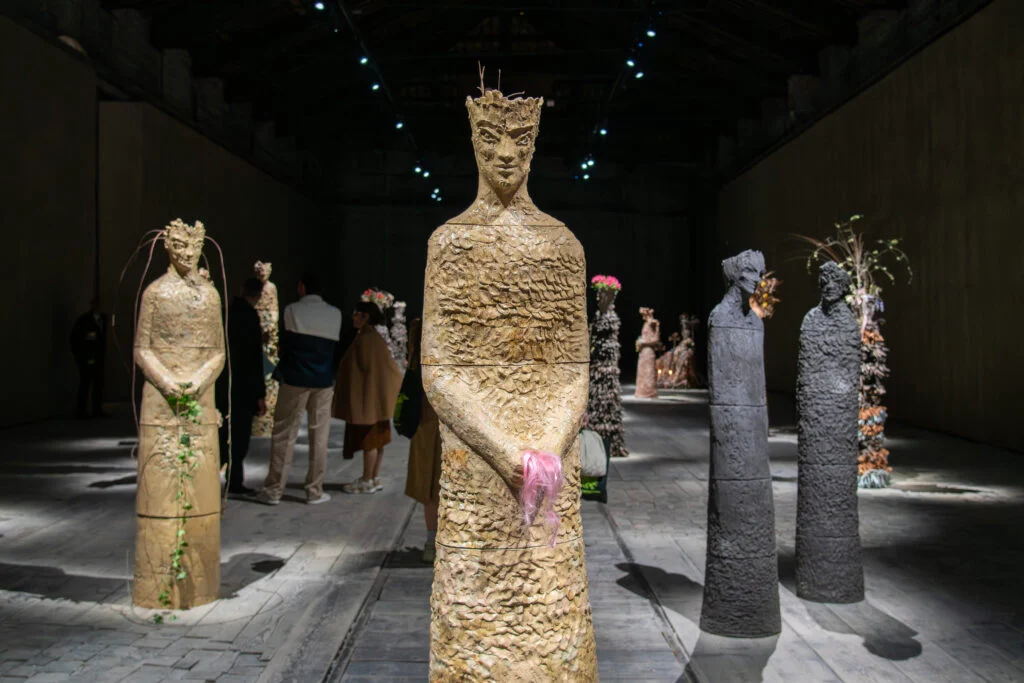
Chiara Camoni's Italian Pavilion at the 2026 Venice Biennale, titled "Con te con tutto," is reviewed in relation to Koyo Kouoh's central exhibition "In Minor Keys." Camoni's installation features a crowd of female figures sculpted in clay and natural materials, described as "donne tronco" (trunk women), which evoke growth, transformation, and the intuitive, manual gestures that Kouoh champions. The review highlights how Camoni's work dialogues with Kouoh's curatorial emphasis on drawing, painting, and craft as intuitive practices, moving away from conceptual art. It also notes a performance by Magdalena Campos Pons at the Tese theatre, which includes a portrait of Toni Morrison and Kouoh, accompanied by music by Kamal Malak.

The tiniest event can tear a hole. Sara MacKillop by Margaret Kross

Sara MacKillop's exhibition "The Cutaway View" at Good Weather in Chicago presents sculptures made from humble analog materials like blank wall calendars, empty shopping bags, and gift wrapping. The London-based artist alters these objects with minimal interventions—such as surgically cut holes in shopping bags to accommodate vinyl records—drawing attention to the ephemera and texture of retail culture. Her series "Calendar Houses" (2021–ongoing) uses archive boxes and wall calendars to create miniature modernist dwellings that critique systems of order and self-optimization.

Martin Wong’s Brick Monument to Popeye

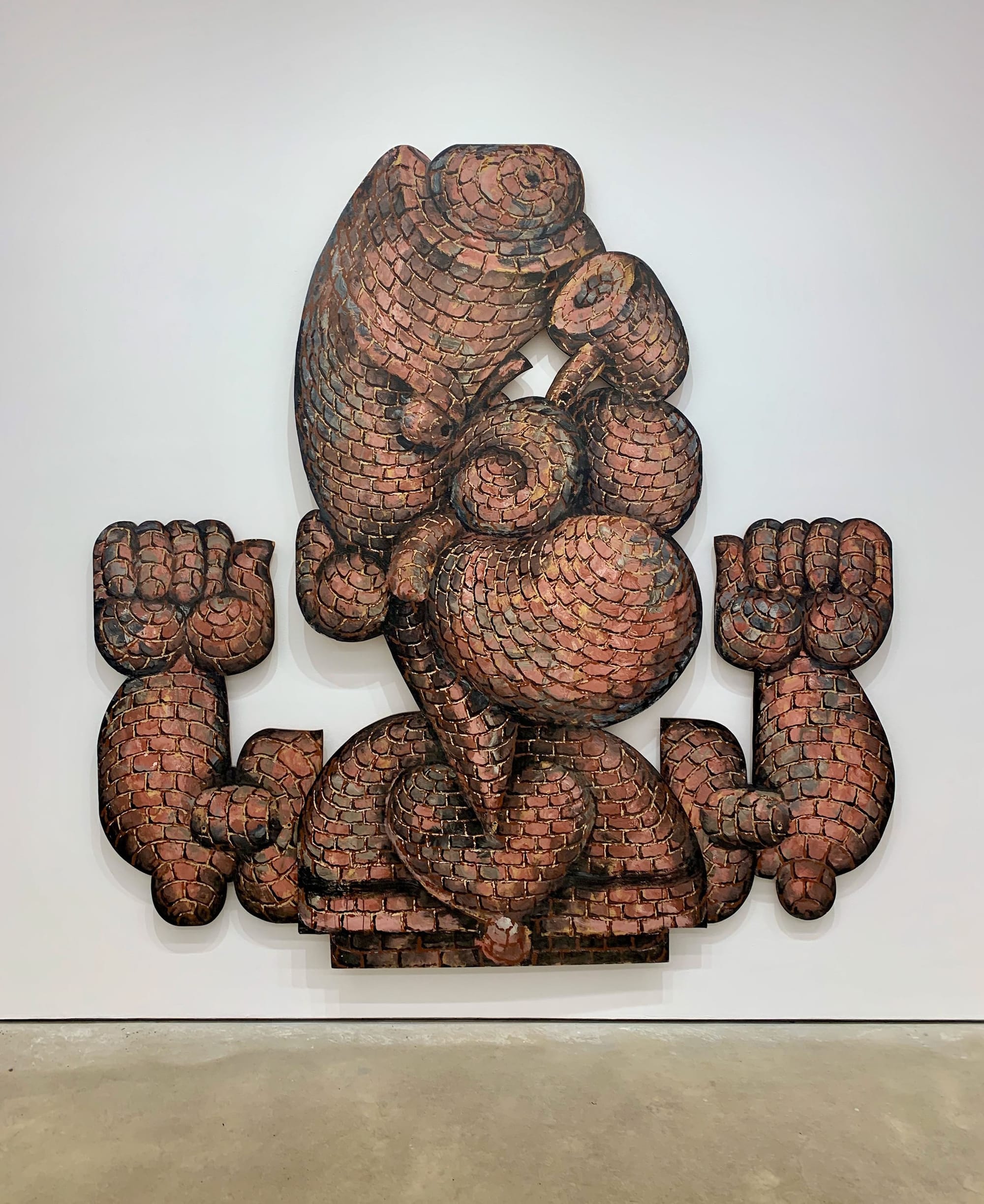
Hyperallergic reviews Martin Wong's posthumous exhibition "Popeye" at PPOW gallery, featuring six motorized plywood panels that reimagine the cartoon character Popeye as curving brickwork. The show includes smaller works like "Sacred Shroud of Pepe Turcel" (1989–90) and paintings of vintage cartoon characters Mutt and Jeff, Little Lulu and Tubby, all rendered in Wong's signature brick style. The review highlights Wong's queer, magpie sensibility and his ability to cross boundaries between high and low culture.

Fight Club Denounces the System From Within the System

Cameroonian artist Pascale Marthine Tayou's first major institutional exhibition in Brazil, "Knockout!," has opened at the Pinacoteca de São Paulo's Pina Luz building. The show spans over 25 years of Tayou's career, featuring installations, sculptures, and paintings across seven rooms. Each room is themed around a historical international conference—including the Berlin Conference of 1884, Yalta, San Francisco, Rome, Rio de Janeiro, Bandung, and a fictional Avignon conference—using these as political and historical axes to critique colonial power structures and global inequality.

Death as Performance

Der Tod als Performance

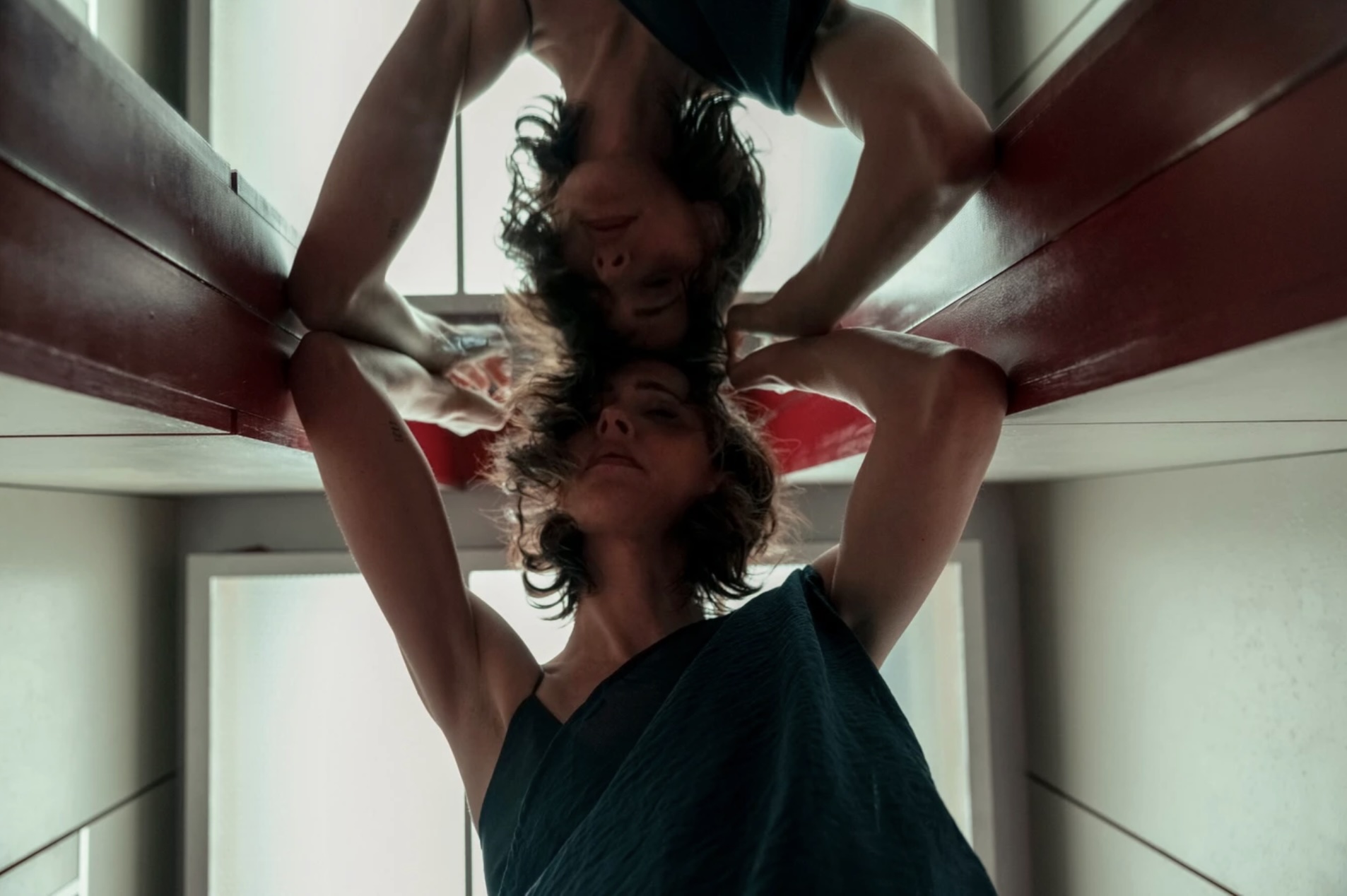
The article reviews Maria Martínez Bayona's debut sci-fi comedy film "The End of It," which premiered in competition at the Cannes Film Festival. The film follows Claire, a 250-year-old artist who, in a future where medical advances have eliminated death, decides to stage her own suicide as a radical art performance. The story critiques a world obsessed with synthetic rejuvenation and explores themes of mortality, authenticity, and the commodification of art.

CUANDO LOS OBJETOS HABLAN. MUSEO HECHIZO, DE JUAN JOSÉ SANTOS

Juan José Santos's book "Museo hechizo" (Metales Pesados, 2025) challenges the perceived neutrality of the Western museum, presenting it as an institution shaped by colonial logics of classification, extraction, and representation. The essay centers on the concept of "lo hechizo"—understood as both artisanal precariousness and disruptive enchantment—and explores small, community-based Latin American museum experiences that operate from precarity, reciprocity, and care. Santos argues that the museum is a space of conflict where voices, narratives, and ways of constructing history are contested, and he proposes thinking of the museum through its minor, situated, and alternative forms in Latin America.

Rose Finn-Kelcey review – flying puns, smart pranks and prayers for 20p

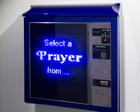
The Guardian reviews "Rose Finn-Kelcey: House Rules," a posthumous exhibition at the new Arts Collective in Northampton, UK. The show features works by the British conceptual artist (1945–2014), including her 1972 flag installation "Power for the People" at Battersea Power Station, a prayer vending machine titled "It Pays to Pray," and pieces exploring permission, spirituality, and societal restrictions. The exhibition is presented as a homecoming for Finn-Kelcey, who was born in Northampton.

Adrian Ghenie: Roman Campagna | Exhibition review

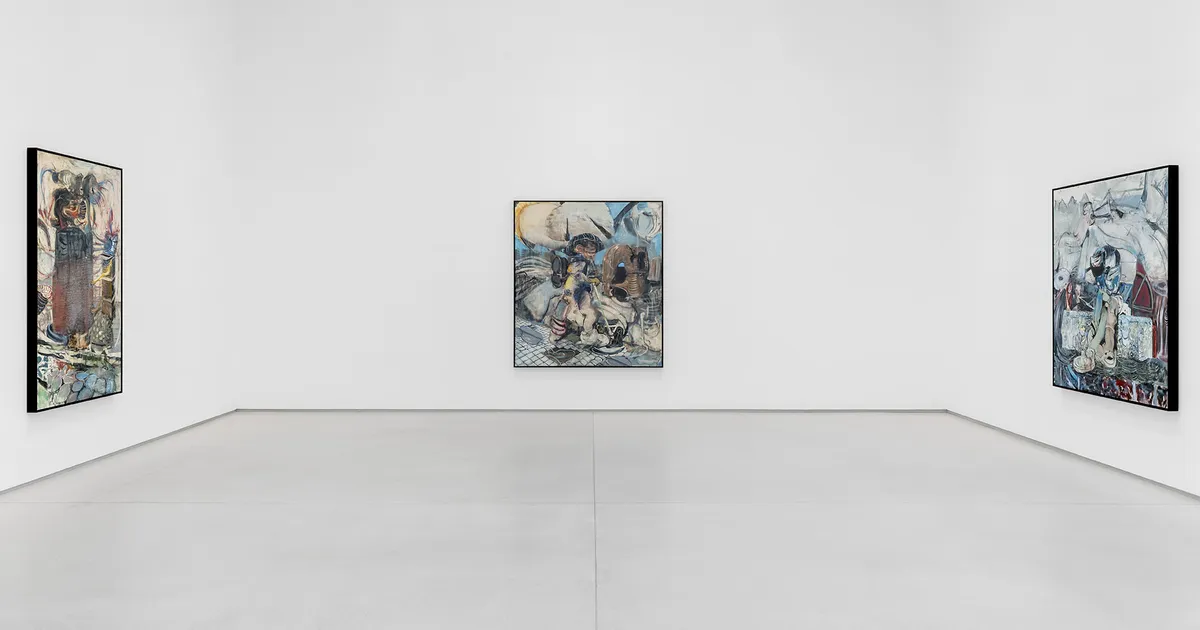
Adrian Ghenie's exhibition "Roman Campagna" at a Paris gallery presents a series of paintings and charcoal drawings that subvert the romantic cliché of an artist's transformative encounter with Rome. Ghenie populates landscapes inspired by the Appian Way with grotesque, alien-headed figures hunched over smartphones, urinating on monuments, or weeping at sunsets, using brown and grey tones punctuated by bright colors. The works reference Francis Bacon and William S. Burroughs, and include direct allusions to Bacon's reinterpretation of van Gogh's self-portrait, as well as a copy of a Pompeii mosaic. The show also features large charcoal drawings on paper that reveal Ghenie's process of constructing his contemporary, alienated figures.

Carole Harris’ Origin Story in “This Side of the River” at MOCAD

The article reviews Carole Harris's solo exhibition "This Side of the River" at the Museum of Contemporary Art Detroit (MOCAD), curated by Abel Gonzalez Fernandez. The show features twenty fiber pieces and archival materials spanning from 1966 to the present, tracing Harris's creative evolution and her responses to Detroit's social and urban changes. It highlights early works like "Potpourri" (1976) and "Black Jack" (1976) from her 1977 debut at Gallery 7, a Black Power-era space founded by Charles McGee, and later pieces such as "Down the Road a Piece" (2003) that mark her shift toward improvisational, abstract compositions.

Jule Korneffel Captures the Weight of the Pre-Dawn Sky at Spencer Brownstone Gallery, NYC

Jule Korneffel's third solo exhibition at Spencer Brownstone Gallery in New York, titled 'In Search of Lost Light,' presents a series of paintings that capture the quiet, liminal moments just before dawn. Using artist-mixed natural pigments, Korneffel shifts from her previous twilight-focused work to explore the anticipation of daylight, with pieces like the titular painting (2025) standing out for its playful, musical composition. The show also includes a mural in the gallery's back patio that blends colors into a grey neutral tone reminiscent of early-morning skies.

In an exhibition in Naples it is possible to get lost without urgency in an unstable balance. The review

In una mostra a Napoli è possibile perdersi senza urgenza in un equilibrio instabile. La recensione

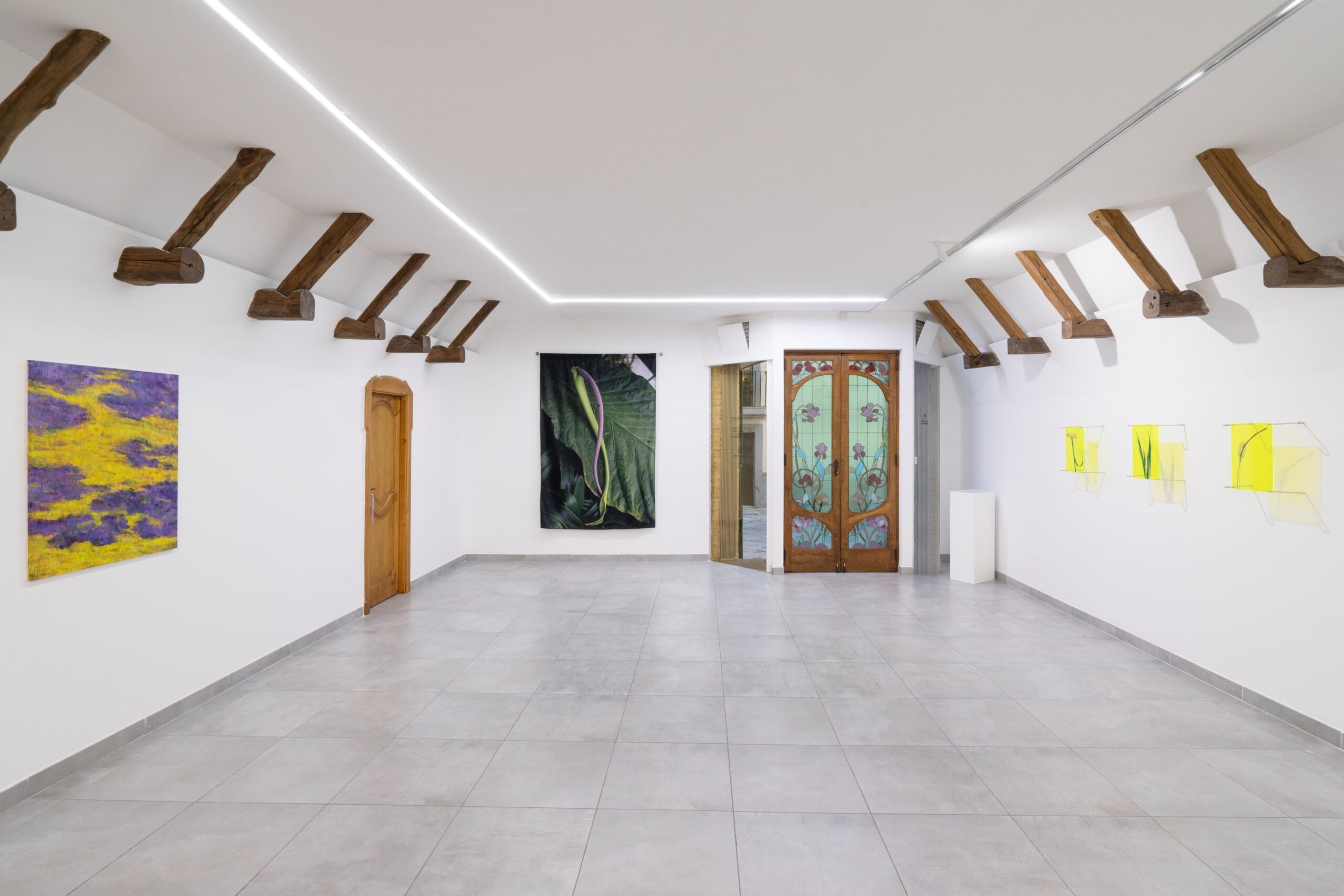
The exhibition "A Gentle Collapse," curated by Marta Ferrara at Andrea Nuovo Home Gallery in Naples, explores the contemporary psychic state through a spatial and perceptual construction. Featuring works in photography, painting, engraving, and installation, the show creates a sense of instability, with meaning emerging gradually through shifts between familiar and altered forms. Artists include Dorottya Vékony, Matteo Silverii, Flora Villaumié, and Zoë Pelikan, whose works engage with themes of genetic engineering, serial accumulation, and subtle disorientation across two gallery levels.