filter_list Showing 27 results for "Mirror" close Clear
search
dashboard All 501 museum exhibitions 277trending_up market 57article culture 41article news 39rate_review review 27person people 22article local 17article policy 8candle obituary 6gavel restitution 4article events 2article event 1
date_range Range Today This Week This Month All
Subscribe

Jasper Johns Keeps Looking

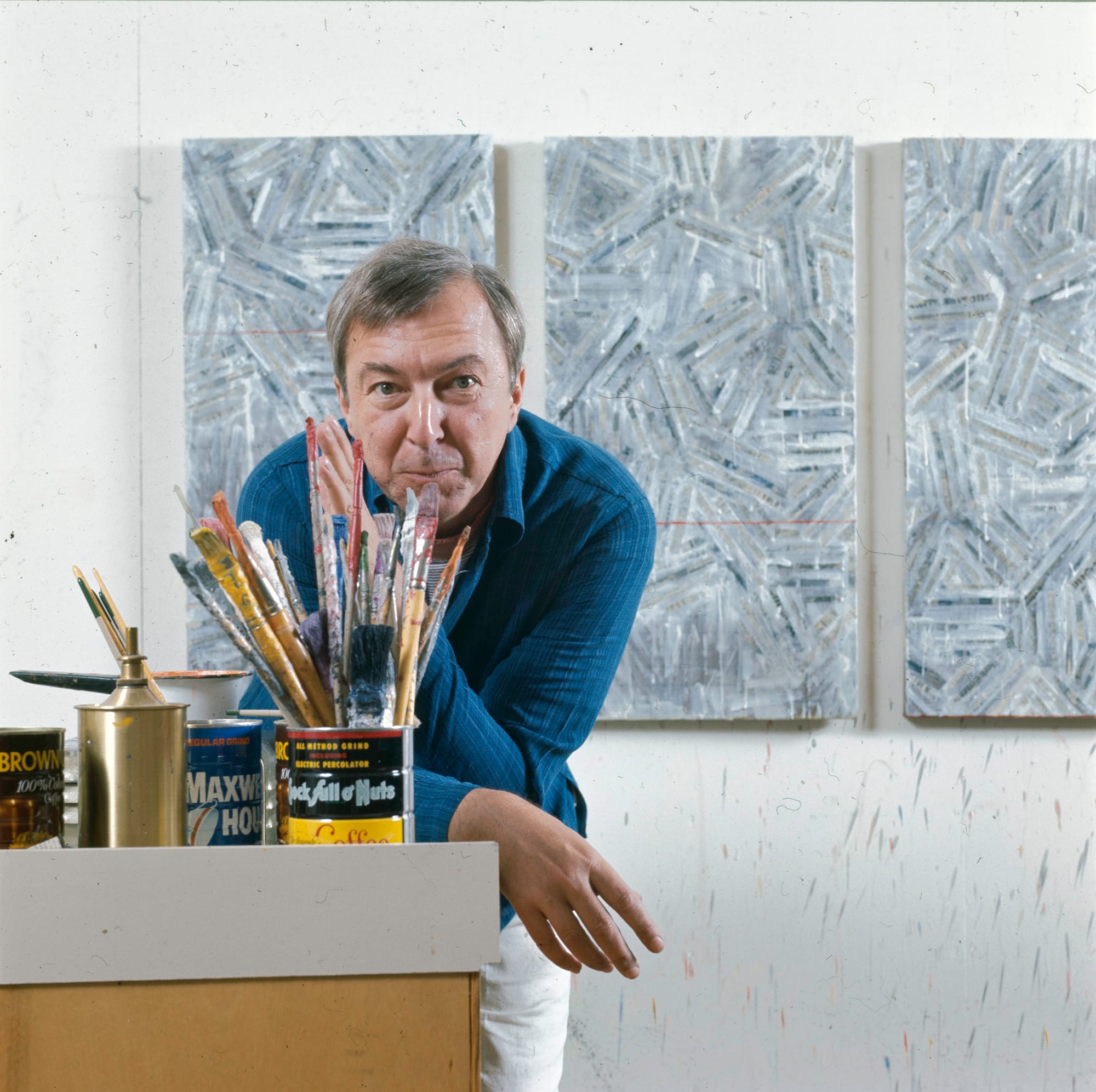
Jasper Johns’s latest exhibition at Gagosian, 'Between the Clock and the Bed,' serves as a profound meditation on the artist's career-long investigation into the 'things the mind already knows.' By revisiting his signature motifs—including flags, targets, and crosshatch patterns—the show highlights Johns’s rejection of Abstract Expressionist spontaneity in favor of a deliberate, analytical process using encaustic and collage. The works document a transformation where familiar symbols are rendered into a complex visual language that bridges the gap between memory and physical presence.

christian marclay one hit wonder clocks doors brooklyn museum

Christian Marclay's latest supercut film, "Doors," is now on view at the Brooklyn Museum after stops in Boston and Europe. The 50-minute looped video compiles scenes of famous actors opening and closing doors from various movies, following the success of Marclay's 2011 hit "The Clock," a 24-hour video-clock that synchronizes on-screen timepieces with the viewer's actual time. The article critiques "Doors" as a less profound, more self-obsessed work that lacks the emotional resonance of its predecessor.

Wilhelm Sasnal review – his wild juxtapositions are almost obscene

Polish artist Wilhelm Sasnal's new exhibition at Sadie Coles HQ in London presents a disorienting array of paintings. The works juxtapose disparate and often disturbing images, including a grotesque depiction of the Oval Office, portraits of his family, album art for the industrial band Throbbing Gristle, and a forest scene linked to the Holocaust, creating a deliberate sense of fragmentation and broken connections.

Notes from New York: The World in a Convex Mirror

The article reviews the sixth edition of MoMA PS1's quinquennial survey 'Greater New York 2026,' which coincides with the institution's 50th anniversary. It highlights works by artists such as Covey Gong, Win McCarthy, Mekko Harjo, and Sophie Friedman-Pappas, noting how the exhibition's themeless structure and use of reflective surfaces create a hall of distorted reflections. The show includes 53 emerging and midcareer artists, mostly millennials, and is accompanied by a block party and gala rather than a dedicated commemorative exhibition like FORTY (2016).

kevin mcgarry reviews jason faragos even

Kevin McGarry reviews the debut issue of *Even*, a new print art journal launched by *Guardian* contributor Jason Farago during Frieze New York. Named after a phrase from Marcel Duchamp's *The Bride Stripped Bare By Her Bachelors, Even*, the magazine is a small, paperback-sized publication that prioritizes text over images, positioning itself as an antidote to market-driven art discourse. The first issue features a lengthy essay on artist Joan Jonas by Elisabeth Lebovici, timed to Jonas's U.S. pavilion at the 56th Venice Biennale, and a piece by Zachary Woolfe on the Björk exhibition at MoMA. McGarry critiques the journal's ambition to revitalize art criticism, noting that while its goals are lofty, the content sometimes falls back on familiar artspeak.

What You Should Definitely Avoid in Venice

Was man in Venedig unbedingt vermeiden sollte

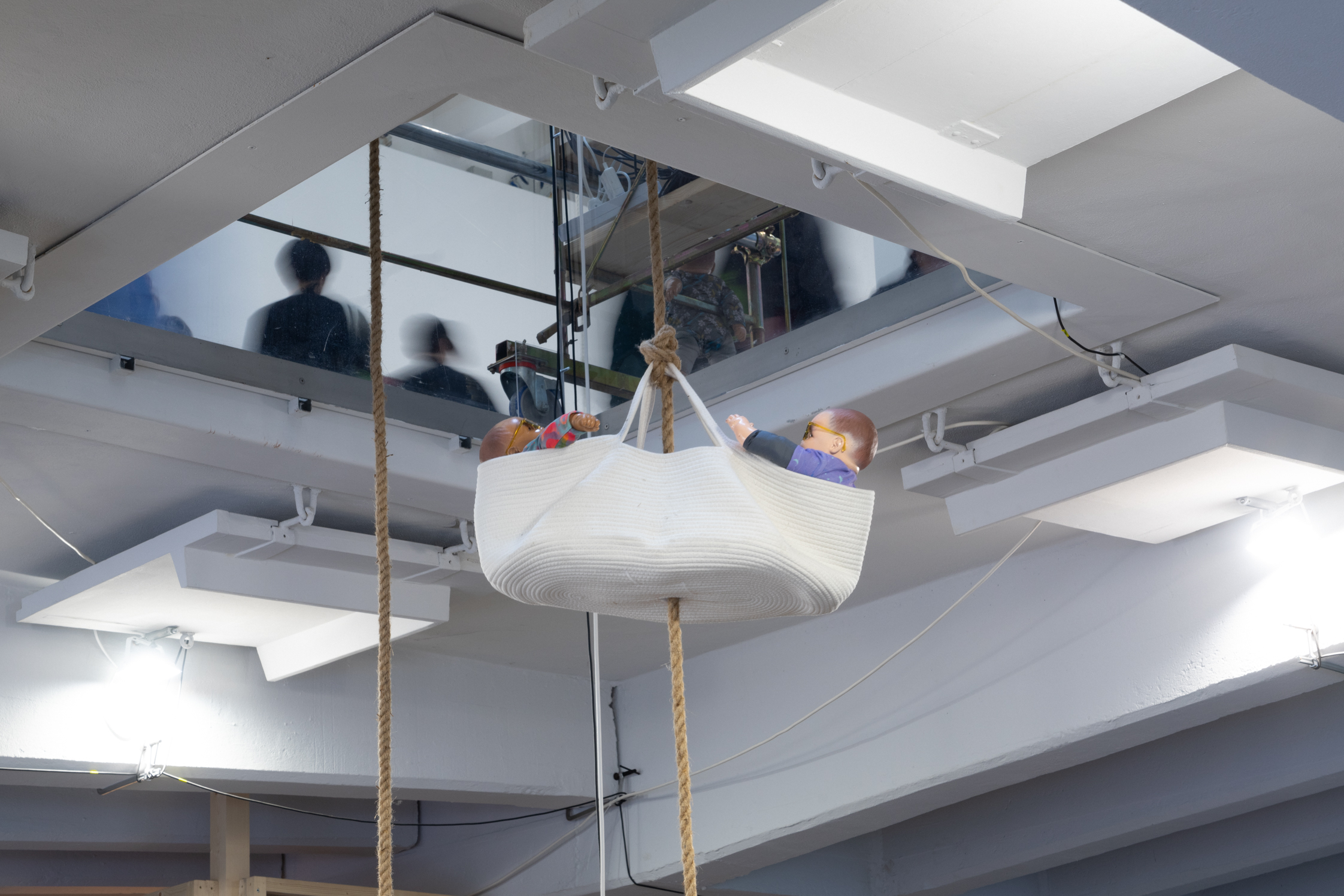
The article humorously critiques the Venice Biennale, highlighting several disappointments. It describes a Japanese pavilion installation by Ei Arakawa-Nash featuring baby dolls for diaper-changing, which a critic dismisses as a male artist over-romanticizing parenthood. Other flops include long queues for the German and Austrian pavilions, underwhelming main exhibition "In Minor Keys," and annoying self-promotional performers outside venues. The piece also laments the presence of loud American collectors and donors who dominate the event.

alex da corte modern art museum of fort worth review

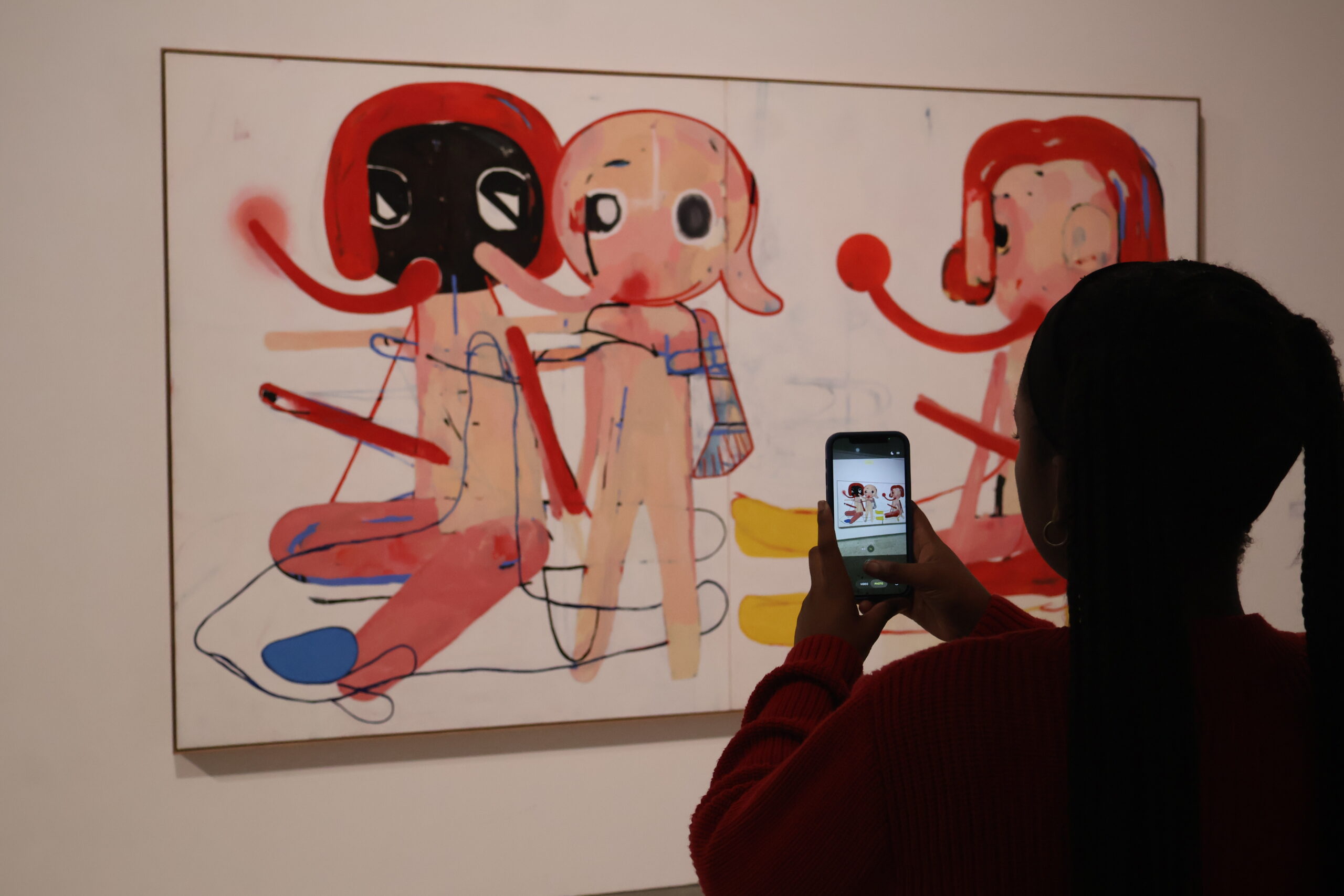
Alex Da Corte's mid-career survey, "The Whale," is on view at the Modern Art Museum of Fort Worth, featuring works that repurpose pop-cultural icons like Disney villains and Mariah Carey to explore themes of erasure and violence. The exhibition includes pieces such as *A Time to Kill* (2016), which obliquely references the 2016 Pulse nightclub shooting through an inverted Elsa standee, and *The Great Pretender* (2021), which removes Lily Tomlin from a TIME magazine cover to comment on queer erasure.

jaqueline humphries aspen museum review

Jacqueline Humphries's survey exhibition at the Aspen Art Museum features her painting installation "TSLA" (2025), a five-panel work hung on bare metal studs that bisects the gallery space. The installation plays with perception through mirrors and anamorphic imagery, including a distorted Tesla logo, and includes a hidden set of red paintings visible only as reflections. The show also presents nine smaller works generated in part by artificial intelligence, housed in a green-walled adjacent room.

What We Miss When We Talk About Giacometti

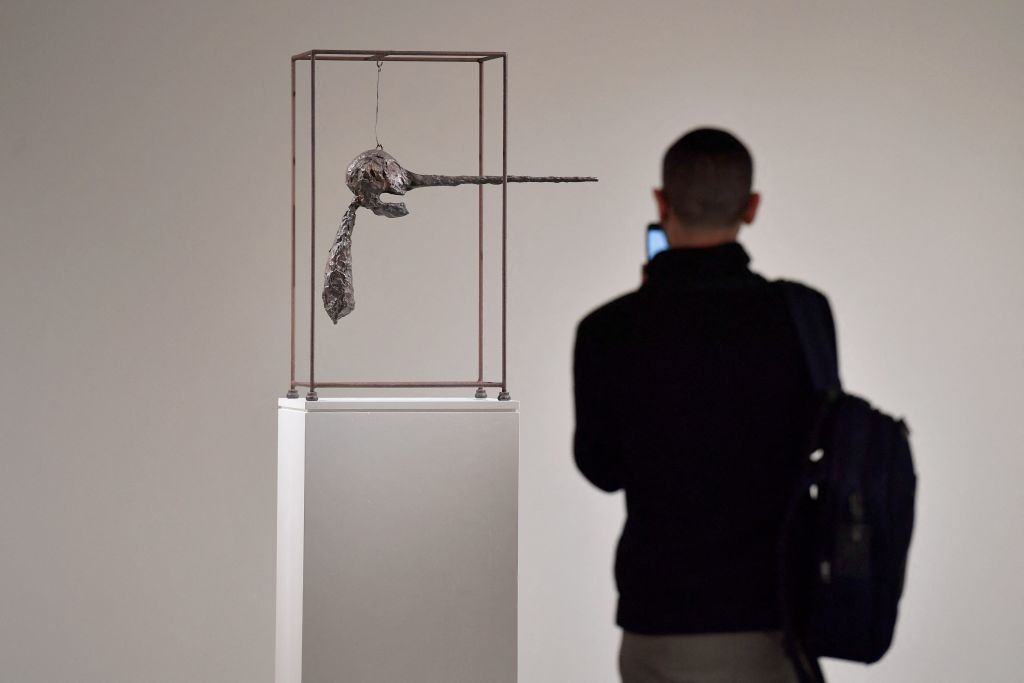
This article explores a critical reevaluation of Alberto Giacometti’s career, specifically focusing on the decade between 1935 and 1945. While Giacometti is globally recognized for his spindly, post-war 'Existentialist' figures, art historian Joanna Fiduccia’s new book, *Figures of Crisis*, argues that his mid-career departure from Surrealism to study human likeness was not a mere transition but a profound response to the political crises and nationalism of interwar France.

william holman hunt the awakening of conscience

The article analyzes William Holman Hunt's 1853 painting *The Awakening Conscience*, which depicts a woman in a Victorian parlor rising from the lap of a man, her gaze fixed on a sunlit garden glimpsed in a mirror. Hunt, a member of the Pre-Raphaelite Brotherhood alongside John Everett Millais and Dante Gabriel Rossetti, filled the work with dense symbolism—such as the woman's ringless left hand, a discarded glove, and sheet music by Edward Lear and Thomas Moore—to reveal that the scene is not a married couple but a mistress and her lover, trapped in a gilded cage.

The Making of a Maintenance Artist

A new documentary titled "Maintenance Artist" (2025) traces the decades-long practice of Mierle Laderman Ukeles, a pioneering artist who focused on marginal, unpaid, and feminine labor. The film covers her career from her 1969 "CARE" manifesto, through her role as artist-in-residence at the New York City Department of Sanitation, to her first retrospective at the Queens Museum in 2017. It highlights her critique of art-world gender biases and her efforts to recognize discounted labor in all fields.

Notes from New York: Rotting Meat

Artist Jen Liu’s solo exhibition 'Pound of Flesh' at Silverlens New York explores the dehumanizing nature of digital labor through visceral imagery of raw meat. The show features paintings where human consciousness is replaced by butcher-shop cuts and an animated video based on Liu’s research into microworkers—individuals who perform repetitive, low-paid tasks to train AI models. By juxtaposing the biological reality of the body with the clinical extraction of data, Liu highlights the physical and psychological toll of the 'Agentic Age.'

j hobermans book everything is now 1960s nyc downtown yoko ono andy warhol

J. Hoberman's new book, *Everything Is Now: The 1960s New York Avant-Garde—Primal Happenings, Underground Movies, Radical Pop*, offers a sweeping cultural history of the downtown New York scene in the 1960s. The book centers on figures like Jonas Mekas, Andy Warhol, Yoko Ono, and Jack Smith, weaving together experimental films, happenings, music, and the chaotic energy of the era. Hoberman, a longtime critic and curator, draws on his personal connections to the scene, including his mentorship under Mekas, and will present a selection of shorts from the book at Anthology Film Archives in June.

mierle laderman ukeles maintenance artist documentary review

A new documentary titled "Maintenance Artist," directed by Toby Perl Freilich, premiered at the Tribeca Film Festival. The film chronicles the career of Mierle Laderman Ukeles, who coined the term "Maintenance Art" in a 1969 manifesto to elevate everyday domestic and civic labor into art. It follows her decades-long collaborations with New York City agencies, including her seminal "Touch Sanitation Performance" (1979–80) with the NYC Department of Sanitation, and her ongoing struggle to realize the installation "Landing: Cantilevered Overlook" (2008) at Freshkills Park. The documentary weaves together archival footage, interviews, and analysis of second-wave feminism, conceptual art, and urban bureaucracy.

Angela de la Cruz review – wonky chairs and busted pianos are monuments to resilience

Angela de la Cruz's solo exhibition "Upright" at Birmingham's Ikon gallery presents a collection of broken and mended artworks. Her canvases are crumpled, folded, and snapped, while sculptures are assembled from precarious junk like a three-legged chair on a stool and a piano stacked atop another. The works, though appearing on the verge of collapse, are all repaired and propped back up, reflecting a state of post-collapse resilience.

Ruminations on Rashid Johnson’s “A Poem for Deep Thinkers”

The article is a reflective review of Rashid Johnson's exhibition "A Poem for Deep Thinkers" at the Modern Art Museum of Fort Worth. The author describes standing before Johnson's work "Falling Man" (2016), a piece incorporating broken mirrors, burned wood, and personal objects like a copy of Harry Haywood's "Black Bolshevik" and shea butter, which prompts meditations on visibility, identity, and Frantz Fanon's "Black Skin, White Masks." The review also examines Johnson's large-scale installation "Antoine's Organ" (2016/2026), which fills a gallery typically reserved for Ellsworth Kelly's minimalist canvases, transforming the space with scaffolding, plants, books, and video monitors.

The Big Review | Manet & Morisot at Legion of Honor, San Francisco ★★★½

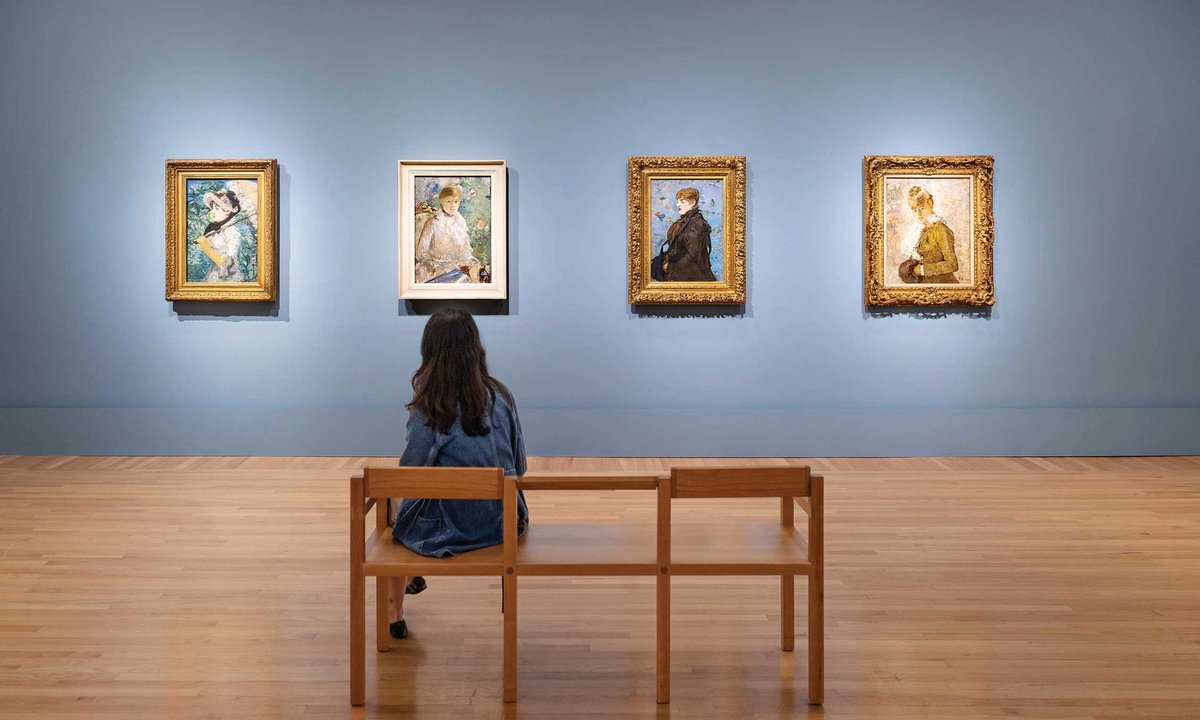
The article reviews the exhibition "Manet & Morisot" at the Legion of Honor in San Francisco, which pairs works by Édouard Manet and Berthe Morisot to explore their artistic dialogue. It highlights how, contrary to the common assumption that Morisot was influenced by Manet, the show argues that Manet increasingly adopted Morisot's lighter palette, looser brushwork, and intimate subject matter in his later years, especially as his health declined. Key pairings include Manet's "Before the Mirror" (1877) and Morisot's "Woman at her Toilette" (around 1875-80), as well as their respective series of seasonal allegories, shown together for the first time.

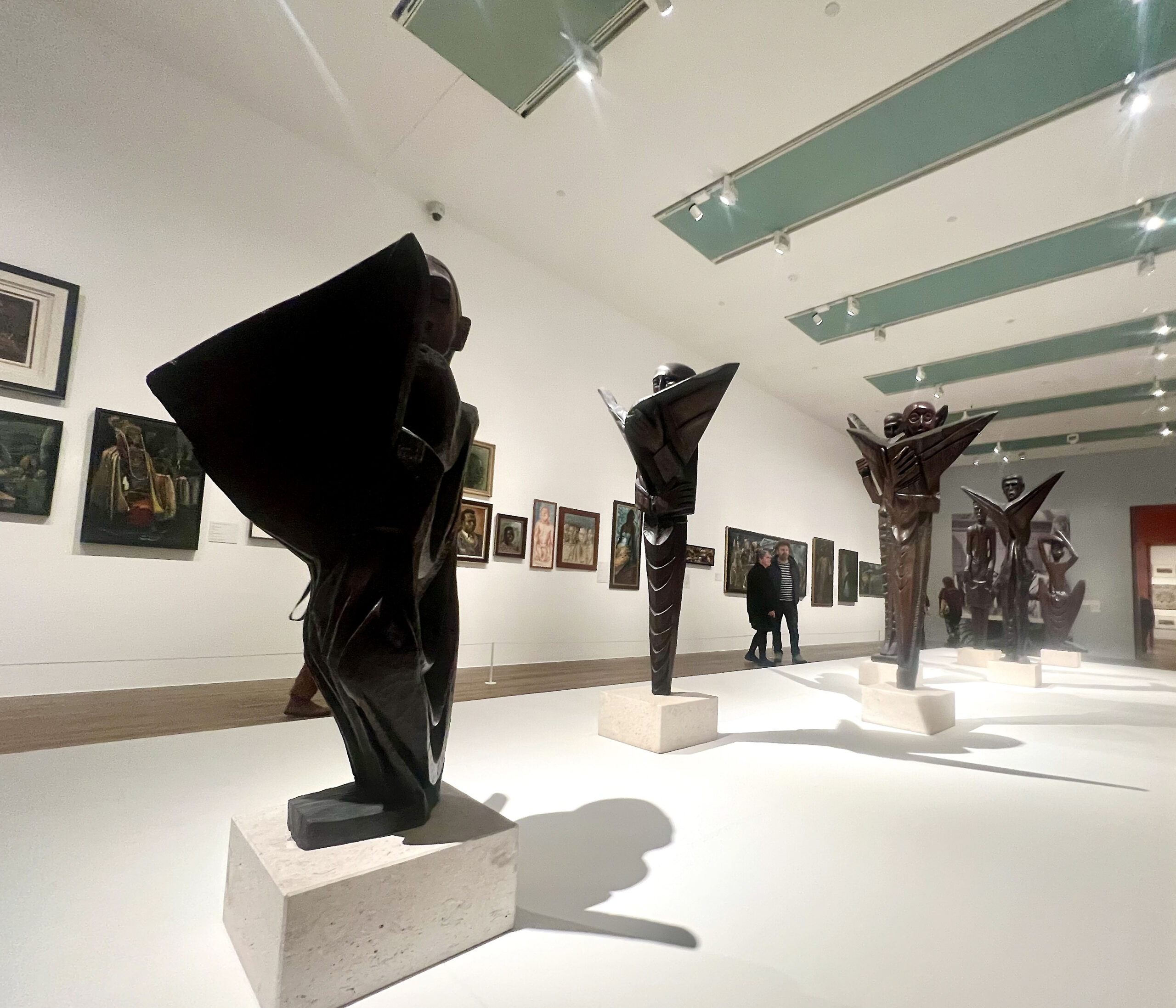
Post-Mortemism: An Autopsy of “Nigerian Modernism: Art and Independence” at Tate Modern.

A critical essay by Ayọ̀ Akínwándé performs a forensic 'autopsy' of the Tate Modern exhibition 'Nigerian Modernism: Art and Independence.' The review dissects the show's structure, arguing it fails in its curatorial framework by isolating Nigerian artists within a regional category, using ethnographic display methods, relying on incomplete research, and excluding key artists and historical context.

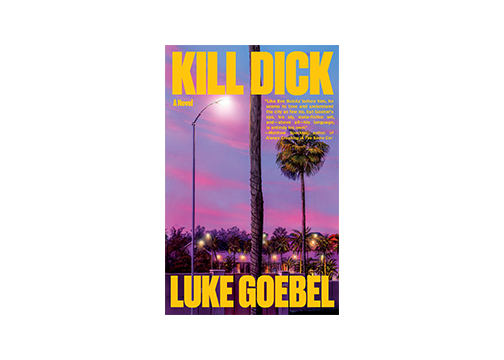
Bicoastal Art World Satire ‘Kill Dick’ Imagines Sackler Revenge

Luke Goebel's new novel 'Kill Dick' is a satirical, chaotic takedown of the contemporary art world and its entanglement with the Sackler family, fictionalized here as the Sicklers. The book follows protagonist Susie, the daughter of the Sickler family lawyer, as she navigates addiction, familial disgust, and a numbed existence against the backdrop of 2016 America. Its prose is deliberately abrasive and shocking, mirroring the emotional state of its narrator.

A Mirrored Monet review – painter reflects on his past in a musical with heart and humour

A new musical titled 'A Mirrored Monet' explores the life of Impressionist painter Claude Monet, focusing on his later years as he reflects on his youth, his artistic struggles, and the personal sacrifices he made, particularly regarding his first wife Camille. The production uses innovative set design to immerse the audience in the Impressionist style and features a strong cast portraying Monet and his contemporaries.

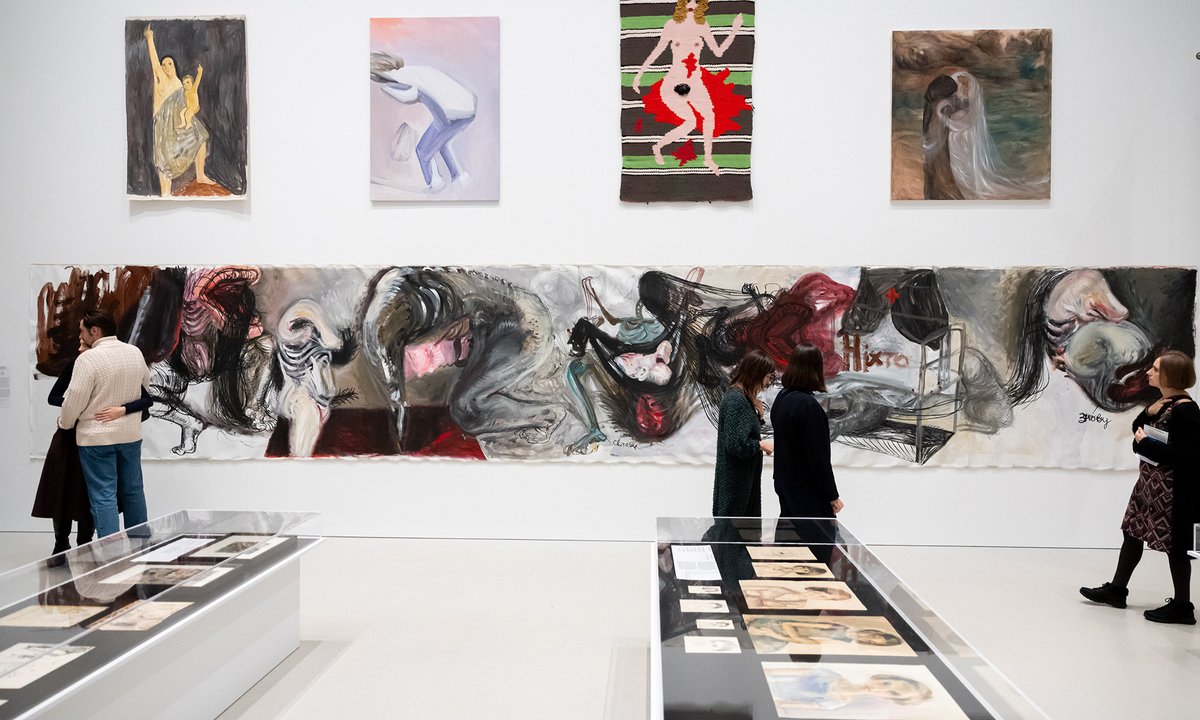
The Big Review | The Woman Question 1550-2025 ★★★★½

The Museum of Modern Art in Warsaw has launched "The Woman Question 1550-2025," a massive survey featuring nearly 200 works by 140 women artists spanning five centuries. Curated by Alison M. Gingeras, the exhibition uses the medieval concept of "la querelle des femmes" to explore how women have asserted their status as "citizen artists" against patriarchal structures. The show juxtaposes historical masterpieces by figures like Artemisia Gentileschi and Sofonisba Anguissola with contemporary provocations by Miriam Cahn and Lubaina Himid, focusing heavily on figurative painting and sculpture.

Death as Performance

Der Tod als Performance

The article reviews Maria Martínez Bayona's debut sci-fi comedy film "The End of It," which premiered in competition at the Cannes Film Festival. The film follows Claire, a 250-year-old artist who, in a future where medical advances have eliminated death, decides to stage her own suicide as a radical art performance. The story critiques a world obsessed with synthetic rejuvenation and explores themes of mortality, authenticity, and the commodification of art.

The Ukrainian Pavilion’s Deer Seen Around the World

Zhanna Kadyrova's concrete sculpture "The Origami Deer" (2019) is prominently displayed at the entrance to the Giardini during the 61st Venice Biennale, part of her project "Security Guarantees" in the Ukrainian Pavilion. Originally installed in Pokrovsk, eastern Ukraine, the work was removed in 2024 as Russian forces advanced, then traveled through Vienna, Warsaw, Prague, Berlin, and Paris before reaching Venice—a journey mirroring the displacement of millions of Ukrainians. The sculpture, shaped like a deer and evoking folded paper, references the 1994 Budapest Memorandum, in which Russia, the UK, and US guaranteed Ukraine's security in exchange for its nuclear disarmament—guarantees that proved worthless after Russia's invasions.

Book Review: The Disoriented Garden... A Breath of Dream

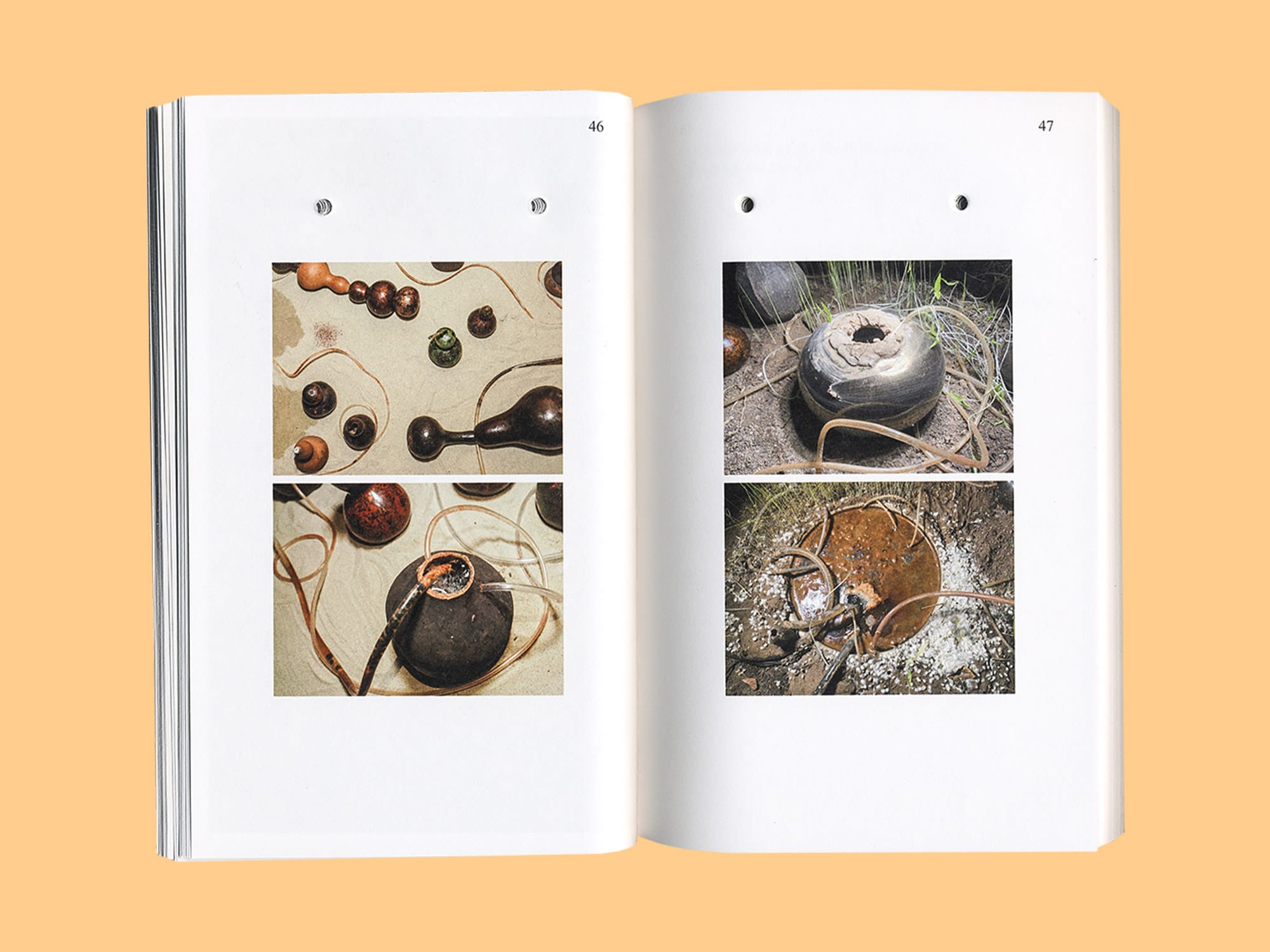
A new book titled 'The Disoriented Garden... A Breath of Dream' has been published by the Jim Thompson Art Center to accompany Vietnamese artist Trương Công Tùng's 2024 solo exhibition. The volume, edited by Hùng Mạnh Dương, is a multilingual, multidisciplinary collection featuring poetry, myths, curatorial texts, and photographs that mirror the artist's exploration of nature, gardens, and spiritual cosmology through video, installation, and painting.

A review within a play. Play by Josiane M.H. Pozi and Emily Pozi  by Nasra Abdullahi

Josiane M.H. Pozi's exhibition "PORTRAIT O.A.Y.G." at Carlos/Ishikawa in London is reviewed through an unconventional, fragmented narrative that blends a play script with critical observation. The review describes Pozi's video works, including "Rhythmic Stimming" (2025) and "Restaurants" (2023), which capture mundane domestic scenes and personal artifacts. The text shifts between a first-person account of meeting the artist and a scripted dialogue between characters J and E, reflecting the exhibition's themes of identity, selfhood, and the poetic potential of everyday objects.

Latent Energy: A Review of Bernard Williams at Elmhurst Art Museum

Bernard Williams' solo exhibition "Crossings" is on view across the Elmhurst Art Museum campus, including its parking lot and the Mies van der Rohe house. The show features sculptures, paintings, and installations that reference African American history, such as the "Spirit of Bessie Coleman" works honoring the pioneering aviator, and "Cowboy Dream" with its roosters and cowboy figure. The exhibition's title and layout deliberately avoid linear narratives, instead forcing viewers to navigate a fragmented path that mirrors the complexities of historical memory and racial injustice.

REVIEW: Now is not forever, when art mimics reality

Theresa-Anne Mackintosh’s solo exhibition, "Now is not Forever," recently debuted at the Wits Art Museum (WAM), featuring a provocative blend of older paintings and new sculptures. The show centers on anthropomorphic figures and the erasure of senses, notably in the "hear no evil, see no evil, do no evil" series, where body parts are painted over to symbolize the avoidance of moral decay. These works, alongside vivid sculptures representing the artist's alter egos, challenge viewers to look past aesthetic surfaces to confront the inherent chaos and dysfunction of contemporary society.