filter_list Showing 255 results for "PRO" close Clear
search
dashboard All 14703 museum exhibitions 6392article local 2149article news 1832trending_up market 1311article culture 964person people 691article policy 621rate_review review 255gavel restitution 247candle obituary 213article event 18article events 4article museums & heritage 1article gallery 1article museums 1article museum 1article satire 1article school 1
date_range Range Today This Week This Month All
Subscribe

the worst art we saw in 2025

Artnet News editors and writers compiled a list of the worst art of 2025, calling out works they found lazy, cynical, overhyped, or ethically dubious. Highlights include Flora Yukhnovich's site-specific painting installation at the Frick Collection, which critics deemed middling and out of place among the museum's historic masterpieces; Jeff Koons's eight-foot-tall Hulk (Tubas) sculpture, sold for $3 million at Frieze New York and described as an obnoxious trophy piece; and actor Adrien Brody's interactive gum wall installation, which invited visitors to stick chewed gum onto a canvas.

raymond saunders carnegie museum retrospective review

Raymond Saunders's first retrospective, a small but potent exhibition at the Carnegie Museum of Art in Pittsburgh, surveys 35 of his bewitching paintings. The works, described as elusive and Rauschenbergian, feature messy scrawls, collected trinkets, and media clippings, with pieces like *Passages: East, West 1* (1987) layering chess boards, paint strokes, and appropriated still lifes. Saunders, who joined Andrew Kreps and David Zwirner last year, has never before received a retrospective, despite his influential 1967 essay "Black Is a Color" and steady institutional acquisitions.

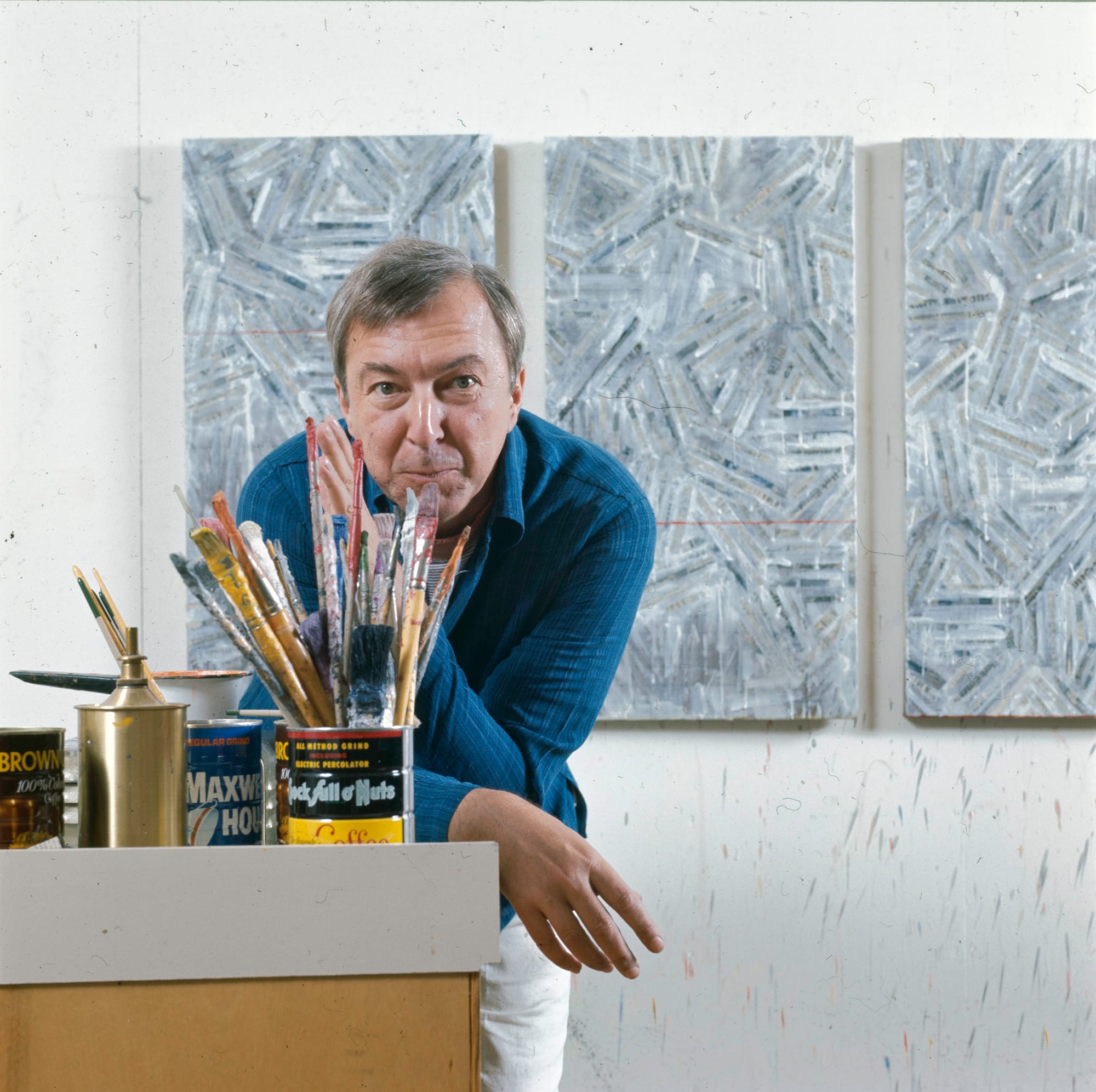
Jasper Johns Keeps Looking

Jasper Johns’s latest exhibition at Gagosian, 'Between the Clock and the Bed,' serves as a profound meditation on the artist's career-long investigation into the 'things the mind already knows.' By revisiting his signature motifs—including flags, targets, and crosshatch patterns—the show highlights Johns’s rejection of Abstract Expressionist spontaneity in favor of a deliberate, analytical process using encaustic and collage. The works document a transformation where familiar symbols are rendered into a complex visual language that bridges the gap between memory and physical presence.

robert longo pace gallery review

Artist Robert Longo presents a new exhibition at Pace Gallery, featuring his signature large-scale, hyperrealistic drawings that address themes of brutality, conflict, and protest. The show is a revised version of a 2023 exhibition at the Milwaukee Art Museum, with works based on media images of events such as the war in Ukraine, Black Lives Matter protests, and migrant crises. The article critically examines several pieces, including "Untitled (Ferguson Police, August 13, 2014)" and "Untitled (Refugees at Mediterranean Sea, Sub-Saharan Migrants, July 25, 2017)," arguing that Longo's manipulations of source photographs result in melodramatic and dishonest representations.

christian marclay one hit wonder clocks doors brooklyn museum

Christian Marclay's latest supercut film, "Doors," is now on view at the Brooklyn Museum after stops in Boston and Europe. The 50-minute looped video compiles scenes of famous actors opening and closing doors from various movies, following the success of Marclay's 2011 hit "The Clock," a 24-hour video-clock that synchronizes on-screen timepieces with the viewer's actual time. The article critiques "Doors" as a less profound, more self-obsessed work that lacks the emotional resonance of its predecessor.

lorna simpson met museum painting survey review

Lorna Simpson's paintings are the subject of a new survey exhibition at the Metropolitan Museum of Art in New York, titled "Source Notes," on view through November 2. The show features over 20 paintings created between 2014 and 2024, marking the first exhibition to survey Simpson's output in this medium. Curated by Lauren Rosati, the exhibition aims to provide an overview of her painterly practice while connecting it to her collage work, with two vitrines displaying her collages to illustrate the fluidity between the two practices. Simpson, best known for her photography from the 1980s, debuted her paintings at the 2015 Venice Biennale organized by the late curator Okwui Enwezor.

lutz bacher retrospective oslo brussels

The article reviews the first posthumous retrospective of the elusive artist Lutz Bacher, titled "Burning the Days," at the Astrup Fearnley Museum in Oslo. Bacher, who died in 2019 and whose real name was never revealed, is known for her use of found photographs and a pseudonym that led many to mistake her for a German man. The exhibition opens with her work "The Lee Harvey Oswald Interview" (1976–78), in which she discusses photography and perception by using Oswald as a stand-in, and includes other pieces such as "Jackie & Me" (1989) and "Men at War" (1975), all exploring how images and narratives produce meaning.

adrien brody art eden gallery

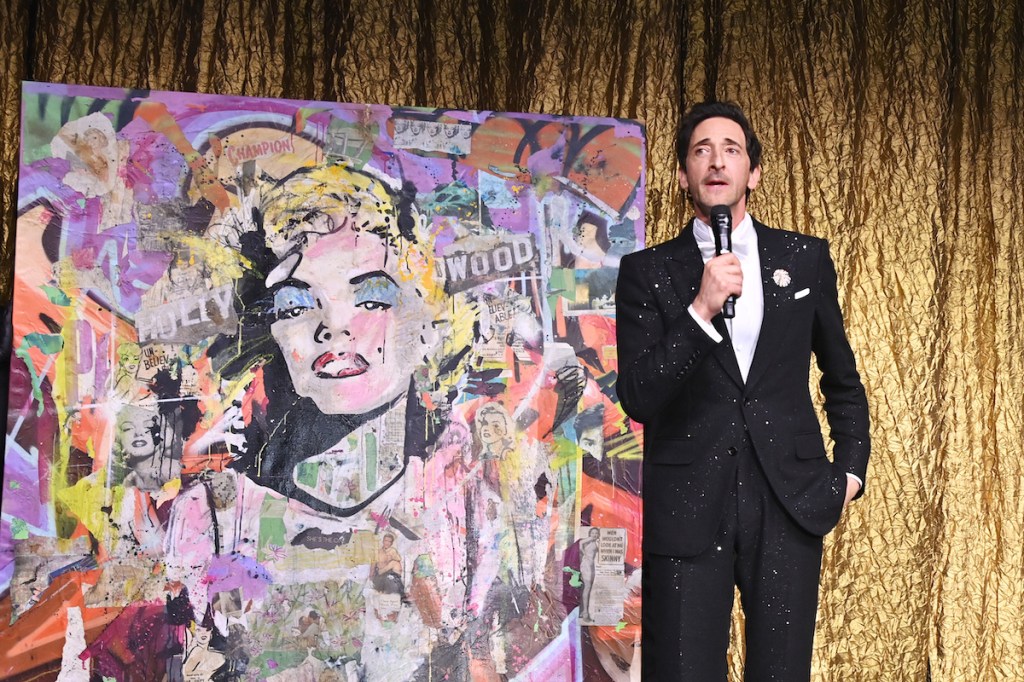
Actor Adrien Brody debuted a new exhibition titled "Made in America" at Eden Gallery in New York, featuring paintings that incorporate pop culture icons like Mickey Mouse, Donald Duck, and Marilyn Monroe alongside collage elements and text. The show has garnered significant media attention, including a profile in the New York Times and praise from Cultured and Interview magazine, partly fueled by the sale of one of Brody's paintings for $425,000 at the amfAR Cannes Gala. However, the art press, including Artnet News, has been highly critical, with ARTnews reviewer Alex Greenberger describing the works as ugly, derivative, and lacking nuance.

independent picks

The article reviews the Independent art fair, highlighting its curated approach that results in a visually cohesive and easeful experience compared to other fairs. It notes the prevalence of neo-bucolic landscapes and animal paintings by artists like Sameen Agha, Tim Braden, and Lisa Sanditz, as well as delicate abstractions and small ceramic works. Standout pieces include Pope.L's provocative paint-scribbled underwear at Mitchell-Innes and Nash, Rosa Barba's kinetic painting at Vistamare, Ibrahim El-Salahi's silkscreen painting at Vigo Gallery, and works by emerging artists such as Constanza Camila Kramer Garfias and Ada Friedman at Kendra Jayne Patrick Gallery.

Notes from New York: The World in a Convex Mirror

The article reviews the sixth edition of MoMA PS1's quinquennial survey 'Greater New York 2026,' which coincides with the institution's 50th anniversary. It highlights works by artists such as Covey Gong, Win McCarthy, Mekko Harjo, and Sophie Friedman-Pappas, noting how the exhibition's themeless structure and use of reflective surfaces create a hall of distorted reflections. The show includes 53 emerging and midcareer artists, mostly millennials, and is accompanied by a block party and gala rather than a dedicated commemorative exhibition like FORTY (2016).

The Robots Were Never the Problem

The New Museum has reopened with 'New Humans: Memories of the Future,' a massive survey featuring over 150 contributors including Hito Steyerl, Precious Okoyomon, and H.R. Giger. Spanning 13 sections across the museum's new 5,500 square-meter extension, the exhibition traces the intersection of art, technology, and the human body from the early 20th century to the present. It juxtaposes interwar European works, such as Hannah Höch’s photomontages and Bauhaus ballets, with contemporary installations like Simon Denny’s sculpture of an Amazon worker's cage.

worst artworks we saw around the world in 2022

Artnet News editors compiled a list of the worst artworks they encountered in 2022, including a chaotic performance by Poncili Creación at NADA Miami, an overproduced Danish Pavilion installation by Uffe Isolotto at the Venice Biennale, and a Paul Cézanne painting at the Barnes Foundation that disappointed a critic. The article offers subjective, critical takes on these works, describing the NADA performance as bizarre and jolting, the Danish pavilion as graphic and lacking a powerful message, and the Cézanne as a disappointment within an otherwise memorable museum visit.

What ‘Costume Art’ Gets Wrong About the Body

The Metropolitan Museum of Art's Costume Institute spring exhibition, featuring nearly 400 objects, pairs garments and ensembles with Western figurative artworks from the museum's permanent collection in dyadic, associative displays. The show eschews traditional art-historical timelines and context in favor of visual and thematic parallels—comparing, for example, Rudi Gernreich's Pubikini with an Egyptian statuette, or Ying Gao's sound-responsive dress with a David Hockney drawing. The exhibition is sponsored by Jeff and Lauren Sánchez Bezos.

10 Art Books for Your Spring Reading List

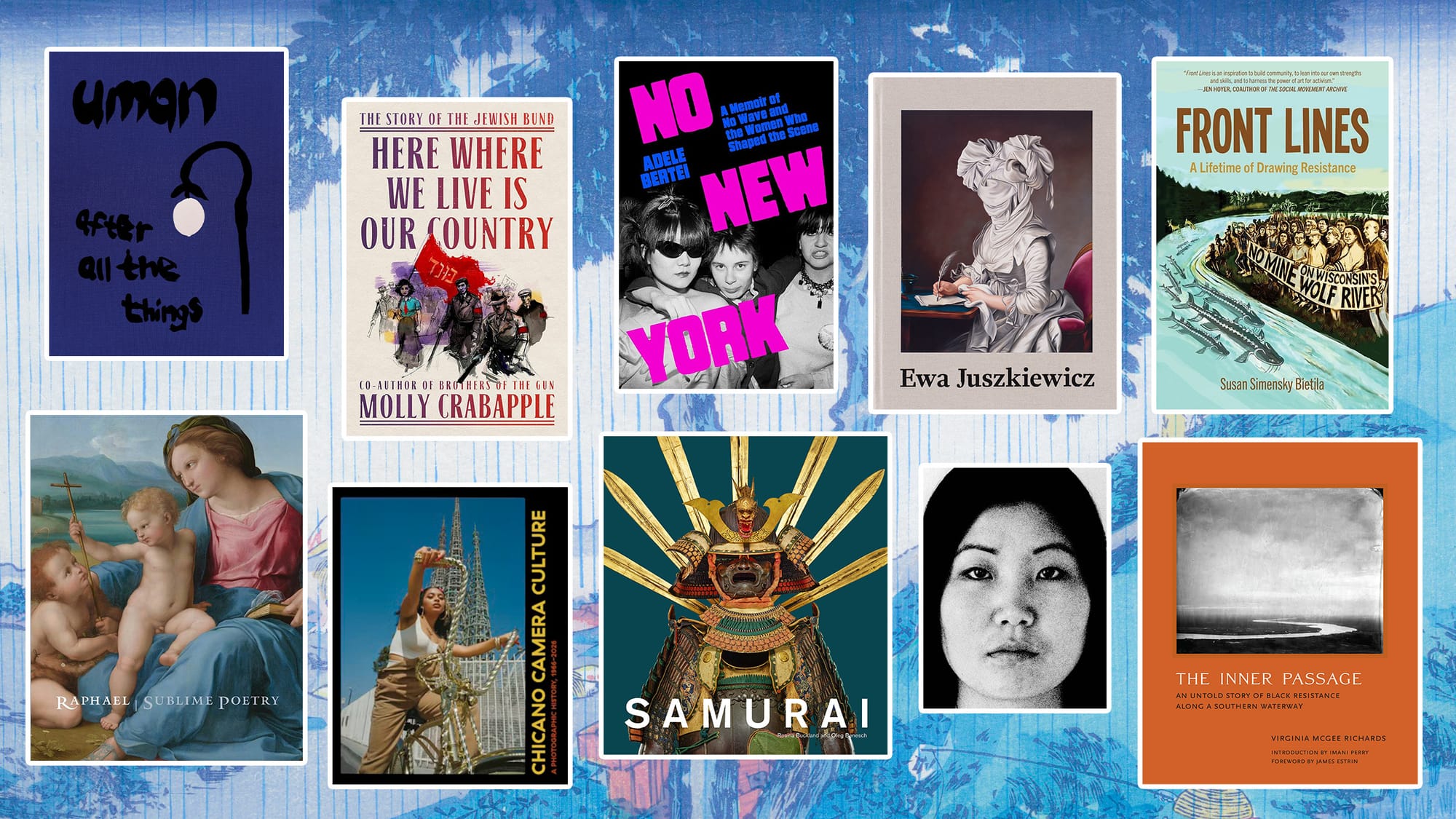
Hyperallergic has published a curated list of ten art books recommended for spring reading. The selection emphasizes historical retellings through an artistic lens, featuring works such as a memoir by activist-artist Susan Simensky Bietila, a chronicle of the Jewish Bund by Molly Crabapple, and the first major catalog on artist Theresa Hak Kyung Cha in 25 years. The list also includes exhibition catalogs like "Chicano Camera Culture" and a monograph on painter Ewa Juszkiewicz.

Konrad Mägi review – these bland, blobby paintings are expressionism without expression

A new exhibition of early 20th-century Estonian painter Konrad Mägi at Dulwich Picture Gallery has received a scathing critical review. The reviewer finds Mägi's colorful, modernist-influenced landscapes and portraits to be bland, derivative, and devoid of the emotional depth or urgency found in the great modernists or the gallery's own Old Master collection.

The Big Review | Venice Biennale 2026: In Minor Keys ★★★½

The Venice Biennale 2026, titled "In Minor Keys," was curated posthumously following the death of artistic director Koyo Kouoh in May 2025. A team of five curators and advisors—Gabe Beckhurst Feijoo, Marie Hélène Pereira, Rasha Salti, Siddhartha Mitter, and Rory Tsapayi—executed her vision across the Giardini and Arsenale venues. The exhibition features 110 artists, with a strong emphasis on new commissions, and is structured around themes of procession, resistance, and joy. Key works include Big Chief Demond Melancon's "Amistad Takeover" (2026), Nick Cave's "Amalgam (Origin)" (2025), and Otobong Nkanga's rewilded columns at the Central Pavilion.

What You Should Definitely Avoid in Venice

Was man in Venedig unbedingt vermeiden sollte

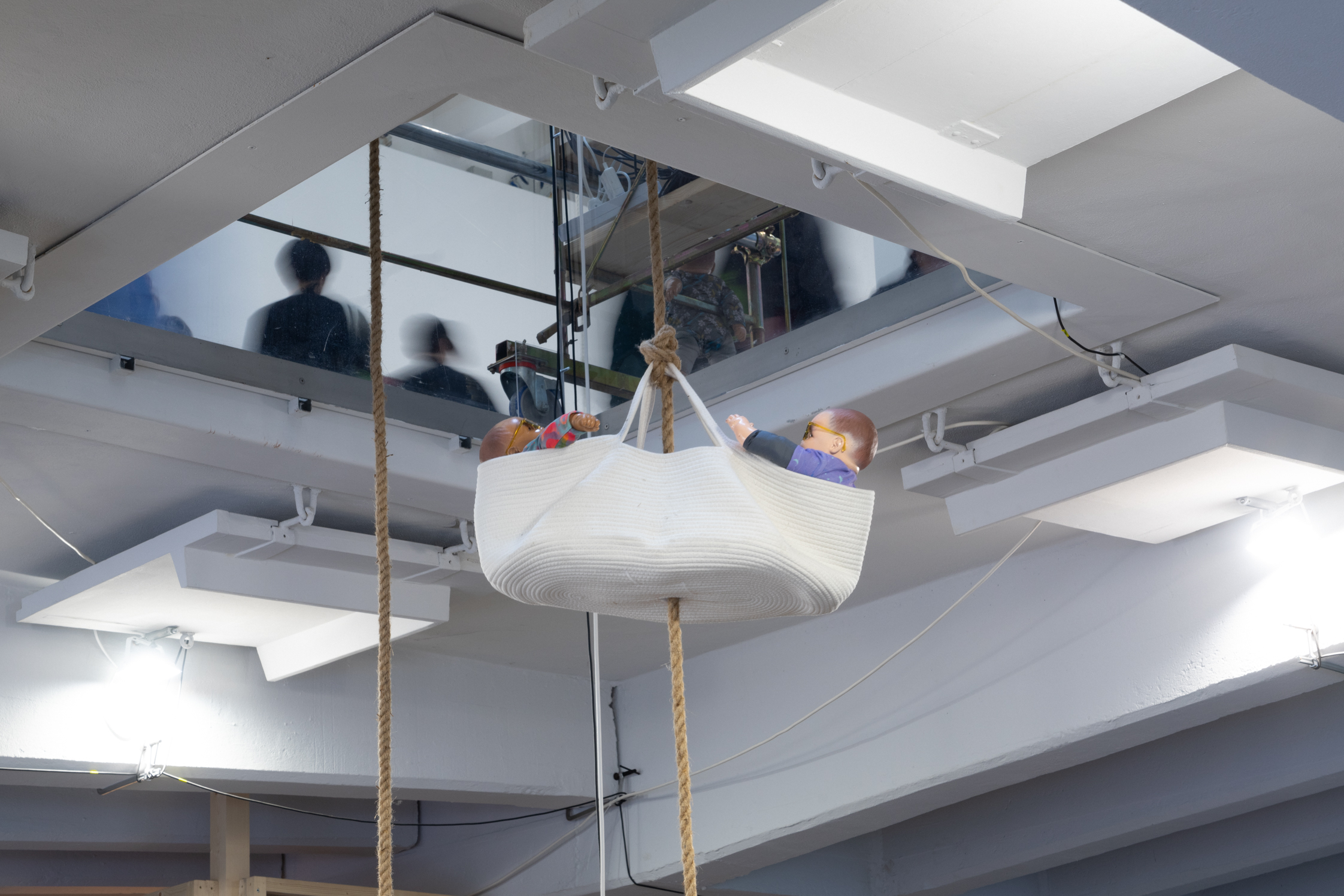
The article humorously critiques the Venice Biennale, highlighting several disappointments. It describes a Japanese pavilion installation by Ei Arakawa-Nash featuring baby dolls for diaper-changing, which a critic dismisses as a male artist over-romanticizing parenthood. Other flops include long queues for the German and Austrian pavilions, underwhelming main exhibition "In Minor Keys," and annoying self-promotional performers outside venues. The piece also laments the presence of loud American collectors and donors who dominate the event.

Big Crisis, Small Gestures

Große Krise, kleine Gesten

The article reviews the second edition of the Klima Biennale Wien, which opened in early April in Vienna. It notes that while the biennale aims to address the urgent triple crisis of climate change, biodiversity loss, and pollution, its execution falls short. The exhibition features symbolic works such as a beached whale, a broken boat, and a compostable SUV sculpture, but these motifs feel repetitive and lack the necessary impact. The author contrasts these with historical precedents like Menashe Kadishman's 1978 Venice Biennale installation and Joseph Beuys' "7000 Eichen" (1982), arguing that the themes of nature and sustainability are not new, only the urgency has intensified.

The 2026 Venice Biennale Is Quintessential Biennial Art

The 61st Venice Biennale, titled "In Minor Keys" and curated by the late Swiss-Cameroonian curator Koyo Kouoh, opened in 2026. The main exhibition at the Arsenale and Giardini features works by artists such as Éric Baudelaire, Maria Magdalena Campos Pons, Mohammed Z. Rahman, Sohrab Hura, and Rose Salane, among others. The exhibition centers on themes of mourning, colonial history, slavery, and healing, with works like Baudelaire's video installation linking the flower trade to the transatlantic slave trade, and a tribute section honoring artists Beverly Buchanan and Issa Samb.

best new york art criticism critics table

Cultured magazine's critics roundup highlights several notable New York art exhibitions. Cameron Rowland's "Properties" at Dia Beacon is examined as a landmark Land art installation that uses contractual relations to address racial capitalism, with works available only for rent or loan. Other shows include Feliciano Centurión's "Sol naciente" at Ortuzar, Joshua Caleb Weibley's "Game Transfer Phenomena" at Chart, Ian Miyamura's debut at Bureau, and Laura Owens's new show at Matthew Marks Gallery, each reviewed for their conceptual and aesthetic innovations.

Desperate, Scared, But Social at UC Irvine Langson Orange County Museum of Art

The group exhibition "Desperate, Scared, But Social" at the UC Irvine Langson Orange County Museum of Art (Langson IMCA) explores the complexities of contemporary social dynamics and collective anxiety. The show brings together diverse artistic perspectives to examine how individuals navigate a landscape defined by political instability, environmental concerns, and the pervasive influence of digital connectivity.

Comment | Catherine Opie shows us that in dark times, looking for joy can be radical

The artist Catherine Opie is currently the subject of a major three-decade portrait survey, 'To Be Seen', at the National Portrait Gallery in London. The exhibition highlights Opie’s career-long commitment to representing the LGBTQ+ community, specifically the leather dyke scene in Los Angeles, through a lens that balances defiance with playfulness. Even her most provocative works, such as the 1993 self-portrait featuring a domestic scene carved into her back, are revealed to contain elements of humor and historical allusion that counter the despair of the AIDS crisis and personal heartbreak.

Are We Too Reverent of Marcel Duchamp?

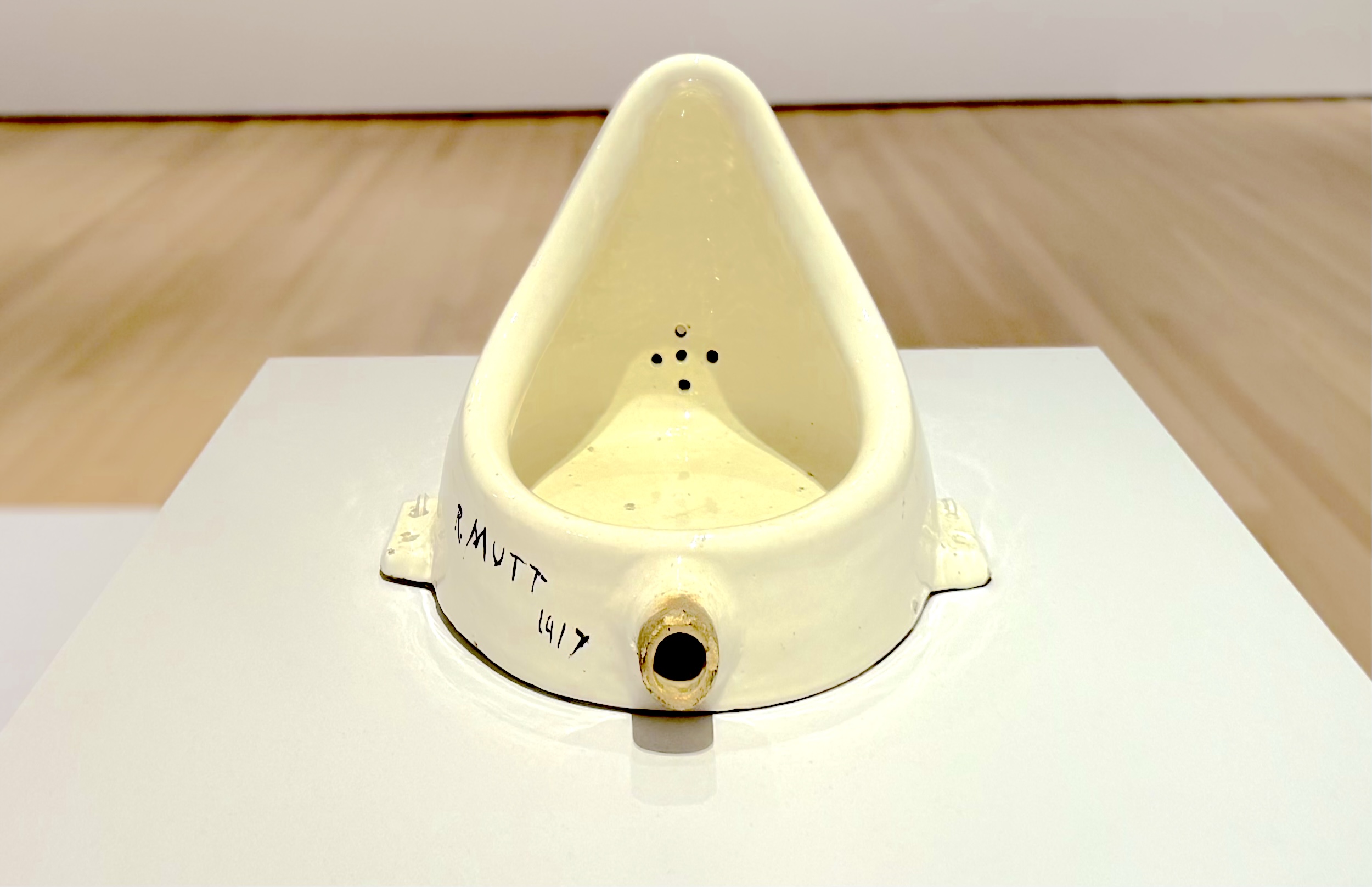
The Museum of Modern Art has launched a major retrospective of Marcel Duchamp, co-organized with the Philadelphia Museum of Art. The exhibition tracks the artist's evolution from his early Cubist experiments and the scandal of 'Nude Descending a Staircase' to his radical invention of the readymade, exemplified by the infamous urinal, 'Fountain'. The show presents a comprehensive look at 'The Duch' through a reverential, church-like atmosphere, concluding with his later years as a dapper, enigmatic figure of the avant-garde.

Devin Troy Strother at ArtCenter

The article is a table of contents for Issue 42 of Contemporary Art Review LA, which includes a review of an exhibition by artist Devin Troy Strother at ArtCenter. The review, written by Janelle Zara, is listed among other reviews, interviews, and features in the publication's November 2025 issue.

future of the art world andras szanto review

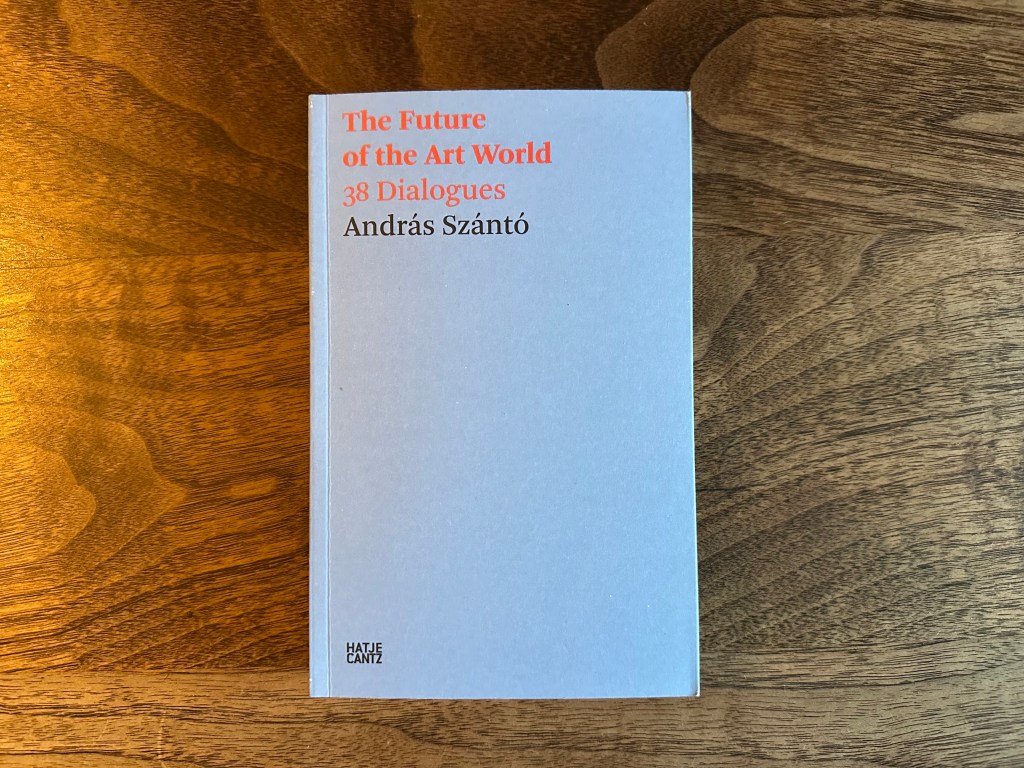
András Szántó has published the third volume of his trilogy on the future of museums and the art world, titled "The Future of the Art World." The book compiles 38 interviews conducted between April 2024 and June 2025 with a wide range of art-world stakeholders, including artists, curators, collectors, dealers, auctioneers, art fair directors, sociologists, philosophers, and policymakers. Unlike his previous books, which focused on museum directors and architects, this volume gives significant voice to artists, who offer provocative critiques and predictions about the future of museums, art education, and digital art.

alex da corte modern art museum of fort worth review

Alex Da Corte's mid-career survey, "The Whale," is on view at the Modern Art Museum of Fort Worth, featuring works that repurpose pop-cultural icons like Disney villains and Mariah Carey to explore themes of erasure and violence. The exhibition includes pieces such as *A Time to Kill* (2016), which obliquely references the 2016 Pulse nightclub shooting through an inverted Elsa standee, and *The Great Pretender* (2021), which removes Lily Tomlin from a TIME magazine cover to comment on queer erasure.

The Big Review | Lacma's David Geffen Galleries ★★★★

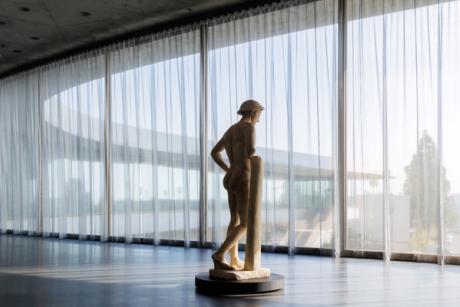
The Swiss architect Peter Zumthor's new $724 million building for the Los Angeles County Museum of Art (Lacma), now called the David Geffen Galleries, has opened after nearly two decades of anticipation. The swooping concrete-and-glass structure is praised for its harnessing of natural light and horizontality, creating a stunning showcase for antiquities and inviting the city inside with floor-to-ceiling windows offering views of the La Brea Tar Pits and Wilshire Boulevard. The building performs best with sculpture and decorative objects, with standout works including Liz Glynn's "The Futility of Conquest" (2023) and Manjunath Kamath's "Vikatonarva" (2024).

What does a woman swimming in urine tell us about the state of the world? Lots! – Venice Biennale review

The 2026 Venice Biennale, curated by the late Koyo Kouoh under the theme "In Minor Keys," has been plagued by months of turmoil including countries withdrawing, artists being fired, exhibitions cancelled, funding pulled, and protests during the preview. A five-person curatorial team took over after Kouoh's death, resulting in what the critic describes as a disjointed, committee-driven exhibition that prioritizes quiet contemplation and healing over direct political engagement. The central shows in the Giardini and Arsenale feature a vast, poorly explained array of art from the global south, with installations of ceramics, textiles, slide projectors, and serene natural scenes that the critic finds anachronistic and dull.

Michael Armitage in Venice, monumental and disturbing. What the exhibition at Palazzo Grassi looks like

Michael Armitage is the subject of a major solo retrospective at Palazzo Grassi in Venice, marking his largest exhibition in Europe to date. Organized by the Pinault Collection, the show features monumental paintings that blend African identity, local Kenyan chronicles, and mythological narratives. Armitage’s work is noted for its physical scale and its ability to transform the chaos of human affairs into a syncretic epic, utilizing traditional materials like Lubugo bark cloth to ground his contemporary subjects.

Comment | We are living in an age of bad painting—the medium must be challenged to stay interesting

The article argues that contemporary painting has entered a period of stagnation, characterized by bloated, vapid, and market-driven works. The author cites observations from Frieze London and the exhibition "Painting After Painting" at SMAK in Ghent, noting that much recent painting lacks intellectual rigor and emotional depth. A conversation with artist Christopher Wool is referenced, where he contrasts the current lack of critical dialogue with the productive crises of the late 1970s, when painters like Philip Guston faced backlash for challenging conventions.