filter_list Showing 9 results for "Promise" close Clear
search
dashboard All 211 museum exhibitions 93article news 37article policy 22article culture 13article local 10trending_up market 10rate_review review 9gavel restitution 8person people 6candle obituary 2article museums 1
date_range Range Today This Week This Month All
Subscribe

Michael Armitage in Venice, monumental and disturbing. What the exhibition at Palazzo Grassi looks like

Michael Armitage is the subject of a major solo retrospective at Palazzo Grassi in Venice, marking his largest exhibition in Europe to date. Organized by the Pinault Collection, the show features monumental paintings that blend African identity, local Kenyan chronicles, and mythological narratives. Armitage’s work is noted for its physical scale and its ability to transform the chaos of human affairs into a syncretic epic, utilizing traditional materials like Lubugo bark cloth to ground his contemporary subjects.


cubism at the met modern art that looks tragically antique

The Metropolitan Museum of Art's current "Cubism" exhibition showcases masterpieces from the Leonard A. Lauder Cubist Collection, featuring works by Pablo Picasso, Georges Braque, Juan Gris, and Fernand Léger. The show spans six galleries and presents some of the finest examples of Cubist art, including iconic pieces like Braque's *The Castle of La Roche-Guyon* (1909) and Picasso's *The Oil Mill* (1909). The exhibition is essentially a curated display of Lauder's promised gift to the Met, highlighting the "Four Horsemen" of Cubism while omitting the broader context of the movement's other pioneers, such as the Salon Cubists.

art ai digital guide brian droitcour

Brian Droitcour curates a guide to navigating the current media landscape through the work of tech-savvy artists and writers, focusing on exhibitions in Brooklyn and Queens. The guide highlights Porpentine's show "Xrafstar World" at Haul Gallery in Gowanus, which features poster-prints of drawings depicting characters from their stories and games, made with different digital brushes. Droitcour contrasts this DIY, performance-driven work with major institutions' engagement with AI, such as Sasha Stiles' "A Living Poem" at MoMA, which he criticizes for echoing technology's promises of polish rather than probing its complications.

Comment | EJ Hill's New York performance personifies the art of endurance

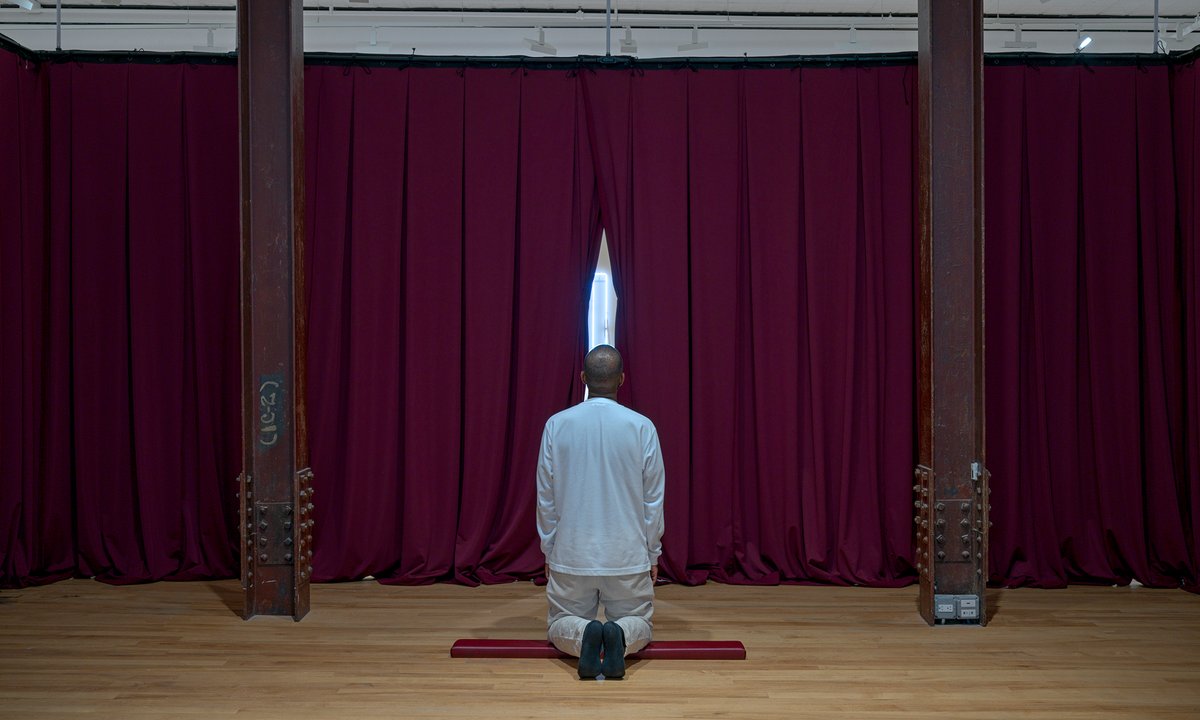
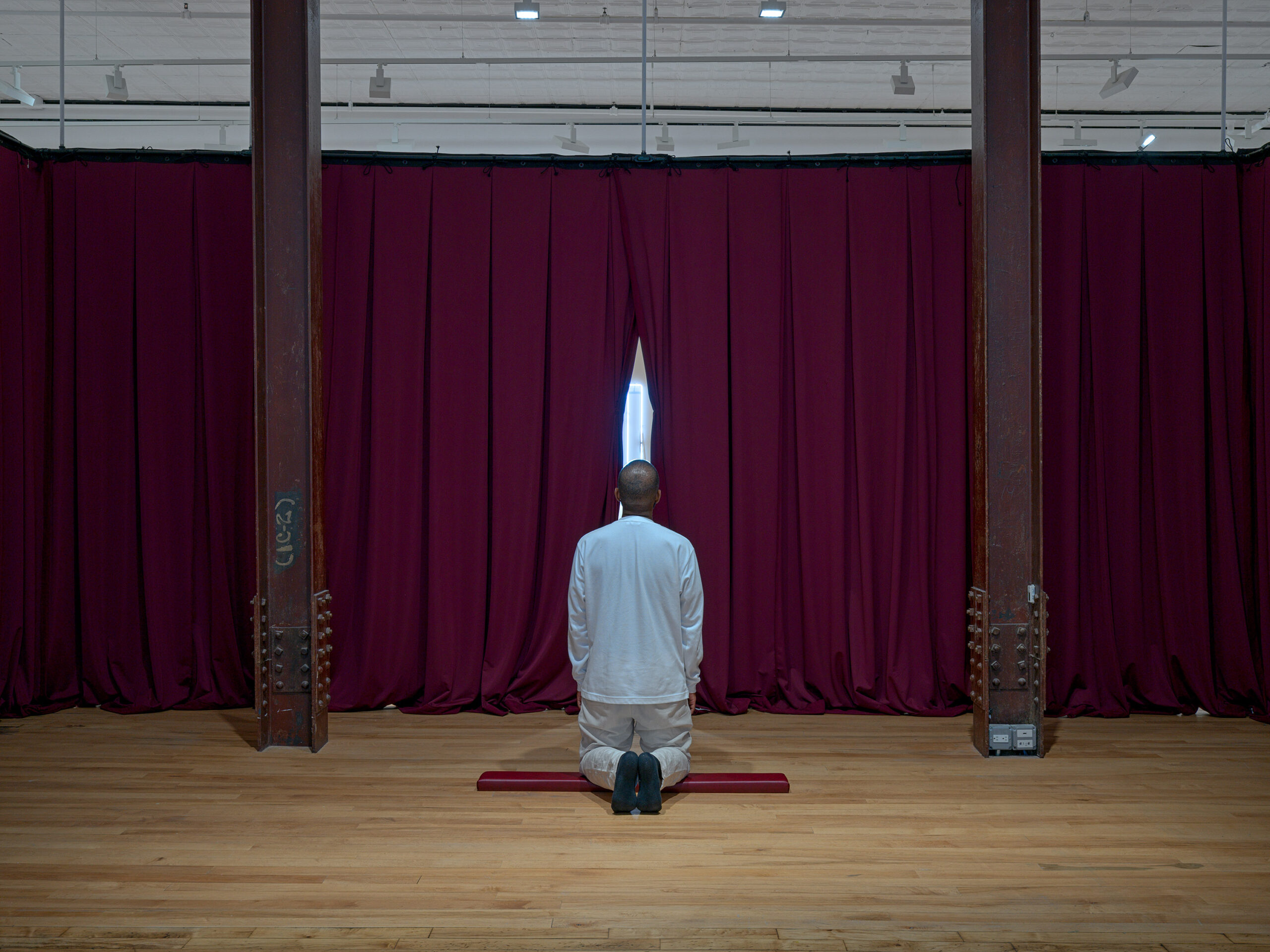
EJ Hill is performing 'Yearning for an Absolute' (2025), the centerpiece of his solo show at 52 Walker in New York, where he kneels on a church kneeler for eight continuous hours each day without food, water, or breaks. The performance runs from June 25 to September 13, totaling 56 days across 12 weeks, and completes a "performance triptych" with his earlier works from 2016 and 2018. Hill describes it as far more grueling than anything he has done before, experiencing widespread physical pain and mental challenges.

blank space book review cultrure over men

W. David Marx's book "Blank Space: A Cultural History of the Twenty-First Century" argues that 21st-century culture has stagnated, blaming the Internet and its economies for a lack of innovation. The book cites critics like Jason Farago and Alex Ross who lament the death of monoculture and the failure of the Internet's promised diversity, while Marx himself longs for a past era of linear artistic progress defined by -isms like Realism and Cubism. However, the review criticizes Marx's framework as rooted in a 19th-century positivist fallacy, noting that art history has never been a clean linear progression and that overlooked artists—such as Hilma af Klint and Hector Hyppolite—have always complicated the canon.

art ej hill kate zambreno review

EJ Hill's new endurance performance, "Yearning for an Absolute" (2025), is on view at 52 Walker in Tribeca through September 13, 2025. For the duration of the exhibition, the 40-year-old Black queer artist kneels every day, all day, within a red velvet enclosure, referencing Catholic devotional practices, saintly mortifications, and his own history of durational works like "Excellentia, Mollitia, Victoria" (2018) at the Hammer Museum's "Made in LA" biennial. The installation also includes red leather kneelers for sale, framed kneeler pad paintings marked with the artist's indentations, and a neon rectangle reminiscent of Dan Flavin's church installation.

Blank Spaces. Sung Tieu by Sarah Johanna Theurer

Sung Tieu's installations, characterized by austere, bureaucratic surfaces, explore the hidden architectures of power embedded in everyday systems. The article examines her series of works that deconstruct administrative forms used in asylum procedures, reducing them to blank spaces and quantified grids to expose how institutional power operates through seemingly neutral documents. Her exhibition "In Cold Print" at Nottingham Contemporary physically manifests these themes by using steel fences to control viewer movement, drawing direct parallels between minimalist sculpture and the dehumanizing design of border controls.

This Garden of Weeds Review: V. Sanjay Kumar Maps the Art World

V. Sanjay Kumar's novel *This Garden of Weeds* explores the Indian art world through a murder mystery centered on the death of a mythic artist, Maya. The story follows her daughter Tara as she uncovers Maya's past through flashbacks involving former art-school classmates—an art critic, a reporter, and a performance artist—while also weaving in subplots about a wealthy family's entry into art collecting, a gallerist's shady dealings, and a reality show for artists. The novel satirizes the fusion of gossip, celebrity, and commerce that defines contemporary art culture.

I wanted to hate the new LACMA. Then I went back

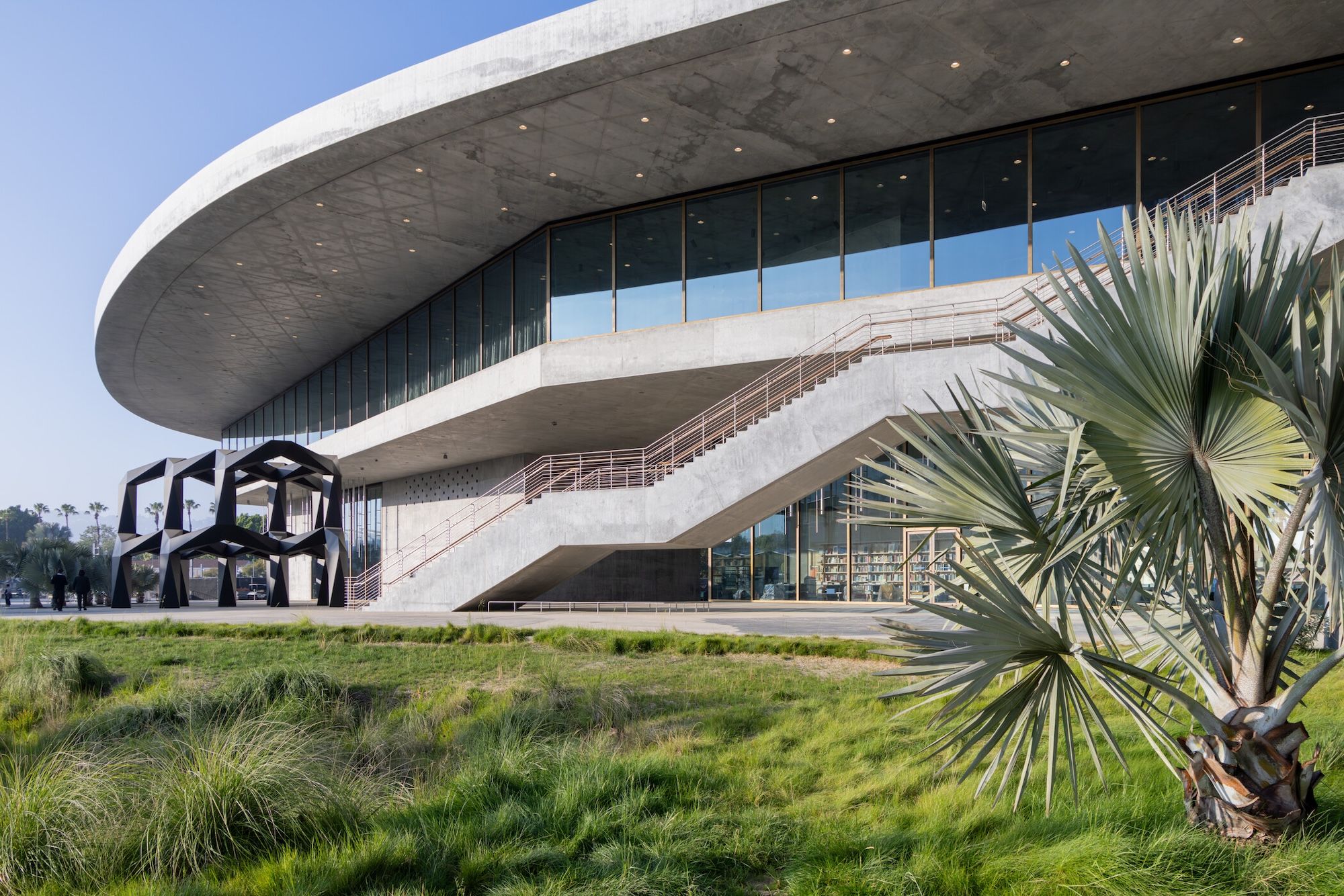
The article describes the author's evolving impression of the newly opened David Geffen wing at the Los Angeles County Museum of Art (LACMA), designed by architect Peter Zumthor. Initially visiting at 11am, the author found the $724 million, 110,000 sq ft building to be a "dismal, dated, inelegant brute," with thick bronze windows, dark concrete slabs, and bunker-like galleries. However, returning at 4pm, the author experienced a transformation: golden afternoon light warmed the concrete, illuminated the interiors, and revealed the building as a "brilliant innovation and true gift to the city." The article details the building's 20-year design evolution, challenges including fossil discoveries on site, and Zumthor's public frustrations with the compromised details.