filter_list Showing 15 results for "Sue" close Clear
search
dashboard All 439 museum exhibitions 227article news 69article local 41article culture 36article policy 20rate_review review 15trending_up market 15person people 7candle obituary 5gavel restitution 4
date_range Range Today This Week This Month All
Subscribe

Two Museums Take on Performative Masculinity, Looksmaxxing, Incels, and Other Macho Buzzwords That Don’t Belong There.

The Stedelijk Museum and Kunstmuseum St. Gallen have co-organized an exhibition titled "Beyond the Manosphere: Masculinities Today," which aims to critically examine contemporary masculinity and its online manifestations such as incels, looksmaxxing, and pickup artists. The show features works by artists including Reba Maybury and Richard Serra, and is curated by Melanie Bühler, with directors Rein Wolfs and Gianni Jetzer overseeing the project. The exhibition will travel from the Stedelijk to the Kunstmuseum St. Gallen later this year.
25th Biennale of Sydney Review: From the Margins

The 25th Biennale of Sydney, titled "Rememory" and curated by Hoor Al Qasimi, features 143 works by 83 artists and collectives from 37 countries across five venues. The exhibition explores marginalized, fragmented, and repressed histories, drawing on Toni Morrison's concept of 'rememory' as a space between remembering and forgetting. Key works include Tuan Andrew Nguyen's film on Vietnam War trauma, Basel Abbas and Ruanne Abou-Rahme's immersive installation on Palestinian displacement, Khalid Albaih's photographs of Sudan, and Massinissa Selmani's drawings on Algerian socialist building projects.

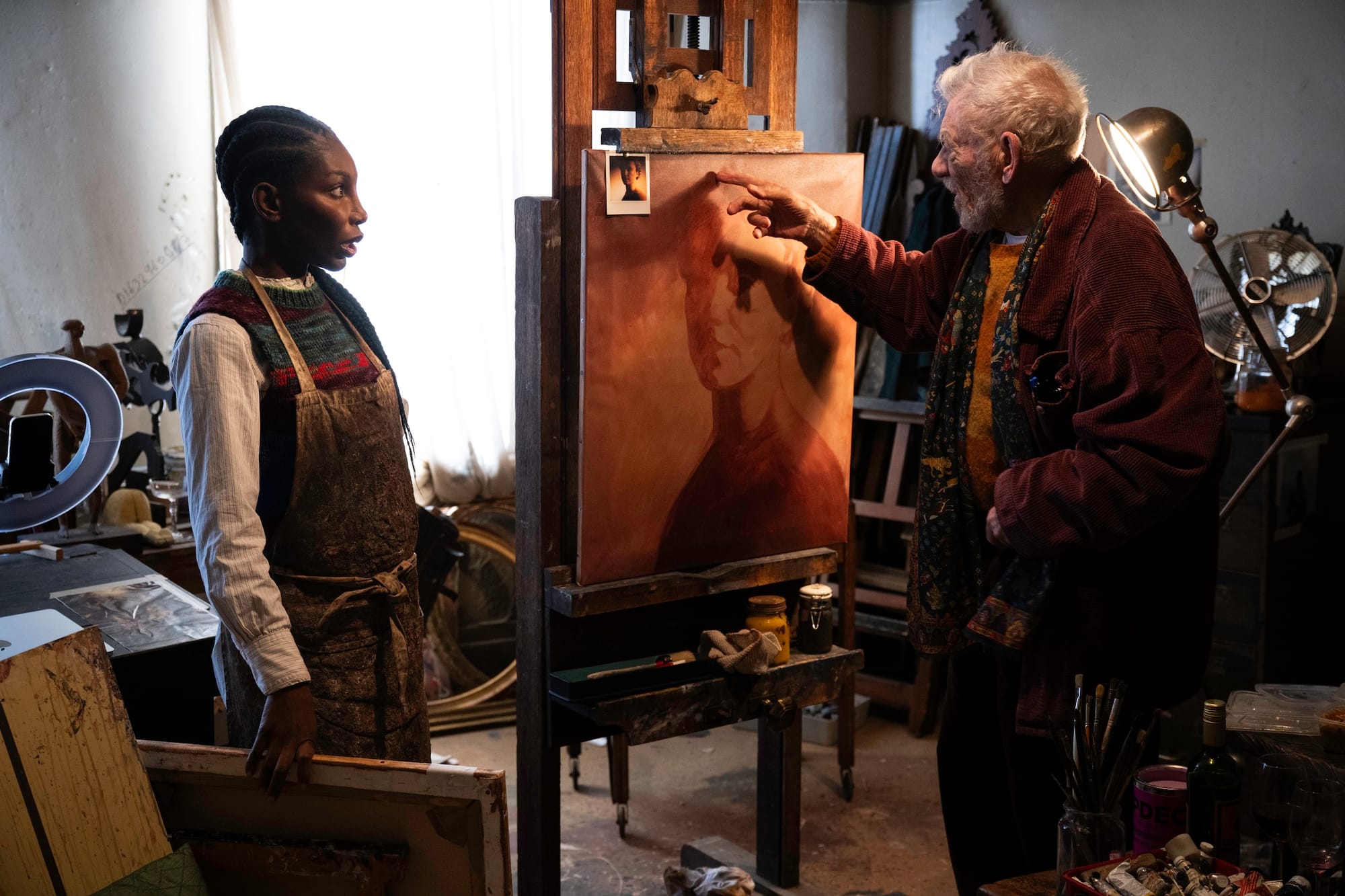
An Unlikely Friendship Between Artist and Forger

The article reviews Steven Soderbergh's 2026 film "The Christophers," which follows an unlikely friendship between two painters in London: Julian Sklar (Ian McKellen), an older artist facing cancellation, and Lori Butler (Michaela Coel), a young painter who restores and forges artworks. The film explores themes of attention, artistic legacy, and the purpose of art, contrasting with darker narratives like "Tár" by offering a comedic yet profound take on these issues.

The Enigma of Alison Knowles

Lauren Moya Ford reviews the only book dedicated to Fluxus artist Alison Knowles, who died six months ago. The book, "Performing Chance: The Art of Alison Knowles In/Out of Fluxus" by Nicole L. Woods (2026), attempts to illuminate Knowles's life and work, but Ford notes that much of her personal life remains mysterious despite the author's efforts. The article is part of a broader books newsletter that also features new tomes on Hans Holbein’s portraits, Jan Staller’s photographs of Manhattan construction sites, and a discussion of a Black Panther family album at the Studio Museum in Harlem.

What’s Left to Learn from Marcel Duchamp?

The article examines Marcel Duchamp's enduring influence on contemporary art, focusing on his readymades such as "Fountain" (1917) and "Bicycle Wheel" (1913/1951). It notes that a major survey co-organized by the Museum of Modern Art and the Philadelphia Museum of Art, 70 years after Duchamp predicted his true public would emerge in 50 to 100 years, reaffirms his status as the most influential artist of the past century. The piece discusses how Duchamp's practice of selecting and presenting ordinary objects as art—from a urinal to a snow shovel—once shocked the art world but now seems quaint compared to later works like Maurizio Cattelan's taped banana.

‘My Year in Paris with Gertrude Stein’ by Deborah Levy, Reviewed

Deborah Levy’s latest novel, *My Year in Paris with Gertrude Stein*, follows a first-person narrator who travels to Paris to research the American writer and collector Gertrude Stein. The narrative slips between the early twentieth century and the autumn of Donald Trump’s 2024 reelection, using stream-of-consciousness prose and liquid metaphors to blur past and present. The narrator’s research into Stein’s role in shaping modernity becomes a vehicle for exploring her own sense of helplessness and lack of agency in a hyperconnected, war-weary present.

‘The Bed Trick’ by Izabella Scott, Reviewed

Izabella Scott's book *The Bed Trick* examines a British rape case in which Gayle Newland was convicted for pretending to be a man named Kai during a two-year relationship with a woman identified as Miss X. Drawing on court transcripts, Scott explores the legal concept of 'fraud vitiates consent' and traces the historical bed-trick trope from medieval folktales to *The Rocky Horror Picture Show*, questioning how much deception invalidates sexual consent.

Ariel West Probes Our Desire for Oil

Andrew Durbin reviews the national pavilions at the 2026 Venice Biennale, contrasting a vacuous US presentation with incisive and moving installations from Britain and Germany. The review critiques the US pavilion for lacking meaningful content, while praising the British and German contributions for their depth and emotional resonance.

‘YBA & BEYOND’ Exports British Cool

Frieze critic Andrew Durbin reviews the national pavilions at the Venice Biennale, contrasting a vacuous US presentation with incisive and moving installations from Britain and Germany. The British pavilion, titled 'YBA & BEYOND,' exports British cool by showcasing works from Young British Artists and their successors, while the German pavilion offers a deeply resonant experience. The US pavilion is criticized for lacking meaningful content, raising questions about curatorial direction and national representation.

How to Have the Perfect Day at Frieze New York 2026

Andrew Durbin reviews the national pavilions at Frieze New York 2026, contrasting a vacuous US presentation with incisive and moving installations from Britain and Germany. The review highlights the disparity in conceptual depth and emotional resonance among the three pavilions, with the US offering little meaning while the British and German contributions engage seriously with contemporary issues.

Arsenale Review: Where Voices Resist Erasure

At the 2026 Venice Biennale's Arsenale, critic Andrew Durbin reviews national pavilions, finding the US presentation vacuous and lacking meaning, while praising the British and German pavilions for their incisive and moving installations that resist erasure. The review highlights a stark contrast in curatorial ambition and political engagement among the participating nations.

Sung Tieu and the Art of Difficulty

Sung Tieu, a Vietnamese-born German artist, is the subject of a critical feature in Frieze that examines her work's engagement with difficulty—both in terms of the complex political and historical themes she tackles and the challenging formal qualities of her installations. The article highlights her recent projects, including works shown at the Venice Biennale, which address issues of surveillance, migration, and Cold War legacies through meticulous research and unconventional materials.

National Pavilions Review: Who’s Afraid of Meaning?

Andrew Durbin reviews national pavilions at a major biennial, contrasting a vacuous US presentation with incisive and moving installations from Britain and Germany. The review critiques the lack of meaningful content in the US pavilion while praising the depth and emotional resonance of the British and German contributions.

Gabrielle Goliath Sounds a Call to Action in Venice

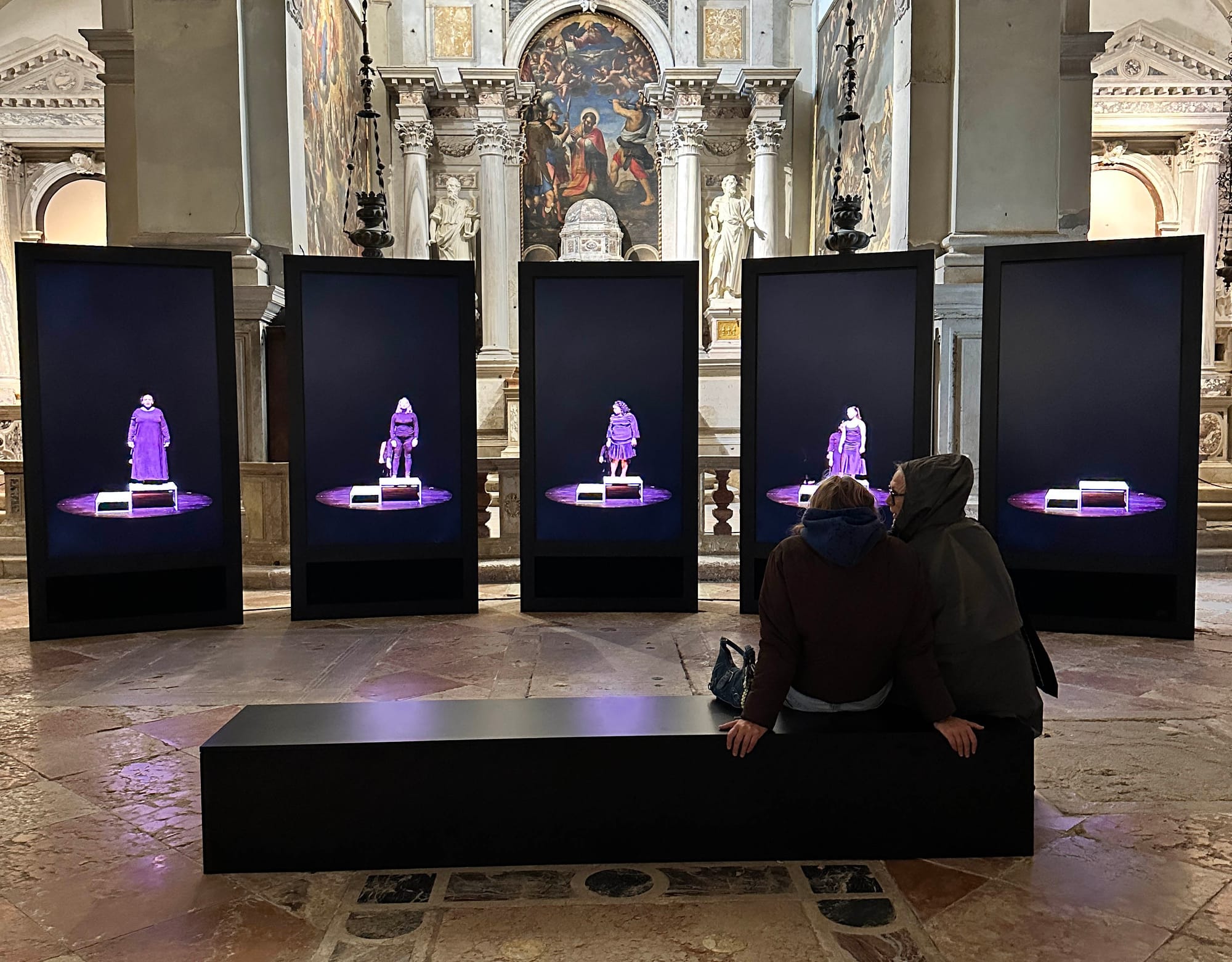
Gabrielle Goliath’s exhibition "Elegy" is presented as South Africa’s unofficial pavilion at the 61st Venice Biennale, after the country’s Culture Minister Gayton McKenzie overrode an independent committee’s selection of Goliath, citing her proposed inclusion of a memorial for Palestinians killed in Gaza. The installation features three video works in which singers sound a single note in tribute to victims of violence: a South African femicide victim, two women killed in Germany’s colonial genocide in Namibia, and Palestinian poet Heba Abunada. The show occupies the Chiesa di Sant'Antonin in Venice, curated with Ingrid Masondo, after a legal challenge against McKenzie was dismissed.

Preemptive Listening review – artist’s film about sirens is buzzing with sonic ideas

The Guardian reviews Aura Satz's art film "Preemptive Listening," which explores the cultural and political meanings of sirens as warning devices. The film features a drone shot of a siren in a residential area, a soundtrack by composer Laurie Spiegel, and commentary from British-Egyptian actor Khalid Abdalla on sirens during the 2011 Arab Spring protests. It also covers sirens on Nakba day in Palestine, a US activist linking emergency vehicle lights to danger for Black women, clocks frozen at the time of the Fukushima disaster, and a Maori activist discussing environmental catastrophe. The reviewer finds the film's ideas interesting but notes it lacks coherence as a feature-length experience, suggesting it would be better suited to a gallery setting.