filter_list Showing 12 results for "Theater" close Clear
search
dashboard All 337 museum exhibitions 142article local 77article news 32article culture 29person people 17rate_review review 12candle obituary 11article policy 11trending_up market 6
date_range Range Today This Week This Month All
Subscribe

Big Crisis, Small Gestures

Große Krise, kleine Gesten

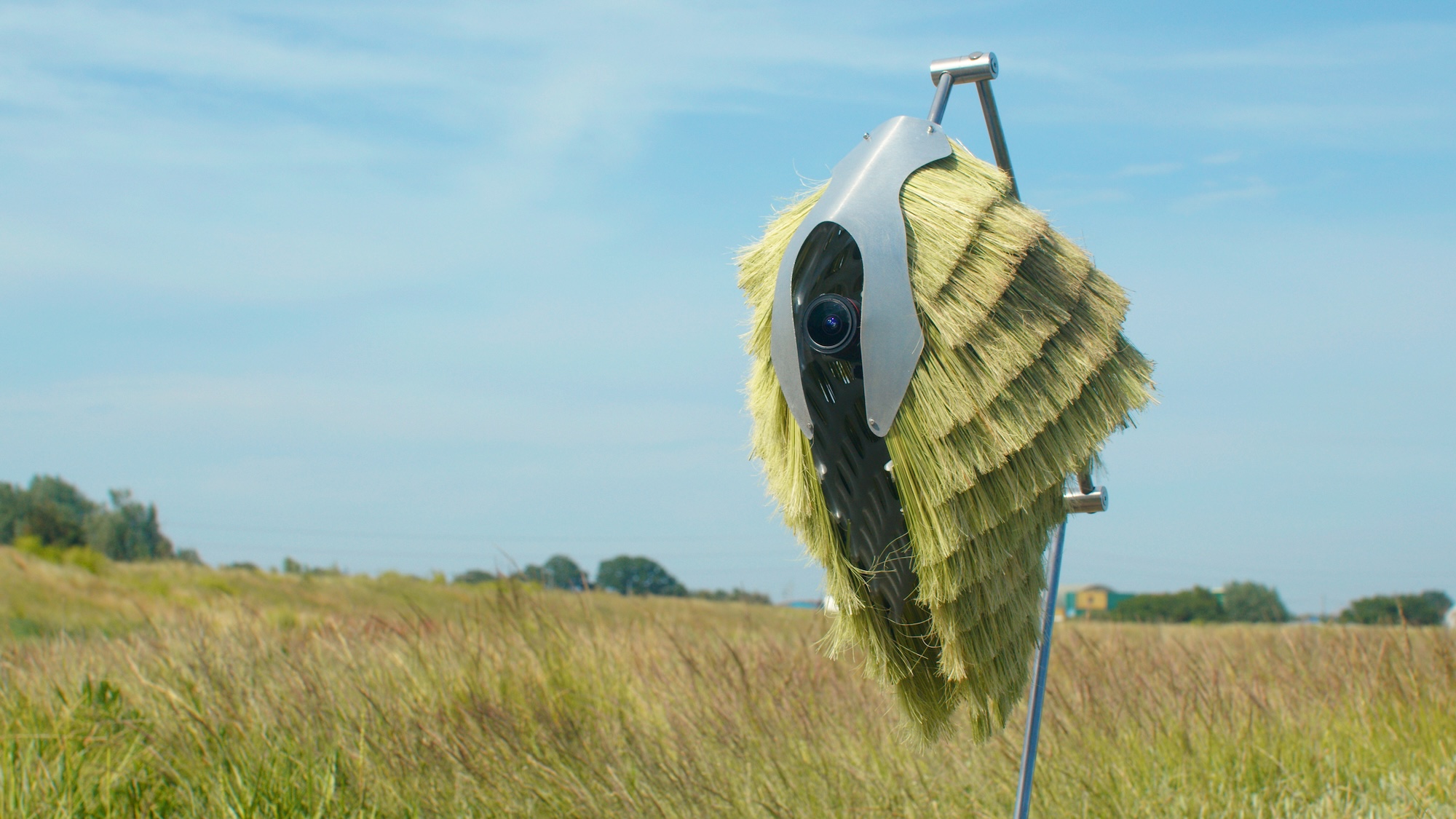
The article reviews the second edition of the Klima Biennale Wien, which opened in early April in Vienna. It notes that while the biennale aims to address the urgent triple crisis of climate change, biodiversity loss, and pollution, its execution falls short. The exhibition features symbolic works such as a beached whale, a broken boat, and a compostable SUV sculpture, but these motifs feel repetitive and lack the necessary impact. The author contrasts these with historical precedents like Menashe Kadishman's 1978 Venice Biennale installation and Joseph Beuys' "7000 Eichen" (1982), arguing that the themes of nature and sustainability are not new, only the urgency has intensified.
Can a Play Capture an Artist as Enigmatic as Henry Darger?

Can a Play Capture an Artist as Enigmatic as Henry Darger?

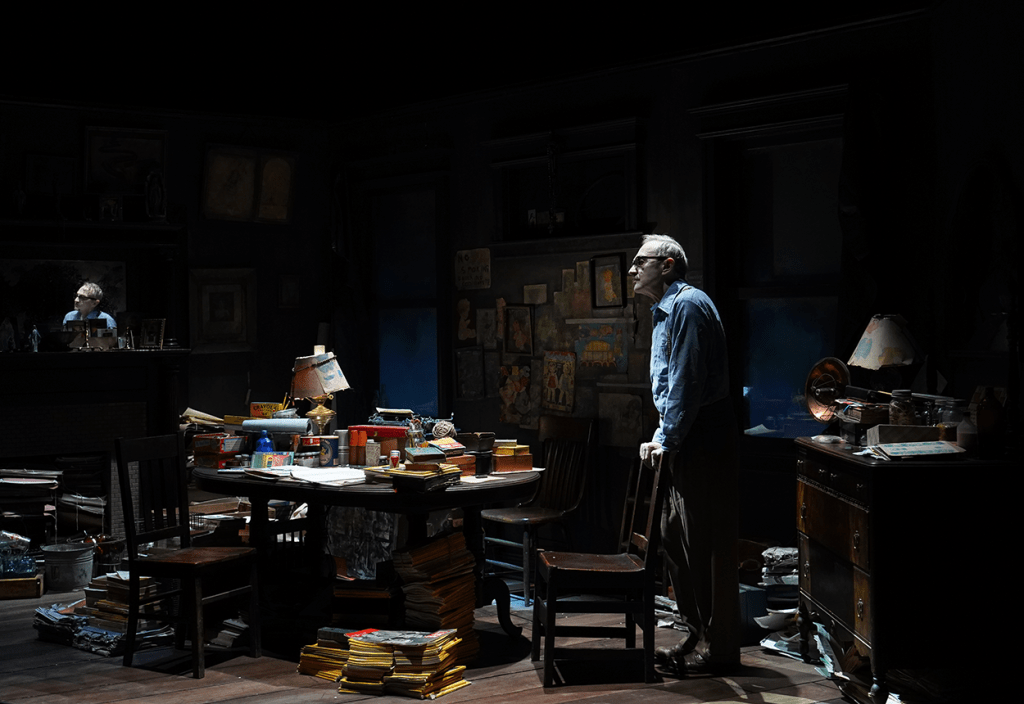
A new play, *Bughouse*, is attempting to portray the life of reclusive artist Henry Darger on stage at New York's Vineyard Theater. The one-man show, starring John Kelly, draws from Darger's own lengthy autobiography to depict his traumatic childhood, institutionalization, and decades of solitary life in Chicago, where he secretly created his vast, fantastical artwork and writings.

Zineb Sedira review: A chic ode to revolutionary cinema, brainy boozers – and exceptional berets

Zineb Sedira's exhibition at Tate Britain presents a cinematic and sculptural homage to La Cinémathèque Algérienne, the Algerian film archive founded in 1965 that became a hub for leftist African filmmakers. The show recreates a 1970s Algerian cafe in Paris, complete with a jukebox, books on revolutionary cinema, and a model movie theater screening a documentary about the archive's director, Boudjemaâ Karèche. Sedira, born in Paris to Algerian parents and based in London, weaves personal and political narratives to explore identity, diaspora, and the role of art in social change.

Thailand Biennale 2025 Review: Beyond the Tropical Paradise

The fourth Thailand Biennale, titled 'Eternal [Kalpa]', has launched across 19 venues in Phuket, aiming to challenge the island's reputation as a mere tropical leisure destination. Curated by a team including Hera Chan, the exhibition utilizes diverse locations—from municipal gymnasiums to mangrove forests—to explore themes of subjective time and local history. Despite logistical delays that saw some artists still installing works during the press preview, the biennial presents a series of site-specific commissions that engage with Phuket’s ecological and social complexities.

‘Transcription’ by Ben Lerner Review: No Phones

Ben Lerner’s latest novel, Transcription, marks a departure from his previous sprawling autofiction like The Topeka School, opting instead for a spare, three-part structure set during the COVID-19 pandemic. The narrative unfolds through three pivotal conversations involving the protagonist, his aging mentor Thomas, a curator, and Thomas’s son Max. Central to the plot is the protagonist’s failure to record a final interview with Thomas due to a broken phone, forcing a reliance on fallible memory and reconstruction.

In ‘A Natural History of the Studio,’ Many William Kentridges Add Up to One

William Kentridge's latest exhibition, 'A Natural History of the Studio,' at Hauser & Wirth in New York presents over 70 drawings from his nine-part film series 'Self-Portrait as a Coffee-Pot,' alongside new sculptures. The works, created during the pandemic, explore self-portraiture through charcoal, pastel, and collage, often featuring doppelgängers that argue and disagree, reflecting the artist's engagement with theater and the materiality of his forms.

The Left Side of History: On Haile Gerima’s Black Lions—Roman Wolves

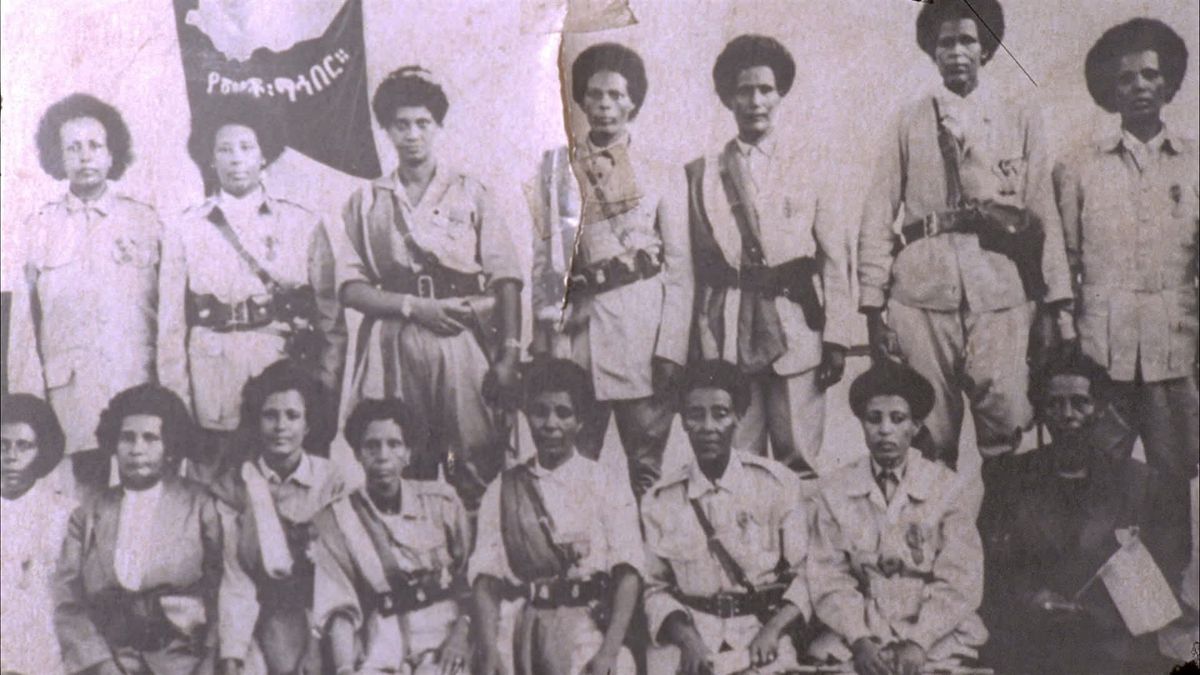
The article is a critical essay analyzing Haile Gerima's 2026 film 'Black Lions—Roman Wolves: The Children of Adwa,' focusing on its exploration of Italy's colonial occupation of Ethiopia and the repression of this history. The author uses a scene from Gerima's earlier film 'Teza'—featuring children playing near a decaying fascist monument in Ethiopia—as a starting point to discuss how colonial memory and trauma are cinematically excavated.

Body as Device. Guide and Reflection on the Performances of the Venice Biennale

Corpo come dispositivo. Guida e riflessione sulle performance della Biennale di Venezia

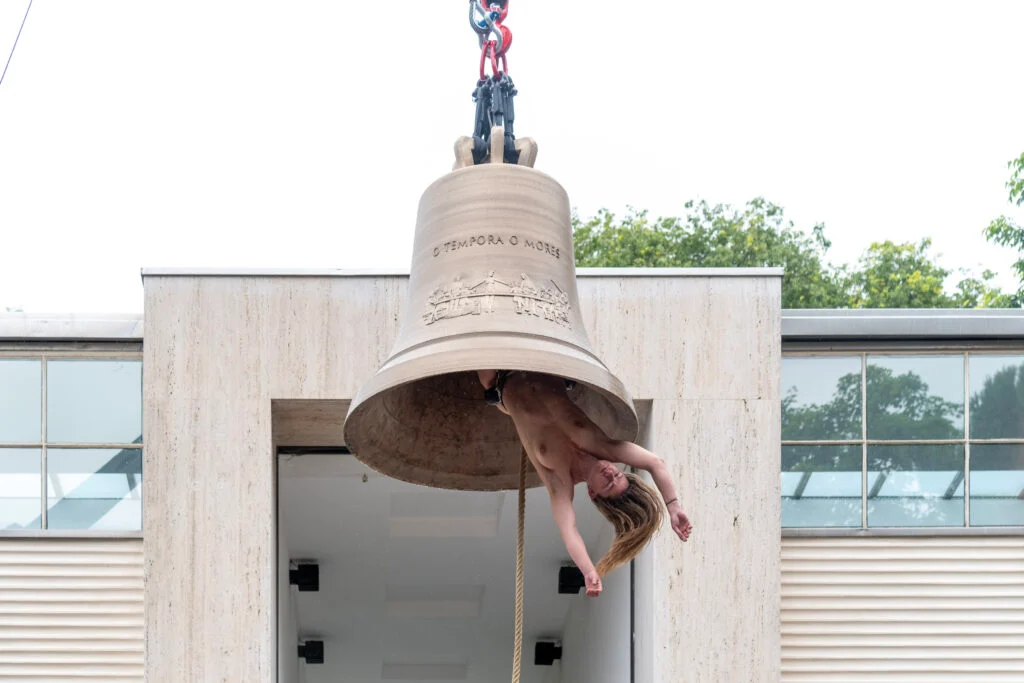
The article analyzes the role of performance art at the 2026 Venice Biennale, arguing that performance is no longer a rediscovered genre but a structurally institutionalized primary form of experience production. It examines how the body reemerges not as an alternative to image-based works but as an internal interruption of the artwork system, preventing closure and reintroducing instability. Key pavilions are discussed: Austria's Florentina Holzinger with "Sancta" draws on 1970s radical performance and feminist body art, creating an immersive environment of continuous movement; Belgium's Miet Warlop with "IT NEVER SSST" engages post-dramatic theater and postmodern dance repetition; Japan's Ei Arakawa-Nash with "Grass Babies, Moon Babies" activates Gutai avant-garde legacies through viewer interaction with soft dolls.

A Baroque Too Baroque: Reflections on the Colossal Exhibition in Forlì

Un Barocco troppo barocco. Riflessioni sulla colossale mostra di Forlì

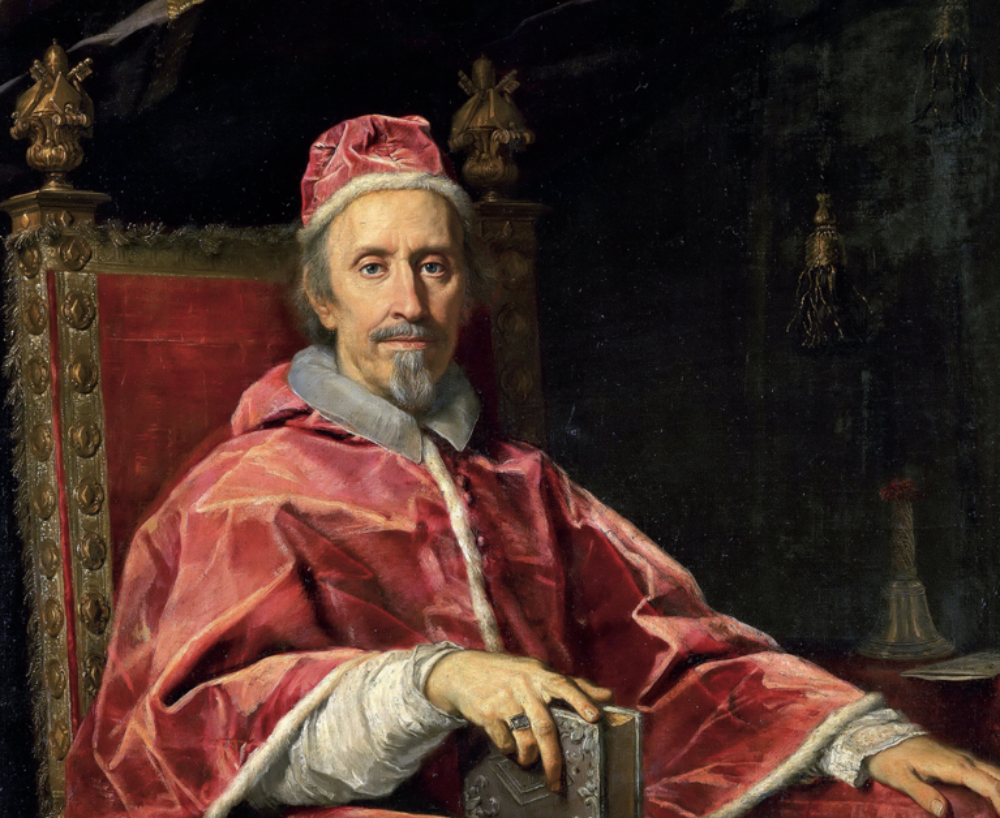
A massive exhibition titled "Barocco: il gran teatro delle idee" (Baroque: The Grand Theater of Ideas) is on view at the Museo Civico San Domenico in Forlì, Italy. The show, curated by a committee of six, ambitiously attempts to define the Baroque across the 17th and 18th centuries, extending its scope to include France and Spain, and even suggesting its echoes in the 20th century. It features approximately 300 works, including paintings, sculptures, and decorative arts.

"Dispossessions in the Americas" Confronts the Colonialism That Invades All Territory

The article reviews "Dispossessions in the Americas," a group exhibition at Wrightwood 659 in Chicago curated by Jonathan D. Katz and Eduardo Carrera. Featuring works from 1960 to 2025, the show examines colonial legacies in the Americas, focusing on the forced dispossession of land, culture, and language from indigenous, Afro-descendant, queer, and trans communities. The review critically questions how a polished, architecturally prestigious venue can coherently display art about socially voiceless communities without falling into voyeurism or fetishization of pain.

Exhibition Review and Studio Visit Feature: Contemporary Color Field Painter Vanessa Johansson

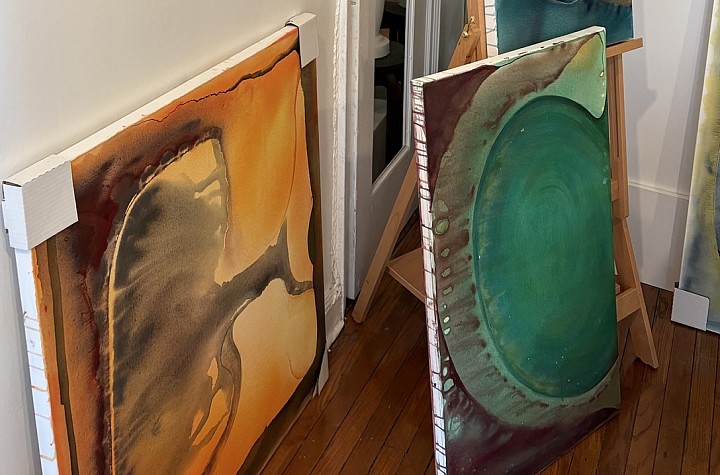
Contemporary painter Vanessa Johansson recently debuted her solo exhibition at the Sky Garden Penthouse in Gramercy Park, New York. Curated by Jenny Mushkin Goldman of Agency Esta, the show featured Johansson’s large-scale acrylic on canvas works, which utilize fluid, transparent layers to evoke the spiritual and visual language of mid-20th-century Color Field abstraction. Pieces such as the triptych 'Windows' and the diptych 'Flow State' demonstrate her intuitive approach to motion, buoyancy, and orbital forms.

Spectral Nomenclature. Anastasia Pavlou  by Arnisa Zeqo

Artist Anastasia Pavlou’s practice is explored through her engagement with literature, memory, and the materialization of language. Her large-scale paintings, which draw formal comparisons to Art Informel and Abstract Expressionism, function as conceptual lexicons where titles—often direct citations from writers like Dionne Brand and Virginia Woolf—carry as much weight as the paint itself. Works such as "The Reader Interrogates Narrative, but Poetry Interrogates the Reader" demonstrate her interest in the "spectral" side of nomenclature, where naming serves to summon ghosts of the past while acknowledging the failures of language to capture emotion.