filter_list Showing 95 results for "protests" close Clear
search
dashboard All 95 article news 46museum exhibitions 31article culture 14rate_review review 4
date_range Range Today This Week This Month All
Subscribe

Queer eyes in focus, sculpture hits pay dirt and Whistler’s world – the week in art

This week's art roundup from The Guardian highlights a major exhibition of James McNeill Whistler at Tate Britain, showcasing the American artist's impact on Victorian Britain with avant-garde influences from Paris and Japan. Other notable exhibitions include "Gender Stories" at the Walker Art Gallery in Liverpool, featuring works by David Hockney and Grayson Perry; Delcy Morelos's earthy sculptures at the Barbican Centre; and Henry Moore's sculptures at Kew Gardens. The article also covers news of a Nazi-looted portrait found in the home of a Dutch SS leader's family, protests at the Venice Biennale over Israel's inclusion, and the unveiling of Zineb Sedira's film installation at Tate Britain.
Peter Doig, Tracey Emin, and More Sign Letter Defending Southbank Centre Chair

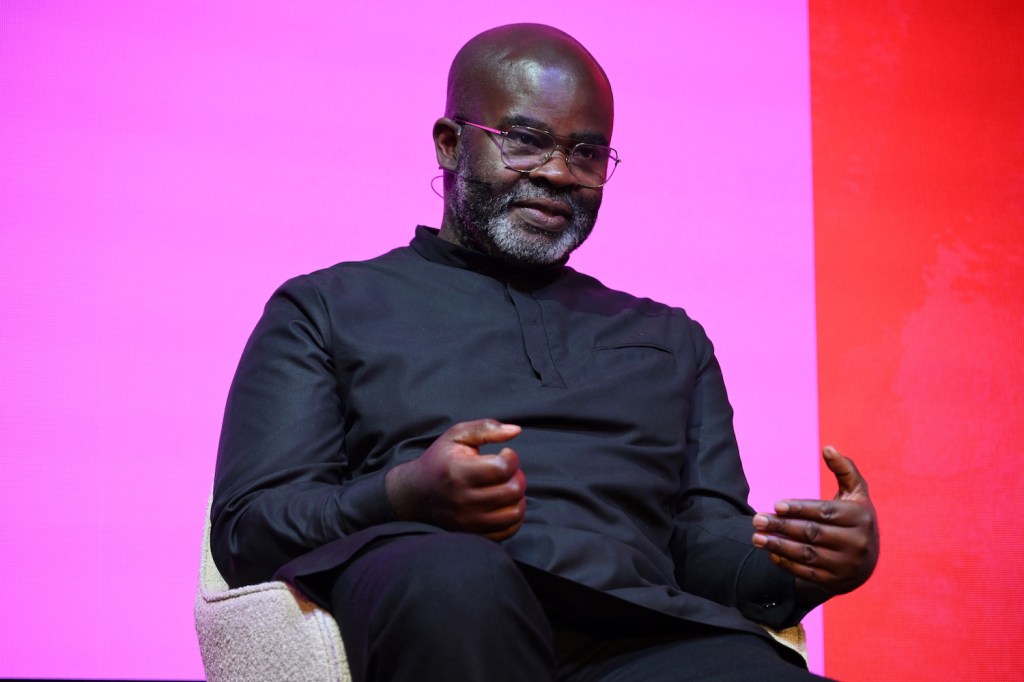
A letter signed by environmental activist Greta Thunberg and artists Tracey Emin and Peter Doig is circulating in support of Misan Harriman, chair of London's Southbank Centre. The letter defends Harriman against what it calls a "dishonest smear campaign" by the Telegraph and other right-wing outlets, which accused him of promoting conspiracies and comparing Reform Party voters to Nazis. The controversy stems from Harriman's social media comments about a knife attack on Jewish men and a video referencing Susan Sontag and Kurt Vonnegut on the Holocaust, which critics say minimized antisemitism or drew inappropriate parallels. Harriman denies making such analogies, and 70,000 people have complained to media watchdog Ipso, while 15,000 signed the letter.

Artists made their mark at 2026 Met Gala

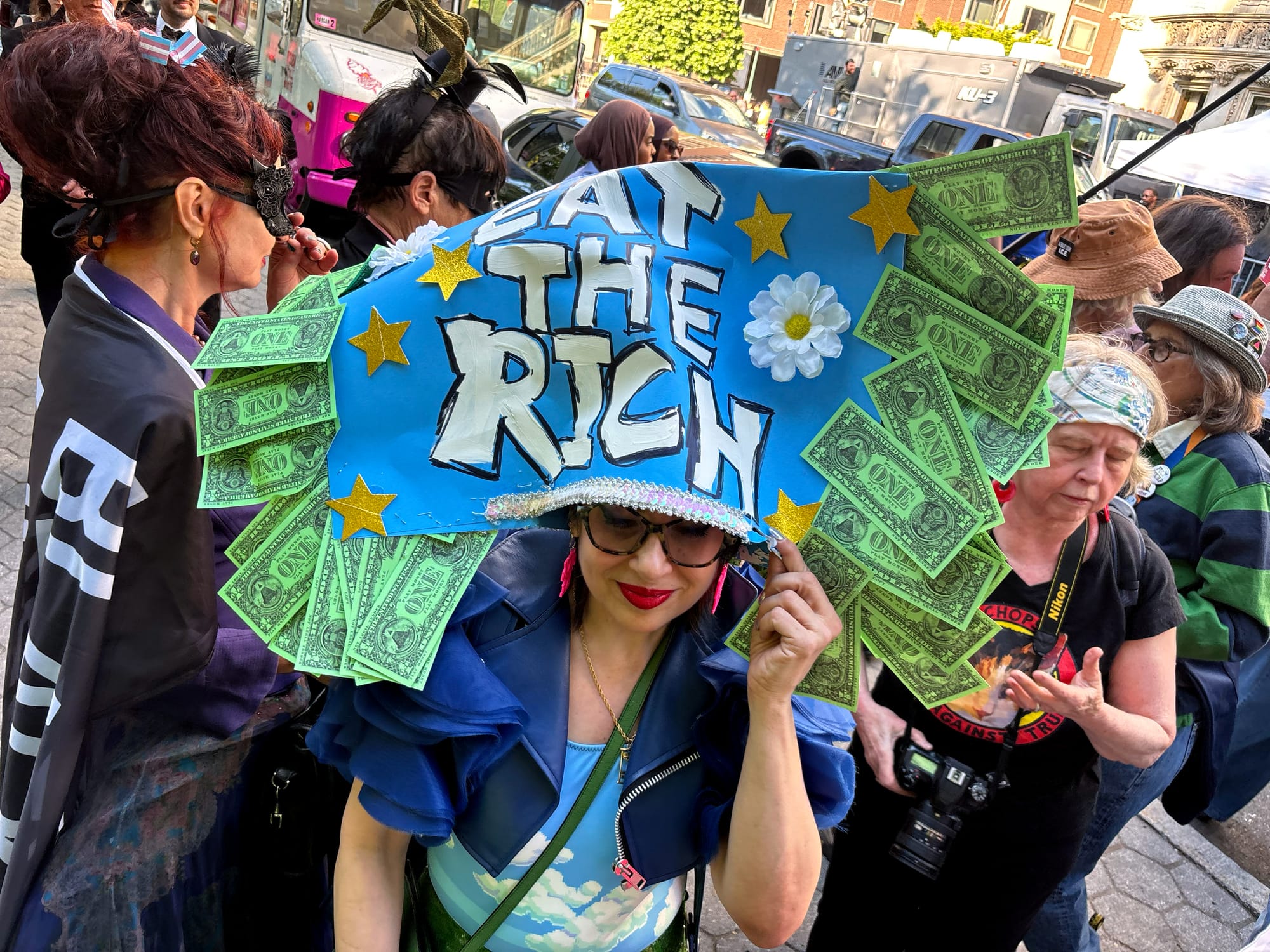
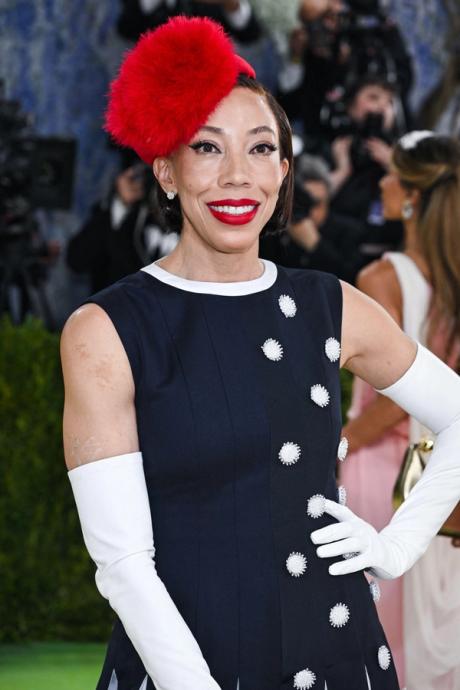
The 2026 Met Gala, held on May 4 at the Metropolitan Museum of Art, raised a record $42 million for the Costume Institute, surpassing last year's $31 million. Honorary chairs Jeff Bezos and Lauren Sanchez Bezos contributed at least $10 million, but their involvement sparked protests outside the event, with demonstrators holding signs like "Tax the Rich" and a group called Everyone Hates Elon leaving fake urine bottles labeled with Bezos's face. Inside, artists made a strong impression: Amy Sherald wore a Thom Browne look based on her painting; Jordan Roth donned a Robert Wun outfit inspired by a Met collection work; and Tschabalala Self collaborated with Brandon Blackwood on a gown evoking Degas's ballerina sculpture. The gala's dress code was "fashion is art," and the accompanying exhibition, "Costume Art" (May 10–January 10, 2027), debuts the Met's new 12,000-square-foot Condé M. Nast Galleries.

Mom, I'm Gonna Be an Artist!

Hyperallergic's Saturday newsletter, edited by Valentina Di Liscia, rounds up a week of art-world activity marked by protests and resistance. Staff Writer Isa Farfan asked 15 artists to share advice from their mothers for Mother's Day, featuring responses from Pat Oleszko, whose work is in the Whitney Biennial. The newsletter also covers editor-in-chief Hakim Bishara's report on a historic strike for Palestine and workers' rights at the Venice Biennale, where dozens of national pavilions shut down, and Editor-at-Large Hrag Vartanian's review of the central exhibition "In Minor Keys." Additional stories include Damien Davis on artists and consignment agreements, Matt Stromberg on the LA Art Book Fair, a protest against Jeff Bezos at the Met Gala, MoMA PS1's upcoming Teresa Margolles survey, and a picket at the American Folk Art Museum.

The US Pavilion Wants Your Money

The American Arts Conservancy, a new nonprofit with MAGA-aligned leadership, is fundraising for Alma Allen's 2026 US Pavilion at the Venice Biennale through a "Donate" button on its website, having received no institutional financial support. Meanwhile, a sculpture by Pedro Reyes at the newly unveiled LACMA building has sparked controversy for recalling a 2021 commission rejected by Mexico City after Indigenous and feminist protests, and the experimental LA nonprofit The Box has closed after 19 years.

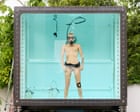
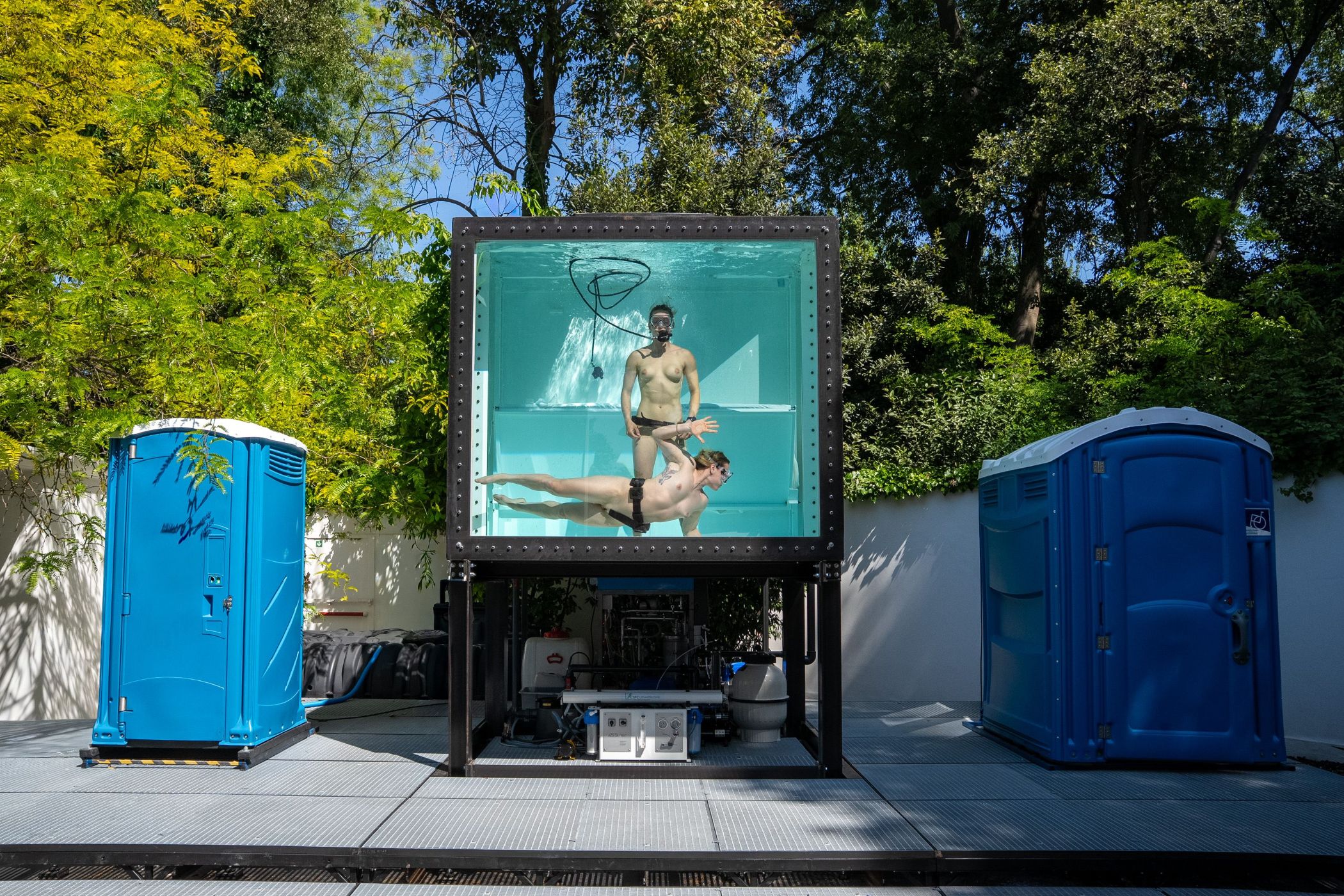
What does a woman swimming in urine tell us about the state of the world? Lots! – Venice Biennale review

The 2026 Venice Biennale, curated by the late Koyo Kouoh under the theme "In Minor Keys," has been plagued by months of turmoil including countries withdrawing, artists being fired, exhibitions cancelled, funding pulled, and protests during the preview. A five-person curatorial team took over after Kouoh's death, resulting in what the critic describes as a disjointed, committee-driven exhibition that prioritizes quiet contemplation and healing over direct political engagement. The central shows in the Giardini and Arsenale feature a vast, poorly explained array of art from the global south, with installations of ceramics, textiles, slide projectors, and serene natural scenes that the critic finds anachronistic and dull.

A Venice Biennale in Protest

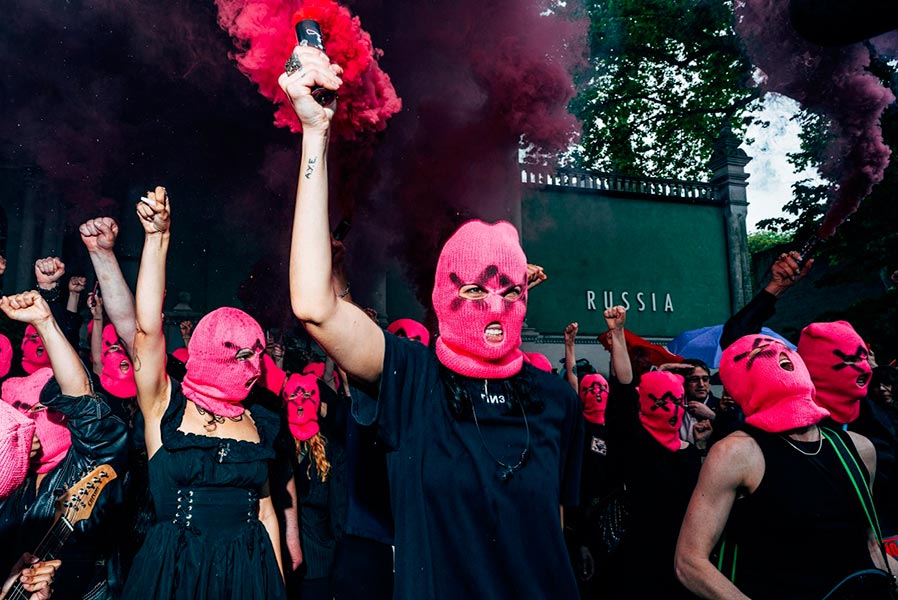
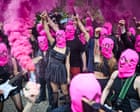
Hundreds of protesters, led by the Art Not Genocide Alliance, blocked the entrance to the Israeli pavilion at the Venice Biennale on May 6, waving Palestinian flags and accusing Israel of operating a "genocide pavilion." Activists from Pussy Riot and FEMEN also staged a pink smoke-filled protest against Russia's participation. Meanwhile, the Biennale jury suddenly resigned, and Israeli pavilion artist Belu-Simion Fainaru made legal threats against the Biennale alleging antisemitism and discrimination. The article also covers exhibitions in Upstate New York, a tribute to Beat Generation icon Jack Kerouac, and obituaries for performance art champion Steven Durland, artist Georg Baselitz, cartoonist Nicole Hollander, and arts patron Doris Fisher.

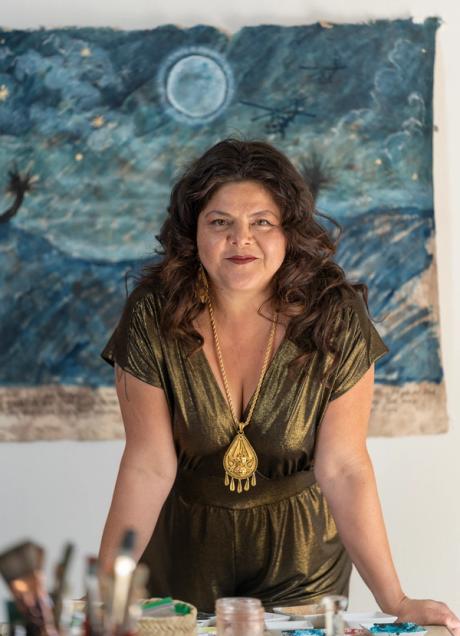
‘The content, material and form support each other’: Sandy Rodriguez on her Hispanic Society Museum show

Sandy Rodriguez presents her new exhibition, *Tierra Insurgente*, at the Hispanic Society Museum and Library in Washington Heights, featuring her hand-painted maps on amate paper alongside historic codices and globes from the institution's collection. Her works blend Mesoamerican and colonial-era imagery with contemporary symbols of state violence and resistance, such as riot police, calavera-style surveillance helicopters, and references to the 2020 racial-justice protests in New Orleans. Rodriguez uses natural pigments like cochineal and hand-processed minerals on bark paper, a material once outlawed by Spanish colonizers, to create a dialogue between past and present.

More than 70 Venice Biennale artists withdraw from awards

More than 70 artists participating in the 2025 Venice Biennale have withdrawn from consideration for the Golden Lion awards, which this year will be decided by public vote. The artists, including Walid Raad, Laurie Anderson, and Yto Barrada, signed a statement published on e-flux on May 9, withdrawing in solidarity with the entire prize jury that resigned last month over a dispute regarding the participation of Israel and Russia. The Biennale management replaced the traditional jury-selected awards with a new "Visitor Lion" system where ticket holders can vote, but the Biennale has acknowledged that if any of the withdrawing artists win, they will not collect the award.

See Some of the Most Outrageous, Stylish Looks at the 2026 Met Gala

The 2026 Met Gala raised $42 million for the Metropolitan Museum of Art's Costume Institute, surpassing last year's $31 million. The event, themed "Costume Art" with a dress code of "Fashion is Art," featured honorary chairs Jeff Bezos and Lauren Sánchez Bezos, whose involvement sparked protests. Co-chairs included Beyoncé, Nicole Kidman, Venus Williams, and Anna Wintour, with artists Anna Weyant, Tschabalala Self, and Amy Sherald on the host committee. The gala precedes the Costume Institute's spring exhibition, also titled "Costume Art," opening May 10.

Female nudity and art that stinks: key takeaways from Venice Biennale 2026

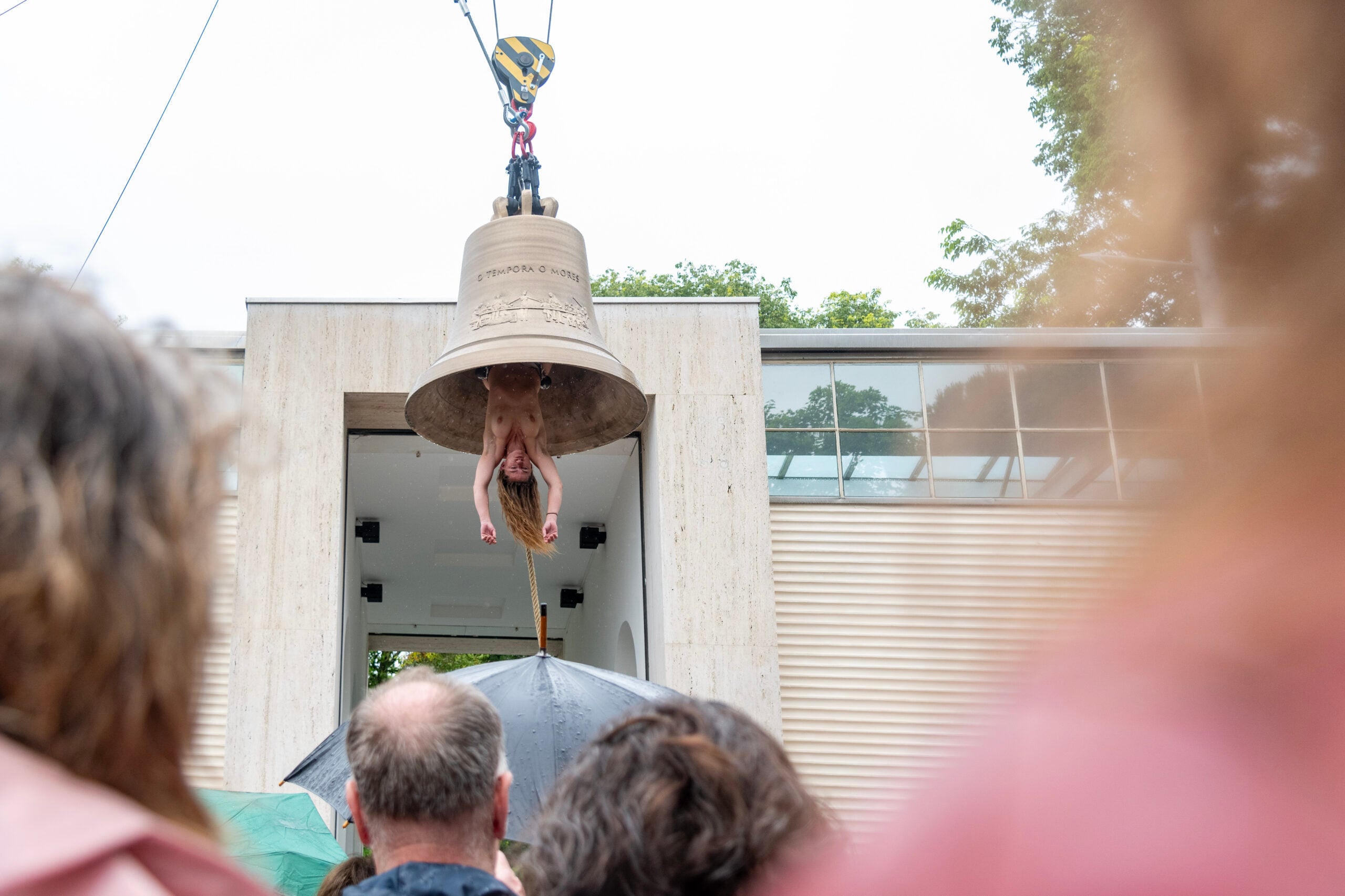
The 2026 Venice Biennale opened with 99 participating countries, including first-timers Somalia and Qatar, under the shadow of curator Koyo Kouoh's death. Her planned theme of "enhancement" and the main show "In Minor Keys" were disrupted by political protests: Pussy Riot objected to Russia's inclusion, and a strike against Israel's participation forced several national pavilions (UK, Austria, France) to close. Key takeaways include pervasive female nudity across pavilions, debates over Russia's presence, criticism of the US pavilion's lackluster art, maritime themes dominating several shows, and the rise of olfactory art.

A Time of Transition

During the preview week of the 61st Venice Biennale, escalating protests targeted the national pavilions of Israel and Russia, with demonstrations by Pussy Riot, ANGA (Art Not Genocide Alliance), and Baltic pavilions. A major protest on May 8 drew over 3,000 people in solidarity with Palestine, and 27 national pavilions—including Austria, the Netherlands, France, and Japan—staged a strike, the first at the Biennale since 1968. The Golden Lion jury resigned after declaring they would not consider countries under ICC investigation (Israel and Russia), and the Biennale administration replaced the prize with a visitors' award, from which half the artists in the main exhibition have withdrawn.

We visited the 2026 Venice Art Biennale: the exhibitions and pavilions you shouldn’t miss

The 2026 Venice Art Biennale has opened across the Giardini, Arsenale, and venues throughout the city, with geopolitics, climate collapse, and national identities dominating the exhibitions. Notable pavilions include Austria's "Seaworld Venice" by Florentina Holzinger, the Czech and Slovak Pavilion's "Il Silenzio della Talpa" by Jakub Jansa and Selmeci Kocka Jusko, India's "Geographies of Distance: remembering home" featuring multiple artists, and the Taiwan Pavilion's "Screen Melancholy" by Li Yi-Fan. The Russian Pavilion has become a focal point of controversy, with guards and empty beer bottles outside, and the Pussy Riot collective staging a protest nearby.

A Brief History of Protest at the Venice Biennale

The article provides a historical overview of protest actions that have taken place at the Venice Biennale, tracing key moments of political and social dissent within the prestigious international art exhibition. It highlights instances where artists, activists, and participating nations have used the Biennale as a platform to challenge authority, address censorship, and critique global issues, from the 1968 student protests to more recent controversies involving national pavilions and institutional policies.

Previews: 61st Venice Biennale: In Minor Keys

The 61st Venice Biennale, titled "In Minor Keys" and curated by the late Koyo Kouoh, opens amid global turmoil and internal controversy. Kouoh, who passed away in May 2025, conceived the exhibition around the metaphor of a "creole garden," emphasizing deep affinities between 111 artists from diverse locations such as Dakar, Beirut, and Salvador. The Biennale is overshadowed by recent geopolitical events, including US-Israeli airstrikes on Iran, and faces protests: over 70 participating artists signed an open letter opposing the participation of Israel, Russia, and the US, while the Australian pavilion saw the reinstatement of Khaled Sabsabi after being dropped, and South Africa withdrew its official pavilion over Gabrielle Goliath's femicide project, which she will still present independently.

Review: The Good, The Bad and The Venice Biennale

The article reviews the 2024 Venice Biennale, focusing on controversies over Russia's and Israel's participation. Protests erupted during opening week, leading the EU to cut funding and the International Jury to resign. As a result, awards like the Golden Lion and Silver Lion will be decided by public vote, with many pavilions and artists withdrawing in protest. The main exhibition, curated under the theme 'Minor Keys,' features standout works by Alfredo Jaar and Carrie Schneider, alongside national pavilions like Austria's provocative entry by Florentina Holzinger.

Art and authoritarianism in Auckland

Auckland Art Gallery is presenting 'Forever Tomorrow: Chinese Art Now,' a major survey of Chinese contemporary art featuring 67 works by 42 artists, running from May 2 to August 23, 2026. The exhibition includes Xiao Lu's iconic 1989 work 'Dialogue,' which she famously shot with a gun hours after its opening, an act later linked to the Tiananmen Square protests. Xiao Lu comments on the political resonance of the show in New Zealand amid global shifts in democracy and US-centric world order.

In an Age of Image Overload, AIPAD’s The Photography Show Reminds Us What a Photograph Can Do

The 2026 Photography Show, organized by AIPAD, opened to VIPs on April 22 at the Park Avenue Armory with record attendance and strong early sales. Featuring 80 domestic and international galleries, the fair showcased works ranging from early photographic experiments to contemporary digital and installation-based practices, with notable acquisitions by the Museum of the City of New York. AIPAD executive director Lydia Melamed Johnson reported a broad demographic of collectors, from established connoisseurs to first-time buyers.

Met Gala Memes That Ate the Rich and Left No Crumbs

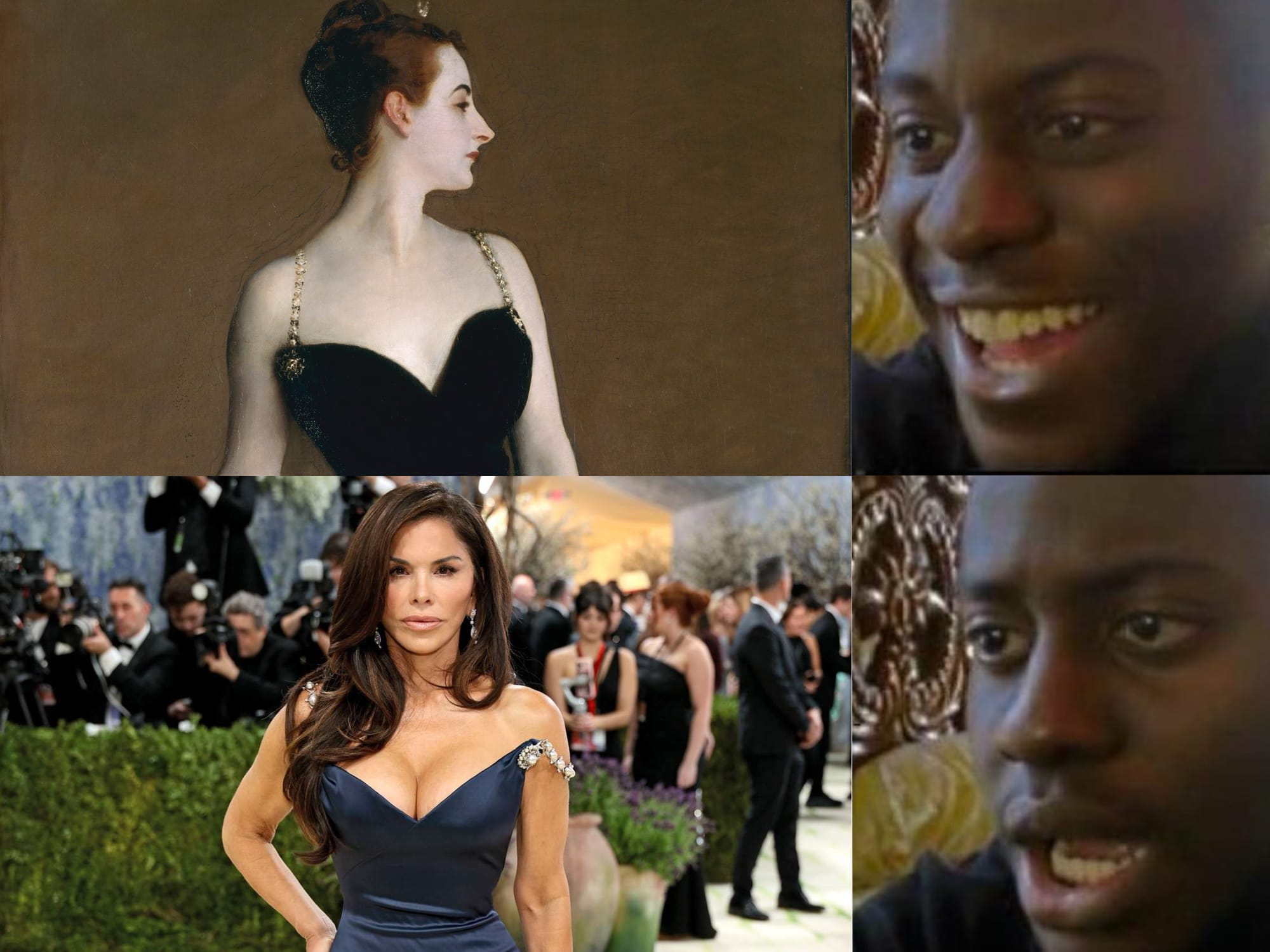
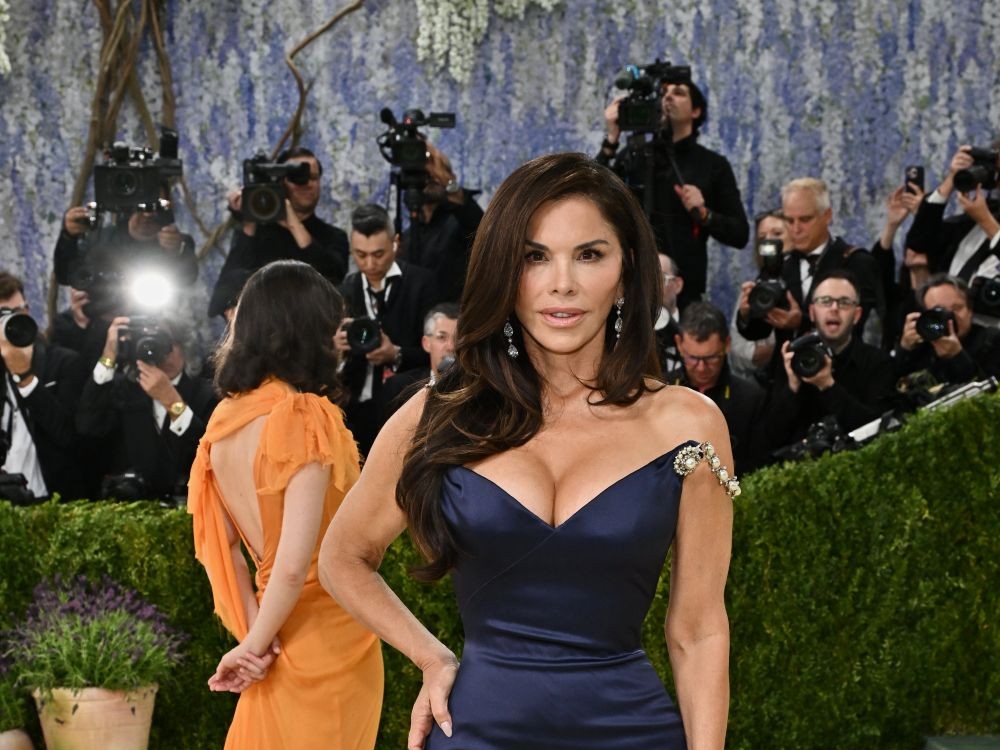
The article covers the 2026 Met Gala, sponsored by Jeff and Lauren Sánchez Bezos, and the intense online backlash it generated. Despite a dress code of "Fashion is Art," celebrities faced merciless mockery on social media for their looks, with particular scorn directed at Lauren Sánchez Bezos's Schiaparelli gown inspired by John Singer Sargent's "Madame X." The criticism was amplified by weeks-long protests against Amazon's labor practices and Bezos's involvement, as well as the museum's own unionized employees speaking out. The piece compiles the most inventive and cutting memes from X (formerly Twitter), targeting everything from fashion fails to political hypocrisy.

The Carnegie International Makes Its Mark

The 59th Carnegie International opens in Pittsburgh, featuring 61 artists from around the world in the oldest survey of its kind in the United States. Critic Ed Simon reviews the exhibition, noting it captures the excitement of earlier editions while providing vital commentary on authoritarianism and militarism. In other news, activists protested Jeff Bezos's co-chair role at the Met Gala with a costumed action and guerrilla projections on his penthouse; Iran withdrew from its national pavilion at the Venice Biennale; MoMA PS1 announced the first US survey of Mexican artist Teresa Margolles; and Hakim Bishara reflects on MoMA's Marcel Duchamp exhibition.

Rollicking Protest Against Bezos's Met Gala Erupts in Manhattan

On May 4, 2026, a small but spirited protest organized by the advocacy group Rise and Resist erupted near the Metropolitan Museum of Art during the Met Gala. Dozens of costumed demonstrators gathered on a makeshift "Resistance Runway" to denounce billionaire Jeff Bezos, who co-chaired the event with his wife Lauren Sánchez Bezos. Participants held signs addressing trans rights, fascism, and wealth inequality, and danced to ABBA's "Money, Money, Money." The protest highlighted Bezos's role as co-chair, with activists criticizing his company Amazon's profits from immigration crackdowns and layoffs at the Washington Post. Bezos reportedly did not attend the gala, while his wife walked the red carpet alone.

How Tech Billionaires Turn Couture into Content

Wie Tech-Milliardäre Couture zu Content machen

The Met Gala, long considered the premier event for fashion and cultural influence, has become increasingly dominated by tech billionaires. This year, Jeff Bezos and Lauren Sánchez Bezos purchased their role as co-hosts, sparking protests in New York and raising questions about whether money alone now buys entry into the highest echelons of fashion. Individual tickets cost $10,000 and a table $350,000, with sponsors including OpenAI, Snapchat, and Meta. The event, organized by Anna Wintour to raise funds for the Costume Institute at the Metropolitan Museum of Art, raised $31 million last year but has transformed from a benefit into a spectacle optimized for viral moments and algorithmic appeal.

La Biennale de Venise s’ouvre dans un climat houleux

The 61st Venice Biennale opened amid intense controversy after its president, Pietrangelo Buttafuoco, announced the return of the Russian pavilion, which had been absent since the start of the Ukraine war. The European Commission suspended its €2 million subsidy for the 2028 edition, and the entire Biennale jury resigned on April 30. Buttafuoco later declared the Russian pavilion would remain closed, but protests erupted during the pre-opening days (May 6–8), drawing 28,000 professionals. Pussy Riot members, Femen activists, and the Free Nations League staged demonstrations, while the Israeli pavilion remained open despite a letter signed by nearly 200 artists calling for its exclusion.

The art of politics: how global conflicts are playing out in this year's Venice Biennale

Israel is making a controversial return to the 2025 Venice Art Biennale after its pavilion was locked in 2024 with a note demanding a ceasefire in Gaza. The artist representing Israel, Belu-Simion Fainaru, will present his project "Rose of Nothingness" in the Arsenale, while Russia also returns to the Biennale after its Giardini pavilion was reassigned to Bolivia in 2024. The Art Not Genocide Alliance (ANGA) has renewed calls for a boycott and is organizing strike action to disrupt the event, accusing Israel of genocide.

There Has Never Been an Apolitical Venice Biennale

The Venice Biennale, with its national pavilion structure, has always been a platform for political expression and soft power, a reality evident from its early 20th-century origins. Contemporary critic Arturo Lancellotti's 1909 review of the German and British pavilions was steeped in geopolitical context, revealing how national artistic displays were interpreted through the lens of imperial power and military alliances.

Selfie-Friendly Pedro Reyes Sculpture Sparks Controversy at LACMA

Nearly eighty Mexican cultural figures have signed an open letter condemning the installation of Pedro Reyes's sculpture 'Tlali' (2026) in the plaza of LACMA's new David Geffen Galleries. The work, described as a selfie-friendly monolithic face inspired by Olmec art, closely resembles a 2021 proposal for a Mexico City sculpture titled 'Tlalli' that was abandoned after protests from hundreds of cultural workers. Critics argue that Reyes, a male artist who does not identify as Indigenous, should not represent Indigenous womanhood, and that the new work perpetuates colonial stereotypes and nationalistic aesthetics. LACMA has defended the piece, claiming it is entirely different in purpose and meaning, while Reyes has not commented.

At the Venice Biennale I saw anger at Russia and Israel – and its leadership pretending everything was fine | Charlotte Higgins

At the 2024 Venice Biennale, the Russian pavilion returned with festive performances and prosecco deliveries, drawing sharp criticism from observers who saw it as a propaganda effort to distract from Russia's war in Ukraine. Meanwhile, Ukraine's Kramatorsk was bombed, and protests erupted, including a Pussy Riot intervention. Biennale president Pietrangelo Buttafuoco defended Russia's and Israel's participation, rejecting preemptive bans despite open letters and appeals. European Commission investigated potential sanctions breaches, and culture ministers from Ukraine, Poland, Estonia, and Baltic states boycotted or condemned the biennale's stance, accusing it of yielding to the aggressor.

Artist Debuts and Inspired Duos Define the Can’t-Miss Booths at Independent

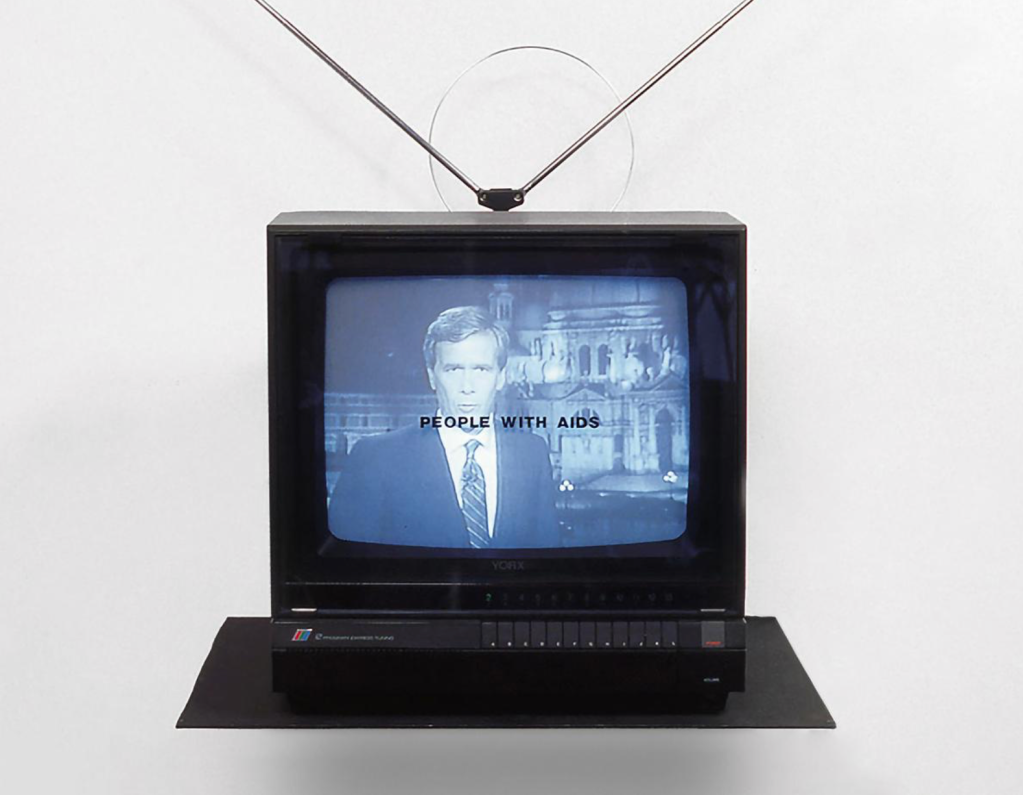
The article highlights standout booths at the Independent Art Fair, newly relocated to Pier 36 in Manhattan's Lower East Side. With 76 exhibitors, 26 of whom are presenting an artist's New York debut, the fair features notable presentations including Sprüth Magers' restaging of Gretchen Bender's 'TV Text & Image (PEOPLE WITH AIDS)', Omar Mismar's debut with abstract paintings on salvaged PVC banners referencing Lebanese protests, Carrie Schneider's large-format photographs from the Venice Biennale, and works by Kim Stolz and Raphael Egil at YveYANG. The fair runs through Sunday and aims for greater attendance and institutional influence.

The best and worst we saw at the Venice Art Biennale 2026. Artribune's hits and flops

Il meglio e il peggio che abbiamo visto alla Biennale d’Arte di Venezia 2026. Top e flop di Artribune

The 61st Venice Biennale, titled "In Minor Keys" and directed by Koyo Kouoh, opened amid significant turmoil: the death of a newly appointed curator, diplomatic tensions over the presence of Russia and Israel, political protests, and the unprecedented collective resignation of the jury, which led to the Golden Lions being awarded by public vote for the first time. Despite this chaotic backdrop, the exhibition—featuring a record 100 national pavilions—has been widely praised for avoiding moralistic pedagogy and instead embracing visual seduction, formal quality, and sensory joy while addressing themes of identity, memory, colonialism, ecological crisis, and violence. The article highlights top and flop moments from the opening week, including strong showings by Biennale president Pietrangelo Buttafuoco and a standout exhibition at Fondazione Prada.

Art and politics clash at Venice Biennale, as world conflicts upstage exhibition's opening

The 61st Venice Biennale, the world's most prestigious art exhibition, opens under unprecedented turmoil. For the first time, its vision was shaped by the late Cameroonian curator Koyo Kouoh, who centered artists from Africa and its diaspora. However, political conflicts over Russia and Israel have overshadowed the art. All five jurors resigned after the Italian culture minister investigated their decision to withhold prizes from Russia and Israel over alleged crimes against humanity. Protests erupted at the Russian pavilion, with Pussy Riot activists denouncing Russia's participation, while the Israeli pavilion artist threatened legal action over the jury's snub. The Biennale will proceed without a jury, with visitors voting for two awards, and the fate of the Golden Lion remains uncertain.