filter_list Showing 8917 results for "Form" close Clear
search
dashboard All 8917 museum exhibitions 4396article local 1389article news 795trending_up market 709article culture 565person people 360article policy 261rate_review review 177candle obituary 160gavel restitution 87article event 9article events 4article museum 2article school 1article architecture 1article satire 1
date_range Range Today This Week This Month All
Subscribe

Bidding battle for Matisse leads Sotheby’s $303.3m Modern art evening sale in New York

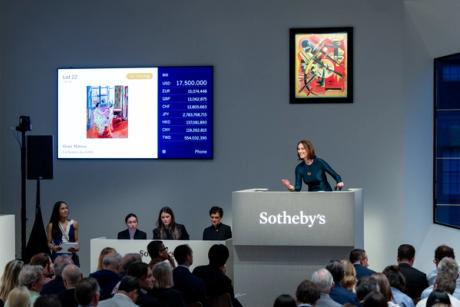
Sotheby’s Modern evening auction on 19 May in New York achieved $303.3m with fees, falling within its pre-sale estimate of $244m to $322.8m. The standout lot was Henri Matisse’s 1919 painting *La Chaise lorraine*, which sold for $48.4m after a ten-minute bidding battle, becoming the second most valuable Matisse painting at auction. Other highlights included Alberto Giacometti’s *La Clairière (Composition avec neuf figures)* at $23.1m, Pablo Picasso’s *Arlequin (Buste, 1909)* at $42.6m, and a Mark Rothko untitled work on paper at $9.27m. The sale also saw strong demand for works by female Surrealists Leonor Fini and Leonora Carrington, while a Rodin sculpture was passed and a Gottlieb painting was withdrawn.
This First Nations artist wants your racist 'Aboriginalia' – video

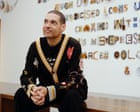
Indigenous artist Tony Albert has issued a public call for Australians to donate their 'Aboriginalia'—objects that depict Aboriginal people and designs but were created by non-Indigenous people, often as caricatures or exoticized souvenirs. Over 3,000 items from Albert's own collection, including tea towels, ashtrays, and playing cards, are now on display in his solo exhibition 'Not a Souvenir' at the Museum of Contemporary Art (MCA) in Sydney, opening on 21 May.

Grayson Perry’s life story to be told in ‘outrageous’ musical

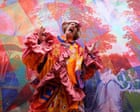
Grayson Perry’s life story is being adapted into a stage musical titled *Grayson the Musical*, co-created with Richard Thomas, composer of *Jerry Springer: The Opera*. The show follows Perry from his childhood in Chelmsford to his rise as a Turner Prize-winning ceramicist and tapestry-maker, featuring his iconic dresses and his teddy bear Alan Measles. Perry wrote the lyrics, with a book by screenwriter Sara-Ella Ozbek and direction by Sean Foley. A workshop production will run for five performances in July at Soho Theatre Walthamstow, the east London borough where Perry once kept a studio and which inspired his famous work *The Walthamstow Tapestry*.

Enter the unsettled space of Asian American abstraction

The Milton Resnick and Pat Passlof Foundation in New York is hosting the exhibition "How Asian Is It?", featuring 12 pioneering East Asian American abstractionists born between 1928 and 1955. Curated by Lilly Wei, the show includes works by Barbara Takenaga, Emily Cheng, Charles Yuen, and David Diao, among others. These artists navigated an art world where downplaying their Asian identities often felt necessary for survival, especially after the 1965 Immigration and Nationality Act reshaped US immigration policy. The exhibition explores how their abstraction—marked by attention to interval, pause, and what remains unsaid—reflects a disciplined negotiation with space rather than a shared style or manifesto.

Venice Biennale’s Russian Pavilion and Pussy Riot Spar Over Usage of Protest Footage

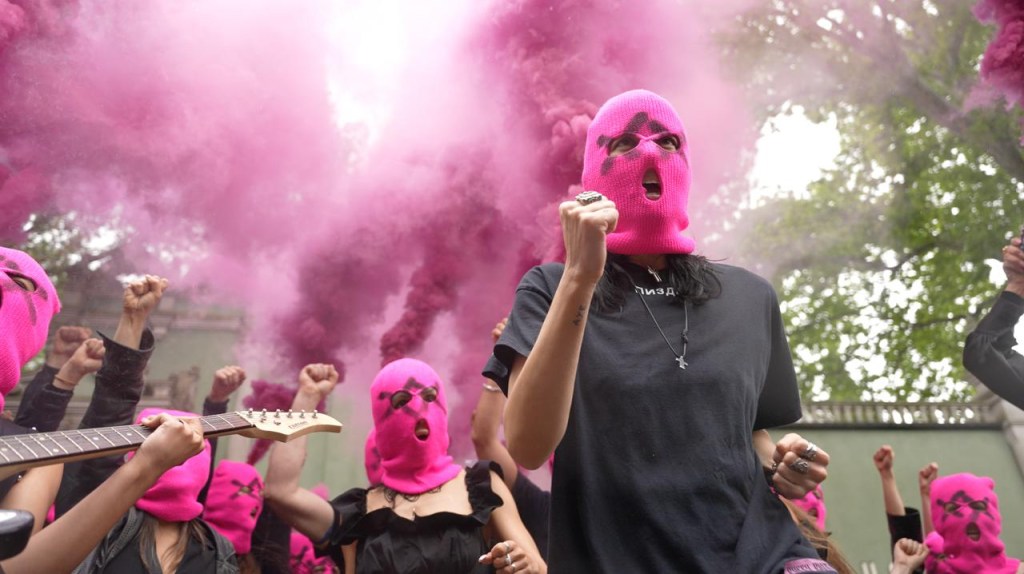
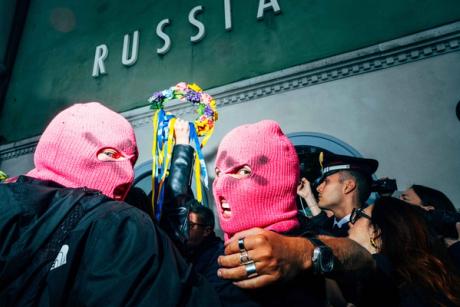
The Russian Pavilion at the 2026 Venice Biennale has become embroiled in a new controversy after accusing the anti-Putin art collective Pussy Riot of censorship. The pavilion posted on Instagram that Pussy Riot demanded the removal of footage featuring them from a documentary film about the pavilion's project, labeling the request as self-censorship. Pussy Riot responded sarcastically, questioning the pavilion's use of Instagram given Russia's 2022 ban of the platform. The dispute follows earlier protests at the pavilion's opening, led by Pussy Riot and FEMEN, against Russia's participation in the Biennale amid its ongoing invasion of Ukraine.

Basquiat’s Former Dealer on the Making of an Art World Icon

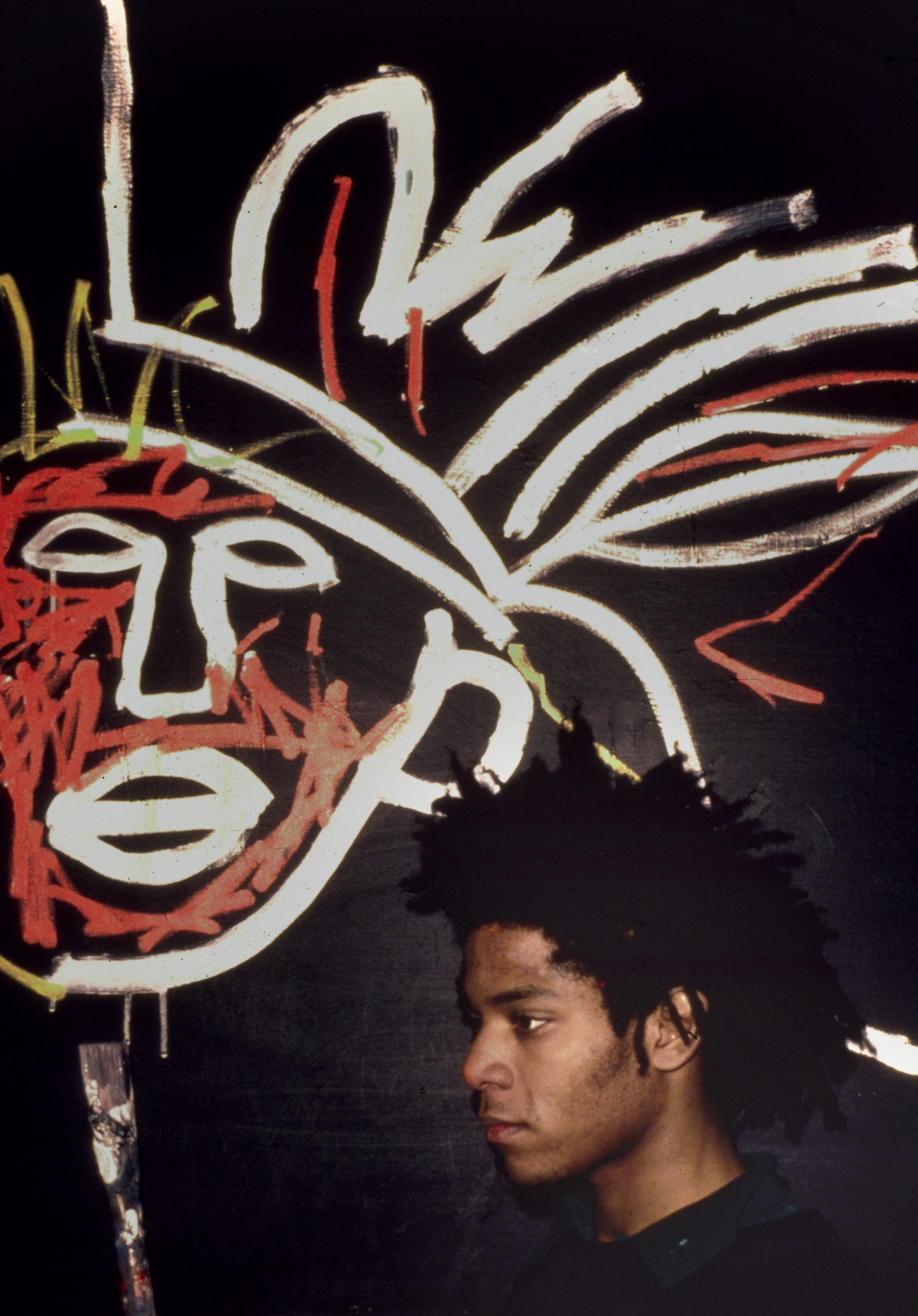
Bruno Bischofberger, who served as Jean-Michel Basquiat's exclusive worldwide dealer from 1982 until the artist's death in 1988, reflects on Basquiat's life and legacy in an excerpt from the forthcoming book *Basquiat: The World of Jean-Michel*, published by Assouline. Bischofberger contrasts Basquiat's raw, politically charged approach with Andy Warhol's detached, commercial style, and recounts personal memories of Basquiat's visits to Switzerland, where he absorbed everything from visual art to folk art and design.

Former Korean Prosecutor Convicted in Alleged Lee Ufan Painting Bribery Scheme

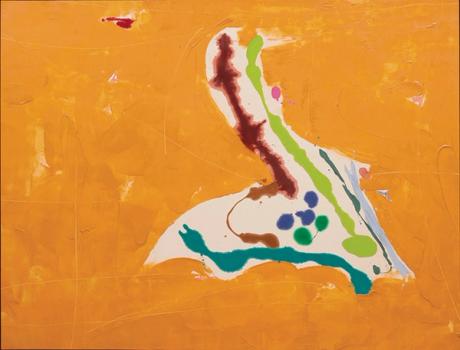
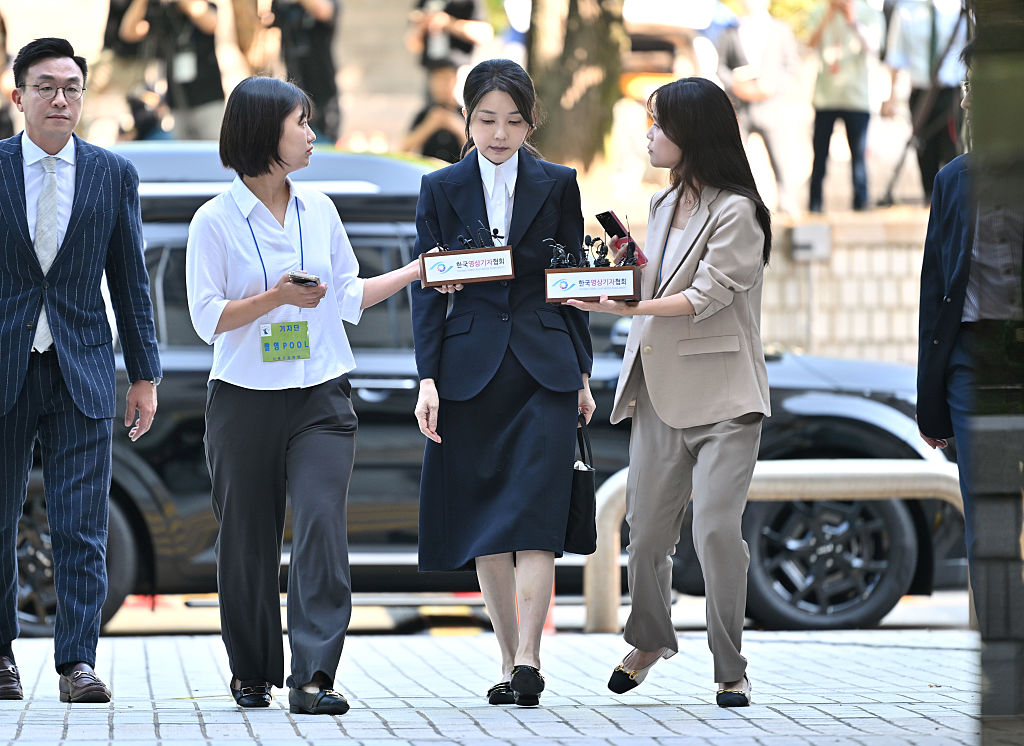
A former senior South Korean prosecutor, Kim Sang-min, has been convicted on appeal for allegedly gifting a painting by renowned artist Lee Ufan to former first lady Kim Keon Hee in exchange for political support ahead of the 2024 parliamentary elections. The Seoul High Court overturned an earlier acquittal, sentencing Kim to two years in prison (suspended for three years) for bribery, plus a separate suspended sentence for illegal political donations. The case took a strange turn when Kim's defense argued the artwork, titled *From Dots (No. 800298)* and valued at 140 million won ($95,500), was a forgery worth less than $700—a claim the court rejected after physically examining the piece and consulting experts.

At the Venice Biennale, Ukraine’s Pinchuk Art Centre finds fragile moments of joy amid loss

The Pinchuk Art Centre in Kyiv has transformed its Venice Biennale presentation from a glamorous celebration of young artists into a somber exhibition responding to the Russian invasion of Ukraine. This year's show, titled "Still Joy — From Ukraine into the World" (9 May-1 August) at the Palazzo Contarini-Polignac, features works by international artists like Tacita Dean and Julian Charriere alongside Ukrainian artists, as well as testimonials from soldiers collected by former marine Hlib Stryzhko. The exhibition explores how joy can persist amid trauma, with installations including pink scrolls bearing survivors' quotes, light box photographs of bombed interiors with rescued pot plants, and a sculpture of bells with displaced women's fingerprints.

Drained, Drowning, and Decay: The Best National Pavilions at the Venice Biennale

The 2026 Venice Biennale is defined by themes of ruin and decay, with standout national pavilions exploring bodily, infrastructural, and archaeological collapse. The Slovenian Pavilion features the Nonument Group repurposing materials from past Biennales into a ruin of a mosque for Bosnian Muslim soldiers from World War I. Syria presents its first national pavilion since the Civil War, with Sara Shamma invoking Palmyra, destroyed by ISIS. Germany's pavilion, titled "Ruin," features works by Henrike Naumann (who died in February) and Sung Tieu, questioning the pavilion's fascist architecture and nationalist residue. The Austrian Pavilion, curated by Florentina Holzinger, offers a visceral performance titled "Sea World." The Biennale is also marked by the abrupt resignation of its five-member jury, who refused to consider nations charged with crimes against humanity, leading to awards being chosen by public vote. Additionally, the main exhibition "In Minor Keys" was affected by the death of its curator, Koyo Kouoh.

Keith Haring Before the End of the World

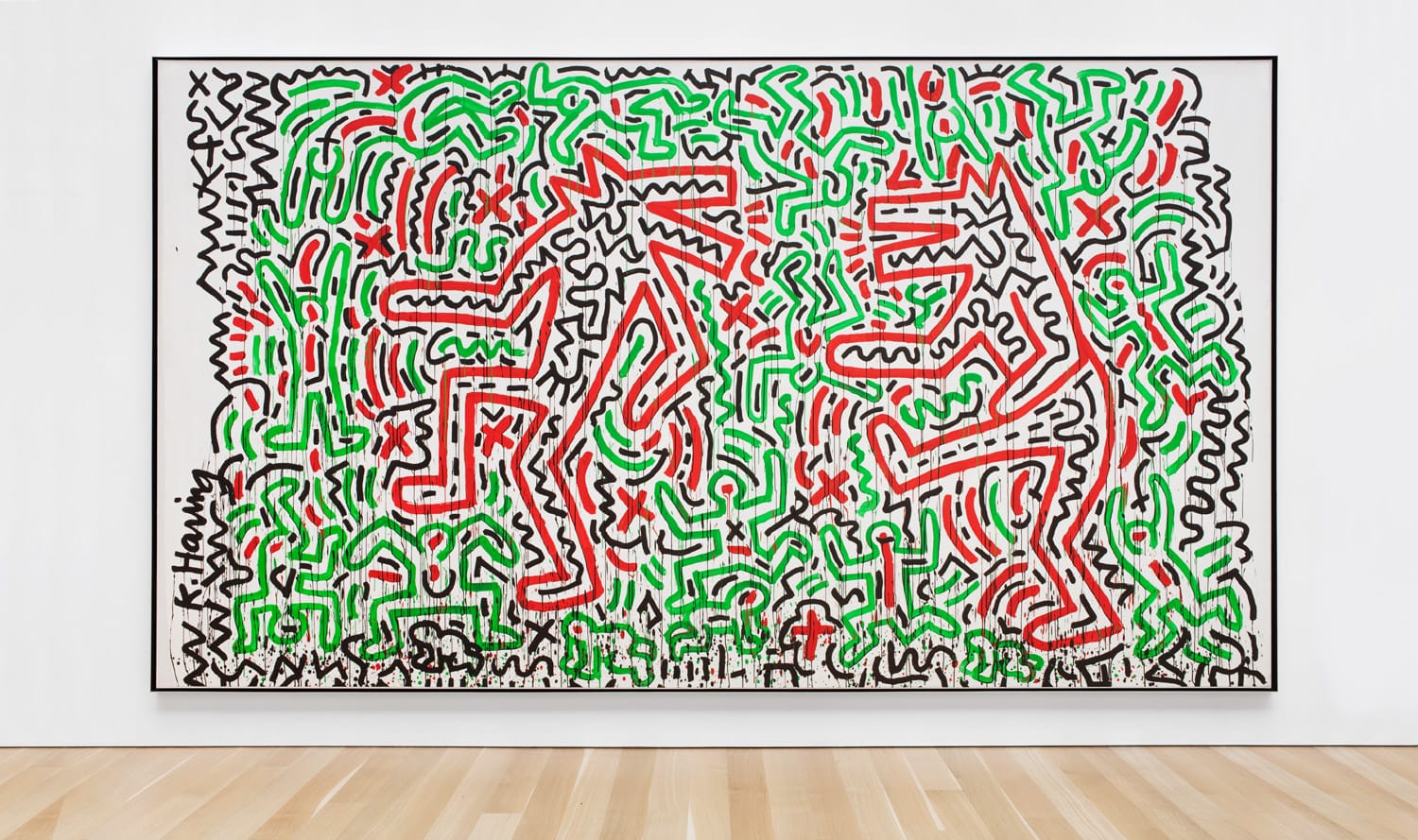
The article reviews Keith Haring's early work from 1980 to 1983, currently on view at the Brant Foundation in New York. The author reflects on initially dismissing Haring's graffiti-inspired style as trite and playful, but now sees darker, prophetic themes in pieces featuring apocalyptic imagery, UFOs, nuclear power, and mindless obedience to higher powers. The exhibition, curated by Dieter Buchhart and Anna Karina Hofbauer, runs through May 31.

Fondazione Sandretto Re Rebaudengo’s New Art Island Made a Sunny Splash in a Rainy Venice Vernissage Week

Patrizia Sandretto Re Rebaudengo, an ARTnews Top 200 collector, inaugurated a new art site on the island of San Giacomo in Venice’s Northern Lagoon during the rainy preview week of the Biennale. The island, purchased in 2018, features two Napoleonic-era powder magazines transformed into exhibition spaces: one hosting the group show “Don’t have hope, be hope!” from the Sandretto Re Rebaudengo Collection, and the other presenting “Fanfare/Lament,” a solo exhibition by Matt Copson curated by Hans Ulrich Obrist. The site also includes permanent installations by artists such as Claire Fontaine, Mario Garcia Torres, Hugh Hayden, Goshka Macuga, Pamela Rosenkranz, and Thomas Schütte, and will serve as a venue for exhibitions, performances, and residencies.

An Unprecedented 24-Hour Strike Could Upend the Venice Biennale

An unprecedented 24-hour strike is set to interrupt the Venice Biennale's opening week on Friday, May 8, in protest of Israel's participation in the global art event. The action, organized by the activist group Art Not Genocide Alliance (ANGA), follows a letter signed by over 230 Biennale participants demanding Israel's exclusion. The strike has exposed divisions among participants, with some artists and pavilion teams weighing solidarity against the rare opportunity to platform their own political messages. The Slovenian pavilion, represented by Nika Grabar of the Nonument Group, has committed to the strike, while others like Ecuador's Tawna Collective remain undecided, balancing protest with their mission to highlight ecological crises in the Amazon.

Arch Hades Turns a Venetian Palazzo Into an Emotional Landscape

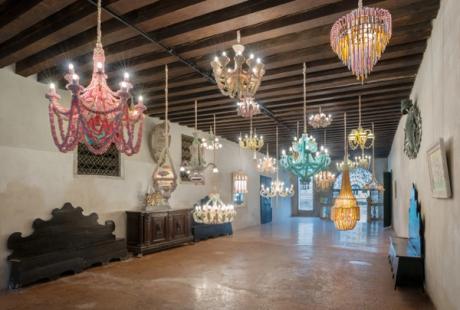
British artist Arch Hades has transformed the Scoletta Battioro e Tiraoro di Venezia, a historic palazzo on Venice's Grand Canal, into an immersive solo exhibition titled “Arch Hades: Return | Ritorno,” timed to the 61st Venice Biennale. The show features site-specific paintings, sculptures, and a soundscape, anchored by the monumental 22-panel painting *Return* (2025), which draws on Greco-Roman sculpture, Symbolism, Surrealism, and Romanticism, and echoes Gustav Klimt's lost “Faculty Paintings.” New works from Hades's “Confessions” series and the mirrored chrome piece *Sphinx* (2026) further explore themes of memory, connection, and existentialism.

Parasol Unit returns with a showcase of women from Central Asia and beyond

Parasol Unit, the London non-profit exhibition space that closed in 2020 after 16 years, has relaunched with a new exhibition titled "Turandot: To the Daughters of the East" as an official collateral event of the Venice Biennale. Held at the historic Palazzo Franchetti, the show features 11 female artists from Central Asia and surrounding regions, curated by founder Ziba Ardalan. The exhibition spans video, installation, sculpture, painting, textile, and sound works by artists including Lida Abdul, Huma Bhabha, Mona Hatoum, and Tala Madani, and runs from 9 May to 31 October.

The Biennale Isn’t a Court. Tell That to the Protesters.

Pietrangelo Buttafuoco, president of the Venice Biennale, defended the decision to allow Russia to reopen its pavilion for the first time since its 2022 invasion of Ukraine, stating that the Biennale is "not a court; it is a garden of peace." The move has sparked widespread backlash, including threats to pull €2.3 million in EU funding. Protests have erupted on the ground, with Pussy Riot and FEMEN staging a theatrical demonstration outside the Russian Pavilion, setting off smoke flares and chanting slogans. Separately, around 60 artists performed a "Solidarity Drone Chorus" to protest Israel's participation, and the Art Not Genocide Alliance has called for a 24-hour strike and rallies across Venice. The Russian Pavilion will be open only during press preview days due to EU sanctions, with video projections visible from outside for the rest of the Biennale's run.

Major protests take place at Venice Biennale previews

Major protests erupted during the preview days of the Venice Biennale, with multiple demonstrations targeting the Israeli and Russian pavilions. On Wednesday, the Art Not Genocide Alliance (ANGA) held a large protest outside the temporary Israeli pavilion in the Arsenale, attended by over 200 people calling for its closure. Separately, the Solidarity Drone Chorus performed a sound composition by Gazan artist Ahmed Muin, with 60 artists wearing T-shirts bearing names of artists from Gaza. Meanwhile, Pussy Riot and FEMEN protested Russian participation, forcing the Russian pavilion to shut its doors. These actions follow the resignation of the entire Golden Lion jury days before the opening, after they stated they would not consider pavilions from countries whose leaders are charged with crimes against humanity by the ICC—widely seen as a reference to Russia and Israel.

In Protest of Israeli Pavilion, Activists and Unions Plan Strike on Venice Biennale’s Opening Day

The Art Not Genocide Alliance (ANGA) has announced a 24-hour strike and rally on May 8, the day before the 2026 Venice Biennale opens to the public, in protest of the Israeli Pavilion. ANGA, formed in opposition to Israel's inclusion in the 2024 Biennale, refers to the current Israeli presentation—featuring Haifa-based artist Belu-Simion Fainaru—as the "Genocide Pavilion." Over 200 artists, curators, and culture workers have signed an open letter demanding Israel's exclusion, and a separate action called Solidarity Drone Chorus involved 60 artists. ANGA is collaborating with local labor and culture organizations including Biennalocene, Vogliamo Tutt'altro, S.a.L.E. Docks, and Mi Riconosci.

The Price Points Powering the Art Market

The article, part of the Artnet Intelligence Report: Year Ahead 2026, analyzes art market performance by price bracket in 2025. The $1 million-to-$10 million range was the strongest segment, with sales totaling $3.5 billion—a 20.8% increase from 2024. Sales above $10 million rose 36.1% to $2.3 billion, boosted by high-priced masterpieces at New York's November auctions. The $100,000-to-$1 million bracket saw $3.2 billion in sales, up 6%. Meanwhile, works under $10,000 and in the $10,000-to-$100,000 range grew less than 1%, indicating cautious buyer behavior.

Pleasure, parody and propaganda: rethinking the art of illustration in a new history of the genre

D.B. Dowd's new book "Reading Pictures" offers a sweeping 400-page history of illustration, tracing the genre from the Diamond Sutra frontispiece in Tang China (AD868) to Molly Crabapple's Gaza reports in 2015. The book examines key works such as Jules Chéret's 1891 poster for the Alcazar d'Été Club, Stuart Davis's caustic covers for The Masses, and Duong Ngoc Canh's Vietnamese propaganda poster, arguing that illustrations are meant to be "read" rather than admired like museum paintings.

‘She had a fresh, informed eye’: mural depicting late Venice Biennale curator Koyo Kouoh displayed in lagoon city

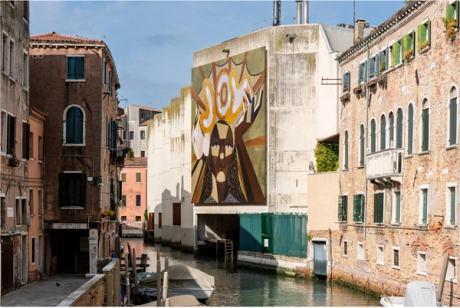
A mural honoring Koyo Kouoh, the late curator of the 2025 Venice Biennale, has been unveiled in Venice. Created by US artist Derrick Adams, the collage titled "Heavy is the head that wears the crown" adorns the facade of the Palazzetto dello sport Giobatta Gianquinto near the Arsenale. Kouoh died on 10 May 2025 at age 57 after a cancer diagnosis. The tribute was organized by curator Francesco Bonami, who had invited Kouoh to join the jury for the 50th Venice Biennale in 2003.

How the adoption of canvas in Venice changed the way artists painted

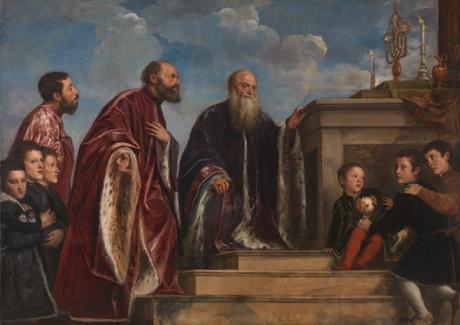
Art historian Cleo Nisse has published a new book, *Venetian Canvas and the Transformation of Painting*, examining how 16th-century Venetian painters such as Titian, Veronese, and Tintoretto pioneered the use of canvas as a painting support. Nisse reveals that canvas was not a uniform material—artists experimented with different weaves, including tabby and herringbone patterns, and even repurposed sailcloth and tablecloth-quality fabrics to achieve specific visual effects. The book argues that canvas was already familiar in the late Middle Ages for banners and alternatives to tapestry, and that Vittore Carpaccio was the first master of the medium, varying canvas types for expressive purposes in his *Legend of St Ursula* series.

BBC ‘Buried’ Footage of Banksy at NYC Mural Site, Former Reporter Claims

Former BBC New York correspondent Nick Bryant claims the BBC suppressed footage he captured of Banksy at a mural site in New York City in March 2018. In a Substack post, Bryant recounts being tipped off by Banksy's PR team about a new artwork at the Houston Bowery Wall, where he and his cameraman filmed the artist—described as a middle-aged man in a black beanie and grey coat—fleeing the scene with fresh paint on his fingers. Despite believing he had a world exclusive, Bryant says BBC editors in London decided not to air the footage, citing concerns about unmasking the artist and preserving the mystery for audiences, including a senior colleague's daughter who compared revealing Banksy's identity to telling children there is no Santa Claus.

‘We are complicit’: Austrian artist Florentina Holzinger’s immersive Venice Biennale pavilion brings apocalypse to the city

Austrian artist Florentina Holzinger has created 'Seaworld Venice,' an immersive and confrontational installation for the Austrian Pavilion at the 2024 Venice Biennale. The work explores climate change, technology, and a dystopian flooded future, drawing comparisons to the 1995 film 'Waterworld'—though neither Holzinger nor curator Nora-Swantje Almes had seen it. Known for extreme performance art involving nudity, blood, live piercing, and heavy machinery, Holzinger's previous works have caused audience members to faint or require medical treatment. The pavilion marks a significant platform for her radical, hybrid practice that blends theatre, dance, opera, and performance art.

Seen a ghost? The eeriest images from Fotografia Europea – in pictures

Fotografia Europea, the international photography festival in Reggio Emilia, Italy, has opened with 20 exhibitions and related events under the theme 'ghosts of the moment'. The festival features works by artists including Tania Franco Klein, Giulia Vanelli, Felipe Romero Beltrán, and Salvatore Vitale, exploring themes of memory, migration, identity, and the unseen forces shaping contemporary life. The festival runs until 14 June 2026.

Women behind the lens: ‘After state massacres, I began burning the prints as an act of mourning’

Iranian-Canadian visual journalist and artist Parisa Azadi describes her process of creating protest photographs during the 2022 Iranian revolution from exile in Dubai. Unable to return to Iran, she used open-source protest footage from social media, isolating frames and printing them with a Fujifilm instax camera to transform ephemeral digital images into physical objects. In January 2026, after state massacres and executions, she began burning these prints as an act of mourning, scarring their surfaces to echo the violence they depict.

What It Takes to Build the Venice Biennale

Three weeks before the Venice Biennale opens on May 5, the city remains a construction site, with the Giardini closed and parts of the Arsenale requiring special access. Artist Faustin Linyekula rehearses his performance *The Galeazze Project* in a 16th-century roofless complex, working with the existing gravel, natural light, and lagoon acoustics rather than imposing a structure. Geopolitical conflicts, supply chain disruptions, and the sudden resignation of the Biennale’s international jury via Instagram add pressure to the already challenging logistics of mounting the global exhibition.

‘It has become a symbol of hope’: the epic journey of Ukraine’s origami deer to the Venice biennale

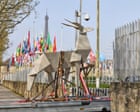
Ukrainian artist Zhanna Kadyrova's concrete origami deer sculpture, originally installed in Pokrovsk in 2018, has been evacuated from the war-torn Donetsk region and transported across Europe to become the centerpiece of Ukraine's national pavilion at the 2026 Venice Biennale. The sculpture, which replaced a Soviet fighter-bomber monument in a local park, was rescued in August 2024 by co-curator Leonid Marushchak amid intensifying Russian attacks, with the help of city authorities and museum staff.

After His Untimely Death, Rutherford Chang’s Survey Rewrites What a Square Can Do

Rutherford Chang, who died last year at age 45, is the subject of a posthumous survey at UCCA Center for Contemporary Art Beijing titled "Hundreds and Thousands." The exhibition centers on Chang's socially engaged works that explore value, circulation, and systems through the deceptively simple form of the square. His best-known piece, "We Buy White Albums" (2013–25), involved amassing roughly one percent of the first pressing of the Beatles' "White Album," highlighting how objects accrue personal and economic worth through use and history. Other works include melting 10,000 copper pennies into a cube and assembling Wall Street Journal portraits from 2008 into a grid that captures a year of crisis and change.

Lucas Museum Aims to Tell the History of Storytelling via 1,200 Objects

The Lucas Museum of Narrative Art in Los Angeles has announced details of its inaugural exhibitions, set to open on September 22, 2026. Founded by filmmaker George Lucas and his wife Mellody Hobson, the museum will feature over 1,200 objects across 30 galleries, tracing the history of visual storytelling from ancient sculptures to Renaissance paintings, photography, comics, and manga. The collection draws from Lucas's personal trove of more than 40,000 works of illustrator art, including pieces by N.C. Wyeth, Norman Rockwell, Frank Frazetta, Beatrix Potter, and Jack Kirby, as well as large-scale murals and photography by artists like Judy Baca and Dorothea Lange. The museum, designed by Ma Yansong of MAD Architects, also includes archives of Lucas's film sets, props, and costumes.

‘Sensitive, sexy and surreal’: Japan’s Kyotographie festival

Kyotographie, Japan's leading international photography festival, opened its 2025 edition with the theme 'Edge,' featuring 14 exhibitions across Kyoto. The festival includes a major retrospective of Daido Moriyama, the 86-year-old pioneer of the 'are-bure-boke' aesthetic, showcasing over 200 images, 400 magazines, and 100 books. Also featured are British artist Linder Sterling, known for her punk-era feminist photomontages and album art for Buzzcocks, and Kenyan photographer Thandiwe Muriu, this year's African artist in residence, who uses patterned kitenge fabric to explore identity and female empowerment.