filter_list Showing 1511 results for "Log" close Clear
search
dashboard All 1511 museum exhibitions 1054article culture 96article local 94article news 93person people 43rate_review review 36trending_up market 31candle obituary 23article policy 21gavel restitution 16article event 3article events 1
date_range Range Today This Week This Month All
Subscribe

Drained, Drowning, and Decay: The Best National Pavilions at the Venice Biennale

The 2026 Venice Biennale is defined by themes of ruin and decay, with standout national pavilions exploring bodily, infrastructural, and archaeological collapse. The Slovenian Pavilion features the Nonument Group repurposing materials from past Biennales into a ruin of a mosque for Bosnian Muslim soldiers from World War I. Syria presents its first national pavilion since the Civil War, with Sara Shamma invoking Palmyra, destroyed by ISIS. Germany's pavilion, titled "Ruin," features works by Henrike Naumann (who died in February) and Sung Tieu, questioning the pavilion's fascist architecture and nationalist residue. The Austrian Pavilion, curated by Florentina Holzinger, offers a visceral performance titled "Sea World." The Biennale is also marked by the abrupt resignation of its five-member jury, who refused to consider nations charged with crimes against humanity, leading to awards being chosen by public vote. Additionally, the main exhibition "In Minor Keys" was affected by the death of its curator, Koyo Kouoh.

Fondazione Sandretto Re Rebaudengo’s New Art Island Made a Sunny Splash in a Rainy Venice Vernissage Week

Patrizia Sandretto Re Rebaudengo, an ARTnews Top 200 collector, inaugurated a new art site on the island of San Giacomo in Venice’s Northern Lagoon during the rainy preview week of the Biennale. The island, purchased in 2018, features two Napoleonic-era powder magazines transformed into exhibition spaces: one hosting the group show “Don’t have hope, be hope!” from the Sandretto Re Rebaudengo Collection, and the other presenting “Fanfare/Lament,” a solo exhibition by Matt Copson curated by Hans Ulrich Obrist. The site also includes permanent installations by artists such as Claire Fontaine, Mario Garcia Torres, Hugh Hayden, Goshka Macuga, Pamela Rosenkranz, and Thomas Schütte, and will serve as a venue for exhibitions, performances, and residencies.

An Unprecedented 24-Hour Strike Could Upend the Venice Biennale

An unprecedented 24-hour strike is set to interrupt the Venice Biennale's opening week on Friday, May 8, in protest of Israel's participation in the global art event. The action, organized by the activist group Art Not Genocide Alliance (ANGA), follows a letter signed by over 230 Biennale participants demanding Israel's exclusion. The strike has exposed divisions among participants, with some artists and pavilion teams weighing solidarity against the rare opportunity to platform their own political messages. The Slovenian pavilion, represented by Nika Grabar of the Nonument Group, has committed to the strike, while others like Ecuador's Tawna Collective remain undecided, balancing protest with their mission to highlight ecological crises in the Amazon.

Arch Hades Turns a Venetian Palazzo Into an Emotional Landscape

British artist Arch Hades has transformed the Scoletta Battioro e Tiraoro di Venezia, a historic palazzo on Venice's Grand Canal, into an immersive solo exhibition titled “Arch Hades: Return | Ritorno,” timed to the 61st Venice Biennale. The show features site-specific paintings, sculptures, and a soundscape, anchored by the monumental 22-panel painting *Return* (2025), which draws on Greco-Roman sculpture, Symbolism, Surrealism, and Romanticism, and echoes Gustav Klimt's lost “Faculty Paintings.” New works from Hades's “Confessions” series and the mirrored chrome piece *Sphinx* (2026) further explore themes of memory, connection, and existentialism.

Parasol Unit returns with a showcase of women from Central Asia and beyond

Parasol Unit, the London non-profit exhibition space that closed in 2020 after 16 years, has relaunched with a new exhibition titled "Turandot: To the Daughters of the East" as an official collateral event of the Venice Biennale. Held at the historic Palazzo Franchetti, the show features 11 female artists from Central Asia and surrounding regions, curated by founder Ziba Ardalan. The exhibition spans video, installation, sculpture, painting, textile, and sound works by artists including Lida Abdul, Huma Bhabha, Mona Hatoum, and Tala Madani, and runs from 9 May to 31 October.

Venice Diary Day 2: “In Minor Keys” Is a Major Statement on Perseverance and Play

The article is a diary entry from the 2026 Venice Biennale, focusing on the exhibition "In Minor Keys" curated by the late Koyo Kouoh. The author describes an emotional experience, beginning with a poem by Refaat Alareer on the Arsenale wall, and highlights works by Guadalupe Maravilla, Alexa Kumiko Hatanaka, and others that address themes of perseverance, healing, and survival. Maravilla's sculptures reference a child kidnapped by ICE, while Hatanaka's linocuts explore bipolar disorder as an adaptive trait. The show also features artist-led collectives like Denniston Hill and fierce pussy, emphasizing institution-building and world-making.
First Impressions of a Venice Biennale Torn Apart by the Present

The 61st Venice Biennale, titled "In Minor Keys," opens amid turmoil: its curator Koyo Kouoh died of cancer during planning, and the festival jury resigned after a controversial statement about excluding Israel and Russia from prizes, replaced by a Eurovision-style people's choice award. The main exhibition, completed by a team of five collaborators using Kouoh's plans, features over 110 artists and collectives, with highlights including works by Big Chief Demond Melanchon, Tammy Nguyen, Guadalupe Maravilla, Ayrson Heráclito, and a section focused on Michael Armitage's Nairobi Contemporary Art Institute.

The Biennale Isn’t a Court. Tell That to the Protesters.

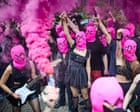
Pietrangelo Buttafuoco, president of the Venice Biennale, defended the decision to allow Russia to reopen its pavilion for the first time since its 2022 invasion of Ukraine, stating that the Biennale is "not a court; it is a garden of peace." The move has sparked widespread backlash, including threats to pull €2.3 million in EU funding. Protests have erupted on the ground, with Pussy Riot and FEMEN staging a theatrical demonstration outside the Russian Pavilion, setting off smoke flares and chanting slogans. Separately, around 60 artists performed a "Solidarity Drone Chorus" to protest Israel's participation, and the Art Not Genocide Alliance has called for a 24-hour strike and rallies across Venice. The Russian Pavilion will be open only during press preview days due to EU sanctions, with video projections visible from outside for the rest of the Biennale's run.

A Pavilion of Ruins: Germany Reconsiders Its Past in Venice

The German Pavilion at the 61st Venice Biennale features a dual presentation exploring the country's layered political history. Artist Sung Tieu has cloaked the pavilion's fascist-era facade with a mosaic reconstruction of a GDR housing estate for Vietnamese contract workers, where she lived as a child. Inside, the late Henrike Naumann's immersive installation 'The Home Front' uses furniture and design to stage a confrontation between East and West German domestic and political ideologies. Naumann died in February 2025 at age 41, but her fully realized concept was completed collaboratively by her partner and curator Kathleen Reinhardt.

David Nahmad maintains that his Modigliani was not looted by the Nazis

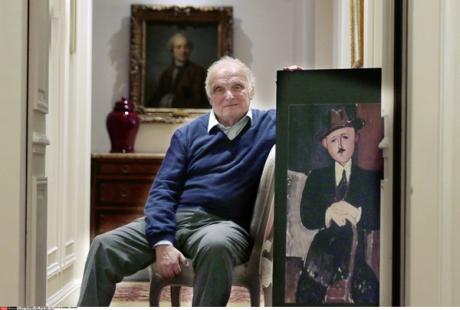
David Nahmad is continuing his legal battle to prove that his Modigliani painting, *Seated Man with a Cane* (1918), was not looted by the Nazis from the Jewish dealer Oscar Stettiner. Despite a recent New York ruling against him, Nahmad’s lawyers have filed a motion to review the case based on new eyewitness testimony. Two witnesses claim the painting they saw in the Van der Klip family—which bought the Nazi-looted work in 1944—is completely different from Nahmad’s painting, lacking a seated man or a cane. Nahmad’s legal team also cites a 1946 French bailiff report and a recent catalogue raisonné by Marc Restellini to argue that Mondex, the restitution firm working for Stettiner’s heirs, misidentified the work.

Nahmad Seeks to Reopen Modigliani Restitution Case With New Witnesses

David Nahmad's lawyers are asking a New York court to reconsider its April 3 decision in the restitution case over Amedeo Modigliani's *Seated Man with a Cane* (1918), which awarded the painting to the estate of dealer Oscar Stettiner. They cite new eyewitness testimony from Frédéric Allain, who recalls a different Modigliani—smaller, darker, and without a seated man or cane—hidden by the Van der Klip family in Paris during World War II, suggesting the wrong painting may have been the focus of the case. The filing also references a 1946 report describing the missing work as a self-portrait and a new catalogue raisonné by Marc Restellini that finds no link between the painting and Stettiner. Mondex, representing Stettiner's heirs, rejects the claims, asserting that *Seated Man with a Cane* bears Stettiner's name and was in the family's possession from 1944 to 1996.

‘We are complicit’: Austrian artist Florentina Holzinger’s immersive Venice Biennale pavilion brings apocalypse to the city

Austrian artist Florentina Holzinger has created 'Seaworld Venice,' an immersive and confrontational installation for the Austrian Pavilion at the 2024 Venice Biennale. The work explores climate change, technology, and a dystopian flooded future, drawing comparisons to the 1995 film 'Waterworld'—though neither Holzinger nor curator Nora-Swantje Almes had seen it. Known for extreme performance art involving nudity, blood, live piercing, and heavy machinery, Holzinger's previous works have caused audience members to faint or require medical treatment. The pavilion marks a significant platform for her radical, hybrid practice that blends theatre, dance, opera, and performance art.

What It Takes to Build the Venice Biennale

Three weeks before the Venice Biennale opens on May 5, the city remains a construction site, with the Giardini closed and parts of the Arsenale requiring special access. Artist Faustin Linyekula rehearses his performance *The Galeazze Project* in a 16th-century roofless complex, working with the existing gravel, natural light, and lagoon acoustics rather than imposing a structure. Geopolitical conflicts, supply chain disruptions, and the sudden resignation of the Biennale’s international jury via Instagram add pressure to the already challenging logistics of mounting the global exhibition.

Inside the Inaugural Edition of Art Cologne Palma Mallorca

The inaugural edition of Art Cologne Palma Mallorca took place from April 9–12, 2026, attracting 88 galleries from 20 countries and over 10,000 visitors to the Mediterranean island. The fair, held at the Palau de Congressos Convention Centre, reported strong sales and sold-out weekend days, with Artistic Director Daniel Hug praising the high level of engagement and positive response from both exhibitors and attendees. A second edition has already been scheduled for April 1–4, 2027.

Newsmakers: Nalini Malani Lets the Walls Speak with a New Installation in Venice

Nalini Malani's latest installation, *Of Woman Born*, opens at the Magazzini del Sale in Venice during the Venice Biennale. Commissioned by the Kiran Nadar Museum of Art, the work projects hand-drawn animations onto the crumbling brick walls of a 15th-century salt warehouse, creating a cave-like environment where images flicker like ancient cave paintings. The installation draws on tens of thousands of drawings and incorporates mythology, literature, and sound, with a central focus on the myth of Orestes to explore themes of violence, displacement, and gender politics. Malani has also extended her recurring 'Skipping Girl' figure across Venice via posters and public signage to guide viewers to the exhibition.

Final book in trilogy asks: What is the future of the art world?

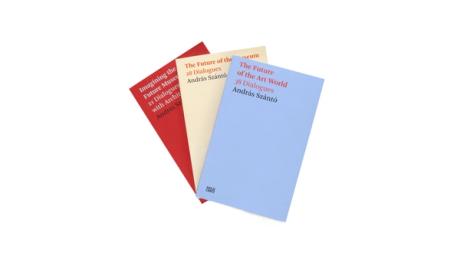
Cultural strategist András Szántó has published the third and final volume of his trilogy on the future of museums, titled *What Is the Future of the Art World?*. The book features dialogues with a wide range of art-world figures—including gallerists José Kuri and Atsuko Ninagawa, collectors Alain Servais and Sylvain Levy, artists William Kentridge and Holly Herndon & Mathew Dryhurst, curator Fatoş Üstek, network scientist Albert-László Barabási, former Art Basel director Marc Spiegler, and Sheikha Al-Mayassa Al Thani—who discuss topics such as the definition of the art world, its rules, and its future trajectory. Szántó notes that there is no consensus on whether the art world is still expanding or entering a phase of slowdown, with different regions moving on divergent paths.

The Art Trade Is Taking Calculated Risks With A.I.

The article examines how the art trade is cautiously experimenting with artificial intelligence, noting that while AI tools are being developed to attract newer collectors, the industry remains heavily reliant on trust and personal relationships that technology cannot replicate. It also reports on Fair Warning's new 'No Warning' sealed-bidding auction format, reflecting a rise in private auctions, and highlights a Sotheby's New York sale of the Jean and Terry de Gunzburg collection that set a U.S. record for design auctions at $96 million, led by a set of 15 mirrors by Claude Lalanne for Yves Saint Laurent that sold for $33.5 million.

How Art Firms Are—or Should Be—Using A.I. Right Now

Art firms are increasingly experimenting with artificial intelligence, but concrete use cases remain limited and industry-specific tools are still in their infancy. A new partnership between Bonhams and tech company ARTDAI aims to apply AI to market analytics, valuation, and specialist research, while companies like Artsy and Artnet are integrating AI capabilities into their platforms. Industry experts, including former Art Basel chief Marc Spiegler, note that the art market's small size has historically discouraged tech development, but AI now makes high-performance tools accessible to smaller businesses.

Vancouver Biennale names senior curator for 2027-29 edition

The Vancouver Biennale has appointed Marcello Dantas as senior curator for its 2027-29 edition. Dantas, a Brazilian curator and art director, has worked on major projects including co-curating Desert X AlUla in Saudi Arabia, curating an Es Devlin exhibition in São Paulo, and serving as art director at Sfer Ik in Tulum. He previously contributed to the Vancouver Biennale's 2013-15 edition with a Vik Muniz project. Dantas emphasizes collaboration with local First Nations and community groups, and plans to explore themes of belonging, displacement, and public art that is ephemeral and participatory.

What You Need to Know About the Venice Biennale’s Russian Pavilion Controversy

The Russian pavilion is set to return to the Venice Biennale for the first time since the 2022 invasion of Ukraine, presenting an exhibition titled 'The tree is rooted in the sky.' This has sparked significant controversy, with artists, curators, and politicians from Ukraine and several European nations calling for the pavilion's exclusion, citing the ongoing war and sanctions. The Biennale organizers have refused to remove Russia, stating they lack the authority to exclude a state recognized by Italy and emphasizing the event's role as a neutral space for cultural dialogue.

Has A.I. Solved the Mystery of This El Greco Painting?

New research using artificial intelligence has challenged the long-held belief that El Greco's altarpiece *The Baptism of Christ* was largely painted by his son and workshop assistants. A machine-learning model called Patch, developed by researchers at Western Reserve University, analyzed the painting's microscopic surface texture and found underlying connections suggesting El Greco himself painted the majority of the work, with only a small region at the bottom attributed to other hands.

‘It’s like a Ouija board – I listen to the painting’: the supernatural art of Sanya Kantarovsky

Russian-born, New York-based artist Sanya Kantarovsky presents his new exhibition "Basic Failure" at Venice's Institute of Sciences, Letters and Arts, timed to coincide with the Venice Biennale. The show features his signature dishevelled, otherworldly figures—including a pallid boy with a cigarette, a child spinning in innocence, and a glass bust of a young boy with a dead spider under its eye—that explore tension, alienation, and the supernatural. Kantarovsky describes his process as listening to the painting like a Ouija board, and the exhibition includes works that confound narrative expectations, such as a scruffy toy panda and a recreation of Antonello Gagini's 16th-century sculpture.

Close encounters: the new wave of women photographers – in pictures

The Saltzman-Leibovitz photography prize, founded in 2025 by Lisa Saltzman and Annie Leibovitz, announces its winners and runners-up for 2026. Bolivian photographer Marisol Mendez wins for her series 'MADRE,' which challenges patriarchal representations of women in Bolivia through portraits of matriarchs and references to the Inca moon goddess. Runner-up Miranda Barnes documents African American debutante cotillions in Detroit, while other featured photographers include Bettina Pittaluga and Cole Ndelu, whose works explore body diversity and the fusion of Zulu cosmology with Catholicism. The exhibition runs at Photo London, Olympia, 13–17 May 2026.

The glories of Francisco de Zurbarán’s paintings | Letters

Two letters to the editor respond to Charlotte Higgins's article on Francisco de Zurbarán. Paul McGilchrist critiques the physical inaccuracy of crucifixion depictions, including Zurbarán's *The Crucified Christ*, noting that most paintings fail to convey the true weight and distortion of a body suspended by nails. Jean Wilson highlights Zurbarán's series *Jacob and his 12 Sons* at Auckland Palace in Bishop Auckland, describing its history since 1756 and its connection to Bishop Trevor's support for Jewish rights.

Pussy Riot protest at Venice Biennale forces Russian pavilion to briefly close

On the second day of the Venice Biennale preview, the activist group Pussy Riot staged a chaotic protest at the Russian pavilion, forcing it to temporarily close. Wearing pink balaclavas and carrying flares, about 40 activists—including members of Femen—gathered outside the pavilion, shouting slogans like "Blood is Russia's Art" and attempting to enter before being pushed back by police. Founding member Nadya Tolokonnikova led the protest, condemning Europe for allowing Russian participation despite the war in Ukraine. Separately, the Art Not Genocide Alliance (Anga) demonstrated outside the Israeli pavilion, which was locked from inside, over Israel's war in Gaza.

The tiniest event can tear a hole. Sara MacKillop by Margaret Kross

Sara MacKillop's exhibition "The Cutaway View" at Good Weather in Chicago presents sculptures made from humble analog materials like blank wall calendars, empty shopping bags, and gift wrapping. The London-based artist alters these objects with minimal interventions—such as surgically cut holes in shopping bags to accommodate vinyl records—drawing attention to the ephemera and texture of retail culture. Her series "Calendar Houses" (2021–ongoing) uses archive boxes and wall calendars to create miniature modernist dwellings that critique systems of order and self-optimization.

When archaeology was dominated by men | Letters

A reader named Elke Bachler writes a letter to The Guardian challenging a sentence in a review of Thomas Laqueur's book *The Dog's Gaze*. The review described a prehistoric scene as showing "a boy and a dog" standing together in wonder before cave art. Bachler argues there is no evidence the child was a boy, noting that archaeology has historically been dominated by men who interpreted evidence through contemporary gender roles.

Art for art’s sake, but for people’s health too | Letter

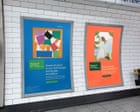
Art Fund director Jenny Waldman responds to a philosophical article about art's intrinsic value, arguing that while art should be enjoyed for its own sake, promoting its measurable health benefits can serve as a crucial entry point for new audiences. She cites the organization's National Art Pass adverts and recent research with King's College London, which demonstrated immediate physiological responses to viewing original art, as tools to invite people who might otherwise feel excluded from cultural institutions.

The Wonderful World that Almost Was by Andrew Durbin review – the queer artists who shaped New York cool

Andrew Durbin's new book, 'The Wonderful World that Almost Was,' is a double biography of painter and sculptor Paul Thek and photographer Peter Hujar. It chronicles their artistic maturation, their open and unapologetic gay relationship, and their central role in defining the 'cool' of the New York creative scene from the 1950s to the mid-1970s, before their deaths from AIDS.

South Korean ceramic artist Jongjin Park wins 2026 Loewe Foundation Craft Prize.

South Korean ceramic artist Jongjin Park has won the 2026 Loewe Foundation Craft Prize for his piece "Strata of Illusion" (2025), a partially-collapsed seat-like form made from paper and coated in porcelain slip. The award comes with a €50,000 ($58,700) prize, and Park's work will be exhibited alongside other shortlisted entries at the National Gallery Singapore, opening tomorrow and running through June 14.