filter_list Showing 44 results for "SEC" close Clear
dashboard All 44 museum exhibitions 18article news 11article culture 6trending_up market 3article local 2person people 1article policy 1gavel restitution 1rate_review review 1
date_range Range Today This Week This Month All
Subscribe

US Border Wall Construction Damages 1,000-Year-Old Indigenous Land Art in Arizona

Construction crews building a barrier between the United States and Mexico have damaged a 200-foot-long etching of a fish embedded in the land in Arizona, known as the Las Playas Intaglio, which is thought to be 1,000 years old. According to a report in the Washington Post, workers destroyed a 60-to-70-foot portion of the ancient Indigenous land art as part of President Donald Trump’s $46.5 billion border-wall project. Satellite imagery confirmed the destruction, showing bulldozer marks running through about a third of the fish formation. U.S. Customs and Border Protection acknowledged the incident, stating that a contractor inadvertently disturbed the cultural site on April 23, 2026, and that the remaining portion has been secured.
Hundreds Protest Israel’s “Genocide Pavilion” at Venice Biennale

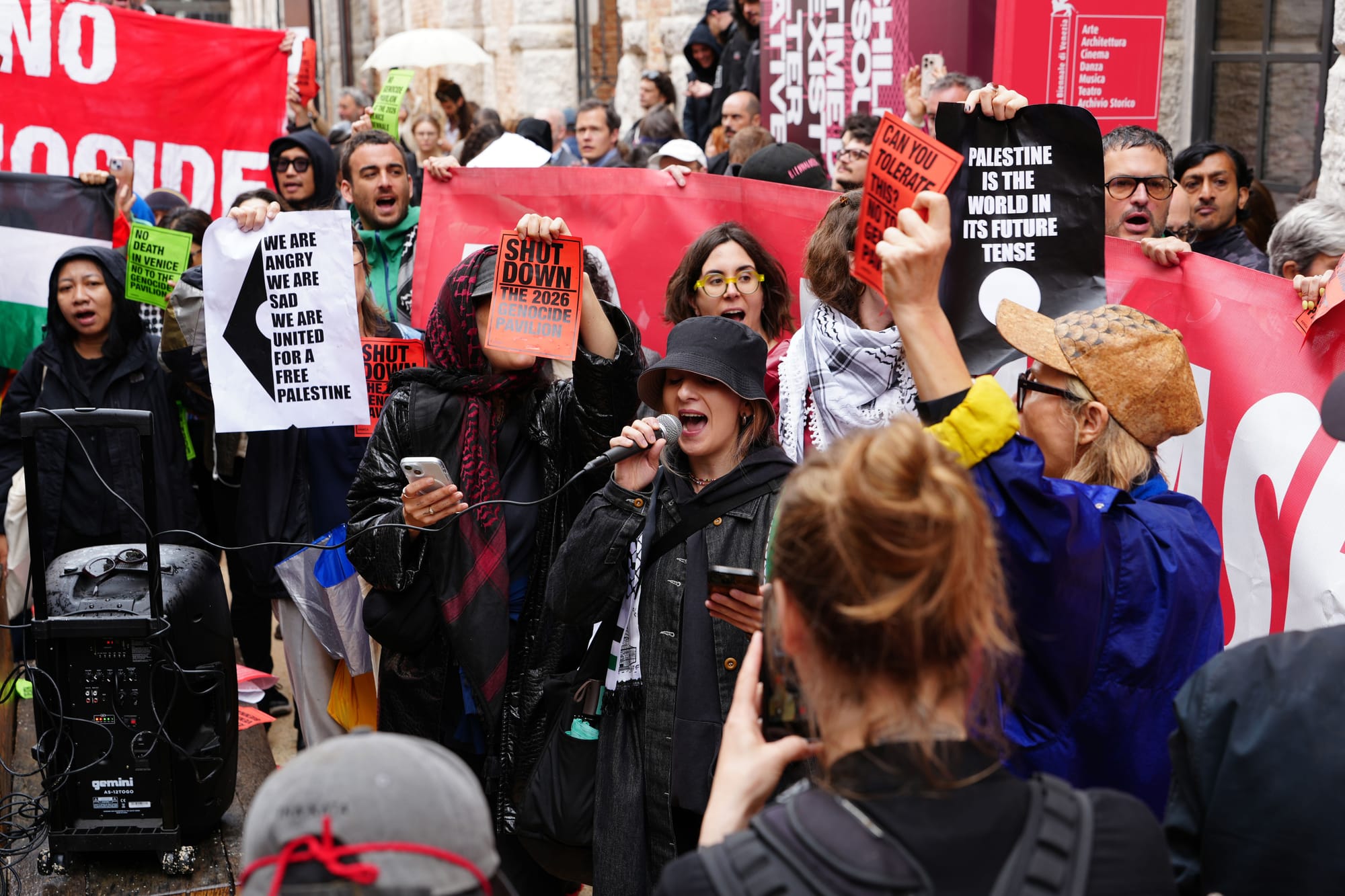
On May 6, 2026, the first day of previews at the Venice Biennale, hundreds of pro-Palestine activists led by the Art Not Genocide Alliance (ANGA) blocked the entrance to the Israeli pavilion, demanding its immediate closure. Protesters waved Palestine flags and banners reading "No Artwashing Genocide" and "No Genocide Pavilion at Biennale," chanting accusations of genocide against Israel. The demonstration temporarily shut down access to Belu-Simion Fainaru's exhibition "Rose of Nothingness" for about half an hour. The protest followed a letter signed by over 200 artists urging the Biennale to exclude Israel, which instead moved the pavilion to an alternative location in the Arsenale due to renovations. Separately, Pussy Riot and FEMEN rallied outside the Russian pavilion, which will only open during preview days due to sanctions. Venice cultural workers plan a 24-hour strike on May 8 in solidarity with Palestinians, potentially disrupting the Biennale's schedule.

Stitches in time: the artist chronicling the DRC’s blood-soaked history in tapestry

Lucie Kamusekera, an 82-year-old artist in Goma, Democratic Republic of the Congo, creates embroidered tapestries on tobacco sacks that chronicle the country's violent history. Born in 1944 and taught sewing by Italian nuns, she began documenting contemporary conflicts after witnessing a military truck filled with corpses. Her more than 70 works depict events from the colonial Belgian Congo era to the 1961 assassination of Patrice Lumumba and the second Congo war, as well as personal tragedies including her husband's murder by rebels. Despite ongoing danger from rebel offensives, she continues to stitch from her home studio, training her children and great-granddaughter to carry on her work.

Today’s war, tomorrow’s loot: attempts at stemming the illicit trade in art

The article examines the ongoing challenge of preventing the illicit trade in cultural property looted from conflict zones. It discusses the Hague Convention of 1954 and its protocol, which require signatory countries to prevent theft and pillage during armed conflict and to seize and repatriate unlawful exports. However, the protocol only applies to situations of 'occupation,' leaving a gap for looting that occurs in the chaos of war beyond formal occupation. The article also notes UN Security Council Resolutions that restrict unlawfully removed cultural property from Iraq and Syria, but no similar consensus exists for countries like Afghanistan, Libya, Ukraine, Lebanon, Yemen, Sudan, and Iran. EU Regulation 2019/880 is highlighted as a measure that prohibits introducing goods removed unlawfully from their place of origin into the EU, though its scope has expanded beyond its original anti-terrorist financing purpose.

Anti-Russia Protests Spread Beyond the Biennale and Into Venice

Protests against the reopening of the Russian pavilion erupted at the Venice Biennale and spread across the city on the second day of the 61st edition. Visual artist Shalva Nikvashvili, who grew up in post-Soviet Georgia, began a silent performance wearing a muzzle-style mask and carrying a chair, holding a sign reading “La Biennale di Venezia” and “violence.” Shortly after, a group of about 20 protesters led by Pussy Riot co-founder Nadya Tolokonnikova gathered outside the Russian pavilion, chanting against Vladimir Putin, waving Ukrainian flags, and releasing a pink smoke flare. The protests followed the Biennale's decision to allow Russia to participate for the first time since its 2022 invasion of Ukraine, despite calls from artists and politicians to exclude the country.

From galleries to guest rooms: The best art-inspired stays in Europe

A number of European hotels are integrating art collections and museum-quality experiences into their accommodations, offering travelers the chance to stay within or adjacent to art spaces. Notable examples include MACAM in Lisbon, Portugal, which combines a contemporary art museum with a hotel featuring the private collection of founder Armando Martins, including works by Marina Abramović and Paula Rego; the Byblos Art Hotel Villa Amistà in Verona, Italy, blending Renaissance architecture with avant-garde art; and the Elizabeth Arthotel in Ischgl, Austria, which has showcased art and sculpture since 1976 and recently added a rooftop commission by the artist duo NONOS.

Art exhibits open in Earlville

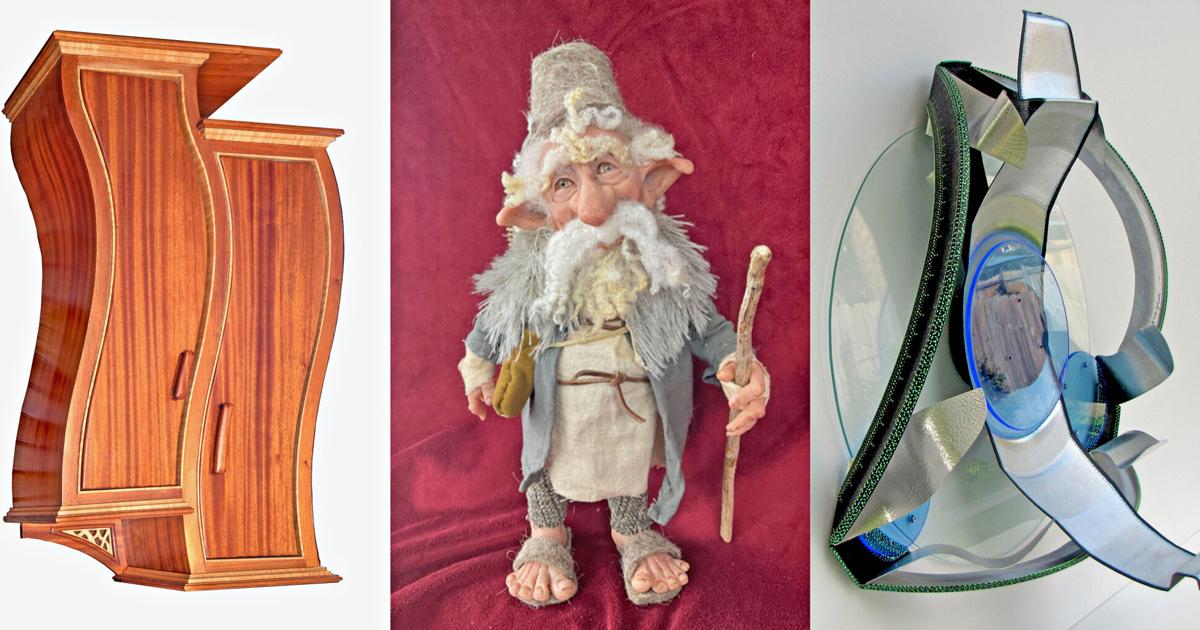
The Earlville Opera House Art Galleries in Earlville, New York, will open the second round of 2026 visual artist exhibitions on Saturday, May 9, from 1 to 3 p.m. The series features three artists: Bruce E. Webster with his retrospective "A Legacy in Wood" showcasing over 40 years of fine wood furniture; Linda Kays-Biviano with "From Clay to Character: Featuring Woodland Spirits," hand-sculpted fantasy figures in polymer clay and resin; and Lawrence Kinney. The exhibits run through July 2, with free admission and an Artist Talk at 1:45 p.m. on opening day.

Alphabet of bread and love for animals. Uri Aran's exhibition at the Museo Madre in Naples

Alfabeto di pane e amore per gli animali. La mostra di Uri Aran al Museo Madre di Napoli

Uri Aran's solo exhibition at the Museo Madre in Naples, curated by director Eva Fabbris, explores language, communication, and connection through a range of works including video, sculpture, and an edible alphabet made of bread. The show, titled "Untitled (I love love)" after a video work, invites viewers into a space where meaning is fluid and inclusive, challenging rigid linguistic structures. Key pieces include the video "Untitled (I love you)" (2012), where Aran addresses plastic animals, and "Untitled (Bread Library)" (2025), a bread alphabet that visitors can rearrange to create new messages.

Pussy Riot and FEMEN protest at the Russian Pavilion at the Venice Biennale. "Blood is the true language of Russia"

Le Pussy Riot e le FEMEN in protesta al Padiglione russo alla Biennale di Venezia. “Il sangue è il vero linguaggio della Russia”

On May 6, 2026, during the preview days of the 61st Venice Biennale, Pussy Riot and FEMEN staged a joint protest outside the Russian Pavilion. Led by Nadya Tolokonnikova, the activists denounced Russia's participation in the Biennale as a form of political normalization while the war in Ukraine continues. The action included chants and slogans such as "Russia kills, Biennale exhibits. Blood is Russia's art," and targeted the Russian ambassador present inside the pavilion. The protest was unannounced and caught Biennale security off guard, drawing a crowd of journalists, visitors, and art professionals.

Ndidi Dike “Rare Earth Rare Justice” at Secession, Vienna

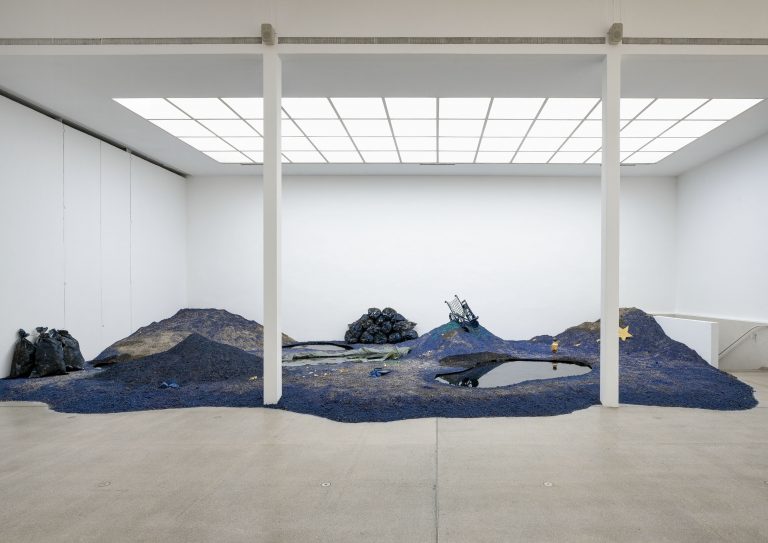
Ndidi Dike, a British-Nigerian sculptor and multi-disciplinary artist, presents her first major solo exhibition at an Austrian institution, titled "Rare Earth Rare Justice," at Secession in Vienna. The show features works across mixed media, painting, sculpture, collage, photography, video, and installation, addressing social, political, and economic conditions of the modern world.

Sorcières !

The article previews an upcoming exhibition titled "Sorcières !" at the Château des ducs de Bretagne – Musée d'histoire de Nantes, running from February 7 to June 28, 2026. It traces the historical debate around witchcraft in 16th-century Europe, focusing on key figures such as Heinrich Kramer, author of the *Malleus maleficarum* (1486), who argued that witchcraft was a female-specific evil requiring extermination, and Jean Bodin, who supported this view. In contrast, Johann Weyer and Michel de Montaigne challenged the persecution, suggesting accused women were mentally ill or elderly and deserved humane treatment rather than execution.

Bulldozer Plows Across Thousand-Year-Old Indigenous Land Art During Border Wall Construction

Construction workers building the Trump administration's border wall between the US and Mexico accidentally damaged a two-hundred-foot-long Indigenous land art figure known as the Las Playas Intaglio, a colossal fish etched into the earth near Ajo, Arizona, that is thought to be over a thousand years old. Satellite imagery showed bulldozer tracks cutting a sixty-to-seventy-foot-wide path across the intaglio, and a Customs and Border Protection spokesperson confirmed the disturbance, stating the remaining portion had been secured and would be protected in place.

Spring fling: Artist’s exhibition celebrates the colors of springtime

The article describes an artist's exhibition that celebrates the colors of springtime. The show is presented as a seasonal event, likely featuring vibrant, spring-themed artworks. The specific artist, venue, and location are not identifiable from the provided text due to a security verification wall that blocks access to the full article content.

Pennswood Art Gallery exhibit features plants and animals of the Poconos

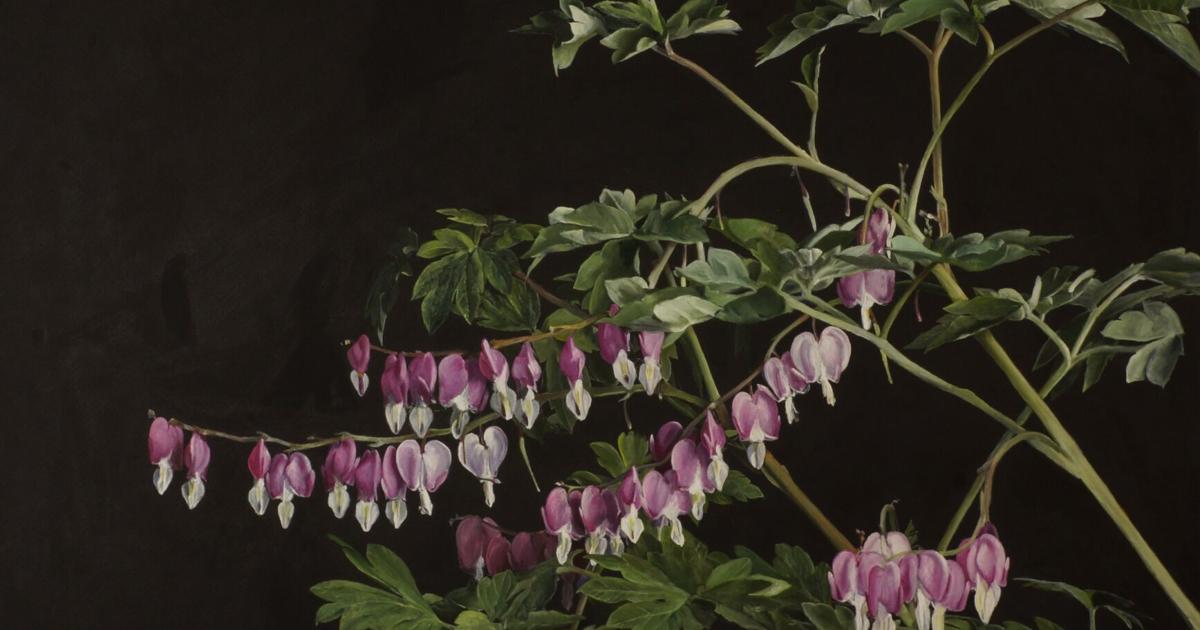
Pennswood Art Gallery in Newtown announces the May 10 opening of its new exhibit, “Contemplative Observation,” featuring the work of artist Albina P. Herron. Herron paints plants and animals native to the Pocono Mountains, using gouache on cotton paper to emphasize texture and presence. The exhibit includes works such as “Bleeding Heart” (Dicentra eximia) and runs until July 1, with an artist talk and reception on opening day.