filter_list Showing 1521 results for "Log" close Clear
search
dashboard All 1521 museum exhibitions 1073article local 102article culture 97article news 86rate_review review 38person people 38trending_up market 27candle obituary 23article policy 19gavel restitution 16article event 2
date_range Range Today This Week This Month All
Subscribe

ArtPhilly Presents “What Now: 2026”

ArtPhilly has announced the inaugural edition of its city-wide festival, "What Now: 2026," scheduled to open on May 27, 2026, coinciding with the 250th anniversary of the United States. The five-week event will feature over 30 newly commissioned projects by Philadelphia-based artists, including performances, installations, and podcasts, staged across festival districts in public spaces and institutions. The festival is led by Creative and Executive Director Bill Adair and Curatorial and Deputy Director Tania Isaac, with a curatorial committee of 17 local curators selecting works that explore the nation's past, present, and future.
Art and Cultural Engagement Can Slow the Pace of Aging: Report

A new study published in the journal *Innovation in Aging* finds that engaging with arts and cultural activities can slow biological aging at a molecular level. Led by Daisy Fancourt of University College London, the research measured participation in four types of activities—participatory arts, receptive arts, visiting heritage sites, and other cultural activities—and used epigenetic clocks to assess aging. Those who engaged at least once a week showed a four-percent slowdown in aging, while monthly engagement yielded a three-percent slowdown.

19th-century European weapons found in cenote in Mexico

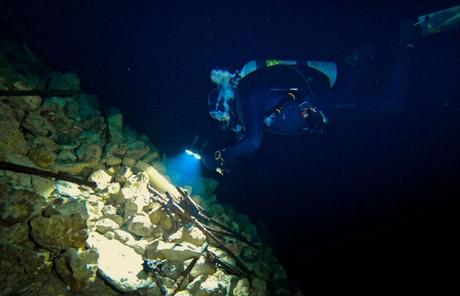
Archaeologists from Mexico's National Institute of Anthropology and History (INAH) have discovered 153 Spanish and British muskets and rifles, along with an iron cannon, in the Síis Já cenote beneath the 16th-century former convent San Bernardino de Siena in Valladolid, Mexico. The weapons were likely discarded by the Yucatecan government during the early years of the Caste War of Yucatán (1847-1901) to prevent them from falling into Maya rebels' hands. The site also yielded Maya ceramic pieces and 18th-century Chinese porcelain, and INAH reported debris and pollution affecting the cenote.

Fade to black: inside the US’s abandoned movie theatres

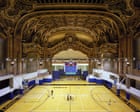
Photographers Yves Marchand and Romain Meffre have documented abandoned early 20th-century movie theatres across the United States, capturing the haunting beauty of their decline. These once-grand cinemas, converted from 1920s music halls and theatres, have been left as hybrid ruins due to the rise of television, streaming platforms, and individualized media consumption. The work is exhibited at Kyotographie 2026 in Japan until 17 May.

‘I waited half an hour for one of Hong Kong’s iconic red taxis to pass by’: William Shum’s best phone picture

William Shum captured a photograph of a red taxi passing through Yau Ma Tei, Hong Kong, using an iPhone 13 Pro Max. He waited half an hour for the taxi to align perfectly with a dense residential building in the background, creating a contrast between the simple vehicle and the layered architecture. The image earned him a win in the 2025 Mobile Photography awards.

1,000-year-old archaeological site bulldozed during construction of Mexico-US border wall

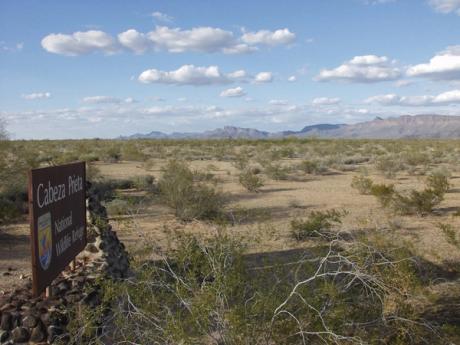
On 24 April, a Department of Homeland Security contractor bulldozed a 1,000-year-old intaglio—a 280ft by 50ft etching in the desert sand—during construction of the US-Mexico border wall in Arizona's Cabeza Prieta National Wildlife Refuge. The site, sacred to local Indigenous communities including the Hia-Ced O’odham, was part of a UNESCO biosphere and contained over 3,000 petroglyphs. Despite warnings from tribal members and refuge staff, the contractor destroyed a 70ft stretch of the fish-shaped intaglio, which elders and archaeologists describe as an irreplaceable cultural and archaeological treasure.

A Landmark Benjamin Franklin Collection Is Hitting the Auction Block

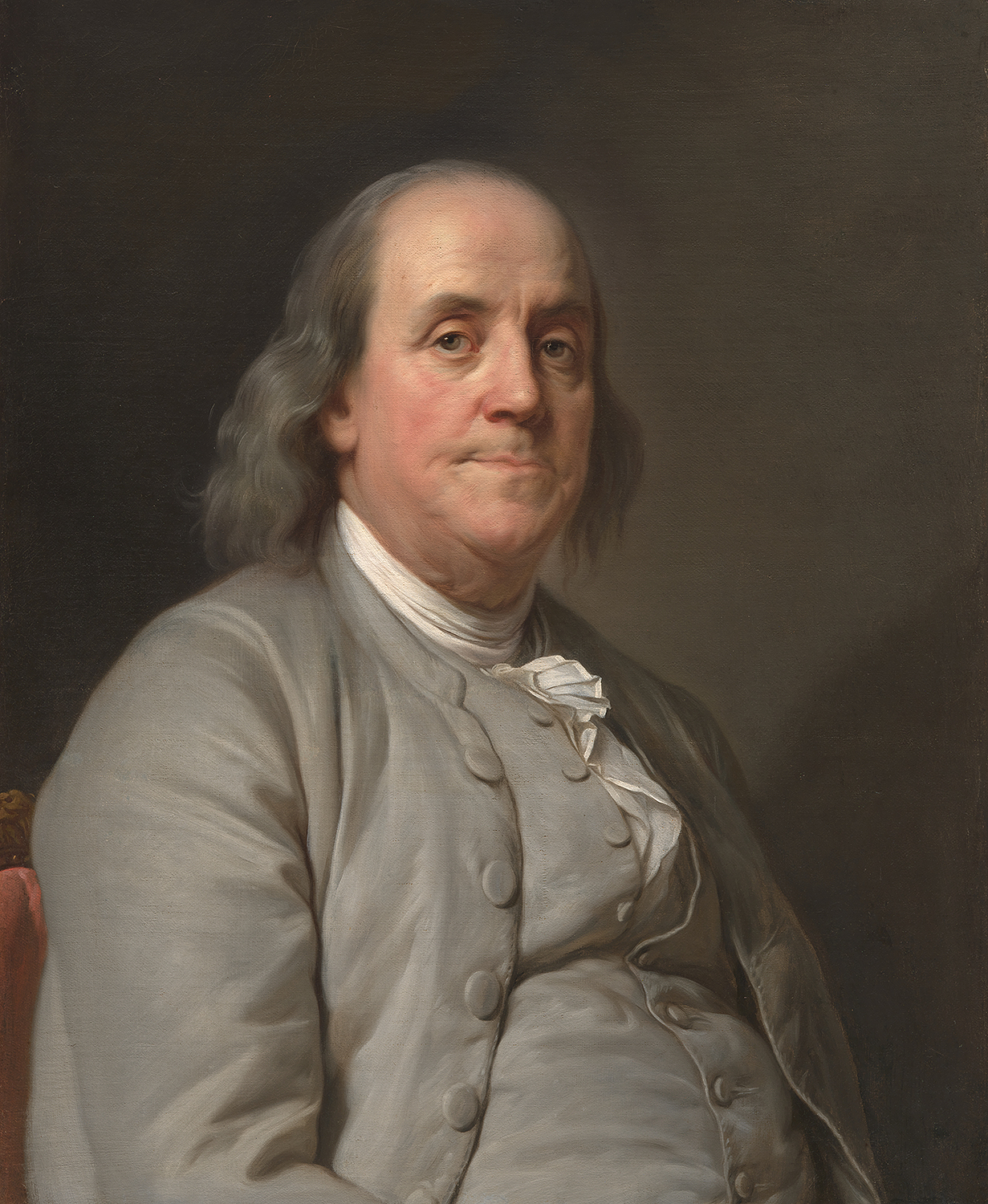
A landmark collection of Benjamin Franklin memorabilia assembled by sports and entertainment mogul Jay Snider is heading to Sotheby’s New York on June 24. The collection includes over 150 items—books, broadsides, letters, and manuscripts—tracing Franklin’s career from printer to scientist to diplomat. Highlights include a 1758 letter to Joseph Galloway (estimated $70,000–$100,000), a 1778 letter from George Washington introducing the Marquis de Lafayette (which sold for over $1 million in January), and a bound volume of Franklin’s electrical experiments ($75,000–$125,000). The full catalogue is valued at $3 million to $4.5 million, and 40 artifacts will be displayed at the Library Company of Philadelphia from May 5 to 7.

Preemptive Listening review – artist’s film about sirens is buzzing with sonic ideas

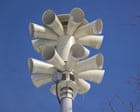
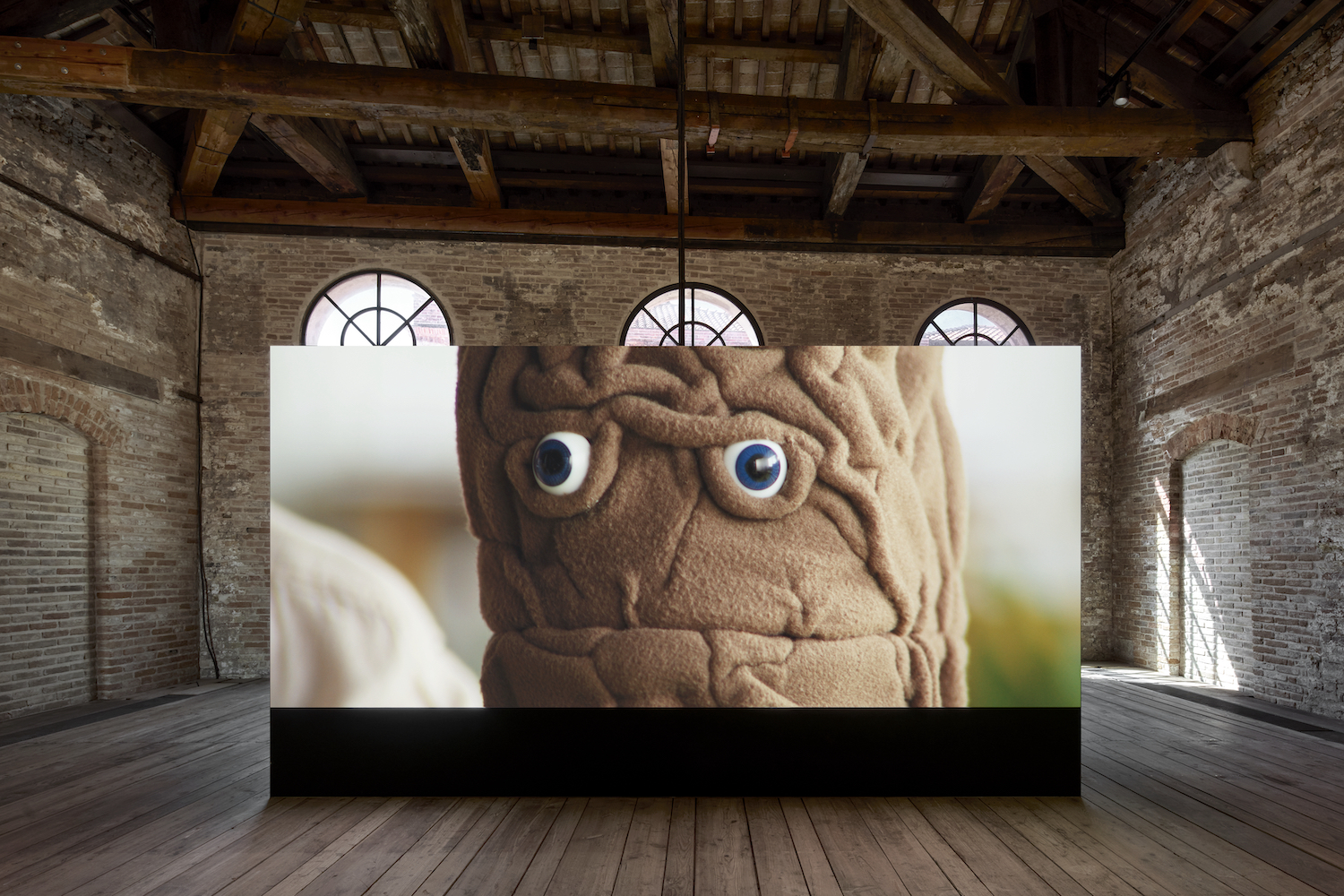
The Guardian reviews Aura Satz's art film "Preemptive Listening," which explores the cultural and political meanings of sirens as warning devices. The film features a drone shot of a siren in a residential area, a soundtrack by composer Laurie Spiegel, and commentary from British-Egyptian actor Khalid Abdalla on sirens during the 2011 Arab Spring protests. It also covers sirens on Nakba day in Palestine, a US activist linking emergency vehicle lights to danger for Black women, clocks frozen at the time of the Fukushima disaster, and a Maori activist discussing environmental catastrophe. The reviewer finds the film's ideas interesting but notes it lacks coherence as a feature-length experience, suggesting it would be better suited to a gallery setting.

Reaching for the stars: enduring symbols of Soviet science – in pictures

Photographer Eric Lusito documents Soviet-era scientific institutes across former USSR states in his book "Soviet Scientific Institutes," published by FUEL. The photo essay captures decaying facilities and enduring equipment at locations including the Institute of Radio Astronomy in Kharkiv, Ukraine; the Byurakan astrophysical observatory in Armenia; the Andronikashvili Institute of Physics in Tbilisi, Georgia; and the Fesenkov Astrophysical Institute in Kazakhstan, among others.

Metal Detectorists Unearth Norway’s Largest-Known Viking Coin Hoard

Two hobbyist metal detectorists, Rune Sætre and Vegard Sørlie, discovered Norway's largest-known Viking Age coin hoard in a field in Østerdalen, east-central Norway. Starting with 19 silver coins on April 10, the find grew to over 3,250 coins dating from the 980s to the 1040s, surpassing the previous record of 1,800 coins found in the 1800s. The hoard includes coins minted under Æthelred the Unready, King Cnut, and Holy Roman Emperor Otto III, as well as early Norwegian coins from after Harald Hardråde's return from Byzantium. The coins have been transferred to the Museum of Cultural History in Oslo for expert analysis.

U.S. Returns Hundreds of Looted Antiquities to Italy

U.S. officials formally returned 337 looted antiquities, archival materials, and artworks to Italy during a ceremony at Rome’s La Marmora barracks. The objects, spanning from the Villanovan era (900–700 B.C.E.) through the Hellenistic period (323–31 B.C.E.), include Etruscan, Greek, Italic, and Egyptian artifacts. The repatriation was coordinated by Italy’s Carabinieri Command for the Protection of Cultural Heritage, the U.S. Federal Bureau of Investigation, the Department of Homeland Security, and the office of Manhattan District Attorney Alvin Bragg Jr. Key items include a marble head of Alexander the Great, a bronze sculpture from Herculaneum, and Egyptian basalt sculptures. Some 221 objects were recovered via the Manhattan DA, while the remaining 116 were secured with help from Christie’s.

Row Over Russia’s Return to the Venice Biennale Deepens

Newly leaked emails reveal that the Venice Biennale has been secretly coordinating with Russia since last summer to facilitate its return to the 2025 edition, despite ongoing international sanctions. The correspondence, published by Italian outlets Open and La Repubblica, shows Biennale president Pietrangelo Buttafuoco, director Andrea Del Mercato, and Russian commissioner Anastasia Karneeva working together on visa issues, pavilion logistics, and a legal strategy to bypass E.U. sanctions prohibiting collaboration with state-backed Russian entities. Russia's pavilion will be open during preview days with performers activating the space, while footage will play for the public from a closed pavilion thereafter.

Seven-Foot-Tall Monument to Ramses II Discovered in Eastern Nile Delta Region

Archaeologists in Egypt have discovered the upper half of a 7-foot-tall statue of Ramses II at the site of Tell El-Faraoun in the eastern Nile Delta. Weighing over 5 tons, the fragment is believed to have originally been carved for a temple in the ancient capital of Per-Ramesses and was later relocated. The find was announced by the Egyptian Ministry of Tourism and Antiquities, with Hisham El-Leithy of the Supreme Council of Antiquities noting its importance for understanding how statues were moved and reused during the New Kingdom.

WAYAMOU: LENGUAS DE LO COMÚN. LAURA ANDERSON BARBATA Y SHEROANAWE HAKIHIIWE

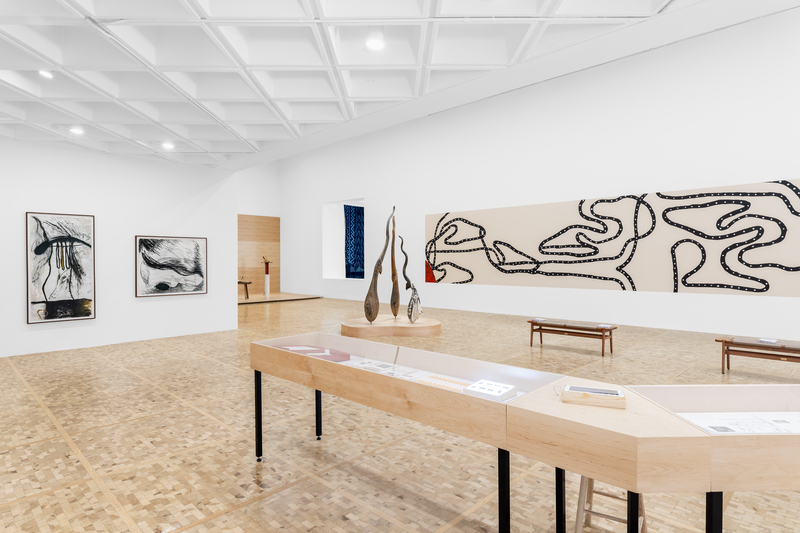
The exhibition "Wayamou: Lenguas de lo común" at the Museo Tamayo in Mexico City presents the collaborative work of artists Laura Anderson Barbata and Sheroanawe Hakihiiwe, whose artistic and political relationship spans over three decades. The show traces their shared history, beginning in the early 1990s when Barbata traveled to the Venezuelan Amazon and taught handmade papermaking using local plant fibers, introducing Hakihiiwe to a sustained visual exploration of Yanomami cosmology, oral tradition, and legacy. In 1992, they co-founded Yanomami Owë Mamotima ("Yanomami art of papermaking"), a project enabling the community to tell its own stories through its own visual and linguistic codes, exemplified by the handmade book "Shapono (Casa)" (1996).

FROM SÃO PAULO TO NEW YORK: THE MUSEUM OF ERRANCY OF ÉDOUARD GLISSANT

DE SÃO PAULO A NUEVA YORK: EL MUSEO DE LA ERRANCIA DE ÉDOUARD GLISSANT

The exhibition "La tierra, el fuego, el agua y los vientos: Por un Museo de la Errancia con Édouard Glissant" has traveled from the Instituto Tomie Ohtake in São Paulo to the Center for Art, Research and Alliances (CARA) in New York, marking its first U.S. presentation. Curated by Manuela Moscoso with Marian Chudnovsky, and building on prior work by Ana Roman and Paulo Miyada, the show engages with the philosophy of Martinican poet and philosopher Édouard Glissant, particularly his concepts of errantry, Relation, opacity, and the Tout-Monde. It centers on Glissant's unrealized idea of a museum as a fluid, porous space that resists colonial frameworks and fixed origins, featuring works by artists such as Melvin Edwards, Gerardo Chávez, and Eduardo Zamora.

Barrie artist bringing Louvre-inspired realism to Aurora gallery

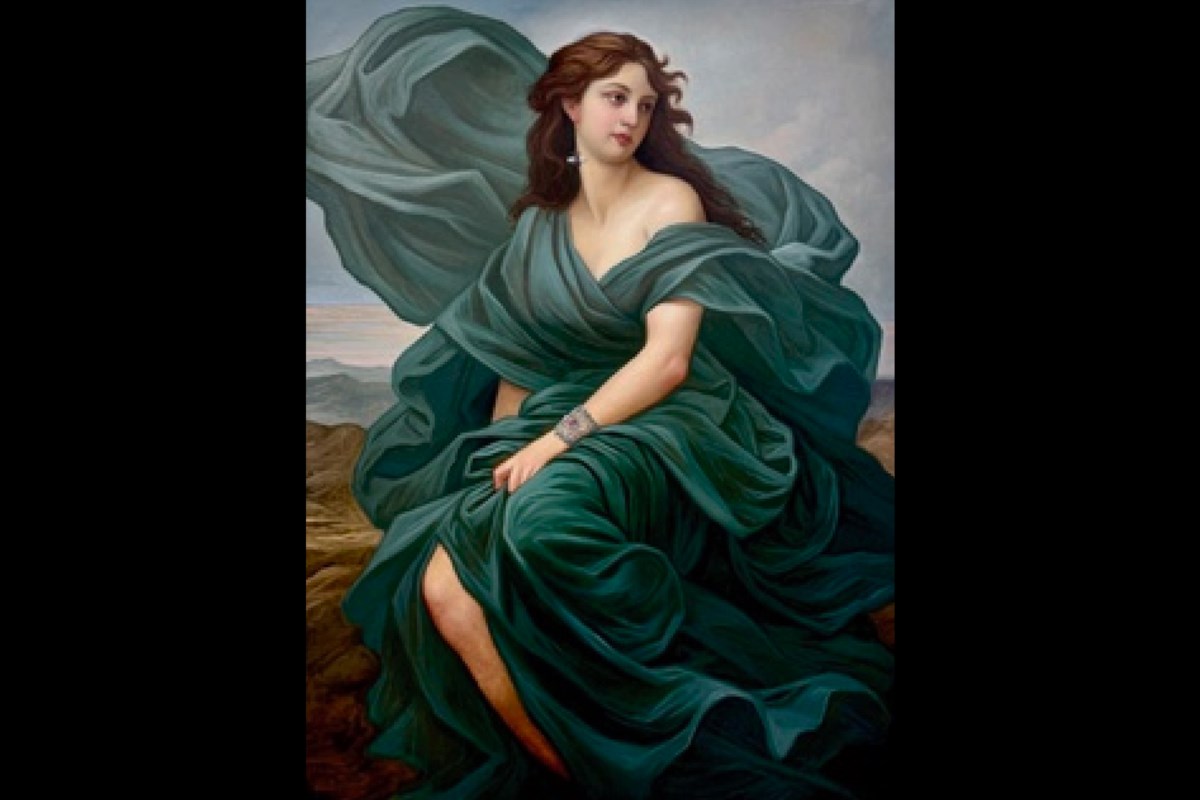
Micak Gallery in Aurora is presenting "Gilded Gold," a solo exhibition by Barrie-based artist JR Newton, featuring new oil paintings on view from May 16 through June 13, 2026. The show includes a live painting event on May 16 and an artist talk and reception on June 4. Newton's highly technical realist works, inspired by a recent trip to the Louvre, reimagine Renaissance portraiture, femininity, and historical grandeur through a contemporary lens, incorporating drapery and jewelry as central motifs.

Dolce Vita is Over

Dolce Vita war gestern

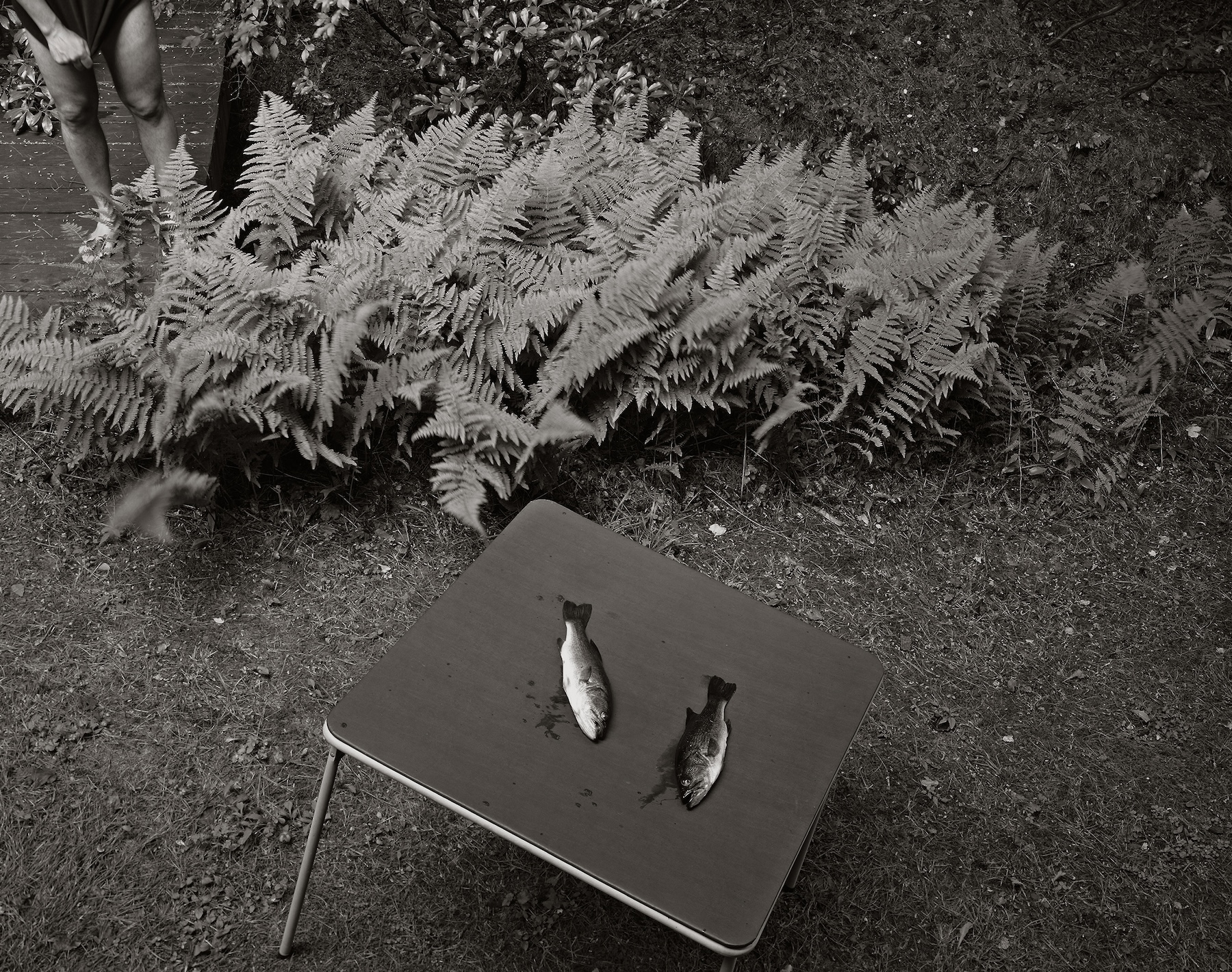
Andrea Modica's new photobook "Italian Story" collects four decades of photographs taken in Italy, beginning with her first trip there in the late 1980s. Born in 1960 to a family with roots in Sicily and Naples, Modica received a Fulbright scholarship to travel to Sicily and photograph the origins of the Catholic imagery, gender roles, and family structures she experienced growing up in New York. The book, however, is not a documentary of her heritage; instead, it presents dreamlike, surreal images—motionless bodies in water, dead fish, figures behind mosquito nets, Madonna statues—that resist clear narrative or identity politics. Modica works with an 8x10 large-format analog camera and prints using the historic platinum-palladium process, giving the images a timeless, collaborative quality.

The Many Sheddings of Valie Export

Die vielen Häutungen der Valie Export

Valie Export, the Austrian media and performance artist known for using her body as a site of social critique, has died at age 85 in Vienna. Her final works include a black-and-white photo series of her forearm resting on a stone snake sculpture at the University of Vienna, exploring themes of skin, transformation, and mimesis. From the 1970s onward, she created iconic "Body Configurations" in which she placed her body on streets and against buildings along Vienna's Ringstrasse, tracing architectural forms to expose institutional power and patriarchal authority.

Nicht mal Engel sind frei von der Gewalt

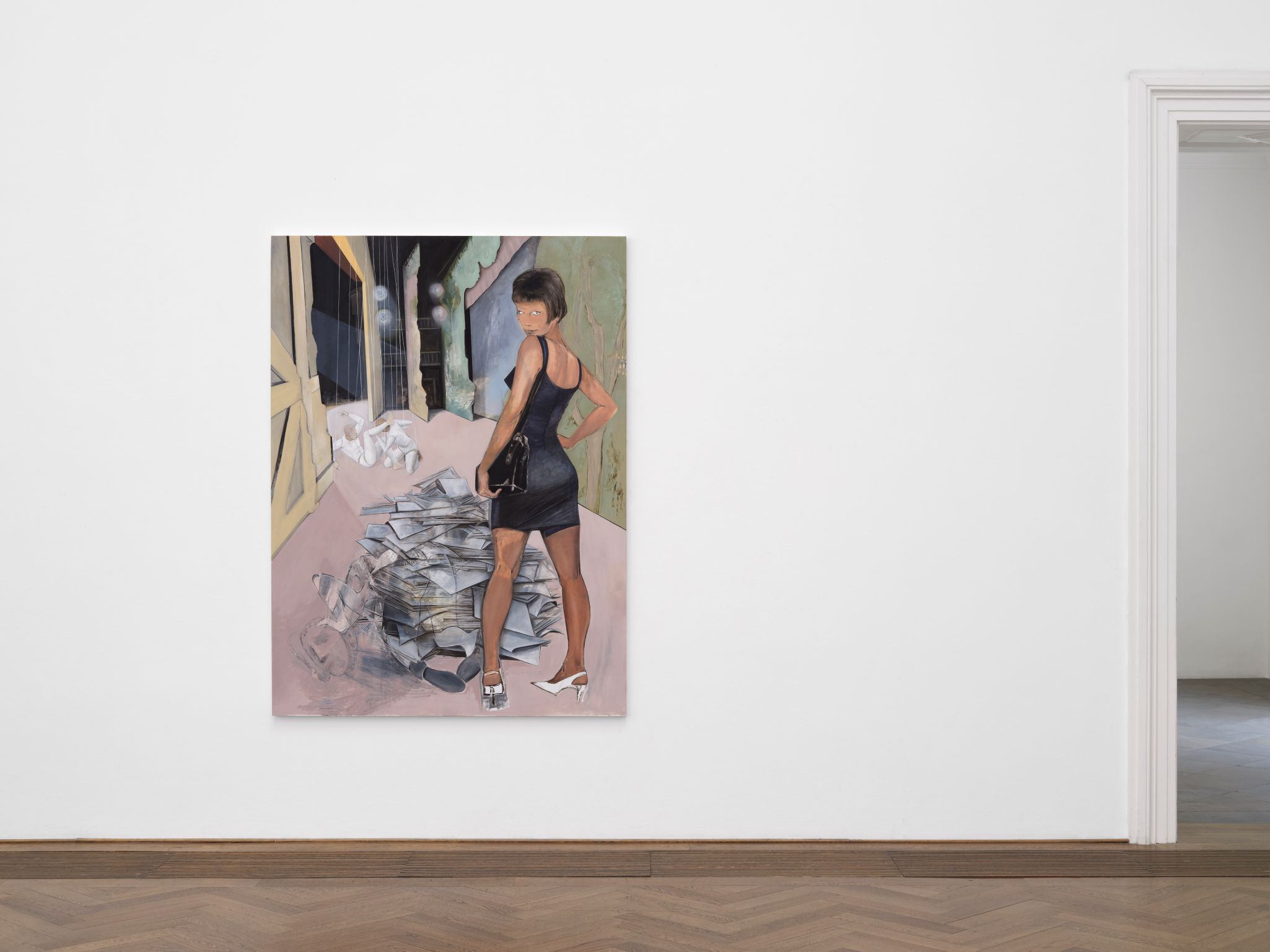
Janiva Ellis presents a multifaceted exhibition at Kunsthalle Basel, exploring the history of violence in modernity through paintings that blend history painting, cartoon, and abstraction. Her works, including "Glint" and "Une nuit agitée," feature angels, hybrid creatures, and dystopian landscapes, questioning the origins and functions of violence in art history and society.

And who are you?

Und wer seid ihr?

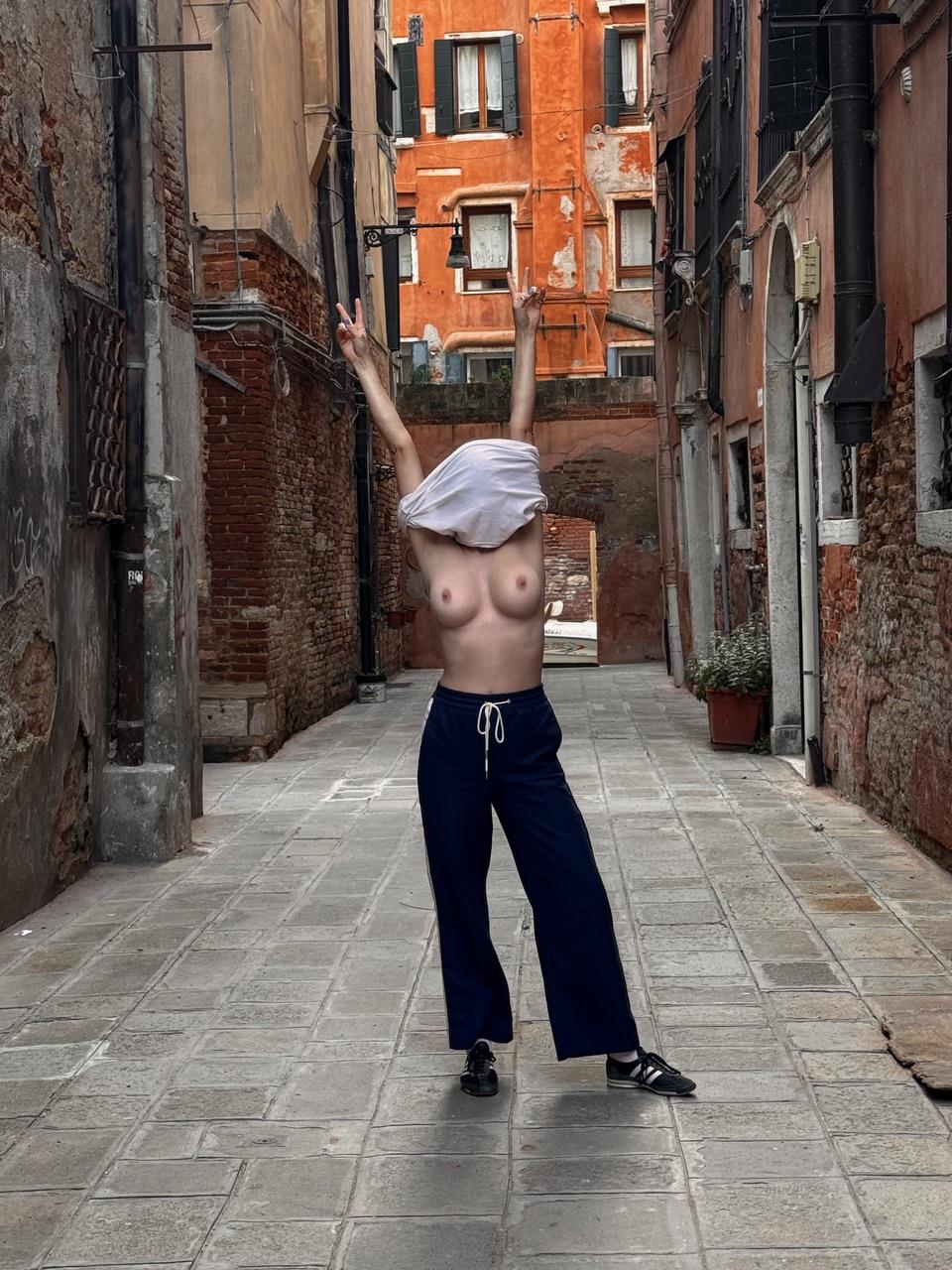
The article is a brief interview conducted at the Venice Biennale, where a visitor named Franzi explains her presence at the event and discusses her favorite pavilion. She cites the Austrian Pavilion by Florentina Holzinger as her absolute favorite after five days of art, and clarifies that her bare chest is not a political protest against Putin but a homage to Holzinger's work. She also mentions missing the Vatican Pavilion due to long queues.

Monuments in Motion

Denkmäler in Bewegung

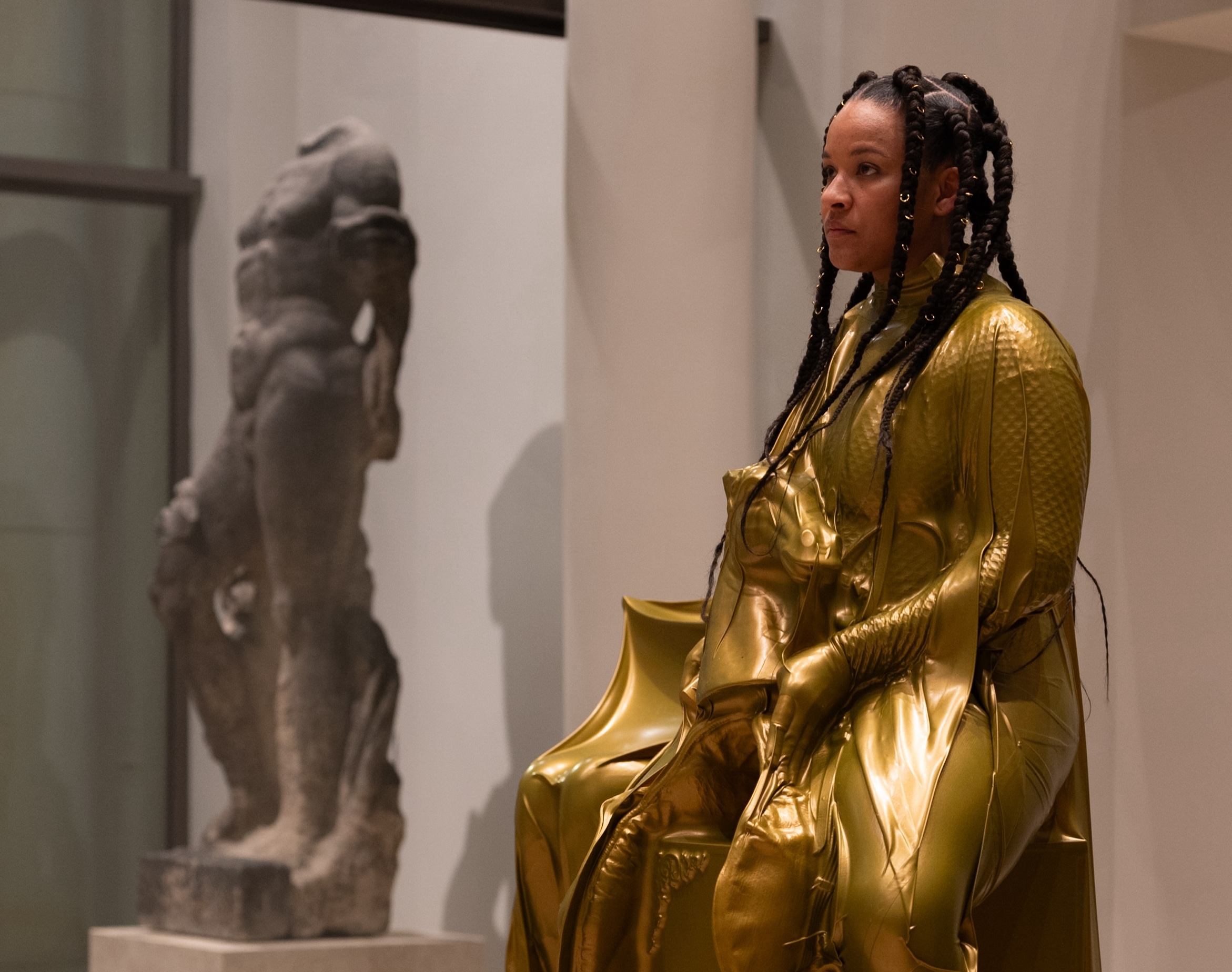
Berlin-based artist Sarah Ama Duah, who transitioned from fashion to sculpture, creates works that explore Afro-German memory culture. Her practice includes beeswax portraits, found objects like Delft porcelain and baroque vases, and performances at venues such as the Humboldt Forum. In 2025, she received the Wolfram Beck Prize for Sculpture. Duah's early fashion work, including silicone garments shown at the Fashionclash Festival in Maastricht, evolved into sculptural investigations of clothing, body, and space, leading her to study performance and sculpture at the Berlin University of the Arts under Jimmy Robert.

The Great Shitshow

Die große Shitshow

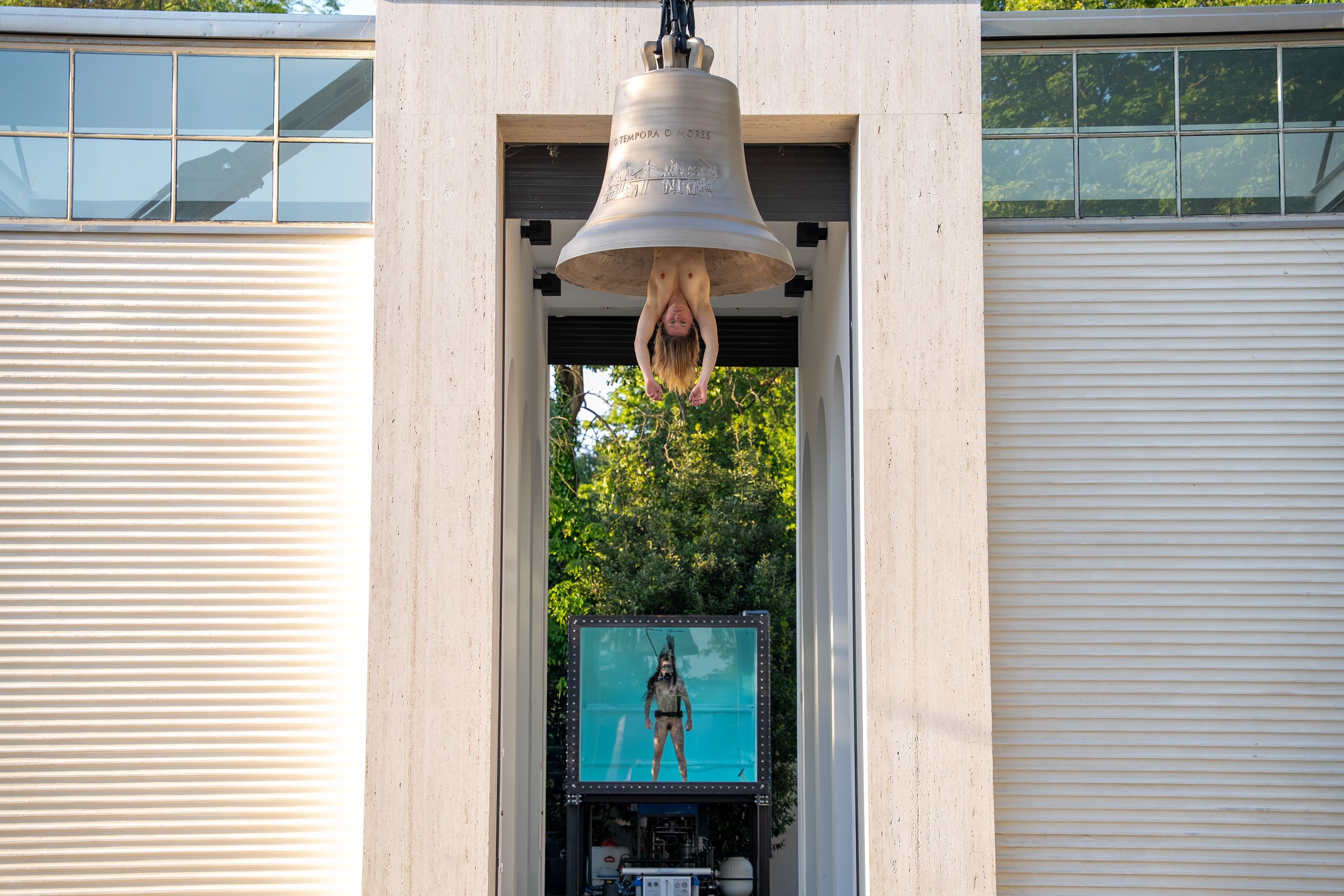
Florentina Holzinger has transformed the Austrian Pavilion at the Venice Biennale into a radical performance installation titled "Seaworld Venice." The piece features naked performers suspended from meat hooks, a performer ringing a bell while dangling upside down from a crane, a woman on a jetski circling inside a flooded pavilion, and a system where visitors are invited to urinate into portable toilets, with the waste processed and recirculated into the water. The work combines extreme physical stunts, nudity, and bodily fluids to create a visceral, immersive experience that has drawn long queues and stunned reactions from the art world.

Shit has the power to destabilize systems of order

"Scheiße hat die Kraft, Ordnungssysteme zu destabilisieren"

Aline Bouvy, the artist representing Luxembourg at the Venice Biennale, has created a film essay titled "La Merde" that centers on excrement as its main character. Originally conceived as a performance, the work explores themes of bodily circulation, transformation, and the grotesque, using feces to challenge societal taboos and systems of order. Bouvy discusses the film's development with curator Stilbé Schroeder, noting that the Biennale provided the resources and time to realize the project, which will later travel to the Kunstverein in Salzburg.

A Struggle Between Artist and Machine

Ein Ringen zwischen Künstler und Maschine

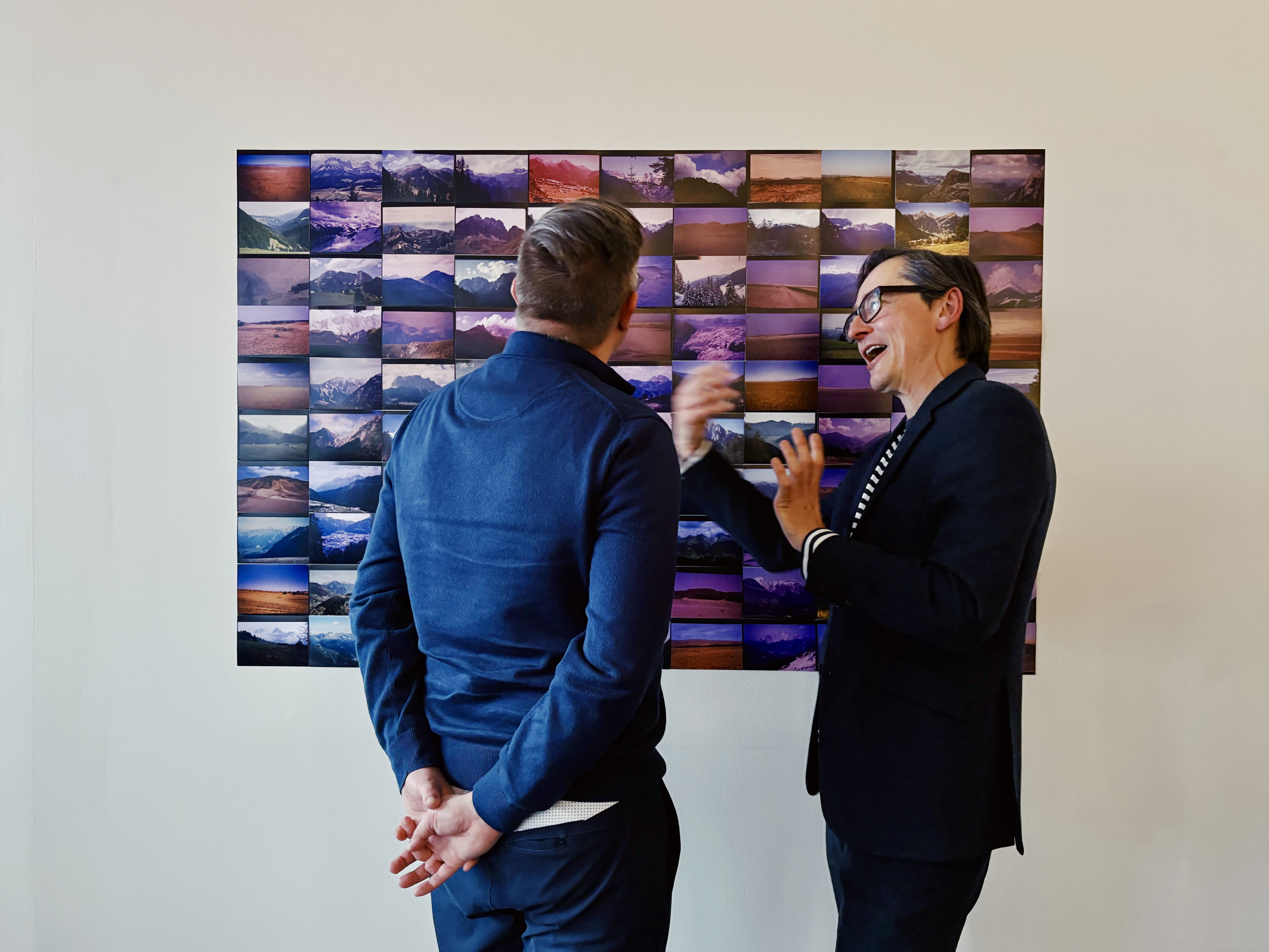
Mario Klingemann, a pioneer of AI art, presents "Conflict of Interest," a pop-up exhibition at Sleek Art Space in Berlin during Gallery Weekend. Curated by Anika Meier and produced in collaboration with Art on Tezos, the show features works that challenge the flood of AI-generated imagery. Klingemann displays mundane landscape photographs from private slides, a series called "Weapons of Mass Distraction" where he disrupts an AI algorithm's image generation, and a haunting 2020 video in which AI-generated faces morph to music. The exhibition makes visible the struggle between human control and machine logic.

The Art of the Chosen Family

Die Kunst der Wahlfamilie

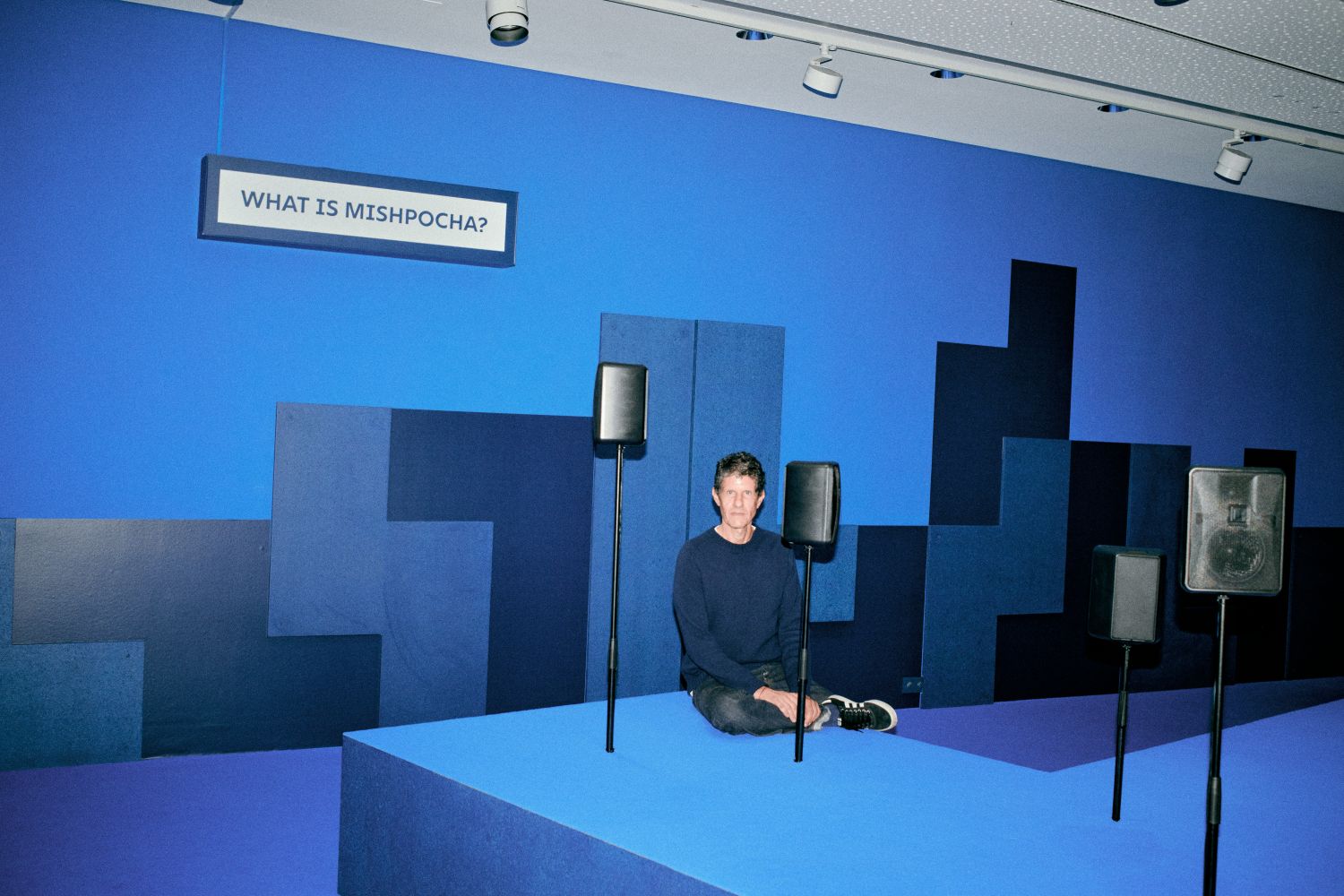
Mike D, co-founder of the Beastie Boys, has co-curated an exhibition titled "Mishpocha. The Art of Collaboration" at the Jewish Museum Frankfurt. The show explores the concept of family beyond biological ties, featuring works such as Ira Eduardovna's video installation "The Library Room," which depicts a family packing for emigration, and immersive audiovisual spaces evoking techno, hip-hop, punk, and Riot Grrrl subcultures. The exhibition includes contributions from artist Jan Ove Hennig, photographer Jan Zappner, design studio Atelier Markgraph, and hospitality group Ima Clique, with Mike D serving as artistic director and ambassador.

Nicole Hollander, Acerbic Feminist Cartoonist, Dies at 86

Nicole Hollander, the creator of the long-running comic strip "Sylvia," has died at the age of 86. For over three decades, she wrote and illustrated the strip, which centered on a tart-tongued, witty woman who freely expressed her many opinions, becoming a staple of feminist humor in American newspapers.

Chang-Ching and Rhett Tsai’s Tricks of the Light

Artists Rhett Tsai and Chang-Ching Su have presented tandem projects at Chicago's Watershed Art & Ecology, inspired by a joint research trip to fishing villages on China's Huangqi Peninsula. Their works explore the practice of light-lure fishing, with Su creating photographic exposures using the green LED lights from squid-fishing boats and translating satellite fishing data into sculptural installations. Tsai's contributions include CGI films and a VR video that depict the rhythms and social realities of coastal communities, focusing on the Tanka boat-dwelling people.

À la Biennale de Venise, le pavillon de l’Ouzbékistan fait revivre la mer d’Aral

The Uzbekistan Pavilion at the 61st Venice Biennale, curated around the figure of author Allayar Darmenov, brings together artists including Vyacheslav Akhunov, Zi Kakhramonova, A. A. Murakami, Zulfiya Spowart, and Nguyen Phuong Linh to explore the ecological disaster of the Aral Sea. Once the world's fourth-largest lake, it was drained by Soviet irrigation projects for cotton farming; the pavilion's installations—such as Kakhramonova's participatory salt-fish molding piece and Spowart's cradle-like sculpture—imaginatively revive the vanished sea and its endemic species.

À Marseille, l’installation textile monumentale d’Adrien Vescovi déploie ses couleurs

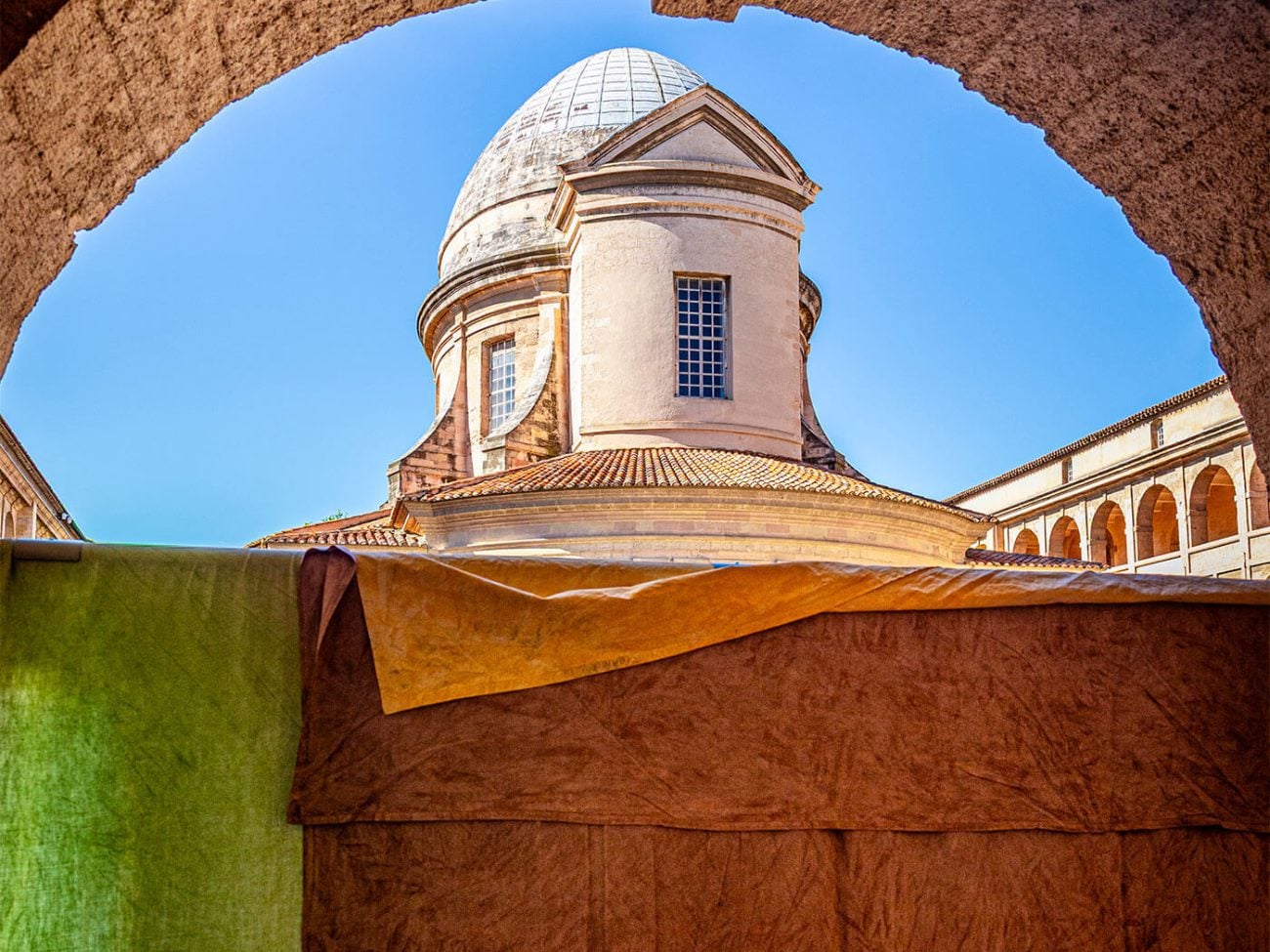
Artist Adrien Vescovi has installed a monumental textile work titled "Dormir comme le soleil" at the Vieille Charité in Marseille. The installation features over 600 dyed sheets suspended across 108 arches of the former hospice, using natural pigments from plants, spices, and ochres. The fabrics, dyed in a labor-intensive process involving large wooden spoons and cauldrons, are designed to fade and evolve over the eight-month exhibition, responding to wind, humidity, and Mediterranean light.

Aux châteaux de Malmaison et de Bois-Préau, le festival des Premiers Romantiques fait dialoguer musique et nature

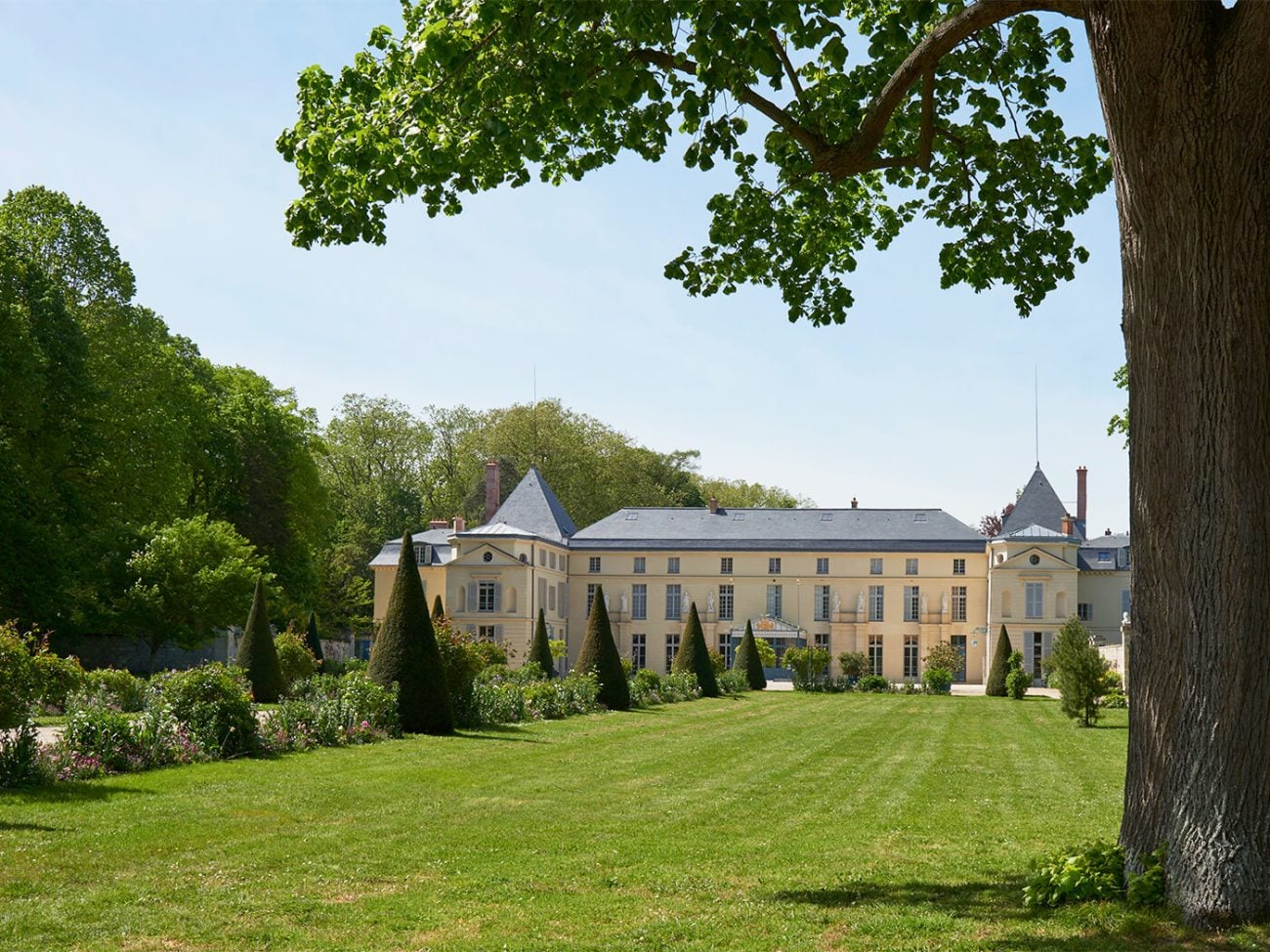
The Festival des Premiers Romantiques takes place from May 22 to 25 at the châteaux of Malmaison and Bois-Préau in Rueil-Malmaison, France. The event features concerts on period pianos (including an 1806 Erard pianoforte and an 1847 Streicher), performed by musicians from La Nouvelle Athènes collective, alongside an exhibition titled "Roses & Pivoines" showcasing works by Pierre-Joseph Redouté and contemporary German artist Thilo Westermann. The festival celebrates Romantic-era music and nature, set in the recently restored château and its emblematic gardens, once the botanical passion of Empress Joséphine.