filter_list Showing 1689 results for "rep" close Clear
search
dashboard All 1689 museum exhibitions 873article news 218article local 168trending_up market 118article culture 94person people 63article policy 52rate_review review 45candle obituary 28gavel restitution 24article event 4article events 1article gallery 1
date_range Range Today This Week This Month All
Subscribe

Trial Begins in Brent Sikkema Murder-For-Hire Case

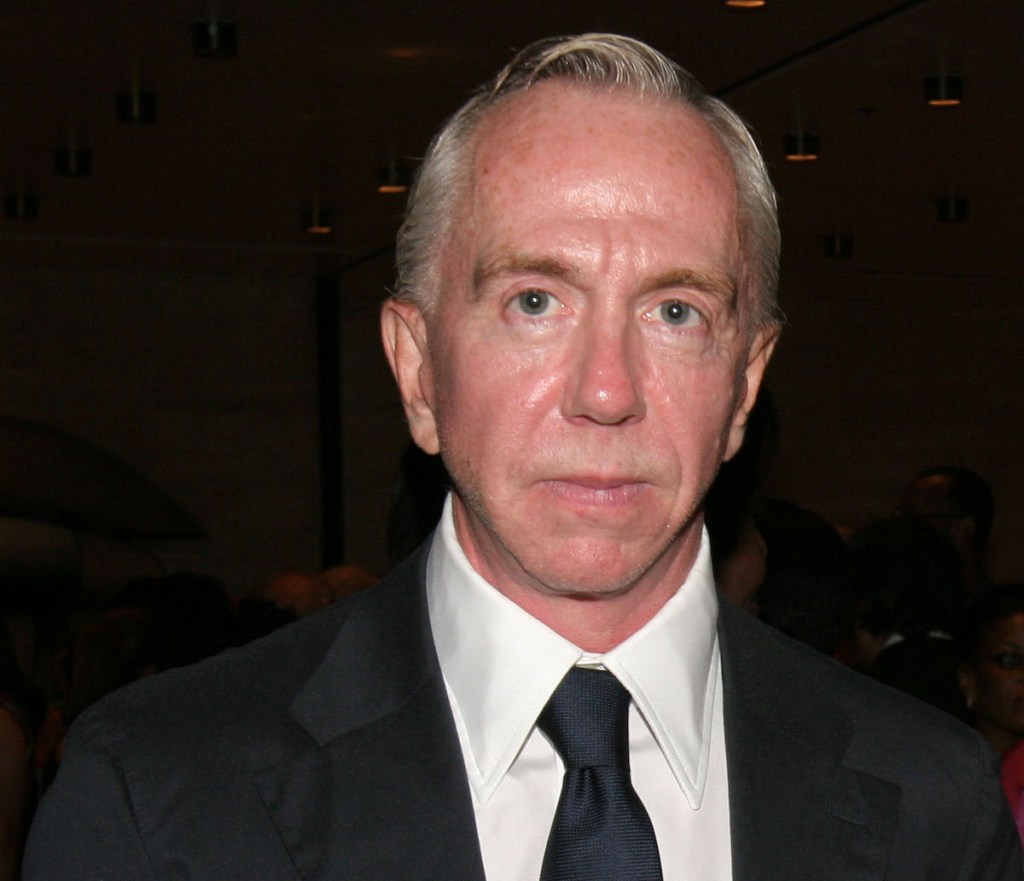
Opening statements and witness testimony began on Tuesday in a Manhattan court for the murder-for-hire trial following the 2024 killing of New York art dealer Brent Sikkema. Alejandro Triana Prevez, a Cuban national, was arrested shortly after Sikkema was found murdered in his Rio de Janeiro apartment, and claims that Sikkema's ex-husband, Daniel Carrera Sikkema, offered him $200,000 to commit the crime. Carrera Sikkema was charged in February 2025 with hiring Prevez. Prosecutors presented evidence including phone records, financial transactions, and witness testimony, while the defense argued the case relies on circumstantial evidence and that Carrera Sikkema's statements were made amid a contentious divorce.
Art and Cultural Engagement Can Slow the Pace of Aging: Report

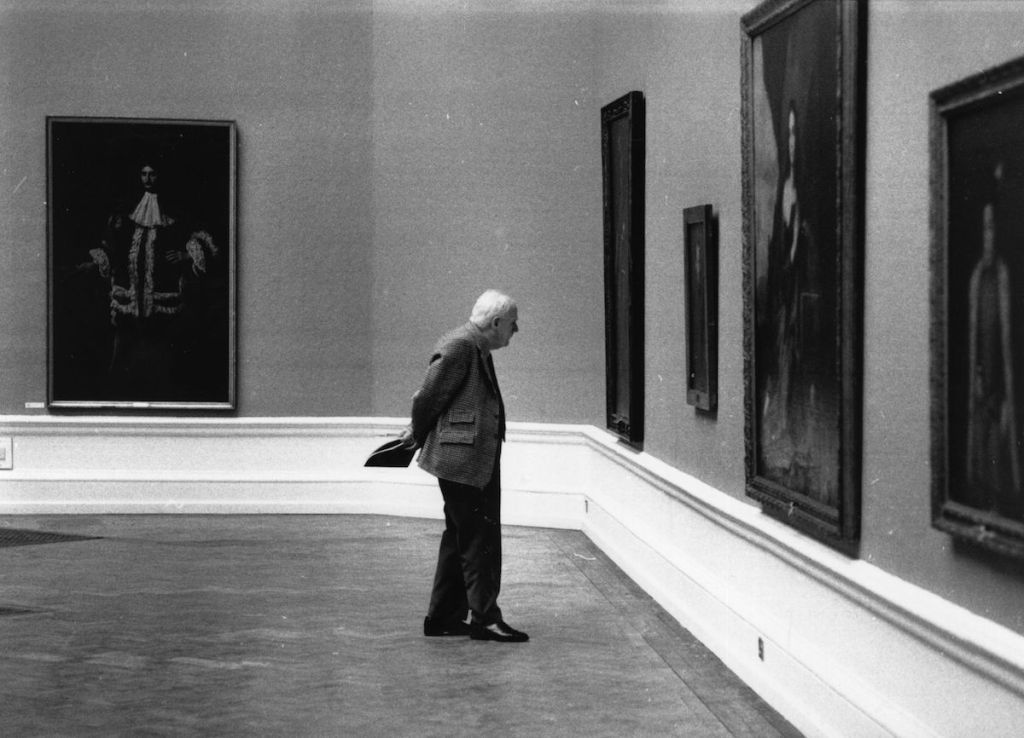
A new study published in the journal *Innovation in Aging* finds that engaging with arts and cultural activities can slow biological aging at a molecular level. Led by Daisy Fancourt of University College London, the research measured participation in four types of activities—participatory arts, receptive arts, visiting heritage sites, and other cultural activities—and used epigenetic clocks to assess aging. Those who engaged at least once a week showed a four-percent slowdown in aging, while monthly engagement yielded a three-percent slowdown.

19th-century European weapons found in cenote in Mexico

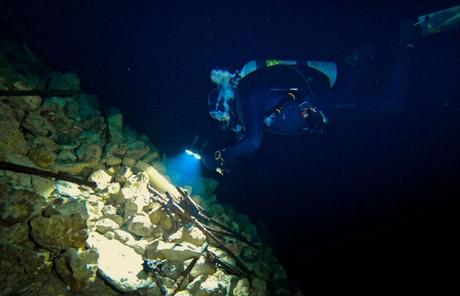
Archaeologists from Mexico's National Institute of Anthropology and History (INAH) have discovered 153 Spanish and British muskets and rifles, along with an iron cannon, in the Síis Já cenote beneath the 16th-century former convent San Bernardino de Siena in Valladolid, Mexico. The weapons were likely discarded by the Yucatecan government during the early years of the Caste War of Yucatán (1847-1901) to prevent them from falling into Maya rebels' hands. The site also yielded Maya ceramic pieces and 18th-century Chinese porcelain, and INAH reported debris and pollution affecting the cenote.

Ancient Greek and Roman Statues Found in Alexandria

An excavation in the Moharam Bek neighborhood of Alexandria, Egypt, has uncovered a significant trove of artifacts from the Greek, Roman, and Byzantine periods, including statues of deities such as Bacchus, Asclepius, and Minerva, as well as coins, lamps, ceramic vessels, a public bathhouse, mosaic flooring from a Roman villa, and advanced water systems. The discovery was announced by Egypt’s Ministry of Tourism and Antiquities and reported by Greek City Times, with officials from the Supreme Council of Antiquities highlighting the site’s comprehensive view of ancient residential and service architecture.

Israel’s Artist Reportedly Pressured Venice Biennale Before Jury’s Resignation

Artist Belu-Simion Fainaru, Israel’s representative at the Venice Biennale, reportedly pressured the exhibition’s organizers before the five-person jury abruptly resigned last week. The jury, tasked with selecting Golden Lion winners, had stated it would not consider nations charged with crimes against humanity by the International Criminal Court—applying to Israel and Russia. According to Italian news agency Adnkronos, Fainaru alleged “racial discrimination” and “antisemitism,” threatened to take his claims to the European Court of Human Rights, and the Biennale warned jury members they could be held personally liable for damages. Hyperallergic confirmed the threats of legal action, and a Biennale spokesperson acknowledged the reports were true.

How sweet it is: chocolate Russell Crowe at the Malta Pavilion

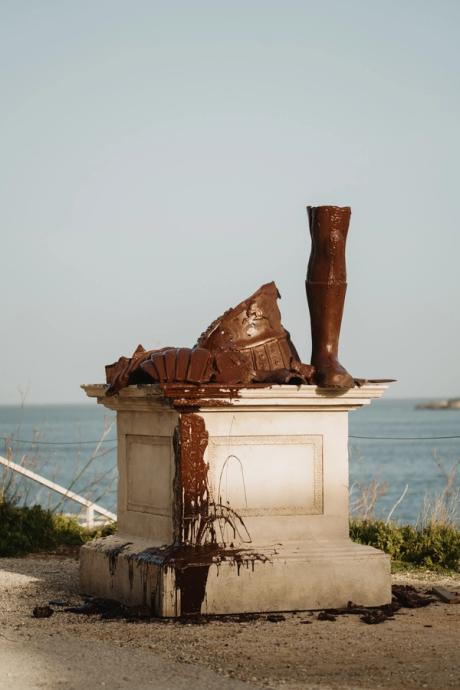
Artist Charlie Cauchi presents a 150-kg chocolate sculpture of Russell Crowe as Maximus from *Gladiator* in her installation *Dolce* at the Malta Pavilion's group exhibition *No Need To Sparkle: Experiments in Love and Revolution* in the Arsenale during the Venice Biennale. The chocolate effigy, originally made by Tiziano Cassar for the Hamrun Chocolate Festival in 2023, was previously admired by Crowe himself, who joked about being made of chocolate.

Manhattan D.A.’s Office Returns More Than 650 Looted Artifacts to India

On April 28, Manhattan District Attorney Alvin L. Bragg, Jr., announced the return of 657 trafficked antiquities valued at nearly $14 million to India. The items were recovered by the D.A.'s Antiquities Trafficking Unit and Homeland Security Investigations, and formally returned at a ceremony in New York. Among the repatriated pieces are a bronze figure of Avalokiteshvara (valued at $2 million), stolen from the Mahant Ghasidas Memorial Museum in Raipur in 1982; a red sandstone Buddha statue (valued at $7.5 million) smuggled by convicted dealer Subhash Kapoor; and a sandstone Ganesha sculpture looted by trafficker Vaman Ghiya and sold through Christie's by Nancy Wiener, who was later convicted of antiquities trafficking.

US Border Wall Construction Damages 1,000-Year-Old Indigenous Land Art in Arizona

Construction crews building a barrier between the United States and Mexico have damaged a 200-foot-long etching of a fish embedded in the land in Arizona, known as the Las Playas Intaglio, which is thought to be 1,000 years old. According to a report in the Washington Post, workers destroyed a 60-to-70-foot portion of the ancient Indigenous land art as part of President Donald Trump’s $46.5 billion border-wall project. Satellite imagery confirmed the destruction, showing bulldozer marks running through about a third of the fish formation. U.S. Customs and Border Protection acknowledged the incident, stating that a contractor inadvertently disturbed the cultural site on April 23, 2026, and that the remaining portion has been secured.

1,000-year-old archaeological site bulldozed during construction of Mexico-US border wall

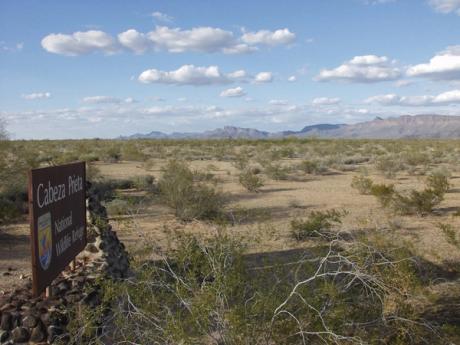
On 24 April, a Department of Homeland Security contractor bulldozed a 1,000-year-old intaglio—a 280ft by 50ft etching in the desert sand—during construction of the US-Mexico border wall in Arizona's Cabeza Prieta National Wildlife Refuge. The site, sacred to local Indigenous communities including the Hia-Ced O’odham, was part of a UNESCO biosphere and contained over 3,000 petroglyphs. Despite warnings from tribal members and refuge staff, the contractor destroyed a 70ft stretch of the fish-shaped intaglio, which elders and archaeologists describe as an irreplaceable cultural and archaeological treasure.

A Landmark Benjamin Franklin Collection Is Hitting the Auction Block

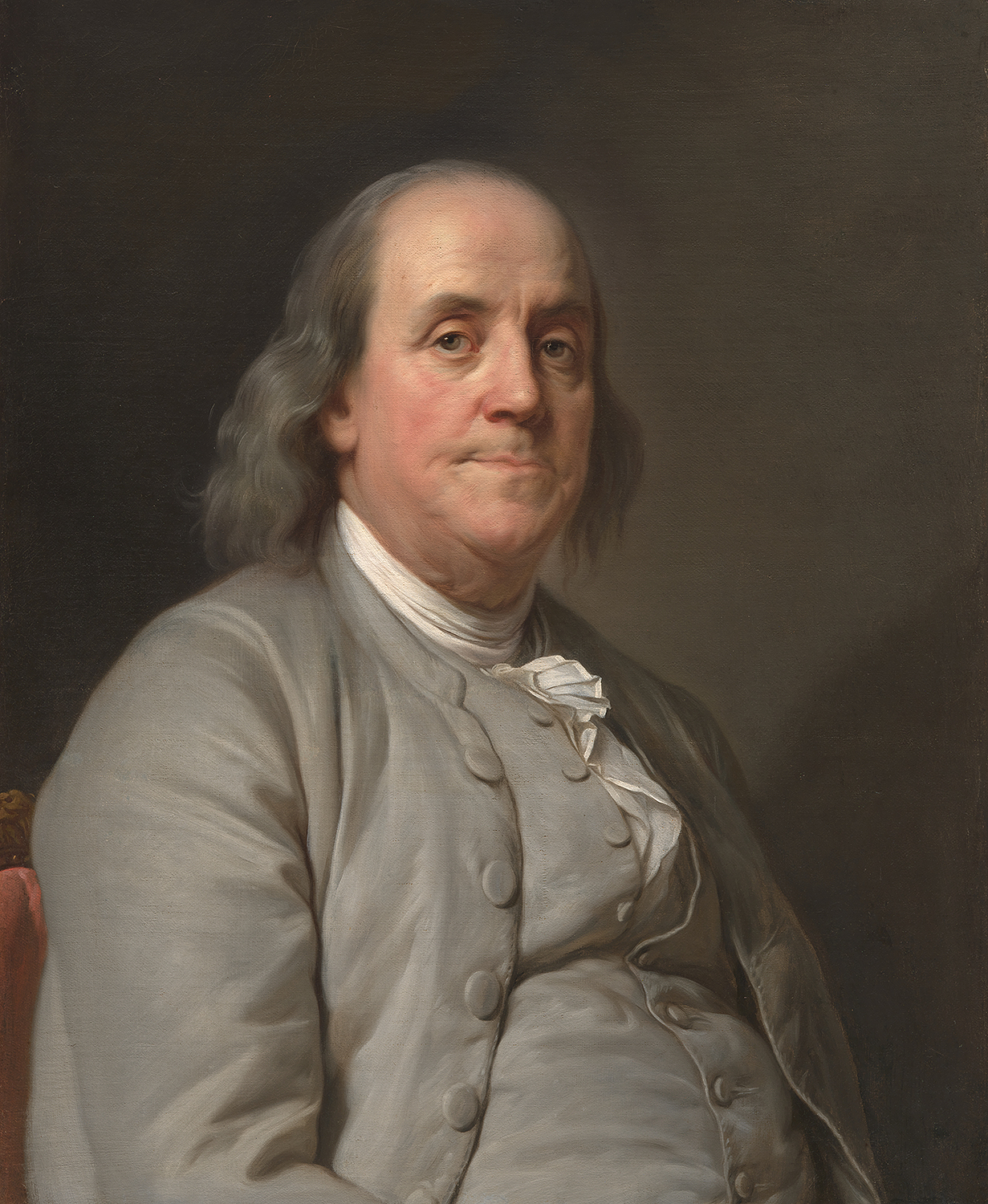
A landmark collection of Benjamin Franklin memorabilia assembled by sports and entertainment mogul Jay Snider is heading to Sotheby’s New York on June 24. The collection includes over 150 items—books, broadsides, letters, and manuscripts—tracing Franklin’s career from printer to scientist to diplomat. Highlights include a 1758 letter to Joseph Galloway (estimated $70,000–$100,000), a 1778 letter from George Washington introducing the Marquis de Lafayette (which sold for over $1 million in January), and a bound volume of Franklin’s electrical experiments ($75,000–$125,000). The full catalogue is valued at $3 million to $4.5 million, and 40 artifacts will be displayed at the Library Company of Philadelphia from May 5 to 7.

Iran Abruptly Drops Out of Venice Biennale as US and Israel’s War Continues

Iran has abruptly withdrawn from the 61st Venice Biennale, scheduled for May 9–November 22, 2026, reducing the number of participating nations from 101 to 100. The Biennale confirmed the withdrawal in a statement but did not provide a reason; Iran is now the only country listed without any artist representatives, though Aydin Mahdizadeh Tehrani remains listed as the pavilion's commissioner. The announcement comes as the Biennale opens to press amid ongoing controversy over the participation of Israel and Russia, whose pavilions have drawn protests from artists and politicians.

Bard President Leon Botstein (Finally) Resigns, Following Epstein Revelations

Leon Botstein, president of Bard College since 1975, announced his retirement on Friday following the release of an independent report by the law firm WilmerHale, commissioned by Bard's board of trustees. The report found that Botstein had not been "fully accurate" in his public accounts of his relationship with convicted sex offender Jeffrey Epstein, revealing visits to Epstein's private island, personal messages, a joint watch purchase worth $56,000, and invitations to campus. While no illegal conduct was identified, the report raised serious concerns about Botstein's leadership and judgment. Botstein will step down on June 30 but remain at Bard as a professor.

Metal Detectorists Unearth Norway’s Largest-Known Viking Coin Hoard

Two hobbyist metal detectorists, Rune Sætre and Vegard Sørlie, discovered Norway's largest-known Viking Age coin hoard in a field in Østerdalen, east-central Norway. Starting with 19 silver coins on April 10, the find grew to over 3,250 coins dating from the 980s to the 1040s, surpassing the previous record of 1,800 coins found in the 1800s. The hoard includes coins minted under Æthelred the Unready, King Cnut, and Holy Roman Emperor Otto III, as well as early Norwegian coins from after Harald Hardråde's return from Byzantium. The coins have been transferred to the Museum of Cultural History in Oslo for expert analysis.

What Biennials Reveal About the Art World

Ben Davis and Jo Lawson-Tancred of Artnet News have published complementary projects analyzing global art biennials. Davis compiled data from major biennials including Istanbul, Gwangju, São Paulo, Sharjah, and Venice over the past four years, tracking which artists have been shown most frequently worldwide since the 2022 Venice Biennale. Lawson-Tancred examined the upcoming Venice Biennale, titled "In Minor Keys" and curated by the late Koyo Kouoh, comparing the demographics of its artists to previous editions to trace shifts in the global art conversation.

U.S. Returns Hundreds of Looted Antiquities to Italy

U.S. officials formally returned 337 looted antiquities, archival materials, and artworks to Italy during a ceremony at Rome’s La Marmora barracks. The objects, spanning from the Villanovan era (900–700 B.C.E.) through the Hellenistic period (323–31 B.C.E.), include Etruscan, Greek, Italic, and Egyptian artifacts. The repatriation was coordinated by Italy’s Carabinieri Command for the Protection of Cultural Heritage, the U.S. Federal Bureau of Investigation, the Department of Homeland Security, and the office of Manhattan District Attorney Alvin Bragg Jr. Key items include a marble head of Alexander the Great, a bronze sculpture from Herculaneum, and Egyptian basalt sculptures. Some 221 objects were recovered via the Manhattan DA, while the remaining 116 were secured with help from Christie’s.

Italian Culture Minister Launches Inspection of Venice Biennale’s Russian Pavilion

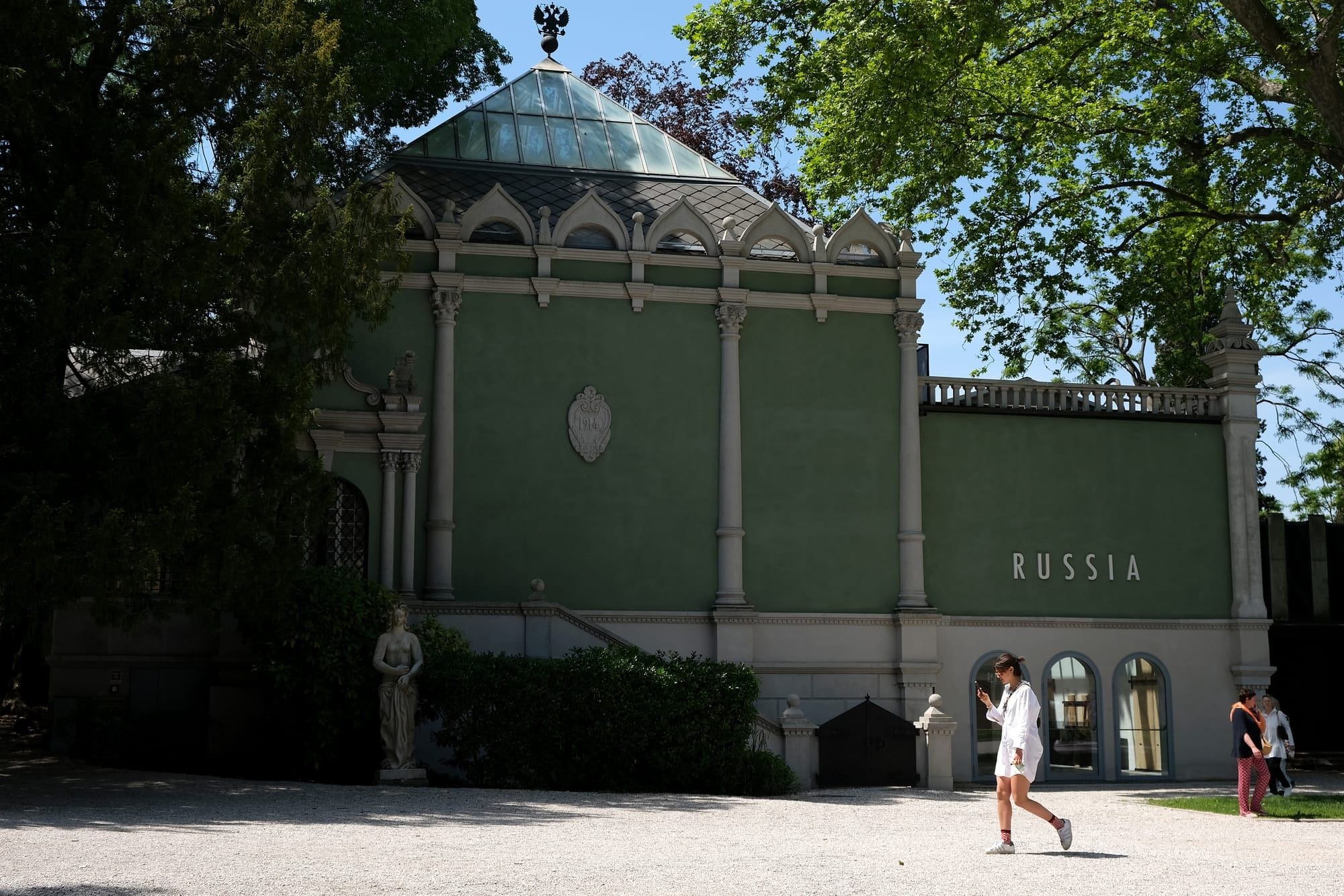
Italian Culture Minister Alessandro Giuli has launched an official inspection of the Russian Pavilion at the 61st Venice Biennale, just days before the exhibition opens. An inspector has been sent to Venice to review all documentation related to Russia's participation, focusing on potential irregularities such as visa issues for Russian artists and delegation members. The investigation follows the Biennale's international jury decision to exclude Russia and Israel from awards due to accusations of crimes against humanity. The Russian Pavilion will be open only during the pre-opening vernissage, after which it will close, with digital documentation displayed in its windows.

A Theatre Group of Exiled Belarusian Artists Arrive in Venice, With an Exhibition That Shows What Repression Feels Like

The Belarus Free Theatre, an exiled underground theater group, will stage its first official collateral exhibition at the 61st Venice Biennale, titled “Official. Unofficial. Belarus.” The show, held in the historic La Chiesa di San Giovanni Evangelista di Venezia, features site-specific paintings, a sound installation, and large-scale sculptures that aim to immerse visitors in the experience of repression under authoritarian rule. This marks only the fifth time Belarus has been present at the Biennale, and the first time it appears not as a state but as a self-governing cultural body, challenging the official narratives of nations like Russia.

Row Over Russia’s Return to the Venice Biennale Deepens

Newly leaked emails reveal that the Venice Biennale has been secretly coordinating with Russia since last summer to facilitate its return to the 2025 edition, despite ongoing international sanctions. The correspondence, published by Italian outlets Open and La Repubblica, shows Biennale president Pietrangelo Buttafuoco, director Andrea Del Mercato, and Russian commissioner Anastasia Karneeva working together on visa issues, pavilion logistics, and a legal strategy to bypass E.U. sanctions prohibiting collaboration with state-backed Russian entities. Russia's pavilion will be open during preview days with performers activating the space, while footage will play for the public from a closed pavilion thereafter.

Russia's Venice Pavilion to Close to the Public in Compliance With Sanctions

Russia will return to the 61st Venice Biennale with its national pavilion, but the exhibition will only be physically open to the press and select guests during the vernissage dates of May 5–8. From May 9 onward, the pavilion will remain closed to the public, with multimedia documentation of performances displayed on screens at the windows. The arrangement follows leaked emails among Biennale Foundation President Pietrangelo Buttafuoco, General Director Andrea Del Mercato, and Russian Pavilion Commissioner Anastasia Karneeva, revealing efforts to comply with EU sanctions while still allowing Russia's participation after two consecutive absences since its invasion of Ukraine.

Co-Working Meets Art at Brooklyn’s Newest Experimental Space

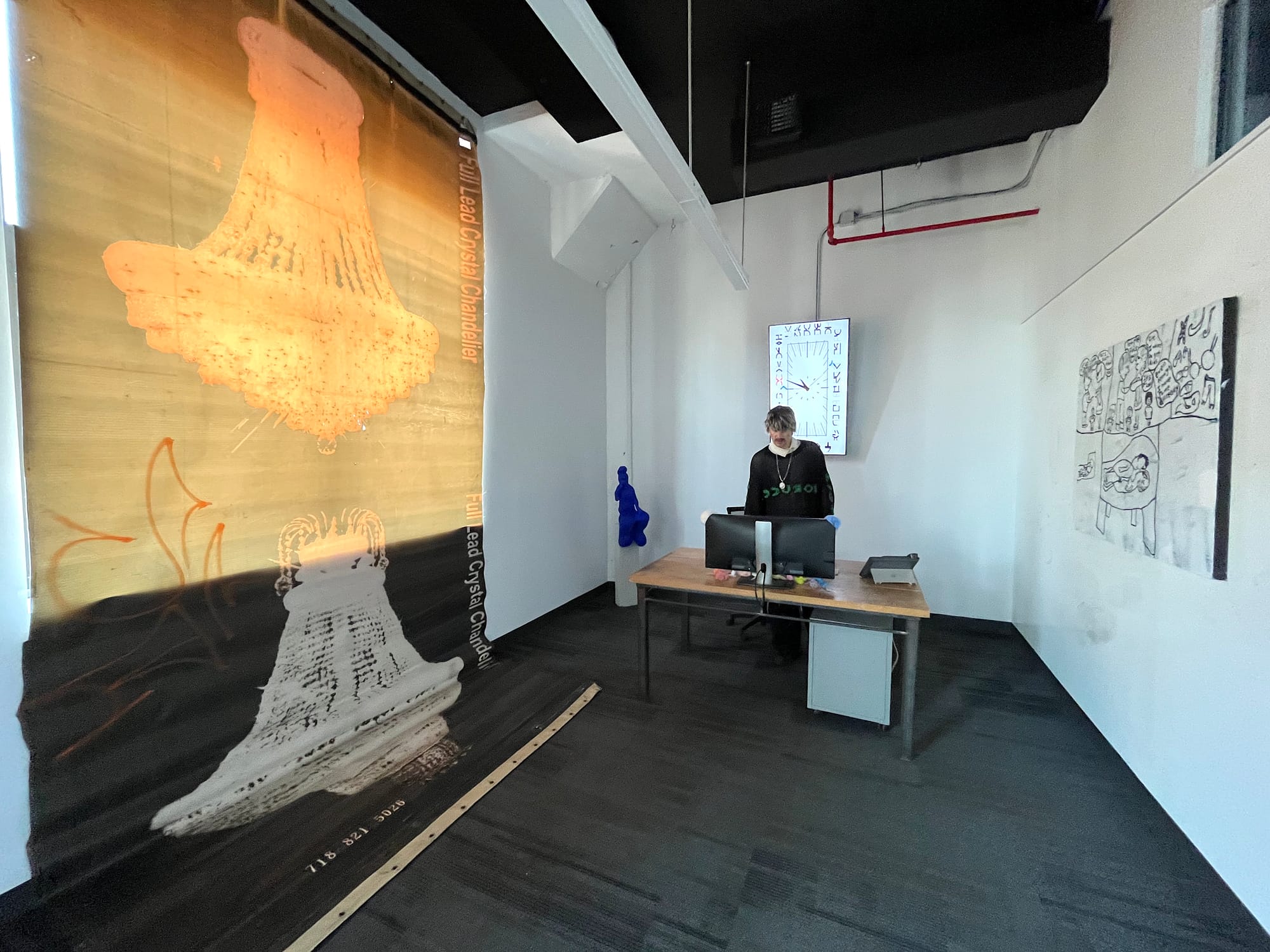
Brooklyn’s newest experimental art space, The Gallery (stylized as “The Gallry”), has opened on the fourth floor of a former automobile service station in Prospect Heights, now converted into creative offices. Curated by artist Florian Meisenberg, the exhibition features site-specific works by over 40 artists installed throughout a former guitar-string manufacturer’s office, including cubicle walls, utility closets, and HVAC systems. The space also functions as a co-working hub, with free daily spots for subscribers. The show runs through May 24 and includes events like screenings, poetry readings, and satirical corporate-themed programming.

A Buddha Is Reborn on the High Line

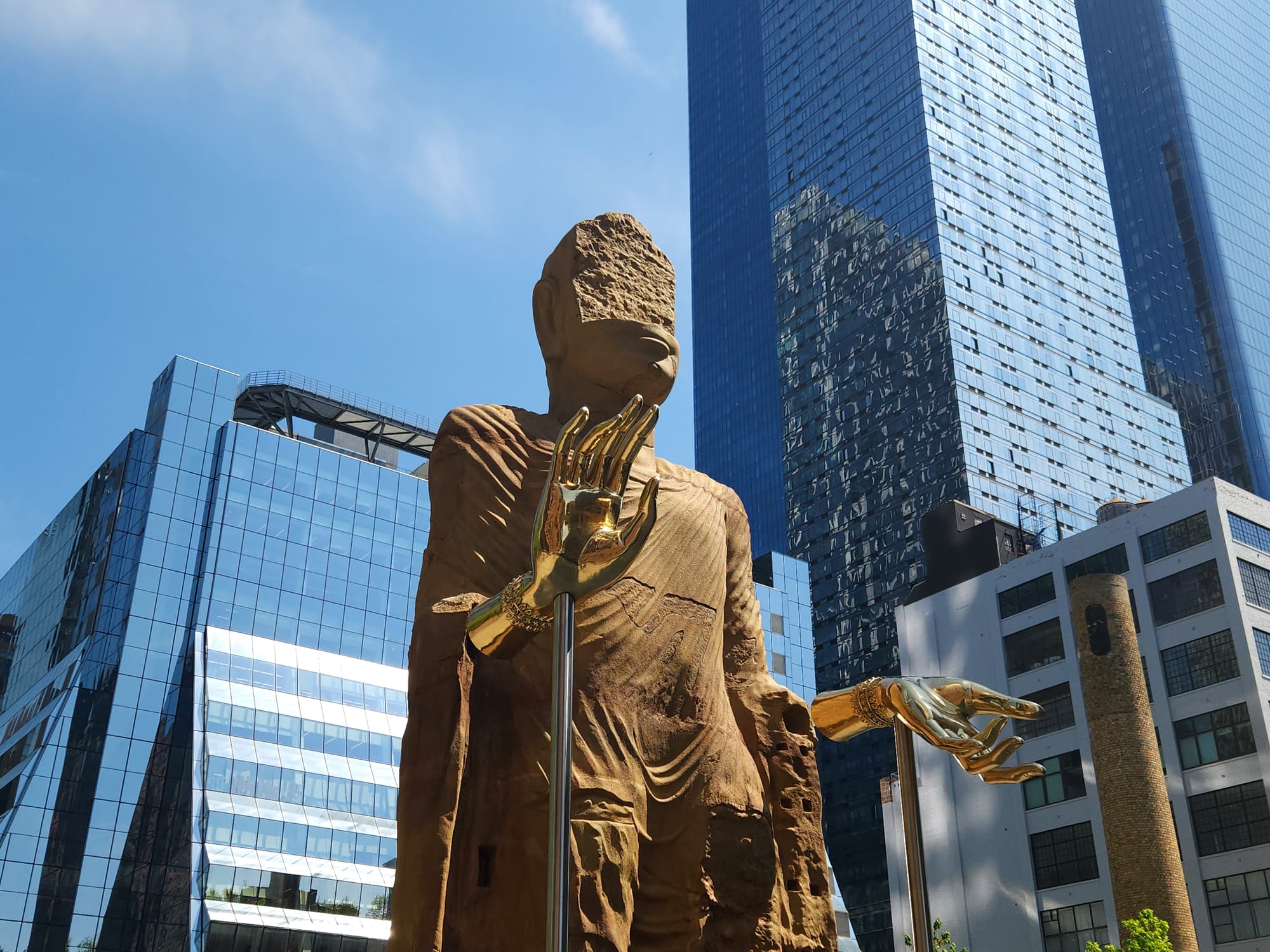
Tuan Andrew Nguyen's sandstone and brass sculpture "The Light That Shines Through the Universe" (2026) has been installed on the High Line in Manhattan as the park's fifth site-specific commission. The 27-foot-tall work, selected from nearly 60 proposals, resurrects the destroyed Bamiyan Buddhas of Afghanistan, which were demolished by the Taliban in 2001. Nguyen sourced artillery brass from Afghanistan to cast the sculpture's mudra hand gestures, symbolizing fearlessness and compassion, and had the sandstone carved in Vietnam. The piece is on view through Spring 2027.

Comment | 'Artnet-Artsy merger: a Bloomberg for art?'

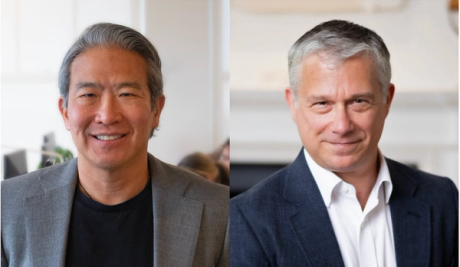
Artnet and Artsy have officially merged under private equity firm Beowolff Capital, founded by former Goldman Sachs trader Andrew Wolff. The deal, which took Artnet private, has already led to layoffs at both companies—including at least seven staff members from Artnet News—and the closure of Artnet's Berlin office. Jeffrey Yin, CEO of Artsy, will lead the combined entity. The merger aims to combine Artnet's vast database of 18 million auction results with Artsy's primary market gallery network to create a seamless user experience for discovering, researching, and buying art.

Ruins of a ‘Unique‘ Temple Complex Discovered in Northern Sinai

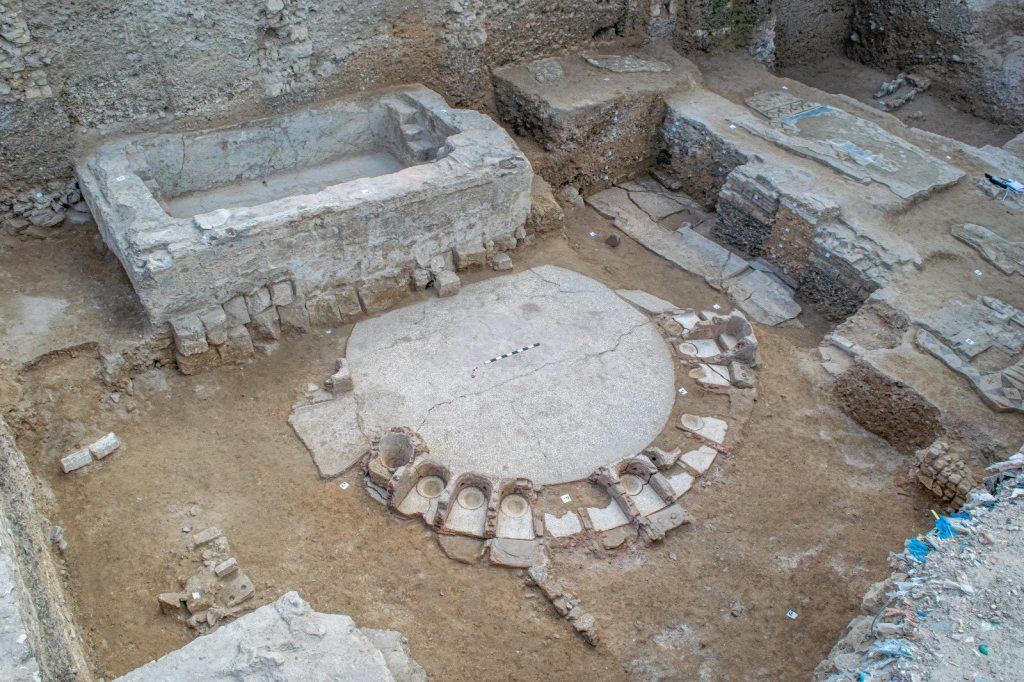
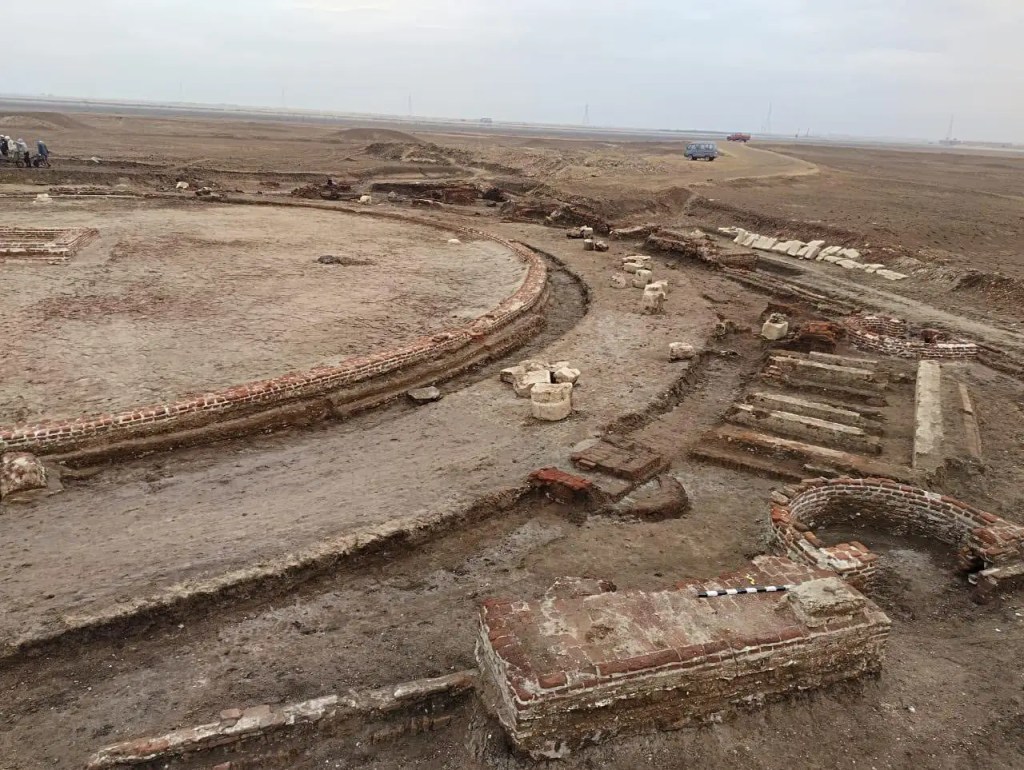
An Egyptian archaeological mission has unearthed a unique temple complex at Tell el-Farama, the site of the ancient city of Pelusium in northern Sinai. The discovery features a massive circular water basin, approximately 100 feet in diameter, surrounded by drainage channels and a central plinth likely intended for a statue. Initially mistaken for a civic building when first excavated in 2019, further study has revealed the site to be a sacred water installation used for religious rituals between the 2nd century BC and the 6th century AD.

From Eurovision to the Venice Biennale, culture contests are being overshadowed by politics

The Venice Biennale and Eurovision Song Contest are being overshadowed by political controversies rather than artistic merit. At the Venice Biennale, the Russian pavilion opened for press previews for the first time since the Ukraine invasion, a decision that may cost the festival €2m in EU funds. The Israeli pavilion will open despite protests from 200 artists and curators, while the South African pavilion will remain empty after its government blocked an artist's tribute to a Palestinian poet. The Iranian pavilion is also shut, and the awarding jury has resigned en masse, meaning no Golden or Silver Lion awards will be given for the first time in 40 years. Similarly, Eurovision's 70th anniversary is dominated by five countries boycotting over Israel's participation, with little focus on the music.

Stitches in time: the artist chronicling the DRC’s blood-soaked history in tapestry

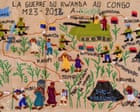
Lucie Kamusekera, an 82-year-old artist in Goma, Democratic Republic of the Congo, creates embroidered tapestries on tobacco sacks that chronicle the country's violent history. Born in 1944 and taught sewing by Italian nuns, she began documenting contemporary conflicts after witnessing a military truck filled with corpses. Her more than 70 works depict events from the colonial Belgian Congo era to the 1961 assassination of Patrice Lumumba and the second Congo war, as well as personal tragedies including her husband's murder by rebels. Despite ongoing danger from rebel offensives, she continues to stitch from her home studio, training her children and great-granddaughter to carry on her work.

Births, deaths and a first kiss: life near the frontline in Ukraine – in pictures

British-Iranian artist Aria Shahrokhshahi's long-term photographic project "Wet Ground" captures daily life in Ukraine during Russia's full-scale invasion, focusing on moments of youth, subculture, and fragile continuity rather than traditional war imagery. The series, developed through repeated stays and volunteering since 2019, includes scenes from teenage discos, hospital wards, a birth during a missile attack, and a first kiss near the frontline, all shot in stark black and white.

WAYAMOU: LENGUAS DE LO COMÚN. LAURA ANDERSON BARBATA Y SHEROANAWE HAKIHIIWE

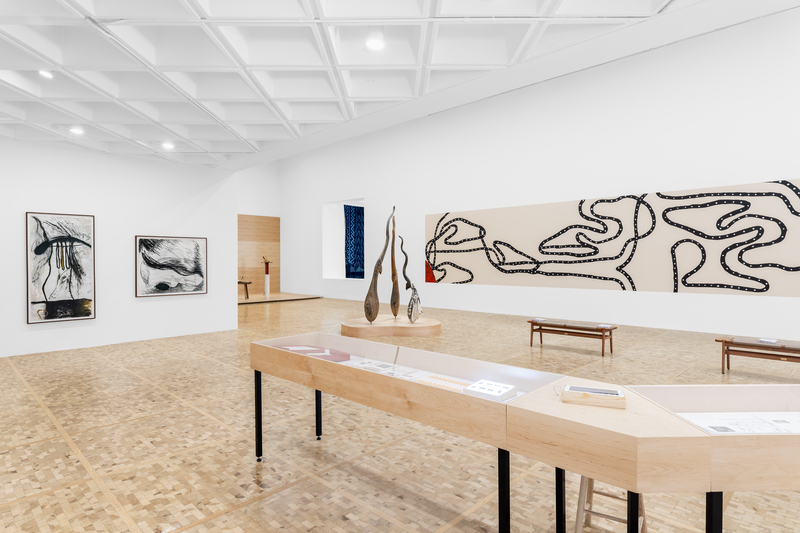
The exhibition "Wayamou: Lenguas de lo común" at the Museo Tamayo in Mexico City presents the collaborative work of artists Laura Anderson Barbata and Sheroanawe Hakihiiwe, whose artistic and political relationship spans over three decades. The show traces their shared history, beginning in the early 1990s when Barbata traveled to the Venezuelan Amazon and taught handmade papermaking using local plant fibers, introducing Hakihiiwe to a sustained visual exploration of Yanomami cosmology, oral tradition, and legacy. In 1992, they co-founded Yanomami Owë Mamotima ("Yanomami art of papermaking"), a project enabling the community to tell its own stories through its own visual and linguistic codes, exemplified by the handmade book "Shapono (Casa)" (1996).

Art, museum exhibits in Kenosha, Racine counties this week

This article highlights a series of art exhibitions and events taking place in Kenosha and Racine counties this week. The Anderson Arts Center in Kenosha is hosting a watercolor exhibition in collaboration with the Watercolor USA Honor Society through May 24. Additionally, the Kenosha Art Association is offering a Tatakizome (hammering plants) Flower Printing class with instructor Jill Montgomery. In Racine, an exhibition titled "Flying Kites in a Windless World" featuring works by Vanessa Filley continues.

Who Are the Custom Mannequins in “Costume Art” Based On? We’re So Glad You Asked

The Metropolitan Museum of Art's 2025 Costume Institute exhibition, "Costume Art," features 25 mannequins modeled after nine real people with diverse body types and mobilities. Curator Andrew Bolton collaborated with artist Samar Hejazi, who created mirrored faceless heads for the mannequins, and artist Tanda Francis, who modeled features after historical figures like André Grenard Matswa. The mannequins are distributed across two thematic sections: "Disabled Body," featuring individuals such as writer Sinéad Burke, athlete Aimee Mullins, and models Aariana Rose Philip, Antwan Tolliver, and Sonia Vera, along with imagery of the late drag performer Goddess Bunny; and "Corpulent Body," featuring models Jade O'Belle, Charlie Reynolds, artist Michaela Stark, and singer Yseult. The living subjects underwent 3D photogrammetry scanning to recreate their likenesses.

The 10 Best Venice Films

Die 10 besten Venedig-Filme

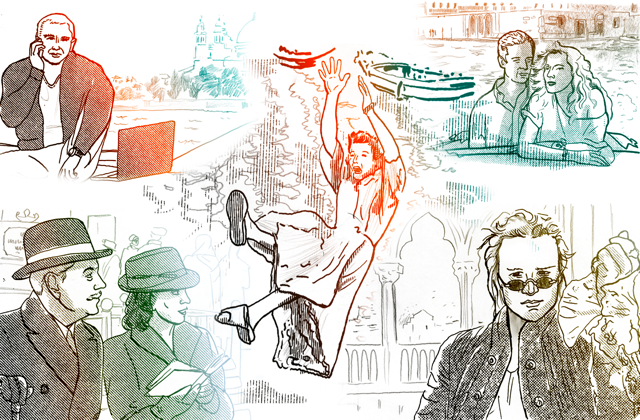
Monopol magazine has published a ranking of the ten best films set in Venice, timed to coincide with the opening of the Venice Art Biennale. The list includes titles such as Steven Spielberg's "Indiana Jones and the Last Crusade" (1989), Joseph L. Mankiewicz's "The Honey Pot" (1967), and Kenneth Branagh's "A Haunting in Venice" (2023), highlighting how the lagoon city serves as a central character in action films, comedies, and love dramas.