filter_list Showing 202 results for "CONTRA" close Clear
search
dashboard All 202 museum exhibitions 81rate_review review 34article culture 33article news 26article local 11trending_up market 10person people 2article policy 2gavel restitution 2candle obituary 1
date_range Range Today This Week This Month All
Subscribe

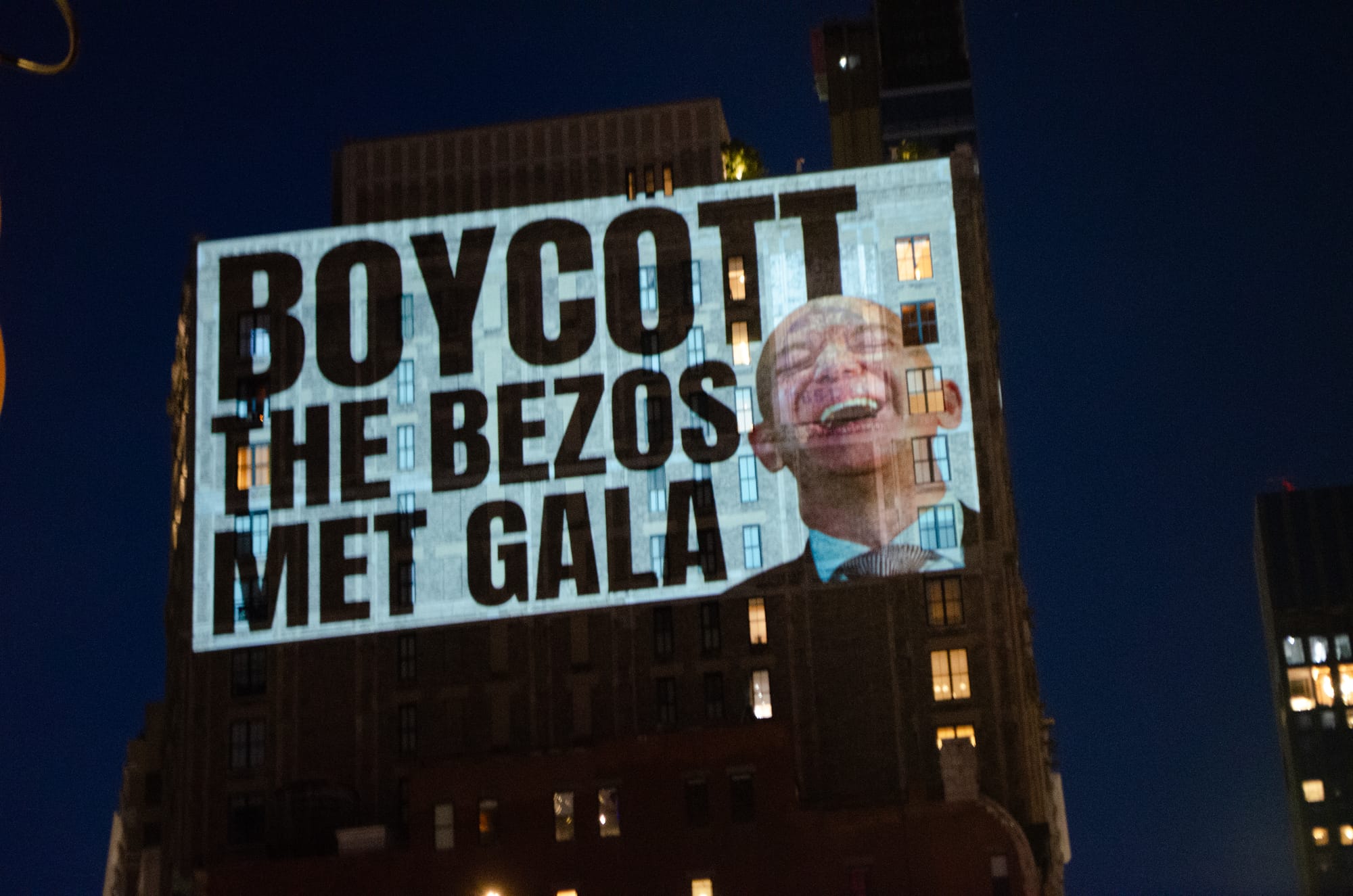
Met Gala Boycott Message Projected on Bezos’s Manhattan Penthouse

On May 3, 2026, the activist group Everyone Hates Elon projected messages condemning Jeff Bezos and Amazon onto Bezos's luxury penthouse in Manhattan's Madison Square Park, ahead of the Met Gala on May 4. The projections included a video testimony from Amazon warehouse worker Mary Hill, who called for honoring workers instead of billionaires, and slogans such as 'Boycott The Bezos Met Gala.' The group also projected onto the Chrysler and Empire State buildings. This action follows earlier protests, including littering the Met with fake urine bottles and wheatpasting posters across the city, all targeting Bezos's role as an honorary co-chair of the gala.
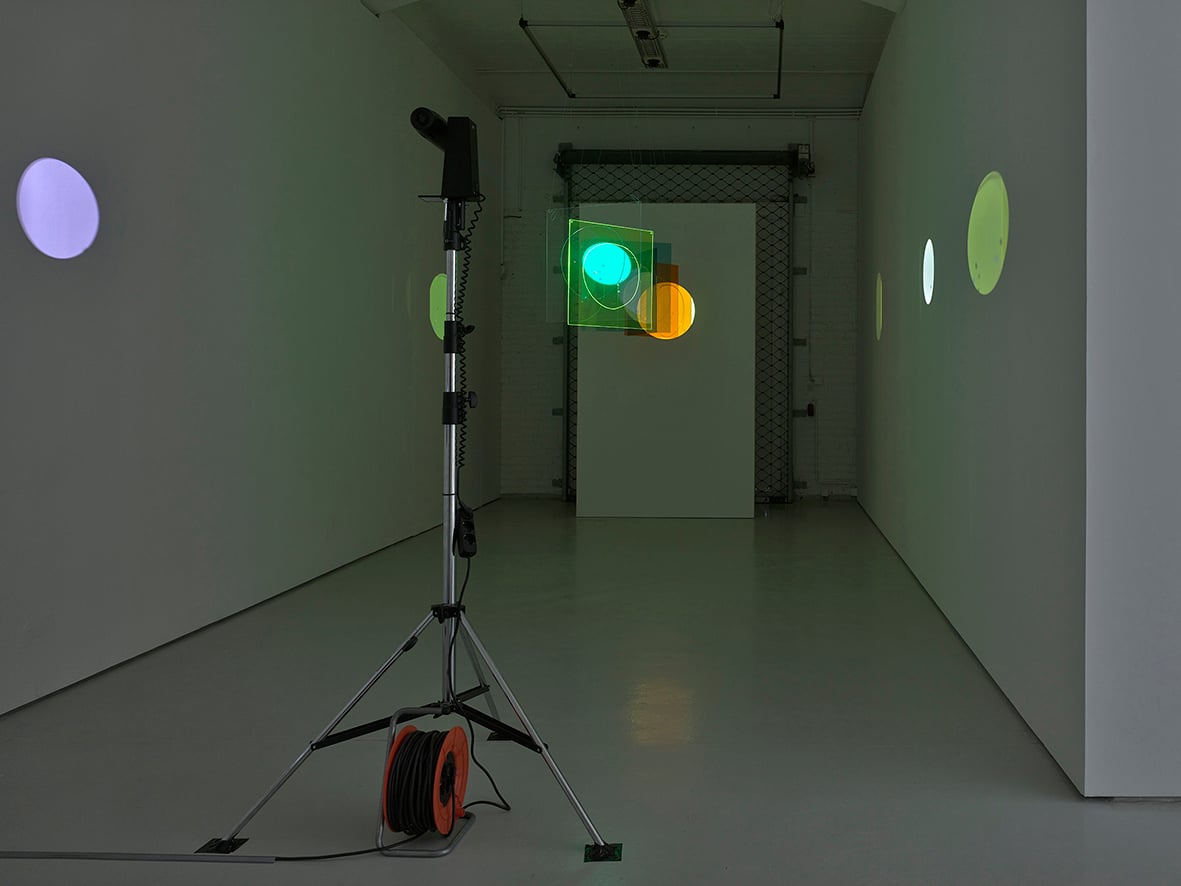
At the Casa di Goethe in Rome, two controversial episodes in the history of science in Mischa Kuball's light installations

Alla Casa di Goethe di Roma due episodi controversi della storia della scienza nelle installazioni di luce di Mischa Kuball

The Casa di Goethe in Rome is hosting a solo exhibition of German conceptual artist Mischa Kuball from April 30 to October 4, 2026. The show features two light installations: "Newton/Goethe luce nera," which contrasts Johann Wolfgang von Goethe's and Isaac Newton's opposing theories on color and light refraction, and "five suns / after Galileo," which visualizes Galileo Galilei's observations of sunspots and his conflict with the Catholic Church. The exhibition is curated by the museum's director, Gregor H. Lersch.

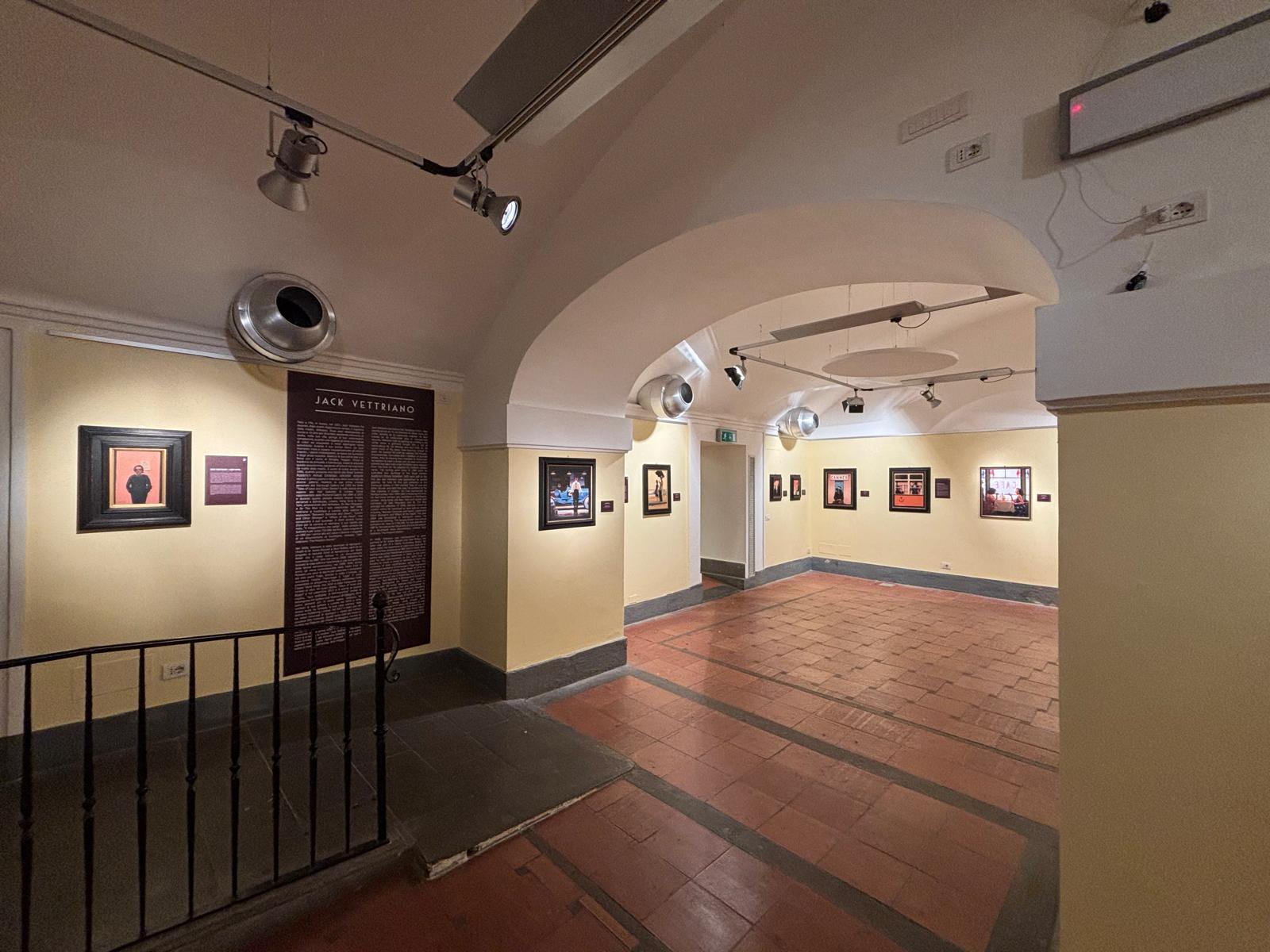
Loved by the public, but not by art critics. Jack Vettriano on show in Rome (interview with the curator)

Amato dal pubblico, ma non dai critici d’arte. Jack Vettriano in mostra a Roma (intervista alla curatrice)

A major retrospective exhibition of Scottish painter Jack Vettriano has opened at Palazzo Velli in Rome. The show, which originated in Bologna at Palazzo Pallavicini, was transformed into a posthumous retrospective following the artist's death in March 2025. It features both original oil paintings and high-quality, limited-edition reproductions on museum paper, a curatorial choice made by Vettriano himself to make his work more accessible.

The Anti-Pop Art of Domenico Gnoli

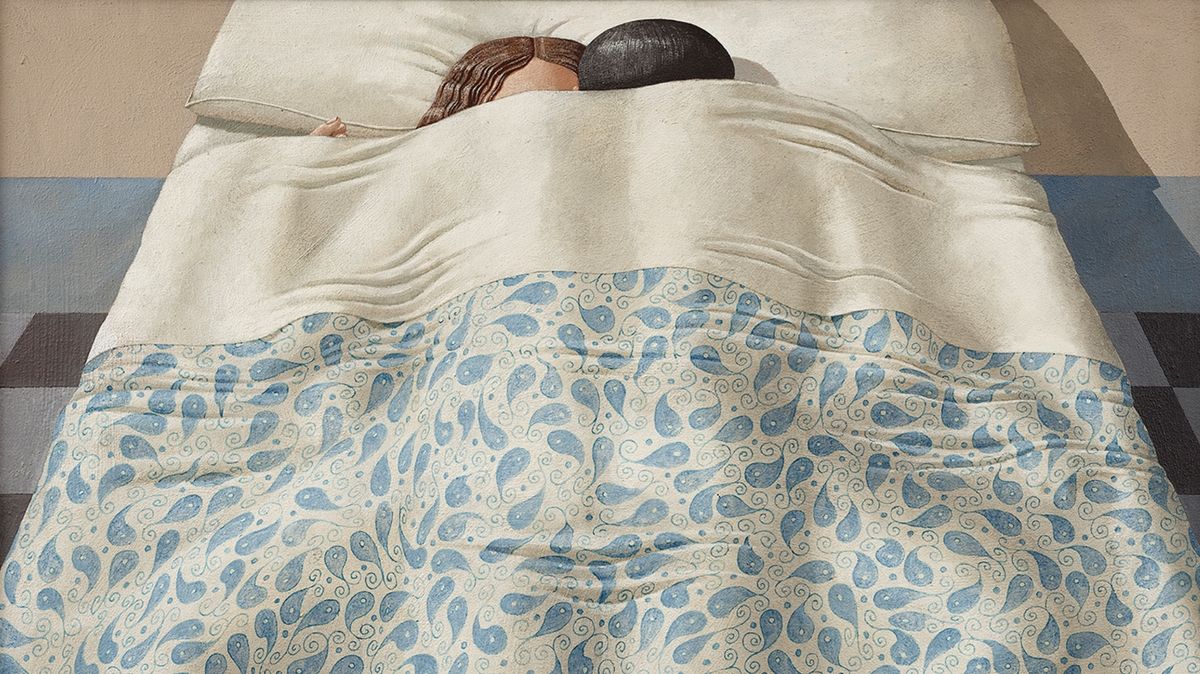
The article reviews "The Adventure of Domenico Gnoli," a retrospective at Lévy Gorvy Dayan in New York, focusing on the Italian artist's 1967 painting *L'inverno (Couple au lit)* and other works featuring intimate, fabric-rich domestic scenes. Gnoli (1933–1970), born into an art-world family, is often associated with Pop Art, but the author argues his work depicts a private, almost childlike world of memory and longing, contrasting with Pop's mass-produced commodities.

'Soulages-Hartung : Affinités électives' at Perrotin, Paris Marais, France on 25 Apr–30 May 2026

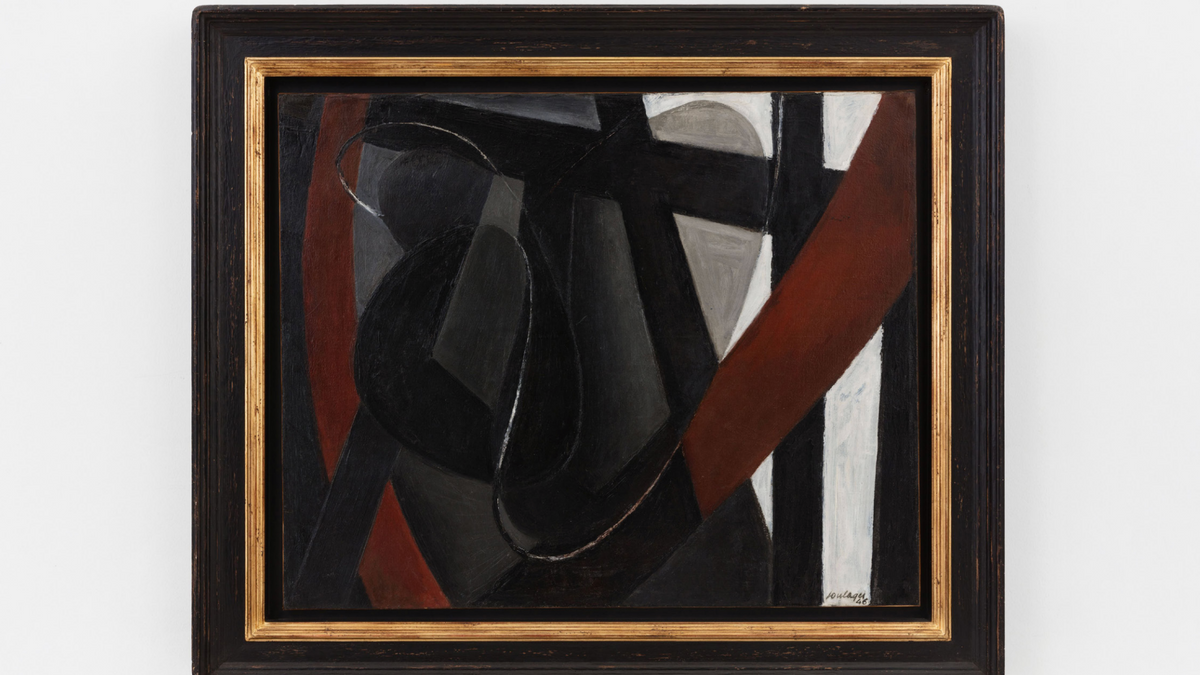
Perrotin in Paris Marais is presenting 'Soulages-Hartung: Affinités électives,' an exhibition exploring the friendship and artistic dialogue between Pierre Soulages (1919–2022) and Hans Hartung (1904–1989). The show features a never-before-screened filmed interview from the Fondation Hartung-Bergman, along with archival documents and rarely seen studio tools. It highlights their shared concerns as postwar abstract painters, their mutual support and gift exchanges—such as Soulages's walnut stain piece given to Hartung in 1948—and their contrasting approaches, with Hartung's explosive gestures versus Soulages's measured structures. The exhibition also reveals their lesser-known use of blue in the 1980s.

Forgers, One-Way Mirrors of the Art Market

Les faussaires, miroirs sans tain du marché de l’art

Anthropologist Monique Jeudy-Ballini has published a new book, "Peintres de l’ombre. Les faussaires à l’œuvre," in which she examines art forgers through an ethnographic lens. Drawing on autobiographical accounts, published interviews, and expert writings—including those of notorious forgers Wolfgang Beltracchi, Eric Hebborn, and Guy Ribes—she explores the motivations and practices of these clandestine figures, arguing that their work involves not only technical skill but also the creation of elaborate narratives and pedigrees for their forgeries. The book is part of the Ethnologiques series edited by Philippe Descola and published by Éditions Mimésis.

Required Reading

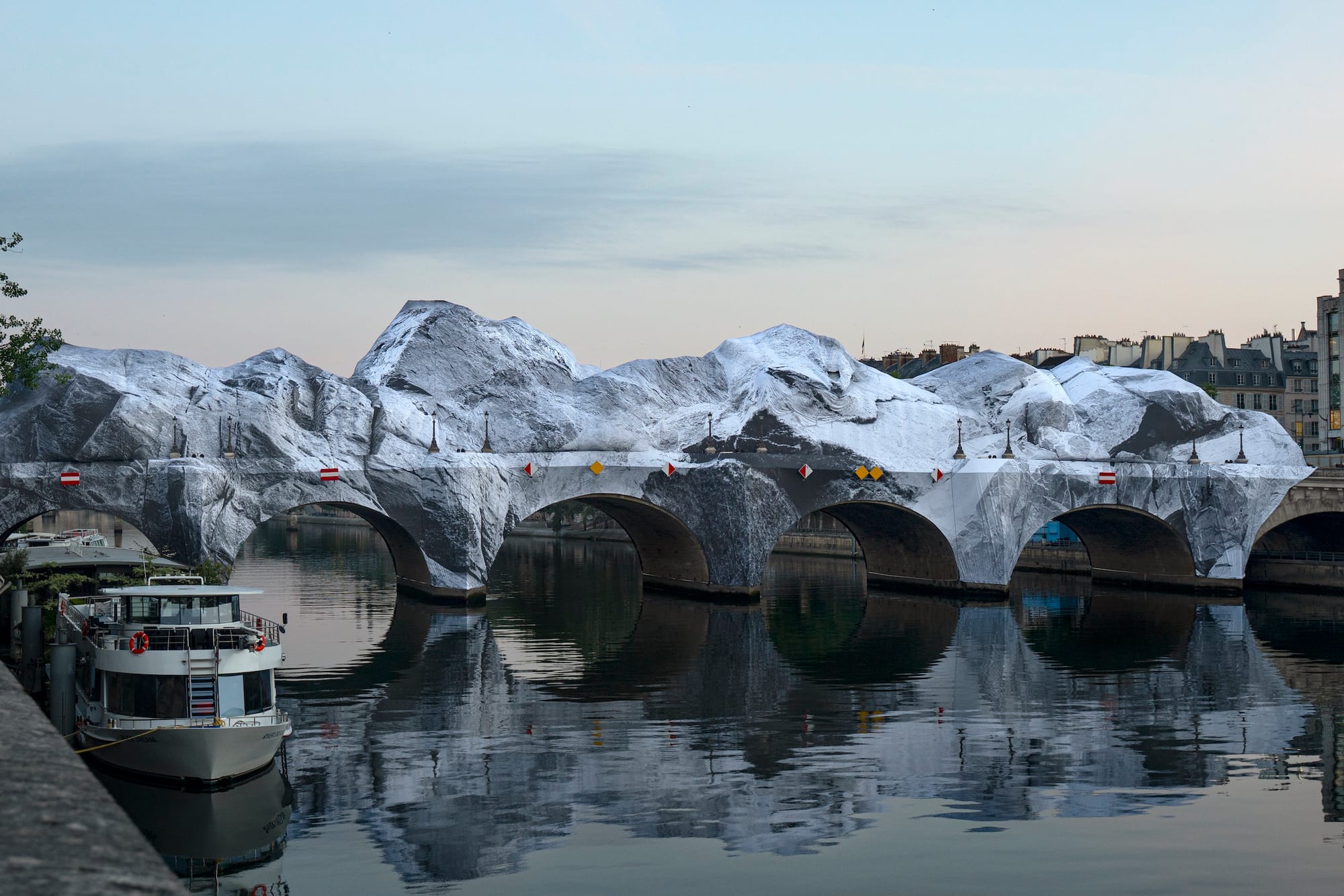
This week's Required Reading roundup from Hyperallergic covers a diverse range of art-world stories. French photographer JR has unveiled "La Caverne du Pont Neuf Paris" (2026), an optical illusion installation that transforms the pathway across the Seine into a black-and-white mountain range cave, paying homage to Christo and Jeanne-Claude's 1985 wrapping of the same bridge. Other highlights include architecture scholar Karrie Jacobs investigating a New York waterfront walking initiative for The Nation, curator Tara Contractor writing in Apollo about James McNeill Whistler's use of metallic pigments influenced by Japanese traditions, and Rob Corsini interviewing Amelia Abraham about their new book celebrating photography of queer nightlife for Dazed.

Banksy Erects Anti-Imperialist Monument in Central London

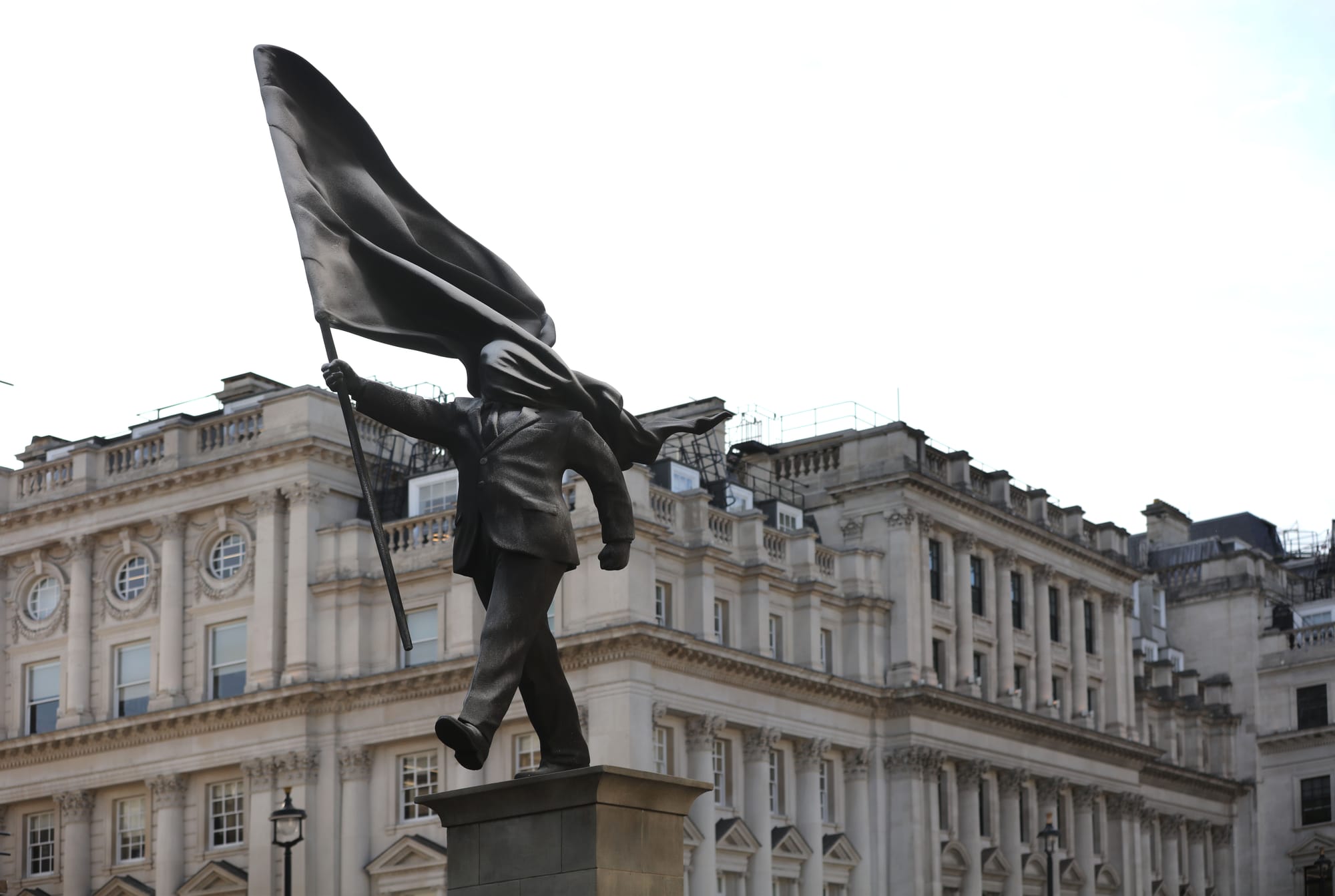
Banksy has installed a new sculpture in Waterloo Place, central London, depicting a suited man with his face covered by a flag walking off a plinth toward his demise. The artist confirmed his authorship via an Instagram video and left his signature on the base. The statue was covertly placed in the early hours of April 29, among existing monuments celebrating the British Empire, including King Edward VII, Florence Nightingale, and the Crimean War Memorial.

Joe Macken Spent 21 Years Hand-Assembling a Vast Model of New York City

Joe Macken, a Queens resident, spent 21 years hand-assembling a vast 50-by-27-foot scale model of New York City, completing it in 2025. The model, built from cardboard, glue, and balsa wood, comprises 340 individual sections and is now on long-term display at the Museum of the City of New York in an exhibition titled "He Built This City: Joe Macken’s Model." Visitors can walk around the model and use binoculars to spot familiar buildings and neighborhoods.

"Hier darf laut gelacht werden"

During the opening week of the Venice Biennale, multiple reports detail controversies surrounding the Israeli and Russian pavilions. According to Hyperallergic, artist Belu-Simion Fainaru of the Israeli pavilion threatened legal action against the Biennale after the jury sought to exclude Israel and Russia from prizes over alleged human rights violations, citing antisemitism and nationality-based discrimination. This may have prompted the jury's sudden resignation. Meanwhile, taz reports that Russia's pavilion is a macabre 'dance of death' blending techno and political denial, while Israel's pavilion faces a 'silent boycott' and social ostracism. Zeit describes protests by Pussy Riot and Femen outside the Russian pavilion as a defining image, with activists chanting 'blood sticks to the art of this country.'

A sturdy soldier in a sequin dress

"Eine kräftige Soldatin im Paillettenkleid"

Media reviews of the Venice Biennale's opening week offer contrasting takes on the German and US pavilions. Critics describe the German pavilion, curated by Sung Tieu and Henrike Naumann, as a dense, ironic East-West narrative that layers Nazi architecture with DDR prefab construction, creating what Jörg Häntzschel calls a "shockingly seamless symbiosis." The US pavilion, featuring sculptures by Alma Allen, is panned by Maximilíano Durón in ArtNews as politically timid and empty, lacking the clear colonial critiques of previous editions by Simone Leigh and Jeffrey Gibson.

On ARTE, the Ruffini Affair or the Autopsy of an Extraordinary Scandal in the Art World

Sur Arte, l’affaire Ruffini ou l’autopsie d’un scandale hors norme dans le monde de l’art

The documentary series "Le Peintre, la Pizza et le Corbeau" (The Painter, the Pizza and the Crow), available on ARTE, investigates a sprawling art forgery scandal centered on discreet dealer Giuliano Ruffini. Beginning in spring 2014 with an anonymous letter, the case led to a judicial inquiry by judge Aude Burési and France's Central Office for the Fight against Trafficking in Cultural Goods (OCBC). The series follows multiple suspicious artworks—including a Lucas Cranach Venus seized from an exhibition at the Hôtel de Caumont, a David and Goliath by Artemisia Gentileschi, and a Frans Hals portrait—each raising questions of authenticity. Ruffini, a former painter turned collector, remains an enigmatic figure, portrayed as both intuitive genius and possible cog in an opaque system.

« Le monde entier semble s’être mis en mouvement, animé par une soif d’expériences culturelles »

The article explores the transformation of cultural travel for artists and art lovers, contrasting the arduous, unknown journeys of historical figures like Eugène Delacroix, Paul Gauguin, and Ella Maillart with today's accessible, curated experiences. It describes how contemporary artists such as Ólafur Elíasson, JR, and Marina Abramović now use travel itself as a medium, creating works that engage with climate change, social issues, and presence. Destinations like the Venice Biennale, AlUla in Saudi Arabia, Naoshima in Japan, and Le Voyage à Nantes are highlighted as hubs where art and travel merge into immersive, sensory experiences.

Alison Roman’s Top Picks from the Frieze Viewing Room

Andrew Durbin reviews the national pavilions at the Venice Biennale, contrasting a vacuous US presentation with incisive and moving installations from Britain and Germany. The review highlights the thematic and emotional depth of the British and German pavilions while critiquing the lack of meaning in the US entry.

Contrast Reigns in Austn Fischer’s Conspicuous Black-and-White Photos

Austn Fischer, a Wisconsin-born, London-based photographer, creates black-and-white images that explore fashion as performance and identity. His work features striking contrasts, such as lace ruffs paired with athletic wear, and he has collaborated with clients like The New Statesman and Crack Magazine, photographing subjects including Ai Weiwei and David Byrne. Fischer describes his process as working backwards, arranging scenes intuitively and later reflecting on their personal significance, especially regarding his sexuality and masculinity.

‘It takes an entire museum to do it justice’: the Smithsonian celebrates America in 250 objects

The Smithsonian National Museum of American History in Washington DC is marking the 250th anniversary of US independence with a major exhibition titled "In Pursuit of Life, Liberty & Happiness," opening on 14 May. The show displays 250 objects spanning all three floors of the museum, ranging from a Revolutionary War-era gunboat (the Philadelphia) to a Donald Trump "Make America great again" hat. Seventy-six rarely seen objects are concentrated in entry hall cases, while the rest are embedded throughout existing galleries, connected by a "ribbon" design. Director Anthea Hartig frames the exhibition as a commemoration of moments where individuals and communities fought for recognition and identity, pairing each object with an action verb to emphasize democracy as participatory.

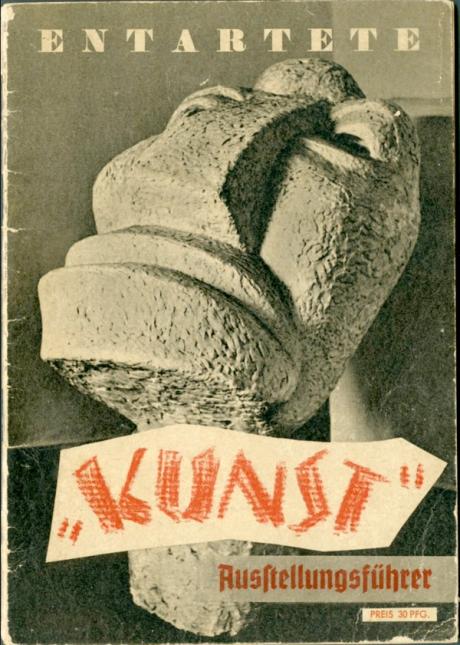
Comment | Degenerate art all over again? Nazi attack on Modern art is not far away from trends in today’s world

The article draws a provocative parallel between the Nazi regime's attack on modern art—epitomized by the 1937 "Degenerate Art" (Entartete Kunst) exhibition—and contemporary political aesthetics, particularly around President Donald Trump. It traces the Nazi party's early use of visual spectacle, mass rallies, and monumental art to forge a national identity, contrasting this with Trump's proposed National Garden for American Heroes and stalled White House Ballroom, which the author dismisses as kitsch but lacking the cohesive fascist aesthetic of Albert Speer's masterplans.

Dries Verhoeven on Representing the Netherlands at the 61st Venice Biennale

Dries Verhoeven will represent the Netherlands at the 61st Venice Biennale (2026) with a new work titled *The Fortress*, installed in the Dutch Rietveld Pavilion in the Giardini. The 25-minute performance piece transforms the sunlit pavilion into a darkened bunker, featuring a raw vocal composition using only false vocal cords. Verhoeven describes the work as a meditation on transition and self-preservation, reflecting a Western society caught between its enlightened self-image and a dark vision of the future. The piece responds to geopolitical unrest outside the Biennale grounds and is designed to be melancholic and confrontational, contrasting with the main exhibition's theme, *In Minor Keys*.

Sung Tieu on Representing Germany at the 61st Venice Biennale

Sung Tieu, who is co-representing Germany at the 61st Venice Biennale alongside Henrike Naumann, responds to a questionnaire from ArtReview about her plans for the German Pavilion. She describes her inspiration as her mother and childhood home, a site built for foreign contract workers in the GDR that later became a refuge for the diaspora. Tieu states that her work relates to the Biennale theme "In Minor Keys" through the lens of Gehrenseestrasse, a concrete record of collective memory. She also expresses skepticism about the Biennale's importance, noting that the German Pavilion's fascist architecture compels artists to work against it, and that national pavilions reveal how much work remains in undoing nationalism.

Nations Charged With Crimes Against Humanity Will Not Be Considered for Venice Biennale Awards

The jury for the 2026 Venice Biennale announced it will not consider contributions from countries whose leaders are charged with crimes against humanity for the Golden and Silver Lion awards, effectively excluding Israel and Russia. The decision, framed as a commitment to human rights and aligned with curator Koyo Kouoh's vision, comes amid broader controversy over participating pavilions, including American artists declining to represent the US and the EU withdrawing a $2.3 million grant over Russia's involvement.

The other side of the art world

Isabel Adair recounts her visits to commercial art galleries in London and Cambridge, describing the experience of viewing Eva Pade's exhibition at Galerie Thaddeus Ropac in Mayfair and the abstract works at Byard Art near King's College. She highlights the contrast between the polished, elite atmosphere of a high-end Mayfair gallery and the more accessible, profit-driven local gallery, while noting the freedom and openness of these spaces to the public.

Ayotunde Ojo Maps Interiority Under the Public Gaze

The article, a critic's guide review by Andrew Durbin, contrasts the US national pavilion presentation at an unspecified biennial with those of Britain and Germany. The US presentation is described as vacuous and lacking in meaning, while the British and German installations are praised for being incisive and moving. The review critically examines the thematic and conceptual approaches of each national pavilion, highlighting a disparity in artistic depth and engagement.

‘In Minor Keys’ Review: Its Best Moments Live in the Institutions Koyo Kouoh Built

Andrew Durbin reviews the national pavilions at the 2026 Venice Biennale, contrasting a vacuous US presentation with incisive and moving installations from Britain and Germany. The review highlights how the best moments of the exhibition live in the institutions built by curator Koyo Kouoh, who organized the Biennale's main exhibition.

Ariel West Probes Our Desire for Oil

Andrew Durbin reviews the national pavilions at the 2026 Venice Biennale, contrasting a vacuous US presentation with incisive and moving installations from Britain and Germany. The review critiques the US pavilion for lacking meaningful content, while praising the British and German contributions for their depth and emotional resonance.

Risk and Reward: Jason Price Gets Artists Business-Savvy

Jason Price, an artist and entrepreneur, is launching a new initiative called 'Risk and Reward' aimed at helping artists develop business acumen. The program offers workshops and resources on financial literacy, contract negotiation, and marketing strategies tailored specifically for visual artists. Price draws on his own experience navigating the art market to provide practical guidance, with the first sessions scheduled to take place in New York and Los Angeles.

Jerald Cooper’s Top Picks from Frieze New York 2026

Andrew Durbin reviews the national pavilions at the 2026 Venice Biennale, contrasting a vacuous US presentation with incisive and moving installations from Britain and Germany. The article critiques the lack of meaning in the American pavilion while praising the depth and emotional resonance of the British and German contributions.

Seba Calfuqueo and the Colonized Body

Andrew Durbin reviews national pavilions at the 2026 Venice Biennale, critiquing the US presentation as vacuous while praising incisive and moving installations from Britain and Germany. The review highlights Seba Calfuqueo's work in the context of colonized bodies, though the article's main focus is on the comparative quality of the pavilions.

Arsenale Review: Where Voices Resist Erasure

At the 2026 Venice Biennale's Arsenale, critic Andrew Durbin reviews national pavilions, finding the US presentation vacuous and lacking meaning, while praising the British and German pavilions for their incisive and moving installations that resist erasure. The review highlights a stark contrast in curatorial ambition and political engagement among the participating nations.

How to Have the Perfect Day at Frieze New York 2026

Andrew Durbin reviews the national pavilions at Frieze New York 2026, contrasting a vacuous US presentation with incisive and moving installations from Britain and Germany. The review highlights the disparity in conceptual depth and emotional resonance among the three pavilions, with the US offering little meaning while the British and German contributions engage seriously with contemporary issues.

Venice Biennale Diary: An Editor on the Ground

Andrew Durbin reviews national pavilions at the Venice Biennale, contrasting a vacuous US presentation with incisive and moving installations from Britain and Germany. The article is part of Frieze's Critic's Guides series, published on May 6, 2026.