filter_list Showing 131 results for "Germany" close Clear
search
dashboard All 131 museum exhibitions 53rate_review review 20candle obituary 17article policy 10article news 10article culture 6gavel restitution 5person people 4trending_up market 4article local 2
date_range Range Today This Week This Month All
Subscribe

Seoul Museum of Craft Art opens two exhibitions centered on brief but ambitious Korean Empire

The Seoul Museum of Craft Art opens two special exhibitions on Tuesday, both centered on the Korean Empire (1897-1910), a brief period when Korea sought to modernize through craft and industrial innovation. The larger exhibition, “The Hybrid,” marks 140 years of diplomatic relations between Korea and France, gathering 24 objects from European collections—23 from France and one from Germany—some not displayed in Korea in over 120 years. The second, “Folded Time, Unfolded Memory: Andong Palace,” focuses on the royal women who lived on the museum’s grounds, particularly Empress Sunjeonghyo and Princess Kim Deok-su. Museum director Kim Soo-jung described the two shows as “almost like an omnibus,” connected through the Korean Empire period.

Marie Antoinette Fashion at Museum Exhibitions [PHOTOS]

A photo essay showcases fashion and decorative arts associated with Marie Antoinette, drawn from multiple museum exhibitions in France. Images include an English-style dress and skirt (circa 1780-1790) from the Palais Galliera-Paris Musées, a shoe from 1895 at the Musée des Beaux Arts de Caen, a pug on a cushion from the Berlin Manufactory (circa 1760) courtesy of Les Arts Décoratifs, and a painting titled "The Bad News" by Jean-Baptiste-Marie Pierre. The collection also features a French-style dress (circa 1755-1765), a formal corset attributed to Queen Marie Antoinette (circa 1770-1780), and a view of the exhibition "Fashion in the 18th Century: A Fantasized Legacy" at the Palais Galliera fashion museum in Paris.

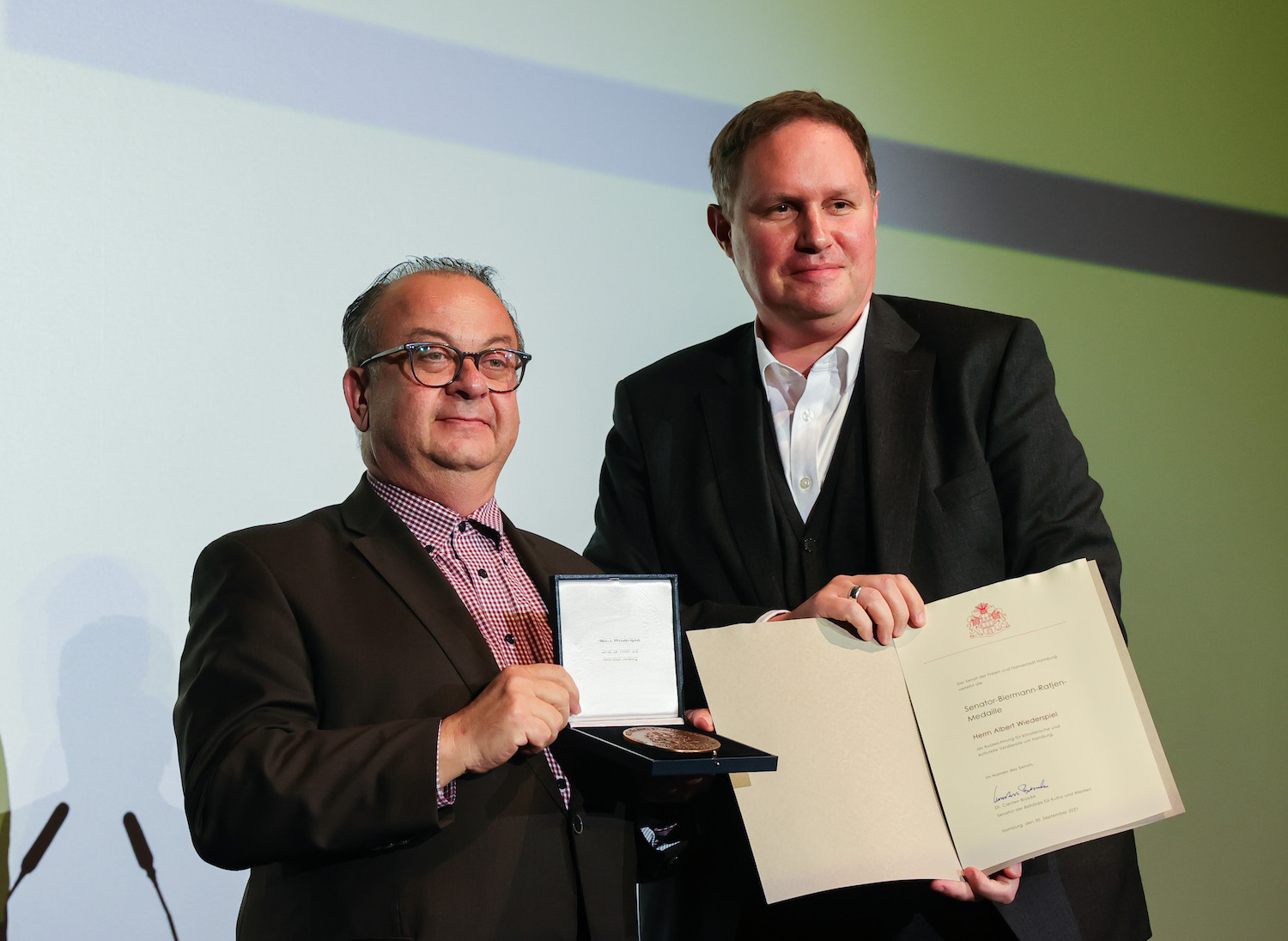
Hamburg Culture Prize No Longer Named After Biermann-Ratjen

Hamburger Kulturpreis heißt nicht mehr nach Biermann-Ratjen

The Hamburg Senate has renamed the Senator-Biermann-Ratjen Medal, a prestigious cultural award, to the "Medaille für Kunst und Kultur in Hamburg" (Medal for Art and Culture in Hamburg). The decision follows a 2024 review of historical records revealing that Hans Harder Biermann-Ratjen (1901–1969), the former culture senator for whom the medal was named, was a member of the Nazi Party (NSDAP). Historian Helmut Stubbe da Luz presented evidence in June 2024 that Biermann-Ratjen had disclosed his NSDAP membership in a 1943 application to the Reich Literature Chamber when seeking to publish a novel.

A Different Germany

Ein anderes Deutschland

The German Pavilion at the Venice Biennale, historically burdened by its Nazi-era origins, presents a new exhibition titled "Ruin." For the first time, the pavilion explicitly adopts an East German perspective, confronting its fraught past from a fresh angle. The show features massive pillars and a prominent "Germania" inscription above the entrance, directly engaging with the building's controversial history.

Bavarian State Police Return Saint Figures to the Czech Republic

LKA gibt Heiligenfiguren an Tschechien zurück

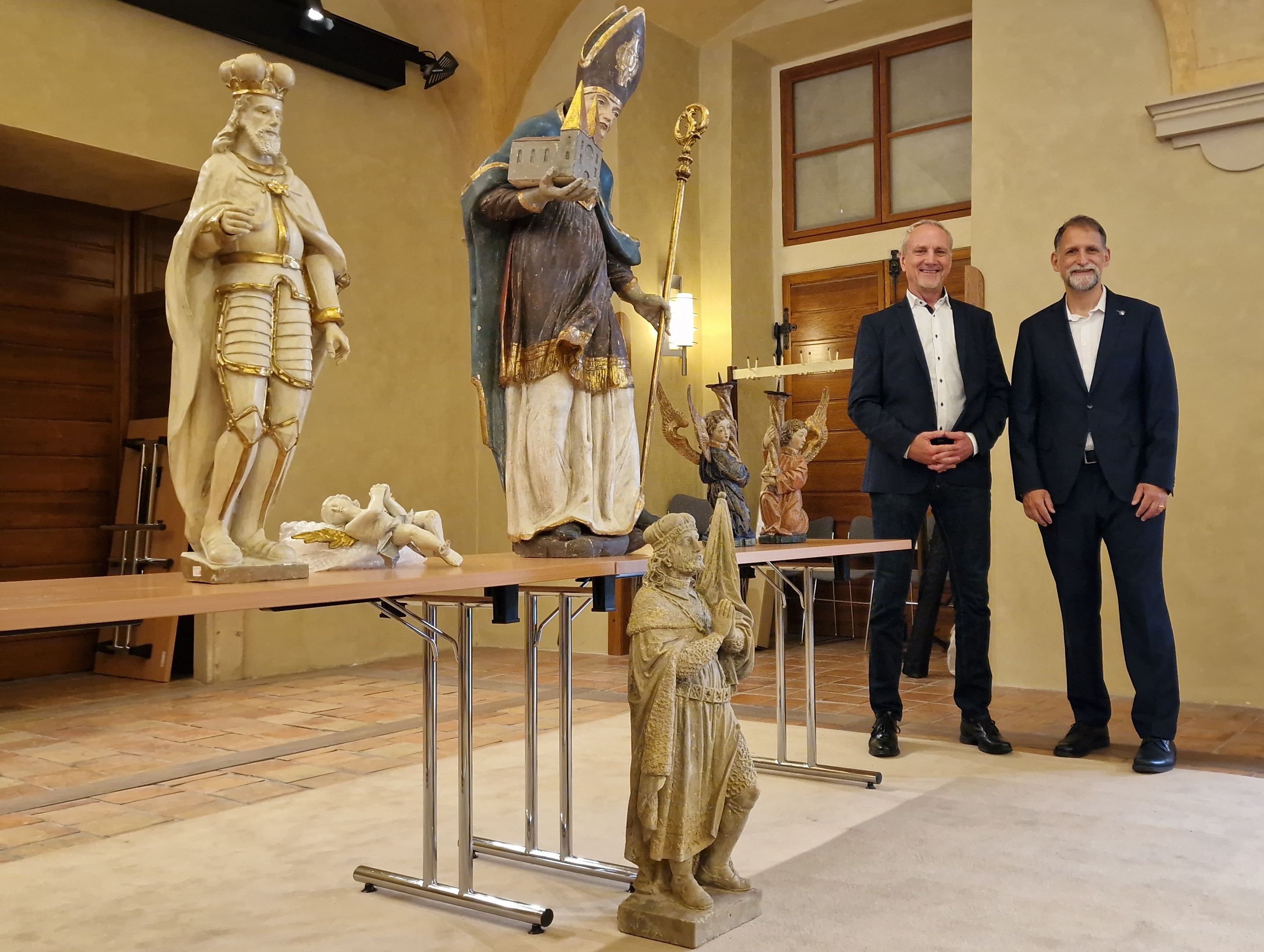
Bavarian state police (LKA) have returned five stolen religious sculptures—saints and angel figures—to Czech authorities. The artworks, some dating back centuries, were stolen from Czech churches as early as 1993 and later offered for online sale in Bavaria and Berlin. The handover ceremony took place in Prague, coordinated with Germany's Federal Government Commissioner for Culture and Media (BKM).

NRW will Verbot für Handel mit Holocaust-Dokumenten

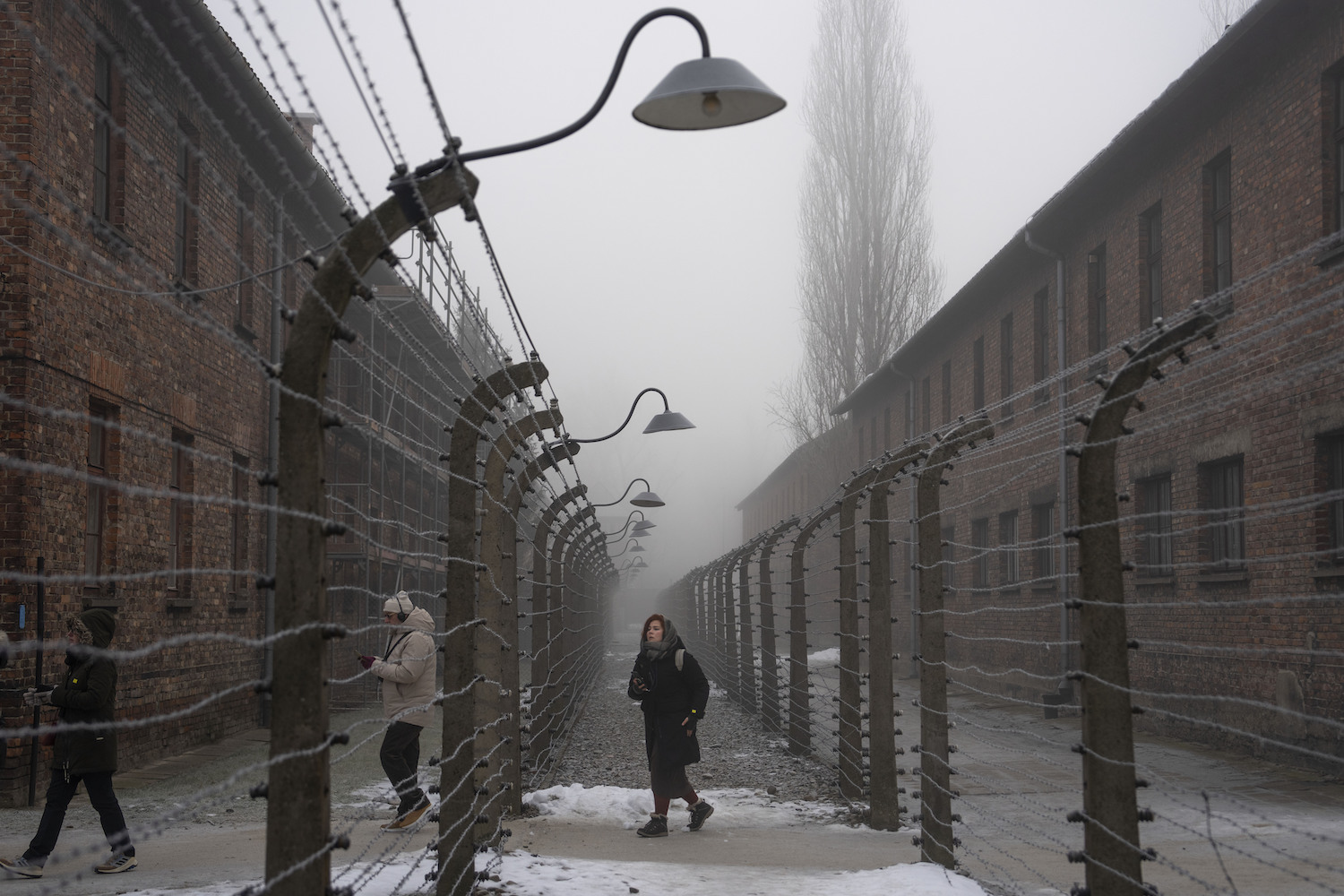
The German state of North Rhine-Westphalia (NRW) is introducing a legislative bill to ban the commercial trade of personal Holocaust documents and artifacts, such as letters from concentration camps, Gestapo cards, and yellow stars. The initiative follows international outrage over a planned auction in Neuss in November 2025, which was halted at the last moment; around 460 objects from that auction were transferred to the Auschwitz-Birkenau Foundation. The bill, to be presented at the Bundesrat session on May 8, aims to prohibit the sale of items directly linked to Nazi victims, while exempting museums, archives, and research institutions.

Berlins Kultursenatorin tritt ab

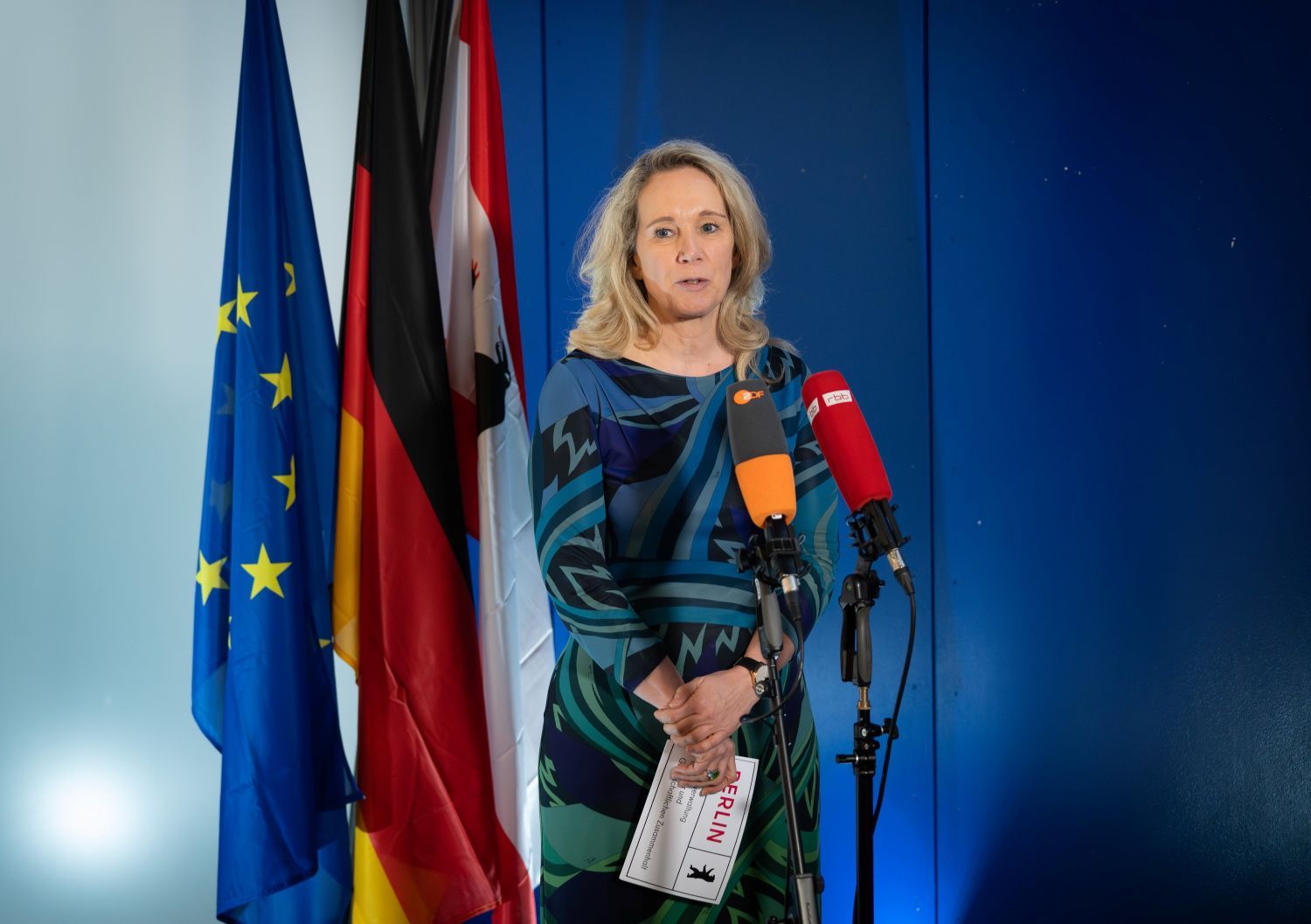
Berlin's Senator for Culture, Sarah Wedl-Wilson, has resigned after less than a year in office, following a damning report from the Berlin Court of Audit. The report found that the allocation of €2.6 million in funding for 13 projects aimed at combating antisemitism was 'evidently unlawful,' citing a lack of proper criteria, arbitrary project selection, and violations of budget regulations. Wedl-Wilson stated she stepped down to prevent damage to the fight against antisemitism, and Governing Mayor Kai Wegner accepted her resignation, vowing to reform the funding system. The opposition has accused CDU politicians of exerting improper influence to push through the projects.

Culture Senator under pressure due to Court of Audit report

Kultursenatorin wegen Rechnungshofberichts unter Druck

Berlin's Court of Audit has issued a scathing report accusing Culture Senator Sarah Wedl-Wilson (independent) of serious legal violations in the allocation of €2.6 million in anti-Semitism prevention grants for 2025. The audit found that the selection process was arbitrary, lacked transparent criteria, and violated state budget regulations. Six of the 13 funded projects—receiving €2 million—were deemed ineligible for the specific budget line, and some recipients were newly founded entities that were not properly vetted. The report warns that the grants may need to be repaid.

Associations Join Warning Against AfD Cultural Policy

Vereine schließen sich Warnung vor AfD-Kulturpolitik an

Nearly 30 cultural institutions in the German state of Saxony-Anhalt have issued a warning against the cultural policy proposals of the far-right Alternative for Germany (AfD) party, which is leading in polls ahead of state elections. The state network of cultural support associations, representing around 680 member groups, has now joined this warning, stating the AfD's plans amount to a restriction of artistic freedom and the instrumentalization of culture according to nationalist guidelines.

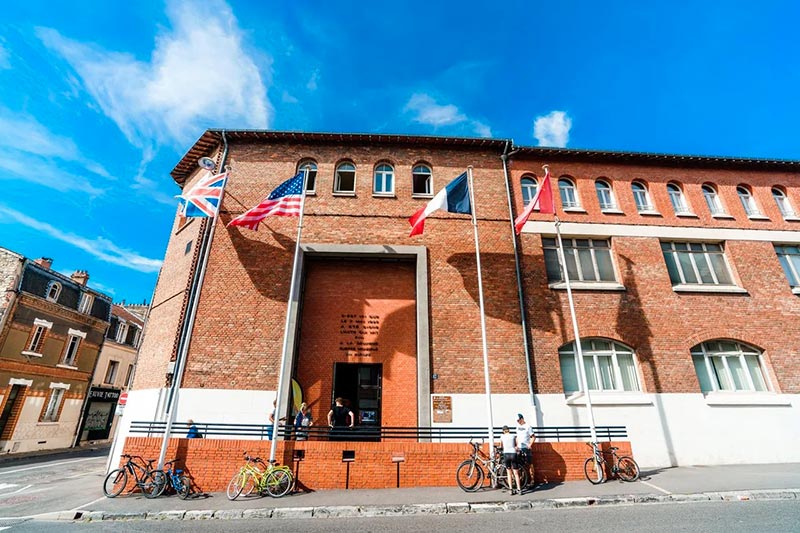
The Museum of the Surrender of Reims Reopens After a Year of Renovations

Le Musée de la Reddition de Reims rouvre ses portes après un an de travaux

The Musée de la Reddition de Reims (Museum of the Surrender of Reims) reopened on May 7, the 81st anniversary of the German surrender signed in its map room, after a year-long closure. The renovation, costing approximately €2 million, focused on conservation: protective glazing, improved ventilation and lighting, and anoxic treatment of collections to halt degradation of original maps, documents, and war room objects. The museum also overhauled its scenography, designed by Belgian agency Kascen, to present a clearer chronological narrative covering the occupation, Allied presence in Reims, liberation, postwar reconstruction, and reconciliation, rather than just the surrender itself. The museum now displays 17 uniforms, 130 objects and weapons, and 65 archival documents, including the act of capitulation and General McAuliffe's jacket.

Cultural Observatories: Dinosaurs or Subjects Capable of Interpreting the Present?

Osservatori culturali. Dinosauri o soggetti in grado di interpretare il presente?

The Cultural Observatory of Canton Ticino has published a study on cultural observatories worldwide, including a map and list of surveyed organizations. The analysis reveals that cultural observatories are not a global phenomenon but are concentrated mainly in Europe and South America, with occasional presence in North America (especially Canada and Hispanic-oriented organizations in the US). Africa, Asia, and Oceania are almost entirely absent from the map. The study also highlights a high rate of inactive observatories: among the top 10 countries by active observatories, only Germany shows an effective activity ratio. Spain has 26 active observatories out of about 45 total, while Italy has 11 active out of over 20 inactive. The research defines observatories as non-profit organizations that combine cultural and statistical expertise to deepen and transfer knowledge about the cultural sector, and classifies as inactive those with no recent activity on web or social channels.