filter_list Showing 127 results for "Germany" close Clear
search
dashboard All 127 museum exhibitions 51rate_review review 20candle obituary 16article policy 9article news 9article culture 7gavel restitution 6person people 4trending_up market 3article local 2
date_range Range Today This Week This Month All
Subscribe

Emma the joke-telling robot cracks up the care home: Paula Hornickel’s best photograph

Photographer Paula Hornickel captured a moment between an elderly care home resident named Waltraud and a social robot named Emma in Albershausen, Germany. The robot, designed for companionship in settings with staff shortages, engages residents in conversation, tells jokes, and discusses topics like favorite flowers, simulating social interaction.
Sung Tieu on Representing Germany at the 61st Venice Biennale

Sung Tieu, who is co-representing Germany at the 61st Venice Biennale alongside Henrike Naumann, responds to a questionnaire from ArtReview about her plans for the German Pavilion. She describes her inspiration as her mother and childhood home, a site built for foreign contract workers in the GDR that later became a refuge for the diaspora. Tieu states that her work relates to the Biennale theme "In Minor Keys" through the lens of Gehrenseestrasse, a concrete record of collective memory. She also expresses skepticism about the Biennale's importance, noting that the German Pavilion's fascist architecture compels artists to work against it, and that national pavilions reveal how much work remains in undoing nationalism.

How to Have the Perfect Day at Frieze New York 2026

Andrew Durbin reviews the national pavilions at Frieze New York 2026, contrasting a vacuous US presentation with incisive and moving installations from Britain and Germany. The review highlights the disparity in conceptual depth and emotional resonance among the three pavilions, with the US offering little meaning while the British and German contributions engage seriously with contemporary issues.

‘YBA & BEYOND’ Exports British Cool

Frieze critic Andrew Durbin reviews the national pavilions at the Venice Biennale, contrasting a vacuous US presentation with incisive and moving installations from Britain and Germany. The British pavilion, titled 'YBA & BEYOND,' exports British cool by showcasing works from Young British Artists and their successors, while the German pavilion offers a deeply resonant experience. The US pavilion is criticized for lacking meaningful content, raising questions about curatorial direction and national representation.

Ariel West Probes Our Desire for Oil

Andrew Durbin reviews the national pavilions at the 2026 Venice Biennale, contrasting a vacuous US presentation with incisive and moving installations from Britain and Germany. The review critiques the US pavilion for lacking meaningful content, while praising the British and German contributions for their depth and emotional resonance.

Arsenale Review: Where Voices Resist Erasure

At the 2026 Venice Biennale's Arsenale, critic Andrew Durbin reviews national pavilions, finding the US presentation vacuous and lacking meaning, while praising the British and German pavilions for their incisive and moving installations that resist erasure. The review highlights a stark contrast in curatorial ambition and political engagement among the participating nations.

Jerald Cooper’s Top Picks from Frieze New York 2026

Andrew Durbin reviews the national pavilions at the 2026 Venice Biennale, contrasting a vacuous US presentation with incisive and moving installations from Britain and Germany. The article critiques the lack of meaning in the American pavilion while praising the depth and emotional resonance of the British and German contributions.

Seba Calfuqueo and the Colonized Body

Andrew Durbin reviews national pavilions at the 2026 Venice Biennale, critiquing the US presentation as vacuous while praising incisive and moving installations from Britain and Germany. The review highlights Seba Calfuqueo's work in the context of colonized bodies, though the article's main focus is on the comparative quality of the pavilions.

Ayotunde Ojo Maps Interiority Under the Public Gaze

The article, a critic's guide review by Andrew Durbin, contrasts the US national pavilion presentation at an unspecified biennial with those of Britain and Germany. The US presentation is described as vacuous and lacking in meaning, while the British and German installations are praised for being incisive and moving. The review critically examines the thematic and conceptual approaches of each national pavilion, highlighting a disparity in artistic depth and engagement.

Seven Shows to Catch Across the US This May

Art critic Andrew Durbin reviews national pavilion presentations at the Venice Biennale, contrasting a vacuous US exhibition with incisive and moving installations from Britain and Germany. The review highlights the disparity in thematic depth and emotional resonance among the three pavilions.

Off-Site Exhibitions Review: The Politics of Listening

Andrew Durbin reviews the national pavilions at an unnamed biennial, contrasting a vacuous US presentation with incisive and moving installations from Britain and Germany. The review critiques the lack of meaningful engagement in the US pavilion while praising the depth and emotional resonance of the British and German contributions.

The Books That Influence Sohrab Hura

Andrew Durbin reviews the national pavilions at an unnamed biennial, contrasting a vacuous US presentation with incisive and moving installations from Britain and Germany. The review critiques the lack of meaning in the US pavilion while praising the depth and emotional resonance of the British and German contributions.

‘Afterimages’: What Does It Mean to See Through Overload?

Andrew Durbin reviews the national pavilions at the Venice Biennale, contrasting a vacuous US presentation with incisive and moving installations from Britain and Germany. The article critiques the lack of meaningful engagement in the US pavilion while praising the depth and emotional resonance of the British and German contributions.

Frieze’s Christine Messineo Takes a Tour of Chelsea

Andrew Durbin reviews national pavilions at the Venice Biennale, contrasting a vacuous US presentation with incisive and moving installations from Britain and Germany. The review highlights the disparity in thematic depth and emotional resonance among the three pavilions.

Venice Biennale Diary: An Editor on the Ground

Andrew Durbin reviews national pavilions at the Venice Biennale, contrasting a vacuous US presentation with incisive and moving installations from Britain and Germany. The article is part of Frieze's Critic's Guides series, published on May 6, 2026.

‘In Minor Keys’ Review: Its Best Moments Live in the Institutions Koyo Kouoh Built

Andrew Durbin reviews the national pavilions at the 2026 Venice Biennale, contrasting a vacuous US presentation with incisive and moving installations from Britain and Germany. The review highlights how the best moments of the exhibition live in the institutions built by curator Koyo Kouoh, who organized the Biennale's main exhibition.

What’s Showing in Chelsea During Frieze Week New York

This article is a critic's guide reviewing national pavilions during Frieze Week New York. Andrew Durbin contrasts a vacuous US presentation with incisive and moving installations from Britain and Germany, questioning the meaning and depth of the American contribution.

National Pavilions Review: Who’s Afraid of Meaning?

Andrew Durbin reviews national pavilions at a major biennial, contrasting a vacuous US presentation with incisive and moving installations from Britain and Germany. The review critiques the lack of meaningful content in the US pavilion while praising the depth and emotional resonance of the British and German contributions.

National Pavilions Review: Porta-Potties, Porn and a Defiant Rave

Frieze critic Andrew Durbin reviews national pavilions at an unnamed biennial, contrasting a vacuous US presentation with incisive and moving installations from Britain and Germany. The US pavilion is criticized for lacking meaning, while the British and German pavilions feature incisive and moving works, including a defiant rave and provocative content like porta-potties and porn.

Gabrielle Goliath Sounds a Call to Action in Venice

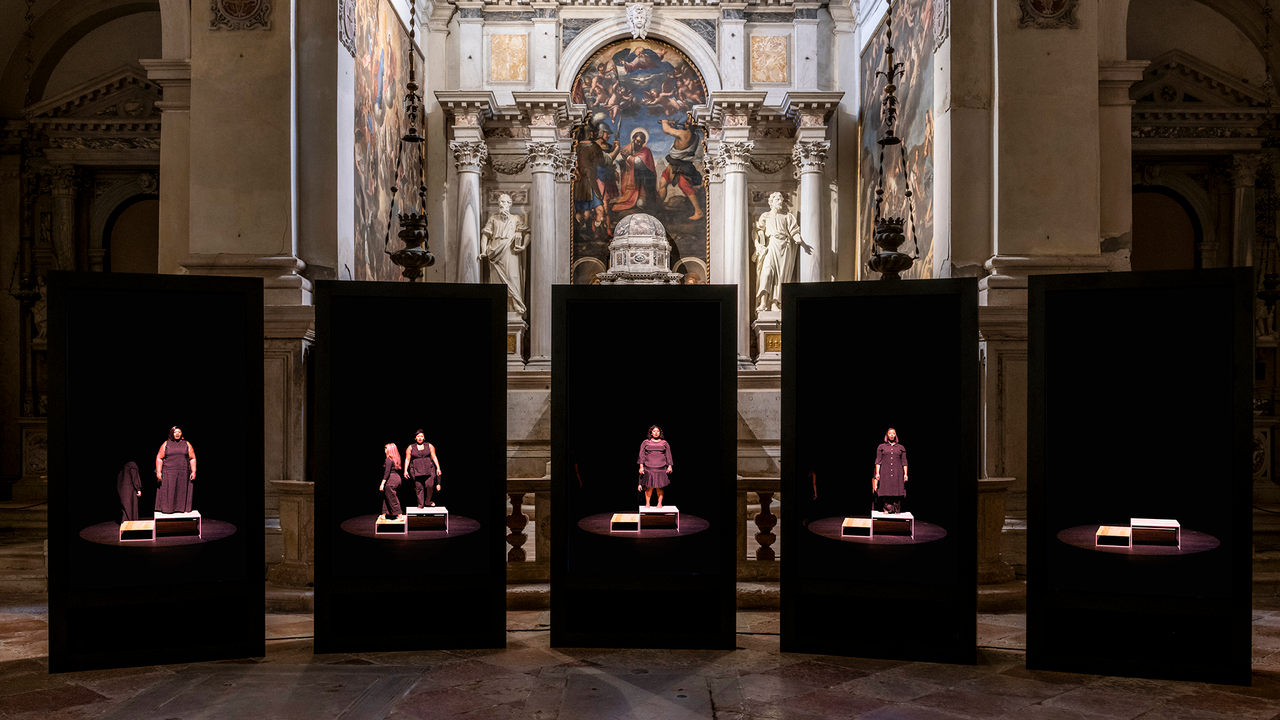
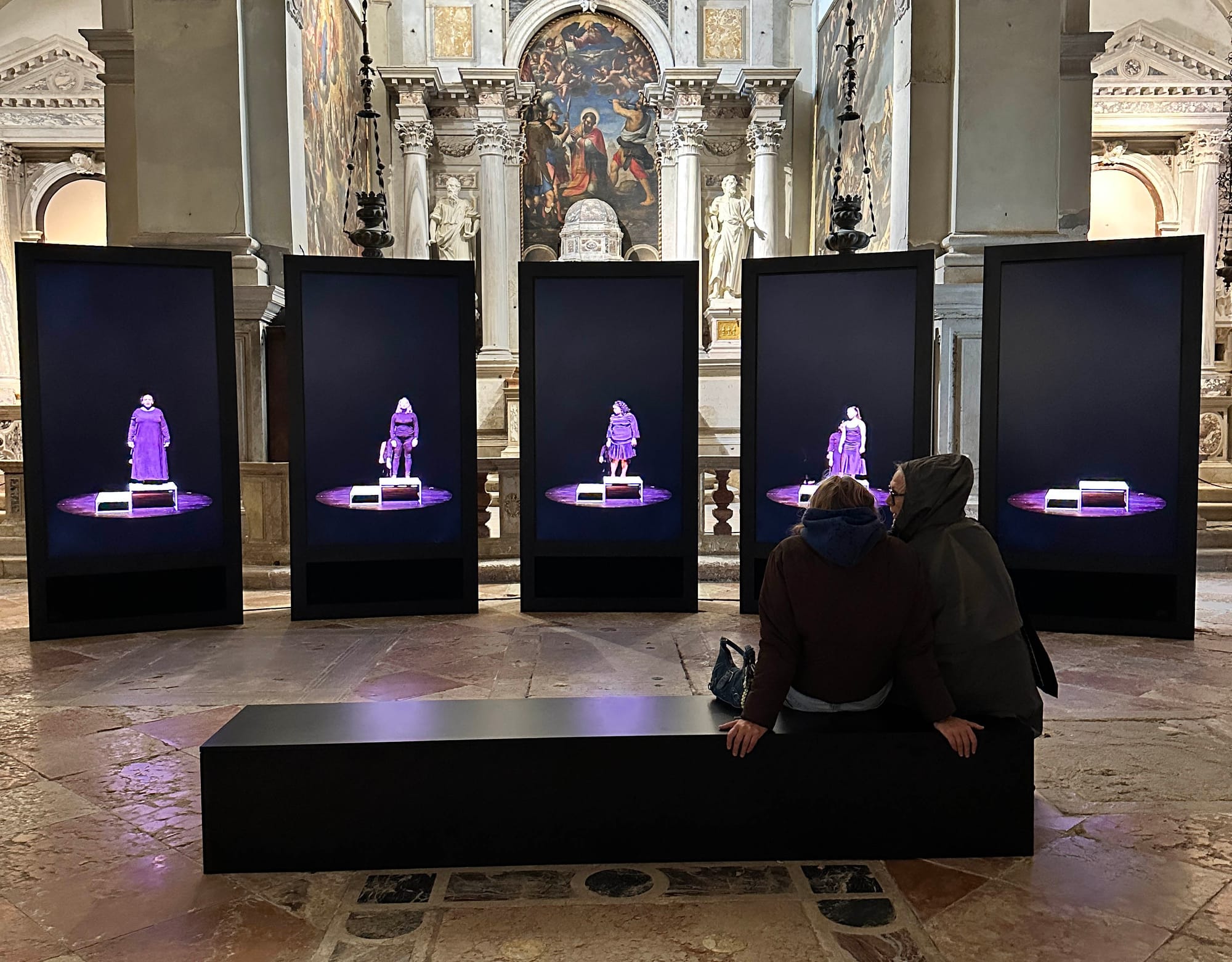
Gabrielle Goliath’s exhibition "Elegy" is presented as South Africa’s unofficial pavilion at the 61st Venice Biennale, after the country’s Culture Minister Gayton McKenzie overrode an independent committee’s selection of Goliath, citing her proposed inclusion of a memorial for Palestinians killed in Gaza. The installation features three video works in which singers sound a single note in tribute to victims of violence: a South African femicide victim, two women killed in Germany’s colonial genocide in Namibia, and Palestinian poet Heba Abunada. The show occupies the Chiesa di Sant'Antonin in Venice, curated with Ingrid Masondo, after a legal challenge against McKenzie was dismissed.

'ART FROM WAR TO WAR: CHASING BUTTERFLIES OVER THE VERGE OF A CLIFF' at Beck & Eggeling International Fine Art, Düsseldorf, Germany on 28 May–15 Aug 2026

An exhibition titled 'ART FROM WAR TO WAR: CHASING BUTTERFLIES OVER THE VERGE OF A CLIFF' is on view at Beck & Eggeling International Fine Art in Düsseldorf, Germany, from 28 May to 15 August 2026. Curated by Antonio Geusa and Kay Heymer, the show features selected works from the Valeria Rodnianski collection, spanning artists from Germany and the Soviet/post-Soviet space. It is structured around two historical turning points—the construction of the Berlin Wall in 1961 and Russia's full-scale invasion of Ukraine in 2022—and organized into three thematic sections: Topos, Anthropos, and Logos, exploring place, human experience, and language.

First-of-its-kind MCA exhibition plays the beat of Caribbean activism

Carla Acevedo-Yates has curated "Dancing the Revolution: From Dancehall to Reggaetón," a major exhibition at the Museum of Contemporary Art Chicago, which will be her final show before departing for a role on the Documenta 16 team in Germany. The exhibition, which occupies the museum's entire fourth floor through September 20, features over 40 artists and explores the social and political histories of Caribbean music genres.

Who Owns These Artworks? Musée d’Orsay Hopes Visitors Can Help Find Out.

The Musée d’Orsay in Paris has opened a new room in its permanent display featuring 13 artworks recovered from Germany and Austria after World War II, whose provenance remains unknown. The museum is inviting visitors to help identify the original owners of these pieces, which were looted or displaced during the war and later restituted to France.

The 2026 Venice Biennale is light and conscious

Quella del 2026 è una Biennale di Venezia leggera e consapevole

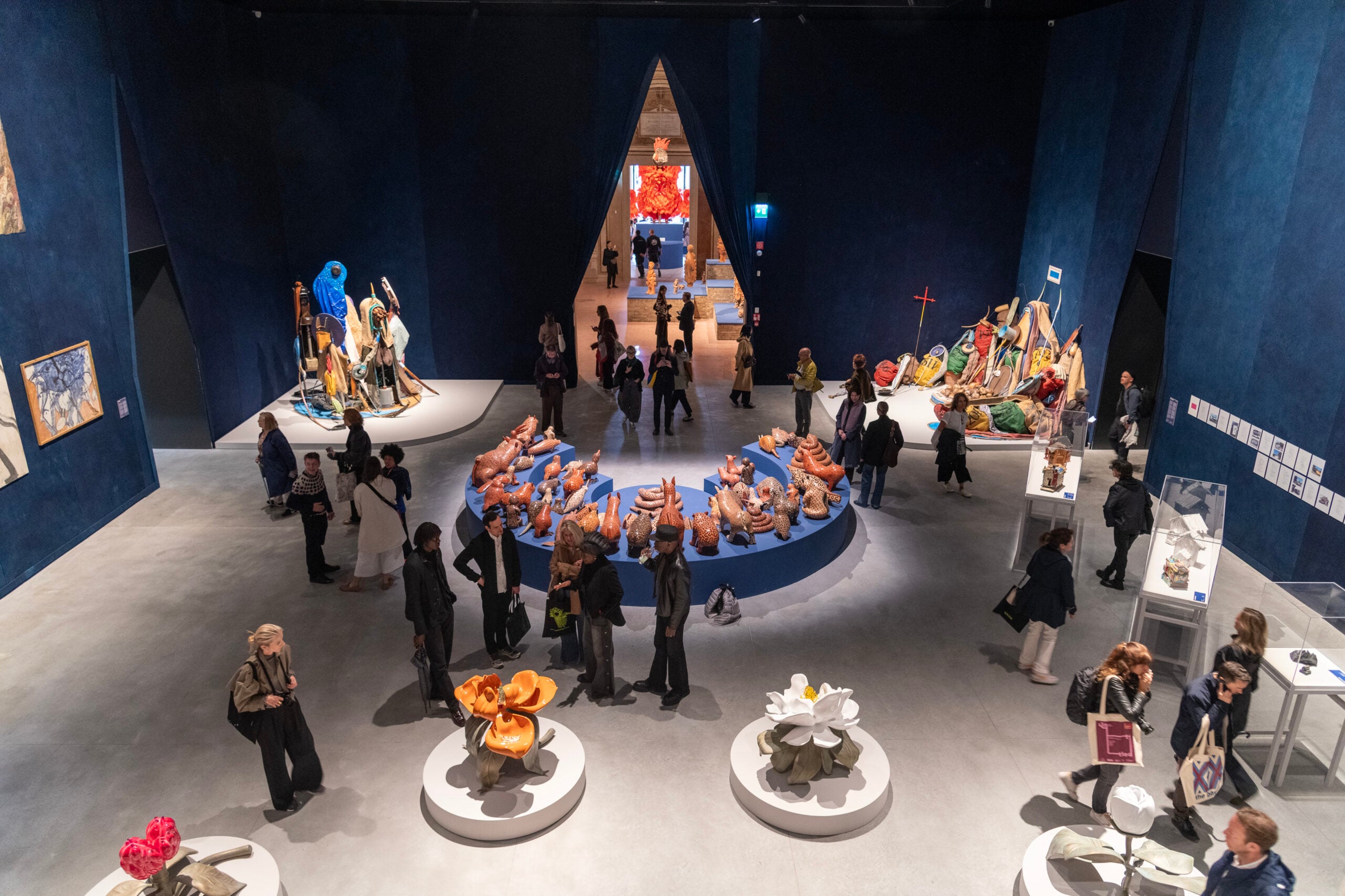
The 2026 Venice Biennale, titled "In Minor Keys" and curated by the late Koyo Kouoh, has opened with a focus on ecology and humanity's relationship with nature. The central pavilion at the Giardini presents a festive, craft-heavy exhibition that emphasizes connections with plants and animals, while the Arsenale offers a more spacious, symphonic experience featuring standout works such as Alfredo Jaar's "End of the World" (2023-2024) and Kader Attia's "Whisper of Traces" (2026). National pavilions, including those of Austria, Denmark, France, Germany, and Spain, explore themes of the body, memory, and ruin with notable installations.

Un’importante collezione tedesca d’arte per la prima volta in mostra in Italia a Venezia

The Kelterborn Collection, a German private collection focused on video art and experimental installations, will be exhibited in Italy for the first time at Venice's Contemporary Forces platform from May 7 to September 27, 2026. The exhibition, titled "Who’s a good boy??," is curated by Anastasia Stravinsky and Mario von Kelterborn in collaboration with IKT – International Association of Curators of Contemporary Art, and features works by twelve artists including Joseph Beuys, Gary Hill, Laure Prouvost, and Ulay. The show aligns with the theme of the 61st Venice Biennale, exploring power "in minor keys."

'Cunningham Capsule' at Knust Kunz Gallery Editions, Munich, Germany on 15 May–6 Jun 2026

Knust Kunz Gallery Editions in Munich, Germany, will host 'Cunningham Capsule,' an exhibition running from 15 May to 6 Jun 2026. The gallery, founded in 1982 as Galerie Sabine Knust, has a long history of collaborating with major artists such as Georg Baselitz, Per Kirkeby, A.R. Penck, Markus Lüpertz, Jörg Immendorff, and Imi Knoebel, focusing on their print and graphic works. Matthias Kunz joined as a partner in 1998.

Exhibition | Travis MacDonald, 'Had a Farm' at Contemporary Fine Arts | CFA, Berlin, Germany

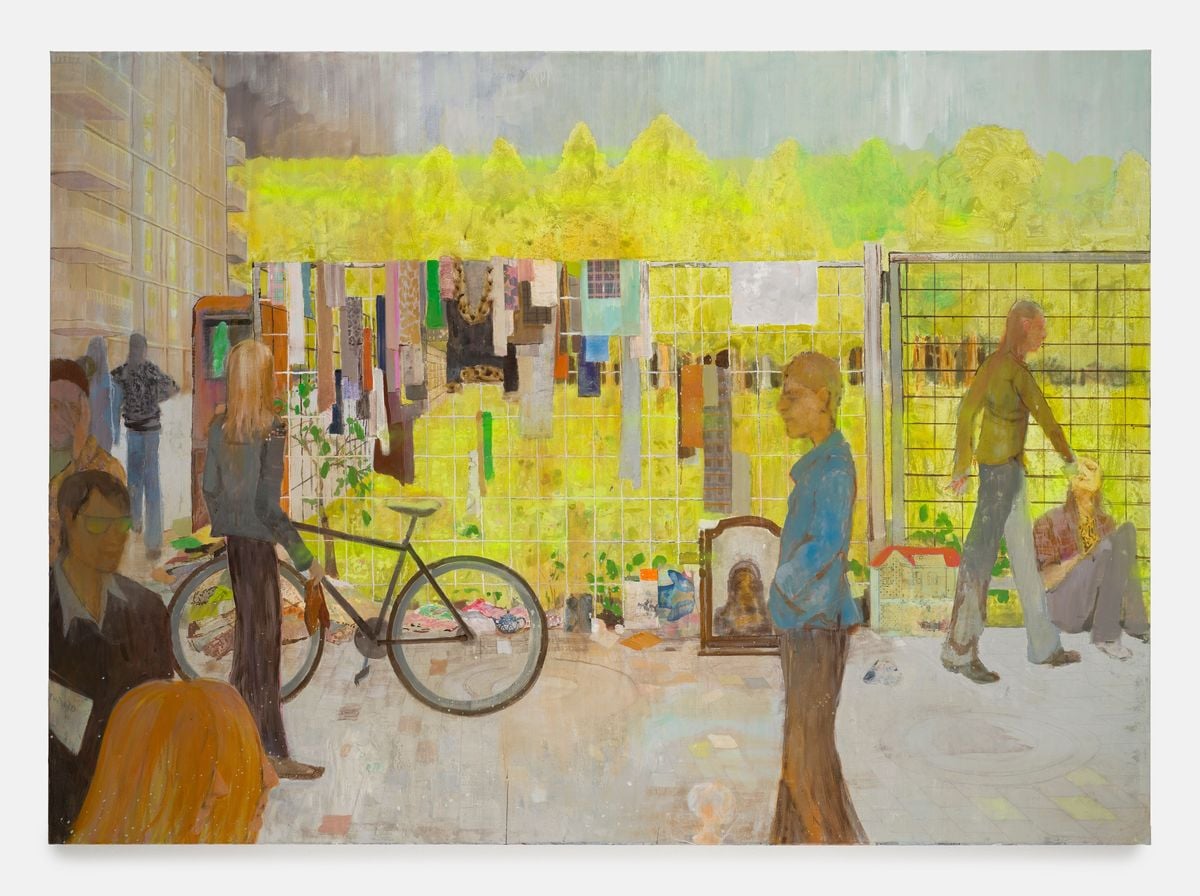
Contemporary Fine Arts in Berlin is presenting 'Had a Farm', a solo exhibition by New Zealand-born artist Travis MacDonald, opening during Gallery Weekend Berlin 2026. The show features new paintings that explore countercultural aesthetics through long-haired, androgynous figures set in a rural-subcultural landscape, drawing on photographic archives of 1970s experimental communes and referencing Pier Paolo Pasolini's essay on hair as a political sign.

Exhibition | Celeste Rapone, 'Hyperarousal' at Esther Schipper, Esther Schipper Berlin, Germany

Esther Schipper Berlin presents 'Hyperarousal', Celeste Rapone's first exhibition with the gallery, featuring three new paintings that explore the intersection of sensuous stimulation and nervous tension. The works depict female protagonists in narratively dense, ambiguous scenes that allegorize millennial angst, using techniques like alla prima painting and color-based formal constraints. Key pieces include 'While Waiting' (2025), showing a figure with pepper spray and a digital camera, and 'Den' (2026), where intertwined figures follow a self-defense tutorial on an iPad.

Hamburg Culture Prize Renamed After Namesake’s Nazi Ties Emerge

Hamburg's Senator Biermann Ratjen Medal, a culture prize awarded for nearly five decades, is being renamed the Medal for Art and Culture in Hamburg after historian Helmut Stubbe da Luz uncovered evidence that the prize's namesake, Hans Harder Biermann-Ratjen, confirmed his Nazi Party membership in a 1943 application. Biermann-Ratjen, who later served as Hamburg's senator for culture, had been deemed not to have been a member during post-war de-Nazification, but the new research prompted the city to rebrand the award.

The Last Quarter of My Life Should Be Like the Beginning

"Das letzte Quartal meines Lebens soll wie der Anfang sein"

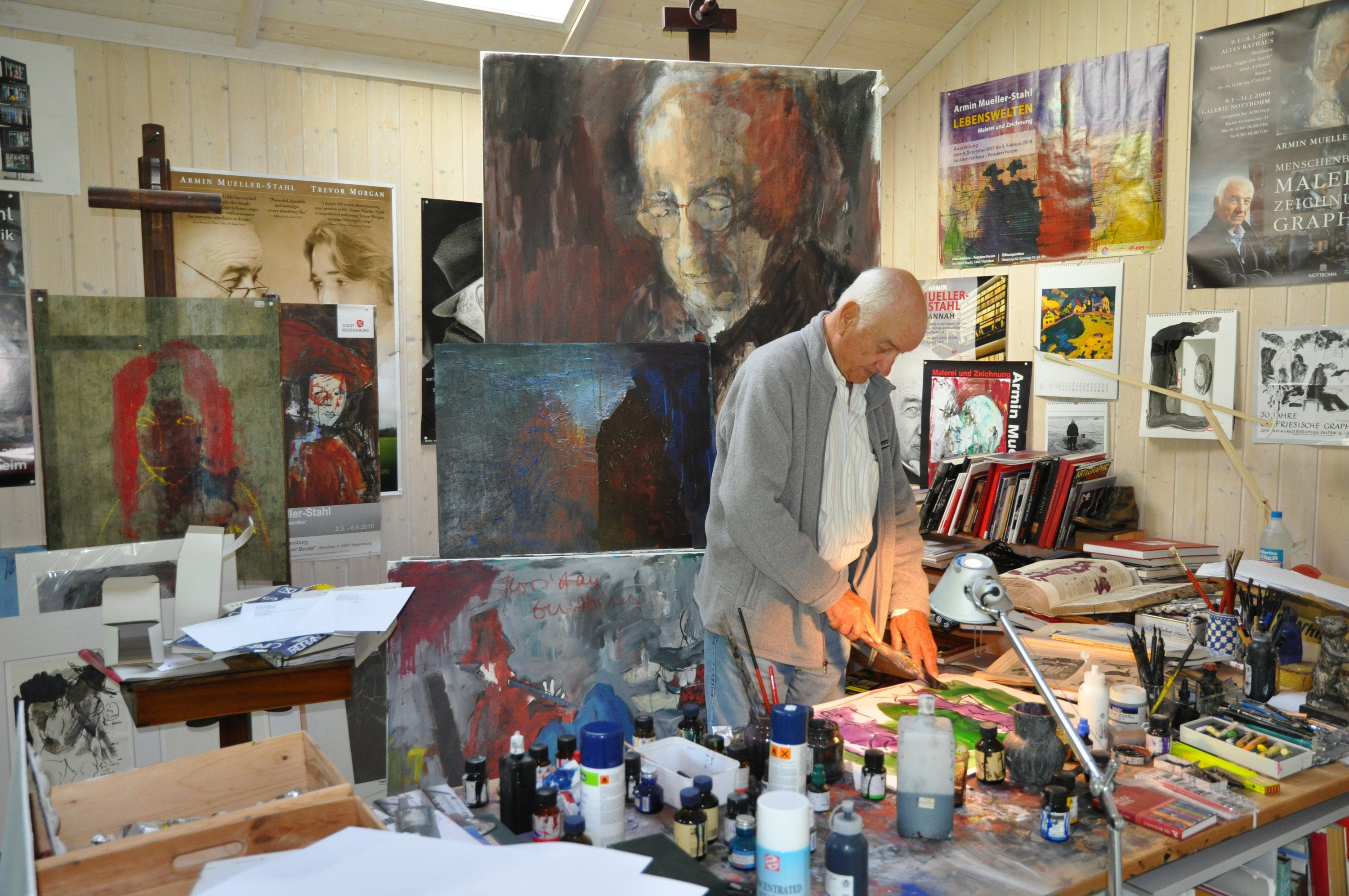
Armin Mueller-Stahl, the 95-year-old German actor and painter, opens his solo exhibition "Nacht und Tag auf der Erde" (Night and Day on Earth) at Museum Schloss Moyland. The show features a graphic cycle inspired by Jim Jarmusch's film "Night on Earth," in which Mueller-Stahl played a New York taxi driver. In an interview, he reflects on his dual careers in film and painting, his life between Hollywood, East Germany, and the present, and themes of loss and memory.