filter_list Showing 196 results for "Origins" close Clear
dashboard All 196 museum exhibitions 94article culture 34article news 19trending_up market 16gavel restitution 11person people 6article policy 5rate_review review 4candle obituary 3article local 3article event 1
date_range Range Today This Week This Month All
Subscribe

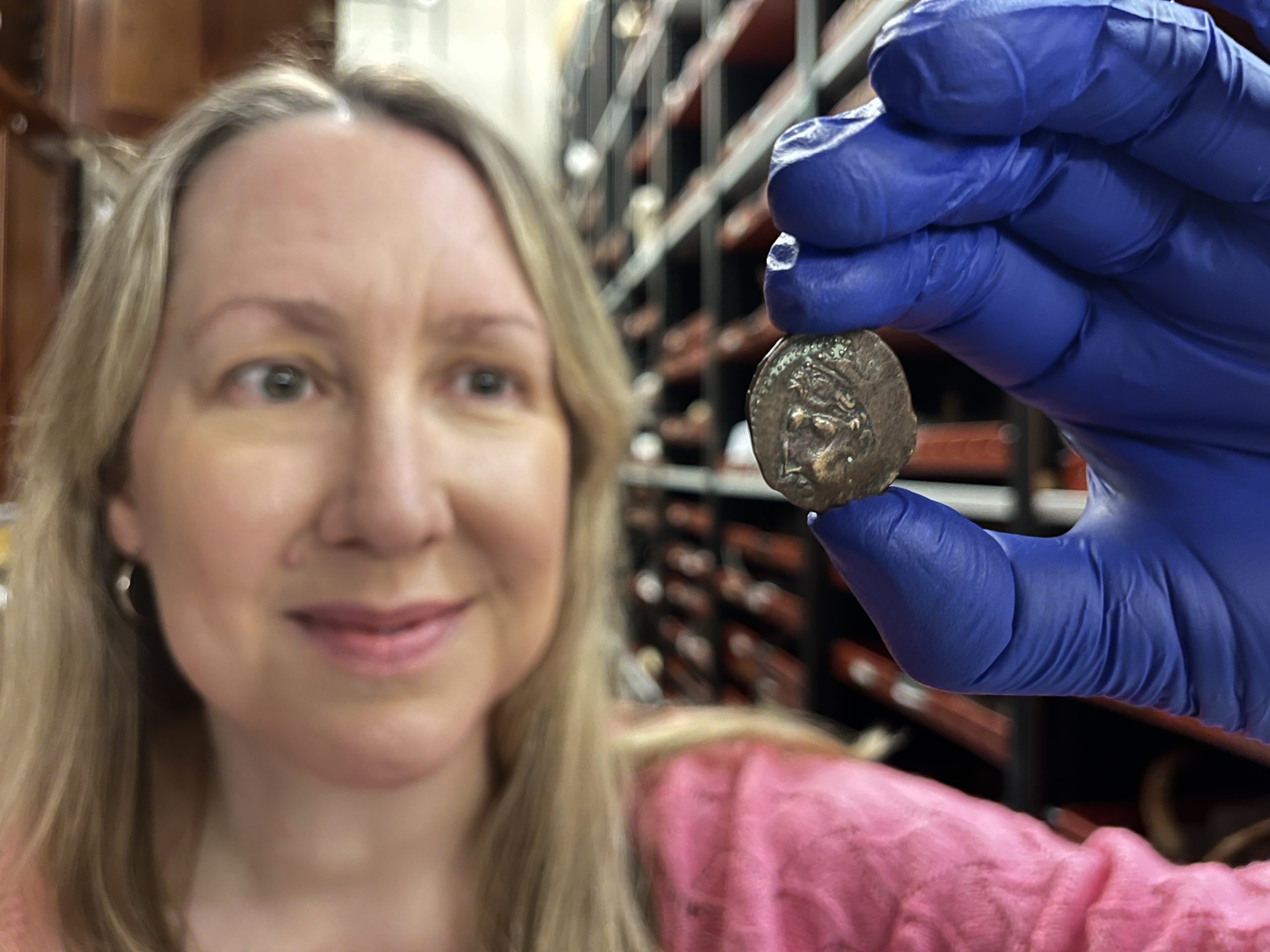
Strange Coin Used on U.K. Bus Turns Out to Be 2,000-Year-Old Relic

A 2,000-year-old Phoenician bronze coin, originally used as bus fare in Leeds in the 1950s, has been identified and donated to the Leeds Discovery Centre. The coin was minted in the ancient Carthaginian settlement of Gadir (modern-day Cádiz, Spain) and features imagery of the deity Melqart and tuna fish, reflecting its maritime origins.

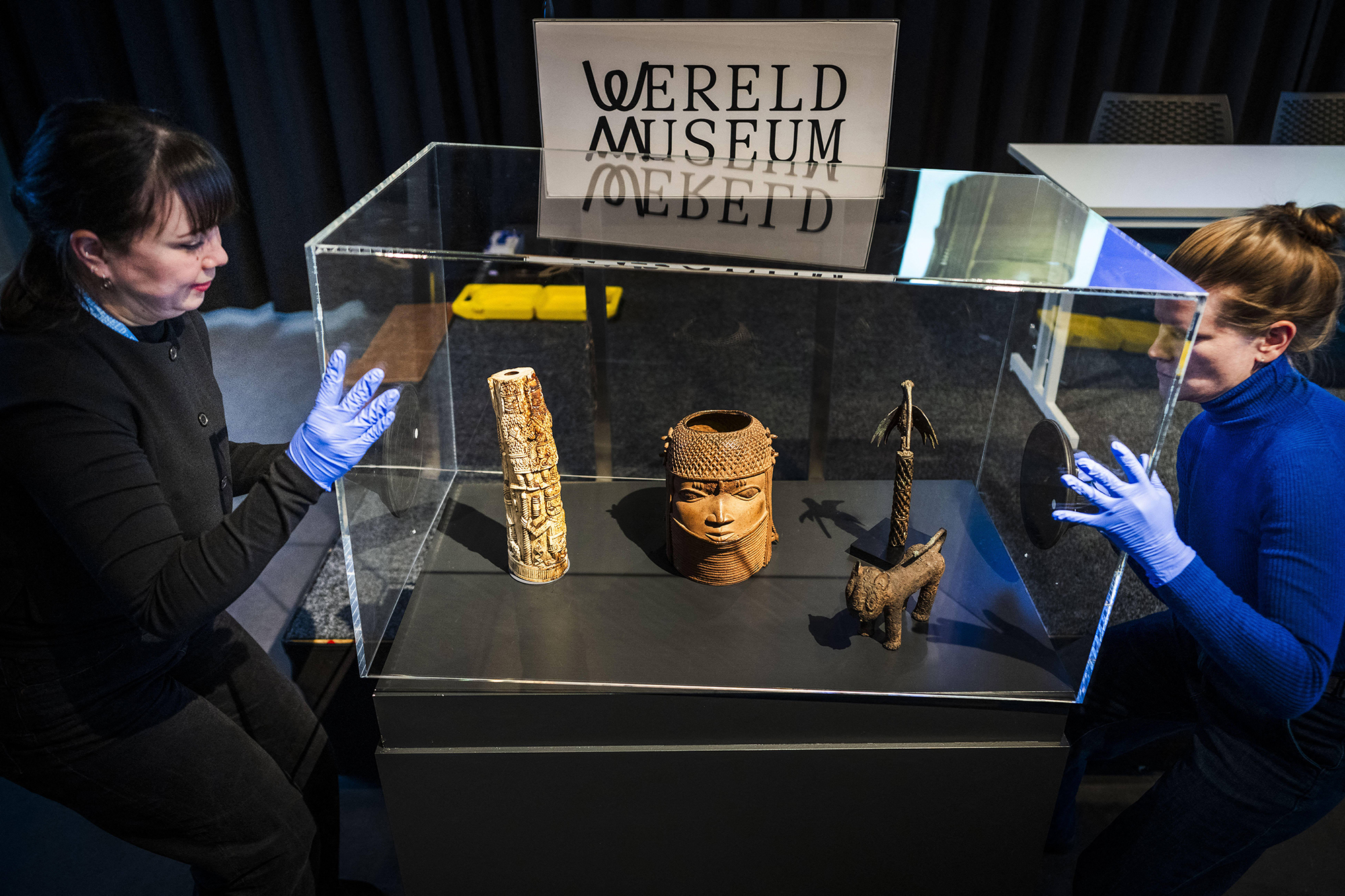
netherlands returns 119 benin bronzes to nigeria in landmark repatriation agreement 2610481

The Netherlands has signed an agreement to return 119 Benin Bronzes to Nigeria, one of the largest repatriations of looted artifacts to date. The transfer, formalized on February 19 by Dutch culture minister Eppo Bruins and Nigerian official Olugbile Holloway at the Wereldmuseum in Leiden, includes 113 bronzes from the Dutch National Collection held at the museum and six additional objects from the municipality of Rotterdam. The artifacts were plundered by British forces in 1897 and later acquired by Dutch institutions, with provenance research confirming the museums were aware of their looted origins.

First-of-its-kind MCA exhibition plays the beat of Caribbean activism

Carla Acevedo-Yates has curated "Dancing the Revolution: From Dancehall to Reggaetón," a major exhibition at the Museum of Contemporary Art Chicago, which will be her final show before departing for a role on the Documenta 16 team in Germany. The exhibition, which occupies the museum's entire fourth floor through September 20, features over 40 artists and explores the social and political histories of Caribbean music genres.

LETTER | Wires crossed on art museum crisis

A local resident has criticized the Nelson Mandela Bay municipality and local media for their delayed response to the deteriorating state of the historic NMB Metropolitan Art Museum. The critique highlights significant factual errors in recent reporting regarding the museum's history, specifically correcting the timeline of its construction phases which date back to 1927, rather than the 70-year history recently cited by officials.

Museum: Art, Collections, and Exhibits

Museum - Art, Collections, Exhibits

This comprehensive overview traces the historical evolution of the museum from its origins as private royal collections and 'cabinets of curiosities' to the modern public institutions of the 21st century. It details the emergence of landmark spaces like the Ashmolean, the British Museum, and the Louvre, while examining how the 'museum boom' of the 20th century expanded these institutions globally across the United States, Asia, and Africa.

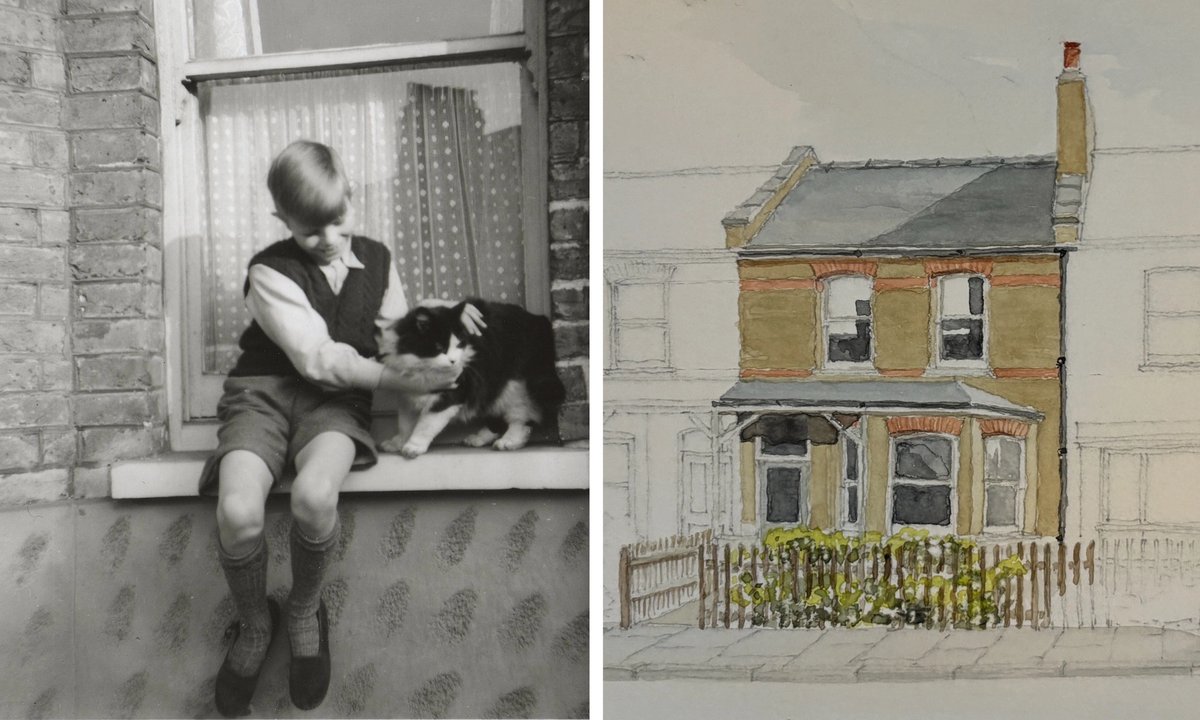
Ground Control to London: David Bowie’s childhood home to be restored by heritage charity

The Heritage of London Trust has acquired David Bowie's childhood home at 4 Plaistow Grove in Bromley, southeast London, and plans to restore it to its early 1960s appearance. The railway workers' cottage, where Bowie lived from ages 8 to 20 and is believed to have written "Space Oddity," will open to the public in late 2027, offering an immersive experience centered on his bedroom. Geoffrey Marsh, co-curator of the V&A's "David Bowie Is" exhibition, will oversee the restoration, funded by a £500,000 grant from the Jones Day Foundation and a public fundraising campaign.

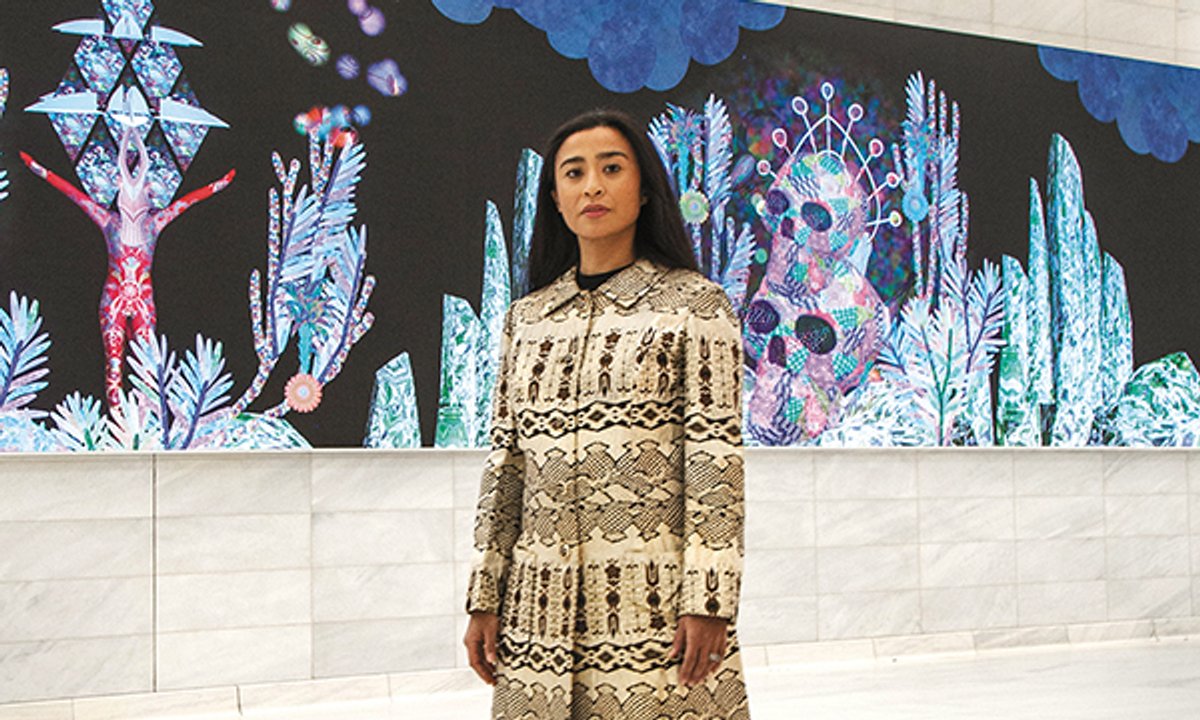
‘We are all part of this intergalactic universe’: Saya Woolfalk’s solo show immerses viewers in her “Empathic Universe”

Saya Woolfalk's solo exhibition "Empathic Universe" at the Museum of Arts and Design (Mad) in New York presents two decades of her visionary world-building practice. The show unfolds in five chapters, featuring sculptures made from textiles, videos, performances, and immersive digital installations that trace the evolution of fictional plant-and-human hybrid races. Woolfalk discusses the origins of her project, which began after her return from Brazil with works like "Winter Garden: Hybrid Love Objects" (2005) at MoMA PS1, and how the Empathic Universe came into focus during her time in the Whitney Independent Study Program around 2006, drawing on mythology, anthropology, technology, and feminist theory.

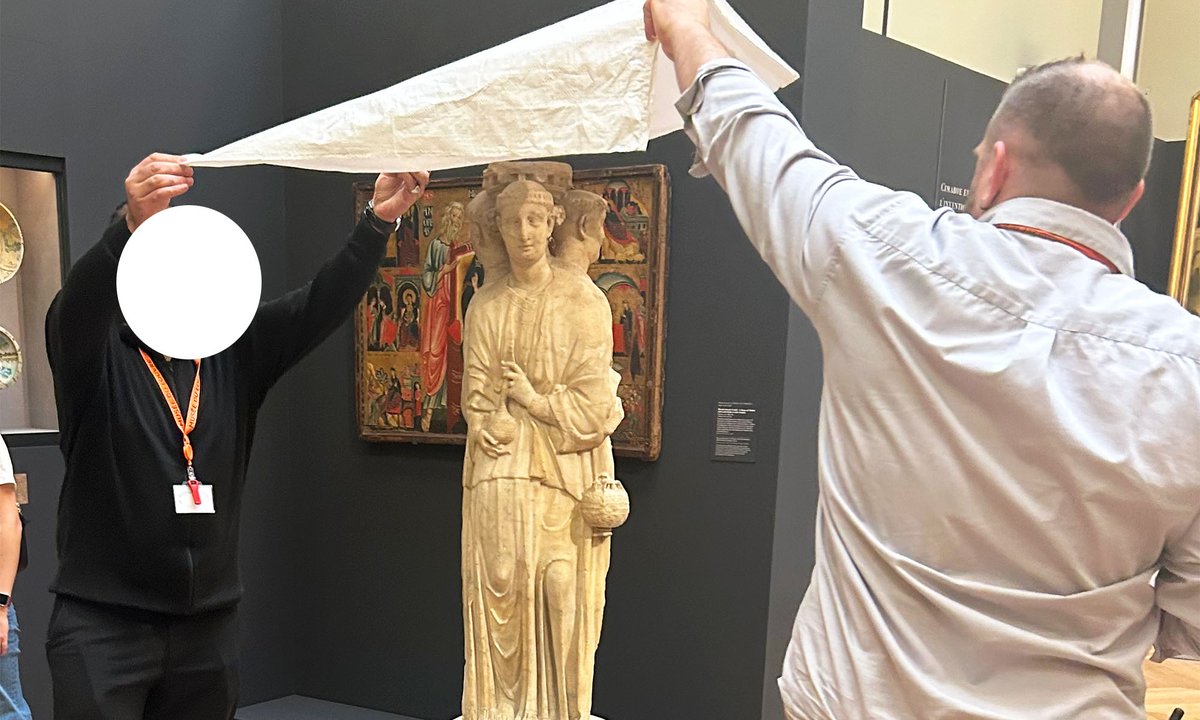
Water leaks into the Louvre’s Cimabue exhibition, landing close to the master’s greatest early painting

On May 3, a hailstorm caused water to leak into the Musée du Louvre in Paris, nearly damaging Cimabue's "Maestà" (1280-85), the centerpiece of the exhibition "A New Look at Cimabue: At the Origins of Italian Painting." Drops fell close to the painting, which is displayed without glass protection, and also landed on the base of a nearby sculpture by Nicola Pisano's studio. Guards initially struggled to respond, but the exhibition was closed within half an hour, and the Louvre confirmed no works were damaged.

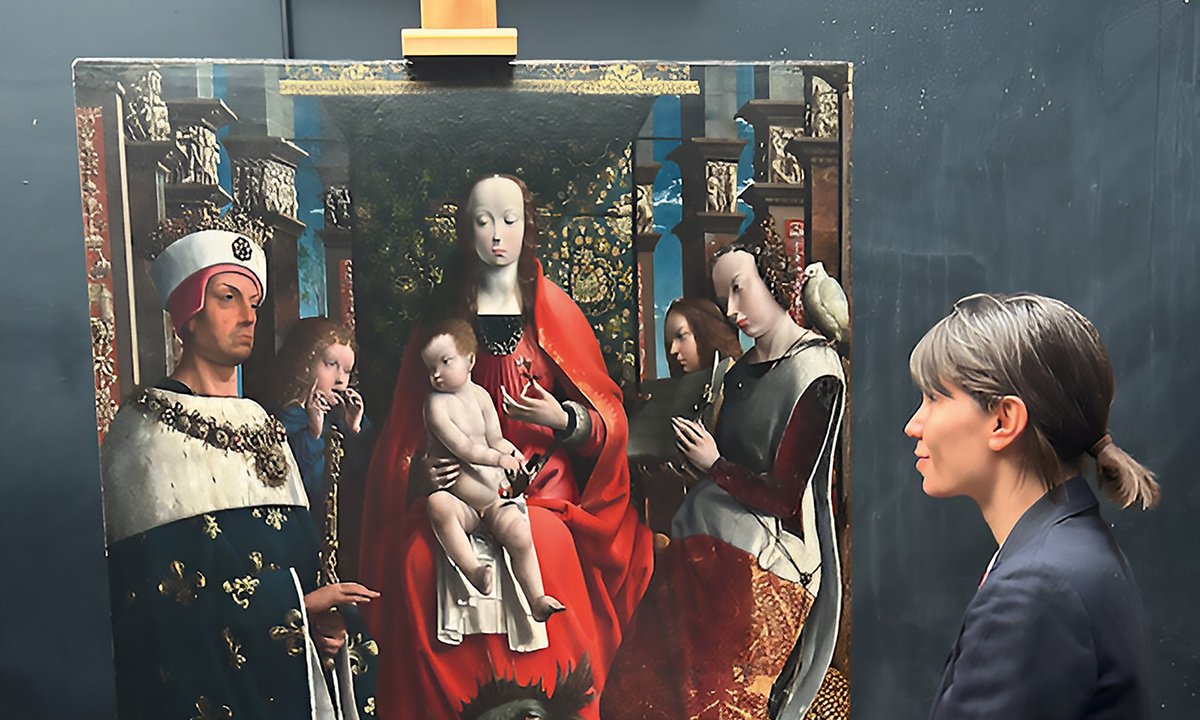
London's National Gallery buys mysterious altarpiece for $20m

London's National Gallery has acquired a mysterious altarpiece, "Virgin and Child with Saints Louis and Margaret and Two Angels" (1500-10), for just over $20 million in a private sale arranged through Sotheby's. The painting, funded by the American Friends of the National Gallery London, was sold by a descendant of the Blundell family and had been kept on the Lulworth Estate in Dorset. The artist remains unknown, with proposed names including Jan Gossaert, Jean Hey, and the Master of Saint Giles, and no other works by the same hand are known. The altarpiece was last publicly exhibited in 1960 and has only recently been shown privately to specialists, who remain divided on its attribution.

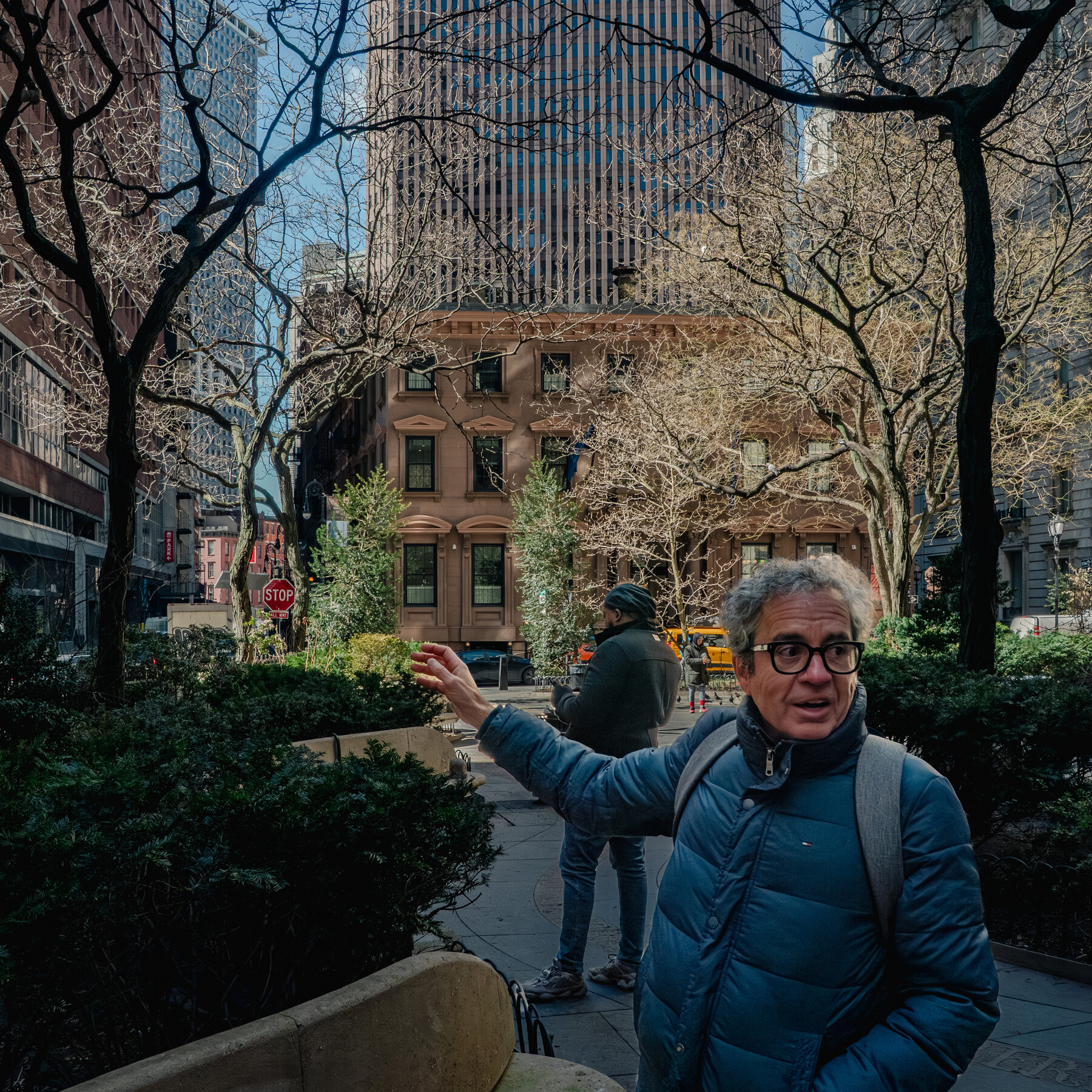
Recalling When Lower Manhattan Was New Amsterdam

The New-York Historical Society has launched a major exhibition exploring the 17th-century origins of New York City during its era as the Dutch settlement of New Amsterdam. The show utilizes a diverse array of artifacts, maps, and historical documents to trace the colony's development from a fur-trading outpost to a diverse maritime hub, highlighting the complex interactions between Dutch settlers, Indigenous populations, and enslaved Africans.

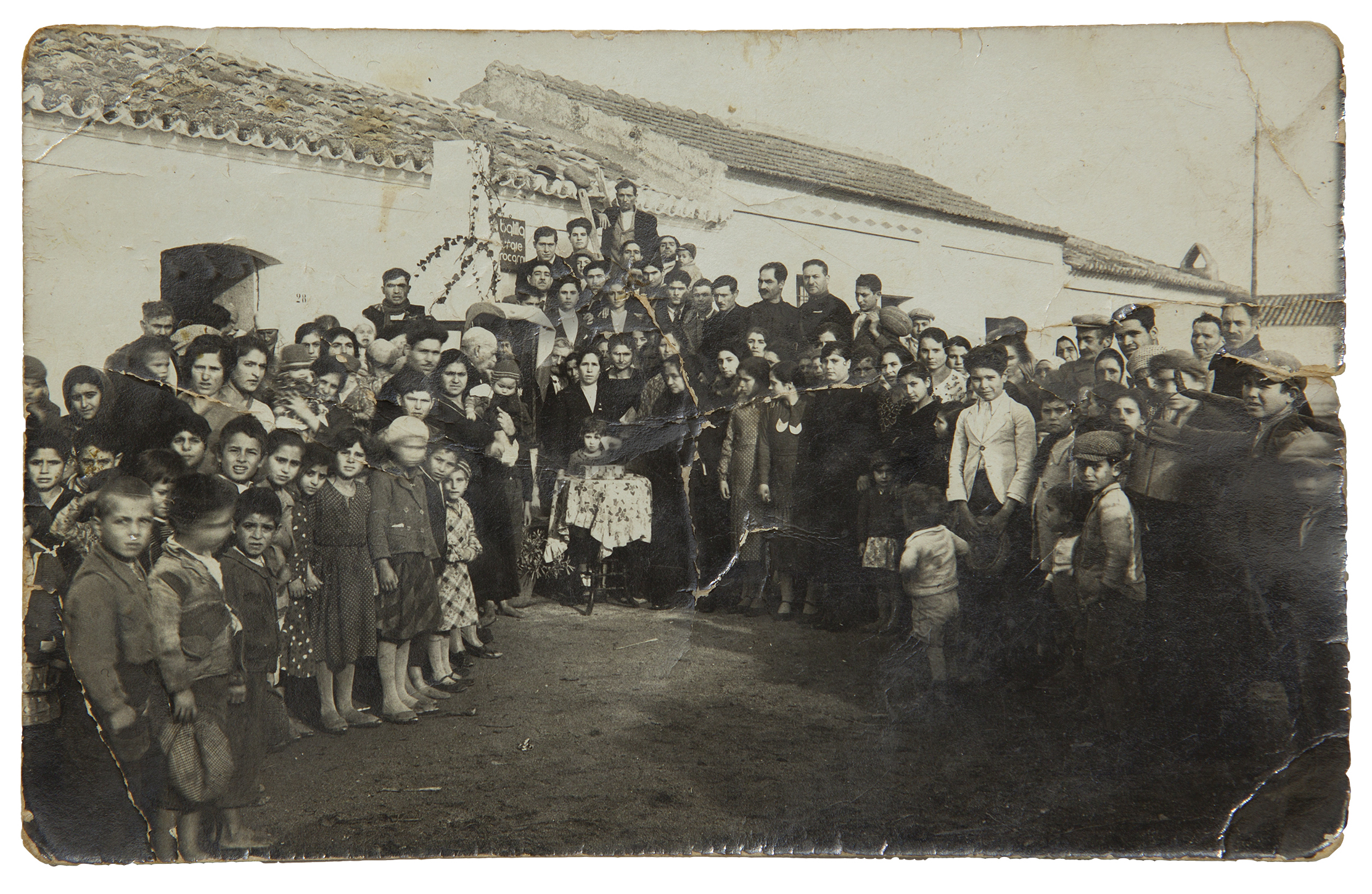
An artist told the incredible story of a Calabrian village that no longer exists. The interview

Un artista ha raccontato l’incredibile storia di un borgo della Calabria che non c’è più. L’intervista

Italian artist Martin Errichiello has created [campanamuta], a six-part audio work broadcast on RAI Radio 3's Zazà program in late 2025 and now available on RaiPlay Sound. The piece tells the story of Eranova, a farming community founded in 1896 near Reggio Calabria that was destroyed by 1980 after the Christian Democratic party planned—but never built—a steel center on its land, now the site of the Port of Gioia Tauro. Errichiello weaves together interviews with former residents and his own original texts, using non-linear narration to explore the village's utopian origins and forced disappearance.

Sands and Rituals from the Antipodes: To Be Discovered in a Former Church in Venice

Sabbie e riti dagli antipodi. Da scoprire in una ex chiesa di Venezia

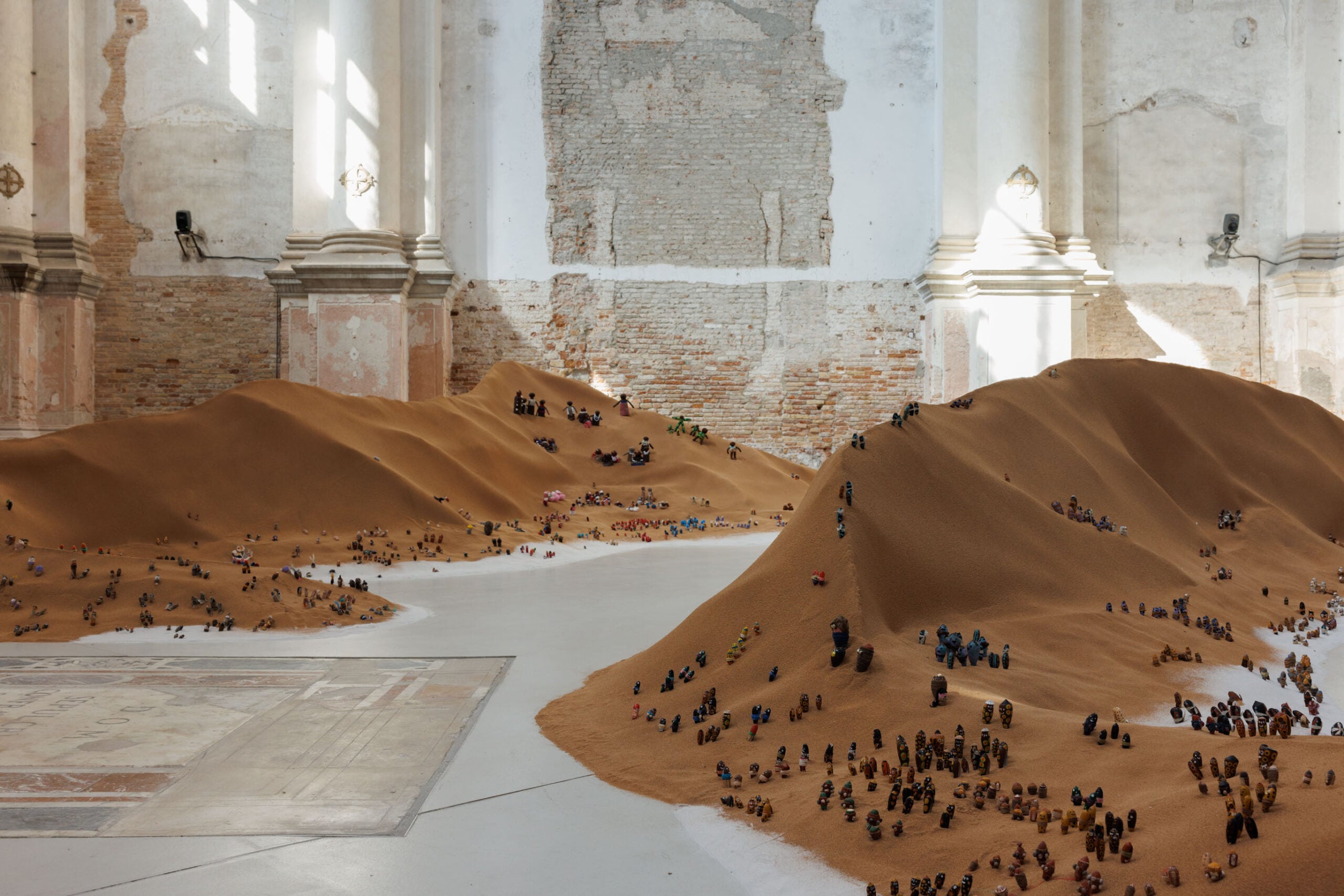
The Church of San Lorenzo in Venice, home to Ocean Space, is hosting "Tide of Returns," an exhibition by the Repatriates Collective. The installation transforms the historic nave with sand dunes populated by thousands of decorated shells known as Dadikwakwa-kwa, or shell dolls, from the Anindilyakwa people of Australia. The show also features a tripartite installation of video, textiles, and braids by German-Bolivian artist Verena Melgarejo Weinandt, exploring themes of ancestral connection and the universal significance of water.

Producing Cinema Inside and With Video Games: A 30-Year Festival in Milan

Produrre cinema dentro e con i videogiochi. A Milano ci fanno un festival (da 30 anni)

The Milan Machinima Festival recently celebrated the 30th anniversary of machinima, the practice of creating audiovisual works and films within video game environments. The event, curated by scholar Matteo Bittanti at IULM University, explored the medium's dual origins in 1996: the community-driven "vernacular" style seen in the Quake-based 'Diary of a Camper' and the artistic approach pioneered by Miltos Manetas in his work 'Miracle'.

a new study conducted the most comprehensive survey of egypts karnak temple revealing unprecedented detail 1234755494

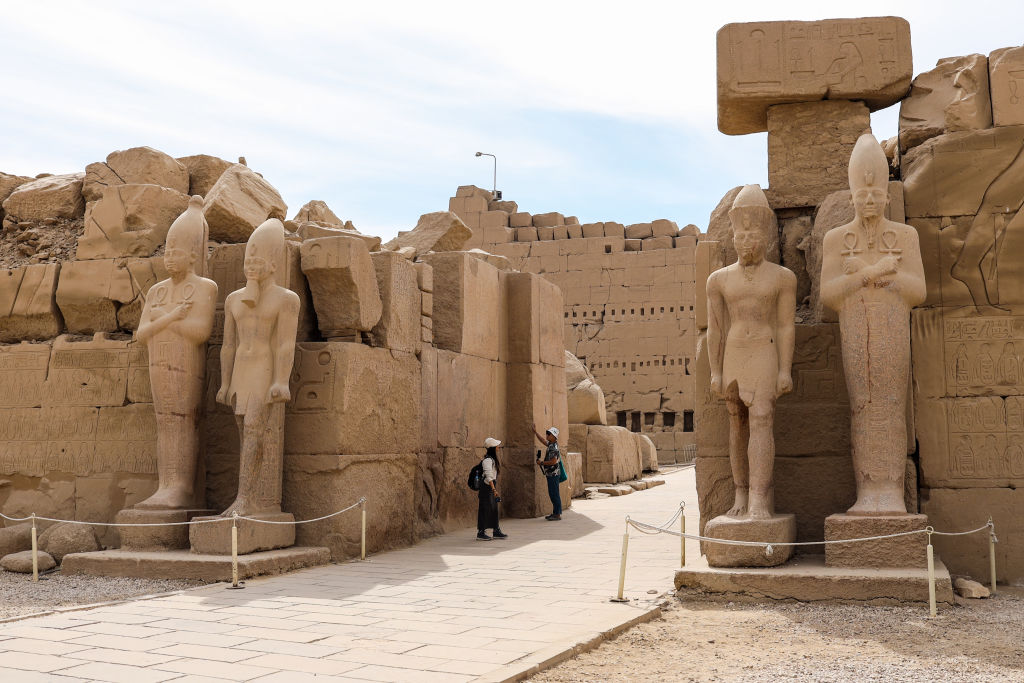
A new study published in the journal Antiquity reveals that Egypt’s Karnak Temple was originally built on a small island, or “fluvial terrace,” surrounded by river channels. The research, led by Ben Pennington of the University of Southampton, is the first comprehensive geoarchaeological survey of the site, analyzing 61 sediment cores and thousands of ceramic fragments. It dates the earliest occupation of Karnak to around 2520 BCE, with ceramics from 2305–1980 BCE, and shows that ancient Egyptians geo-engineered the landscape by dumping desert sand into channels to create new building land.

judy baca los angeles other art fair 2611411

Judy Baca, a pioneering Los Angeles muralist known for her socially engaged public art, is participating in the Other Art Fair for the first time. She is showcasing a new 10-by-22-foot painting, *The 1968 East L.A. Walkouts*, which is the latest addition to her monumental, decades-long project *The Great Wall of Los Angeles*. The fair has commissioned a printed reproduction of the work for exhibition and will donate it to a community center afterward.

bayeux tapestry 93 penises offer clues 2639001

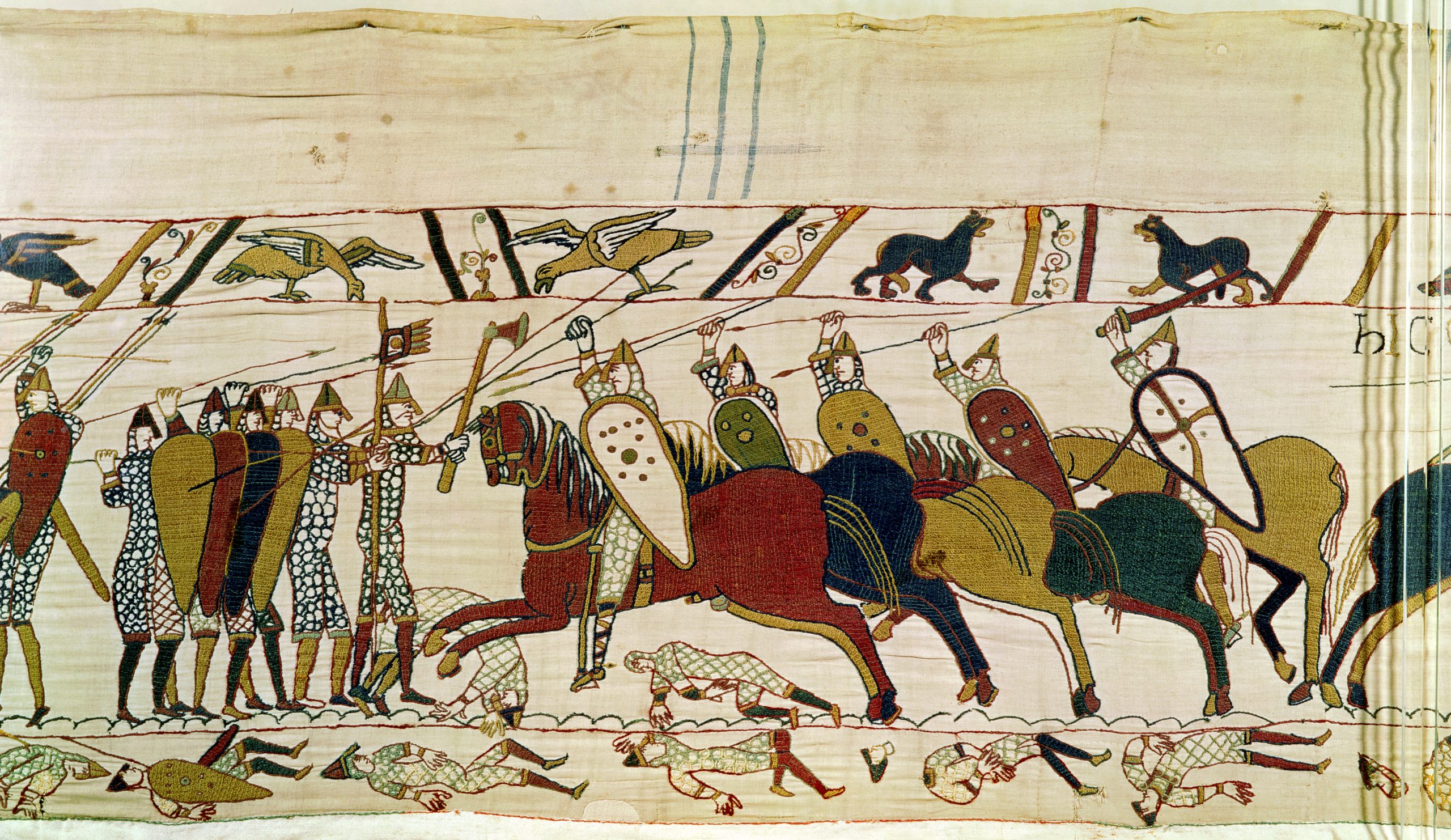
The article examines historian George Garnett's analysis of the 93 penises depicted in the Bayeux Tapestry, a 225-foot-long embroidery chronicling the Norman conquest of England in 1066. Garnett, a professor of Medieval history at Oxford University, argues that the size and placement of these genitalia—88 on horses and five on men—offer clues about the tapestry's meaning. He notes that the largest equine phallus belongs to Duke William's stallion, followed by those of Harold Godwinson and Odo of Bayeux, suggesting a hierarchy of importance. More significantly, Garnett interprets four penises attached to men in the tapestry's border as references to Aesop's fables, indicating themes of deceit, shame, and illicit sex, which he believes challenge the traditional attribution of the tapestry's commission to Odo of Bayeux.

great sphinx origin 2631406

The article examines the enduring mystery of who the Great Sphinx of Giza was modeled after. While the 66-foot-tall statue is universally recognized, its origins remain debated among Egyptologists. Some believe Pharaoh Khafre commissioned it in his own image, citing a 1853 discovery of a Khafre statue nearby and a connecting road to his pyramid. Others argue it was built by Khafre's brother Redjedef to honor their father Khufu, the builder of the Great Pyramid. Damage to the Sphinx's nose from erosion and human conflict complicates identification.

hikers in the czech republic giant gold hoard 2638246

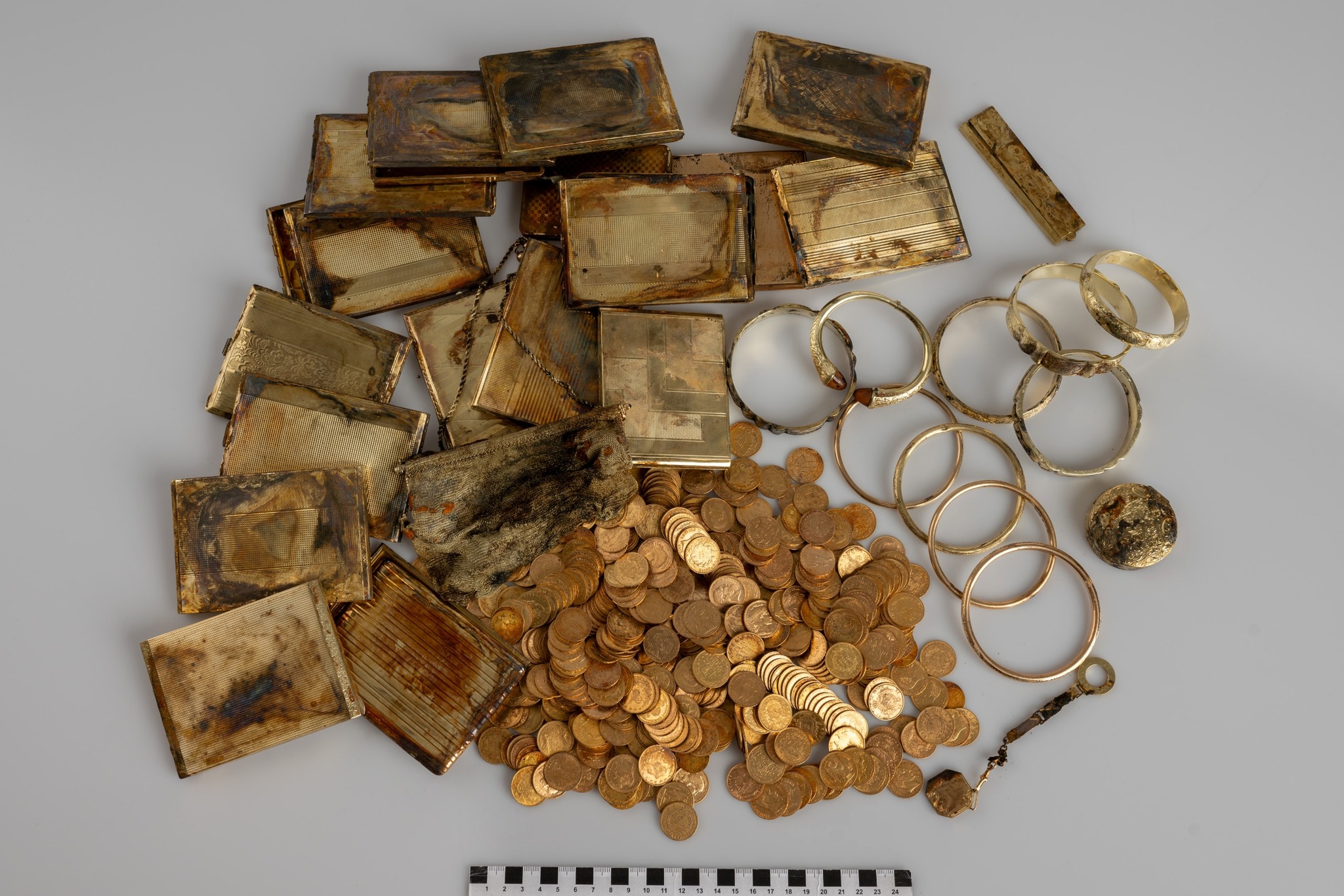
A pair of hikers in the Czech Republic discovered a 20th-century gold hoard worth over $340,000 in the foothills of the Krkonoše mountains. The find, consisting of 600 gold coins from multiple countries and a second box of gold items, was turned over to the Museum of Eastern Bohemia in Hradec Králové, where archaeologists are investigating its origins.

FROM SÃO PAULO TO NEW YORK: THE MUSEUM OF ERRANCY OF ÉDOUARD GLISSANT

DE SÃO PAULO A NUEVA YORK: EL MUSEO DE LA ERRANCIA DE ÉDOUARD GLISSANT

The exhibition "La tierra, el fuego, el agua y los vientos: Por un Museo de la Errancia con Édouard Glissant" has traveled from the Instituto Tomie Ohtake in São Paulo to the Center for Art, Research and Alliances (CARA) in New York, marking its first U.S. presentation. Curated by Manuela Moscoso with Marian Chudnovsky, and building on prior work by Ana Roman and Paulo Miyada, the show engages with the philosophy of Martinican poet and philosopher Édouard Glissant, particularly his concepts of errantry, Relation, opacity, and the Tout-Monde. It centers on Glissant's unrealized idea of a museum as a fluid, porous space that resists colonial frameworks and fixed origins, featuring works by artists such as Melvin Edwards, Gerardo Chávez, and Eduardo Zamora.

Michael Fullerton: The Politics of Portraiture

Glasgow-based painter Michael Fullerton is presenting a two-part exhibition that critically examines the politics of portraiture. The first section features 11 oil portraits of male asylum seekers he lived alongside while working as live-in staff at the Hilltop Hotel in Carlisle. These works, painted in a traditional style, depict the men with care against ambiguous landscapes, deliberately restricting personal information to names and origins, highlighting their status within systems of power.

Hilma af Klint en 2 minutes

Hilma af Klint (1862–1944) is profiled as a pioneering Swedish abstract artist who created a vast body of visionary, large-scale abstract paintings decades before Kandinsky, yet kept them secret during her lifetime. The article traces her life from a childhood steeped in science and nature, through her studies at the Royal Academy of Fine Arts in Stockholm, to her dual artistic practice: conventional landscapes and portraits for income, and radically abstract works guided by spiritualist séances and theosophical beliefs. She founded the group "The Five" with fellow female artists, and from 1906 onward produced the monumental series "Paintings for the Temple" (193 works), convinced she was channeling a higher force. She stipulated in her will that her abstract works not be revealed until 20 years after her death, and they were only rediscovered in the late 1960s.

Maxwell Mustardo Sculpts Ancient Ornamentation in Brilliant Glazed Forms

Maxwell Mustardo creates ceramic vessels that blend ancient Greek forms like amphorae, kraters, and kylix with organic, fungal-like surface textures in fluorescent oranges, pinks, and greens. Based in New Jersey, he works as studio manager at the former residence of artist Toshiko Takaezu, and his practice focuses on pushing classical ornamentation—such as gadrooning—back into its natural origins, blurring the line between cultural artifact and living growth.

The Irresistible Force of Thinking and Acting Together

Guest curator Greg de Cuir Jr. interviews five prominent artist duos—including Joana Hadjithomas and Khalil Joreige, and OJOBOCA—to explore the mechanics of collaborative practice and shared life. The participants discuss the origins of their partnerships, ranging from the necessity of navigating new environments like Berlin’s analog film scene to the shared political and aesthetic urgency following the Lebanese Civil Wars.

Naho Kawabe "Flos Filicis: Flower of the Fern" @ WAITINGROOM

川辺ナホ「Flos Filicis:羊歯の花」@ WAITINGROOM

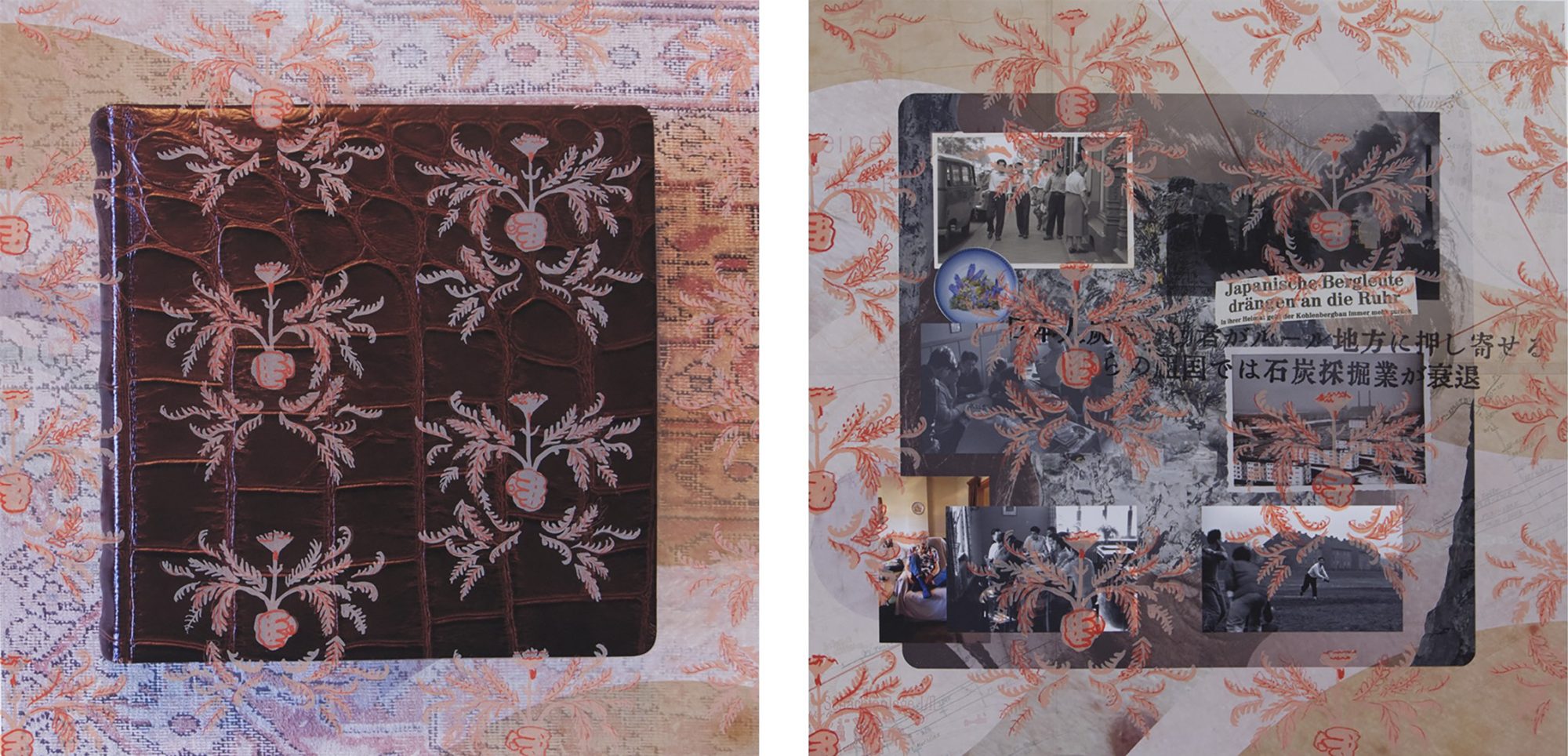
The Tokyo gallery WAITINGROOM is hosting "Flos Filicis: Flower of the Fern," a solo exhibition by Naho Kawabe featuring new installations, photo collages, and drawings. The exhibition centers on the paradoxical concept of the "fern flower" to explore the relationship between fossil fuels, industrial infrastructure, and the myth of progress. Kawabe utilizes materials like charcoal and electrical components alongside research-based lithographs to examine the history of Japanese migrant coal miners in Germany and the broader ecological impact of energy consumption.

Philadelphia Museum of Art Opens Rocky Exhibition Exploring Boxing, Celebrity, and the Meaning of Monuments

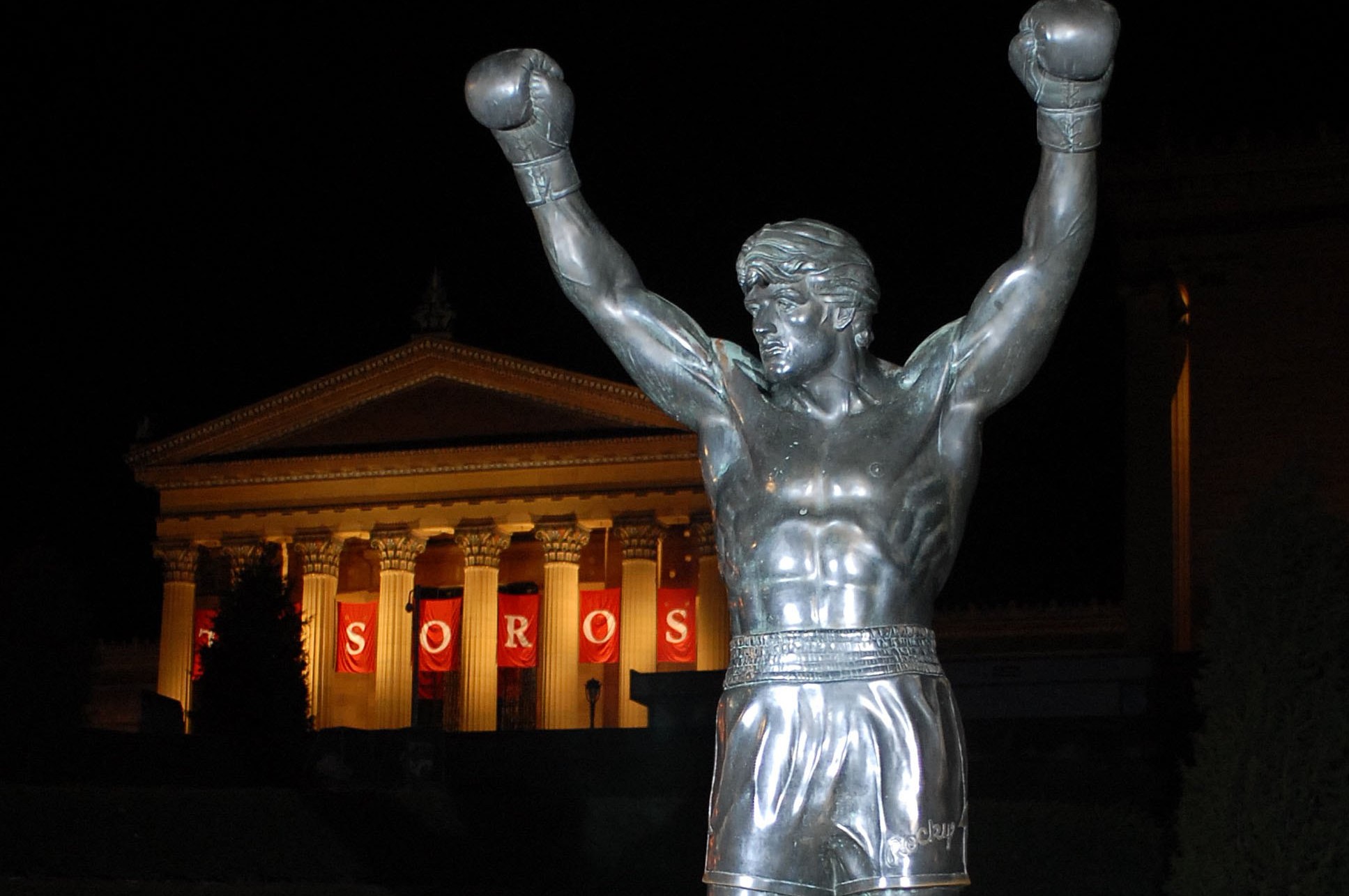
The Philadelphia Museum of Art has opened a new exhibition centered on the Rocky statue, exploring themes of boxing, celebrity, and the meaning of monuments. The show investigates why millions of visitors from around the world flock to the iconic statue, which sits at the museum's steps, and examines its cultural significance beyond its cinematic origins.

Brush to canvas: News from the art community

The Dalí Museum in St. Petersburg, Florida, will open two exhibitions in May 2025: "Architecture of the Dalí" on May 2, tracing the museum's history from its 1980s origins to its current bayfront structure, and "Dalí in America" on May 9, featuring over 70 works exploring Salvador Dalí's vision of the United States. Other notable openings include "Wolves: Photography by Ronan Donovan" at the James Museum of Western & Wildlife Art (May 9), multidisciplinary artist Babs Reingold's solo show "After Venus" at the Museum of Fine Arts St. Petersburg (May 15), and "Cigars! Photography, Industry, and Identity" at the Florida Museum of Photographic Arts, commemorating Ybor City's cigar-rolling history. Additional events include Florida NOW at Florida CraftArt, Charles Morrison's "Head in the Sky, Feet on the Ground" at the Morean Center for Clay, and a photography contest sponsored by FloridaRAMA and St. Petersburg Month of Photography.

San Diego Museum of Art Reflects on 100 Years in New Exhibit

The San Diego Museum of Art (SDMA) is marking its 100th anniversary with a special exhibition titled 'SDMA: 100 Years.' The show, curated by Lucas Perez, traces the institution's chronological evolution from its origins after the 1915 Panama-California Exposition, through its founding in 1926 as the Fine Arts Gallery, to its present-day identity. It features rediscovered archival materials, including early children's art and photographs documenting periods like its conversion into a naval hospital during World War II.

Climate report from Getty’s PST Art programme urges cultural organisations to confront exhibitions’ impacts

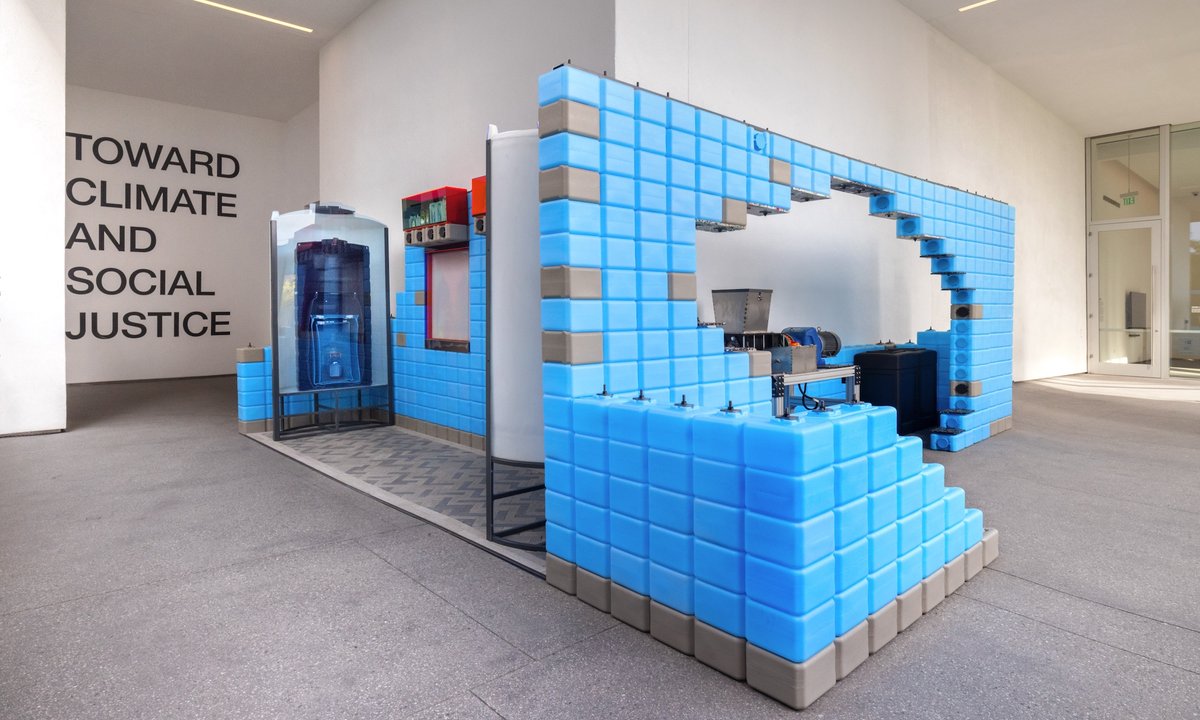
The Getty has released a comprehensive climate impact assessment of its PST Art initiative, titled Art & Science Collide (2024-25), based on its inaugural Climate Impact Program (CIP). Developed with climate adviser Laura Lupton and artist Debra Scacco, the program provided webinars, guidance, and networking to participating institutions, with over two-thirds completing a climate impact report. Key findings show that air travel and air freight of art are the most carbon-intensive activities, and shifting to sea freight could reduce total emissions by 18%. Many institutions reduced waste through simple, low-cost changes, with some committing to permanent sustainability practices.

'Radical' female ceramicists share their stories at the Ackland Art Museum

On August 27, the Ackland Art Museum at the University of North Carolina hosted a panel titled "Artist Conversation: Radical Ceramicists in North Carolina," featuring three female ceramicists: Hitomi Shibata, Isys Hennigar, and Jessica Dupuis. The event was part of programming around the museum's exhibition "Radical Clay," which highlights work by female Japanese ceramicists. Panelists discussed the historical marginalization of women in ceramics—Shibata noted that in 1990s Japan, studios refused to hire women, while Hennigar explained that until the early 20th century in North Carolina, female artists were only allowed to be decorators, not master ceramicists. The conversation also explored how ceramic pieces reflect their geographic origins and the importance of local artistic communities, such as Seagrove, N.C., which has the largest community of potters in the U.S.

Explore Luxembourg’s open-air urban galleries

The article explores the street art scene in Luxembourg, highlighting cities and towns like Esch-sur-Alzette, Leudelange, Koler, and Ettelbruck where murals and graffiti adorn buildings, schools, and even waste bins. It traces the movement's origins to the 1980s hip-hop-inspired rebellion, when graffiti was illegal and artists like Sumo, Spike, Stick, Dan Sinnes, and Alain Tshinza emerged. Today, urban art is embraced as a tool for social cohesion and expression, with projects like Kufa's Urban Art Esch in Esch-sur-Alzette featuring over fifty murals by international artists. The article also notes techniques such as grid systems, projections, and reverse graffiti, exemplified by Klaus Dauven's 2023 tribute on the Vianden dam.