filter_list Showing 35 results for "2024 Venice Biennale" close Clear
search
dashboard All 35 museum exhibitions 16article news 12person people 4article culture 1trending_up market 1rate_review review 1
date_range Range Today This Week This Month All
Subscribe

5 Under-Recognized Artists Getting Their Due in New York This Season

The article highlights five under-recognized artists whose exhibitions are on view in New York this season, focusing on Domenico Gnoli at Lévy Gorvy Dayan and Raquel Rabinovich at Hutchinson Modern and Contemporary. Gnoli, an Italian painter who died in 1970, is known for his pallid, claustrophobic depictions of everyday subjects, while Rabinovich, who died at 102 in January 2026, created somber minimalist paintings exploring silence and withholding. The piece notes that New York galleries often use the pre-fair period to showcase less prominent artists of great promise.
In Pictures: New Museum curator Gary Carrion-Murayari’s Frieze favourites

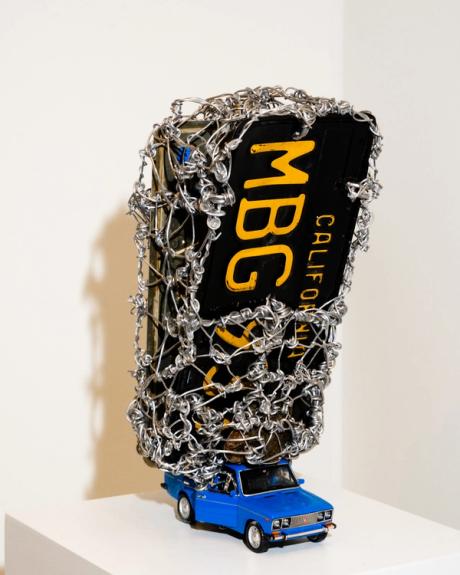
New Museum curator Gary Carrion-Murayari shares his personal highlights from the Frieze New York art fair, selecting works by artists including Arthur Simms, Haegue Yang, Abel Rodriguez and Aycoobo-Wilson Rodríguez, Sung Tieu, Maryam Hoseini, Pedro Neves, and Melvin Way. Each pick is accompanied by a brief commentary explaining why the work resonates with him, ranging from underappreciated talents to artists featured in the 2024 Venice Biennale.

Alma Allen Flops in Venice

Hyperallergic reports on the 2026 Venice Biennale, with Editor-in-Chief Hakim Bishara criticizing the U.S. pavilion's exhibition of Alma Allen's work as a disappointing departure from the previous editions' profound explorations of Indigenous life and Black sovereignty. Editor-at-Large Hrag Vartanian offers a positive review of the main exhibition "In Minor Keys," while Greta Rainbow covers a poetry procession honoring the late artistic director Koyo Kouoh. Additional stories include a review of the film "The Christophers" about an artist and forger, and news of workers at the American Folk Art Museum picketing for higher wages.

Amanda Carneiro and Raphael Fonseca to curate 2027 Bienal de São Paulo

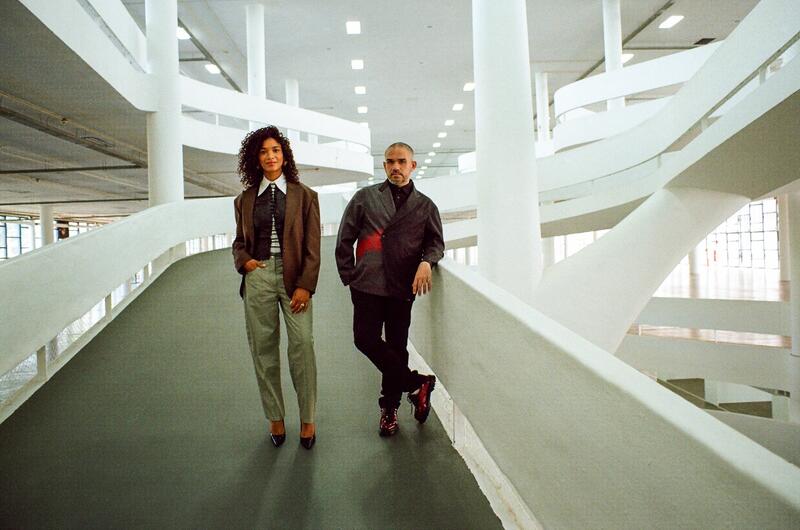
Amanda Carneiro and Raphael Fonseca have been named curators of the 2027 Bienal de São Paulo. Carneiro, a curator at MASP since 2018, has organized solo exhibitions for artists including Santiago Yahuarcani, Beatriz Milhazes, and Sonia Gomes, and was part of Adriano Pedrosa’s curatorial team for the 2024 Venice Biennale. Fonseca, visual arts programmer at Culturgest and curator-at-large at the Denver Art Museum, is currently curating the Taiwan Pavilion for the 2026 Venice Biennale and co-curating the 3rd Counterpublic Triennial. He also curated the 2025 Bienal do Mercosul.

‘I shared a single bed with my mother for three years’: Sung Tieu on her monument to immigrant workers in Venice

Artist Sung Tieu has clad the German pavilion at the 2024 Venice Biennale with a mosaic replica of the Gehrenseestrasse complex, a now-abandoned housing estate in Berlin where she lived as a child. The work, titled "Human Dignity Shall Be Inviolable," uses three million mosaic stones to recreate the facade of the prefabricated blocks that housed Vertragsarbeiter—contract workers from Vietnam, Mozambique, Angola, and Cuba who bolstered East Germany's economy. Tieu, who shared a single bed with her mother in the complex for three years, conceived the pavilion alongside the late artist Henrike Naumann.

Montclair Art Museum Hires Esteemed Curator Kate Kraczon After Layoffs at Brown University

The Montclair Art Museum in New Jersey has appointed Kate Kraczon as its new chief curator, effective June 15. Kraczon previously served as director of exhibitions and chief curator at the David Winton Bell Gallery at Brown University, where she was laid off in late 2024 amid a wave of cuts. She succeeds Gail Stavitsky, who held the post since 1994. The museum also recently hired Todd Caissie, an enrolled member of the Osage Nation and former director of Canada’s New Brunswick Internment Camp Museum, as its director.

Two Brazilian curators selected to organise 2027 Bienal de São Paulo

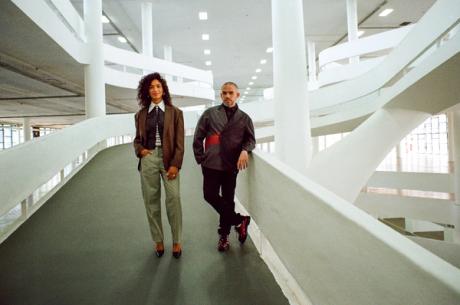
The Fundação Bienal de São Paulo has appointed Brazilian curators Amanda Carneiro and Raphael Fonseca as chief curators for the 2027 Bienal de São Paulo, Latin America's largest and longest-running visual arts event. Carneiro, a curator at the Museu de Arte de São Paulo (MASP) since 2018, also organized the main exhibition at the 2024 Venice Biennale. Fonseca, based in Lisbon, works at Culturgest, serves as curator-at-large for Latin American art at the Denver Art Museum, and is curating the Taiwan Pavilion at the 61st Venice Biennale. The event will take place at the Pavilhão Ciccillo Matarazzo in Ibirapuera Park, with further details expected in coming months.

Venice Showcases an Array of Global Art Stars During the Biennale

During the 2024 Venice Biennale, museums and foundations across the city are presenting solo and group exhibitions featuring major international art figures, including Marina Abramović, Lorna Simpson, Arthur Jafa, Richard Prince, and a tribute to Peggy Guggenheim. These shows run concurrently with the main Biennale exhibition, drawing visitors to venues such as the Peggy Guggenheim Collection and other historic palazzos.

Husband of Prominent New York Gallerist Convicted in Murder-for-Hire Plot

Brent Sikkema, a prominent New York gallerist known for championing artists like Kara Walker, was found stabbed to death in his apartment in Brazil in 2024. His husband has now been convicted in a murder-for-hire plot connected to the killing, which occurred amid their divorce proceedings.

Adelaide Biennial of Australian Art 2026 Review: Up Close and Personal

The 2026 Adelaide Biennial of Australian Art, titled 'Yield Strength,' features 24 artists across three venues, curated by Ellie Buttrose. The exhibition explores resilience under political and social pressures, with works like Erika Scott's fused assemblages from discarded domestic items, Jennifer Matthew's steel construction that manipulates visitor movement, and Nathan Beard's silicone arms critiquing exoticization of Thai culture. The title borrows an engineering term for the point at which materials transform under stress, reflecting the show's focus on art that strains formal boundaries without breaking.

Venice off the beaten track

The article highlights collateral exhibitions at the 2024 Venice Biennale that take place beyond the main venues of the Giardini and Arsenale, offering visitors unexpected discoveries in historic Venetian palazzos and warehouses. Featured shows include Hernan Bas's 'The Visitors' at Ca' Pesaro, exploring tourism's contradictions; 'Turandot: To the Daughters of the East' at Palazzo Franchetti, a group exhibition of women artists from Central Asia; and Amoako Boafo's first solo show in Italy at Palazzo Grimani, presented by Gagosian.

Review: The Good, The Bad and The Venice Biennale

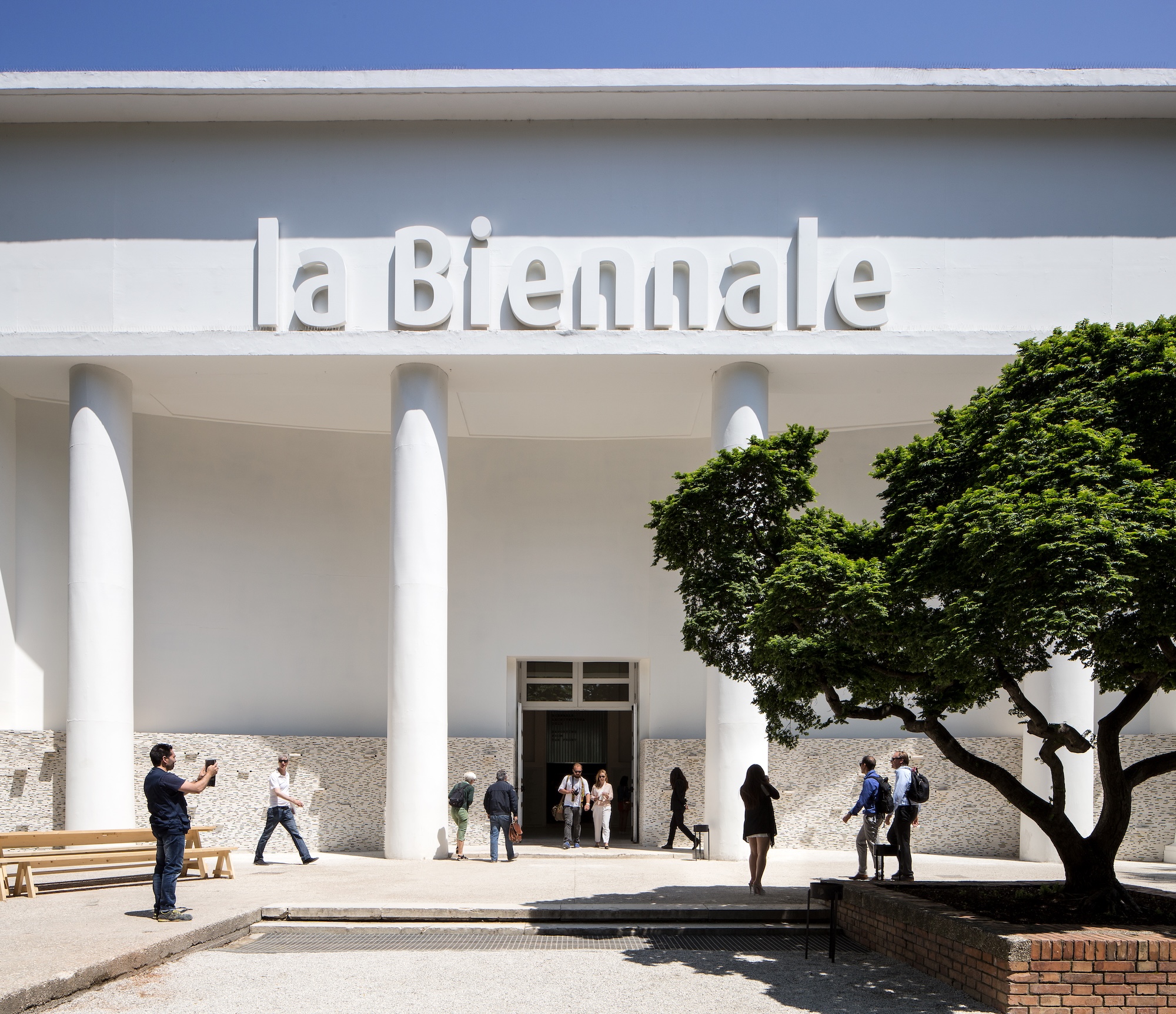
The article reviews the 2024 Venice Biennale, focusing on controversies over Russia's and Israel's participation. Protests erupted during opening week, leading the EU to cut funding and the International Jury to resign. As a result, awards like the Golden Lion and Silver Lion will be decided by public vote, with many pavilions and artists withdrawing in protest. The main exhibition, curated under the theme 'Minor Keys,' features standout works by Alfredo Jaar and Carrie Schneider, alongside national pavilions like Austria's provocative entry by Florentina Holzinger.

May You Live in Less Interesting Times

The international jury for the Venice Biennale has collectively resigned just before the press preview, following their announcement that countries accused of crimes against humanity—specifically Israel and Russia—would be excluded from award consideration. The jurors did not provide an explicit reason for their resignation. Meanwhile, Russia's return to the 61st Venice Biennale will involve workarounds to comply with international sanctions, including restricted pavilion access. The article also highlights a widely-read essay by Hakan Topal on the financialization and 'administrification' of American art schools and academia.

La Biennale de Venise s’ouvre dans un climat houleux

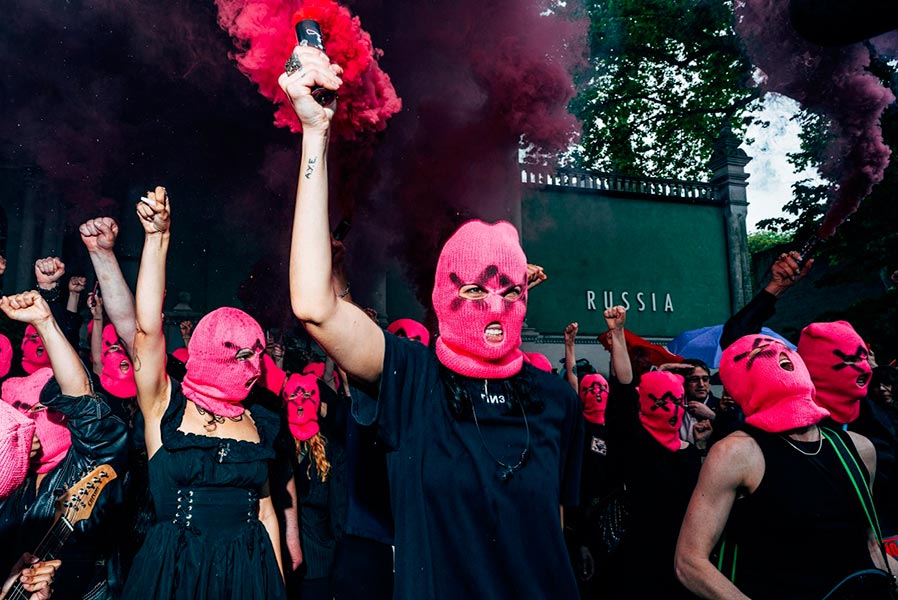
The 61st Venice Biennale opened amid intense controversy after its president, Pietrangelo Buttafuoco, announced the return of the Russian pavilion, which had been absent since the start of the Ukraine war. The European Commission suspended its €2 million subsidy for the 2028 edition, and the entire Biennale jury resigned on April 30. Buttafuoco later declared the Russian pavilion would remain closed, but protests erupted during the pre-opening days (May 6–8), drawing 28,000 professionals. Pussy Riot members, Femen activists, and the Free Nations League staged demonstrations, while the Israeli pavilion remained open despite a letter signed by nearly 200 artists calling for its exclusion.

KOO JEONG A “KANGSE X” at Hauser & Wirth, Zurich

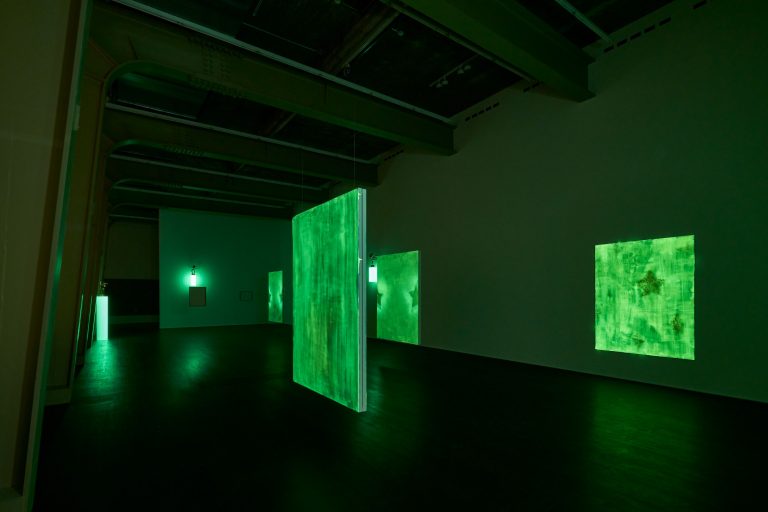
Koo Jeong A presents "KANGSE X" at Hauser & Wirth in Zurich, an exhibition that extends from her previous show "ODORAMA CITIES" at the Korean Pavilion of the 60th Venice Biennale. The title derives from the Korean term "KANGSE," meaning spatial strength, and the show encompasses her multifaceted practice across drawing, painting, sculpture, installation, film, and animation, including her earlier work "MYSTERIOUSSS" (2017).

Venice show brings together two leading figures from the Polish avant-garde

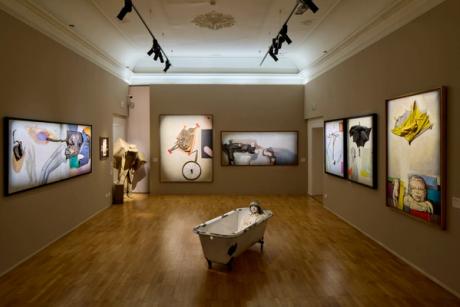
A collateral exhibition at the 2024 Venice Biennale, titled "Tadeusz Kantor (1915-1990) Emballage Cricotage and Madame Jarema," brings together two towering figures of the Polish avant-garde: Tadeusz Kantor and Maria Jarema. Organized by the Starak Family Foundation at the Procuratie Vecchie, the show features over 60 works spanning paintings, monotypes, sculptures, theatre props, and costumes, culminating in a room dedicated to Kantor's seminal theatre piece "The Dead Class" (1975). Jarema's work was shown at the 1958 Venice Biennale, and Kantor exhibited in the Polish pavilion in 1960; the exhibition highlights their intertwined, interdisciplinary practice and their foundational role in post-war Polish avant-garde art.

Polish pavilion at Venice Biennale explores fluidity of language with film recorded underwater

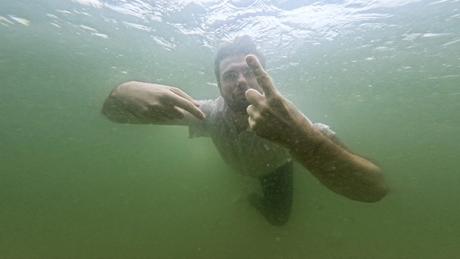
Poland's entry for the 2024 Venice Biennale, titled *Liquid Tongues*, is an audio-video installation by artists Bogna Burska and Daniel Kotowski. The work centers on a performance by the Chór w Ruchu (Choir in Motion), which includes both hearing and deaf performers, with much of the content filmed underwater in a Warsaw swimming pool. Presented across two screens in the Polish pavilion, the installation draws inspiration from whale song to explore alternative modes of communication, using spoken English and International Sign. The project builds on a previous performance at Warsaw's Zachęta National Gallery of Art and was developed in close collaboration with curators Ewa Chomicka and Jolanta Woszczenko.

Montclair Art Museum Hires New Chief Curator Kate Kraczon

The Montclair Art Museum in New Jersey has hired Kate Kraczon as its new chief curator, replacing Gail Stavitsky. Kraczon previously served as director of exhibitions and chief curator at the David Winton Bell Gallery at Brown University, where she was terminated last December amid university layoffs. At the Bell, she organized the only US screening of "Prisoners of Love, 2025" by Palestinian artists Basel Abbas and Ruanne Abou-Rahme, and an exhibition of Julien Creuzet's work originally shown at the French Pavilion in the 2024 Venice Biennale. Before Brown, she worked as a curator at the Institute of Contemporary Art (ICA) in Philadelphia, where she organized the 2018 show "Ree Morton: The Plant That Heals May Also Poison."

At the Venice Biennale I saw anger at Russia and Israel – and its leadership pretending everything was fine | Charlotte Higgins

At the 2024 Venice Biennale, the Russian pavilion returned with festive performances and prosecco deliveries, drawing sharp criticism from observers who saw it as a propaganda effort to distract from Russia's war in Ukraine. Meanwhile, Ukraine's Kramatorsk was bombed, and protests erupted, including a Pussy Riot intervention. Biennale president Pietrangelo Buttafuoco defended Russia's and Israel's participation, rejecting preemptive bans despite open letters and appeals. European Commission investigated potential sanctions breaches, and culture ministers from Ukraine, Poland, Estonia, and Baltic states boycotted or condemned the biennale's stance, accusing it of yielding to the aggressor.

Montclair Art Museum Names Kate Kraczon Chief Curator

The Montclair Art Museum (MAM) has appointed Kate Kraczon as its new Chief Curator, effective June 15, 2026. Kraczon, a nationally respected curator with over two decades of experience, joins MAM from Brown University, where she served as Director of Exhibitions and Chief Curator of the David Winton Bell Gallery. At Brown, she oversaw a program of more than 7,000 works and developed partnerships with major institutions including the Andy Warhol Foundation and the Terra Foundation for American Art. Her previous roles include Laporte Associate Curator at the Institute of Contemporary Art at the University of Pennsylvania, where she organized over 30 exhibitions.

Putin ‘Won’ the Venice Biennale, Quips Italian Culture Minister

Italian Culture Minister Alessandro Giuli stated that Russian President Vladimir Putin "won" the 2024 Venice Biennale, criticizing Russia's controversial return to the event. Giuli, who repeatedly denounced Russia's presence, told Corriere della Sera that Russian artists in the pavilion cannot express dissent against their regime. The Biennale faced widespread calls to remove Russia, with the EU threatening to withhold a €2 million grant, but organizers argued they lacked legal authority to exclude the country. Protests by Pussy Riot and FEMEN marked the pavilion's opening, while the Biennale's jury resigned en masse after announcing that nations charged with crimes against humanity would be ineligible for Golden Lions.

Venice Biennale Artists Decline Consideration for Golden Lions Chosen by Public Vote

Nearly half of the artists in the main exhibition of the Venice Biennale have signed a statement declining consideration for the Golden Lion awards, in solidarity with the jury that resigned last month. The statement, published by e-flux, includes prominent names such as Alfredo Jaar, Tuan Andrew Nguyen, Otobong Nkanga, and Walid Raad, as well as national pavilion representatives from France, Lithuania, and the Netherlands. The Biennale had planned to replace the jury-selected Golden Lions with "Visitor Lions" decided by public vote, but the artists' refusal marks an unprecedented protest within the exhibition.

‘We are complicit’: Austrian artist Florentina Holzinger’s immersive Venice Biennale pavilion brings apocalypse to the city

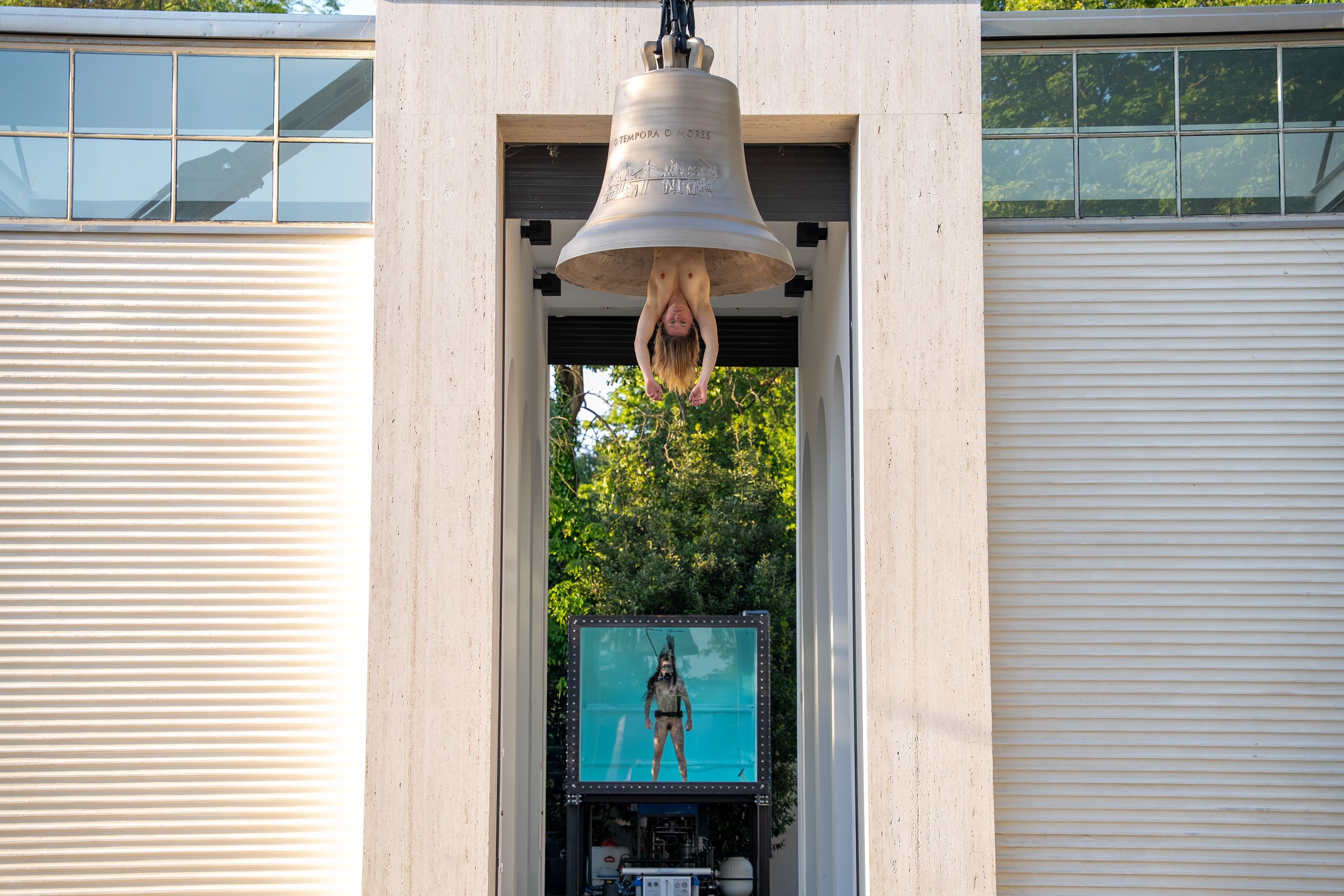
Austrian artist Florentina Holzinger has created 'Seaworld Venice,' an immersive and confrontational installation for the Austrian Pavilion at the 2024 Venice Biennale. The work explores climate change, technology, and a dystopian flooded future, drawing comparisons to the 1995 film 'Waterworld'—though neither Holzinger nor curator Nora-Swantje Almes had seen it. Known for extreme performance art involving nudity, blood, live piercing, and heavy machinery, Holzinger's previous works have caused audience members to faint or require medical treatment. The pavilion marks a significant platform for her radical, hybrid practice that blends theatre, dance, opera, and performance art.

Venice Bound? Here’s All the News You Need to Know About This Year’s Biennale

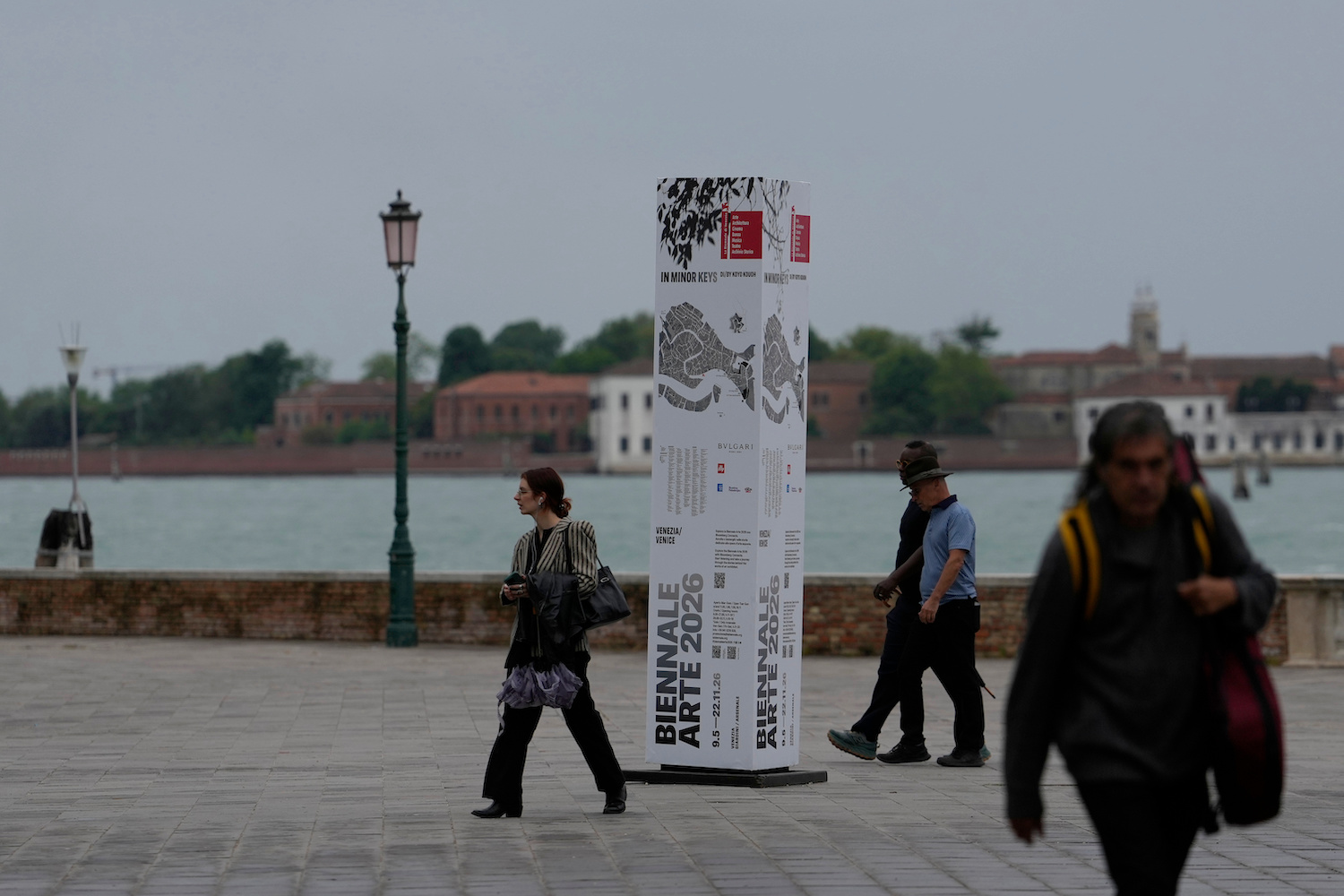
The 61st Venice Biennale is embroiled in geopolitical controversy over Russia's return to the event in 2026, which has sparked widespread backlash. Nearly 10,000 artists and cultural leaders signed an open letter opposing Russia's participation, and the European Union withdrew €2 million in funding for the 2028 edition. Leaked emails reveal Biennale officials worked with Russian pavilion commissioner Anastasia Karneeva to circumvent EU sanctions, while Italy's culture minister Alessandro Giuli plans to boycott the opening week. Meanwhile, activists continue to push for Israel's removal from the Biennale, though Israel will be accommodated in the Arsenale this year.

"One of the most dramatic Biennales": 11 unmissable art shows to see at Venice

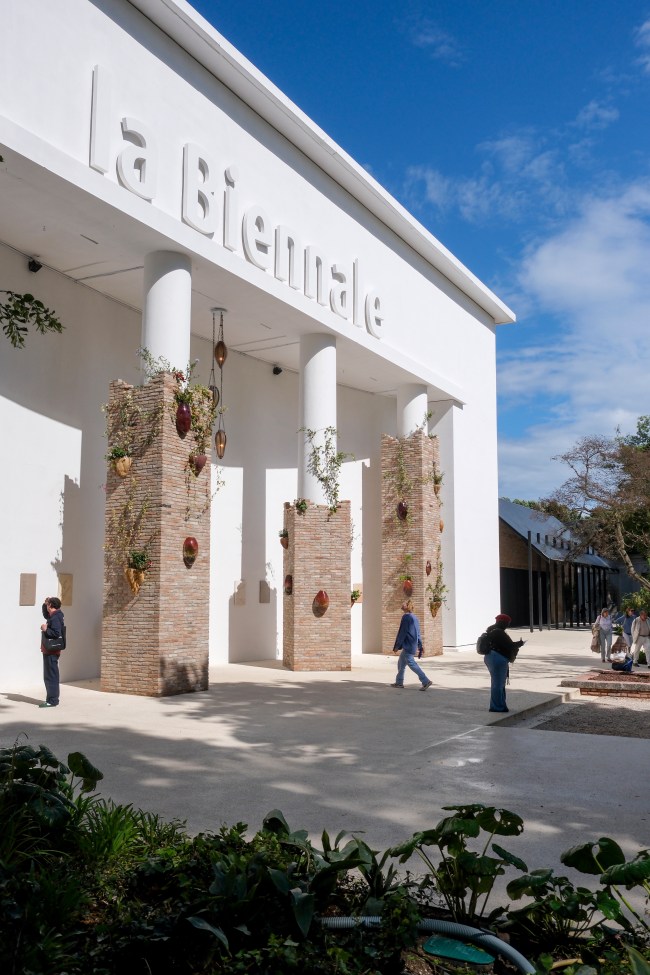
Theo Christelis reports from the opening week of the 2024 Venice Biennale, describing it as one of the most dramatic editions in recent memory. Key events include the death of main curator Koyo Kouoh and German Pavilion artist Henrike Naumann, the resignation of the prize jury over the participation of Israel and Russia, a protest by Pussy Riot, and a boycott by half the participating artists. Amid the turmoil, Christelis highlights unmissable shows including the Indian Pavilion (returning after seven years), Jenny Saville at Ca' Pesaro, Michael Armitage at Palazzo Grassi, and presentations at the British, Japanese, and Saudi Arabian Pavilions.

Iran Withdraws From 2026 Venice Biennale

Iran has withdrawn from the 2026 Venice Biennale, the world's most important art event, organizers announced on May 4. No official reason was given, but the withdrawal comes amid an uncertain ceasefire in Iran's war with the United States and Israel. The Biennale confirmed the decision in a statement, noting that 100 countries will still participate, including newcomers Tanzania and Seychelles. This follows South Africa's withdrawal over a legal dispute concerning a Gaza-focused artwork, and the closure of the Russian Pavilion to the public after the EU withdrew €2 million in funding over Russia's involvement.

Where to go for the next scandal?

Wo bitte geht's zum nächsten Skandal?

The article reports on the 2024 Venice Biennale preview days, where the atmosphere is dominated by political protests, media stunts, and social-media pressure rather than the art itself. Incidents include a solidarity drone choir for Gaza, a Pussy Riot and FEMEN protest at the Russian Pavilion, and a planned demonstration near the Israeli Pavilion, all amplified by PR agencies and WhatsApp alerts. A journalist describes being pressured by editors to cover scandals and political controversies instead of art reviews, which they say no longer attract clicks.

Somali Cultural Organizations Unhappy With Somalia Pavilion at the Venice Biennale

Somali artists and cultural organizations are protesting the Somalia pavilion at the 2024 Venice Biennale, arguing it excludes artists based in Somalia and relies on diaspora figures and an Italian co-curator, which they view as colonial. The Somali Arts Foundation issued a statement condemning the lack of consultation, while the queer arts collective Warbixinta Cidda criticized the appointment of Italian curator Fabio Scrivanti. Somali American poet Ladan Osman boycotted the pavilion, calling it "anti-indigenous."

WHO ARE THE CURATORS THAT WILL LEAD THE NEXT BIENAL DE SAO PAULO

The Fundação Bienal de São Paulo has appointed Amanda Carneiro and Raphael Fonseca as chief curators for the 37th Bienal de São Paulo, scheduled for 2027 at the Pavilhão Ciccillo Matarazzo in Ibirapuera Park. Carneiro, a curator at MASP since 2018 and an artistic organizer for the 2024 Venice Biennale, and Fonseca, a visual arts curator at Culturgest and curator-at-large at the Denver Art Museum, will lead the largest visual arts event in Latin America.

The Great Shitshow

Die große Shitshow

Florentina Holzinger has transformed the Austrian Pavilion at the Venice Biennale into a radical performance installation titled "Seaworld Venice." The piece features naked performers suspended from meat hooks, a performer ringing a bell while dangling upside down from a crane, a woman on a jetski circling inside a flooded pavilion, and a system where visitors are invited to urinate into portable toilets, with the waste processed and recirculated into the water. The work combines extreme physical stunts, nudity, and bodily fluids to create a visceral, immersive experience that has drawn long queues and stunned reactions from the art world.