

filter_list Showing 2 results for "Libya" close Clear
dashboard All 2 museum exhibitions 1article policy 1
date_range Range Today This Week This Month All
Subscribe

‘Your homes will be destroyed, your family killed’: the US has dropped millions of war propaganda leaflets – but do they work?

The United States military has been dropping propaganda leaflets in psychological operations (psyops) for over a century, from World War I through the Gulf War and the wars in Iraq and Afghanistan. A new interactive exhibit at Pioneer Works in Brooklyn, organized by the digital archive group Khajistan, displays hundreds of these leaflets, including those dropped on Japan during World War II and in more recent conflicts. However, declassified internal documents, such as a 1971 US Air Force report, reveal that leaflets were often used as toilet paper, cigarette rolling paper, or souvenirs by enemy soldiers, undermining the official narrative of their effectiveness.
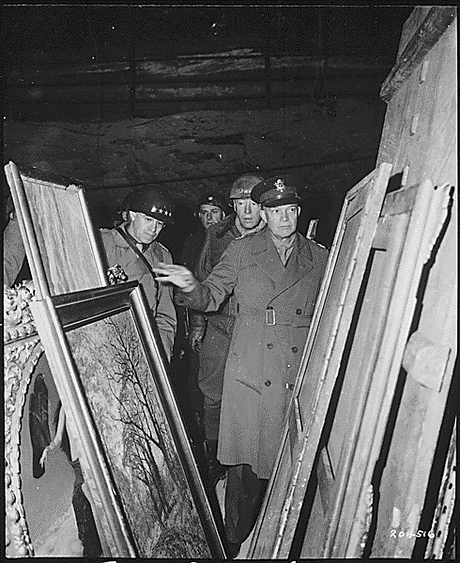
Today’s war, tomorrow’s loot: attempts at stemming the illicit trade in art

The article examines the ongoing challenge of preventing the illicit trade in cultural property looted from conflict zones. It discusses the Hague Convention of 1954 and its protocol, which require signatory countries to prevent theft and pillage during armed conflict and to seize and repatriate unlawful exports. However, the protocol only applies to situations of 'occupation,' leaving a gap for looting that occurs in the chaos of war beyond formal occupation. The article also notes UN Security Council Resolutions that restrict unlawfully removed cultural property from Iraq and Syria, but no similar consensus exists for countries like Afghanistan, Libya, Ukraine, Lebanon, Yemen, Sudan, and Iran. EU Regulation 2019/880 is highlighted as a measure that prohibits introducing goods removed unlawfully from their place of origin into the EU, though its scope has expanded beyond its original anti-terrorist financing purpose.