filter_list Showing 49 results for "Pietrangelo Buttafuoco" close Clear
search
dashboard All 49 article news 44museum exhibitions 3person people 1article policy 1
date_range Range Today This Week This Month All
Subscribe

More than 70 Venice Biennale artists withdraw from awards

More than 70 artists participating in the 2025 Venice Biennale have withdrawn from consideration for the Golden Lion awards, which this year will be decided by public vote. The artists, including Walid Raad, Laurie Anderson, and Yto Barrada, signed a statement published on e-flux on May 9, withdrawing in solidarity with the entire prize jury that resigned last month over a dispute regarding the participation of Israel and Russia. The Biennale management replaced the traditional jury-selected awards with a new "Visitor Lion" system where ticket holders can vote, but the Biennale has acknowledged that if any of the withdrawing artists win, they will not collect the award.

What Is the Venice Biennale? Everything You Need to Know

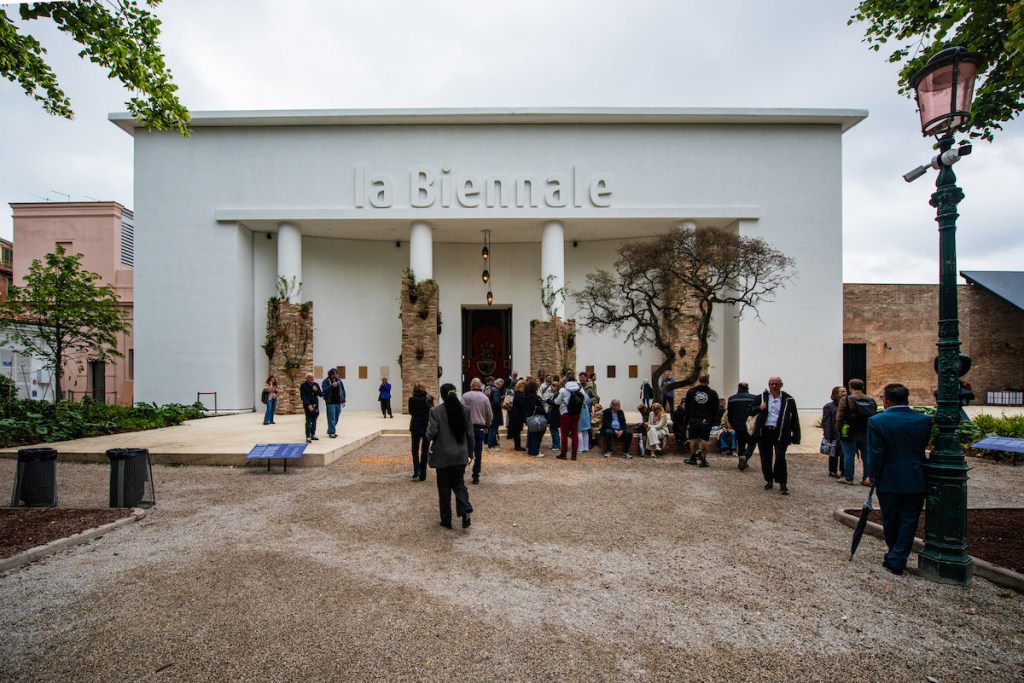
The Venice Biennale returns for its 61st edition, running from May 9 to November 22, 2026. The event, often called the Olympics of the art world, comprises a central exhibition curated by an artistic director, national pavilions from dozens of countries, and officially approved Collateral Events. This year's edition was to be curated by Koyo Kouoh, a celebrated Cameroonian-born curator, but she died at 57 in May 2025 before announcing the title and theme, “In Minor Keys.” The Biennale organization has moved forward with a team of five curatorial advisers executing her vision. The event is overseen by president Pietrangelo Buttafuoco and is expected to draw over 800,000 visitors.

Venice Biennale’s 2026 Golden Lion Jury to Be Led by Videobrasil Founder

The Venice Biennale has announced the five-member jury for its 2026 edition, which will award the prestigious Golden Lion prizes. The jury president is Solange Oliveira Farkas, founder of the Videobrasil Biennial, and she will be joined by curators and academics Zoe Butt, Elvira Dyangani Ose, Marta Kuzma, and Giovanna Zapperi.

No Need to Shed a Tear for the Jury

"Man muss der Jury keine Träne nachweinen"

The entire jury of the Venice Biennale resigned shortly before the opening, prompting criticism of Biennale President Pietrangelo Buttafuoco. Italian Culture Minister Alessandro Giuli accused Buttafuoco of pursuing a misguided "pacificist fantasy" by readmitting Russia to the six-month exhibition, calling it failed "side foreign policy." Commentators in German media, including Niklas Maak (FAZ) and Marcus Woeller (Die Welt), see the resignation as a symptom of a crisis in the art world, with the jury having acted as a "political tribunal" by pre-judging artists based on nationality, particularly regarding Israel. The Biennale leadership defended inclusion, but the standoff has caused significant "image damage." Separately, Dirk Knipphals (wochentaz) delivers a scathing review of Wolfram Weimer's first year as cultural policy commissioner, accusing him of empty rhetoric and failing to counter right-wing cultural politics. Juliane von Mittelstaedt (Der Spiegel) reports on Saudi Arabia's use of a spectacular new art museum in Riyadh as a stability narrative amid regional conflict.

Pussy Riot Storms Russia Pavilion at Venice Biennale

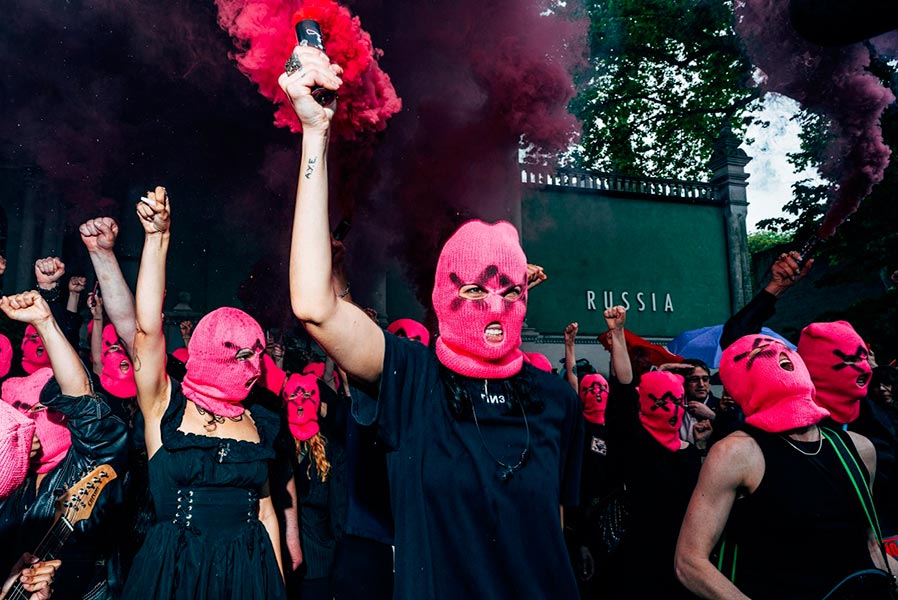
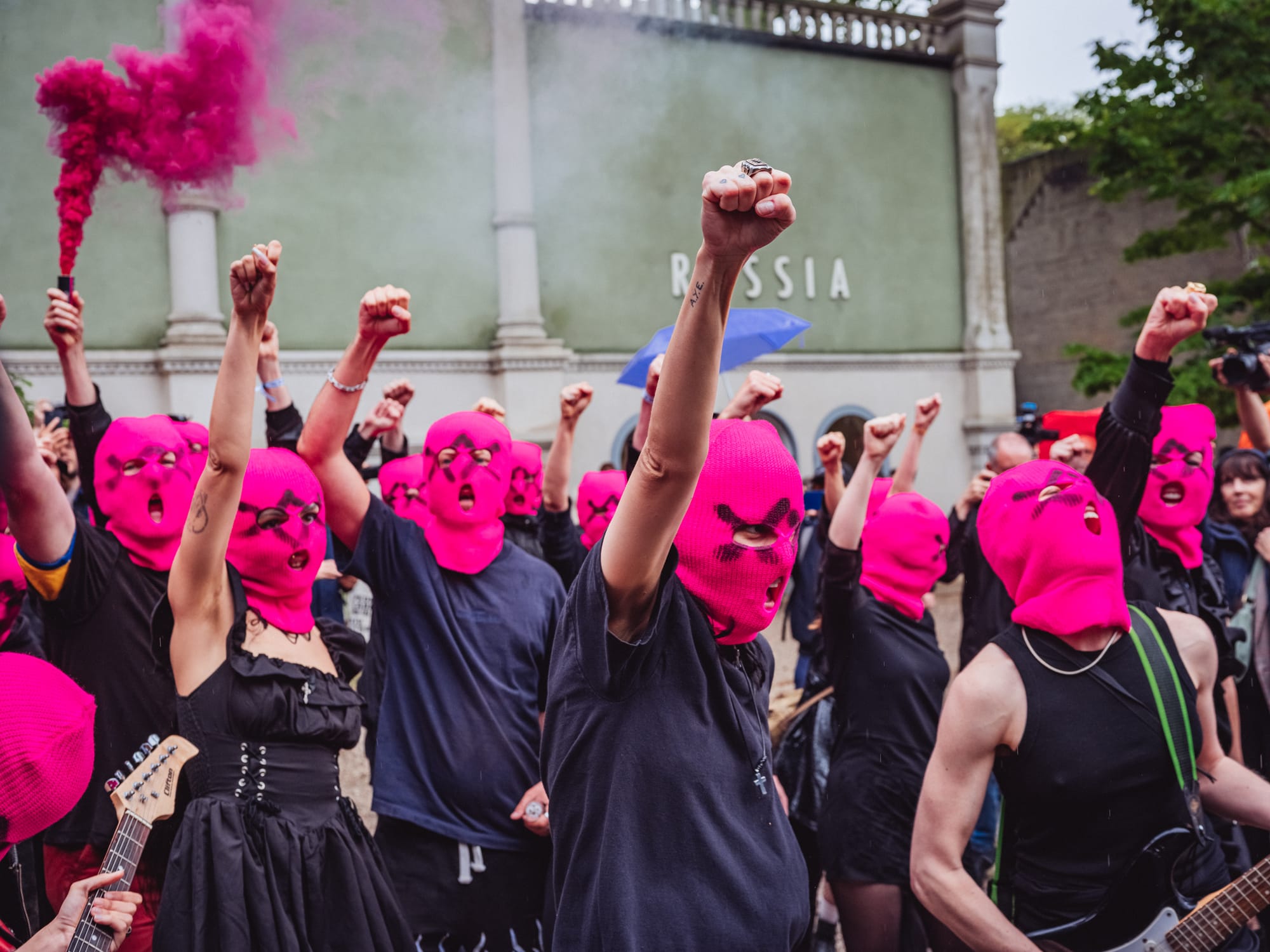
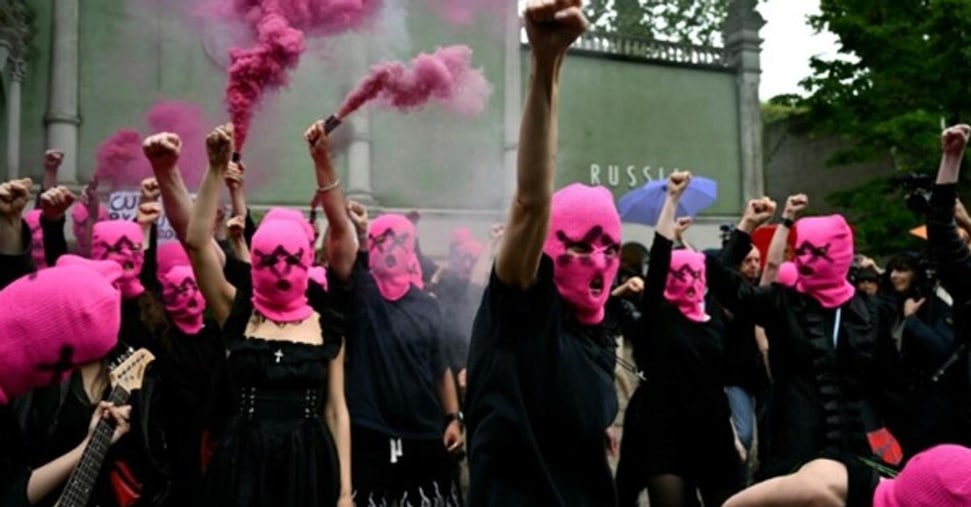
Pussy Riot staged a dramatic protest at the Russia Pavilion during the Venice Biennale, releasing pink smoke and waving Ukrainian flags while chanting slogans like 'Blood is Russia’s art.' Around 50 protesters, including members of Femen, occupied the area. Pussy Riot founder Nadya Tolokonnikova called for the pavilion to be closed and given to oppressed peoples, challenging Biennale president Pietrangelo Buttafuoco to meet her. The protest lasted about 20 minutes, with performers climbing the pavilion and exposing political slogans on their chests.

"Man besitzt Kunst nicht, man ist nur ihr Verwalter"

The 61st Venice Biennale opened on Saturday without ceremony or an opening celebration, amid political turmoil over the participation of Russia and Israel. Italy's Culture Minister Alessandro Giuli criticized Biennale director Pietrangelo Buttafuoco for not informing the government about Russia's participation request, suggesting it could have been used as leverage for a ceasefire in Ukraine. The entire jury resigned after attempting to exclude both Russia and Israel from prize awards, leading to the cancellation of the traditional jury decision in favor of a public vote, which over 70 participating artists have protested by withdrawing from this year's prizes. Separately, a rare photograph from the early 1940s has surfaced showing Lucas Cranach the Elder's painting "Venus with Cupid as Honey Thief" in Adolf Hitler's Munich apartment, raising unresolved questions about whether the work was looted from Jewish owners before 1935.

La Biennale de Venise s’ouvre dans un climat houleux

The 61st Venice Biennale opened amid intense controversy after its president, Pietrangelo Buttafuoco, announced the return of the Russian pavilion, which had been absent since the start of the Ukraine war. The European Commission suspended its €2 million subsidy for the 2028 edition, and the entire Biennale jury resigned on April 30. Buttafuoco later declared the Russian pavilion would remain closed, but protests erupted during the pre-opening days (May 6–8), drawing 28,000 professionals. Pussy Riot members, Femen activists, and the Free Nations League staged demonstrations, while the Israeli pavilion remained open despite a letter signed by nearly 200 artists calling for its exclusion.

The art of politics: how global conflicts are playing out in this year's Venice Biennale

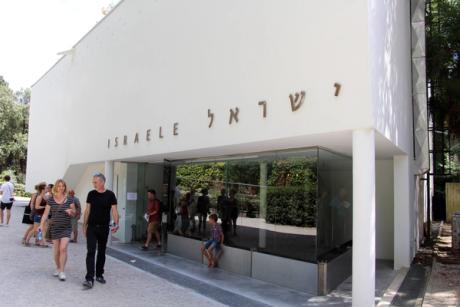
Israel is making a controversial return to the 2025 Venice Art Biennale after its pavilion was locked in 2024 with a note demanding a ceasefire in Gaza. The artist representing Israel, Belu-Simion Fainaru, will present his project "Rose of Nothingness" in the Arsenale, while Russia also returns to the Biennale after its Giardini pavilion was reassigned to Bolivia in 2024. The Art Not Genocide Alliance (ANGA) has renewed calls for a boycott and is organizing strike action to disrupt the event, accusing Israel of genocide.

At the Venice Biennale I saw anger at Russia and Israel – and its leadership pretending everything was fine | Charlotte Higgins

At the 2024 Venice Biennale, the Russian pavilion returned with festive performances and prosecco deliveries, drawing sharp criticism from observers who saw it as a propaganda effort to distract from Russia's war in Ukraine. Meanwhile, Ukraine's Kramatorsk was bombed, and protests erupted, including a Pussy Riot intervention. Biennale president Pietrangelo Buttafuoco defended Russia's and Israel's participation, rejecting preemptive bans despite open letters and appeals. European Commission investigated potential sanctions breaches, and culture ministers from Ukraine, Poland, Estonia, and Baltic states boycotted or condemned the biennale's stance, accusing it of yielding to the aggressor.

The best and worst we saw at the Venice Art Biennale 2026. Artribune's hits and flops

Il meglio e il peggio che abbiamo visto alla Biennale d’Arte di Venezia 2026. Top e flop di Artribune

The 61st Venice Biennale, titled "In Minor Keys" and directed by Koyo Kouoh, opened amid significant turmoil: the death of a newly appointed curator, diplomatic tensions over the presence of Russia and Israel, political protests, and the unprecedented collective resignation of the jury, which led to the Golden Lions being awarded by public vote for the first time. Despite this chaotic backdrop, the exhibition—featuring a record 100 national pavilions—has been widely praised for avoiding moralistic pedagogy and instead embracing visual seduction, formal quality, and sensory joy while addressing themes of identity, memory, colonialism, ecological crisis, and violence. The article highlights top and flop moments from the opening week, including strong showings by Biennale president Pietrangelo Buttafuoco and a standout exhibition at Fondazione Prada.

Art and politics clash at Venice Biennale, as world conflicts upstage exhibition's opening

The 61st Venice Biennale, the world's most prestigious art exhibition, opens under unprecedented turmoil. For the first time, its vision was shaped by the late Cameroonian curator Koyo Kouoh, who centered artists from Africa and its diaspora. However, political conflicts over Russia and Israel have overshadowed the art. All five jurors resigned after the Italian culture minister investigated their decision to withhold prizes from Russia and Israel over alleged crimes against humanity. Protests erupted at the Russian pavilion, with Pussy Riot activists denouncing Russia's participation, while the Israeli pavilion artist threatened legal action over the jury's snub. The Biennale will proceed without a jury, with visitors voting for two awards, and the fate of the Golden Lion remains uncertain.

Israel’s foreign ministry accuses Venice Biennale's jury of ‘politicising’ exhibition

Israel’s foreign ministry has accused the Venice Biennale's jury of politicizing the exhibition after jurors announced they would not consider for prizes countries whose leaders face International Criminal Court charges for crimes against humanity. The jury’s statement, which did not name specific nations, is broadly understood to apply to Israel and Russia, both returning to the Biennale for the first time since the Gaza war and the Ukraine invasion, respectively. The Israeli ministry posted on X that the jury had decided to 'boycott' Israeli sculptor Belu-Simion Fainaru, calling it 'a contamination of the art world.' The Biennale distanced itself from the jury’s announcement, stating the jury acts autonomously, while the Russian pavilion is reportedly set to open only for a limited pre-opening period due to budget constraints amid sanctions.

Russian Pavilion Will Be Closed to the Public During Venice Biennale: Report

The Russian Pavilion will be closed to the public for most of the 2025 Venice Biennale, opening only during the pre-opening vernissage (May 5–8) for live performances tied to the exhibition “The Tree Is Rooted in the Sky.” After May 9, the pavilion will remain closed, with digital documentation displayed in the windows. The compromise follows weeks of pressure from European cultural and political figures—including Italy’s culture minister—to shutter the pavilion due to Russia’s ongoing war in Ukraine. Plans were confirmed via email correspondence between Biennale Foundation president Pietrangelo Buttafuoco, general director Andrea Del Mercato, and Russian Pavilion commissioner Anastasia Karneeva, as reported by Italian outlets Open and La Repubblica.

Putin ‘Won’ the Venice Biennale, Quips Italian Culture Minister

Italian Culture Minister Alessandro Giuli stated that Russian President Vladimir Putin "won" the 2024 Venice Biennale, criticizing Russia's controversial return to the event. Giuli, who repeatedly denounced Russia's presence, told Corriere della Sera that Russian artists in the pavilion cannot express dissent against their regime. The Biennale faced widespread calls to remove Russia, with the EU threatening to withhold a €2 million grant, but organizers argued they lacked legal authority to exclude the country. Protests by Pussy Riot and FEMEN marked the pavilion's opening, while the Biennale's jury resigned en masse after announcing that nations charged with crimes against humanity would be ineligible for Golden Lions.

Venice Biennale Artists Decline Consideration for Golden Lions Chosen by Public Vote

Nearly half of the artists in the main exhibition of the Venice Biennale have signed a statement declining consideration for the Golden Lion awards, in solidarity with the jury that resigned last month. The statement, published by e-flux, includes prominent names such as Alfredo Jaar, Tuan Andrew Nguyen, Otobong Nkanga, and Walid Raad, as well as national pavilion representatives from France, Lithuania, and the Netherlands. The Biennale had planned to replace the jury-selected Golden Lions with "Visitor Lions" decided by public vote, but the artists' refusal marks an unprecedented protest within the exhibition.

‘Exclusion can only satisfy the ego’: Venice Biennale president hits out at critics amid Russia and Israel controversy

Venice Biennale president Pietrangelo Buttafuoco defended the institution against critics at a conference on May 6, three days before the public opening, amid controversy over Russia's return to the event for the first time since its 2022 invasion of Ukraine and ongoing disputes over Israel's participation. He accused critics of “narcissism” and “censorship,” while Italian culture minister Alessandro Giuli sent inspectors to investigate whether Russia's involvement breached sanctions; a report was submitted to Prime Minister Giorgia Meloni's office. Meanwhile, the Biennale faces legal threats from the artist representing Israel over alleged discrimination, and protests have erupted, including a demonstration by Art Not Genocide Alliance and a Pussy Riot action at the Russia pavilion.

The Biennale Isn’t a Court. Tell That to the Protesters.

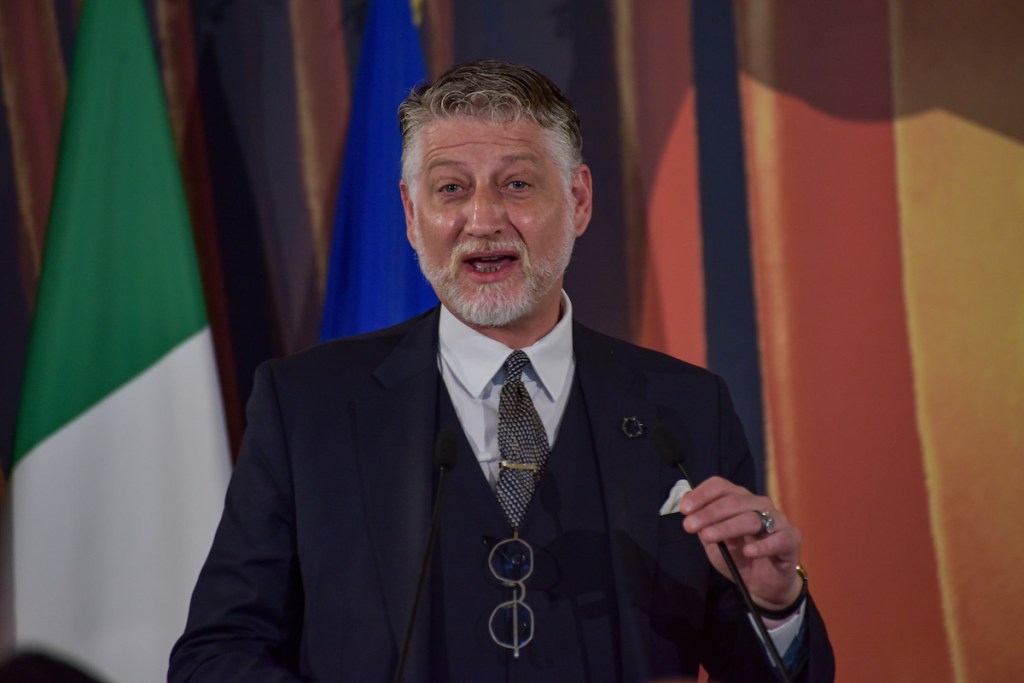
Pietrangelo Buttafuoco, president of the Venice Biennale, defended the decision to allow Russia to reopen its pavilion for the first time since its 2022 invasion of Ukraine, stating that the Biennale is "not a court; it is a garden of peace." The move has sparked widespread backlash, including threats to pull €2.3 million in EU funding. Protests have erupted on the ground, with Pussy Riot and FEMEN staging a theatrical demonstration outside the Russian Pavilion, setting off smoke flares and chanting slogans. Separately, around 60 artists performed a "Solidarity Drone Chorus" to protest Israel's participation, and the Art Not Genocide Alliance has called for a 24-hour strike and rallies across Venice. The Russian Pavilion will be open only during press preview days due to EU sanctions, with video projections visible from outside for the rest of the Biennale's run.

Venice Diary Day 1: At the Giardini, Artists Refuse to Make Fascism Cozy

Henrike Naumann's posthumous installation at the German Pavilion, which retains its 1938 Nazi-era fascist architecture, refuses to make the space 'cozy' by adorning windows with violently ripped domestic fabrics. The 2026 Venice Biennale is the first under president Pietrangelo Buttafuoco, associated with neo-fascist politics, and is overshadowed by controversy over his 'neutrality' policy allowing all countries to participate despite human rights concerns. The exhibition jury initially announced it would not consider pavilions from countries whose leaders are charged with crimes against humanity, then abruptly quit, leaving the situation unresolved. The US Pavilion features unimpressive blobs by Alma Allen, while the Russian Pavilion offers cut flowers and free vodka, and Andreas Angelidakis responds to fascist aesthetics at the Greek Pavilion.

Venice Bound? Here’s All the News You Need to Know About This Year’s Biennale

The 61st Venice Biennale is embroiled in geopolitical controversy over Russia's return to the event in 2026, which has sparked widespread backlash. Nearly 10,000 artists and cultural leaders signed an open letter opposing Russia's participation, and the European Union withdrew €2 million in funding for the 2028 edition. Leaked emails reveal Biennale officials worked with Russian pavilion commissioner Anastasia Karneeva to circumvent EU sanctions, while Italy's culture minister Alessandro Giuli plans to boycott the opening week. Meanwhile, activists continue to push for Israel's removal from the Biennale, though Israel will be accommodated in the Arsenale this year.

How Pussy Riot Is Challenging Russia’s Return to the Venice Biennale

The feminist art collective Pussy Riot is campaigning to replace the official Russian exhibition at the 2024 Venice Biennale with their own show, "Resistance Imprisoned." The alternative exhibition features art created by nearly 30 current and former political prisoners in Russia, using improvised materials like envelopes, bedding, and blood. The collective's founder, Nadya Tolokonnikova, aims to expose the country's repressive system, drawing from her own experience in a penal colony.

Pussy Riot protest at Venice Biennale forces Russian pavilion to briefly close

On the second day of the Venice Biennale preview, the activist group Pussy Riot staged a chaotic protest at the Russian pavilion, forcing it to temporarily close. Wearing pink balaclavas and carrying flares, about 40 activists—including members of Femen—gathered outside the pavilion, shouting slogans like "Blood is Russia's Art" and attempting to enter before being pushed back by police. Founding member Nadya Tolokonnikova led the protest, condemning Europe for allowing Russian participation despite the war in Ukraine. Separately, the Art Not Genocide Alliance (Anga) demonstrated outside the Israeli pavilion, which was locked from inside, over Israel's war in Gaza.

Venice Biennale Jury Bars Israel and Russia from Official Prizes

The international jury of the 61st Venice Biennale announced on April 23 that it will not consider the Israeli and Russian pavilions for official prizes, including the Golden Lion for national participation. The five-member, all-women panel—comprising Solange Farkas, Zoe Butt, Elvira Dyangani Ose, Marta Kuzma, and Giovanna Zapperi—said it would exclude countries whose leaders are currently charged with crimes against humanity by the International Criminal Court, a criterion that applies to Israel and Russia due to ICC arrest warrants for Benjamin Netanyahu and Vladimir Putin. The decision comes amid mounting controversy over the Biennale's decision to host both pavilions, with Russia returning after its artists withdrew in 2022 over the Ukraine invasion and Israel reopening after its 2024 pavilion remained closed pending a Gaza ceasefire. The European Commission had also threatened to suspend a €2 million grant over the Russian pavilion's reopening.

Pussy Riot and Topless Activists Rally Against Russian Pavilion at Venice Biennale

On May 6, 2026, the art collective Pussy Riot and the Ukrainian feminist group FEMEN staged a protest outside the Russian Pavilion at the 61st Venice Biennale. Approximately 50 activists released pink smoke and blue-and-yellow flares evoking the Ukrainian flag, while FEMEN members staged a topless protest with anti-war slogans like “RUSSIA KILLS, BIENNALE EXHIBITS.” Italian police and Biennale security blocked access to the pavilion, and some Pussy Riot activists were tackled after entering. The protest targeted Russia’s participation in the Biennale for the first time since its full-scale invasion of Ukraine in 2022, with activists condemning the event for lending legitimacy to Russian officials and artists aligned with the government.

Art Biennale: artists reject the popular jury

Fifty-two artists and curators, along with sixteen National Participants of the 61st Venice Art Biennale, have withdrawn from the newly introduced 'Lions of the Visitors' (People's Prizes) competition. The boycott follows the resignation of the jury appointed by artistic director Koyo Kouoh, who died in 2025, and is a protest against the inclusion of Russia and Israel in the prize—countries initially excluded by the international jury. The controversy escalated after Italian Minister of Culture Alessandro Giuli publicly opposed the Biennale president Pietrangelo Buttafuoco's decision to allow Russia's participation, drawing in the European Commission and even Ursula von der Leyen, who warned of potential sanctions violations. The signatories include artists and curators from France, Belgium, Luxembourg, Turkey, Switzerland, Spain, the Netherlands, and several other nations.

THE VENICE BIENNALE IN AN EDITION MARKED BY POLITICAL GAMES

The Venice Biennale's 2024 edition is embroiled in political controversy surrounding its national pavilions, particularly those of Russia, South Africa, and Israel. The Russian pavilion's readmission amid the war in Ukraine drew sharp criticism from the artistic community and led the European Union to withdraw approximately two million euros in funding. The Israeli pavilion, which remained empty in 2024 to protest hostage situations, now features a proposal by sculptor Belu-Simion Fainaru, prompting protests from the Art Not Genocide Alliance and over 200 artists demanding its exclusion. The curatorial team, appointed by the late curator Koyo Kouoh, resigned collectively nine days before the opening, and the Biennale's directorship canceled the opening ceremony, postponing awards to November. Demonstrations led by Art Not Genocide Alliance, Pussy Riot, and FEMEN surrounded the Russian pavilion during the press opening, and a strike by cultural workers is planned for May 8th.

The soap opera continues. Minister Giuli will boycott the inauguration of the Venice Biennale

La telenovela continua. Il Ministro Giuli diserterà l’inaugurazione della Biennale di Venezia

Alessandro Giuli, Italy's Minister of Culture, has announced he will boycott the pre-opening and inauguration ceremony of the 61st Venice Biennale on May 9, 2026, escalating a political and cultural crisis. The dispute began when Biennale president Pietrangelo Buttafuoco allowed the Russian pavilion to reopen, absent since 2022 due to the Ukraine invasion, citing artistic freedom. Giuli demanded the removal of ministry representative Tamara Gregoretti from the Biennale board for failing to oppose the decision. Tensions flared during the Italy Pavilion press conference, where journalists were confined to a separate streaming room and questions were restricted. The European Commission condemned the Russian pavilion's reopening, cutting €2 million in funding and issuing a 30-day ultimatum, while 22 European countries signed a letter pressuring the institution. The Biennale's international jury, led by Solange Oliveira Farkas, then excluded Russia and Israel from award consideration, citing ethical guidelines against countries whose leaders face International Criminal Court charges for crimes against humanity.

"Etwas zaghaft, etwas ängstlich, etwas sicher"

The article surveys recent art-world commentary, focusing on a critical review of the Turner Prize shortlist in The Guardian, where Eddy Frankel calls the selection "timid, anxious, safe" and laments a self-perpetuating, elitist system. It also covers a Hyperallergic essay by Lisa Siraganian questioning whether artworks can possess personhood, sparked by Pierre Huyghe's Venice exhibition. Additionally, it reports on controversy at the Venice Biennale, where the jury preemptively excluded countries whose leaders are sought by the International Criminal Court—namely Russia and Israel—drawing sharp criticism from Die Welt's Marcus Woeller. A podcast interview with US sculptor Alma Allen, selected for the US Pavilion, rounds out the coverage.

Israel Criticizes Venice Biennale Jury over Pavilion’s Exclusion

The international jury of the 61st Venice Biennale has excluded the Israeli and Russian pavilions from consideration for official prizes, citing that countries whose leaders are charged with crimes against humanity by the International Criminal Court will not be eligible. Israel’s foreign ministry condemned the decision as a political boycott, and Israeli representative Belu-Simion Fainaru called it a hostile act that exceeds the jury’s mandate. The Biennale’s president, Pietrangelo Buttafuoco, has distanced the institution from the jury’s action, insisting the exhibition remain open to all nations recognized by Italy.

Under pressure, the jury of the 61st Venice Biennale will exclude Russian and Israeli pavilions from the awards

Sous pression, le jury de la 61e Biennale de Venise exclura les pavillons russe et israélien du palmarès

The 61st Venice Biennale, titled "In Minor Keys" and running from May 9 to November 22, 2026, has been embroiled in political controversy after organizers decided to reinstate the Russian pavilion, which had been excluded since Russia's 2022 invasion of Ukraine. Under pressure from the European Commission, which threatened to suspend a €2 million grant, the jury announced it will exclude artists from the Russian and Israeli pavilions from winning prizes, citing that leaders Vladimir Putin and Benjamin Netanyahu face International Criminal Court charges for crimes against humanity. The Russian pavilion will remain closed to the public but open for VIP press previews, while the Israeli pavilion stays open to the public. Italian Culture Minister Alessandro Giuli has refused to attend the opening ceremony in protest.

Nations Charged With Crimes Against Humanity Will Not Be Considered for Venice Biennale Awards

The jury for the 2026 Venice Biennale announced it will not consider contributions from countries whose leaders are charged with crimes against humanity for the Golden and Silver Lion awards, effectively excluding Israel and Russia. The decision, framed as a commitment to human rights and aligned with curator Koyo Kouoh's vision, comes amid broader controversy over participating pavilions, including American artists declining to represent the US and the EU withdrawing a $2.3 million grant over Russia's involvement.