filter_list Showing 59 results for "The Giardini" close Clear
search
dashboard All 59 museum exhibitions 35article news 18rate_review review 5article culture 1
date_range Range Today This Week This Month All
Subscribe

The Big Review | Venice Biennale 2026: In Minor Keys ★★★½

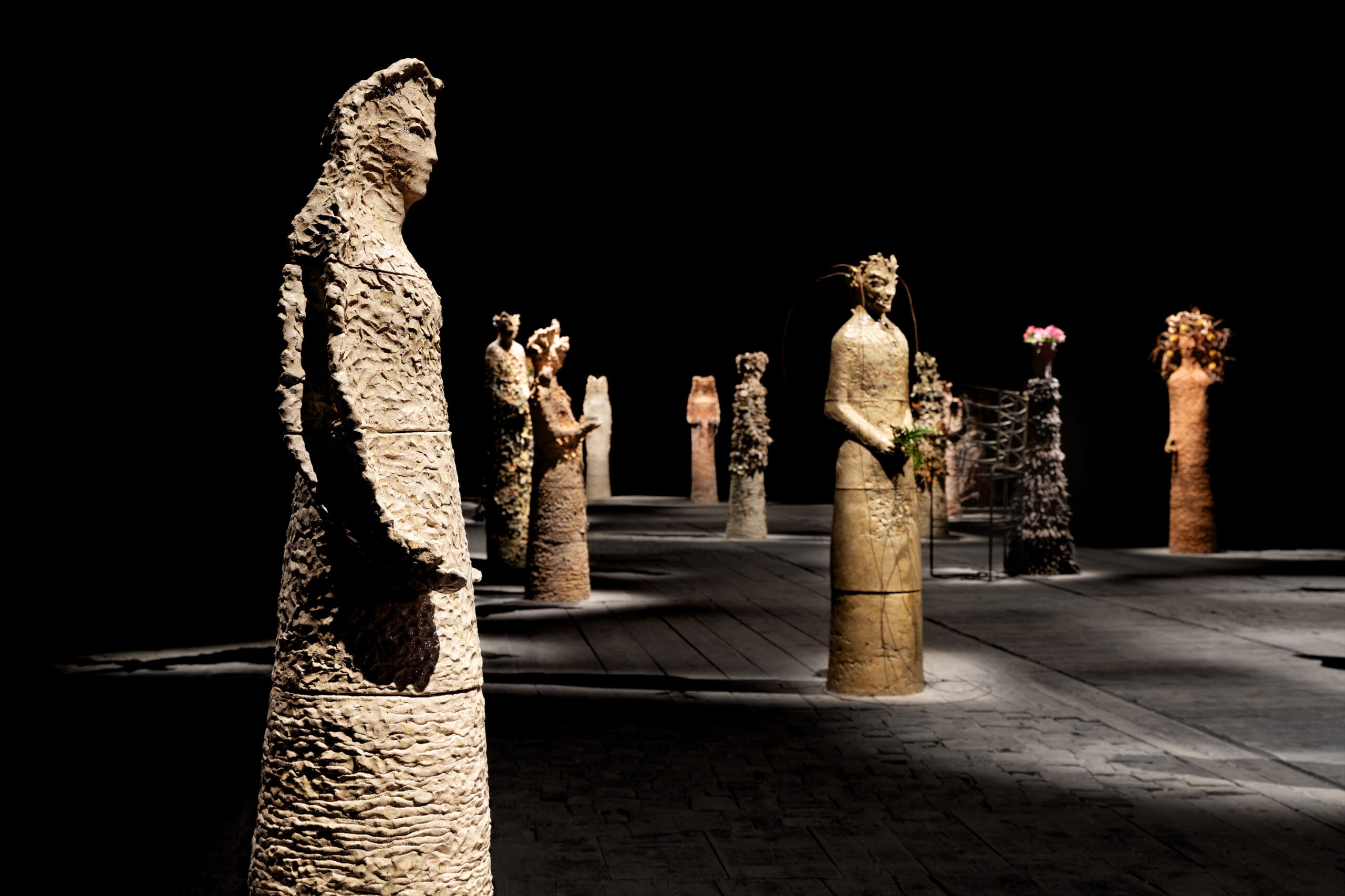
The Venice Biennale 2026, titled "In Minor Keys," was curated posthumously following the death of artistic director Koyo Kouoh in May 2025. A team of five curators and advisors—Gabe Beckhurst Feijoo, Marie Hélène Pereira, Rasha Salti, Siddhartha Mitter, and Rory Tsapayi—executed her vision across the Giardini and Arsenale venues. The exhibition features 110 artists, with a strong emphasis on new commissions, and is structured around themes of procession, resistance, and joy. Key works include Big Chief Demond Melancon's "Amistad Takeover" (2026), Nick Cave's "Amalgam (Origin)" (2025), and Otobong Nkanga's rewilded columns at the Central Pavilion.
What does a woman swimming in urine tell us about the state of the world? Lots! – Venice Biennale review

The 2026 Venice Biennale, curated by the late Koyo Kouoh under the theme "In Minor Keys," has been plagued by months of turmoil including countries withdrawing, artists being fired, exhibitions cancelled, funding pulled, and protests during the preview. A five-person curatorial team took over after Kouoh's death, resulting in what the critic describes as a disjointed, committee-driven exhibition that prioritizes quiet contemplation and healing over direct political engagement. The central shows in the Giardini and Arsenale feature a vast, poorly explained array of art from the global south, with installations of ceramics, textiles, slide projectors, and serene natural scenes that the critic finds anachronistic and dull.

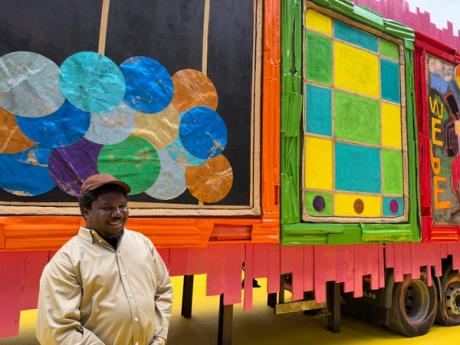
Alvaro Barrington takes a road trip to the Venice Biennale

Artist Alvaro Barrington has created a vibrant haulage truck titled "Labor Day Parade ’91" (2026) as his contribution to the 61st Venice Biennale, part of the exhibition "In Minor Keys." The truck, decorated with scenes linked to his background and art historical references, was driven from London to Venice on an epic road trip across Europe. It is now parked in the Giardini next to the Austrian pavilion, with its front tyres punctured to prevent movement. During the preview, the work was admired by artist Julie Mehretu and Dia Art Foundation director Jessica Morgan.

Khaled Sabsabi on Representing Australia at the 61st Venice Biennale

Khaled Sabsabi, the artist representing Australia at the 61st Venice Biennale (2026), will exhibit works both in the Australia Pavilion in the Giardini and in the main Biennale exhibition titled "In Minor Keys." His pieces explore spirituality, migration, and shared humanity through Tasawwuf (Sufi) sensibilities, emphasizing flux and collective experience. Sabsabi is the first Australian artist to have work in both the national pavilion and the main exhibition in the same year, and he honors the curatorial vision of the late Koyo Kouoh.

We visited the 2026 Venice Art Biennale: the exhibitions and pavilions you shouldn’t miss

The 2026 Venice Art Biennale has opened across the Giardini, Arsenale, and venues throughout the city, with geopolitics, climate collapse, and national identities dominating the exhibitions. Notable pavilions include Austria's "Seaworld Venice" by Florentina Holzinger, the Czech and Slovak Pavilion's "Il Silenzio della Talpa" by Jakub Jansa and Selmeci Kocka Jusko, India's "Geographies of Distance: remembering home" featuring multiple artists, and the Taiwan Pavilion's "Screen Melancholy" by Li Yi-Fan. The Russian Pavilion has become a focal point of controversy, with guards and empty beer bottles outside, and the Pussy Riot collective staging a protest nearby.

Venice off the beaten track

The article highlights collateral exhibitions at the 2024 Venice Biennale that take place beyond the main venues of the Giardini and Arsenale, offering visitors unexpected discoveries in historic Venetian palazzos and warehouses. Featured shows include Hernan Bas's 'The Visitors' at Ca' Pesaro, exploring tourism's contradictions; 'Turandot: To the Daughters of the East' at Palazzo Franchetti, a group exhibition of women artists from Central Asia; and Amoako Boafo's first solo show in Italy at Palazzo Grimani, presented by Gagosian.

Hyperallergic’s Guide to the 2026 Venice Biennale

Hyperallergic has published its guide to the 2026 Venice Biennale, detailing what to see and do at this year's edition. The guide covers the three main categories of the Biennale—the Giardini with 29 permanent national pavilions, the Arsenale with temporary rented spaces, and collateral events across the city. Key developments include the return of Russia to its permanent Giardini pavilion and Israel's participation with a new contractual stipulation preventing its artist from closing the pavilion, after Ruth Patir's protest in 2024. South Africa withdrew following the cancellation of Gabrielle Goliath's video installation 'Elegy,' which mourns victims of Israel's genocide in Gaza and will now be shown at a historic church. The United States will be represented by Alma Allen after Barbara Chase-Riboud stepped down, and Qatar is set to become the first country in decades to build a new pavilion in the Giardini.

FAD’s Fab Five: 5 Must-See Highlights at the 2026 Venice Biennale

Lee Sharrock selects five must-see highlights at the 61st Venice Biennale, titled "In Minor Keys" and conceived by the late curator Koyo Kouoh, who passed away in 2025. The Biennale runs from May 9 to November 22, 2026, at the Giardini, Arsenale, and various Venetian venues. Featured highlights include Marina Abramović's historic exhibition "Transforming Energy" at the Gallerie dell'Accademia—the first major show for a living woman artist there—the Holy See Pavilion's "The Ear is the Eye of the Soul" with artists like Patti Smith and Brian Eno, and Lubaina Himid's British Pavilion presentation "Predicting History: Testing Translation."

Pussy Riot and FEMEN Join Forces in Punk Protest in Venice: ‘Russia Kills! Biennale Exhibits!’

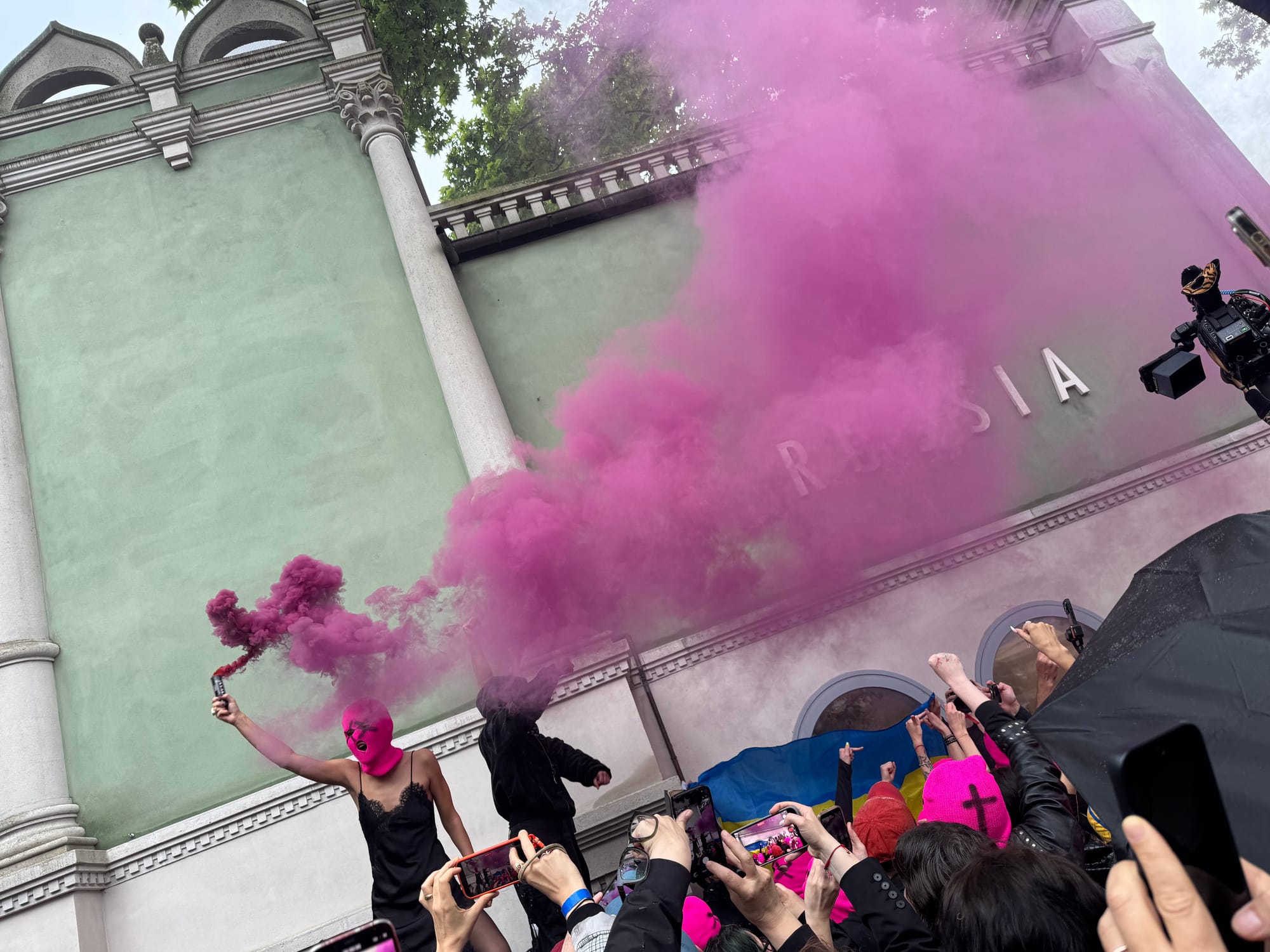
On Wednesday morning, Pussy Riot and FEMEN led a protest outside the Russian Pavilion at the 2026 Venice Biennale, chanting slogans like “Russia kills! Biennale exhibits!” and “Blood is Russia’s art!” Dozens of protesters, some in pink balaclavas and others bare-chested with floral crowns, gathered in the Giardini under light rain, carrying guitars and blasting punk rock and hip-hop. The action was organized by Nadya Tolokonnikova and other Pussy Riot members alongside FEMEN, a Ukrainian-founded women’s movement. They released pink, yellow, and blue smoke, and Tolokonnikova criticized the Biennale for allowing Russian participation while artists who oppose the war in Ukraine are imprisoned. She proposed an alternative exhibition, “Resistance Imprisoned,” currently on view in Strasbourg, featuring incarcerated artists.

A mapping of all the intersections between the 2026 Venice Biennale and the fashion world

Una mappatura di tutti gli intrecci tra la Biennale di Venezia 2026 e il mondo della moda

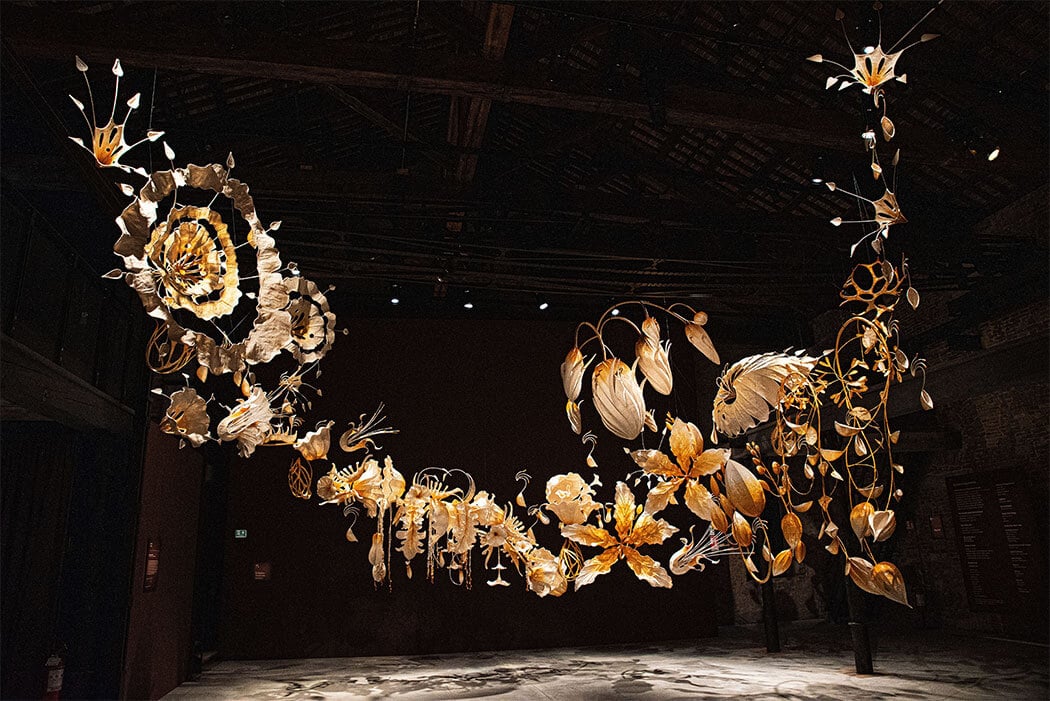
The article maps the growing intersection between fashion brands and the 61st Venice Biennale in 2026, detailing specific collaborations. Zegna is the main sponsor of the Italian Pavilion, supporting Chiara Camoni's project "Con te con tutto" curated by Cecilia Canziani, using materials from Zegna's Oasi Zegna and Lanificio. Bottega Veneta renews its partnership with Pinault Collection to support Lorna Simpson's exhibition "Third Person" at Punta della Dogana, curated by Emma Lavigne, and also presents a public intervention at Campo Manin. Swatch celebrates 15 years of the Swatch Art Peace Hotel with the exhibition "Flora Fantastica" at the Giardini Reali, featuring artist Elisa Insu. The newly opened Fondazione Dries Van Noten at Palazzo Pisani Moretta debuts with "The Only True Protest Is Beauty," curated by Dries Van Noten and Geert Bruloot.

'I wanted to catch the desperation': Dries Verhoeven on turning the Dutch pavilion into a bunker for the Venice Biennale

Artist Dries Verhoeven has transformed the Dutch pavilion at the Venice Biennale into a bunker-like space by covering its iconic glass-and-steel structure with metal shutters. Inside, visitors experience a gradually darkening environment and a raw vocal performance by 13 rotating performers, intended to evoke desperation and confusion about contemporary global crises. The work critiques the modernist ideals of openness and optimism embodied by the pavilion, designed by Gerrit Rietveld in 1953.

What to See at the 2026 Venice Biennial

The 2026 Venice Biennale, opening May 9 and running through November 22, features a main exhibition titled "In Minor Keys" organized by the late Koyo Kouoh, alongside 99 national pavilions. The event spans the Giardini and Arsenale sites, with concurrent shows across the city, including a group exhibition at the Fondazione Dries Van Noten, Melissa McGill's installation "Marea" at Corte Nova, Illy's artist-designed espresso cups at Giardini Reali, and a solo exhibition of Hernan Bas's paintings at Ca' Pesaro International Gallery of Modern Art.

Welcome to Venice: the shows you won’t want to miss at the 61st Biennale

The 61st Venice Biennale, titled "In Minor Keys," opens with a keynote exhibition conceived by the late Koyo Kouoh and realized by her team after her sudden death in May 2025. The show spans the Central Pavilion in the Giardini and the Arsenale, featuring 110 artists and collectives. Highlights include Bracha L. Ettinger's installation at the Hotel Metropole, where she transforms a room where Sigmund Freud wrote part of *The Interpretation of Dreams* into a feminist 'borderspace,' and works by artists such as Arthur Jafa, Richard Prince, Issa Samb, Beverly Buchanan, and Daniel Lind-Ramos. The exhibition explores themes of history, colonialism, war, and environmental destruction, aiming for a 'sotto voce' tone that nonetheless delivers powerful, liberating statements.

Bogna Burska and Daniel Kotowski on Representing Poland at the 61st Venice Biennale

Bogna Burska and Daniel Kotowski, representing Poland at the 61st Venice Biennale, plan to exhibit a project inspired by the Choir in Motion (a phonic/sign-language ensemble of hearing and Deaf people), underwater role reversals, and whale communication. Their work explores alternate forms of communication, Deaf Gain, and the retrieval of voices—both human and non-human—aligning with the Biennale's theme "In Minor Keys." The Polish pavilion is located in the Giardini.

Venice Diary Day 1: At the Giardini, Artists Refuse to Make Fascism Cozy

Henrike Naumann's posthumous installation at the German Pavilion, which retains its 1938 Nazi-era fascist architecture, refuses to make the space 'cozy' by adorning windows with violently ripped domestic fabrics. The 2026 Venice Biennale is the first under president Pietrangelo Buttafuoco, associated with neo-fascist politics, and is overshadowed by controversy over his 'neutrality' policy allowing all countries to participate despite human rights concerns. The exhibition jury initially announced it would not consider pavilions from countries whose leaders are charged with crimes against humanity, then abruptly quit, leaving the situation unresolved. The US Pavilion features unimpressive blobs by Alma Allen, while the Russian Pavilion offers cut flowers and free vodka, and Andreas Angelidakis responds to fascist aesthetics at the Greek Pavilion.

What It Takes to Build the Venice Biennale

Three weeks before the Venice Biennale opens on May 5, the city remains a construction site, with the Giardini closed and parts of the Arsenale requiring special access. Artist Faustin Linyekula rehearses his performance *The Galeazze Project* in a 16th-century roofless complex, working with the existing gravel, natural light, and lagoon acoustics rather than imposing a structure. Geopolitical conflicts, supply chain disruptions, and the sudden resignation of the Biennale’s international jury via Instagram add pressure to the already challenging logistics of mounting the global exhibition.

Dark clouds, protests and resignations dampen start of 61st Venice Biennale

The 61st Venice Biennale opened under grey skies and rain, with political tensions overshadowing the art world's premier event. The Russian pavilion, absent for two editions due to the Ukraine war, reappeared with a party atmosphere, though the Italian ministry of culture confirmed it would not be open to the public. The Ukrainian culture minister called Russia's symbolic presence powerful. The Iranian pavilion withdrew without explanation, and a protest by 60 artists from the In Minor Keys show marched through the Giardini humming in solidarity against Israel's participation. Over 200 artists, including Lubaina Himid and Alfredo Jaar, signed an open letter demanding the Israeli pavilion's cancellation. The event also proceeded without its curator, Koyo Kouoh, who died in May 2025; her curatorial team delivered the exhibition following her plans.

Venice Biennale opening marked by protests

The 2026 Venice Biennale opened for professionals on Tuesday amid a series of protests, with more planned throughout the week. Around 60 artists from the exhibition "In Minor Keys" gathered at the Giardini for a collective action called "Solidarity Drone Chorus," inspired by Gazan composer Ahmed Muin's "Drone Song," to draw attention to genocide and war in Palestine. The Art Not Genocide Alliance (ANGA) organized a 24-hour strike for Friday 8 May, protesting Israel's participation. Pussy Riot staged a protest outside the Russian pavilion, and the Latvian pavilion launched a campaign against Russia's involvement. The protests follow a highly politicized lead-up, including calls for boycotts of the Russian, Israeli, and US pavilions, EU funding cuts over Russia's participation, and the resignation of the Biennale jury.

Goen Choi and Hyeree Ro on Representing South Korea at the 61st Venice Biennale

Goen Choi and Hyeree Ro are representing South Korea at the 61st Venice Biennale, which runs from 9 May to 22 November 2026. In an interview with ArtReview, Choi describes his sculptural installation "Meridian," featuring ruptured copper pipes that traverse the Korean Pavilion in the Giardini, exploring unseen infrastructures and unstable relations between fixed structures. Ro presents "Bearing," a membranelike waxed fabric installation with eight stations for mourning, remembering, and mending, inspired by Korean gardens and temples. Both artists respond to the Biennale's theme "In Minor Keys," emphasizing subtle forces, low vibrations, and contemplative spaces.

Venice Biennale Swamped in Protests Ahead of Planned Strike

The Art Not Genocide Alliance (ANGA) has announced a 24-hour strike for Friday, May 8, coinciding with previews of the 2026 Venice Biennale, alongside a protest rally organized by local group Biennalocene and Italian trade unions. Earlier this week, sixty artists staged a sonic protest at the Giardini entrance to draw attention to the plight of those affected by genocide and war in Palestine and elsewhere. The Latvian pavilion has also encouraged attendees to wear a design by artist Krišs Salmanis reading “Death in Venice – Russia go home!” Meanwhile, dissident artists Pussy Riot stormed the Russian pavilion waving Ukrainian flags, and the entire 2026 Biennale jury resigned after the decision to exclude countries whose leaders are charged with crimes against humanity by the International Criminal Court from competing for top prizes.

The Ukrainian Pavilion’s Deer Seen Around the World

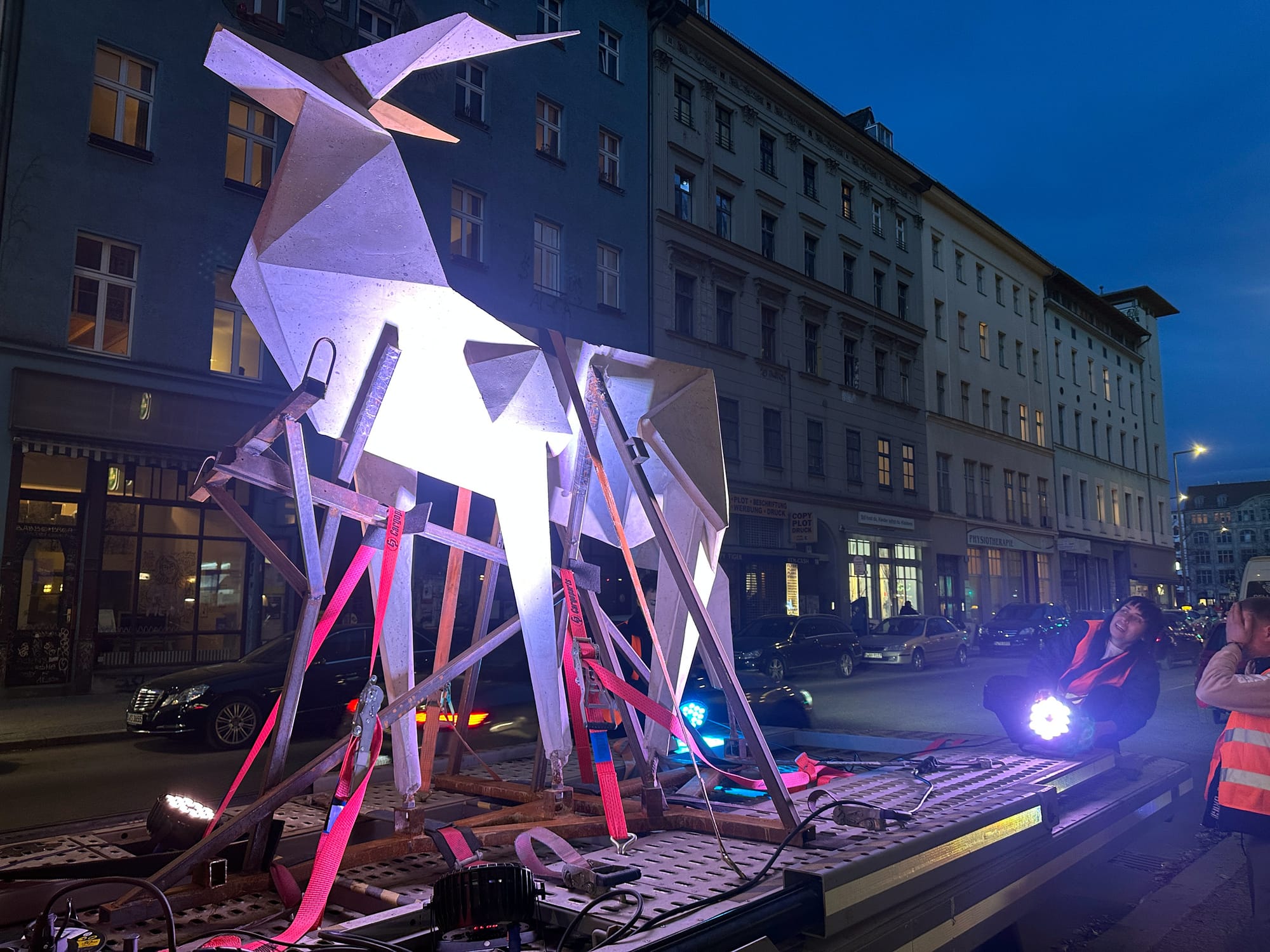
Zhanna Kadyrova's concrete sculpture "The Origami Deer" (2019) is prominently displayed at the entrance to the Giardini during the 61st Venice Biennale, part of her project "Security Guarantees" in the Ukrainian Pavilion. Originally installed in Pokrovsk, eastern Ukraine, the work was removed in 2024 as Russian forces advanced, then traveled through Vienna, Warsaw, Prague, Berlin, and Paris before reaching Venice—a journey mirroring the displacement of millions of Ukrainians. The sculpture, shaped like a deer and evoking folded paper, references the 1994 Budapest Memorandum, in which Russia, the UK, and US guaranteed Ukraine's security in exchange for its nuclear disarmament—guarantees that proved worthless after Russia's invasions.

Artists Pay Tribute to Koyo Kouoh in Poetry Caravan at Venice Biennale

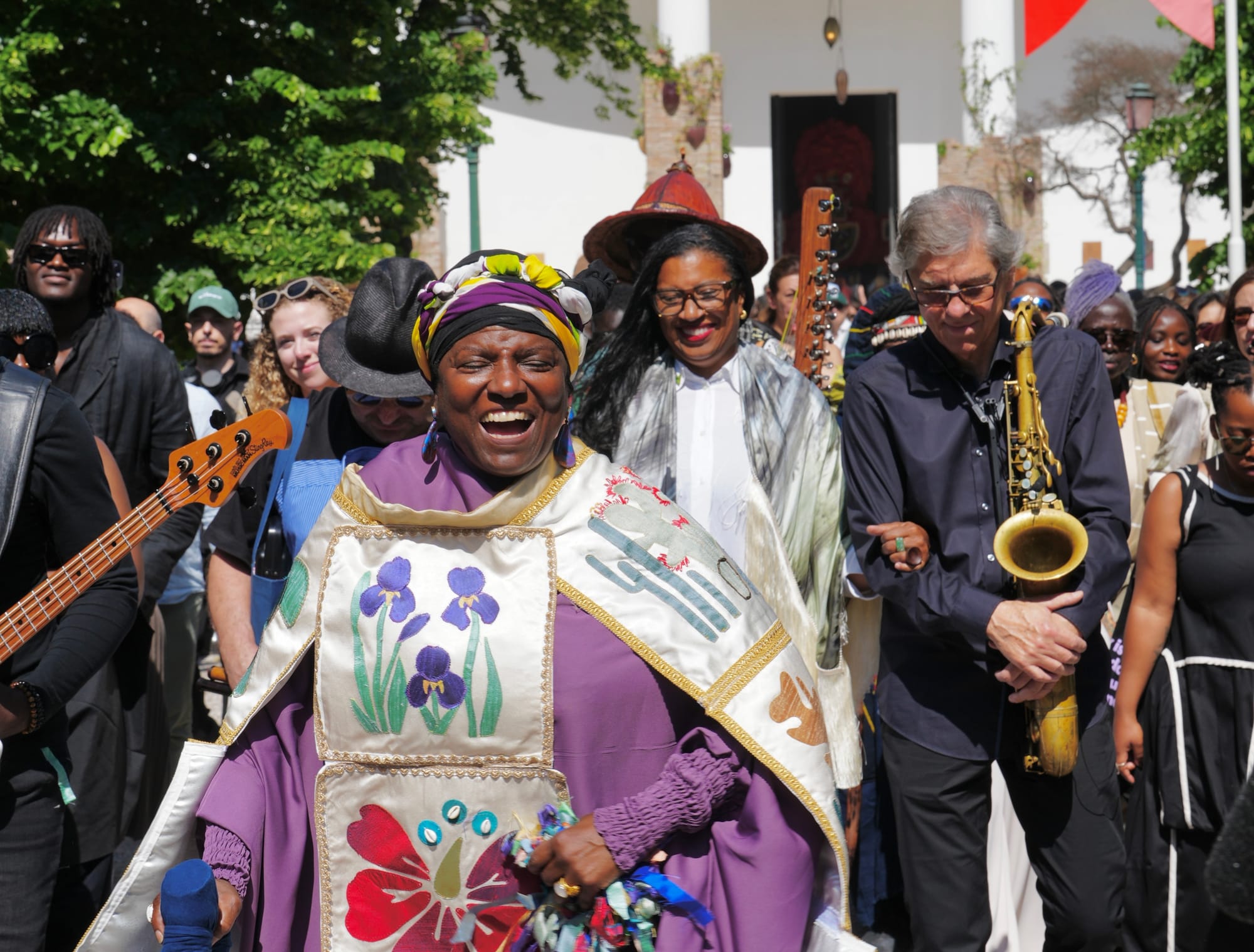
At the Venice Biennale on May 7, 2026, Cuban artist María Magdalena Campos-Pons led a poetry caravan across seven locations in the Giardini to honor Koyo Kouoh, the late curator of the Biennale's main exhibition "In Minor Keys," who died of cancer at age 57 in 2025. The procession, inspired by a 1999 voyage Kouoh took with nine African poets from Dakar to Timbuktu, featured performances by poets Natalie Diaz, Robin Coste Lewis, Batool Abu Akleen, and Anne Waldman, kora player Saliou Cissokho, and Kouoh's husband, Swiss saxophonist Philippe Mall, who played a composition dedicated to her. The event was organized by a team of Kouoh's assistants and advisers, including Marie Hélène Pereira, who served as stand-in lead of the 2026 Biennale.

Venice Biennale 2026: The Pavilions Not to Be Missed

Biennale de Venise 2026 : les pavillons à ne surtout pas manquer

The 61st Venice Biennale, curated by Koyo Kouoh as an invitation to slow down and reconnect with emotions, features a constellation of contemplative and powerful proposals across the city. Notable national pavilions include the Holy See transforming a monastic garden into an immersive sound experience by Soundwalk Collective, Canada exploring colonial heritage through giant water lilies by Abbas Akhavan, and Austria electrifying the Giardini with radical performances by Florentina Holzinger. Other highlights include Spain dissecting collective memory through postcards, Poland imagining new forms of language between human and underwater worlds, and India's pavilion exploring notions of home.

For the 61st Venice Biennale, a quest for beauty despite a troubled world

Pour la 61e Biennale de Venise, une quête de beauté malgré un monde troublé

Koyo Kouoh, the Swiss-Cameroonian curator who was set to become the first African woman to direct the Venice Biennale, died suddenly on May 10, 2025, at age 57, just weeks before the opening of the 61st edition she had conceived. Titled "In Minor Keys," the exhibition at the Giardini and Arsenale will proceed posthumously based on her detailed directives, featuring 111 artists including Laurie Anderson, Wangechi Mutu, and Kader Attia, with a focus on beauty, resilience, and radical emotional connection amid global turmoil.

Protests and Shutdowns Engulf 61st Venice Biennale Opening

The 61st Venice Biennale preview week, opening to press and professionals ahead of its May 9 public launch, has been engulfed by protests and institutional crises. On May 5, around 60 artists from Koyo Kouoh's exhibition “In Minor Keys” staged a Solidarity Drone Chorus outside the Giardini, drawing on Gazan composer Ahmed Muin's Drone Song (2025) to highlight victims of warfare. On May 6, the Art Not Genocide Alliance (ANGA) organized protests outside Israel's pavilion at the Arsenale, leading to a security-enforced closure, while Pussy Riot and FEMEN demonstrated outside the Russian pavilion. The jury resigned on April 30 after controversy over award eligibility tied to ICC arrest warrants, prompting the Biennale to scrap Golden Lions and transfer prize voting to the public. Iran withdrew its pavilion on May 4, and Russia's will close on May 9, with only exterior video projections remaining. ANGA and Italian unions have announced a 24-hour strike on May 8.

The Most Provocative Performance in Venice

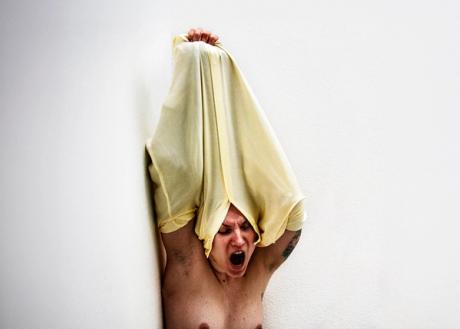
Florentina Holzinger, a performance artist known for extreme feminist works involving nudity, bodily fluids, and physical endurance, is representing Austria at the 2026 Venice Biennale with a pavilion titled “Seaworld Venice.” Opening May 9, the installation transforms the Austrian Pavilion in the Giardini into an underwater theme park and a functioning sewage treatment plant, where audience urine collected from portable toilets is cleaned and recycled into the tanks. The work explores themes of the human body, ecology, and Venice’s own struggles with sinking infrastructure and mass tourism.

Gabrielle Goliath Discusses Her Canceled South African Pavilion as She Shows New Work in a Venice Church

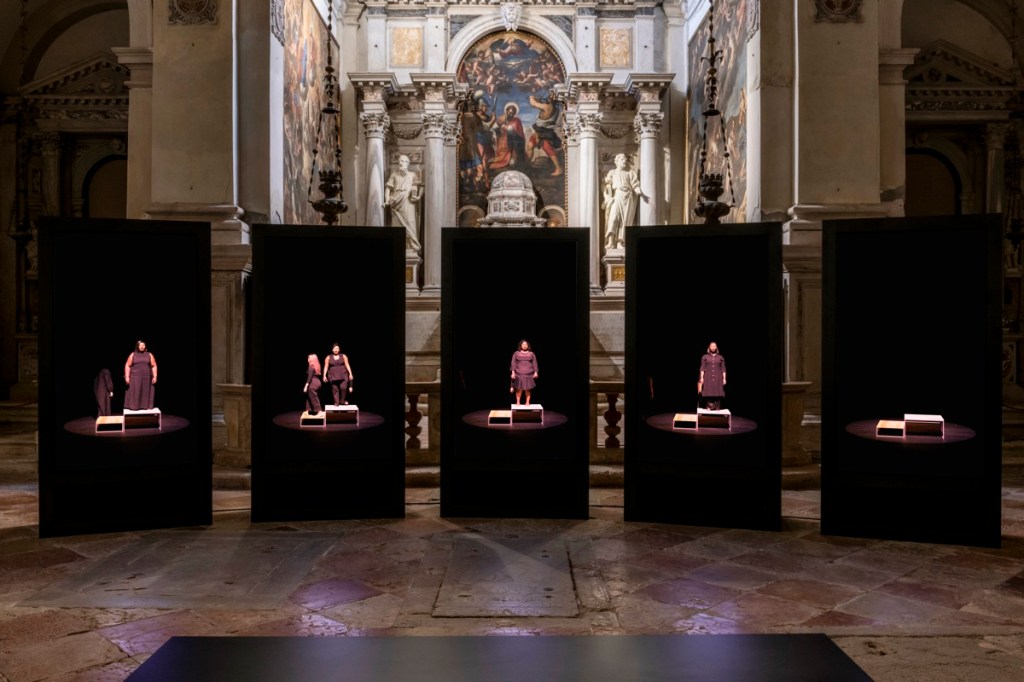
South African artist Gabrielle Goliath’s planned pavilion for the South Africa Pavilion at the Venice Biennale was canceled by culture minister Gayton McKenzie, who deemed it “highly divisive.” Despite the cancellation, Goliath has installed her work, a multi-screen iteration of her ongoing performance series *Elegy*, at the Chiesa di Sant’Antonin, half a mile from the Giardini. The new piece mourns victims of atrocities including South African femicide, the Herero and Nama genocide, and the death of Gazan poet Hiba Abu Nada, killed by an Israeli airstrike. Goliath stated that McKenzie explicitly demanded removal of the Palestinian content while deeming the other subjects acceptable.

Dozens of Venice Biennale Artists Stage ‘Drone’ Perfomance in Protest of Israel’s Participation

On the opening day of the Venice Biennale, around 60 artists and dozens of other participants staged a protest titled “Solidarity Drone Chorus” at the Giardini entrance, humming a viral song by Gazan composer Ahmed “Muin” Abu Amsha to sonically occupy the space. The action, organized by artists in the main exhibition over several months, protested Israel’s participation in the Biennale and expressed support for Palestine, with participants wearing T-shirts bearing the names and artworks of Gazan and Palestinian artists, many of whom have been killed. The protest follows an open letter from the Art Not Genocide Alliance demanding Israel’s exclusion.

Dries Verhoeven on Representing the Netherlands at the 61st Venice Biennale

Dries Verhoeven will represent the Netherlands at the 61st Venice Biennale (2026) with a new work titled *The Fortress*, installed in the Dutch Rietveld Pavilion in the Giardini. The 25-minute performance piece transforms the sunlit pavilion into a darkened bunker, featuring a raw vocal composition using only false vocal cords. Verhoeven describes the work as a meditation on transition and self-preservation, reflecting a Western society caught between its enlightened self-image and a dark vision of the future. The piece responds to geopolitical unrest outside the Biennale grounds and is designed to be melancholic and confrontational, contrasting with the main exhibition's theme, *In Minor Keys*.

Miet Warlop on Representing Belgium at the 61st Venice Biennale

Miet Warlop, the artist representing Belgium at the 61st Venice Biennale (2026), discusses her plans for the Belgian Pavilion in the Giardini in an interview with ArtReview. Her installation, inspired by the Belgian motto 'L'union fait la force' ('unity makes strength'), aims to create a space between a workspace, exhibition, and performance that brings people together in introspection. She cites time spent with Venice's artistic communities, including students at the Accademia, as influential, and notes that her work engages with the Biennale's theme 'In Minor Keys' by incorporating minor-key music to evoke nuanced, introspective emotions.