filter_list Showing 26 results for "Ukraine war" close Clear
dashboard All 26 article news 12article policy 5article culture 4museum exhibitions 3article local 1rate_review review 1
date_range Range Today This Week This Month All
Subscribe

The week around the world in 20 pictures

This photo essay from The Guardian presents 20 images capturing global events from the past week, including a protest by Femen and Pussy Riot activists against Russia's participation at the Venice Biennale art show, Israeli strikes in Gaza, the hantavirus outbreak, and Emma Chamberlain at the Met Gala. Other images document the war in Ukraine, with scenes of Russian military rehearsals in Moscow, damaged monuments, and drone strike aftermath, as well as a political protest in Nashville where Democratic state representative Justin J Pearson was removed from the house gallery during a redistricting protest.

Pussy Riot Storms Russia Pavilion at Venice Biennale

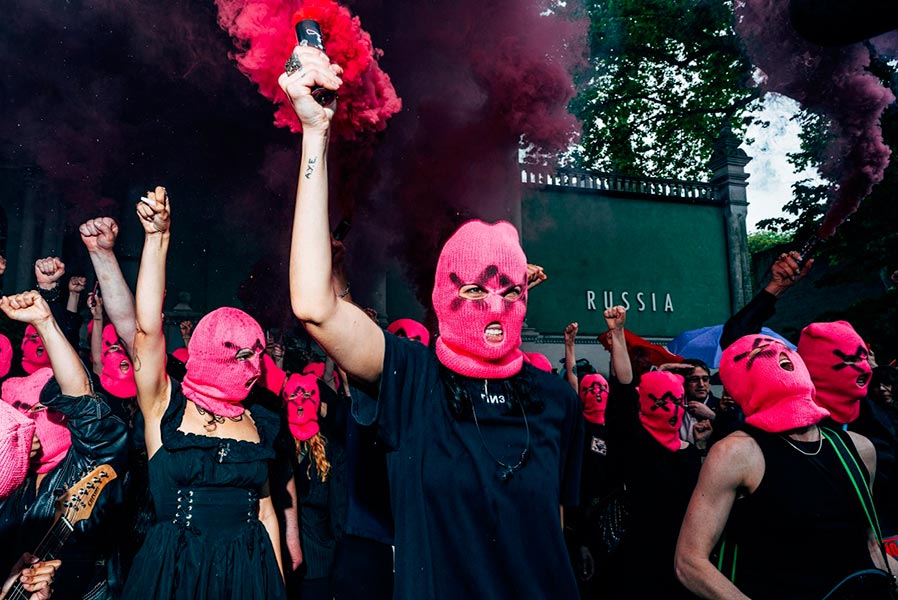
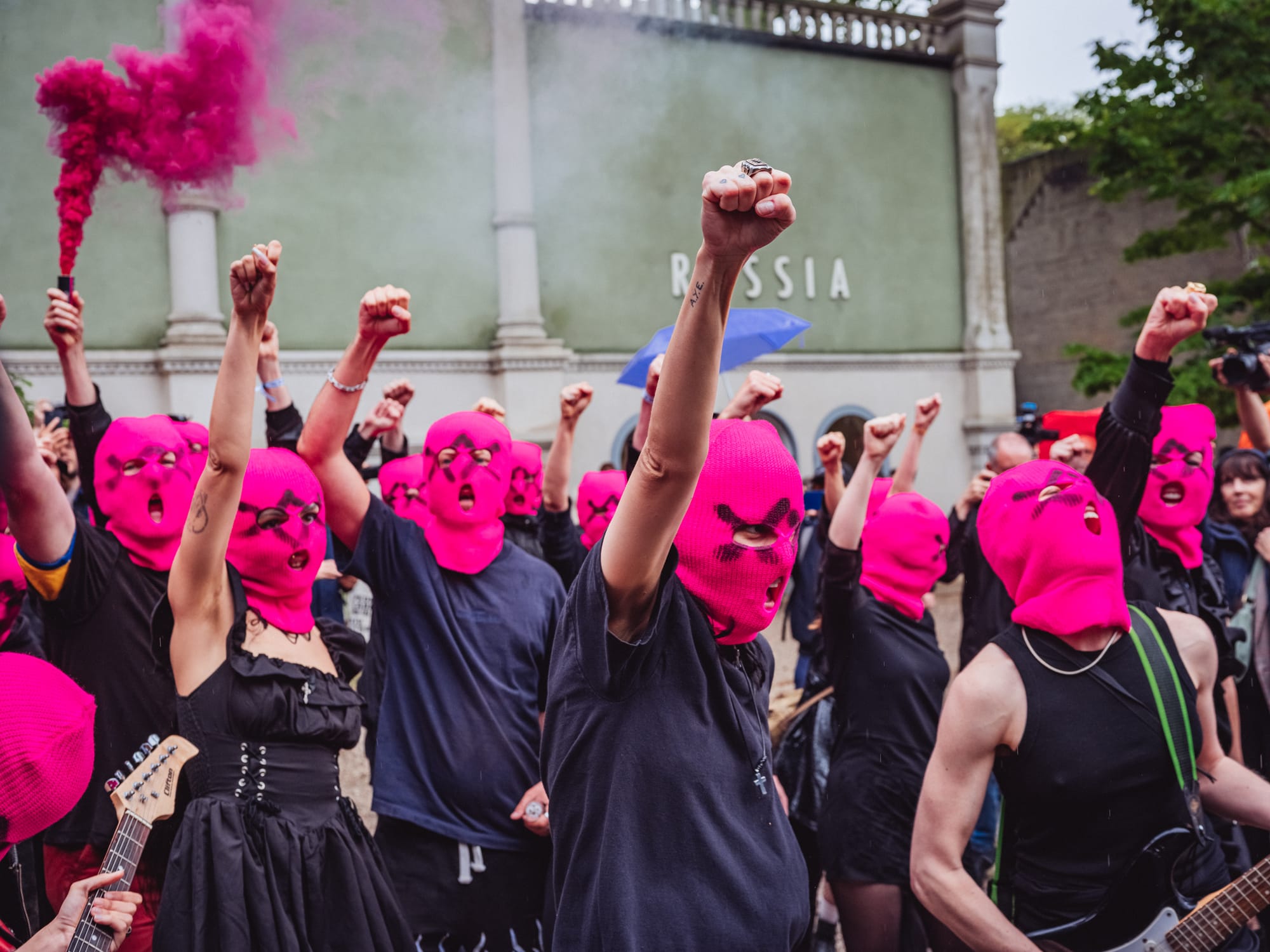
Pussy Riot staged a dramatic protest at the Russia Pavilion during the Venice Biennale, releasing pink smoke and waving Ukrainian flags while chanting slogans like 'Blood is Russia’s art.' Around 50 protesters, including members of Femen, occupied the area. Pussy Riot founder Nadya Tolokonnikova called for the pavilion to be closed and given to oppressed peoples, challenging Biennale president Pietrangelo Buttafuoco to meet her. The protest lasted about 20 minutes, with performers climbing the pavilion and exposing political slogans on their chests.

Pussy Riot and FEMEN Join Forces in Punk Protest in Venice: ‘Russia Kills! Biennale Exhibits!’

On Wednesday morning, Pussy Riot and FEMEN led a protest outside the Russian Pavilion at the 2026 Venice Biennale, chanting slogans like “Russia kills! Biennale exhibits!” and “Blood is Russia’s art!” Dozens of protesters, some in pink balaclavas and others bare-chested with floral crowns, gathered in the Giardini under light rain, carrying guitars and blasting punk rock and hip-hop. The action was organized by Nadya Tolokonnikova and other Pussy Riot members alongside FEMEN, a Ukrainian-founded women’s movement. They released pink, yellow, and blue smoke, and Tolokonnikova criticized the Biennale for allowing Russian participation while artists who oppose the war in Ukraine are imprisoned. She proposed an alternative exhibition, “Resistance Imprisoned,” currently on view in Strasbourg, featuring incarcerated artists.

At the Venice Biennale I saw anger at Russia and Israel – and its leadership pretending everything was fine | Charlotte Higgins

At the 2024 Venice Biennale, the Russian pavilion returned with festive performances and prosecco deliveries, drawing sharp criticism from observers who saw it as a propaganda effort to distract from Russia's war in Ukraine. Meanwhile, Ukraine's Kramatorsk was bombed, and protests erupted, including a Pussy Riot intervention. Biennale president Pietrangelo Buttafuoco defended Russia's and Israel's participation, rejecting preemptive bans despite open letters and appeals. European Commission investigated potential sanctions breaches, and culture ministers from Ukraine, Poland, Estonia, and Baltic states boycotted or condemned the biennale's stance, accusing it of yielding to the aggressor.

La Biennale de Venise s’ouvre dans un climat houleux

The 61st Venice Biennale opened amid intense controversy after its president, Pietrangelo Buttafuoco, announced the return of the Russian pavilion, which had been absent since the start of the Ukraine war. The European Commission suspended its €2 million subsidy for the 2028 edition, and the entire Biennale jury resigned on April 30. Buttafuoco later declared the Russian pavilion would remain closed, but protests erupted during the pre-opening days (May 6–8), drawing 28,000 professionals. Pussy Riot members, Femen activists, and the Free Nations League staged demonstrations, while the Israeli pavilion remained open despite a letter signed by nearly 200 artists calling for its exclusion.

Russian Pavilion Will Be Closed to the Public During Venice Biennale: Report

The Russian Pavilion will be closed to the public for most of the 2025 Venice Biennale, opening only during the pre-opening vernissage (May 5–8) for live performances tied to the exhibition “The Tree Is Rooted in the Sky.” After May 9, the pavilion will remain closed, with digital documentation displayed in the windows. The compromise follows weeks of pressure from European cultural and political figures—including Italy’s culture minister—to shutter the pavilion due to Russia’s ongoing war in Ukraine. Plans were confirmed via email correspondence between Biennale Foundation president Pietrangelo Buttafuoco, general director Andrea Del Mercato, and Russian Pavilion commissioner Anastasia Karneeva, as reported by Italian outlets Open and La Repubblica.

At the Venice Biennale, Ukraine’s Pinchuk Art Centre finds fragile moments of joy amid loss

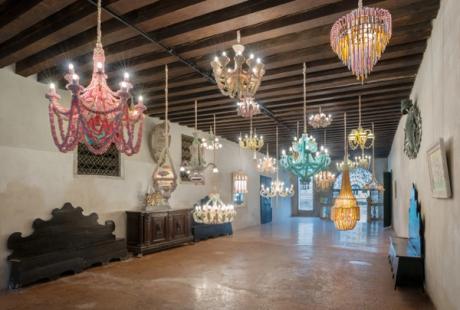
The Pinchuk Art Centre in Kyiv has transformed its Venice Biennale presentation from a glamorous celebration of young artists into a somber exhibition responding to the Russian invasion of Ukraine. This year's show, titled "Still Joy — From Ukraine into the World" (9 May-1 August) at the Palazzo Contarini-Polignac, features works by international artists like Tacita Dean and Julian Charriere alongside Ukrainian artists, as well as testimonials from soldiers collected by former marine Hlib Stryzhko. The exhibition explores how joy can persist amid trauma, with installations including pink scrolls bearing survivors' quotes, light box photographs of bombed interiors with rescued pot plants, and a sculpture of bells with displaced women's fingerprints.

What You Need to Know About the Venice Biennale’s Russian Pavilion Controversy

The Russian pavilion is set to return to the Venice Biennale for the first time since the 2022 invasion of Ukraine, presenting an exhibition titled 'The tree is rooted in the sky.' This has sparked significant controversy, with artists, curators, and politicians from Ukraine and several European nations calling for the pavilion's exclusion, citing the ongoing war and sanctions. The Biennale organizers have refused to remove Russia, stating they lack the authority to exclude a state recognized by Italy and emphasizing the event's role as a neutral space for cultural dialogue.

Dark clouds, protests and resignations dampen start of 61st Venice Biennale

The 61st Venice Biennale opened under grey skies and rain, with political tensions overshadowing the art world's premier event. The Russian pavilion, absent for two editions due to the Ukraine war, reappeared with a party atmosphere, though the Italian ministry of culture confirmed it would not be open to the public. The Ukrainian culture minister called Russia's symbolic presence powerful. The Iranian pavilion withdrew without explanation, and a protest by 60 artists from the In Minor Keys show marched through the Giardini humming in solidarity against Israel's participation. Over 200 artists, including Lubaina Himid and Alfredo Jaar, signed an open letter demanding the Israeli pavilion's cancellation. The event also proceeded without its curator, Koyo Kouoh, who died in May 2025; her curatorial team delivered the exhibition following her plans.

Pussy Riot and Topless Activists Rally Against Russian Pavilion at Venice Biennale

On May 6, 2026, the art collective Pussy Riot and the Ukrainian feminist group FEMEN staged a protest outside the Russian Pavilion at the 61st Venice Biennale. Approximately 50 activists released pink smoke and blue-and-yellow flares evoking the Ukrainian flag, while FEMEN members staged a topless protest with anti-war slogans like “RUSSIA KILLS, BIENNALE EXHIBITS.” Italian police and Biennale security blocked access to the pavilion, and some Pussy Riot activists were tackled after entering. The protest targeted Russia’s participation in the Biennale for the first time since its full-scale invasion of Ukraine in 2022, with activists condemning the event for lending legitimacy to Russian officials and artists aligned with the government.

The Ukrainian Pavilion’s Deer Seen Around the World

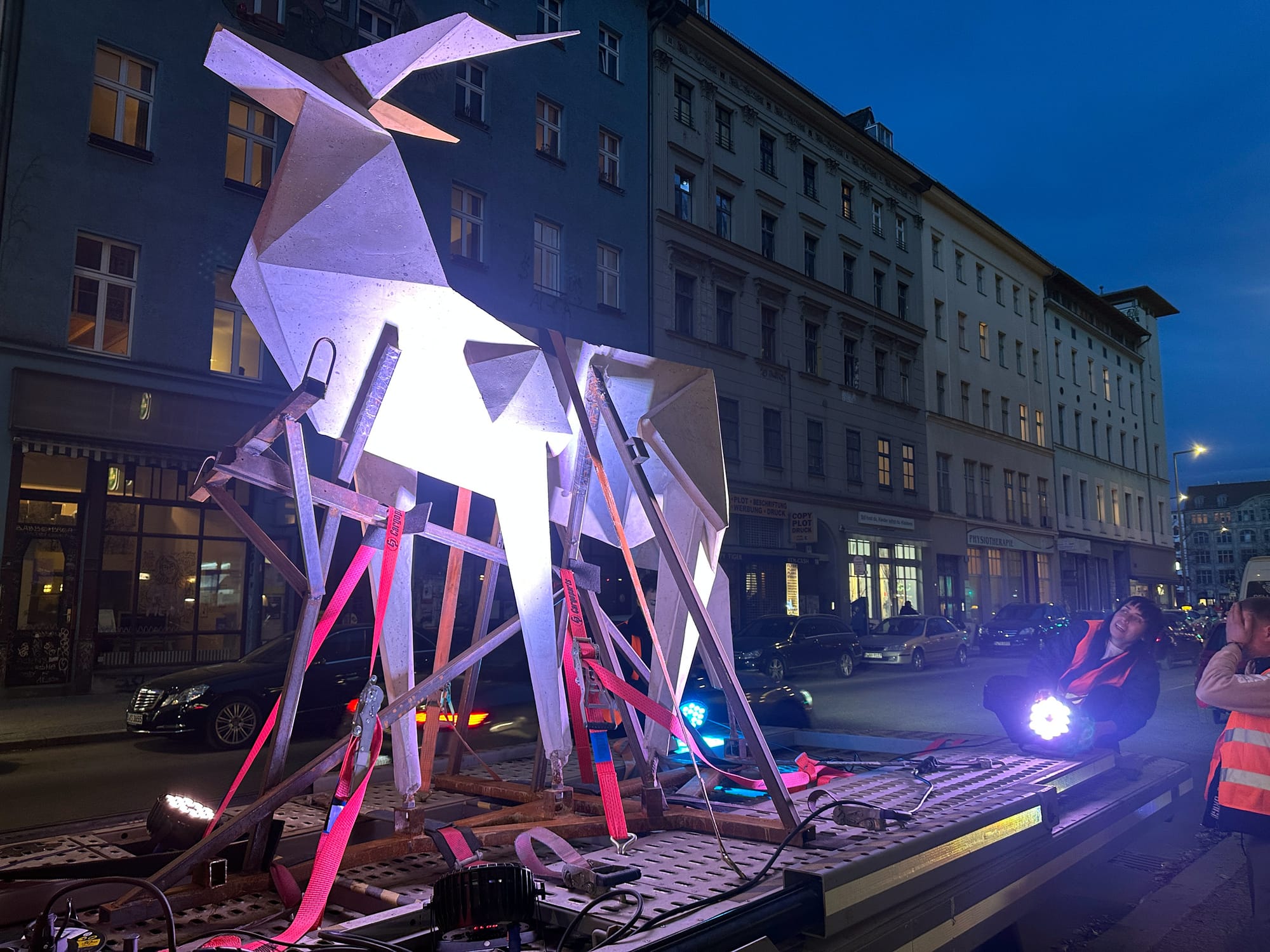
Zhanna Kadyrova's concrete sculpture "The Origami Deer" (2019) is prominently displayed at the entrance to the Giardini during the 61st Venice Biennale, part of her project "Security Guarantees" in the Ukrainian Pavilion. Originally installed in Pokrovsk, eastern Ukraine, the work was removed in 2024 as Russian forces advanced, then traveled through Vienna, Warsaw, Prague, Berlin, and Paris before reaching Venice—a journey mirroring the displacement of millions of Ukrainians. The sculpture, shaped like a deer and evoking folded paper, references the 1994 Budapest Memorandum, in which Russia, the UK, and US guaranteed Ukraine's security in exchange for its nuclear disarmament—guarantees that proved worthless after Russia's invasions.

Seen in Venice, Bought in Venice

"In Venedig gesehen, in Venedig gekauft"

The article reports on multiple developments surrounding the Venice Biennale. Iran has withdrawn from the Biennale, citing political and economic crises, with logistical challenges such as no flights or postal service making participation nearly impossible. Artist Anish Kapoor has called for the exclusion of the United States from the Biennale, criticizing its "abhorrent policy of hate" and "ongoing warmongering." A memorial installation by Derrick Adams for the late curator Koyo Kouoh, who was set to lead the main exhibition, will be displayed near the Arsenale. Additionally, the Biennale faces a funding cut from the EU due to Russia's continued participation despite the Ukraine war, leading to the resignation of the jury and the culture minister's withdrawal.

EU Cuts Venice Biennale Funding Over Russia Involvement

The European Commission has withdrawn a $2.3 million grant from the Venice Biennale, following through on a threat made last week. The funding cut is a direct response to the Biennale's decision to readmit Russian artists as a government-funded delegation for its 2026 edition, which the EU argues violates sanctions and provides Russia a cultural platform during its war against Ukraine.

Nikita Kadan Questions Whether War Ever Ends

Ukrainian artist Nikita Kadan, in an interview with Frieze, reflects on his practice and the ongoing psychological and physical toll of war, questioning whether conflict ever truly ends. He discusses his recent works, which grapple with the persistent state of war in Ukraine, the transformation of urban spaces, and the collective trauma that outlasts active hostilities.

Hermitage Museum Director and Putin Ally Mikhail Piotrovsky Sanctioned by European Union

The European Union has sanctioned Mikhail Piotrovsky, the longtime director of the State Hermitage Museum in St. Petersburg, for his close association with Vladimir Putin and his active support of Russia's war against Ukraine. Announced on April 23, the sanctions are part of a broader package targeting over a hundred individuals and entities, including other cultural figures like Sergei Obryvalin, Igor Solonin, and Andrey Polyakov, for their roles in the seizure of Ukrainian cultural property and the spread of Russian propaganda in occupied regions.

Saving the Street Art of the Bombs: A True Story from Ukraine

Salvare la street art delle bombe: una storia vera dall’Ucraina

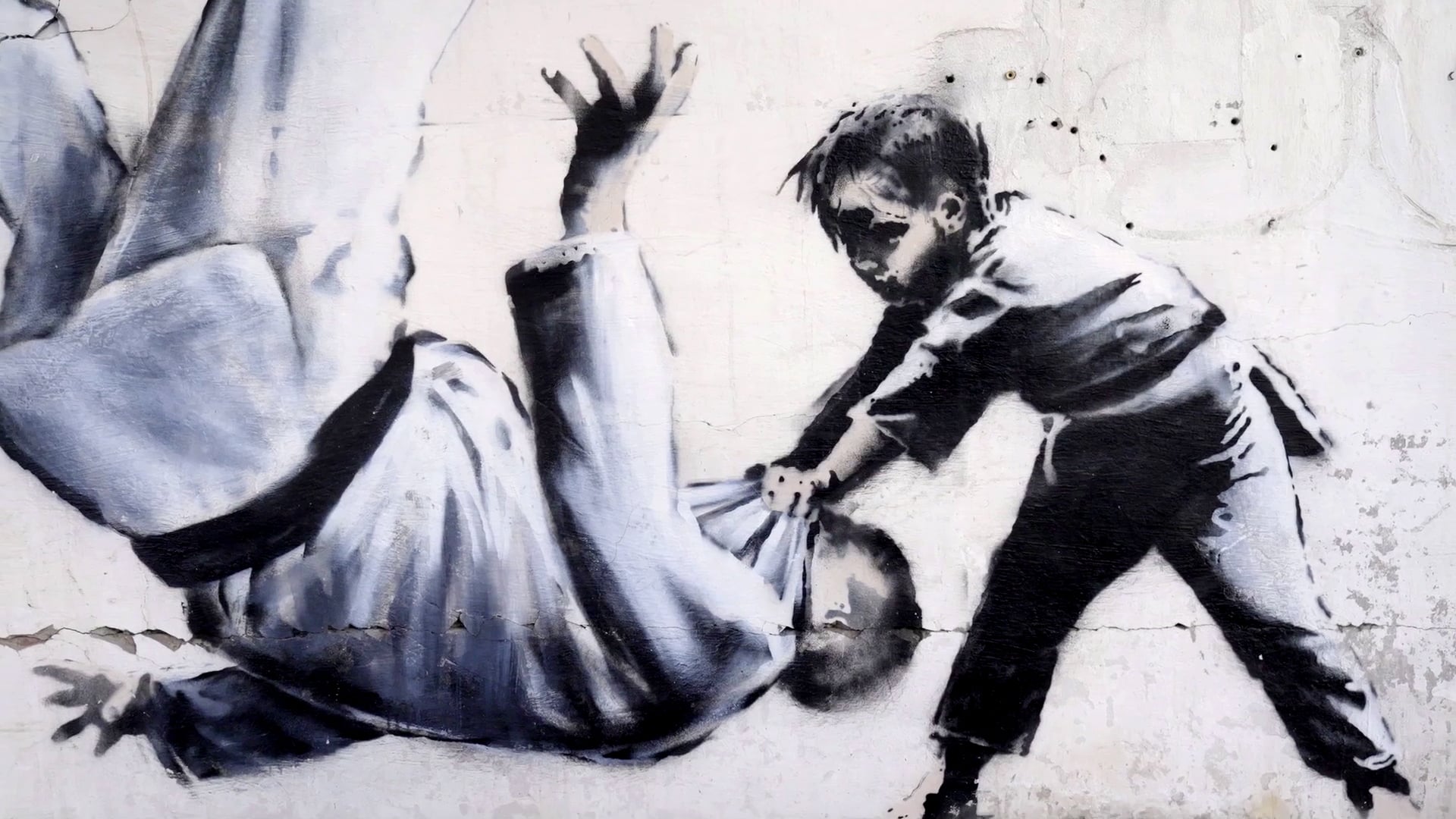
A documentary titled "Arte vs Guerra – Banksy e C215 a Borodyanka, Ucraina" will air on Sky Arte on April 26, recounting how street artists Banksy and C215 created murals in Borodyanka, Ukraine, shortly after the Russian invasion began in February 2022. The works include Banksy's "La Ginnasta" and "Davide e Golia," as well as C215's portraits of war victims like Dmytro Kotsiubaylo. The film also follows three Italian restorers—Paola Ciaccia, Alessandro Cini, and Maria Colonna—who risked their safety to preserve these murals from war damage and landmines.

Reaching for the stars: enduring symbols of Soviet science – in pictures

Photographer Eric Lusito documents Soviet-era scientific institutes across former USSR states in his book "Soviet Scientific Institutes," published by FUEL. The photo essay captures decaying facilities and enduring equipment at locations including the Institute of Radio Astronomy in Kharkiv, Ukraine; the Byurakan astrophysical observatory in Armenia; the Andronikashvili Institute of Physics in Tbilisi, Georgia; and the Fesenkov Astrophysical Institute in Kazakhstan, among others.

Births, deaths and a first kiss: life near the frontline in Ukraine – in pictures

British-Iranian artist Aria Shahrokhshahi's long-term photographic project "Wet Ground" captures daily life in Ukraine during Russia's full-scale invasion, focusing on moments of youth, subculture, and fragile continuity rather than traditional war imagery. The series, developed through repeated stays and volunteering since 2019, includes scenes from teenage discos, hospital wards, a birth during a missile attack, and a first kiss near the frontline, all shot in stark black and white.

Finland’s political leadership to retract from Venice Biennale over Russian Pavilion

Finland's Minister of Science and Culture, Mari-Leena Talvitie, announced that the country's political leadership will not participate in the upcoming Venice Biennale if Russia's national pavilion is allowed to take part. This decision follows a joint letter signed by Talvitie and 21 other European ministers in March, which deemed Russia's return to the Biennale since its 2022 invasion of Ukraine as 'unacceptable'. Finnish public officials and cultural representatives, however, will still attend to support Finnish artists.

Russia’s Venice Pavilion Will Be Closed to Public for Duration of Biennale

Russia's pavilion at the 2026 Venice Biennale will be closed to the public for the duration of the exhibition, from May 9 to November 22, following escalating controversy over the country's participation. The group show, titled “The tree is rooted in the sky,” will only be open to press and industry insiders during the preview days (May 5–8). The move comes after the International Criminal Court accused Russia of crimes against humanity, leading the Biennale to bar Russia and Israel from competing for awards. Italian culture minister Alessandro Giuli has also boycotted the preview and opening ceremony in protest.

Venice Biennale chief under pressure

Venedig-Biennale-Chef unter Druck

Just before the opening of the Venice Art Biennale, its president Pietrangelo Buttafuoco is facing mounting criticism after the entire jury resigned. Italian Culture Minister Alessandro Giuli accused Buttafuoco of pursuing a form of "parallel foreign policy" by readmitting Russia to the six-month exhibition, calling him a "victim of a pacifist fantasy." The opening ceremony and the traditional Golden Lion awards have been canceled; prizes will now be decided by visitor vote at the end of the Biennale in November.

The Mykolaiv Regional Art Museum has shown how it operates during the war

The Mykolaiv Regional Art Museum in Ukraine has adapted to wartime conditions by evacuating part of its collection and packing remaining exhibits with available materials. A research tour offered a behind-the-scenes look at these efforts, as reported by NikVesti. The MyART platform is creating a digital collection of Mykolaiv's cultural heritage, involving the art museum, local history museum, naval museum, central library, observatory, and shipyard museum. The museum, founded in 1914 by Prince Mykola Hedroits, now operates from a building on Velyka Morska Street built in 1904, and staff continue to research its founder's history.

EU Plans Penalty for Russia's Biennale Participation

EU plant Strafe für Biennale-Teilnahme Russlands

The European Union has threatened to cut funding for the Venice Biennale if it allows Russia to reopen its national pavilion at the upcoming exhibition. EU foreign policy chief Kaja Kallas stated that Russia's return is "morally wrong" while the country is bombing Ukrainian museums and destroying cultural heritage. Russia, in coordination with the Biennale foundation, had announced plans to participate this year with works by Russian artists, marking its first appearance since the 2022 invasion.

EU sanctions Mikhail Piotrovsky, director of the Hermitage

L’UE sanctionne Mikhaïl Piotrovski, directeur de l’Ermitage

The European Union has added Mikhail Piotrovsky, the 81-year-old director of the State Hermitage Museum in St. Petersburg, to its sanctions list as part of the 20th package of measures against Russia. Brussels accuses him of publicly supporting the war in Ukraine and of conducting archaeological excavations by the museum in occupied Crimea. His assets in the EU are frozen and he is banned from entering European territory.

Venice Biennale inaugurated in turmoil over Russian presence

The Venice Biennale, the world's largest contemporary art exhibition, opened to the press amid turmoil over Russia's return for the first time since the Ukraine war began. The event features artists from several conflict-affected nations, including Ukraine, Israel, and the US, while Iran has canceled its participation. Resignations, boycotts, and threats to cut funding have marked the lead-up to the opening.

The Foreign Ministry presented art prints of stolen paintings from the Kherson Art Museum

The Ukrainian Foreign Ministry has opened an exhibition titled "Return of Kherson’s Memory. Stolen Art Preserved in Museum Artprints," featuring 30 high-quality reproductions of masterpieces stolen by Russian forces from the Kherson Regional Art Museum named after Oleksii Shovkunenko in autumn 2022. The stolen works include pieces by artists Mykola Pymonenko, Ivan Aivazovsky, and Viktor Zaretsky, among over 10,000 items illegally removed from the museum just before Kherson’s de-occupation. The exhibition was organized by the museum team and the art platform Vivid Fusion.