filter_list Showing 7 results for "israel pavilion protest" close Clear
search
dashboard All 7 article news 7
date_range Range Today This Week This Month All
Subscribe

The Biennale Isn’t a Court. Tell That to the Protesters.

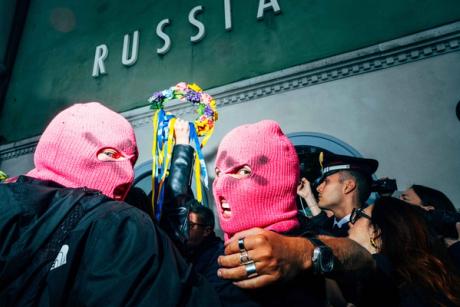
Pietrangelo Buttafuoco, president of the Venice Biennale, defended the decision to allow Russia to reopen its pavilion for the first time since its 2022 invasion of Ukraine, stating that the Biennale is "not a court; it is a garden of peace." The move has sparked widespread backlash, including threats to pull €2.3 million in EU funding. Protests have erupted on the ground, with Pussy Riot and FEMEN staging a theatrical demonstration outside the Russian Pavilion, setting off smoke flares and chanting slogans. Separately, around 60 artists performed a "Solidarity Drone Chorus" to protest Israel's participation, and the Art Not Genocide Alliance has called for a 24-hour strike and rallies across Venice. The Russian Pavilion will be open only during press preview days due to EU sanctions, with video projections visible from outside for the rest of the Biennale's run.
Major protests take place at Venice Biennale previews

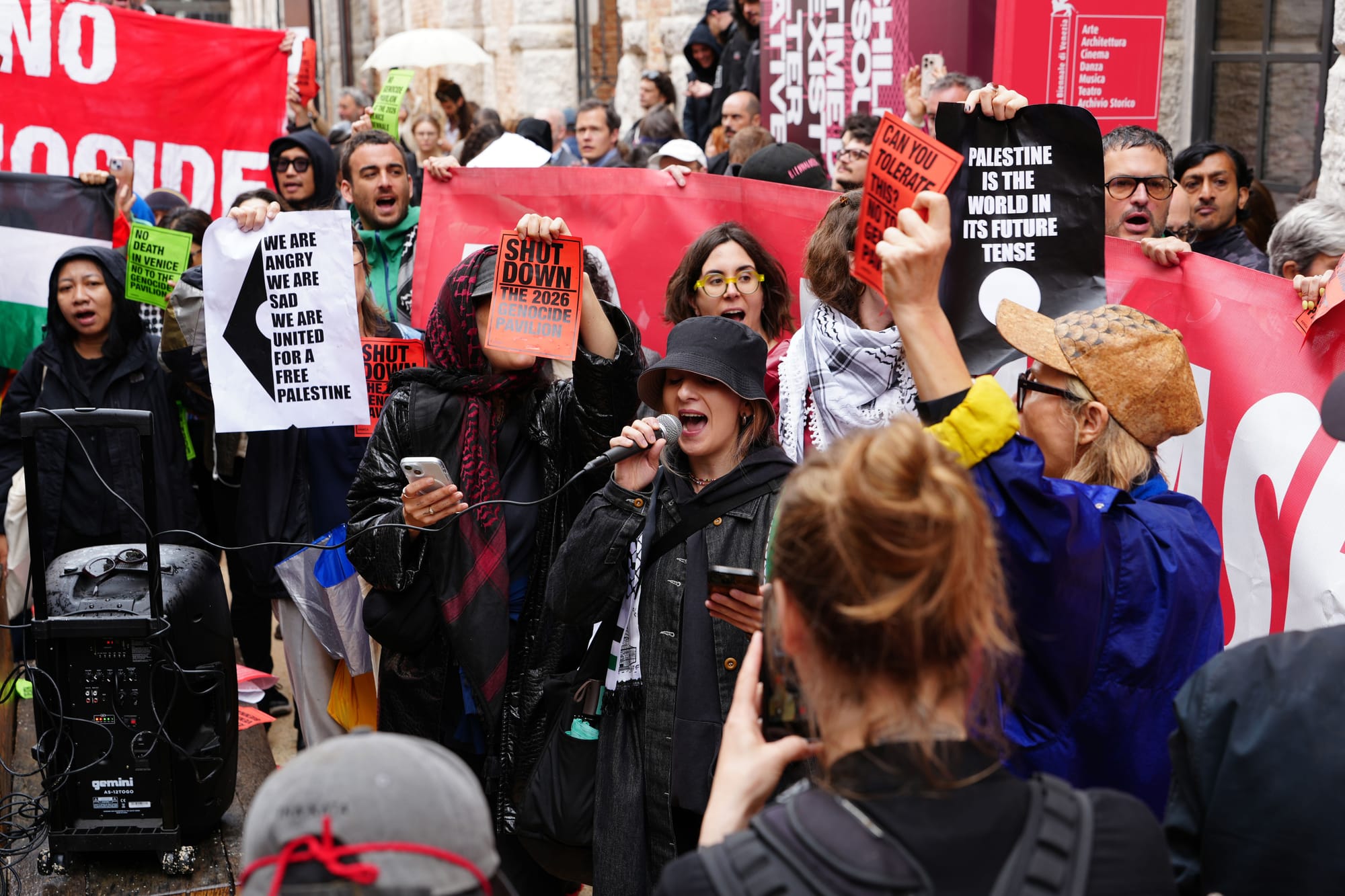
Major protests erupted during the preview days of the Venice Biennale, with multiple demonstrations targeting the Israeli and Russian pavilions. On Wednesday, the Art Not Genocide Alliance (ANGA) held a large protest outside the temporary Israeli pavilion in the Arsenale, attended by over 200 people calling for its closure. Separately, the Solidarity Drone Chorus performed a sound composition by Gazan artist Ahmed Muin, with 60 artists wearing T-shirts bearing names of artists from Gaza. Meanwhile, Pussy Riot and FEMEN protested Russian participation, forcing the Russian pavilion to shut its doors. These actions follow the resignation of the entire Golden Lion jury days before the opening, after they stated they would not consider pavilions from countries whose leaders are charged with crimes against humanity by the ICC—widely seen as a reference to Russia and Israel.

In Protest of Israeli Pavilion, Activists and Unions Plan Strike on Venice Biennale’s Opening Day

The Art Not Genocide Alliance (ANGA) has announced a 24-hour strike and rally on May 8, the day before the 2026 Venice Biennale opens to the public, in protest of the Israeli Pavilion. ANGA, formed in opposition to Israel's inclusion in the 2024 Biennale, refers to the current Israeli presentation—featuring Haifa-based artist Belu-Simion Fainaru—as the "Genocide Pavilion." Over 200 artists, curators, and culture workers have signed an open letter demanding Israel's exclusion, and a separate action called Solidarity Drone Chorus involved 60 artists. ANGA is collaborating with local labor and culture organizations including Biennalocene, Vogliamo Tutt'altro, S.a.L.E. Docks, and Mi Riconosci.

THE VENICE BIENNALE IN AN EDITION MARKED BY POLITICAL GAMES

The Venice Biennale's 2024 edition is embroiled in political controversy surrounding its national pavilions, particularly those of Russia, South Africa, and Israel. The Russian pavilion's readmission amid the war in Ukraine drew sharp criticism from the artistic community and led the European Union to withdraw approximately two million euros in funding. The Israeli pavilion, which remained empty in 2024 to protest hostage situations, now features a proposal by sculptor Belu-Simion Fainaru, prompting protests from the Art Not Genocide Alliance and over 200 artists demanding its exclusion. The curatorial team, appointed by the late curator Koyo Kouoh, resigned collectively nine days before the opening, and the Biennale's directorship canceled the opening ceremony, postponing awards to November. Demonstrations led by Art Not Genocide Alliance, Pussy Riot, and FEMEN surrounded the Russian pavilion during the press opening, and a strike by cultural workers is planned for May 8th.

Hundreds Protest Israel’s “Genocide Pavilion” at Venice Biennale

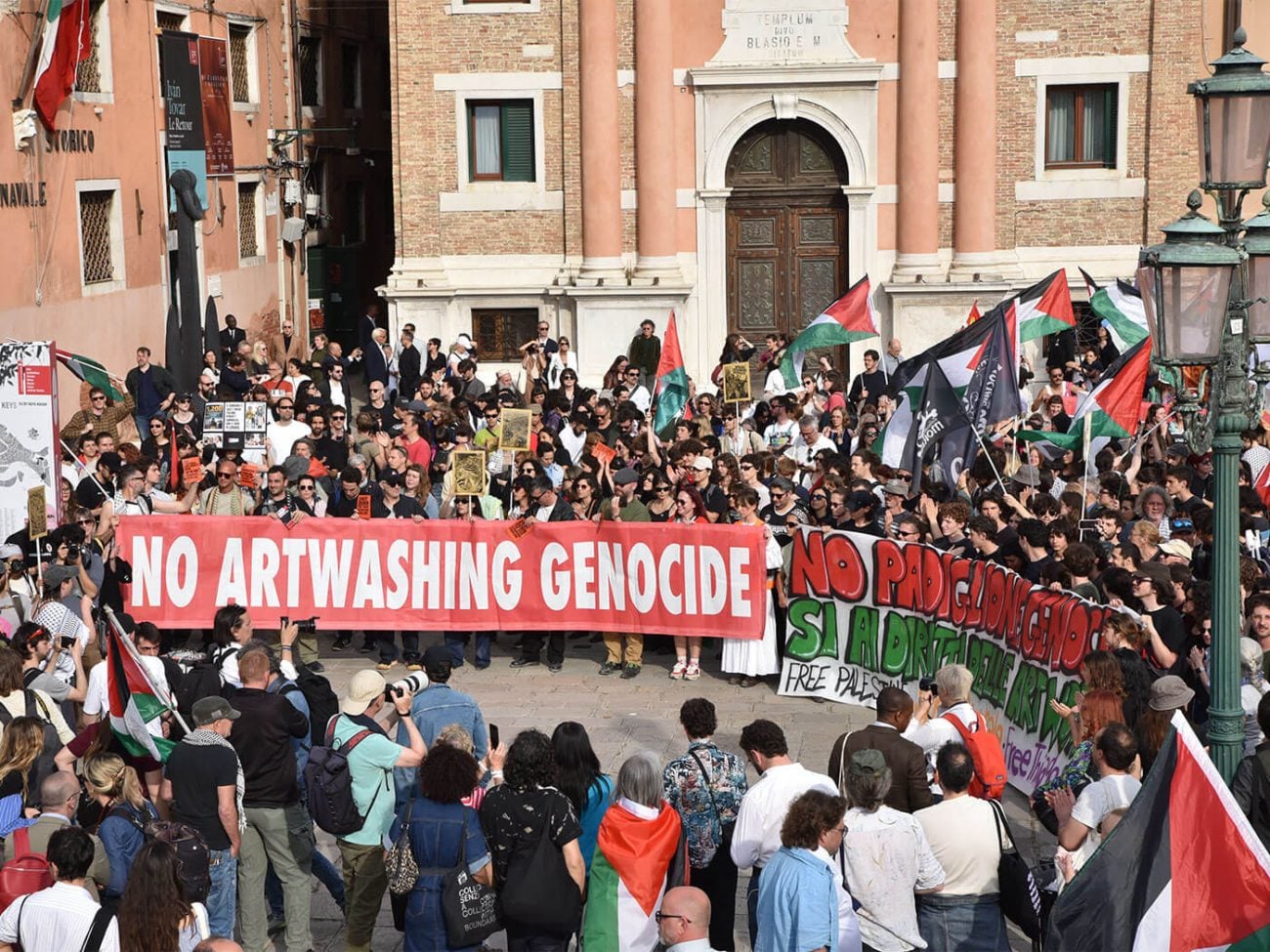
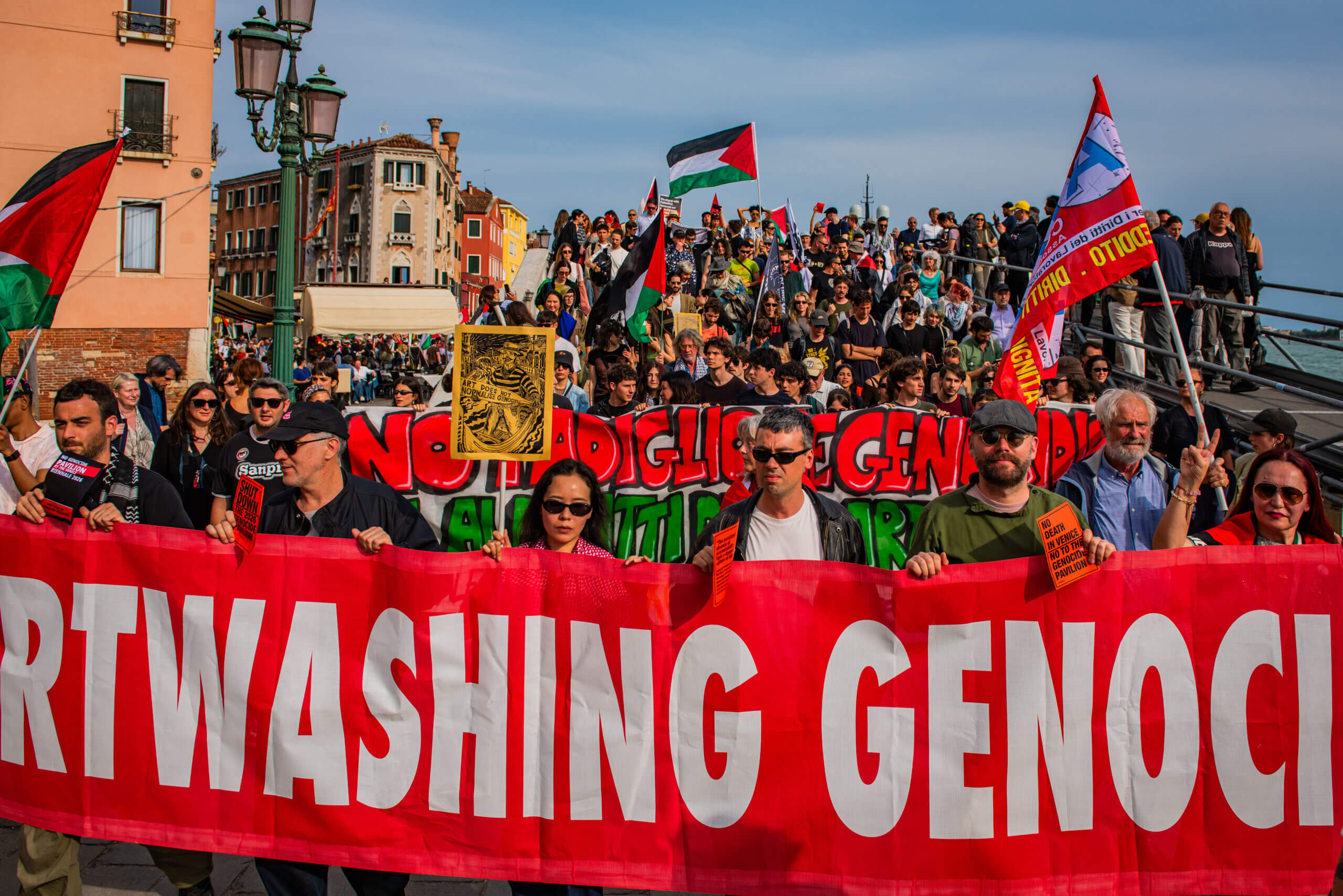
On May 6, 2026, the first day of previews at the Venice Biennale, hundreds of pro-Palestine activists led by the Art Not Genocide Alliance (ANGA) blocked the entrance to the Israeli pavilion, demanding its immediate closure. Protesters waved Palestine flags and banners reading "No Artwashing Genocide" and "No Genocide Pavilion at Biennale," chanting accusations of genocide against Israel. The demonstration temporarily shut down access to Belu-Simion Fainaru's exhibition "Rose of Nothingness" for about half an hour. The protest followed a letter signed by over 200 artists urging the Biennale to exclude Israel, which instead moved the pavilion to an alternative location in the Arsenale due to renovations. Separately, Pussy Riot and FEMEN rallied outside the Russian pavilion, which will only open during preview days due to sanctions. Venice cultural workers plan a 24-hour strike on May 8 in solidarity with Palestinians, potentially disrupting the Biennale's schedule.

« No art washing ! » : à la Biennale de Venise, près de 3 000 manifestants réunis pour dénoncer la présence du pavillon israélien

On May 8, 2026, nearly 3,000 protesters gathered in Venice to demonstrate against the presence of the Israeli pavilion at the Venice Biennale. Led by the collective Art Not Genocide Alliance (Anga), the crowd included artists, curators, and cultural workers who chanted slogans such as "Stop al Padiglione genocidio" and called for a strike on the closing day of the professional previews. Dozens of national pavilions, including those of France, Belgium, Poland, Spain, the United Kingdom, Lebanon, and Ukraine, closed in solidarity. The protest followed a letter sent by Anga in March demanding Israel's exclusion, which went unanswered, and the self-dissolution of the awards jury on April 30 over the presence of both Israel and Russia.

At the Venice Biennale, protests, self-mutilation and rage against Israel and Russia. Is anyone left to talk about the art?

At the 61st Venice Biennale, protests and controversies have overshadowed the art itself. The Art Not Genocide Alliance (ANGA) demonstrated against the inclusion of Israel and Russia, while the Israeli Pavilion became a flashpoint. Artist Belu-Simion Fainaru, presenting his installation "Rose of Nothingness" in a temporary space, complained that he was forced to defend his art's right to exist amid questions about politics rather than his work. The Biennale also saw barricades, strikes, the resignation of the Golden Lion jury, Iran's last-minute withdrawal, and anger directed at the American pavilion over Trump administration policies. The central exhibition, "In Minor Keys," curated by the late Koyo Kouoh, was eclipsed by these events.