filter_list Showing 15 results for "second world war" close Clear
dashboard All 15 museum exhibitions 9article news 3article culture 2article local 1
date_range Range Today This Week This Month All
Subscribe

Flock and awe: inside the big changes at Henry Moore’s glorious sheep-filled Hoglands home

The Henry Moore Foundation has reopened the Sheep Field Barn gallery at Moore's former home and studio in Perry Green after a major architectural redesign by DSDHA. The reopening is marked by an exhibition of Moore's seminal Shelter Drawings, created when he first arrived at the estate during the Second World War.

glenn lowry moma values trump 1234752653

Glenn Lowry, the longtime director of the Museum of Modern Art (MoMA), delivered a farewell speech in June 2025 at MoMA's Party in the Garden, implicitly addressing the Trump administration's attacks on cultural institutions. He urged the museum to defend values of pluralism, freedom of expression, and minority rights, warning that the coming years would present consequential choices not seen since World War II. The article notes that while Trump has not directly targeted MoMA, he has threatened the Smithsonian Institution, and artist Amy Sherald canceled a National Portrait Gallery survey alleging censorship. Under Lowry, MoMA mounted a 2017 exhibition critical of Trump's travel ban, but has otherwise avoided explicit political programming.

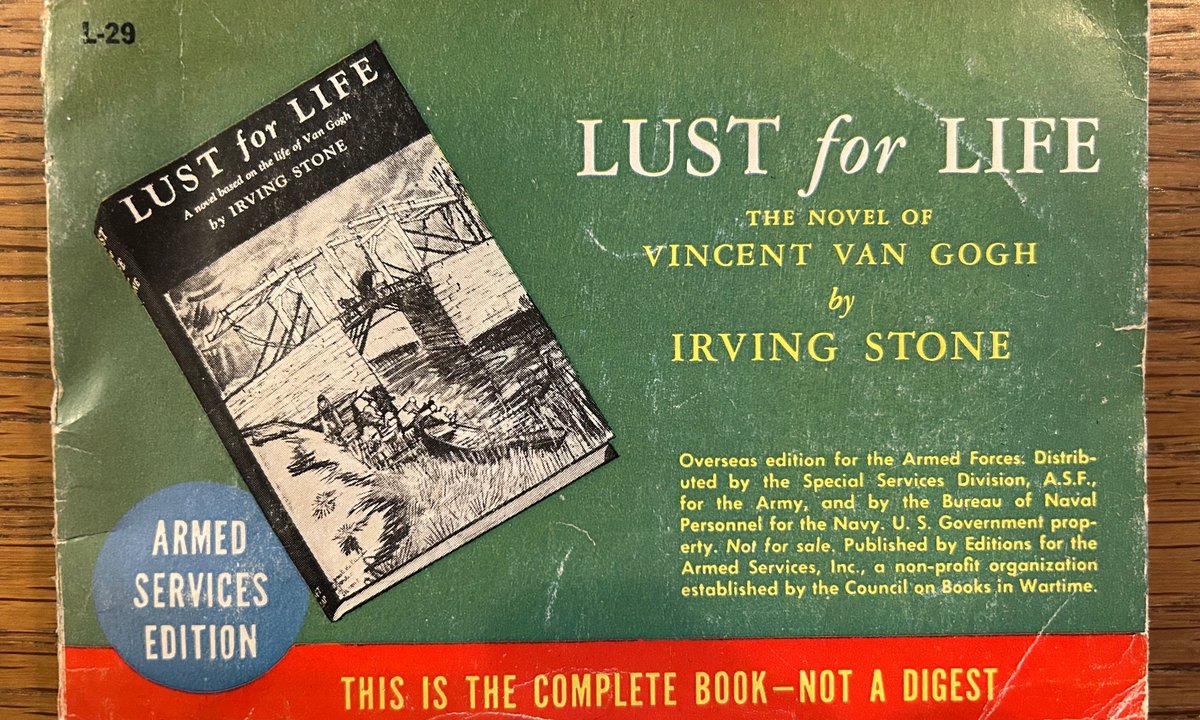
‘Lust for Life’: The Van Gogh book designed to fit in pockets of US soldiers during the Second World War

Irving Stone's 1934 novel *Lust for Life*, a fictionalized biography of Vincent van Gogh, was published as an Armed Services Edition during World War II for U.S. soldiers. These pocket-sized books, measuring 11cm by 17cm, were designed to fit in uniform pockets and withstand harsh conditions. Over 123 million copies of various titles were printed from 1943 to 1947, with distribution including parachute drops to troops on Pacific islands and handouts to soldiers before the Normandy Landings. The surviving copies are scarce and often damaged, with browned pages and covers marked as U.S. government property, not to be resold.

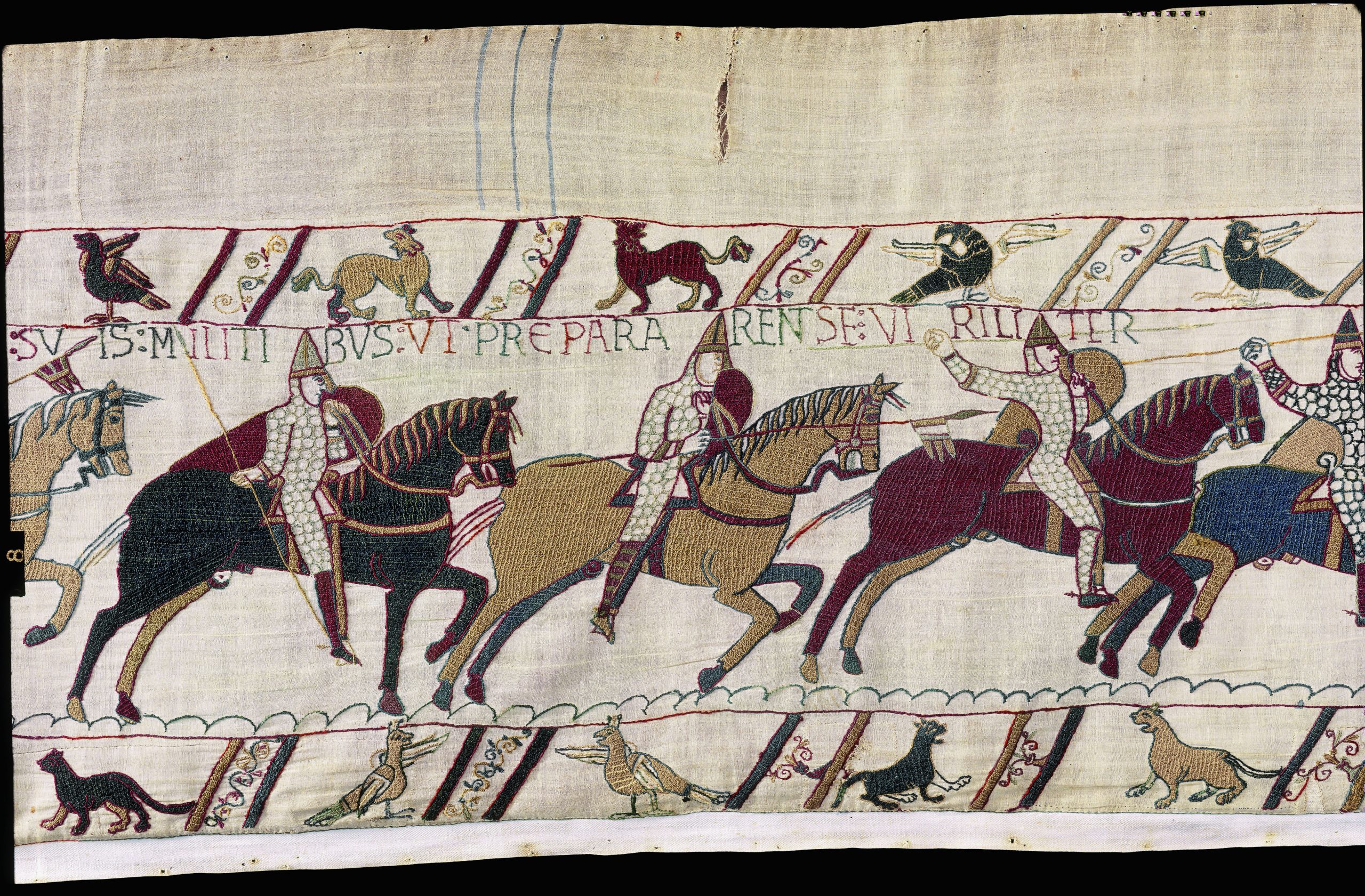
bayeux tapestry british museum loan 2665313

The Bayeux Tapestry, a 230-foot-long medieval textile depicting the Norman Conquest of 1066, will be loaned to the British Museum in London for the first time in 950 years. The historic deal between Britain and France is set to be finalized on July 9, with the tapestry expected to appear in a blockbuster exhibition about the Norman Conquest opening in September 2026. In exchange, treasures from across the U.K.—including artifacts from Sutton Hoo and the Lewis chessmen—will travel to France. The agreement will be announced by British Prime Minister Keir Starmer and French President Emmanuel Macron, and signed by British Museum director Nicholas Cullinan.

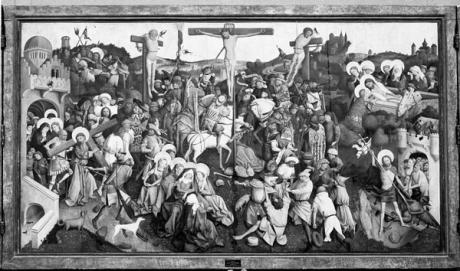
Caravaggio and Rubens works destroyed by fire in Second World War are brought back to (digital) life

The Gemäldegalerie in Berlin has completed the digitization of its high-resolution glass-negative archive, which documents hundreds of Old Master paintings destroyed in a fire at the end of the Second World War. The collection includes lost works by Caravaggio, Peter Paul Rubens, Anthony van Dyck, and Paolo Veronese, which were stored in a flak tower for protection and burned in May 1945.

‘Your homes will be destroyed, your family killed’: the US has dropped millions of war propaganda leaflets – but do they work?

The United States military has been dropping propaganda leaflets in psychological operations (psyops) for over a century, from World War I through the Gulf War and the wars in Iraq and Afghanistan. A new interactive exhibit at Pioneer Works in Brooklyn, organized by the digital archive group Khajistan, displays hundreds of these leaflets, including those dropped on Japan during World War II and in more recent conflicts. However, declassified internal documents, such as a 1971 US Air Force report, reveal that leaflets were often used as toilet paper, cigarette rolling paper, or souvenirs by enemy soldiers, undermining the official narrative of their effectiveness.

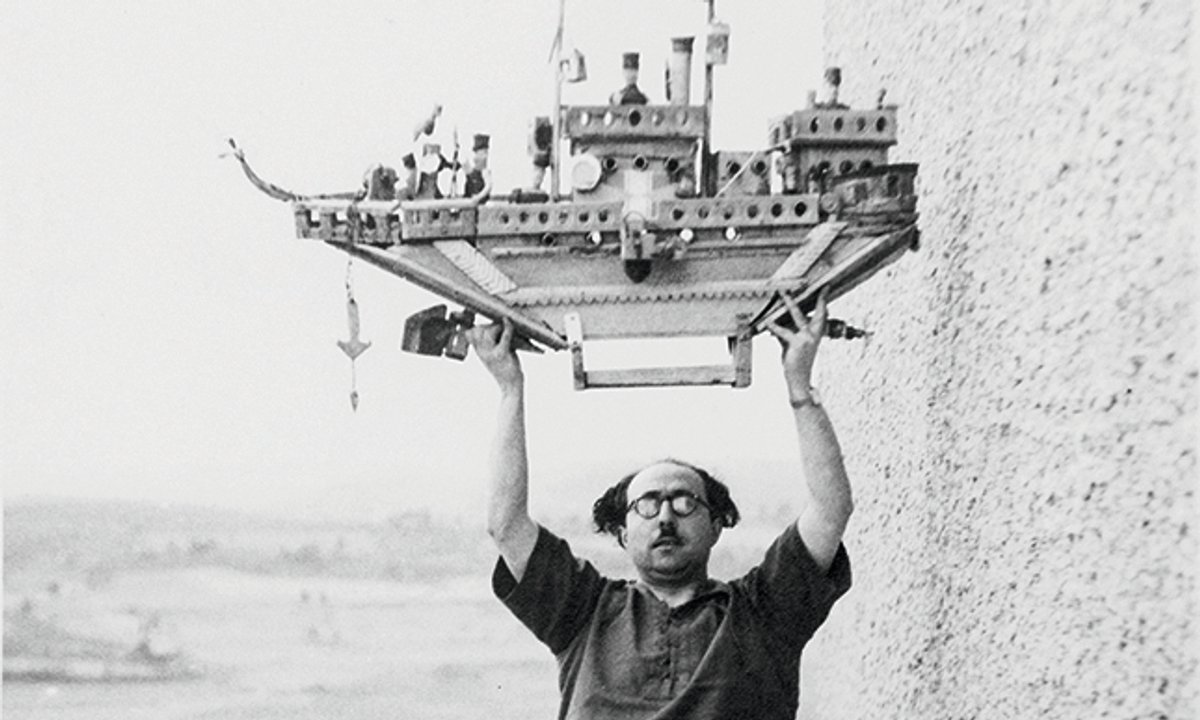
The tale of a French psychiatric asylum that harboured Second World War resistance fighters—and where patients became artists

An exhibition catalogue from the American Folk Art Museum's 2024 show traces the story of Saint-Alban-sur-Limagnole, a French psychiatric asylum that sheltered Spanish Republican refugees and resistance fighters during World War II. Under Catalan psychiatrist Francesc Tosquelles, patients were encouraged to create art from found objects, producing works that later influenced Jean Dubuffet's concept of Art Brut. The asylum became a haven where hierarchies between doctors and patients were leveled, and patients bartered their creations for food during wartime austerity.

Border Crossings: Ten Scottish Masters of Modern Art

The McManus: Dundee's Art Gallery & Museum presents 'Border Crossings: Ten Scottish Masters of Modern Art,' an exhibition running from 28 June 2025 to 14 June 2026. Curated by Janet McKenzie, the show highlights ten Scottish-born artists—including Wilhelmina Barns-Graham, Eduardo Paolozzi, and William Turnbull—who left Scotland to train and build careers in London, Paris, and New York, contributing significantly to international modernism.

'ART FROM WAR TO WAR: CHASING BUTTERFLIES OVER THE VERGE OF A CLIFF' at Beck & Eggeling International Fine Art, Düsseldorf, Germany on 28 May–15 Aug 2026

An exhibition titled 'ART FROM WAR TO WAR: CHASING BUTTERFLIES OVER THE VERGE OF A CLIFF' is on view at Beck & Eggeling International Fine Art in Düsseldorf, Germany, from 28 May to 15 August 2026. Curated by Antonio Geusa and Kay Heymer, the show features selected works from the Valeria Rodnianski collection, spanning artists from Germany and the Soviet/post-Soviet space. It is structured around two historical turning points—the construction of the Berlin Wall in 1961 and Russia's full-scale invasion of Ukraine in 2022—and organized into three thematic sections: Topos, Anthropos, and Logos, exploring place, human experience, and language.

New book explores the complex history of Jewish country houses

A new book titled *Jewish Country Houses*, edited by Juliet Carey and Abigail Green, explores the history of approximately 1,000 country estates built or remodeled by wealthy Jewish families across Great Britain and Continental Europe from the French Revolution until World War II. These houses, such as Waddesdon Manor and Château de Champs-sur-Marne, served as symbols of social arrival and assimilation, blending eclectic architectural styles with art collections from European auction houses. The volume, published by Profile and Brandeis University Press in association with the National Trust, features contributions from an international team of historians and curators, with photographs by Hélène Binet, and includes case studies of a dozen houses now open to the public.

Fire-damaged room at Castle Howard brought back to life by meticulous restoration

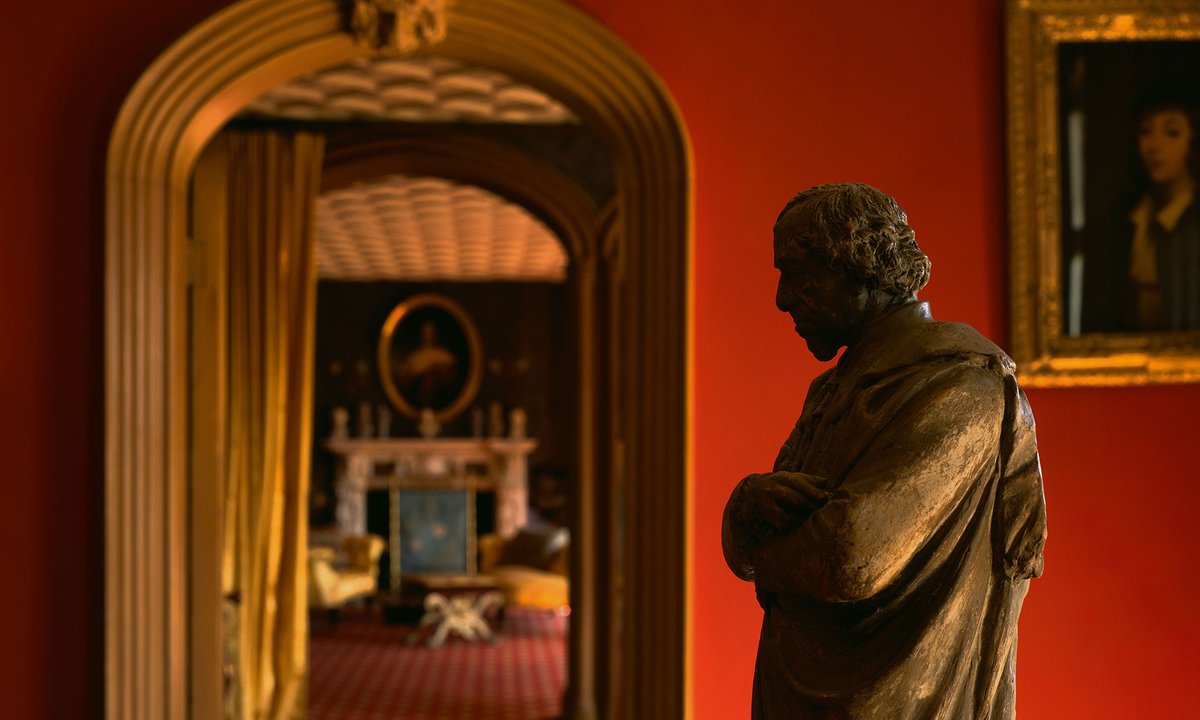
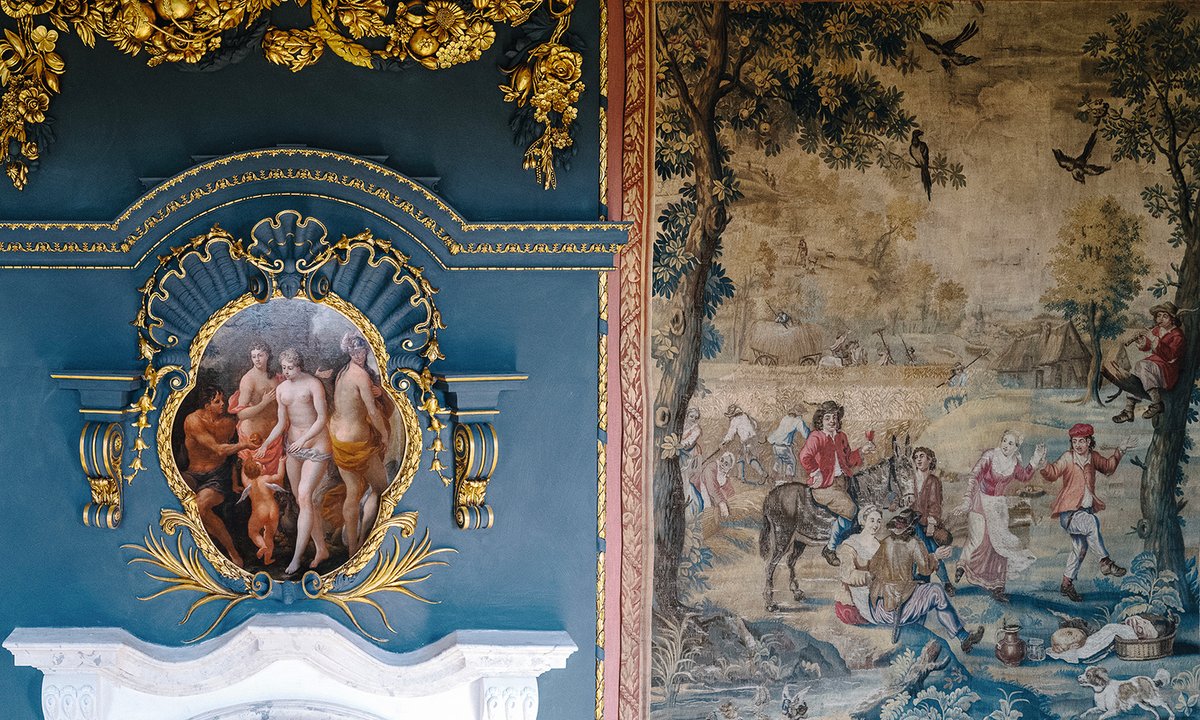
The Tapestry Drawing Room at Castle Howard, a historic stately home in Yorkshire, England, has been meticulously restored after being gutted by a fire in 1940. The room, originally adorned with early 18th-century tapestries woven by John Vanderbank and based on scenes by David Teniers, was reduced to a scorched shell. Nick Howard, whose family has lived in the house for three centuries, oversaw the restoration, which involved reinstalling the original tapestries—found rolled up in the attic—after conservation by Alison Stanton. The centerpiece, a painting by Marco Ricci titled *Judgment of Paris*, and a newly built fireplace based on archival photographs complete the revival.

Immediately after the Second World War, how did six exhibitions attempt to make sense of the atrocities?

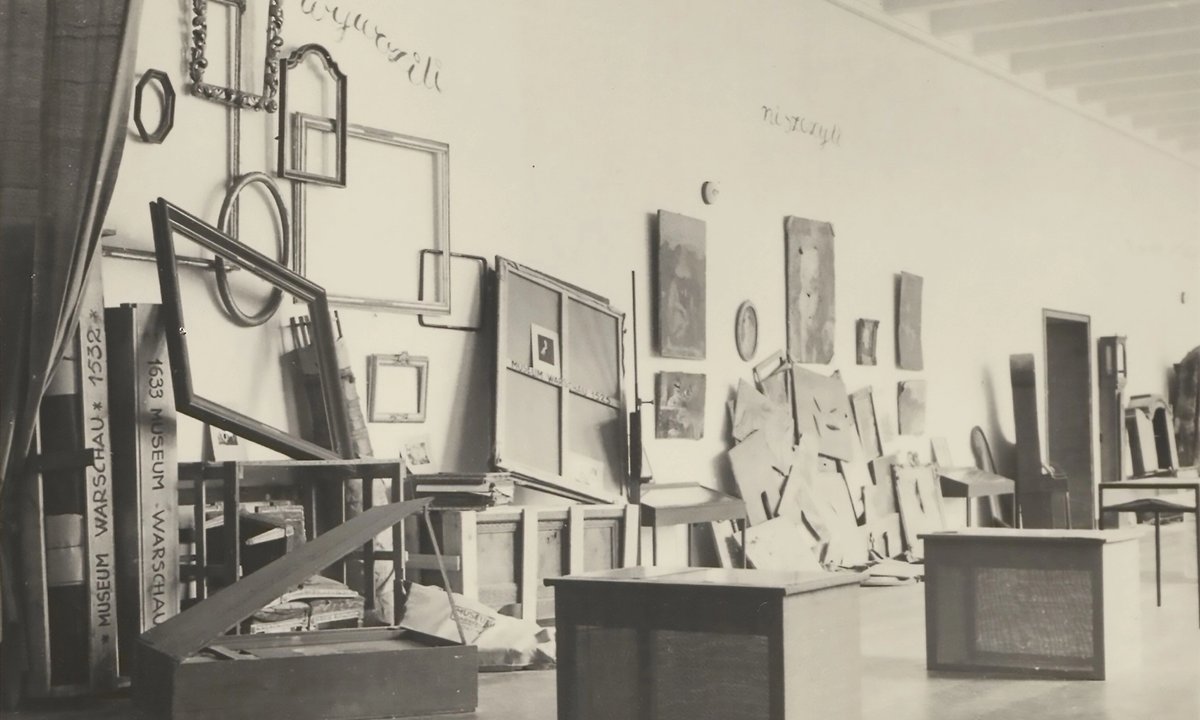
Berlin's Deutsches Historisches Museum has opened an exhibition titled "On Displaying Violence: First Exhibitions on the Nazi Occupation in Europe, 1945-48," which revisits six post-World War II exhibitions that attempted to process the atrocities of the war. These shows took place in venues ranging from the Grand Palais in Paris to a Czech villa formerly occupied by a Nazi official, and included displays such as the UK's Daily Express "The Horror Camps" (1945), the French traveling show "Hitlerian Crimes" (1945), "Warsaw Accuses" (1945) at the National Museum in Warsaw, and "Our Path to Freedom" (1947) at the Bergen-Belsen concentration camp. The Berlin exhibition uses original objects, film footage, photographs, and recordings to recreate the experience of these early post-war shows.

La Seconda guerra mondiale con gli occhi dei grandi fotografi in una mostra a Gorizia

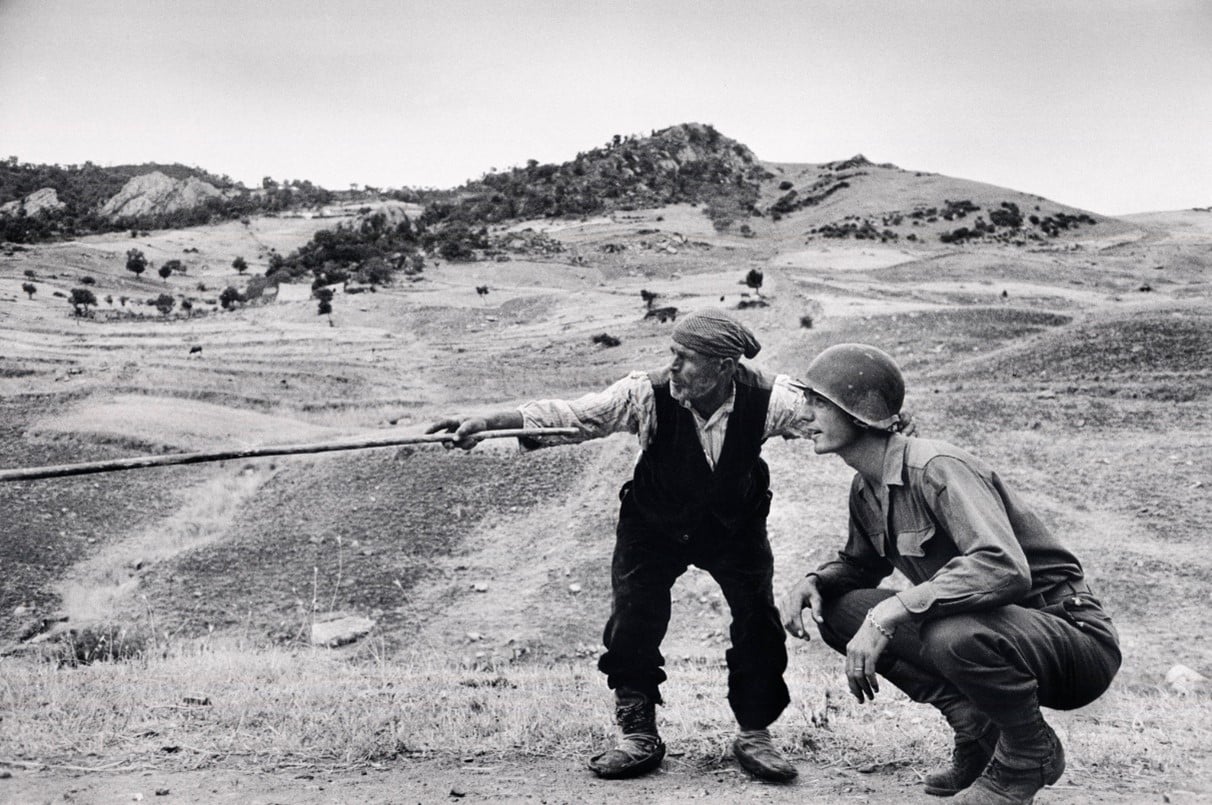
Palazzo Attems-Petzenstein in Gorizia hosts the exhibition "Back to Peace? La guerra vista dai grandi fotografi Magnum," which presents the Second World War and its aftermath through two hundred photographs, video installations, and soundscapes by legendary Magnum photographers. The show features iconic works by Robert Capa, Eve Arnold, Henri Cartier-Bresson, David Seymour, Eric Hartmann, René Burri, Thomas Hoepker, George Rodger, Wayne Miller, and Werner Bischof, covering the Normandy landings, the liberation of Bergen-Belsen, the atomic devastation of Hiroshima, and the return of French prisoners. Curated by Andrea Holzherr and Marco Minuz, the exhibition is divided into two sections: one focusing on wartime imagery and the other on the immediate consequences of the conflict, including the suffering of civilians and the fragile hope of reconstruction.

Monumental sculpture honours women’s service in US Coast Guard during Second World War

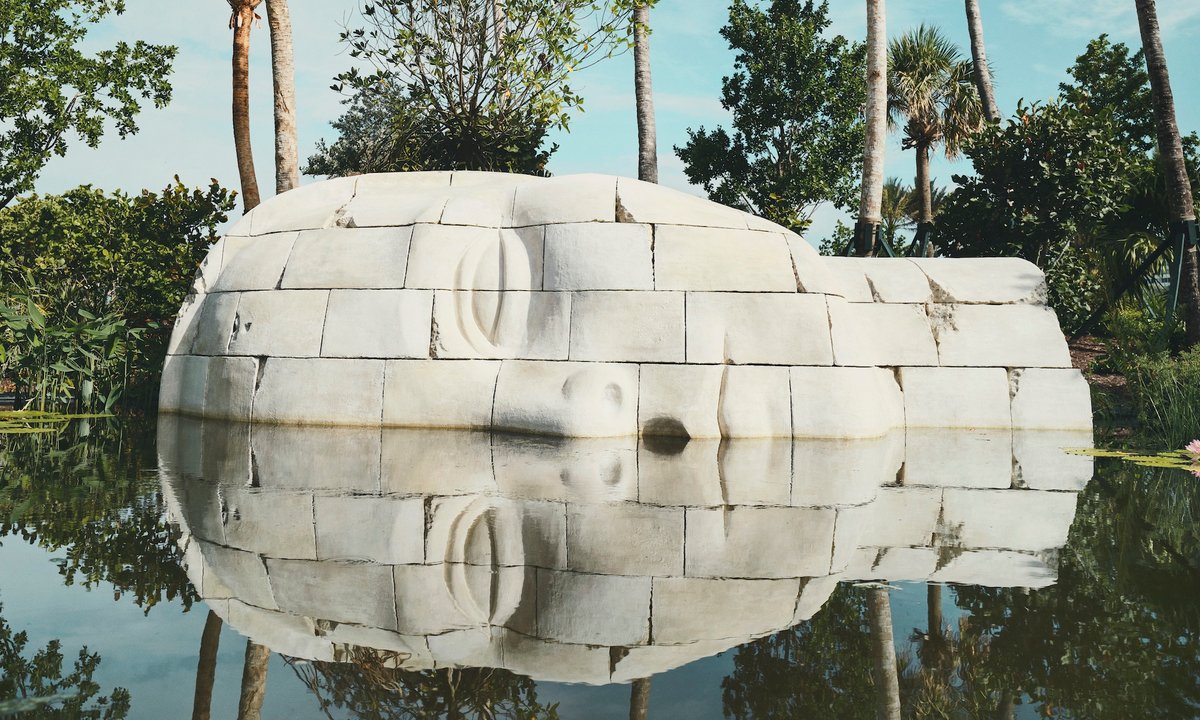
A monumental sculpture titled "Reflection" by French-born artist Prune Nourry has been installed at Ocean Terrace Park in Miami Beach, honoring the women of the U.S. Coast Guard Women’s Reserve (Spars) who served during World War II. The 21.3-foot sculpture features a half-face resting in water, completed by its reflection, with a mangrove tree sprouting from the side of the head. It was unveiled on October 30 and is Nourry’s first public art project in the U.S. The work uses the likeness of Yeoman Third Class Nellie Locust, a Cherokee woman who served in the Spars, with permission from her family. The sculpture was created in collaboration with landscape architect Raymond Jungles.

Haarlem Resistance hero commemorated with illicit 'stumbling stone'

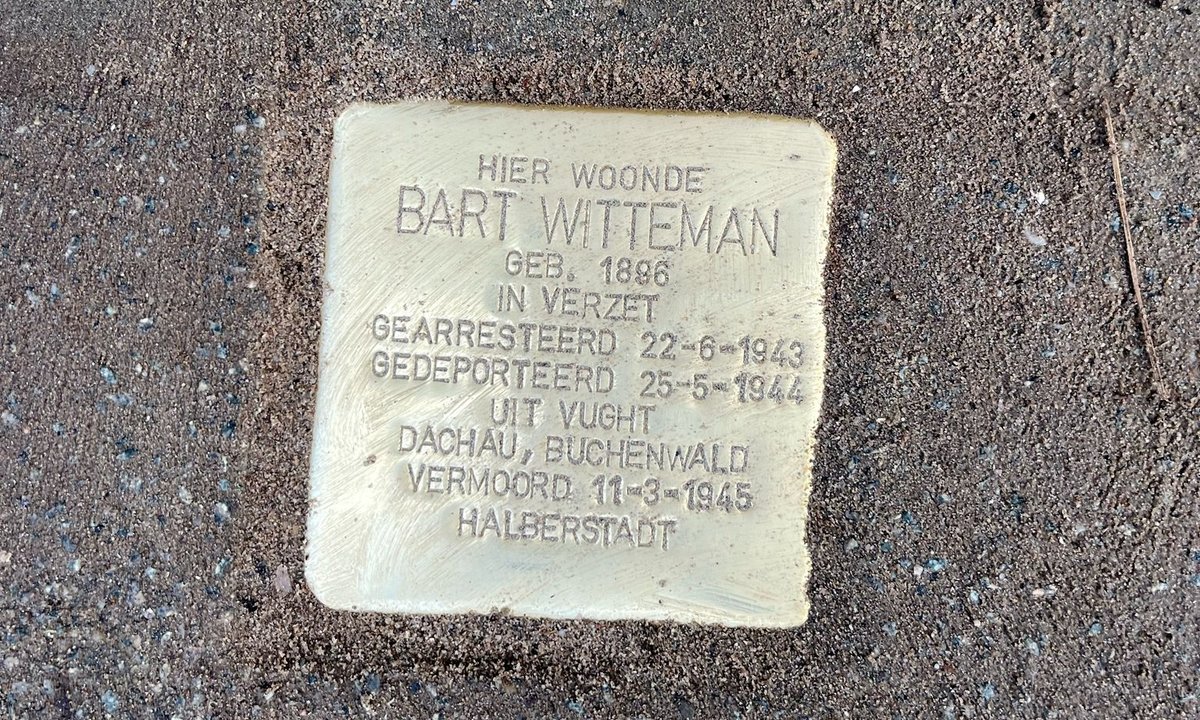
Ton Witteman, grandson of Dutch resistance hero Bart Witteman, has laid an unauthorized 'stumbling stone' (stolpersteine) in front of his grandfather's former home in Haarlem, Netherlands. Bart Witteman, a policeman who sheltered two Jewish people during World War II, was arrested, deported, and murdered by the Nazis in 1945. The city council had refused to include non-Jewish resistance figures in its official memorial program, which only covers the 733 murdered Jewish, Sinti, and Roma residents. Witteman obtained the hand-stamped brass plaque from German artist Gunter Demnig's Stolpersteine project and installed it himself with the current homeowners' blessing.