
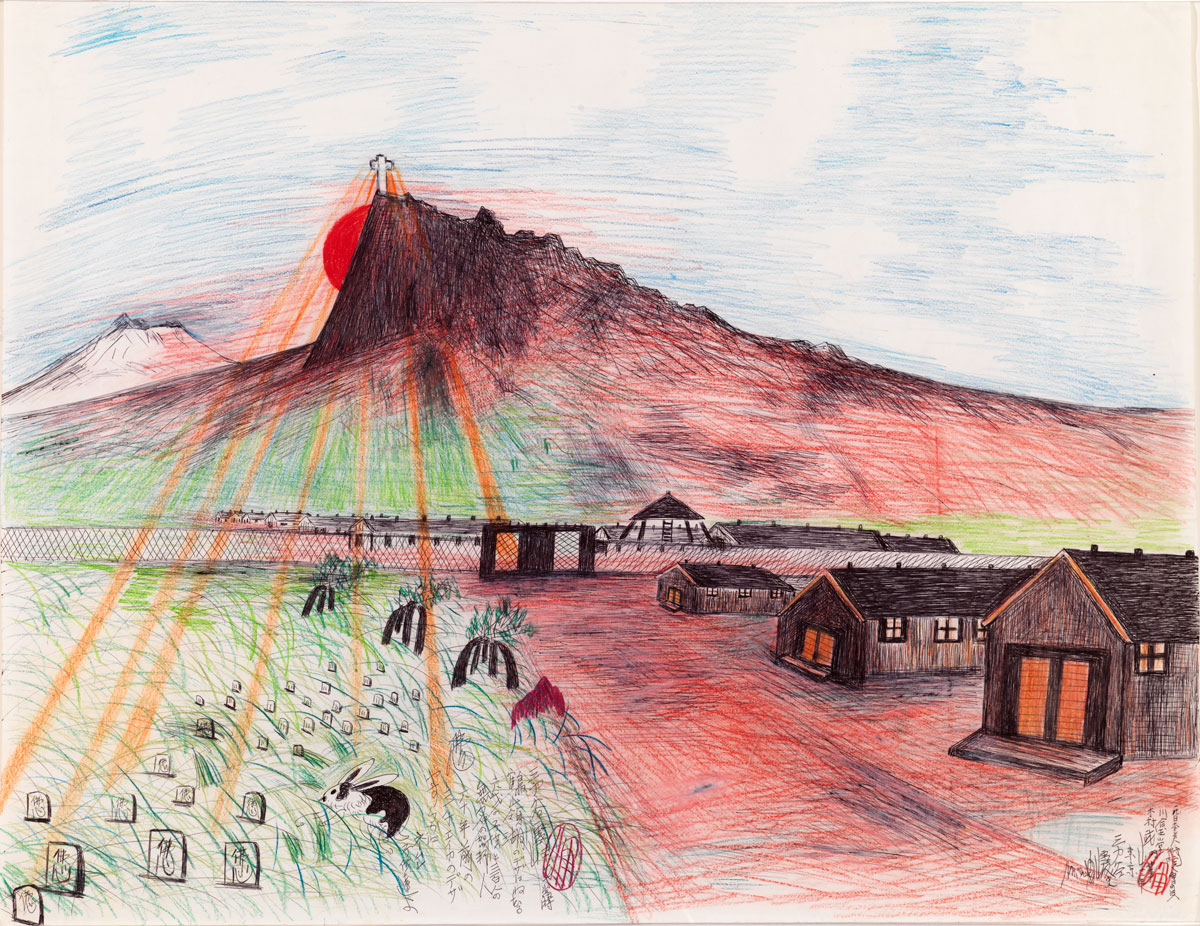
The Spencer Museum of Art has opened 'Street Nihonga: The Art of Jimmy Tsutomu Mirikitani,' a major spring exhibition featuring 170 works by the Japanese American artist, many never before displayed. The show traces Mirikitani's extraordinary life from his birth in Sacramento in 1920, his childhood in Hiroshima, formal training in traditional Nihonga under masters Kawai Gyokudō and Kimura Buzan, to his forced incarceration at Tule Lake during World War II after refusing to sign a loyalty oath. After years of statelessness and homelessness in New York City, Mirikitani developed a deeply personal, politically charged mixed-media practice that blended Japanese techniques with American street art.
The exhibition matters because it recovers the legacy of an artist who was systematically erased by U.S. wartime policies—Mirikitani was among 120,000 Japanese Americans incarcerated, and over 5,000 who were coerced into renouncing their citizenship. By presenting his work from the 1940s through the 2010s, the show illuminates how art can survive trauma, displacement, and decades of invisibility. It also connects the personal to the political, using Mirikitani's story to address ongoing questions about civil liberties, racial injustice, and the power of creative resilience.