
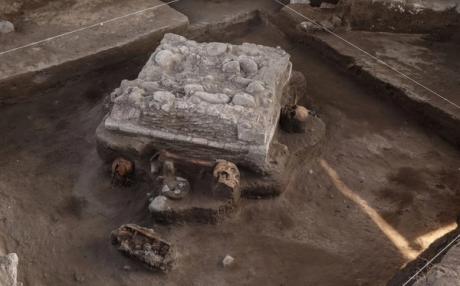
Archaeologists from Mexico’s National Institute of Anthropology and History (INAH) have discovered a 1,000-year-old Toltec altar during salvage work for a new high-speed rail line between Mexico City and Querétaro. The stone structure, known as a momoztli, dates back to AD 900-1150 and was found with four human skulls and leg bones arranged at its base, suggesting ritual or sacrificial use. Located near the ancient site of Tula Chico, the find also included ceramic objects and obsidian artifacts within a compound likely belonging to the local elite.
The discovery highlights the ongoing tension between Mexico's ambitious infrastructure projects and the preservation of its rich Mesoamerican heritage. Similar to the controversies surrounding the Maya Train, this new rail project must navigate significant archaeological zones; previous finds along the route have already forced an 8km detour to protect prehistoric petroglyphs. As excavations continue, officials must decide whether to reroute the tracks again or implement further conservation measures to protect the integrity of the Toltec ceremonial landscape.