
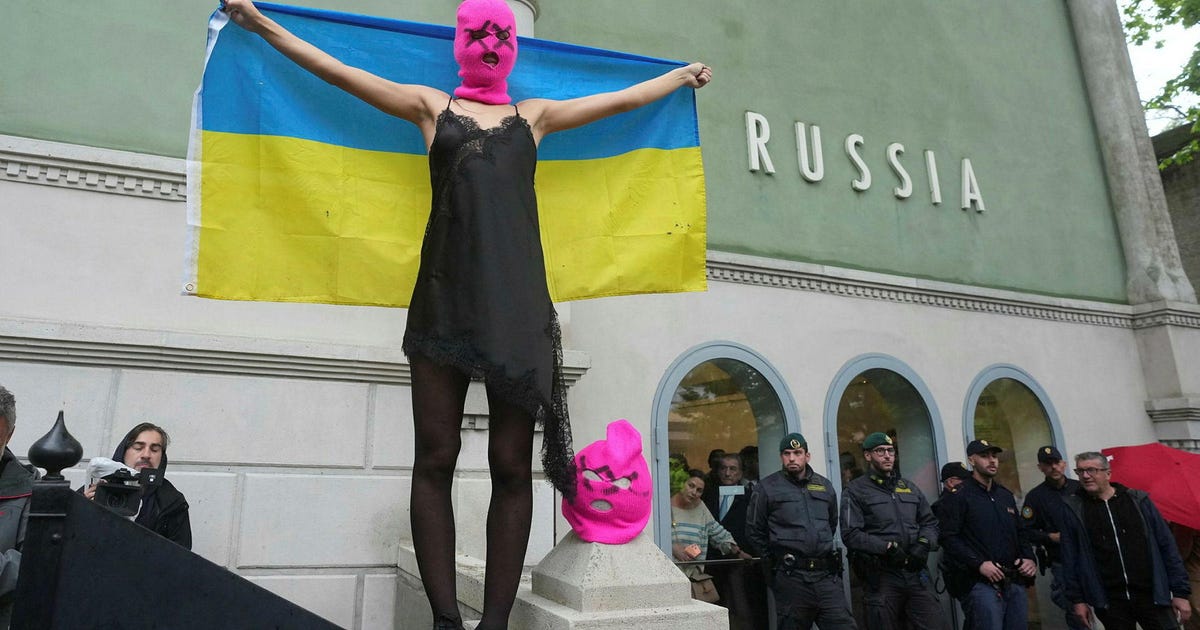
Russia has announced its return to the Venice Biennale in March 2026 after a four-year absence since the full-scale invasion of Ukraine. The Russian pavilion, permitted back by a controversial Biennale president, has been operating as a non-stop party featuring regime-compliant musicians, while artists and protesters outside the pavilion attempt to drown out the festivities with louder demonstrations. The article, by Naama Riba, reports on the protests that took place on May 6, 2026, and questions the political motivations behind Russia's re-entry into the prestigious international art exhibition.
This matters because the Venice Biennale is one of the world's most significant cultural platforms, and Russia's return—under what critics call 'propaganda masked as art'—raises urgent questions about the politicization of international exhibitions and the role of art institutions in times of war. The controversy highlights tensions between artistic freedom, national representation, and ethical responsibility, as the Biennale's leadership faces scrutiny for allowing a country engaged in military aggression to use the event for soft-power messaging. The protests underscore a growing divide within the art world over how to respond to state-sponsored cultural diplomacy from nations under international sanctions.