
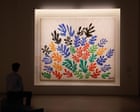
A major exhibition at the Centre Pompidou and the Grand Palais focuses on the final, revolutionary period of Henri Matisse's career, from 1941 to 1954. The show charts his artistic reinvention following a life-threatening surgery, beginning with obsessive, reworked paintings from his Nice studio during the war and culminating in the radiant, large-scale cut-outs for which he is widely celebrated.
This period represents a profound late-life renaissance that reshaped modern art. Confined to a wheelchair, Matisse distilled his forms to their essentials through drawing and then pioneered his revolutionary cut-out technique, producing works of explosive color and graphic simplicity. The exhibition highlights how physical limitation fueled boundless creativity, resulting in iconic series like 'Jazz' and the designs for the Vence Chapel, cementing his legacy as a genius who found his most vital expression in old age.