filter_list Showing 15 results for "Biennale 2026" close Clear
search
dashboard All 689 museum exhibitions 415article news 150article policy 28trending_up market 27rate_review review 21person people 20article culture 15candle obituary 9gavel restitution 2article local 1article event 1
date_range Range Today This Week This Month All
Subscribe

how venices legendary hotel cipriani is rethinking luxury with art

The article describes a weekend stay at the Hotel Cipriani, a Belmond hotel in Venice, highlighting its role as a luxurious oasis amid the city's cultural offerings. It details visits to the Peggy Guggenheim Collection, including the exhibition "Manu-Facture: The Ceramics of Lucio Fontana," and the Gallerie dell'Accademia, while focusing on the hotel's upcoming redesign by architect Peter Marino, set to debut in 2025 with new suites and a lobby. The hotel's art program, including past collaborations like Daniel Buren's pavilion and future activations tied to the 2026 Venice Biennale, is also emphasized.

When Gagosian Goes So Do His Galleries, How Hockney’s Swimmer Swam Away, and Green Shoots in the Gallery World

Kenny Schachter's article opens with a broad critique of the political climate under the Trump administration, linking it to a chilling effect on free speech and democracy, before pivoting to the art world. He notes the absence of a U.S. representative for the 61st Venice Biennale, mentions Marilyn Minter's protest piece, and references David Hockney's *Portrait of an Artist (Pool with Two Figures)* at Christie's. The piece also touches on market negativity, the resilience of art, and skepticism about the Middle East as a market savior.

7 Books We’re Looking Forward to in May

ARTnews has published a list of seven art books to look forward to in May 2026, covering a wide range of topics from contemporary theory and AI imagery to historical biographies and the Venice Biennale. Featured titles include Dena Yago's collected writings 'That Figures,' Victoria Johnson's biography of Frederic Church 'Glorious Country,' Trevor Paglen's 'How to See Like a Machine,' Nicholas Fox Weber's 'Anni Albers: A Life,' Massimiliano Gioni's 'High Waters: An Oral History of the Venice Biennale,' Rennie McDougall's 'Nonstop Bodies: How Dance Shaped New York City,' and Paul Elie's 'Last Supper: Art, Faith, Sex and Controversy in the 1980s.'

curators reveal their favorite artworks of all time

Artnet News asked leading curators and museum directors to share their favorite artworks of all time. Connie Butler of MoMA PS1 chose David Hammons's "Bliz-aard Ball Sale" (1983), praising its connection from Duchamp to AI. Julieta Gonzalez of the Wexner Center selected Hans Holbein the Younger's "The Ambassadors" (1533), highlighting its anamorphic skull as a metaphor for viewing modernity from the margins. Madeleine Grynsztejn of MCA Chicago picked Francisco Goya's "A Pilgrimage to San Isidro" (1819–23) from his Black Paintings cycle, calling it a metaphor for fanaticism.

A brush with… Lubaina Himid — podcast

This podcast episode features a conversation with Lubaina Himid, the Turner Prize-winning artist born in Zanzibar in 1954 and based in Preston, UK. Himid discusses her paintings, sculptures, and installations that center marginalized figures, diasporic cultures, and overlooked histories. She reflects on the influence of artists Stanley Spencer, Bridget Riley, and William Hogarth, as well as writers Audre Lorde and Essex Hemphill. The episode also covers her curatorial work in the 1980s, her role in the Black British Arts movement, and her admiration for peer Claudette Johnson. Upcoming exhibitions include a show with Magda Stawarska at Kettle’s Yard in Cambridge, a group show at the Institute of Contemporary Arts in London, and her representation of the British Pavilion at the 2026 Venice Biennale.

severance dieter rams braun vitsoe

The article examines the use of two iconic minimalist designs—the Vitsœ 620 chair and a Braun wall-mounted hi-fi system—in the Apple TV+ series *Severance*. Both objects were designed by German industrial designer Dieter Rams in the 1960s and appear in the show's dystopian corporate setting, specifically in the lower levels of Lumon Industries where experimental subject Gemma undergoes tests. The production team intentionally selected these pieces to convey themes of power, control, and commerce.

ArtReview Asia Spring 2026 Issue Out Now

The Spring 2026 issue of ArtReview Asia has been published, featuring a cover profile of artist Li Yi-Fan. The issue includes an in-depth look at Li's work, which explores the relationship between humans and machines through video installations and performance lectures, ahead of his representation of Taiwan at the Venice Biennale. Other articles examine the contemporary art scene in Bangkok, urban redevelopment in Colombo, a colonial-era plant hunting exhibition in London, and Taiwan's museum boom.

Boats and trains, not planes: reflections on a greener—but sometimes greenwashed—Venice Biennale

The article recounts the author's train journey from London to Venice for the 61st Venice Biennale, highlighting the environmental benefits and pleasant experience of traveling by rail versus flying, despite higher costs and longer duration. It then focuses on the Biennale's central exhibition "In Minor Keys" curated by the late Koyo Kouoh, which foregrounds environmental themes through works that engage with earth, nature, and ecological stakes, featuring artists like Otobong Nkanga, Célia Vasquez Yui, Theo Eshetu, Linda Goode Bryant, and Annalee Davis.

juergen teller bottega veneta summer 2026 campaign

Juergen Teller has photographed Bottega Veneta's Summer 2026 campaign, set against the iconic landmarks of Venice, including the Palazzo Contarini Polignac and the Venice Giardini. The campaign features models Liya Kebede and Anine Van Velzen, and arrives ahead of the 2026 Venice Biennale. It also marks the debut collection of Louise Trotter, who joined Bottega Veneta as creative director last year, drawing on the house's 50-year archives and reimagining signature items like the Lauren and Knot bags.

kamala culture failure

Ben Davis, an art critic, analyzes the failure of Kamala Harris's 2024 presidential campaign through the lens of its visual culture, particularly a MoveOn.org poster in Brooklyn that renders Harris's face entirely from emojis—smiley eyes, fist-bump skin, octopus lips, and coconut necklace. He argues this poster epitomizes the campaign's reliance on incoherent internet vibes and substance-free memes, contrasting it with Shepard Fairey's uninspired "FORWARD" poster and the self-parody of "Brat Summer" aesthetics. Davis blames Democratic Party consultants for wasting over $1 billion on a campaign that failed to connect with voters on economic anger, instead offering wonkish proposals and appeals to nonexistent Liz Cheney Republicans.

Meet the Writer Who Sees Every Single Show at the Venice Biennale

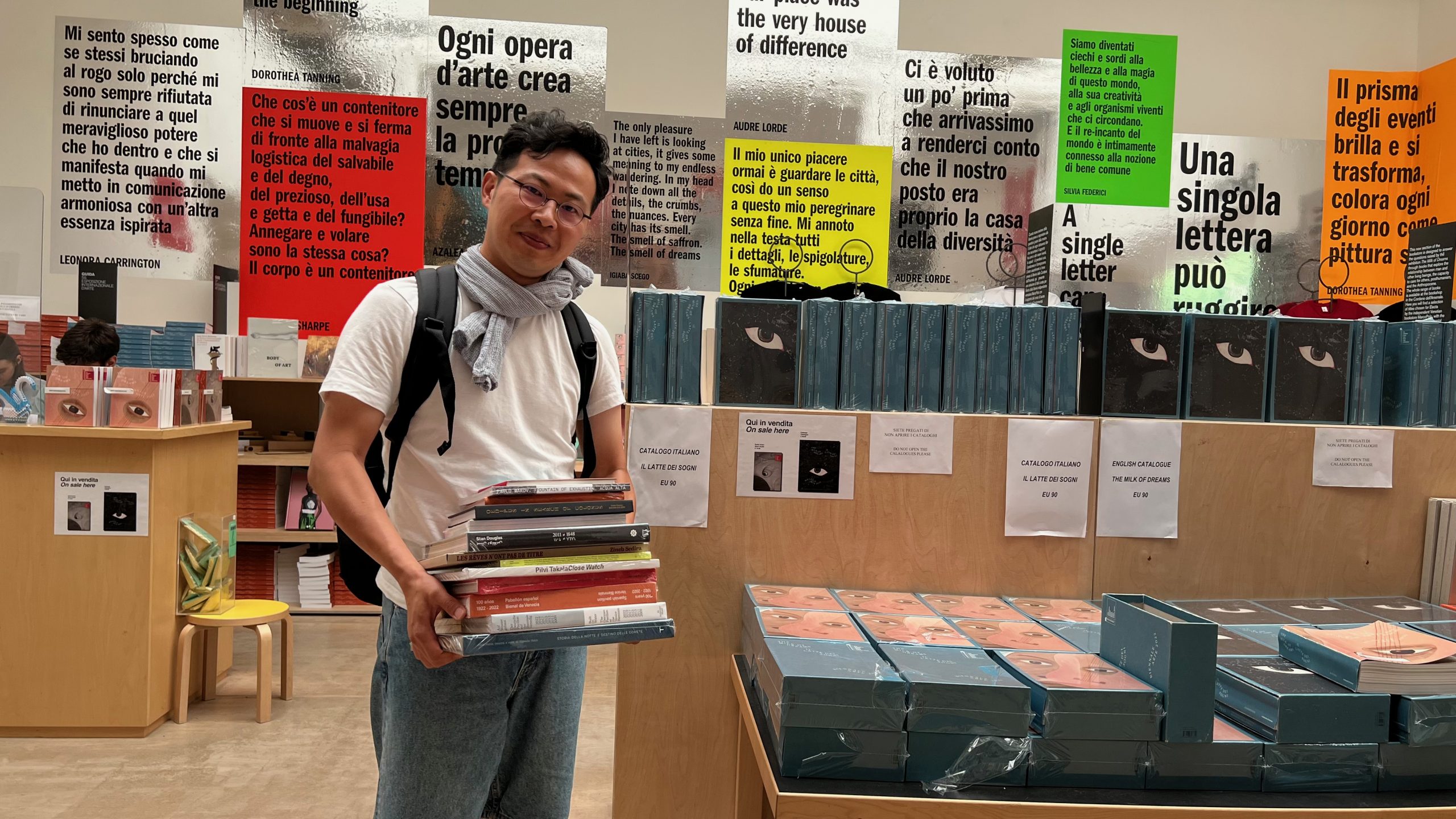
Jaeyong Park, a Seoul-based writer, translator, and interpreter, has attended every edition of the Venice Biennale since 2022—including both art and architecture cycles—and seen every single show, from the central exhibition and national pavilions to collateral and unofficial events. He documents his journeys in regular dispatches and has compiled a free bilingual guide to the biennial. Park organizes his trips with a group of fellow art workers, splitting accommodation costs and sharing reviews over dinner to ensure full coverage.

Why Does Italy No Longer Qualify for the World Cup or the Biennials?

Perché l’Italia non si qualifica più né ai Mondiali né alle Biennali?

Artist Oscar Giaconia draws a provocative parallel between the decline of Italian football and the diminishing presence of Italian contemporary artists in major international forums like the Venice Biennale and Manifesta. He argues that both sectors suffer from a systemic failure to nurture young talent, characterized by a lack of strategic scouting, a preference for foreign trends, and a bureaucratic deafness that stifles growth.

Art Born of Pain: Frida Kahlo

This article is a promotional piece for the DW English program 'Arts Unveiled,' highlighting several upcoming segments. It announces the start of the 61st Venice Biennale, the world's largest art exhibition, and poses questions about its standout features and art's role in times of crisis. Other segments explore the American Dream as a nightmare on the 250th anniversary of US independence, and feature Indigenous artist Britta Marakatt-Labba, who creates embroidered polar landscapes reflecting Sámi culture.

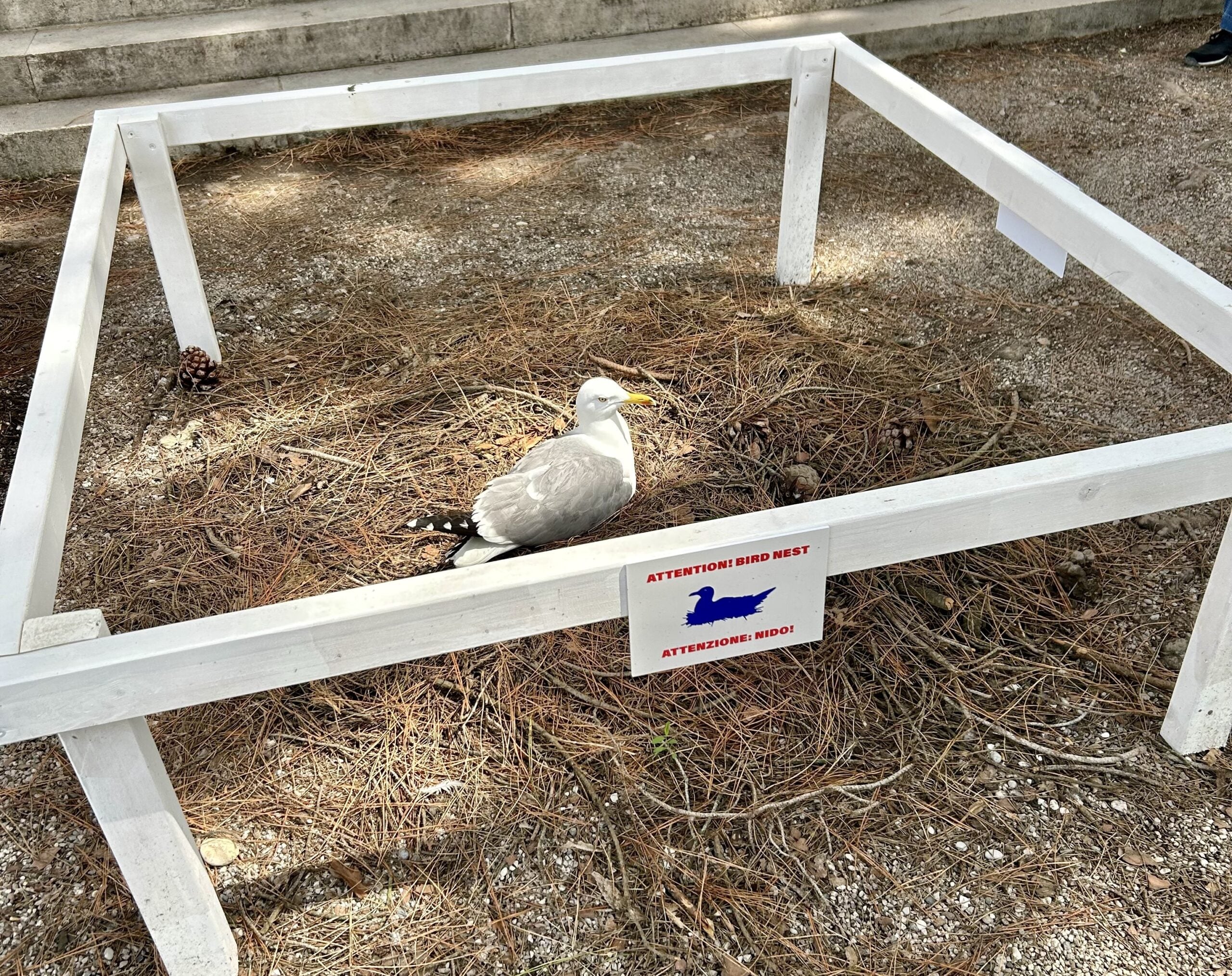
Il Padiglione della Natura alla Biennale di Venezia. Ovvero due gabbiani che mettono in crisi il patriarcato

At the 2026 Venice Biennale, two seagulls built a nest in front of the Polish Pavilion in the Giardini. Organizers chose to protect the nest with a small fence and a sign, turning it into an unofficial "Nature Pavilion." The birds share incubation duties equally, drawing large crowds who pause to watch their cooperative behavior amid the Biennale's intense geopolitical tensions, including protests against the Russian Pavilion, pro-Palestinian actions, and debates over Israel's cultural role.

The Biennale and the Weight of Flags. What Is the Point of National Pavilions?

La Biennale e il peso delle bandiere. Che senso hanno i padiglioni nazionali?

The article examines the inherent contradiction within the Venice Biennale: its historical structure of national pavilions, a legacy of 19th-century world fairs and state-sponsored art, clashes with the transnational, post-identity vision of the international exhibition curated by Koyo Kouoh. The return of the Russia Pavilion amid geopolitical conflict and the international show titled "In Minor Keys," which rejects national belonging as an interpretive criterion, highlight this tension. The piece also addresses the controversy over the lack of Italian artists in the main exhibition, questioning whether a Biennale hosted in Italy should guarantee national representation.