filter_list Showing 16 results for "Figura" close Clear
search
dashboard All 437 museum exhibitions 260trending_up market 44candle obituary 31person people 28article news 26article local 18article culture 16rate_review review 13article policy 1
date_range Range Today This Week This Month All
Subscribe

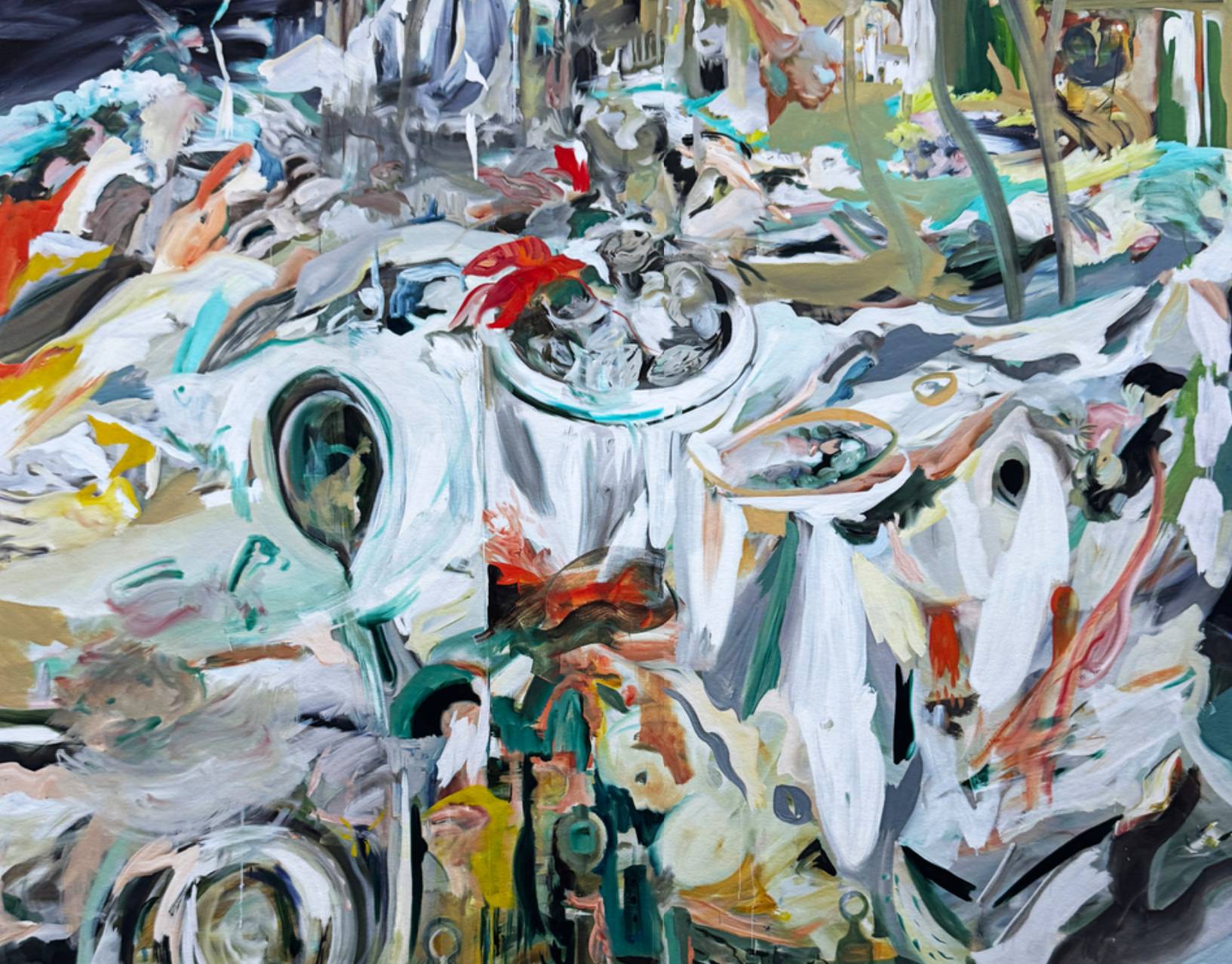
7 Contemporary Artists to Follow If You Like Cecily Brown

The article presents a curated list of seven contemporary artists whose work shares aesthetic or thematic connections with the painter Cecily Brown. It highlights artists like Jenna Gribbon, known for intimate, luminous portraits; Issy Wood, who blends Old Master techniques with contemporary malaise; and others such as Flora Yukhnovich, Doron Langberg, Louis Fratino, Maia Cruz Palileo, and Somaya Critchlow, each exploring figuration, sensuality, and painterly abstraction in distinct ways.
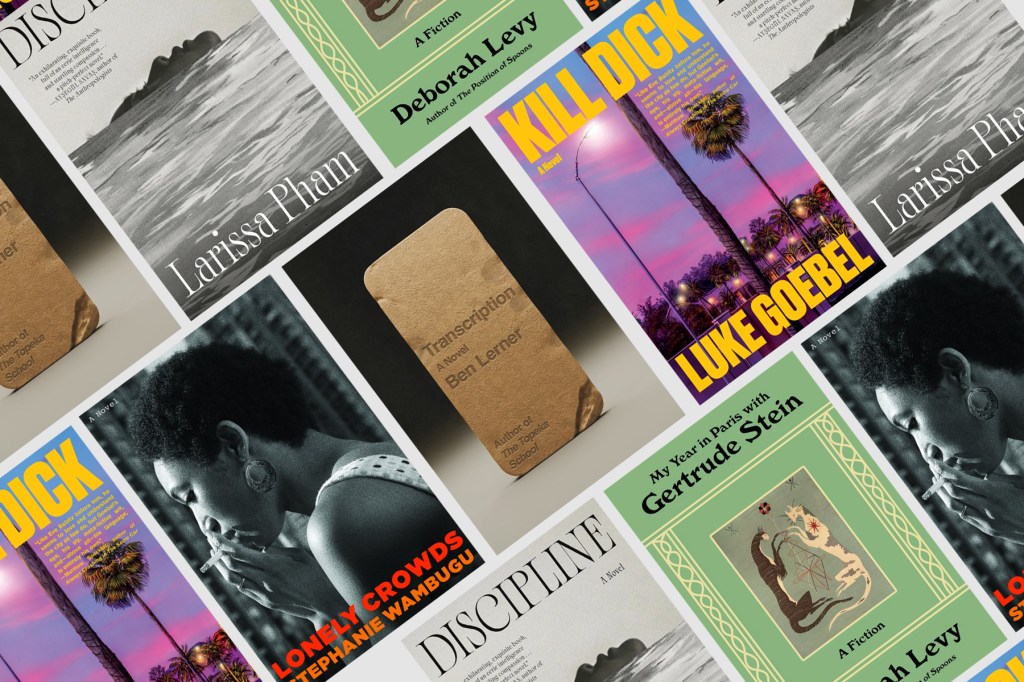
5 Art Novels to Read This Summer

ARTnews has published a list of five art novels to read this summer, all released within the past year. The featured books include Ben Lerner's 'Transcription,' Larissa Pham's 'Discipline,' Deborah Levy's 'My Year in Paris with Gertrude Stein: A Fiction,' Stephanie Wambugu's 'Lonely Crowds,' and Luke Goebel's 'Kill Dick.' Each novel explores how art emerges through relationships—with friends, mentors, parents, lovers, and historical artists—offering a range of perspectives from anxious inner monologues to satirical critiques of the art world.

parlez vous le francais french old masters glossary and museum list

Artnet News published a French-language glossary of Old Masters terminology and a list of French museums dedicated to Old Masters. The article defines an Old Master as a European painter who worked before 1800, then provides an A–Z bilingual glossary covering terms from Baroque to Venetian Renaissance. It also profiles two museums: the Musée du Louvre in Paris, highlighting its history, collection size, and a wartime anecdote about Théodore Géricault's "Le Radeau de la Méduse," and the Musée du Louvre-Lens, a branch museum opened in 2012 on a former mining site.

issy wood charli xcx vanity fair cover

Issy Wood, a rising British artist known for her figurative paintings of luxury objects and body parts, created the cover for Vanity Fair's first art-themed issue in nearly two decades. The cover features a portrait of pop star Charli XCX titled *Charli 2* (2025), painted in oil on velvet with gauzy stars and white forms. Wood cited their shared Britishness and the singer's career longevity as inspiration, while the article draws parallels between Wood's subject matter and the 'Brat universe.'

art in america new talent issue 2025

Art in America's 2025 "New Talent" issue features 20 emerging artists chosen by the magazine's editors, including Nico Williams, Bint Mbareh, Justin Allen, Agnes Questionmark, and Brooklin A. Soumahoro. The issue also includes a postmortem on figurative painting by Barry Schwabsky, an essay on spiritual art by Eleanor Heartney, a symposium on art's purpose with seven artists, and a tribute to the late Jaune Quick-to-See Smith by Emmi Whitehorse. Other sections cover Suzanne Valadon, Hito Steyerl's book, and a debate between art fairs and biennials.

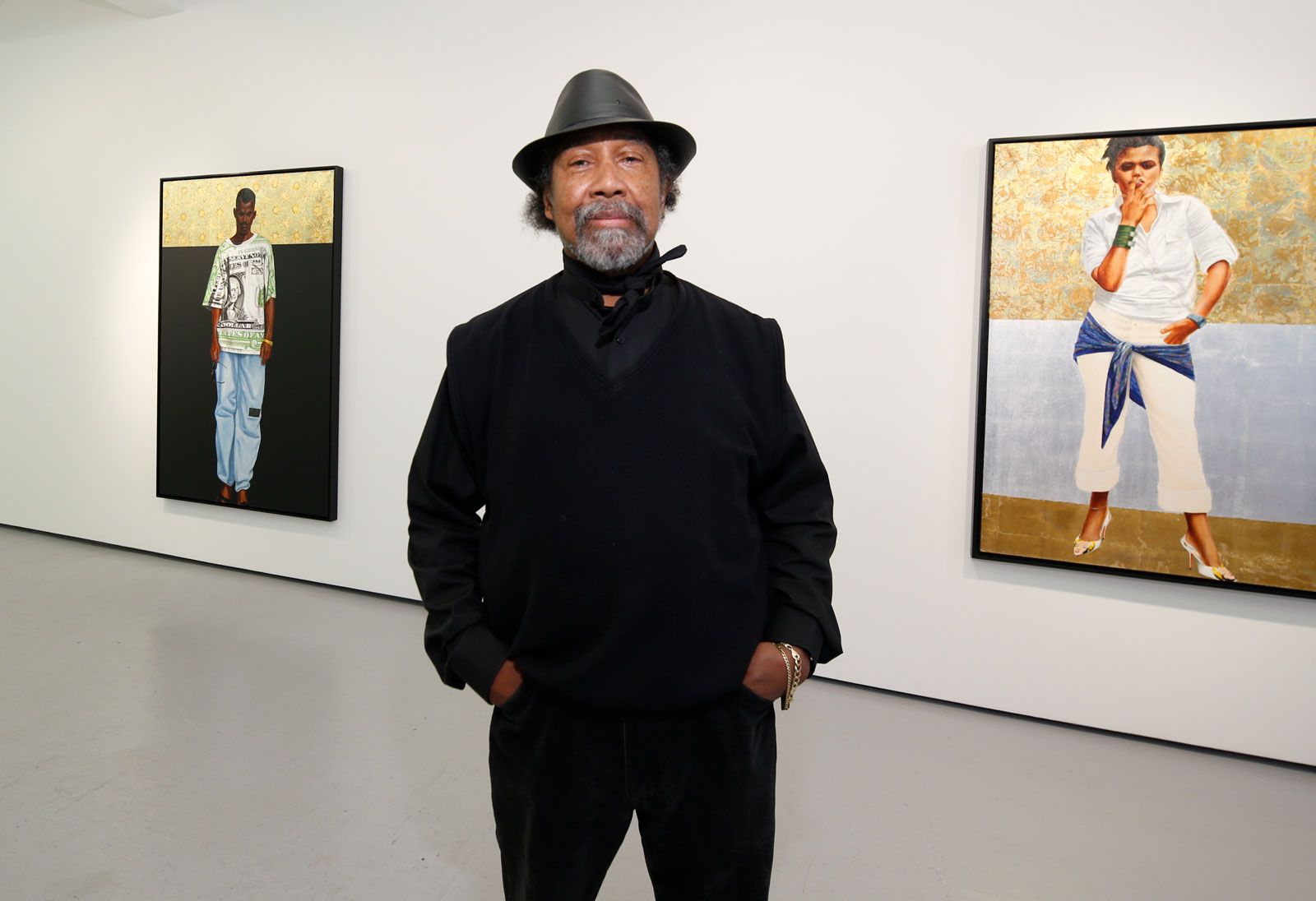
Barkley L. Hendricks | Biography, Paintings, Photography & Legacy

Barkley L. Hendricks was a transformative American portrait artist known for depicting ordinary Black men and women with the scale and technical mastery typically reserved for European Old Masters. After a pivotal trip to Europe in the 1960s where he noted the absence of Black subjects in museum collections, Hendricks dedicated his career to elevating Black identity through bold, life-sized oil paintings and photography. His work often featured vibrant monochromatic backgrounds and subjects drawn from his personal life, popular music, and urban culture.

Fresh blood for an ancient medium: 10 young painters to watch this spring

This article profiles ten young painters to watch this spring, highlighting their innovative approaches to the ancient medium of painting. Featured artists include British painter Francesca Mollett, whose abstractions have exceeded market expectations with works like 'Two Thistles' fetching over GBP 250,000 at auction; Samuel Hindolo, whose mysterious figurative and abstract paintings have caught the attention of critic Hilton Als; and Stanislava Kovalčíková, whose provocative mythological works were exhibited at Aspen Art Museum and who runs the independent space The White Ermine in Düsseldorf. Other artists mentioned include Evelyn Plaschg, who transforms mundane objects into unsettling meditations, with a solo museum exhibition opening at HALLE FÜR KUNST Steiermark.

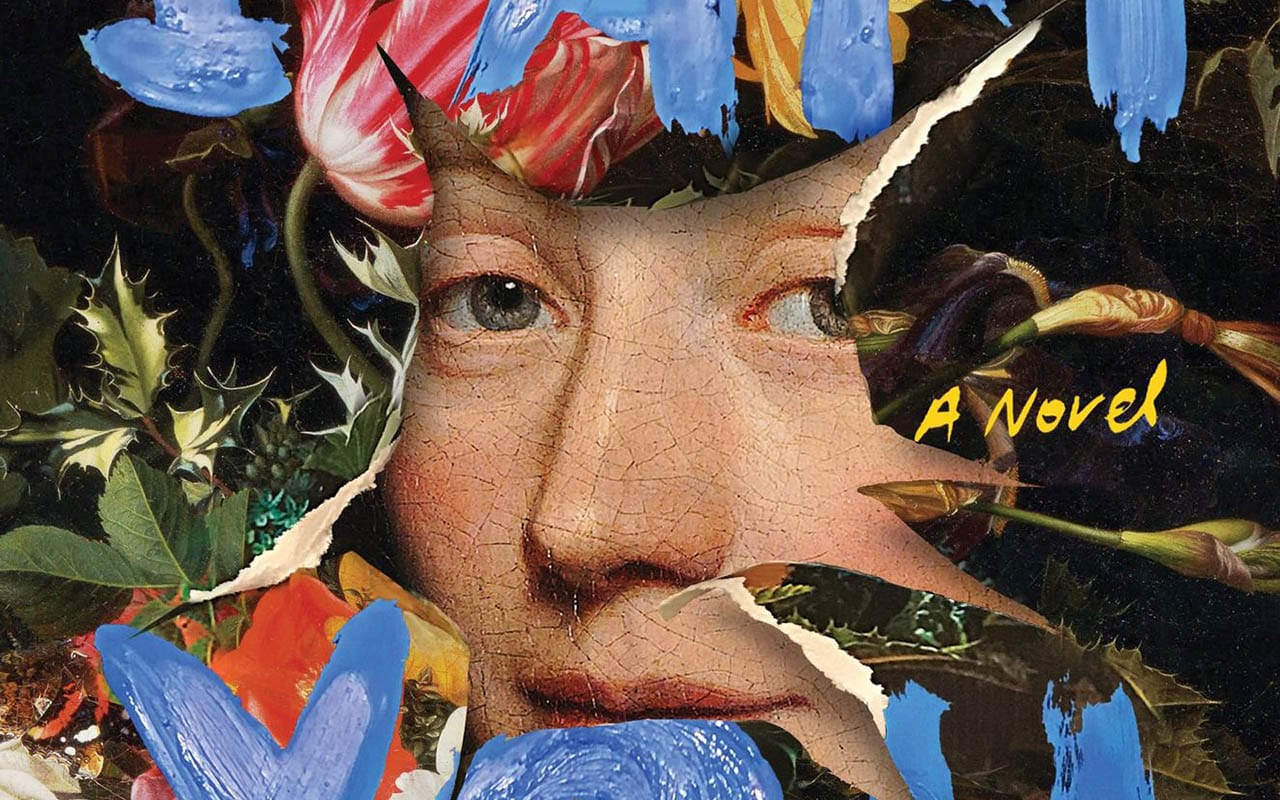
The Painted Book Cover Is Back

The article reports on a growing trend in book cover design: the use of painted, figurative artwork instead of stock photos or digital renderings. Publishers are increasingly licensing paintings by artists from Hilma af Klint to Shannon Cartier Lucy, seeing them as a way to signal cultural authority and intellectual rigor. The trend is discussed through examples like Victoria Redel's *I Am You* (2025) and Kyung-Ran Jo's *Blowfish* (2025), with insights from LiteraryHub Managing Editor Emily Temple and Astra House publisher Benjamin Schrank.

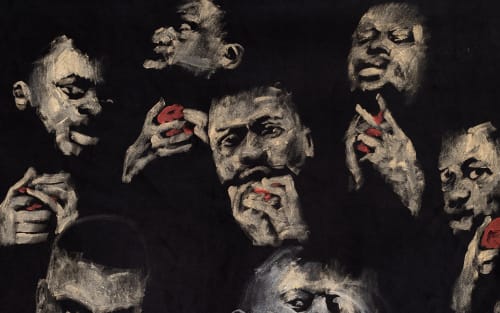
Archie Rand On the Irreducibility of Painting in a Post-Digital Age

Archie Rand, now in his late 70s, recently held his first extensive solo show in years at Jarvis Art in New York, featuring his new body of work titled "Heads." The exhibition reclaims painting's primordial function, emphasizing the connection between brain and hands, imagination and reality. Rand, who emerged from the downtown New York scene in the late 1970s and early '80s, has witnessed the full postwar evolution of American art. His career includes a pivotal synagogue mural commission that led to backlash from the Orthodox community and a break with critic Clement Greenberg, pushing him toward representational forms. He found allies in figures like Philip Guston and John Ashbery, and after his wife's death ten years ago, began reflecting on mortality and childhood influences.

art bites michelangelo military fortifications

Michelangelo, best known for masterpieces like the Sistine Chapel ceiling and the Pietà, also served as the governor and procurator general of fortifications for Florence in 1529, tasked with designing military defenses against the Medici family. After the Medici were expelled in 1527, Michelangelo joined the "Nine of the Militia" committee, but his overly complex drawings were so impractical that almost none were built. The Medici, backed by Pope Clement VII, successfully besieged Florence in 1529–30, forcing Michelangelo into hiding in a secret chamber beneath the Medici Chapel, where he drew figurative works rediscovered in 1975. He was eventually pardoned and went on to create major commissions like the tomb of Pope Julius II and The Last Judgement, but left Florence for Rome in 1534.

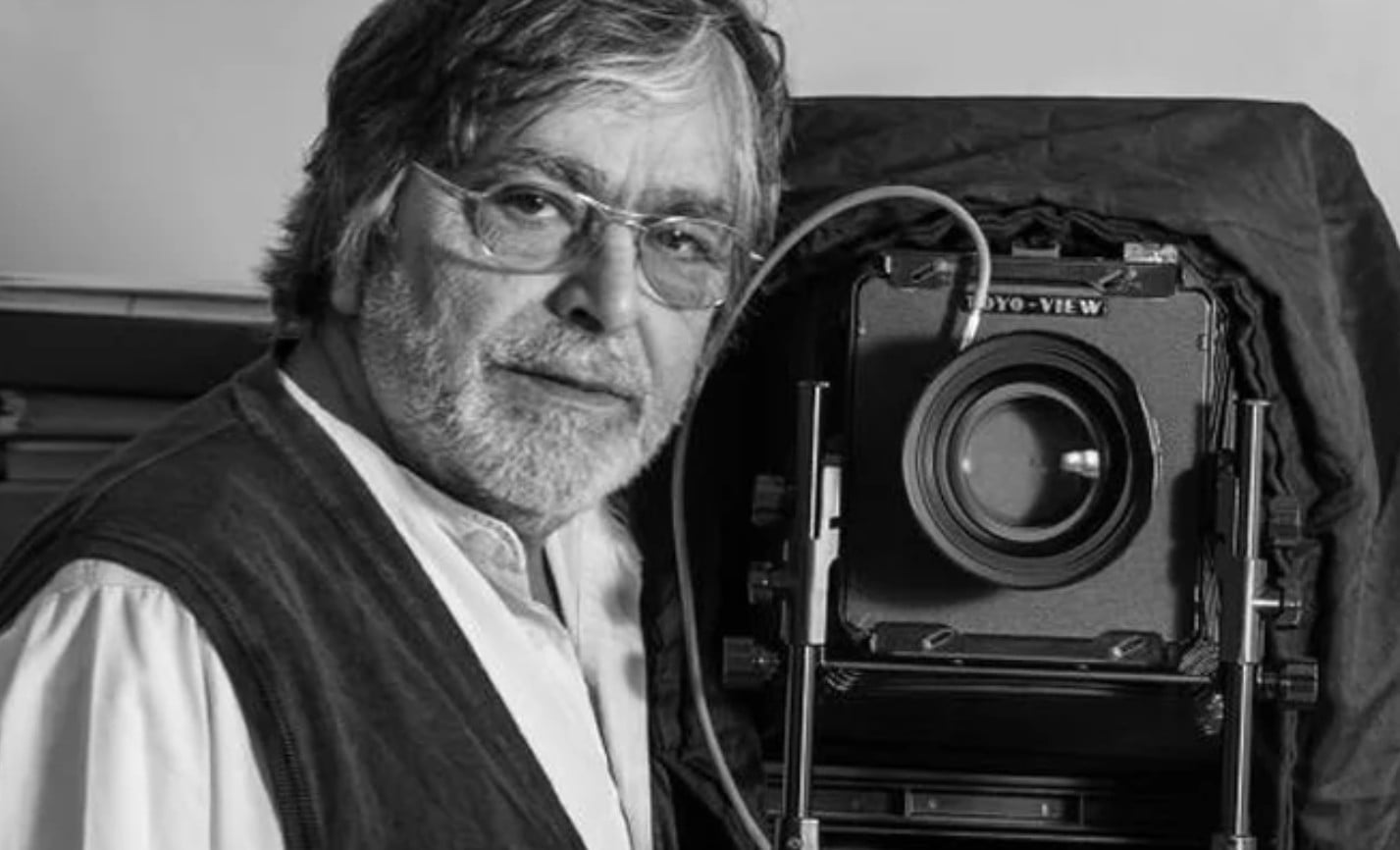
Pappi Corsicato's film on photographer Claudio Abate, which recounts the artistic ferment of Rome between the 1960s and 1990s, is now on RaiPlay

È su RaiPlay il film di Pappi Corsicato sul fotografo Claudio Abate che racconta il fermento artistico di Roma tra gli Anni ’60 e ‘90

RaiPlay has released a new documentary film by Pappi Corsicato titled "Claudio Abate. L’obiettivo nell’arte" (2026), which pays tribute to the late photographer Claudio Abate (1943–2017). The film weaves together interviews, archival materials, and footage from Istituto Luce to chronicle Abate's life and work, focusing on his role documenting the vibrant Roman art scene from the 1960s through the 1990s. It highlights his collaborations with key figures such as Jannis Kounellis, Michelangelo Pistoletto, Fabio Sargentini, and the artists of the Pastificio Cerere school, capturing seminal performances, happenings, and installations that defined Arte Povera and other avant-garde movements.

the secret islamic devotional art that depicts muhammad

The article explores the little-known tradition of figurative Islamic art depicting the prophet Muhammad, which has existed since at least the 13th century in Persian and Turkish cultures. It notes that while a ban on such imagery is widely observed in Arab countries, no explicit prohibition appears in the Quran, and devotional images—often in miniature form—have been created by Muslims for personal and religious use. Examples include a mural in Tehran and a work at the Metropolitan Museum of Art. Scholars like John Esposito, Omid Safi, and Christiane Gruber are quoted to contextualize this tradition in the wake of the Charlie Hebdo attacks, which reignited debate over depictions of Muhammad.

Raphael and the Renaissance of Divine Beauty

The New York Times explores the enduring legacy of Raphael, the High Renaissance master whose work defined the pinnacle of 'divine beauty' and classical harmony. The analysis delves into his technical mastery, his ability to synthesize the influences of Leonardo and Michelangelo, and his prolific output during his brief life in Rome.

tom price radical material experimentation

Artist Tom Price discusses his material-driven practice in an interview with Artnet News. Based in Mallorca, Spain, and a Royal College of Art graduate, Price explores how materials like coal, resin, and tar carry symbolic weight and drive conceptual narratives in his sculptures. His "Meltdown" series and works such as "The Presence of Absence" (2014) demonstrate his focus on material transformation, figuration, and abstraction.

Three artists, three questions: Contemporary art

Three Israeli artists—Ronit Porat, an evacuated photographer working with archival materials; an emerging artist using shrapnel from rocket shells as art material while serving as an IDF reservist; and a young artist opening a new exhibition after a break—are profiled in this column by Basia Monkaj. Each answers three questions about inspiration, the definition of art, and what makes their work unique, set against the backdrop of the ongoing war in Israel and the centenary of Surrealism.

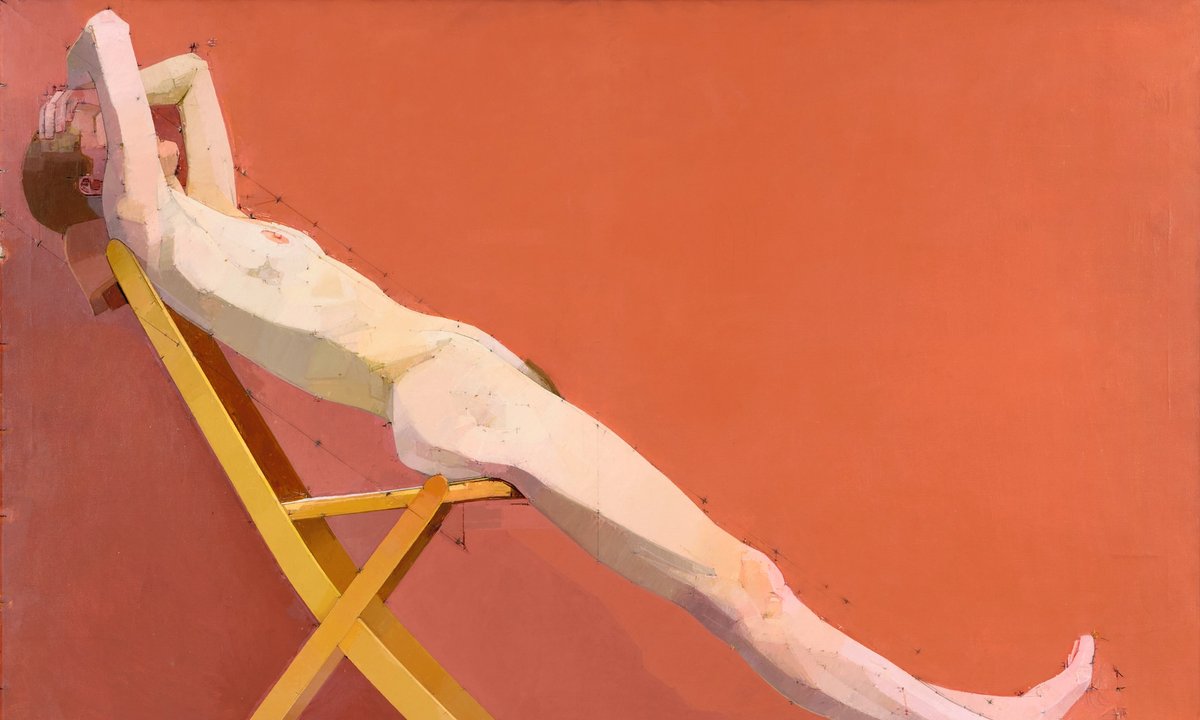
Euan Uglow monograph offers a fresh perspective through memoirs, papers and contributions

Andrew Lambirth's new book, *The Uglow Papers*, takes an unconventional approach to the monograph on British painter Euan Uglow (1932-2000). Instead of a traditional narrative, Lambirth compiles around 30 personal memoirs, papers, and contributions from friends, students, and colleagues—gathered through interviews, phone calls, emails, and letters. These firsthand accounts, paired with a concise introduction and a glossary of names, offer intimate recollections of Uglow's rigorous studio practice, his teaching methods, and his social life, including details about his Sunday night open houses and shared meals. The book also traces Uglow's artistic development from his studies at Camberwell School of Arts and Crafts and the Slade School of Fine Art, through his mentorship under William Coldstream, to his own distinctive geometric and emotionally charged works like *The Diagonal* (1971-77) and *Pyramid* (1993-96).