filter_list Showing 4 results for "Premise" close Clear
search
dashboard All 31 museum exhibitions 10article news 5article culture 4trending_up market 4article local 3rate_review review 2person people 1article policy 1gavel restitution 1
date_range Range Today This Week This Month All
Subscribe

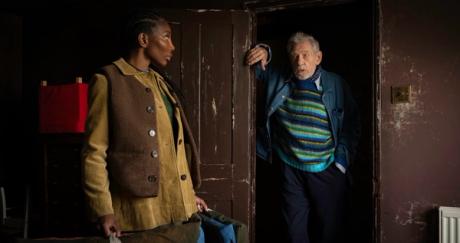
In The Christophers, an aging artist’s unfinished masterpieces are subjects of speculation and scheming

The Christophers is a new film starring Ian McKellen as Julian Sklar, a once-celebrated 1970s painter who has become a social pariah and reality TV villain. The plot follows a 'reverse art heist' where Sklar’s estranged children hire a restorer and former forger, played by Michaela Coel, to secretly finish a series of nine incomplete portraits of his former lover. The goal is to inflate the works' market value so they can be 'discovered' as masterpieces upon the aging artist's death.


westmoreland frick collection restaurant review

The Frick Collection in New York has opened its first-ever restaurant, Westmoreland, named after founder Henry Clay Frick's private train car. Located on the museum's newly renovated second floor, the 50-seat dining room features interiors by Bryan O'Sullivan Studio, a mural by artist Darren Waterston, and a menu of comforting, unadventurous fare like caesar salad, club sandwich, and avocado toast. The kitchen is led by Skyllar Hughes, a veteran of Danny Meyer's Ci Siamo, and operated by Union Square Events. Only museum ticket holders can dine, and reservations must be made in person.

What happens to the art market when humanity stops mattering?

The article examines the resilience of the high-end art market amid rising geopolitical tensions and shrinking public funding for culture. It notes that while sales at major auction houses like Sotheby's and Christie's have rebounded, political forces in the US and Europe are increasingly prioritizing military spending and exerting pressure on cultural institutions, drawing parallels to the rise of fascism in the early 20th century.

Literature Today: The Crisis of the Novel as a Symptom of Social Change

La letteratura oggi: la crisi del romanzo come sintomo di un cambiamento sociale

The article examines the perceived crisis of the novel as a literary form, tracing its historical rise alongside the bourgeoisie in the 17th and 18th centuries. It argues the novel functioned as a mirror for a coherent social class with shared values, serving as a device for collective representation. The form's foundational premise of a recognizable community began to fracture in the 20th century, particularly after World War II, as societies atomized and grand ideological narratives collapsed.