filter_list Showing 26 results for "raphael" close Clear
search
dashboard All 315 museum exhibitions 128trending_up market 80article news 42article culture 26rate_review review 11person people 7article local 7candle obituary 6article policy 4gavel restitution 4
date_range Range Today This Week This Month All
Subscribe

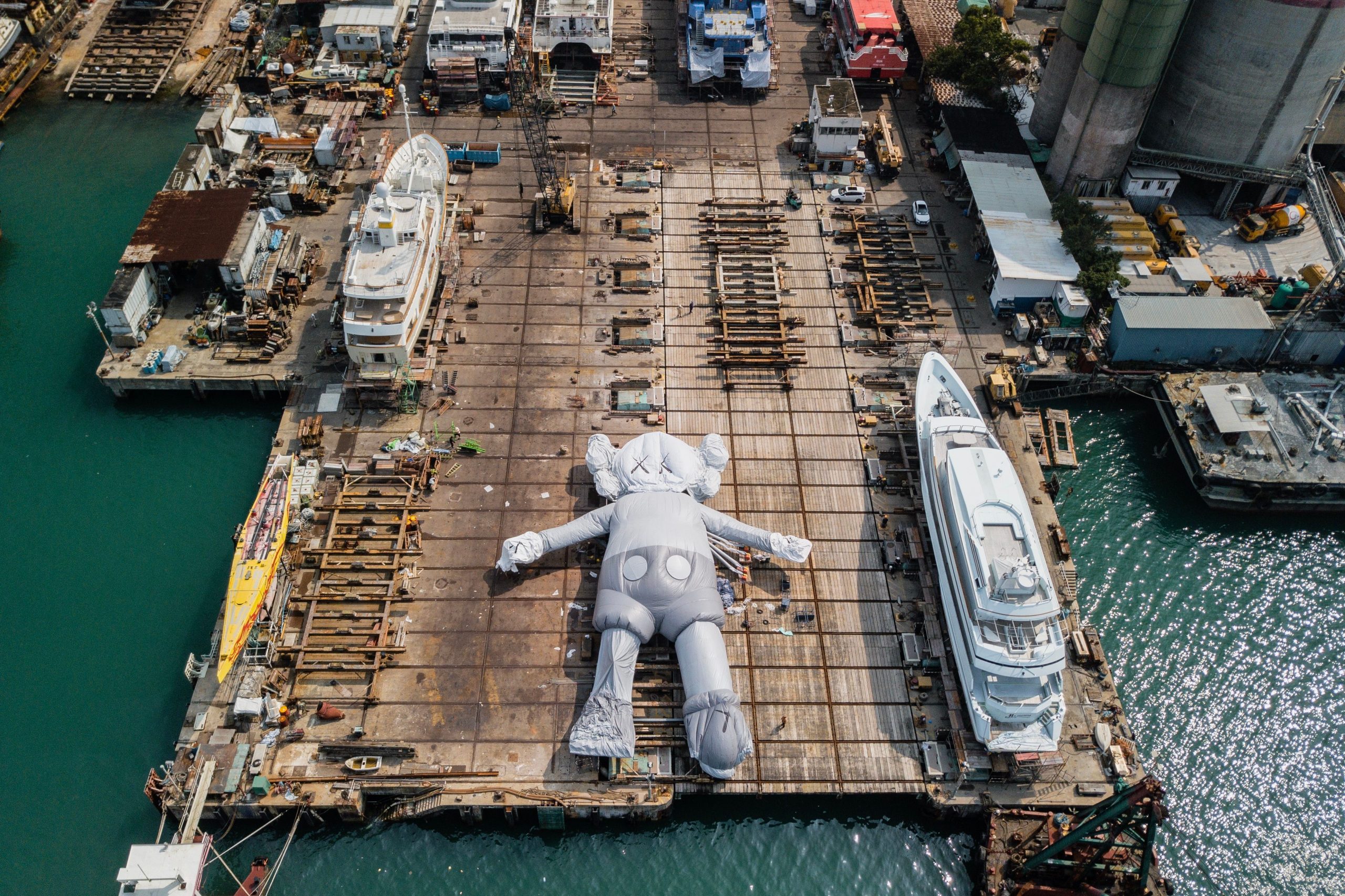
forget blue chip art its a red chip art world now

The article introduces and defines the concept of "red-chip art," a new category of art collecting that rejects traditional art-historical reverence in favor of aesthetics rooted in street art, graffiti, super-flat cartoons, multi-colored chrome, and crypto culture. It describes red-chip collectors as mysteriously affluent millennials, techies, hip-hop visionaries, and crypto aspirants who gravitate toward artworks that resemble toys, limited-edition dolls, NFTs, and memecoins, often consumed at venues like the Eden Fine Art gallery at the Wynn in Las Vegas or parties during Art Basel Miami Beach. Key artists associated with this movement include KAWS, George Condo, Virgil Abloh, Tom Sachs, Alex Israel, Damien Hirst, Harmony Korine, Yoshitomo Nara, and Banksy, with Jeff Koons and Takashi Murakami seen as transitional "purple chip" figures.

titian top 10 works ranked

Artnet News ranks the top 10 works of Renaissance master Titian, using criteria of suggestiveness, mystery, and pop culture relevance. The list includes paintings such as "Pietà" (1575–76), "Danaë" (1544–46), "Assumption of the Virgin" (1516–18), and "The Rape of Europa" (1560–61), with commentary on their composition, history, and cultural impact.

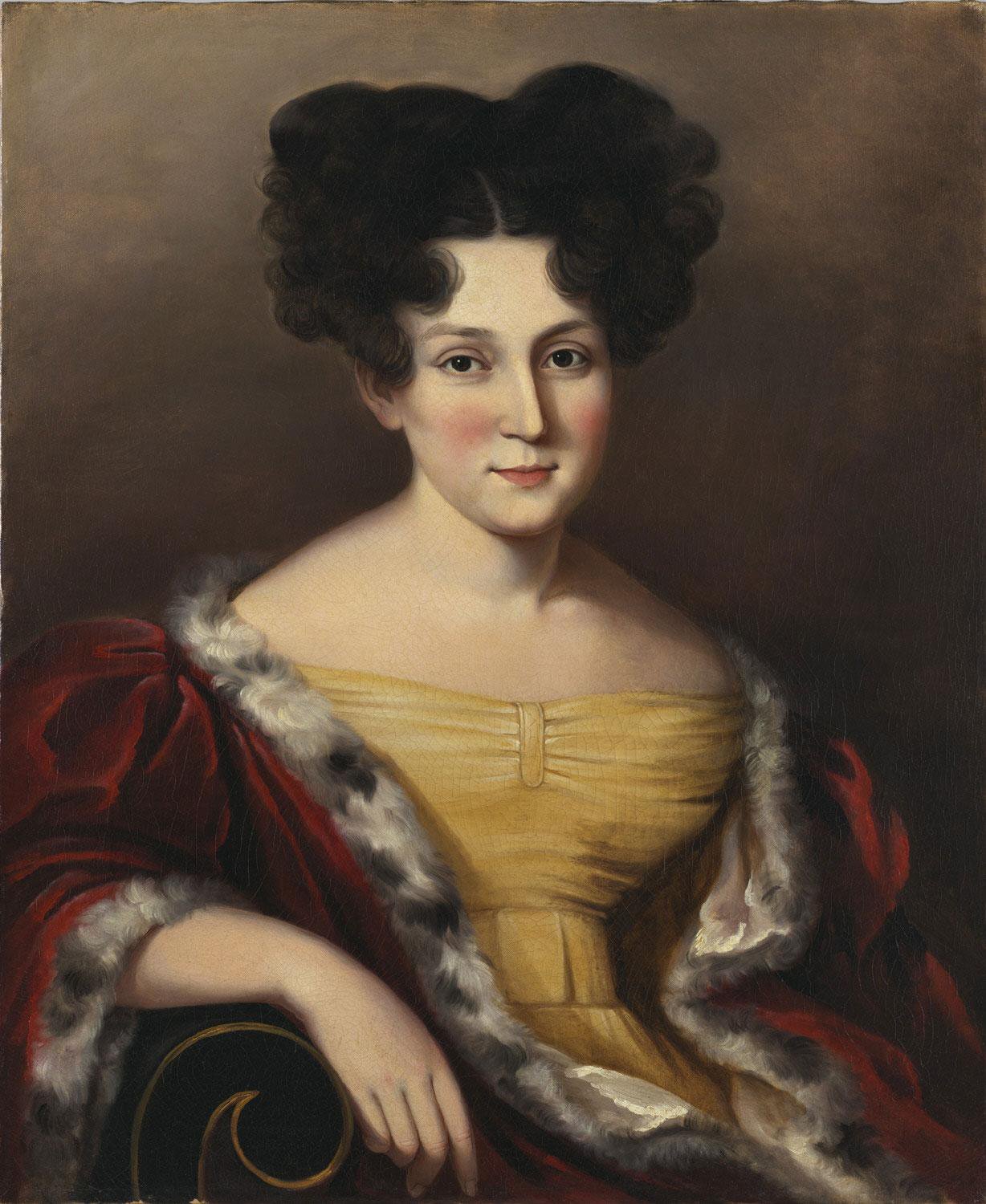
Why Was Sarah Miriam Peale, Pioneering Member of America’s First Art Dynasty, Left Behind?

Sarah Miriam Peale, a member of the prominent Peale art dynasty and arguably the first professional woman artist in the United States, is finally receiving long-overdue institutional recognition. Despite a prolific sixty-year career painting portraits of political figures and still lifes in Baltimore and St. Louis, her legacy was largely overshadowed by her uncle Charles Willson Peale and her male cousins. Her independence as an unmarried woman who supported herself entirely through her craft marked a radical departure from the gender norms of the 19th century.

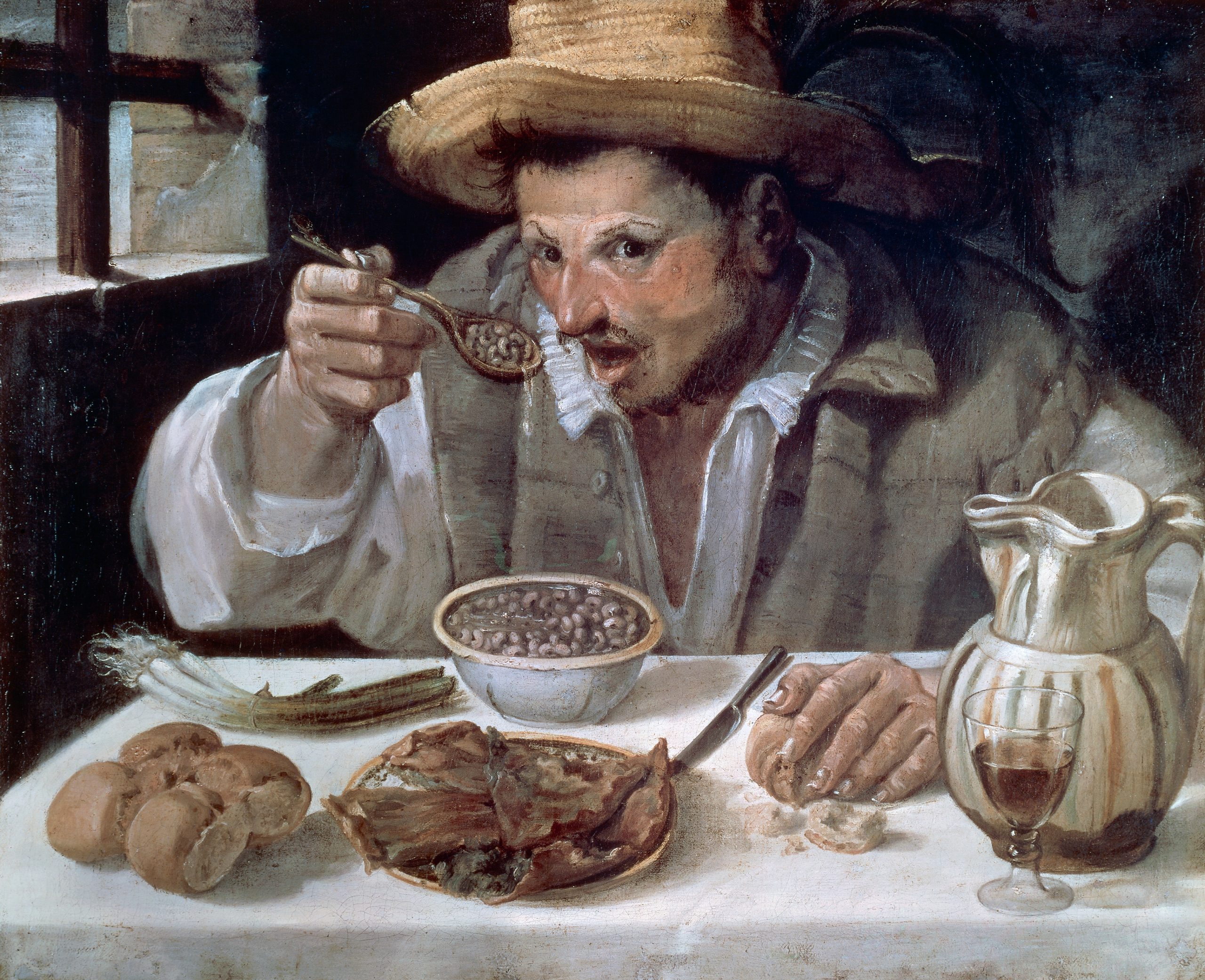
It's Time to Give Annibale Carracci Some of Rembrandt's Spotlight

its time to give annibale carracci some of rembrandts spotlight

This article advocates for a critical re-evaluation of the Italian Baroque painter Annibale Carracci, arguing that his historical significance and artistic influence rival that of the more widely celebrated Rembrandt van Rijn. While Rembrandt has dominated recent museum headlines and auction records, the author highlights Carracci’s foundational role in establishing the Accademia degli Incamminati in Bologna, which revolutionized art education by prioritizing life drawing and elevating the social status of artists from mere craftsmen to intellectual creators.

burton the meeting on the turret stairs

The article explores Frederic William Burton's iconic Victorian watercolor *Hellelil and Hildebrand, the Meeting on the Turret Stairs* (1864), held at the National Gallery of Ireland. It recounts the tragic medieval Danish ballad that inspired the painting, in which the noblewoman Hellelil and her guard Heldebrand are doomed lovers. Burton, an Irish painter influenced by the Pre-Raphaelite Brotherhood, worked exclusively in watercolor and gouache, making this delicate piece a technical marvel. The museum displays it only one hour twice weekly to protect it from light damage.

art bites facts holiday small talk

Artnet News offers a lighthearted holiday guide with seven art-historical conversation starters designed to deflect awkward family small talk. The article reveals quirky facts such as a secret apartment atop the Eiffel Tower, the Surrealists' party game 'Exquisite Corpse,' Leonardo da Vinci's role as a wedding planner for Milan's nobility, Marcel Duchamp paying his dentist with a fake check, and Frank Lloyd Wright inspiring Lincoln Logs.

roman sculpture

This article explores the rediscovery of Roman sculpture during the Renaissance and its profound influence on artists like Raphael, Donatello, Michelangelo, and Leonardo da Vinci. It details how Roman sculptors, inspired by Greek methods after the conquest of Greece in 146 B.C.E., created highly realistic works that served both artistic and political purposes, glorifying emperors and reinforcing imperial power. The piece highlights six iconic Roman sculptures—including the Equestrian Statue of Marcus Aurelius, the Colossus of Constantine, Trajan's Column, and the Augustus of Prima Porta—describing their historical context, artistic features, and enduring legacy.

renaissance artists raphael and durer were kind of obsessed with each other

The article explores the artistic friendship between Renaissance masters Raphael and Albrecht Dürer, who never met but exchanged letters and artworks across 600 miles. Initiated when both were at the height of their careers, the correspondence began with Dürer sending Raphael a gouache self-portrait, to which Raphael responded with drawings, including "Two male nude studies" (1515) and "Three Standing Men" (1514-16). The friendship lasted only five years, ending with Raphael's death in 1520 at age 37. The exchange is documented by Giorgio Vasari in "The Lives of the Artists," and one surviving drawing bears an inscription by Dürer acknowledging Raphael's gift.

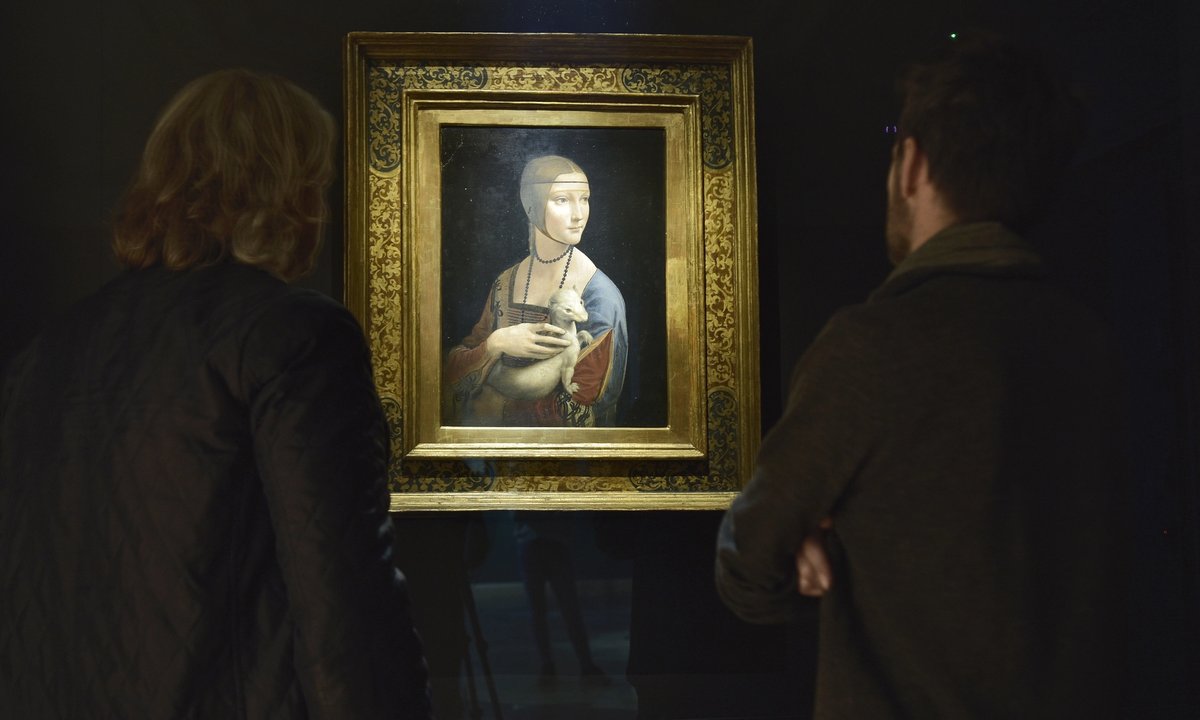
leonardo da vinci existing paintings ranked

Artnet News has published a ranking of Leonardo da Vinci's surviving paintings, focusing on completed, stand-alone works and excluding frescos like *The Last Supper* and unfinished pieces. The article evaluates paintings such as *Annunciation* (c. 1472–76), *Madonna of the Carnation* (1478–80), and *Ginevra de' Benci* (c. 1474–78), considering factors like attribution certainty, historical context, and unique traits—for instance, *Ginevra de' Benci* is the only Leonardo painting in a public collection in the Americas.

michelangelo 550 birthday headlines

Artnet News rounds up recent headlines involving Renaissance master Michelangelo di Lodovico Buonarroti Simoni as institutions prepare to celebrate his 550th birthday in 2025. The article highlights three stories: a scene in HBO's *The White Lotus* season three finale that echoes Michelangelo's *Pietà*; the ongoing scholarly debate over whether Michelangelo himself forged the ancient sculpture *Laocoön and His Sons*; and the restoration of Michelangelo's family tomb at the Basilica of Santa Croce in Florence ahead of his birthday.

7 art history facts

Frieze Week in New York has arrived, drawing tens of thousands of visitors to The Shed for displays from over 65 international galleries. The article offers a collection of art historical trivia to help attendees impress peers, including tales of a potentially fake Picasso gifted to Robin Williams by Disney, Piet Mondrian's fondness for Disney's *Snow White and the Seven Dwarfs*, and a legend that Raphael's pupil Giulio Romano created erotic frescos in the Vatican's Sala di Constantino out of anger over delayed payment from Pope Clement VII.

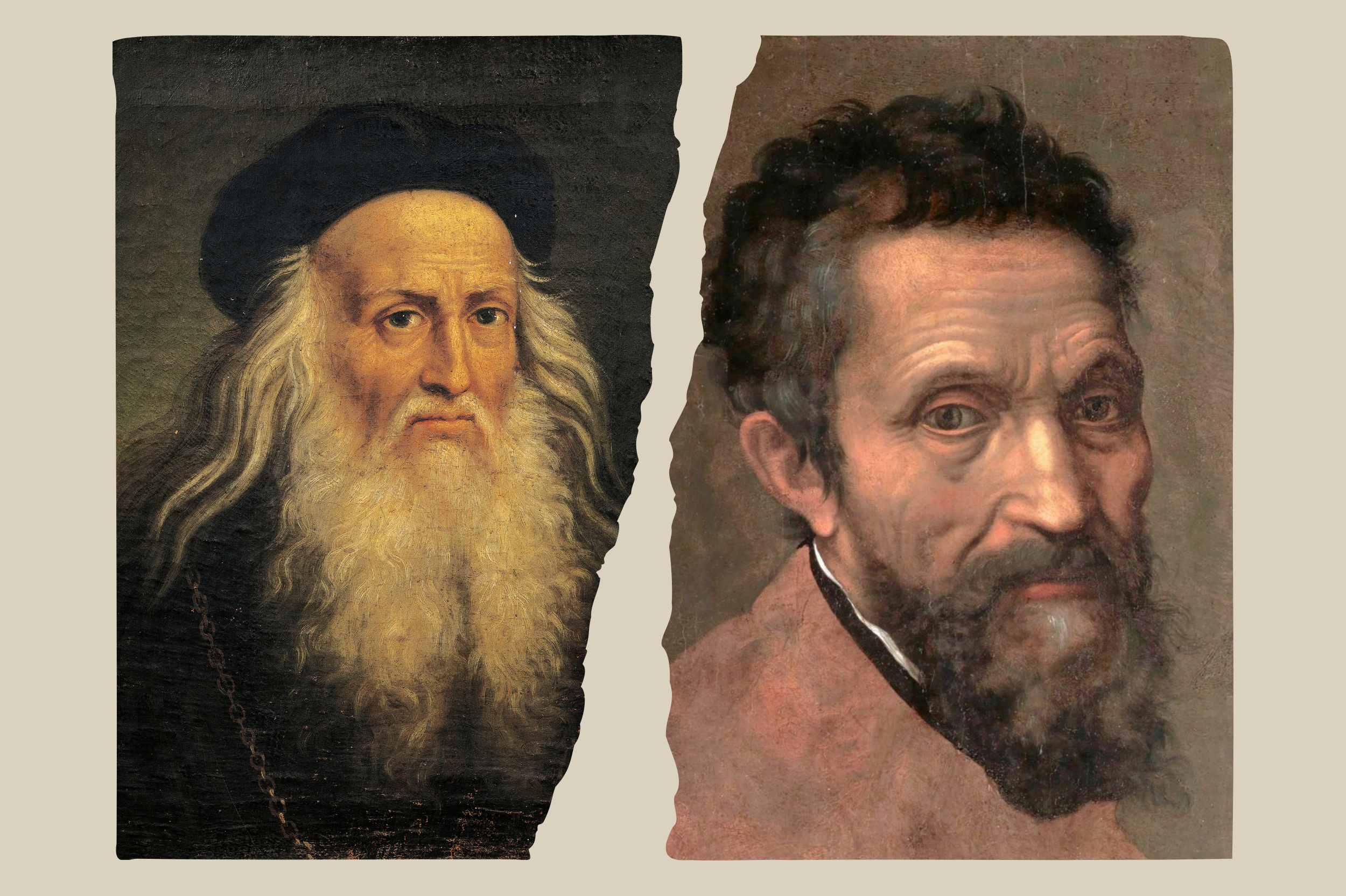
why did leonardo and michelangelo have beef

Leonardo da Vinci and Michelangelo, two of history's most celebrated artists, had a well-documented rivalry rooted in competition for commissions, class differences, and artistic disagreements. Their first known encounter occurred when Leonardo served on a committee deciding the placement of Michelangelo's *David* (1501), where Leonardo reportedly mocked the sculpture by sketching it as the sea god Neptune. Their rivalry escalated when both were commissioned to paint opposing murals in Florence's Salone dei Cinquecento—Leonardo's *Battle of Anghiari* and Michelangelo's *Battle of Cascina*—neither of which was completed. The artists traded insults over the years, with Michelangelo criticizing Leonardo's view of sculpture as inferior to painting, and Leonardo deriding Michelangelo's muscular figures as resembling "a bag of walnuts."

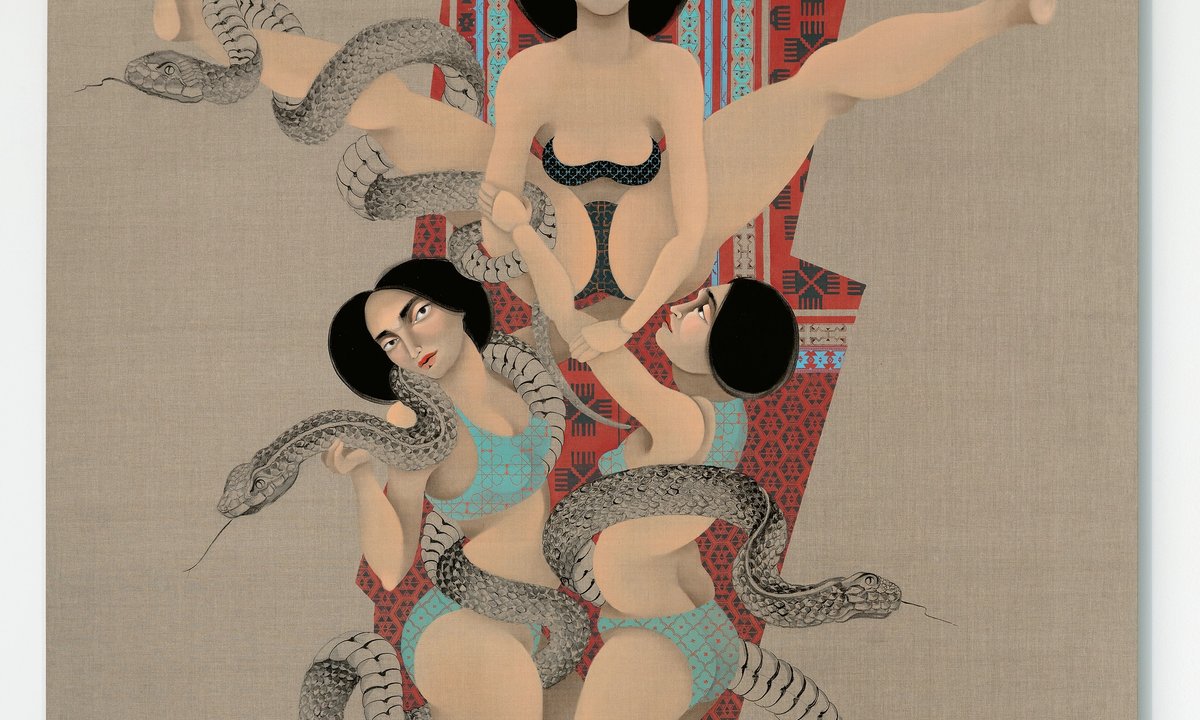
‘The good, the bad and the ugly’: a short history of how artists depict the female body

Art historian Amy Dempsey has published a new book, 'The Female Body in Art,' which examines the historical representation of women in Western art. The book moves from Renaissance archetypes to contemporary works, focusing on a celebratory selection of artists and images rather than critiquing the often problematic history of the female nude.

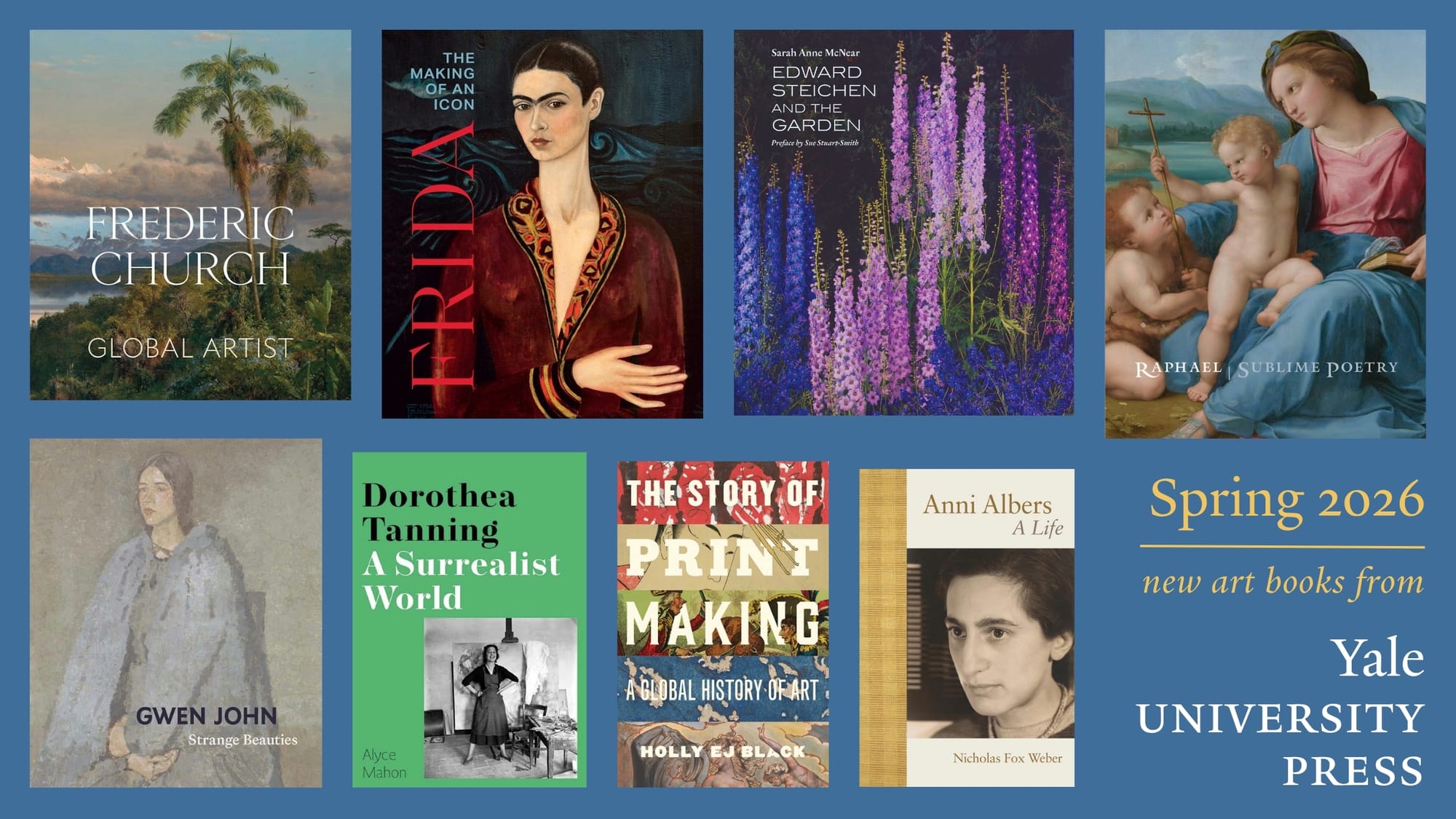
Early 2026 Art Books From Yale University Press

Yale University Press has announced its early 2026 art book lineup, featuring exhibition catalogues such as "Raphael: Sublime Poetry" from The Metropolitan Museum of Art, "Gwen John: Strange Beauties" from the Yale Center for British Art, "Edward Steichen and the Garden" from the George Eastman Museum, and "Frederic Church: Global Artist" from Olana NY State Historic Site. New releases also include a biography of Anni Albers by Nicholas Fox Weber, a catalogue titled "Anni Albers: Constructing Textiles" accompanying a European traveling exhibition, and Alyce Mahon's "Dorothea Tanning: A Surrealist Life," named a Best New Art Book of 2026 by Christie's. The press will hold a 50% off annual sale in May.

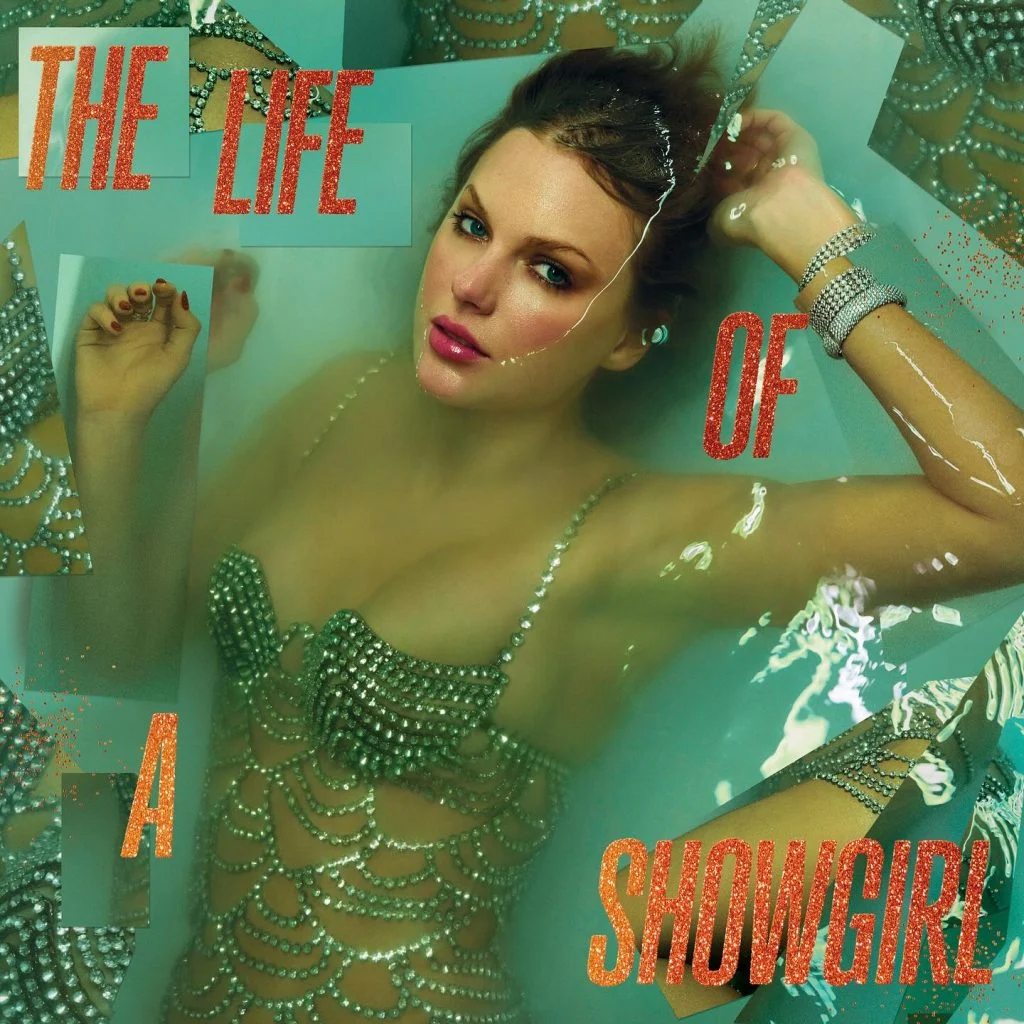
taylor swift fate of ophelia painting john everett millais

Taylor Swift's new album 'The Life of a Showgirl' includes a song titled 'The Fate of Ophelia,' which references the tragic character from Shakespeare's 'Hamlet.' The article draws a parallel between Swift's song and John Everett Millais's Pre-Raphaelite painting 'Ophelia' (1851–52), which depicts the character before her death. The Tate, which owns the painting, posted about the work to discuss the death of its model, Elizabeth Siddal, in 1862. Swift's album cover, showing her floating in water, has been compared to the Millais painting, but the song reimagines Ophelia's narrative with a happy ending tied to her relationship with Travis Kelce.

laocoon vatican michelangelo forgery

On January 14, 1506, Florentine architect Giuliano da Sangallo and Michelangelo Buonarroti witnessed the excavation of the Laocoön Group, a monumental ancient marble statue unearthed in a Roman vineyard. The sculpture, depicting the Trojan priest Laocoön and his sons battling serpents, was quickly acquired by Pope Julius II and installed in the Vatican, where it remains today at the Museo Pio-Clementino. However, art historian Lynn Catterson controversially proposed in 2005 that the statue is not an ancient artifact but a forgery created by Michelangelo himself, citing evidence such as a drawing of a torso resembling the statue's back, bank records of Michelangelo's marble purchases, and his history of producing forgeries like the lost Sleeping Cupid.

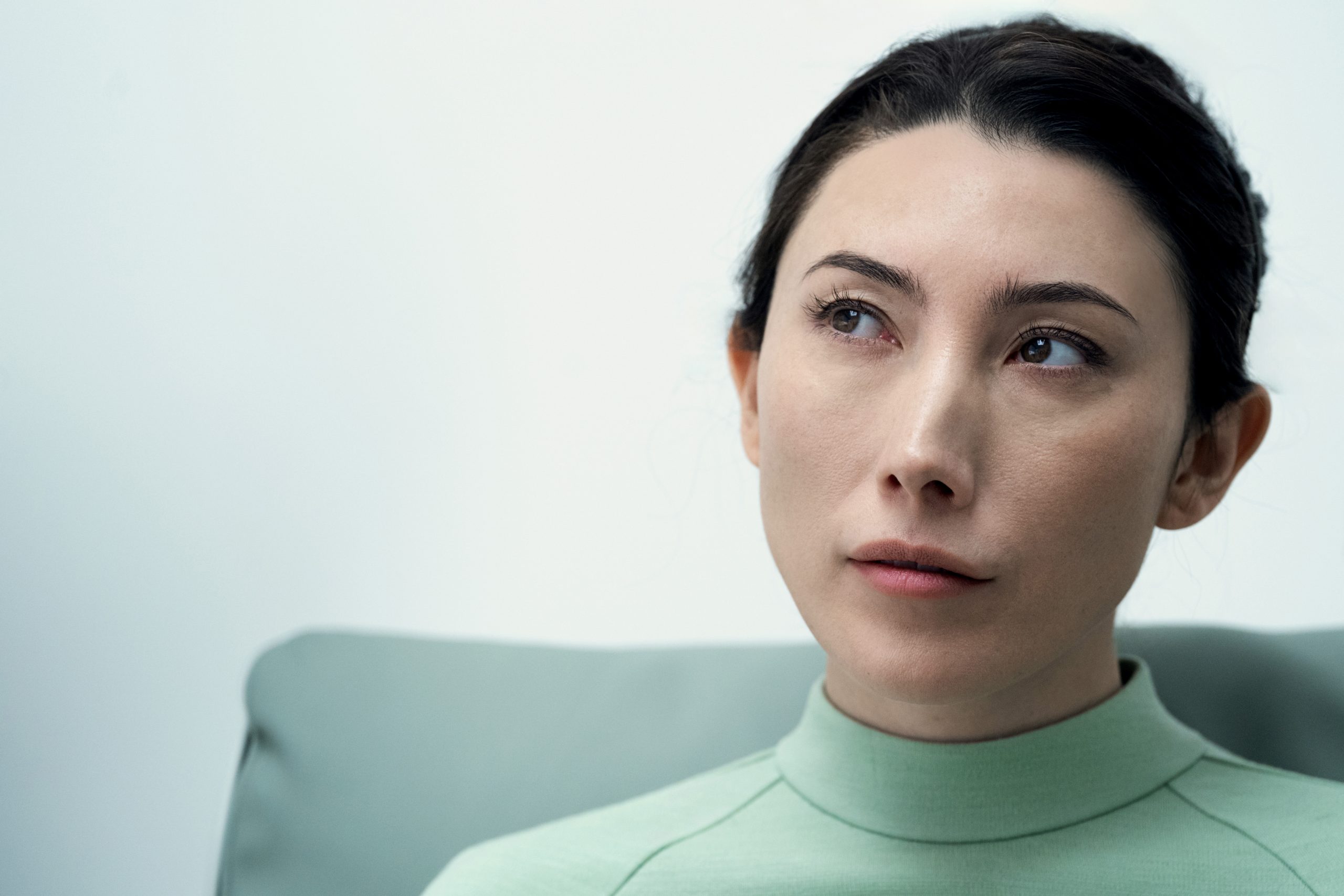
severance dieter rams braun vitsoe

The article examines the use of two iconic minimalist designs—the Vitsœ 620 chair and a Braun wall-mounted hi-fi system—in the Apple TV+ series *Severance*. Both objects were designed by German industrial designer Dieter Rams in the 1960s and appear in the show's dystopian corporate setting, specifically in the lower levels of Lumon Industries where experimental subject Gemma undergoes tests. The production team intentionally selected these pieces to convey themes of power, control, and commerce.

How to see every painting by Leonardo da Vinci

This article guides readers on a global tour to see every surviving painting by Leonardo da Vinci, numbering around 16 works predominantly by the master himself, plus a few with his intervention. It traces his career through Florence, Milan, Rome, and France, highlighting key locations such as the Louvre, the National Gallery in London, the Alte Pinakothek in Munich, the Hermitage in St. Petersburg, the National Gallery of Scotland in Edinburgh, and museums in Washington, D.C., and Krakow. The piece also notes the disputed attribution and unknown whereabouts of the $450m Salvator Mundi.

waterhouse tennyson lady of shalott

English painter John William Waterhouse created three paintings based on Lord Alfred Tennyson's poem "The Lady of Shalott," depicting a cursed woman from Arthurian legend. The article explores Waterhouse's deep admiration for Tennyson, noting that he filled his copy of Tennyson's works with sketches. It reveals that Waterhouse painted the story in reverse chronological order, starting with the final scene in 1888, then the moment of temptation in 1894, and finally the lady's lament in 1915. The article also identifies the model for the first painting as likely Waterhouse's wife, artist Esther Kenworthy Waterhouse, and describes symbolic details in the work, such as the snuffed candles foreshadowing death.

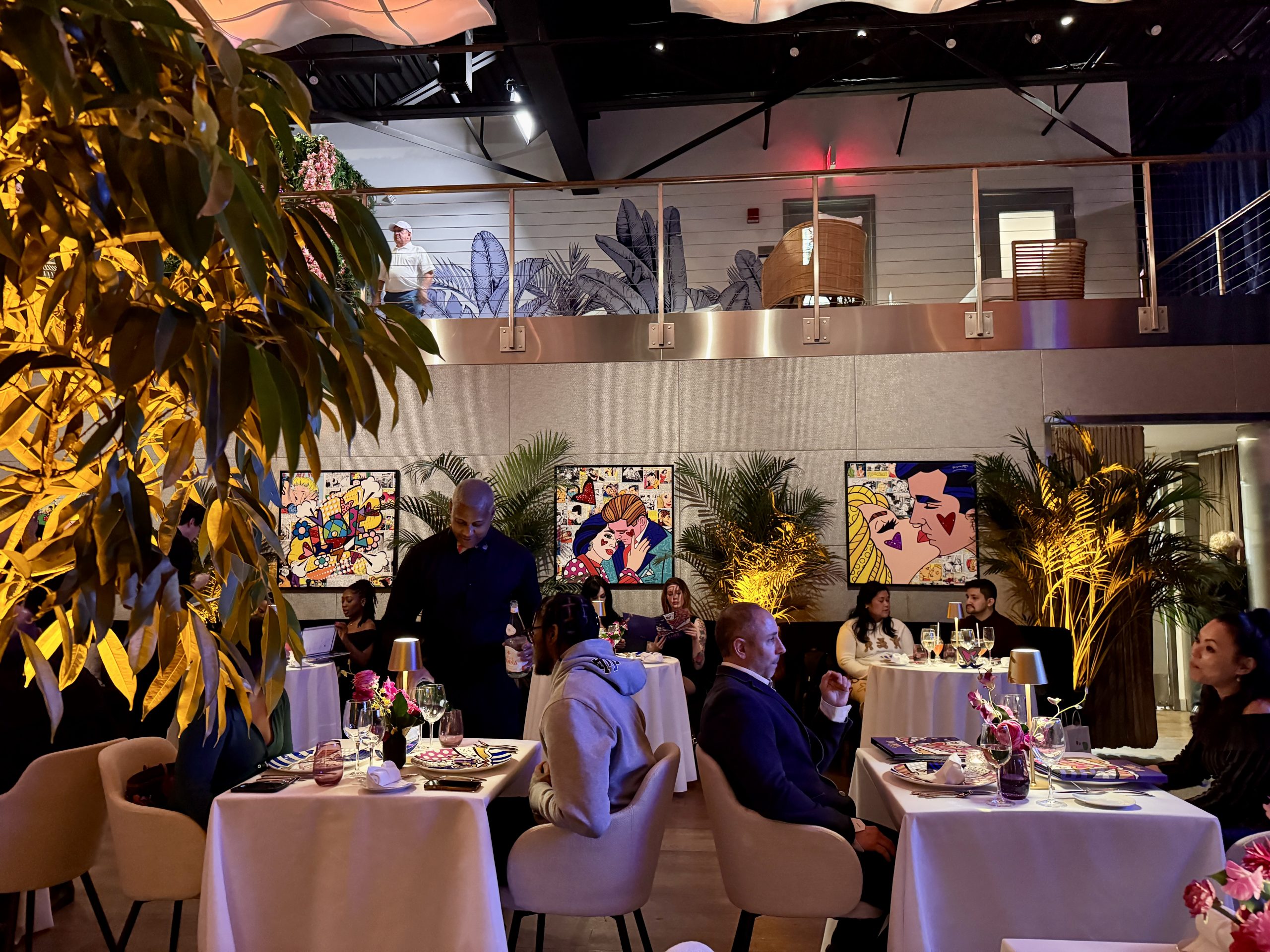
wet paint romero britto cruise

Artnet News' gossip column Wet Paint reports on a Valentine's Day dining experience aboard a simulated Princess Cruises ship at Pier 59 in Chelsea Piers, New York. The event, titled "Love by Britto: First Artistically Inspired Dining Experience Celebrating 'Love'," was designed by Miami-based artist Romero Britto, featuring his signature kaleidoscopic pop art on plates, wine labels, paperweights, and even toilet paper roll stickers. Chef Rudi Sodamin prepared the meal, which included a cocktail with edible glitter and heart-shaped desserts. Britto himself attended a run-through the previous night, and the $214 tickets for the final evening were sold out.

kamala culture failure

Ben Davis, an art critic, analyzes the failure of Kamala Harris's 2024 presidential campaign through the lens of its visual culture, particularly a MoveOn.org poster in Brooklyn that renders Harris's face entirely from emojis—smiley eyes, fist-bump skin, octopus lips, and coconut necklace. He argues this poster epitomizes the campaign's reliance on incoherent internet vibes and substance-free memes, contrasting it with Shepard Fairey's uninspired "FORWARD" poster and the self-parody of "Brat Summer" aesthetics. Davis blames Democratic Party consultants for wasting over $1 billion on a campaign that failed to connect with voters on economic anger, instead offering wonkish proposals and appeals to nonexistent Liz Cheney Republicans.

Raphael and the Renaissance of Divine Beauty

The New York Times explores the enduring legacy of Raphael, the High Renaissance master whose work defined the pinnacle of 'divine beauty' and classical harmony. The analysis delves into his technical mastery, his ability to synthesize the influences of Leonardo and Michelangelo, and his prolific output during his brief life in Rome.

Madrid: Hypnotic Laugh Track by Manga Ngcobo

Writer Manga Ngcobo reflects on the architectural and cultural landscape of Madrid in early 2025, juxtaposing the city's historic art institutions with its rapid technological and commercial evolution. Drawing on Ben Lerner’s novel 'Leaving the Atocha Station', the piece explores the growing disconnect between the profound emotional experiences promised by masters like Velázquez and Goya and the reality of a city increasingly designed for content creation, retail aesthetics, and digital consumption.

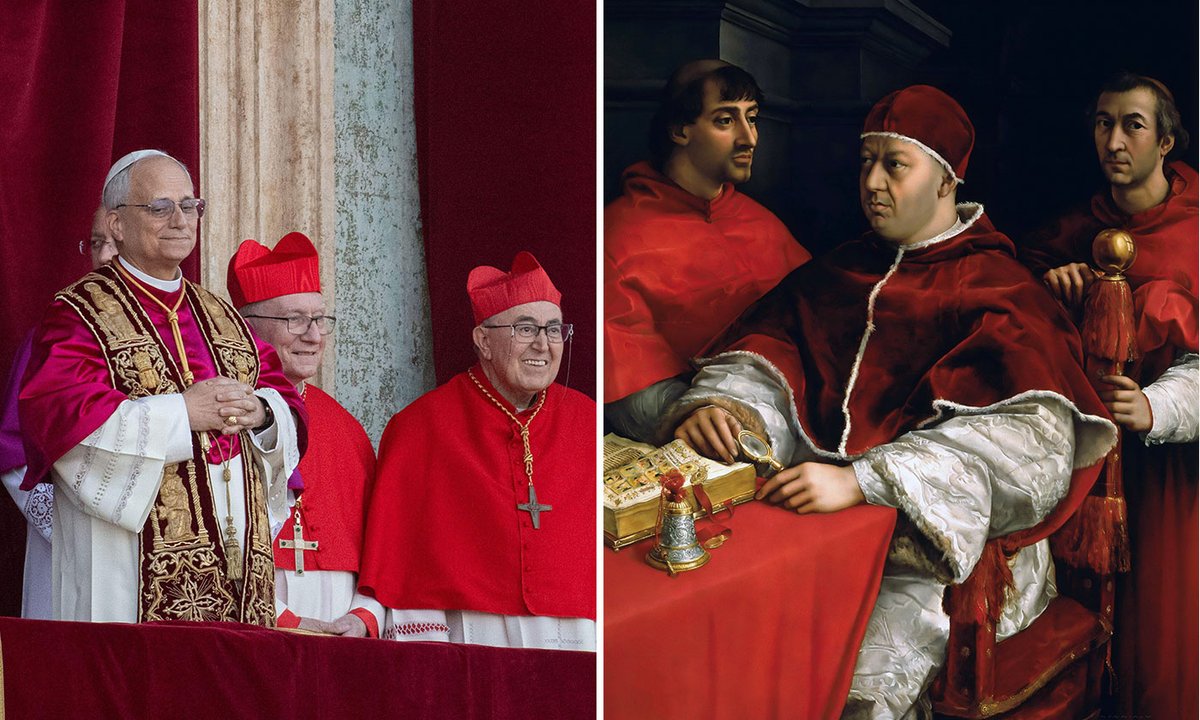
The art of being Pope Leo: from a Raphael portrait to the first pontiff to be captured on film

The article examines the artistic and historical legacy of popes named Leo, following the election of Robert Prevost as Pope Leo XIV on 8 May. It traces the name through figures like Leo I (Leo the Great), Leo IX, and Leo X, focusing on Raphael's iconic 1518-20 portrait of Pope Leo X with cardinals Giulio de' Medici and Luigi de Rossi. The piece also discusses Raphael's frescoes in the Vatican's Stanze and Loggia, which depict earlier Leonine popes, and highlights the Medici family's role in bankrolling the Renaissance.

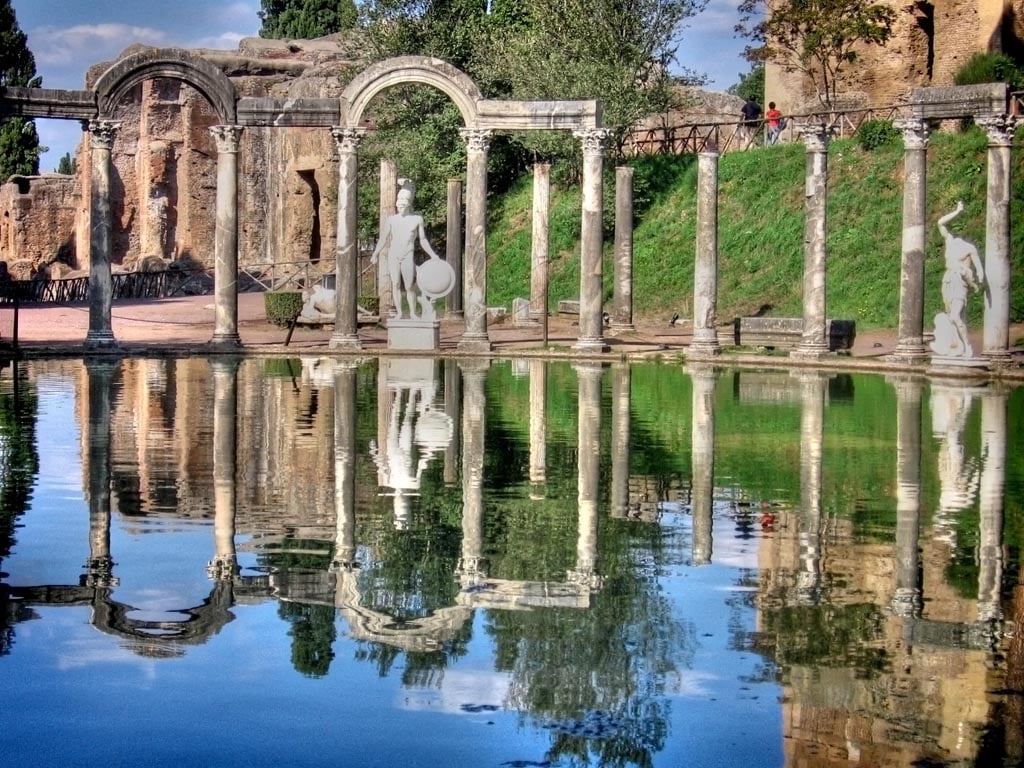
That Time Raphael Visited Tivoli, Transforming Antiquity into Art

Quella volta che Raffaello visitò Tivoli trasformando l’antichità in arte

In April 1516, Raphael Sanzio embarked on a historic excursion to Tivoli alongside a prestigious circle of Renaissance intellectuals, including Baldassarre Castiglione and Pietro Bembo. This journey served as a critical field study for Raphael, who had recently been appointed as Rome's prefect of antiquities. By examining the complex ruins of Hadrian's Villa and the Sanctuary of the Sibyl, the group engaged in a sophisticated blend of archaeological investigation and humanist leisure that defined the cultural climate under Pope Leo X.

A short guide to the hidden meanings in great paintings

Former picture researcher Caroline Chapman has released a new book titled "Painted Mysteries: Interpreting Great Paintings," which decodes the hidden symbolism in over 135 historic artworks. The publication serves as a guide for modern viewers to understand the complex visual language used by masters such as Botticelli, Rembrandt, and Raphael, unravelling layers of meaning that have become elusive over time.